
Pueblos Blancos: Andalucía’s White Villages, Off the Coast Trail
Whitewashed towns cling to cliffs and hilltops across the Sierra de Cádiz. This is inland Andalucía — a mountain park, castle ruins and slow village squares, an hour from the coast but a world away from its crowds.
Why Visit Pueblos Blancos (Sierra de Cádiz)
The Pueblos Blancos are a cluster of white-painted towns spread across the mountains of northern Cádiz province, in western Andalucía. They sit inland, between the sherry city of Jerez and the famous cliff town of Ronda. Most visitors to Andalucía stay on the coast or in the big cities, so these hill towns stay quiet even in high season. Distances between them are short, the food is regional and cheap, and the whole area works well as a two-to-four-day road trip.
Villages that feel unspoiled
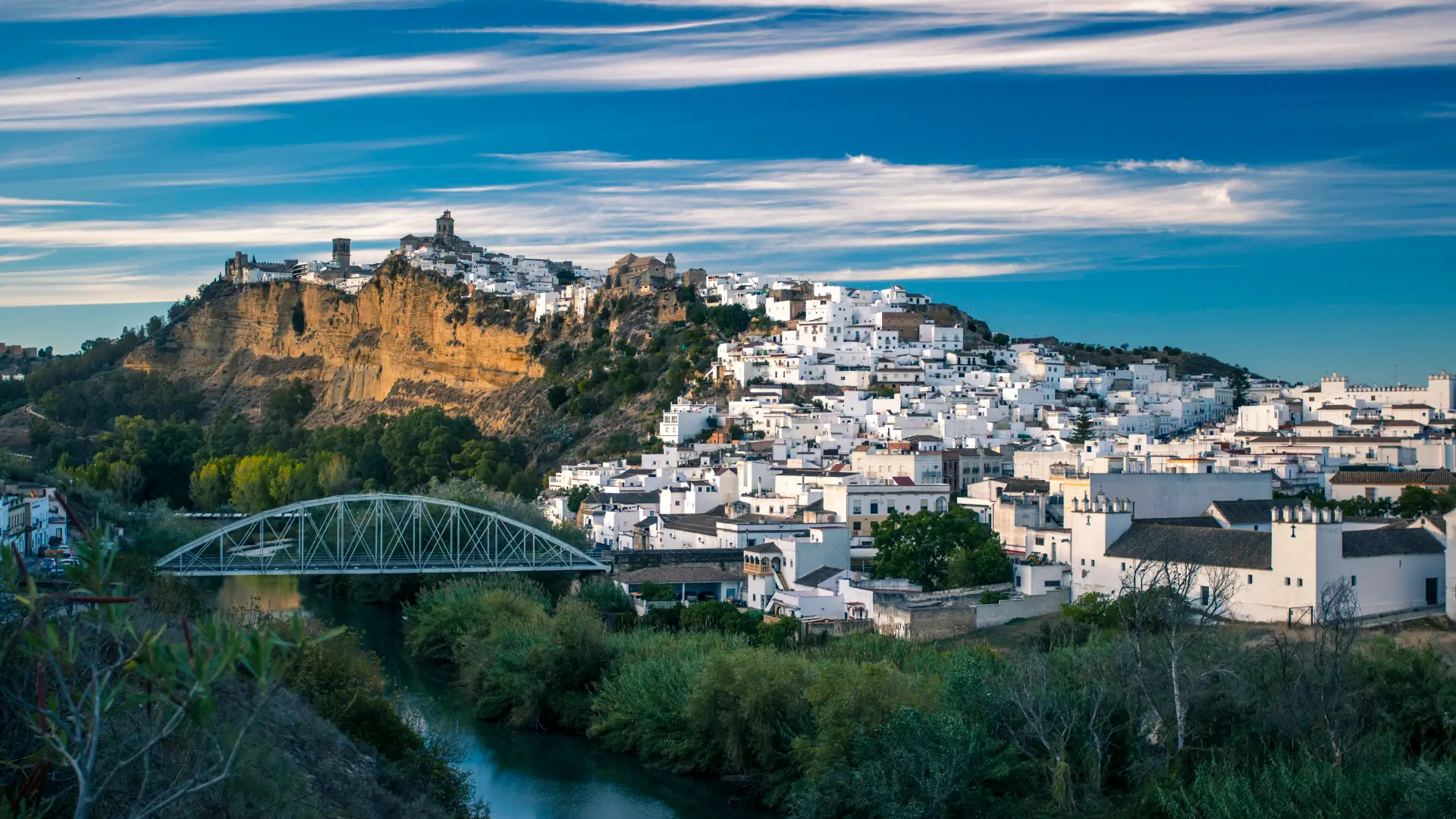
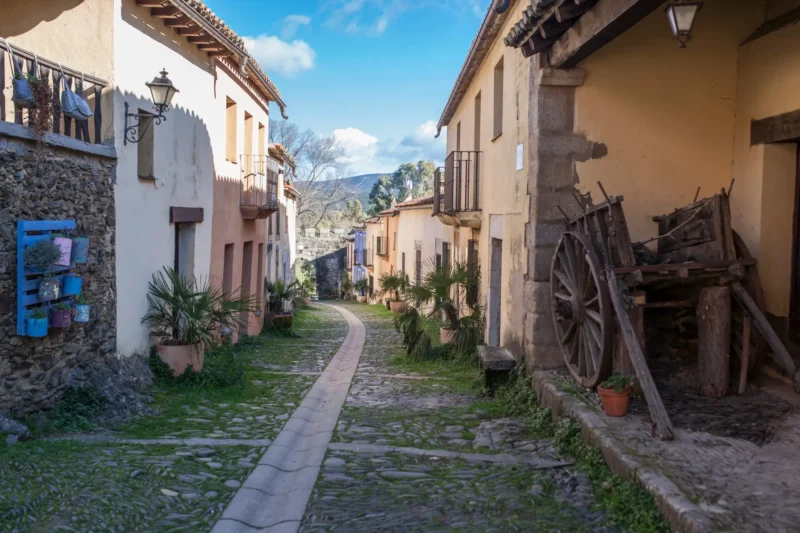
Each town has the same core: white houses, narrow lanes and a castle or church at the top. But each sits differently. Arcos de la Frontera balances on a long limestone ridge. Zahara de la Sierra wraps around a rock above a turquoise reservoir. Setenil de las Bodegas tucks its houses under a shelf of overhanging rock. You can walk any of them in an afternoon, and outside the day-trip hours you often have the streets to yourself.
A mountain park in the middle
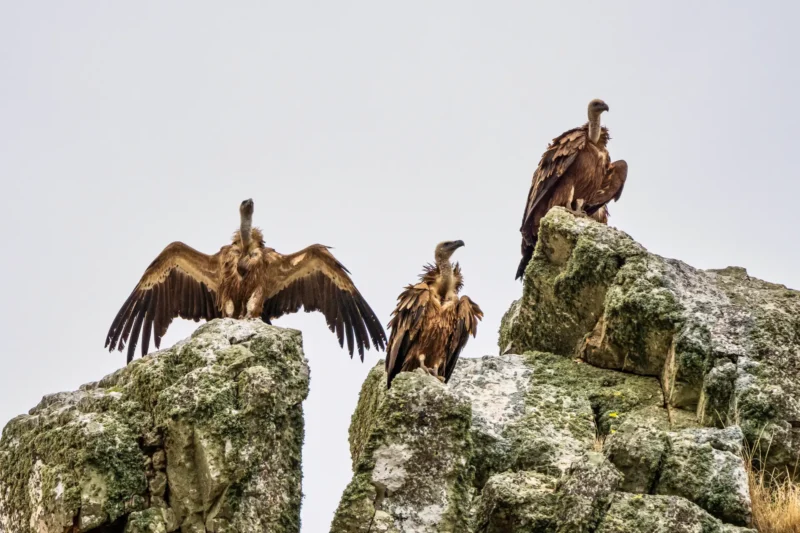
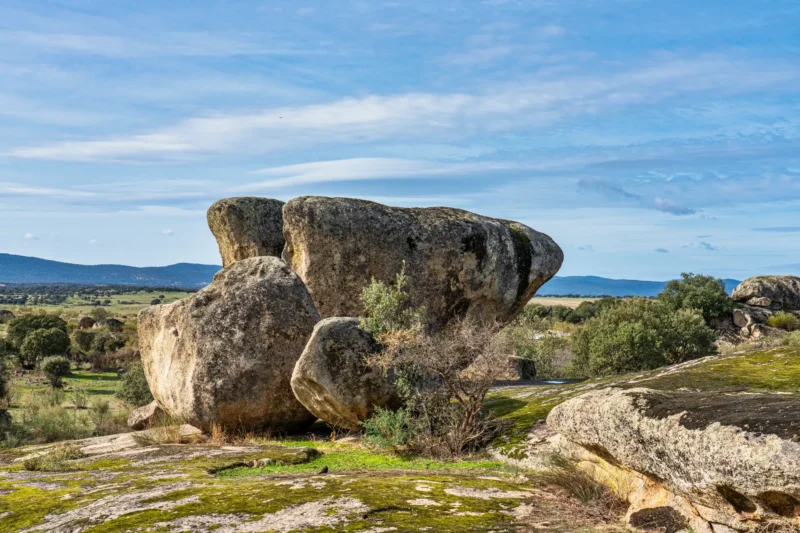
The Sierra de Grazalema Natural Park sits at the heart of the region. It is a UNESCO Biosphere Reserve, known for limestone gorges, griffon vultures and rare Spanish fir woods. It is also, statistically, the wettest place in Spain — which is why the hills stay green when the rest of Andalucía turns dry. That rain feeds the reservoirs and, in spring, a strong wildflower season along the roadsides.
Layers of history you can see
These towns mark the old frontier between Moorish Granada and Christian Castile — that is what “de la Frontera” means in so many of the names. The castles were built to guard that line. Many towns show older layers too, from Roman roads to prehistoric caves. You do not need a guide to feel it: the street plans, the fortress walls and the hilltop viewpoints tell the story on their own.
Food that costs little
This is not a fine-dining region, and that is the point. The Sierra de Cádiz is known for artisan goat’s cheese, its own protected olive oil and hearty mountain stews. A raciones lunch with local cheese and wine costs a fraction of what you would pay on the coast. Village bars are honest and unpolished, and the regional products are worth taking home.
When to Visit Pueblos Blancos (Sierra de Cádiz)
Spring (March–May)The best all-round time. Days are mild (roughly 18–24°C in the hills), the countryside is green, and the spring rains bring a strong wildflower season along the mountain roads, at its peak around May. Easter (Semana Santa) fills the towns for its processions, so book ahead around then. This is peak hiking season in the Grazalema park.
Summer (June–August) Hot and dry. Low-lying towns like Arcos and Setenil can be uncomfortable in the early afternoon, though the higher villages such as Grazalema stay a little cooler thanks to altitude. Rain is almost non-existent. Start any sightseeing or walking early, rest in the middle of the day, and expect more Spanish holiday visitors on summer weekends.
Autumn (September–November)A second sweet spot. The heat eases back to comfortable levels, crowds thin out, and it is a fine time for longer walks and climbing. The first rains return later in autumn, sometimes in short heavy bursts, but they rarely last for days.
Winter (December–February)Cool, green and very quiet. Hill temperatures sit around 10–15°C by day and can drop near freezing at night, with snow possible on the higher ground. This is the wettest stretch, though even then Grazalema keeps plenty of bright, clear days. Good for a low-key, low-cost visit if you do not mind short daylight hours.
Sights and Activities in Pueblos Blancos (Sierra de Cádiz)

Stand on the cliff edge in Arcos de la Frontera
Arcos sits on a long, sheer limestone ridge above the Guadalete river, and its main square opens straight onto the drop. The mirador beside the parador gives one of the best views in the region. It is the classic “gateway” town to the white villages, and a National Historic Monument.
Drive the Puerto de las Palomas
The mountain road between Grazalema and Zahara de la Sierra climbs over the Puerto de las Palomas pass, at over 1,300 metres. It is a short but spectacular drive of hairpins and long views across the park. Take it slowly and stop at the mirador near the top.
Explore the Sierra de Grazalema park
This UNESCO Biosphere Reserve is the green core of the region, full of limestone gorges, caves and rare Spanish fir. Several of the best walks (including the Pinsapar and the Garganta Verde) need a free permit from the park office, so plan ahead. Spring brings wildflowers; autumn brings cooler, clearer hiking.
See the cave houses of Setenil de las Bodegas
Setenil is unlike any other white town: its streets run under huge overhanging rock shelves, with houses and bars built right into the cliff. It is small enough to see in an hour or two, and best enjoyed with a drink in the shade of the rock.
Climb to Olvera's castle and church
Olvera rises to a twin crown of a Moorish castle and a large neoclassical church, visible for miles across the northern countryside. It was named Spain’s Capital of Rural Tourism in 2021. The old town below is one of the most authentic and least touristy in the region.
Look up at Zahara de la Sierra's tower
Zahara wraps around a rock topped by a restored medieval keep, above the turquoise Zahara–El Gastor reservoir. The short, steep climb to the tower rewards you with a wide panorama of the park. The reservoir below is used for kayaking and lakeside walks.
Cross the gorge in Ronda
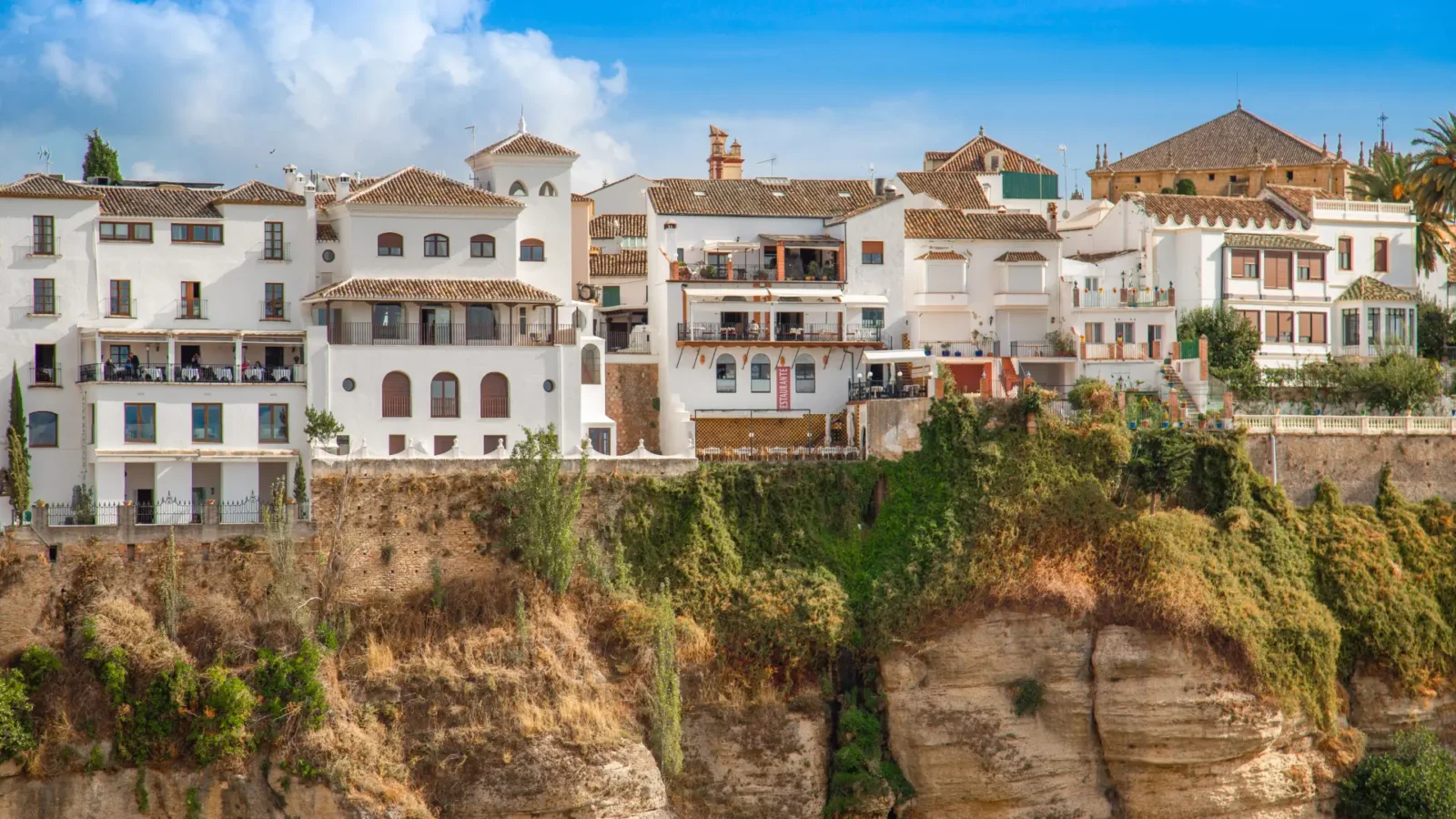
Ronda is the region’s eastern anchor and its most famous stop. The town splits across a deep gorge, the El Tajo, joined by the dramatic Puente Nuevo bridge — the view from below is the classic Ronda image. It is larger and busier than the other villages, so allow a half-day and start early. (Ronda sits just over the line in Málaga province, but has always been the gateway to the white villages.)
Shop for leather in Ubrique
Ubrique looks like any other white village, but it is one of Europe’s most important centres for luxury leather. For generations its workshops have hand-made bags and accessories for major international fashion houses, and a large share of Spain’s leather goods are produced here. The Museo de la Piel (Leather Museum) tells the story, and small shops sell work straight from local makers.
Getting There and Around
The Pueblos Blancos have no airport of their own. Three airports ring the region, all roughly within one to two hours of the western base:
Jerez (XRY) is the closest to the western villages — about 45 minutes to Arcos de la Frontera. It is small but well placed for the Cádiz side.
Seville (SVQ)is the largest nearby airport, around 1.5–2 hours to Arcos, with the widest choice of flights.
Málaga (AGP)is the most convenient for the eastern end — roughly 1.5–2 hours to Ronda via the coast or inland roads.
A car is essential. Buses do connect some towns (Jerez–Arcos is frequent; there are limited services elsewhere), but they are slow, indirect and infrequent between the smaller villages. To follow any kind of loop you need your own wheels. The roads are good two-lane country roads; a couple of stretches — notably the mountain pass between Grazalema and Zahara — are twisty and slow, but scenic and perfectly manageable. In the hill towns, park at the edge and walk in: the old centres have steep, narrow lanes and little parking.
How Long to Stay and Where to Base Yourself
The Pueblos Blancos work as a compact road trip. The towns sit close together — most legs between them are 15 to 50 minutes — and two natural base towns anchor the area at either end: Arcos de la Frontera in the west (near Jerez) and Ronda in the east. A hire car ties it all together; public transport between the smaller villages is thin. You do not need to move hotels every night, because from either base you can reach several villages on an easy day-trip loop.
How many days do you need?
A day trip (from Seville, Jerez or the coast) lets you see two or three villages — usually Arcos, plus a quick stop at one or two more. It gives you the feel, but it is a rushed way to do it.
2–3 days is the natural short break. Base in Arcos de la Frontera for the western side — the town itself, plus Grazalema and Zahara de la Sierra as day trips into the natural park. This is enough for the headline villages at a relaxed pace.
4–5 daysis the sweet spot. Split your nights between the two bases: a couple in Arcos for the western villages and the Grazalema park, then move east to Ronda for the eastern cluster — Setenil de las Bodegas, Olvera and the cave houses — with Ronda itself as a full day. This covers all six core towns without hurrying.
A week or moresuits slow travel. Keep the same two bases but add the smaller villages (El Bosque, Ubrique, Benaocaz, Algodonales), a proper hiking day in the Grazalema park, and time to just sit in the squares. The region rewards not rushing.
Explore Pueblos Blancos (Sierra de Cádiz) by area
The region’s core places form a single compact cluster spanning the Sierra de Grazalema and the northern hills.
Sierra de Grazalema and the white villages
Looking for a ready-made plan?See our Pueblos Blancos routes.
Food and Drink in Pueblos Blancos (Sierra de Cádiz)
The Sierra de Cádiz is mountain food country, and its two star products both come with real pedigree.
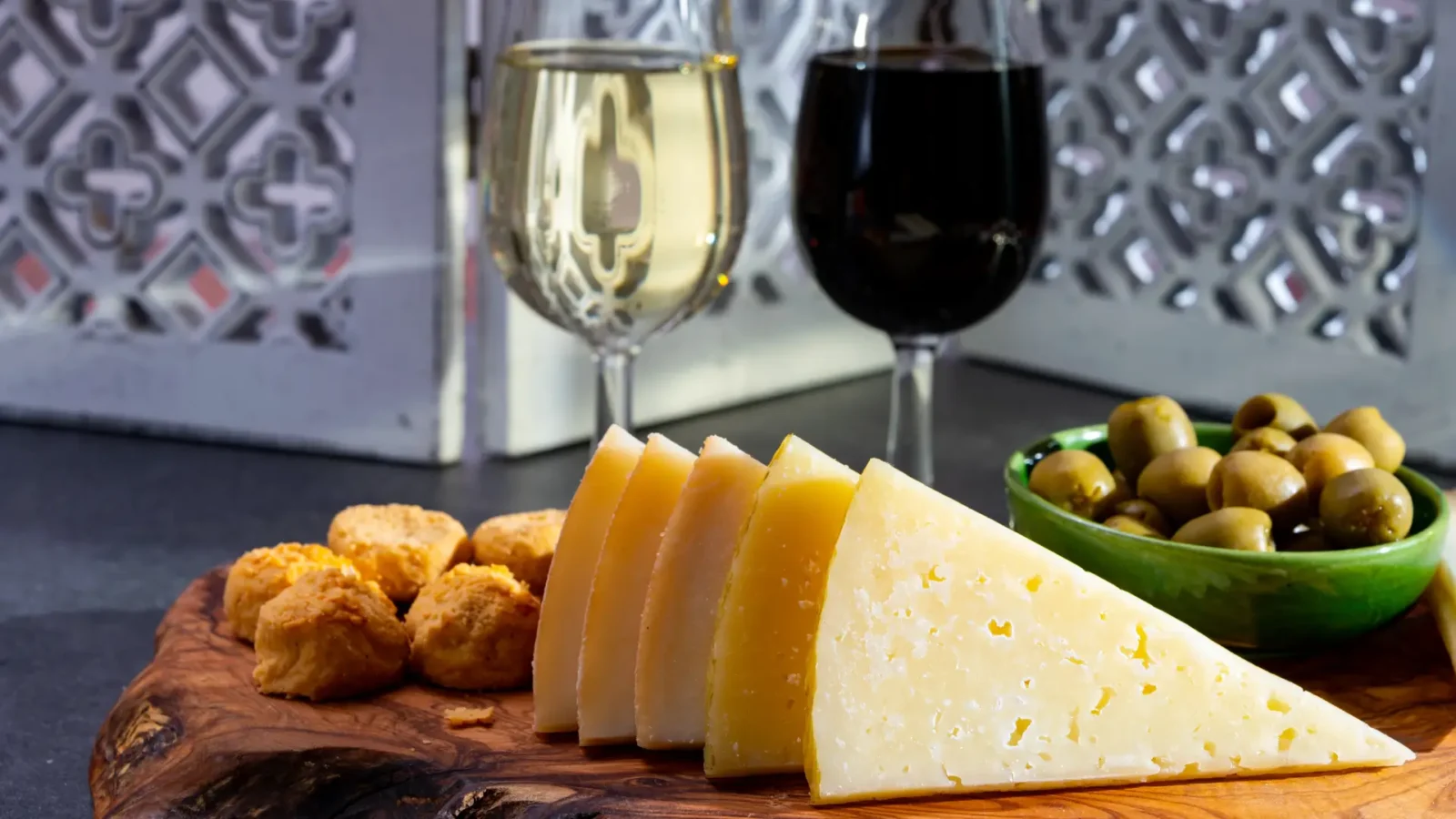
Payoyo cheese is the region's best-known name. It is made from the milk of the native payoya goat and the Grazalema merino sheep — two protected local breeds — mainly around Grazalema and Villaluenga del Rosario. It comes fresh, semi-cured or cured, and often rolled in olive oil, rosemary, paprika or Iberian lard. It has won repeated national and international awards, and a cheese board with a glass of local wine is one of the region's simple pleasures. (A dedicated protected designation for the wider Sierra de Cádiz cheeses has been in the works; the payoya and Grazalema merino breeds themselves are already registered and protected.)
Aceite Sierra de Cádiz is the region's protected olive oil (a DOP / Protected Designation of Origin), pressed in the north-western hills around Olvera and the Guadalete valley. It is a good souvenir to carry home, and turns up on every table alongside the bread.
Beyond those two, expect honest mountain cooking: hearty stews and soups (tomato soup, tagarninas — wild thistle — and chickpea dishes), game in season, and asparagus in spring. The whole region is close to Jerez, so a glass of sherry or local wine is never far away. It is inexpensive, filling and regional — exactly the kind of eating this area does best.
Hungry for specifics? Each of our place pages carries a hand-picked list of where to eat in that town, across all budgets — from village bars to special-occasion tables.
Good to Know
Language: SpanishEnglish is spoken in tourist spots and larger hotels, less so in village bars — a few Spanish words go a long way here.
Money: EuroCards are widely accepted, but carry some cash for small village bars and parking.
Siesta: RealMany shops and some restaurants close in the early afternoon and reopen in the evening. Plan lunch for around 2pm and dinner from 8:30pm.
Tipping: Not expectedRounding up or leaving small change is normal and appreciated.
DrivingRoads are good but often narrow and winding in the hills. Park at the edge of the old towns and walk in.
Frequently Asked Questions
Yes. They are among the most authentic and least crowded parts of Andalucía — a cluster of whitewashed hill towns with castles, a mountain park and good, cheap regional food, all within easy reach of Seville, Jerez or the coast.
Two to three days covers the headline villages at a relaxed pace. Four to five days lets you see all the core towns and spend time in the Grazalema park. A day trip is possible but rushed.
Their white-painted houses, hilltop castles and cliffside settings, the Sierra de Grazalema Natural Park, and regional products like payoya goat’s cheese and protected Sierra de Cádiz olive oil.
Spring (March to May) and autumn (September to November) are ideal, with mild weather and thinner crowds. Spring adds wildflowers. Summer is hot in the low-lying towns; winter is cool, green and very quiet.
Effectively yes. Buses between the smaller villages are slow and infrequent. A hire car is the only practical way to follow a village-to-village route.
Arcos de la Frontera for the western villages and the Grazalema park; Ronda for the eastern cluster (Setenil, Olvera). On a longer trip, split your nights between the two.
No. It is one of the better-value parts of Andalucía. Food and drink are cheap, and accommodation is well below coastal prices, especially outside high summer.
Fly into Jerez, Seville or Málaga and hire a car. Jerez is closest to the western villages (about 45 minutes to Arcos); Málaga is handiest for Ronda and the east.
Where to Stay in Pueblos Blancos (Sierra de Cádiz)
Two standout places to sleep in each of our suggested bases — a comfortable pick plus a more characterful one. For the full range in any town, see its place page.
Parador de Arcos de la Frontera
Right on the cliff-edge main square, with the region’s signature view straight from the terrace. The historic parador is the splurge choice in town, and the location is unbeatable for the old centre.
Check prices & availability for Parador de Arcos de la Frontera on the accommodation's websiteHotel El Convento
A small, well-regarded hotel in a converted convent in the heart of the old town, a short walk from the same clifftop square. A characterful, mid-priced alternative to the parador.
Check prices & availability for Hotel El Convento on the accommodation's websiteParador de Ronda
Perched beside the famous Puente Nuevo, with rooms and a terrace over the gorge. The prime location in Ronda for the headline view.
Check prices & availability for Parador de Ronda on the accommodation's websiteHotel San Gabriel
A well-liked family-run hotel in an 18th-century townhouse in the old quarter, full of character and a quieter, better-value counterpoint to the parador.
Check prices & availability for Hotel San Gabriel on the accommodation's website