Extremadura: Where Spain Still Feels Like Spain
Most travellers head straight for Barcelona or Madrid. Extremadura, in Spain’s south-west, stays off their radar — and that is exactly why you should come. Roman cities, medieval towns, and wild, empty landscapes, with almost no crowds.

Why Visit Extremadura
Here, just over a million people live in a region roughly the size of Belgium. That leaves a lot of space to explore. You can stand alone in a Roman theatre, eat where locals eat, and walk a medieval square without queueing for anything. The history runs deep, too: conquistadors like Francisco Pizarro grew up in these towns in the 1470s. And the food is some of the best in Spain — jamón ibérico, Torta del Casar cheese, and wines you have probably never tried — still served at honest, local prices.
Authentic Spain, without the crowds
While millions visit the coast and the big cities, Extremadura stays quiet. You will often have a plaza, a viewpoint, or a whole village to yourself. It feels lived-in and real, not staged for visitors.
Living history at every turn
Extremadura has three UNESCO World Heritage Sites: the old town of Cáceres, the Roman ensemble of Mérida, and the Royal Monastery of Guadalupe. Cáceres is so well preserved it doubled as King’s Landing in Game of Thrones. Mérida’s Roman theatre, built to seat around 6,000 people, still hosts performances today.
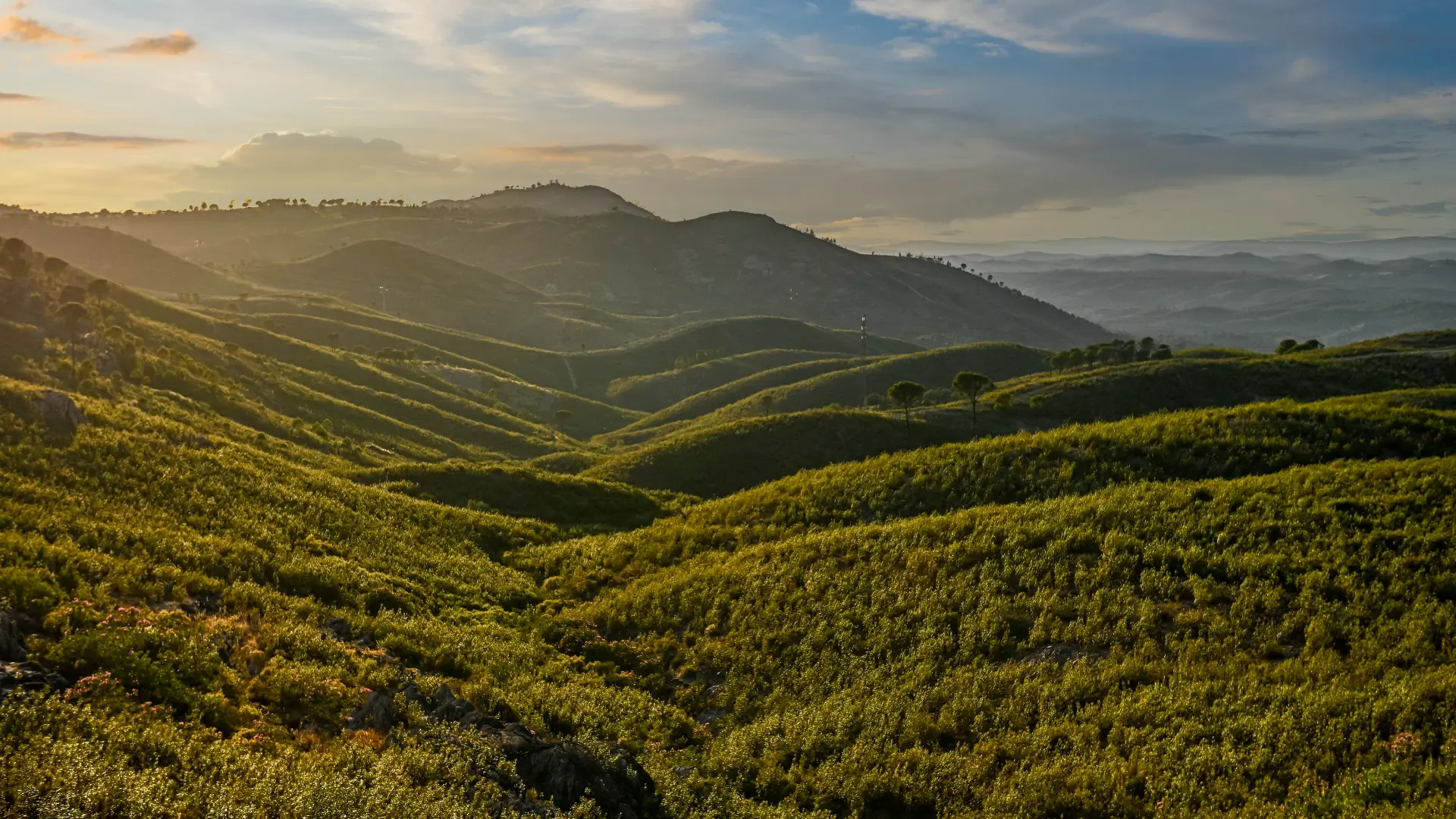
Wild, open landscapes
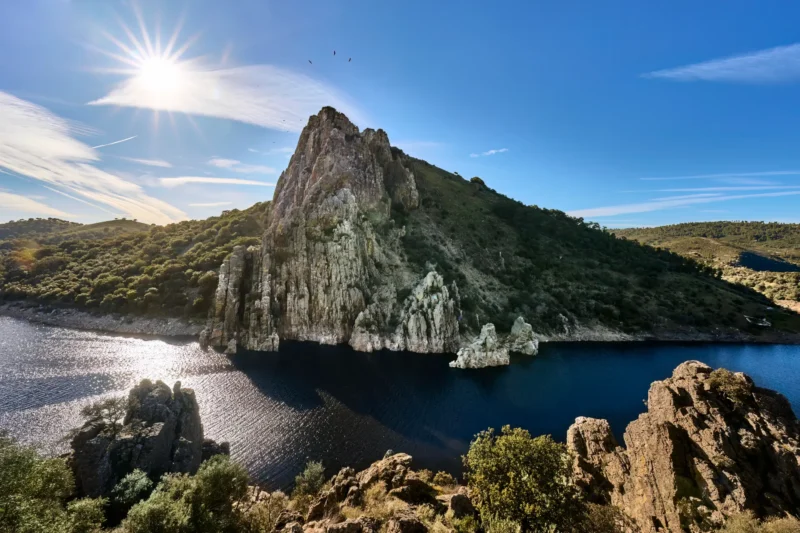
Monfragüe National Park protects dramatic river gorges and dehesa oak forests. It is one of Europe’s best places to watch birds of prey — griffon vultures, black vultures, and rare imperial eagles ride the thermals above the cliffs.
Food culture you can actually afford
This is the home of Spain’s finest acorn-fed jamón ibérico and creamy Torta del Casar cheese. You will eat exceptionally well in family-run spots where the prices still make sense.
When to Visit Extremadura
Spring (April–May)The best all-round season. Comfortable temperatures and active wildlife. In late March and early April, the Jerte Valley turns white with cherry blossom. Peak time for birdwatching.
Summer (June–August)Genuinely hot, often above 38°C (100°F). Explore early and late, rest in the middle of the day, and expect the lowest accommodation prices.
Autumn (September–October) Mild weather, the start of harvest season, and local festivals. Slightly quieter than spring.
Winter (November–March) Mild but sometimes rainy. Many rural stays close. Best for cities and indoor sights.
How Long to Stay and Where to Base Yourself
You do not need to keep changing hotels. Extremadura’s three great cities sit in a tight triangle: Cáceres to Trujillo is about 47 km (≈45 min), Cáceres to Mérida about 70 km (≈45 min), and Trujillo to Mérida about 90 km (≈55 min). Pick one or two bases and do easy day trips.
How many days do you need?
3 daysA first taste. Base in Cáceres or Mérida and see all three cities.
4–5 daysThe sweet spot. Add Monfragüe National Park, the Guadalupe monastery, and a scenic drive.
7+ daysAdd the green north: the Jerte Valley, Las Hurdes, the Yuste monastery, and towns like Plasencia and Hervás.
10 days or moreEasily done. Nature lovers, hikers, and slow travellers happily spend two weeks here, especially with two bases.
Best bases
CáceresCentral, beautiful, well connected. The best all-round base.
MéridaIdeal if Roman history is your main interest.
TrujilloSmaller and quieter, with a stunning main square.
The green north (Plasencia or the Jerte/La Vera area)Best for nature, hiking, and cooler summer days.
Looking for a ready-made plan? See our Extremadura routes for car, motorcycle, and camper itineraries.
Getting There and Around
There is no major international airport, so most people fly into Madrid (about 3 hours by car) or Seville (about 2.5 hours). Badajoz has a small airport with limited domestic flights.
Arriving late on a long-haul flight? Consider an overnight near Madrid or Seville airport before driving on.
A car is essential. Towns sit 30–90 minutes apart, public transport is limited, and the roads are excellent and almost empty. Major routes connect from Madrid (A-5), Seville (A-66), and Portugal (A-6). Parking is free or cheap nearly everywhere.
Sights and Activities

Walk through Roman Mérida
Mérida was founded by the Romans in 25 BCE. Today its theatre, amphitheatre, Temple of Diana, and long Roman bridge sit right in the modern city. The National Museum of Roman Art rounds out the picture.

Explore medieval Cáceres and Trujillo
Wander the walled old town of Cáceres, one of the best-preserved medieval centres in Spain. Then visit Trujillo, where conquistador palaces and a grand Plaza Mayor surround the birthplace of Francisco Pizarro.

Watch vultures at Monfragüe
At sunset, head to the cliffs of Monfragüe National Park. Hundreds of vultures circle overhead — bring binoculars and take your time.

See the Royal Monastery of Guadalupe
This UNESCO-listed monastery (about 1.5–2 hours east of the main triangle) mixes Gothic, Mudéjar, and Renaissance styles. Inside you will find an important collection of art, including works by Zurbarán. It has been a major pilgrimage site for centuries.

Cross the Alcántara Roman bridge
Near the Portuguese border, this stone bridge has spanned the River Tagus since 104–106 AD, built under Emperor Trajan. At almost 200 metres long and around 70 metres high, it is one of the finest Roman bridges still standing.

Taste jamón ibérico at the source
Local farms offer tours and tastings. The black Iberian pigs roam the oak forests eating acorns, and you can taste the difference in every slice.

Step into Granadilla, the ghost village
Founded by the Moors in the 9th century, Granadilla was emptied between 1959 and 1964 for a reservoir — but the flood never came. Today it is carefully restored and open to walk through. Climb the 15th-century castle for sweeping views.

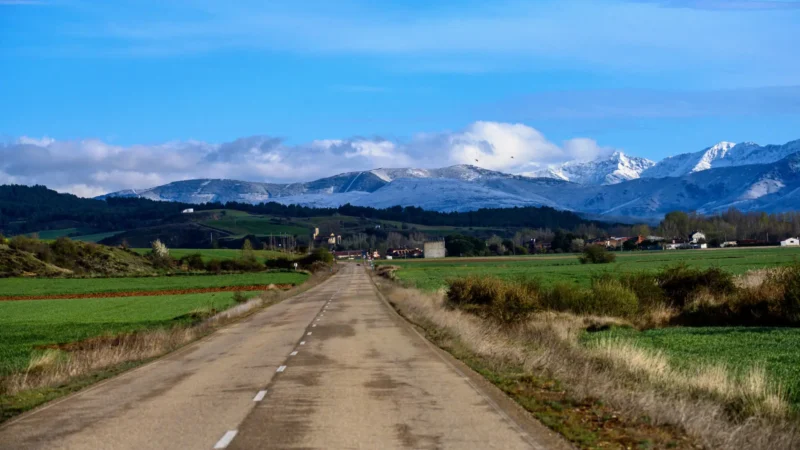
Drive the quiet mountain roads
The remote roads of Las Hurdes and the green Jerte Valley offer dramatic viewpoints and barely another car in sight. Near Cáceres, the surreal granite boulders of Los Barruecos (a Game of Thrones filming location) make an easy, photogenic stop.
Food and Drinks
Extremadura eats well at every budget. Here is where to start.
€ — Budget / Local favourites
A long-standing classic on the main square. Generous, hearty regional cooking; the migas and lamb stew (caldereta de cordero) are the dishes to try.
Mama Rous Tapas Bar
A short walk from the tourist centre and loved by locals. Creative, fresh tapas at very fair prices.
€€ — Mid-range / Authentic & cosy
An intimate spot near the Parador, often rated the city’s best. The menú extremeño tasting menu is excellent value.
A small, warm restaurant with a beautiful plant-filled courtyard. A short, well-cooked menu using local produce.
€€€— Luxury / A culinary experience
One of Spain’s finest tables, with three Michelin stars and a world-famous wine cellar. A long, memorable tasting menu. Book well ahead.
A creative, Michelin-recommended take on Extremaduran cooking, set in the old town. A more accessible fine-dining option.
Good to Know
Language: SpanishEnglish is rarely spoken outside the main hotels.
Money: EuroCards work in cities; carry cash in villages.
Tipping: Not expectedRounding up or leaving €1–2 is plenty.
Siesta: RealMany shops close from about 2–5pm.
Driving: EasyGood roads, light traffic, plenty of parking.
Frequently Asked Questions
Yes. It is one of Spain’s least-crowded regions, with three UNESCO World Heritage Sites, world-class jamón ibérico, and some of Europe’s best birdwatching — all without the queues of Barcelona or Seville.
Three days are enough for a first taste of Cáceres, Trujillo, and Mérida. Four to five days let you add Monfragüe and Guadalupe. A week or more is ideal if you also want to explore the green north.
Roman ruins in Mérida, the medieval old towns of Cáceres and Trujillo, acorn-fed Iberian ham, the dehesa landscape, and Monfragüe National Park’s birds of prey.
Spring (April–May) and autumn (September–October). Summers are very hot, often above 38°C, and many rural stays close in winter.
Yes, a car is strongly recommended. Public transport between towns is limited, but the roads are excellent and parking is easy and cheap.
Cáceres is the best all-round base, with Mérida ideal for Roman history. For nature and the green north, base yourself in Plasencia or the Jerte Valley.
No. It is generally cheaper than Spain’s coast and big cities, from restaurants to accommodation.
Fly into Madrid (about 3 hours by car) or Seville (about 2.5 hours). Badajoz has a small airport with limited domestic flights.
Where to Stay in Extremadura
We pick stays for location, character, and authenticity. Booking links below are affiliate links that help support this free guide, at no extra cost to you.