
Castilla-La Mancha: Don Quixote’s Spain, Still Wide and Empty
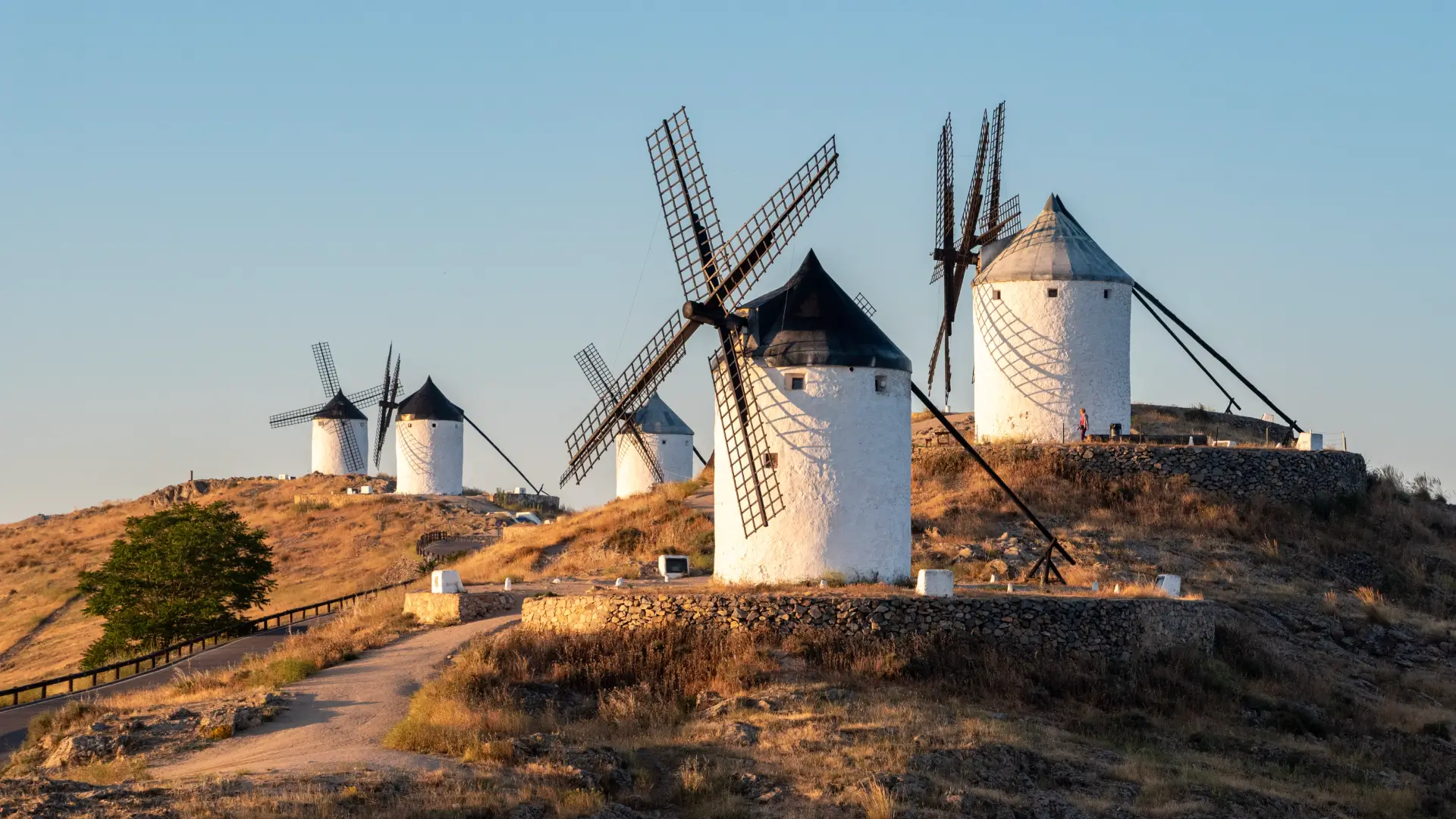
Spain’s great central plain, where windmills line the ridges and castles watch over near-empty roads. This is one of the country’s least-crowded regions — a land of vineyards, walled cities and long horizons. Come for the space, the history, and prices that feel like an older Spain.
Why Visit Castilla-La Mancha
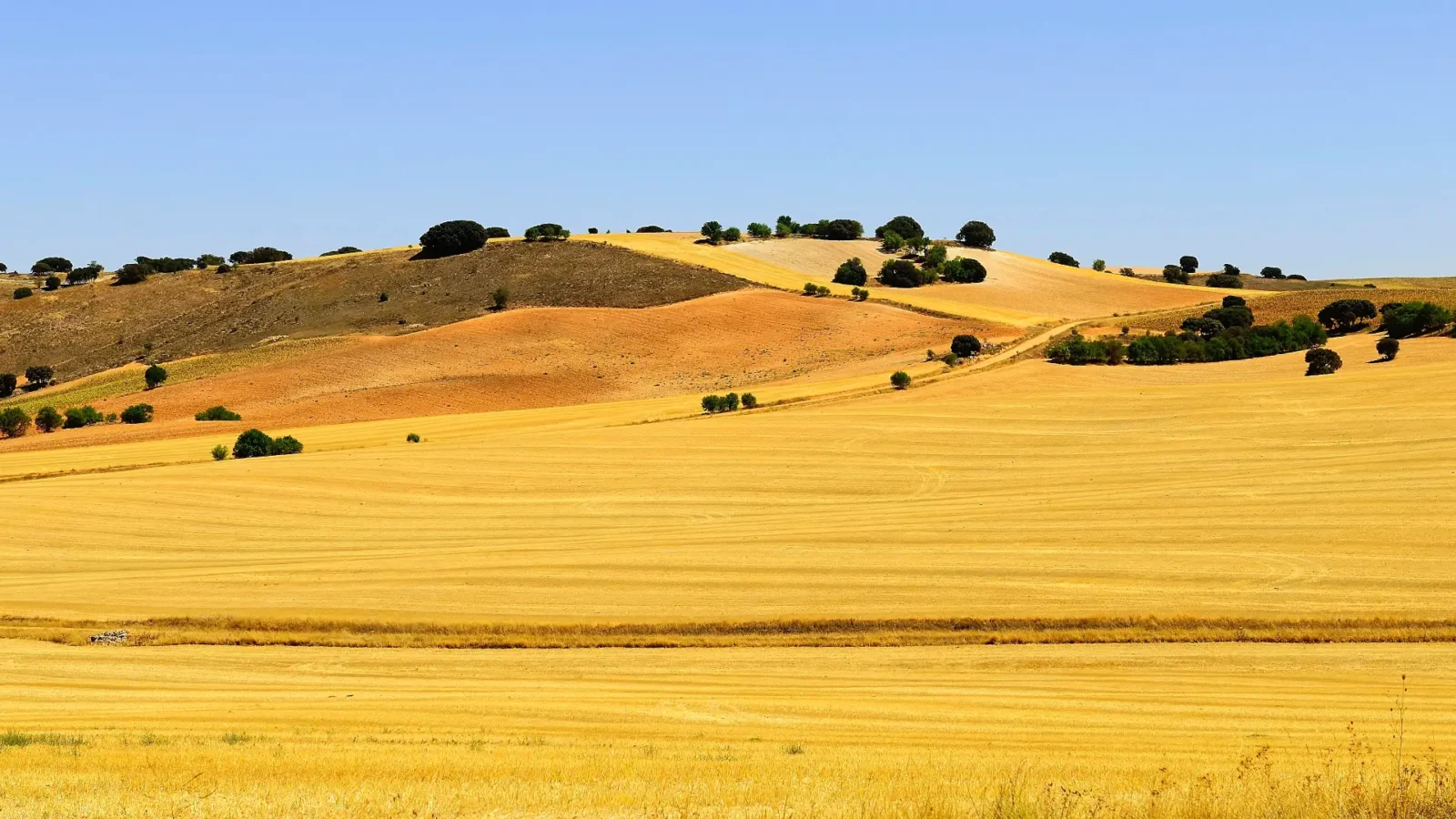
Castilla-La Mancha is the huge inland region just south of Madrid, and one of the emptiest corners of the country. It fills much of Spain’s central meseta — a high plateau of vineyards, sunflower fields, olive groves and wide skies, ringed by low mountains. This is the land of Don Quixote, of windmills and crumbling castles, and it stays quiet even in high season. Most visitors rush past it on the way south. That is exactly why it works for a slower kind of trip.
The region is big and thinly spread, so a car changes everything. With one, you can string together walled cities, cliff-top villages and lake country in a few unhurried days, and rarely fight a crowd. Food and rooms cost less here than on the coast or in the big-name cities, which makes it easy to travel well without spending a lot.
A quieter Spain, away from the crowds
Castilla-La Mancha is one of Spain’s most sparsely populated regions. Outside the two famous cities — Toledo and Cuenca — you can walk a village at midday and hear only your own footsteps. Whitewashed towns, ridge-top windmills and Renaissance squares sit along roads that carry little traffic. If you want the feel of Spain before mass tourism, this is where to find it.
Living history at every turn
The plateau was a frontier for centuries, fought over by Christian and Moorish armies, and it is dotted with the castles they left behind. Toledo packs Jewish, Christian and Moorish heritage inside its walls. Cuenca hangs its medieval houses over a gorge. Almagro guards Spain’s best-preserved open-air theatre. Villages like Sigüenza, Belmonte and Villanueva de los Infantes carry that long history lightly, without the ticket queues.
Big landscapes, from plains to gorges
The classic image is the flat La Mancha plain, gold with grain and grape. But the region has more range than that. In the north, La Alcarria rolls green with honey country, lavender fields and upland forest. In the east, the Júcar river carves deep gorges that towns cling to. And in the south, the Lagunas de Ruidera string turquoise lakes across the dry plateau. It is a region for scenic driving as much as for sightseeing.
Honest food at honest prices
Manchego country is farmer’s country, and the food reflects it: simple, hearty and made from what the land gives. Sheep’s-milk cheese, saffron, wine, garlic and honey are all local and protected. A good regional meal costs a fraction of what you would pay in a tourist hub, and the wine is some of the best value in Spain. This is a place to eat and drink well for little.
When to Visit Castilla-La Mancha
Spring (March–May)The best all-round season. Days warm gently into the low 20s °C, the plain turns green, and the northern lavender and blossom begin. Crowds are light everywhere, even in Toledo and Cuenca. Book ahead only around Easter, when Cuenca’s Holy Week processions draw visitors.
Summer (June–August)Hot and very dry. On the plains, July and August highs sit around 34–35 °C and can push higher, with cool nights at altitude. It is the season for early starts, long lunches and shade. Almagro’s classical theatre festival lights up July, and the windmill towns look their best in the low, golden evening light.
Autumn (September–October) The other sweet spot. Heat eases back to the low-to-mid 20s °C by day, the grape and saffron harvests come in, and the light turns soft. Late October brings the saffron rose fields near Consuegra and the town’s saffron festival. Quiet roads, comfortable walking, good value.
Winter (November–February) Cold and clear on the plateau, with January highs around 11–12 °C, frost at night, and occasional snow in Cuenca and the northern uplands. Sights stay open but some rural spots feel shuttered. The reward is having the great cities almost to yourself, and marzipan season in Toledo around Christmas.
Sights and Activities in Castilla-La Mancha

Stand below the windmills of Consuegra
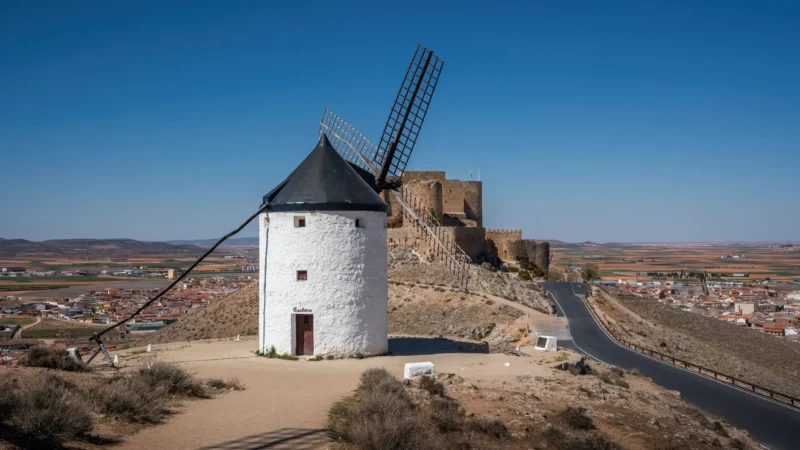
A ridge of twelve restored windmills lines the Cerro Calderico above Consuegra, with a medieval castle at one end. This is the postcard image of La Mancha, and the story behind Don Quixote’s “giants”. Come near sunset, when the coaches have gone and the mills glow against the plain.
Walk Cuenca's hanging houses
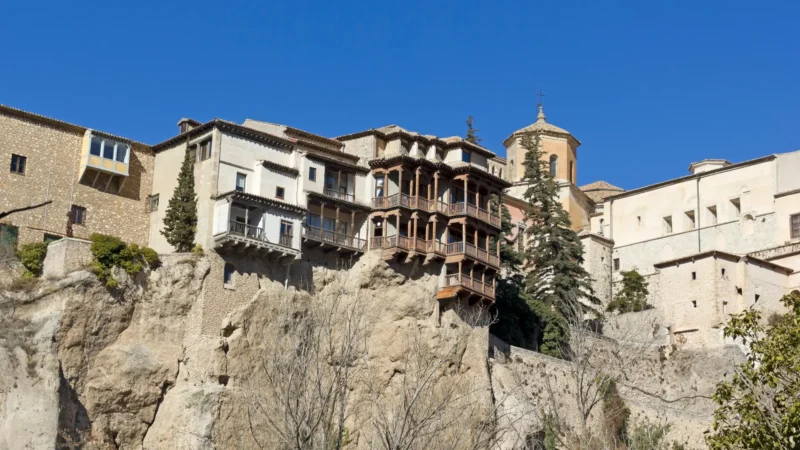
Cuenca’s Casas Colgadas cling to the lip of the Huécar gorge, their wooden balconies jutting over a sheer drop. The walled old town, a UNESCO site, also holds Spain’s first Gothic cathedral and a fine museum of abstract art set inside the hanging houses themselves.
Cross Toledo's bridges at dawn
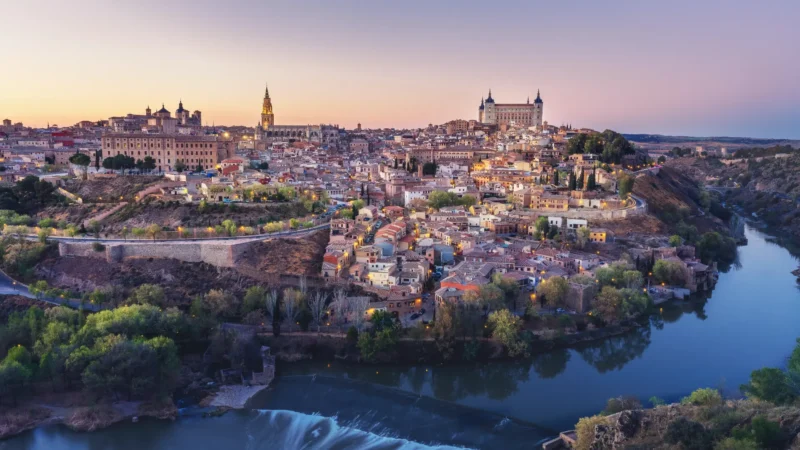
Toledo rises on a granite loop of the River Tagus, a maze of Jewish, Christian and Moorish monuments behind its walls. It is the region’s busiest city by far — so the trick is timing. Arrive early or stay the night, and walk the old town before the day-trippers fill it.
See Almagro's arcaded plaza and its Golden Age theatre
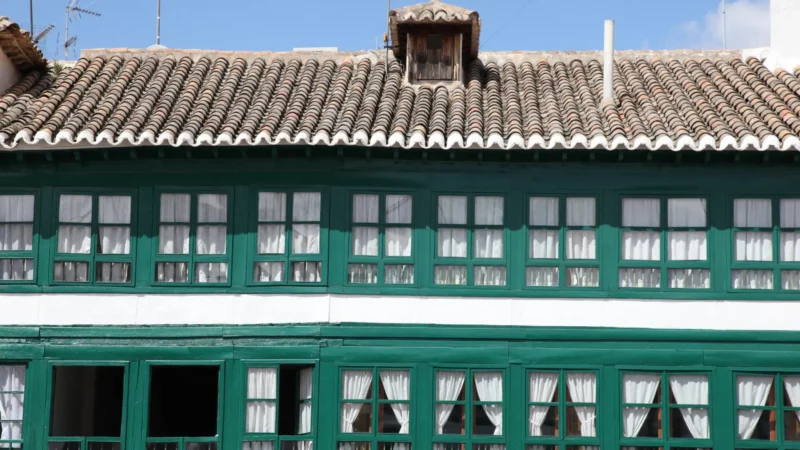
Almagro’s long Plaza Mayor is unlike any other in Spain. Two tiers of green-framed wooden galleries run down both sides. Just off the square sits the Corral de Comedias, the best-preserved open-air theatre in the country. It still stages a classical theatre festival each summer.
Climb the castle at Belmonte
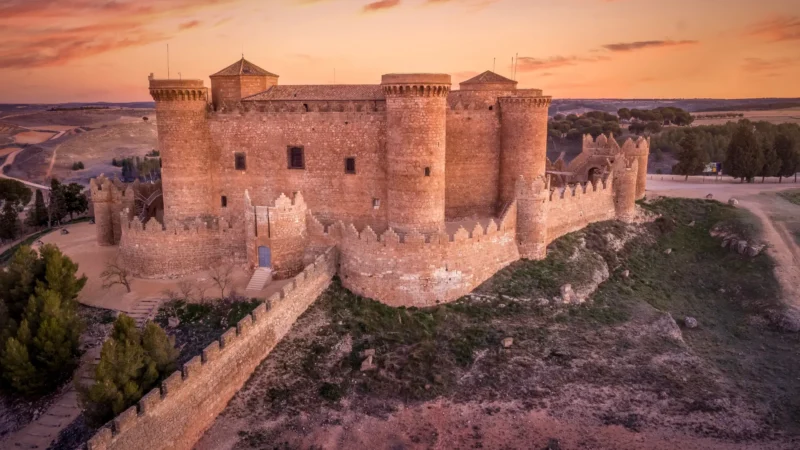
The 15th-century Castillo de Belmonte is one of the region’s finest, with intact walls, towers and Mudéjar ceilings above a small, quiet village. It has stood in for medieval Spain in more than one film, and the ramparts give long views over the Cuenca plain.
Drive down into the Júcar gorge to Alcalá del Júcar
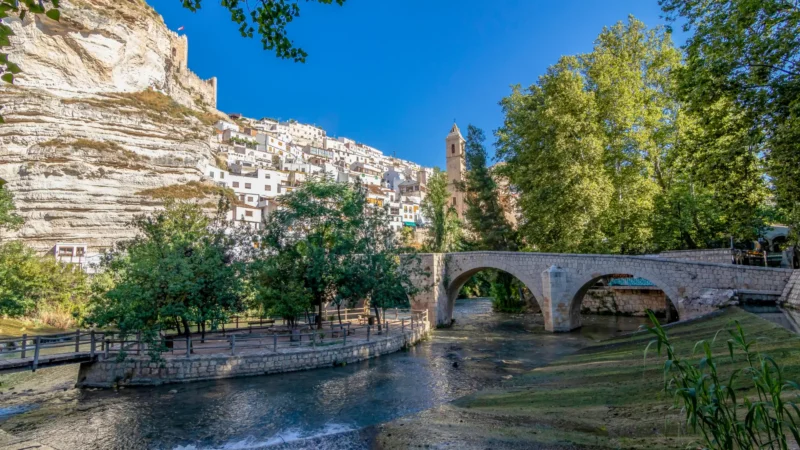
In the south-east, whitewashed Alcalá del Júcar spills down a cliff inside a hairpin bend of the Júcar river, its houses burrowing back into the rock. An Arab castle crowns the ridge and a Roman-origin bridge spans the water. The drive in, through the gorge, is half the reward.
Swim the lakes of Ruidera
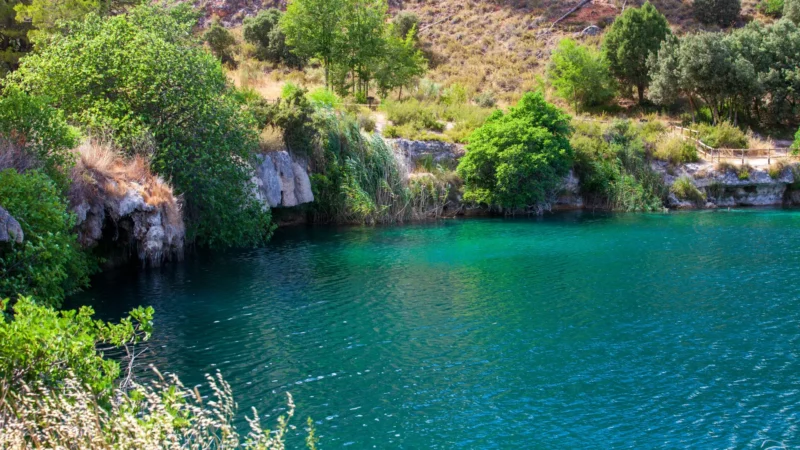
The Lagunas de Ruidera are a chain of some fifteen linked lakes and waterfalls, a green surprise strung across the dry southern plateau. Walking trails and quiet swimming spots line the water, and the Cueva de Montesinos nearby has its own place in Don Quixote.
Wander the medieval streets of Sigüenza
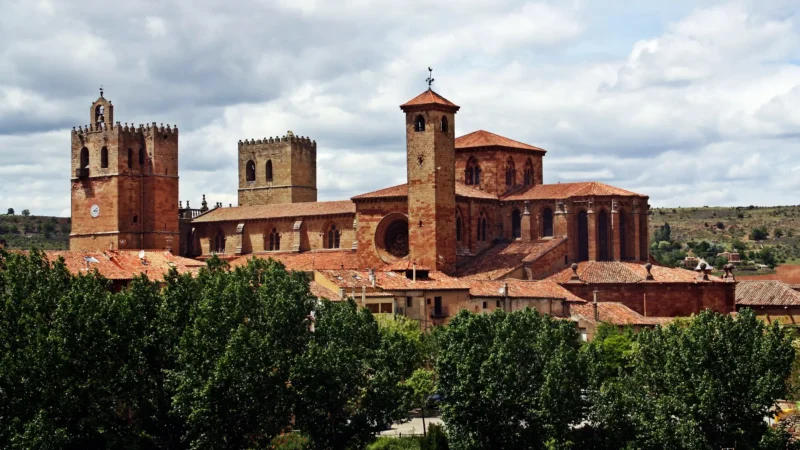
In the northern hills, Sigüenza gathers a fortress-like cathedral, an arcaded main square and a hilltop castle — now a parador — into one compact, walkable town. It makes an easy, characterful base for the green, under-visited country of La Alcarria.
Getting There and Around
Castilla-La Mancha wraps around the south of Madrid, so most trips start from the capital and head out by car or fast train.
Affiliate note: some links below are affiliate links. If you book through them, we may earn a small commission at no extra cost to you. It helps us keep GoHiddenSpain running and growing. We only suggest services we'd feel comfortable recommending.
Madrid-Barajas (MAD)the main gateway, with the widest choice of international flights. About an hour’s drive to Toledo, and the natural starting point for the windmill plains and the north. Fast AVE trains run from Madrid to Toledo in around 30 minutes and to Cuenca in about 50.
Valencia (VLC)the handier gateway for the east of the region. Best for Albacete, the Júcar gorge and Alcalá del Júcar, reached by road or by train to Albacete.
Albacete (ABC)the region’s own airport, but very limited (mainly a domestic link to Barcelona), so most visitors fly into Madrid or Valencia instead.
A car is essential for the windmill towns, the villages, the lakes and the gorges. The whole appeal here is quiet roads between small towns that buses reach slowly, if at all. Main routes are good and near-empty. Old-town centres in Toledo and Cuenca are tight and restricted, though — park in the public car parks below and walk up. Fill up in the larger towns, as rural petrol stations can be sparse. Download offline maps before the gorges and the northern hills, where signal drops. Most people pick up a hire car at the airport: compare car hire on LocalRent.
Prefer not to drive? If you’re basing yourself in one city like Toledo or Cuenca, a private transfer from the airport is the easy way in. From there you can explore by train, bus and day trips. It won’t get you between the windmill towns and villages, though, where a car still wins. Book an airport transfer on GetTransfer.
The main cities (Toledo, Cuenca, Albacete) sit on Spain’s high-speed AVE network from Madrid, so you can skip the drive between them if you’d rather.
How Long to Stay and Where to Base Yourself
Castilla-La Mancha rewards the time you give it. The region is large and spread out, but it splits naturally into a handful of clusters — the windmill plains south of Toledo, the cities of Cuenca and Almagro, the northern hills around Sigüenza, and the eastern gorges of the Júcar — each an easy drive from a single base. A car ties them together; how many clusters you reach depends on how many days you have.
How many days do you need?
A day or twoa taster. Base in Toledo and pair its old town with a half-day out to the windmills of Consuegra, an easy hour away on the plain. This is the classic add-on to a Madrid trip.
Three to four daysthe sweet spot for a first visit. Keep Toledo as your base for the north and the windmill country (Consuegra, Campo de Criptana, El Toboso), then move east to Cuenca for its gorge and hanging houses. This covers the region’s two headline cities and its most iconic landscape without rushing.
Five to seven daysroom to slow down. Add Almagro and the deep-south villages of Ciudad Real (Villanueva de los Infantes) with the lakes of Ruidera, or swing north to base in Sigüenza for the green hills of La Alcarria. Either loop turns a highlights trip into a proper regional one.
A week or morefor slow travel and the corners most people miss. Fold in the Júcar gorge and Alcalá del Júcar in the east, the northern castle towns of Atienza and the black-architecture villages, and time simply to drive and stop. This is where the region’s emptiness becomes the whole point.
Explore Castilla-La Mancha by area
Castilla-La Mancha’s places sit across its five provinces. Below, each province in turn — its character, the areas within it, and the towns we cover (or will cover) there. Routes that string these together follow at the end.
Toledo
- ToledoA hilltop UNESCO city of cathedrals, synagogues and mosques, at its finest in the early and late hours.
- El TobosoThe white Toledo village Cervantes gave to Dulcinea, with Quixote quotes on the walls and a Gothic church locals call the cathedral of La Mancha.
- ConsuegraTwelve windmills and a Knights’ castle crown the ridge above this classic La Mancha town.
The region's historic heart and its busiest draw, in the north-west. Toledo city is the great walled gateway; south and east of it stretch the classic La Mancha windmill plains — Consuegra's ridge of mills, El Toboso of Dulcinea fame — along with saffron fields and the porticoed square of Tembleque.
Ciudad Real
- Lagunas de Ruidera A chain of turquoise lagoons and waterfalls on the high La Mancha plain, ringed by Don Quixote legend.
- Villanueva de los InfantesThe Golden Age capital of the Campo de Montiel, where Quevedo died and Don Quixote may have lived.
- Campo de CriptanaTen white windmills rise straight from a whitewashed old town, giants and cave houses together.
The southern plain, deep in wine and Don Quixote country. This is the heartland of the windmill story, from the ten-mill hill of Campo de Criptana to the Renaissance streets of Villanueva de los Infantes, the theatre town of Almagro, and the lake chain of Ruidera on the province's eastern edge.
Cuenca
- TragaceteA high stone village and the mountain base for the Río Cuervo spring, forest waterfalls and the source of the Júcar.
- UñaA tiny lagoon hamlet ringed by limestone cliffs — the calmest base for the Ciudad Encantada and the karst walks of the Serranía de Cuenca.
- CuencaA UNESCO city where medieval houses hang over a river gorge — busy by day, magical at dawn and after dark.
- BelmonteA complete walled town crowned by one of Spain’s best-preserved castles, just off the windmill trail.
The most scenically varied province, rising from the La Mancha plain into the Serranía de Cuenca uplands. Cuenca city hangs over its gorge; south lie the castle village of Belmonte and the manor town of Priego, while the eastern hills hold rock formations like the Ciudad Encantada.
Guadalajara
The green, under-visited north — La Alcarria, honey country, with lavender fields, upland beech forest and slate-built "black architecture" villages. Its medieval frontier towns are the draw: cathedral-and-castle Sigüenza and clifftop Atienza chief among them.
Albacete
The region's south-east, least known to outside visitors. Here the Júcar river carves dramatic gorges through La Manchuela — Alcalá del Júcar and Jorquera cling to the cliffs — while the Sierra de Alcaraz rises to the west, above the Renaissance plaza of Alcaraz itself.
Looking for a ready-made plan? See our Castilla-La Mancha road trips.
Food and Drink in Castilla-La Mancha
Castilla-La Mancha eats the way its old farming life ran: simple, hearty, and built on a short list of very good local products. Several carry Europe’s protected-origin marks, which is a reliable sign you are getting the real thing.
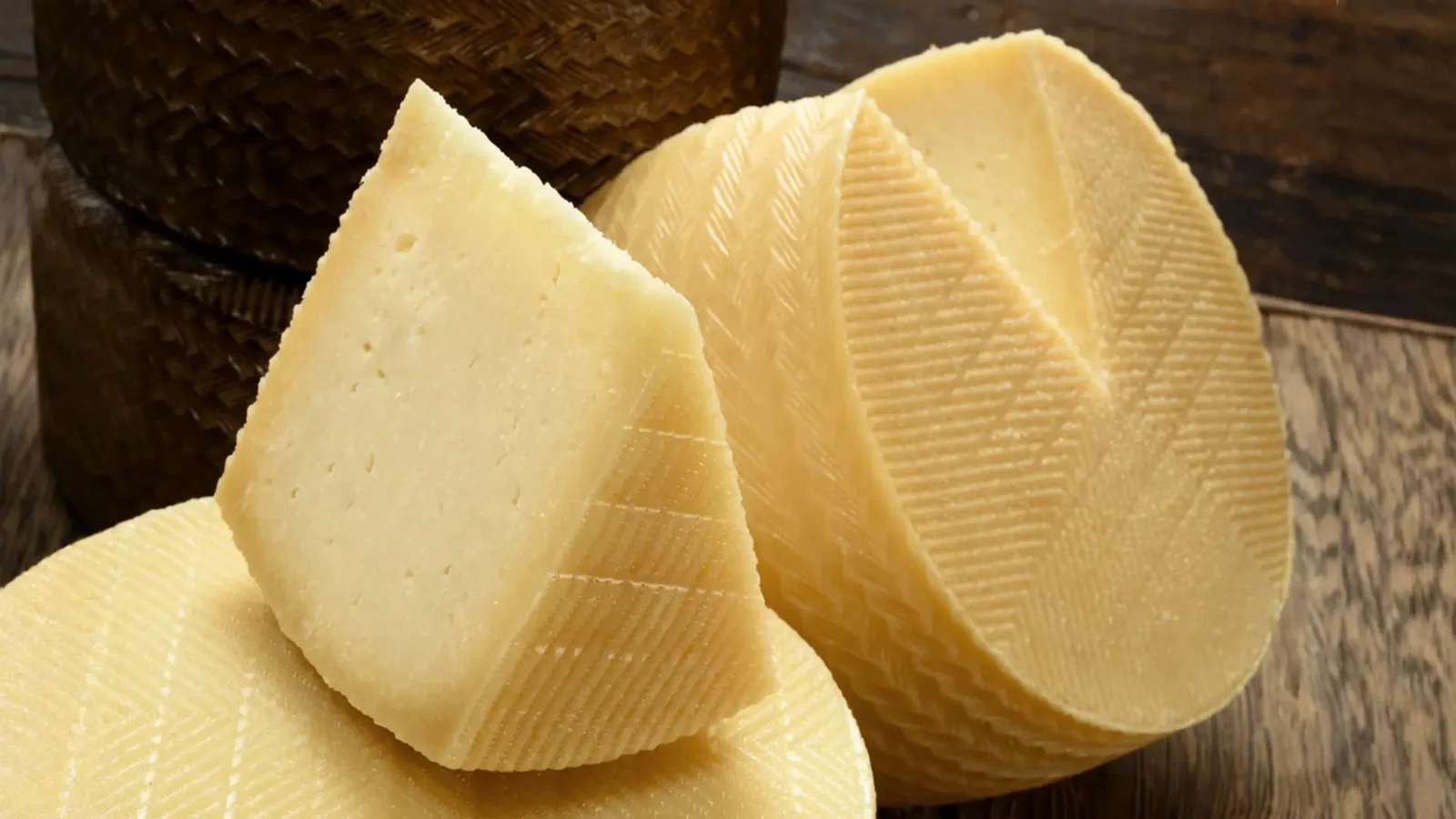
Manchego cheesethe region’s star. A firm, nutty sheep’s-milk cheese with DOP status, made only from Manchega sheep grazed across the La Mancha provinces. It pairs perfectly with the local quince paste and a glass of red.
Saffronthe region’s most precious crop. Azafrán de La Mancha holds its own DOP, hand-picked from crocus flowers at dawn each autumn and toasted the same day; Consuegra celebrates the harvest with a saffron festival in late October.
Wineflows cheaply and well. The La Mancha DO is the largest single vineyard area in the world, and the Valdepeñas DO in Ciudad Real turns out easy-drinking Tempranillo reds. This is some of the best-value wine country in Spain.
Honey and marzipanround out the sweeter side. Miel de La Alcarria, from the northern hills of Guadalajara and Cuenca, carries its own DOP, scented with rosemary and lavender. And Toledo’s almond marzipan, a legacy of the city’s Moorish past, is a Christmas tradition across Spain.
Local dishesbeyond the products, look for hearty plates like pisto manchego (a tomato-and-vegetable stew), migas (fried breadcrumbs with garlic and chorizo), morteruelo (a rich game pâté from Cuenca) and slow-roast lamb or kid.
Hungry for specifics? Each place page carries hand-picked restaurant lists, across every price level — from village bars to special-occasion tables.
Good to Know
LanguageSpanish only; English is limited outside Toledo, Cuenca and hotels. A few phrases go a long way in the villages.
Money: EuroCheaper than the coast and the big cities. Cards are widely accepted, but carry some cash for small rural bars and village shops.
SiestaReal here. Many shops and some sights close from roughly 2–5 pm, and village restaurants stop serving lunch by mid-afternoon. Plan around it.
DrivingEasy, quiet roads; a car is essential for everything beyond Toledo and Cuenca. Parking is simple except inside the two walled old towns, where you park outside and walk in.
HeatSummer afternoons are fierce on the plain. Do your sightseeing early or late, and rest in the middle of the day.
Frequently Asked Questions
Yes, especially if you want an uncrowded, authentic side of Spain. It offers walled cities like Toledo and Cuenca, the windmills and castles of Don Quixote country, big empty landscapes, and excellent-value food and wine — all just south of Madrid and far quieter than the coast.
Three to four days covers the highlights: Toledo, the windmill towns, and Cuenca. Five to seven lets you add the southern villages, the lakes of Ruidera or the northern hills around Sigüenza. A week or more suits slow travel into the quieter corners.
It is best known as the land of Don Quixote — windmills, castles and wide plains — plus the walled cities of Toledo and Cuenca, Manchego cheese, saffron, and some of Spain’s best-value wine. It is also one of the country’s least-crowded regions.
Spring (March–May) and autumn (September–October) are ideal, with warm days in the low-to-mid 20s °C and light crowds. Summer is hot and dry, with plains highs around 34–35 °C, so start early. Winter is cold, with frost and occasional snow in the uplands.
For the region as a whole, yes. Toledo and Cuenca are reachable by train from Madrid, but the windmill towns, villages, lakes and gorges are effectively car-only. A car is what makes a proper regional trip possible.
Toledo is the best first base, close to Madrid and the windmill plains. Add Cuenca for the east, Almagro or the Ciudad Real villages for the south, and Sigüenza for the green northern hills. Each anchors an easy cluster of day trips.
No. It is one of the better-value regions in Spain. Meals, wine and accommodation cost noticeably less than on the coast or in Madrid, and even the paradores and nicer hotels are reasonable by Spanish standards.
Most visitors come from Madrid, an hour or less from the region’s northern edge, with two international airports. Toledo and Cuenca have fast trains from the capital; from either, a rental car opens up the rest of the region.
Where to Stay in Castilla-La Mancha
Standout places to sleep in our suggested bases across the region — handpicked for character, location and comfort. For the full range in any town, from village casas rurales to cliff-edge paradores, see its place page.
Áurea Toledo
A four-star hotel spread across several linked medieval buildings in the old town, a few minutes from the cathedral. Warm, characterful rooms with exposed stone and brick, and a central spot for walking the casco at quiet hours.
Check prices & availability for Áurea Toledo on the accommodation's websiteHotel San Juan de los Reyes
A comfortable, well-priced choice in the historic Jewish quarter, within walking distance of the main sights and with its own parking. A reliable mid-range base inside the walls.
Check prices & availability for Hotel San Juan de los Reyes on the accommodation's websiteParador de Cuenca
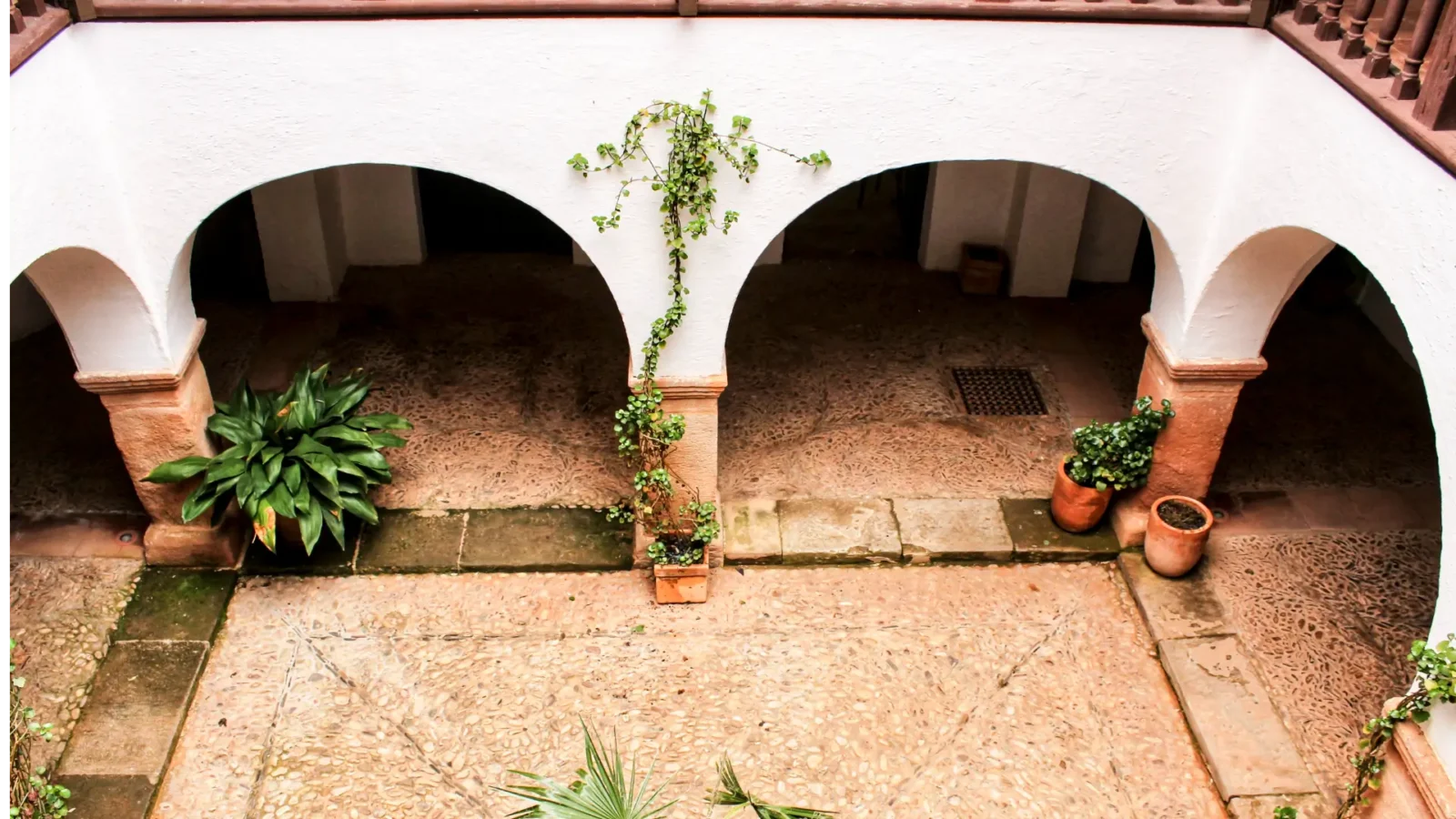
Sleep inside history: this Parador fills the former Convent of San Pablo, right across the gorge from the hanging houses, reached by its own footbridge. Recently refreshed, with a quiet courtyard and rooms that look straight at the old town. The Cuenca stay if you can stretch to it.
Check prices & availability for Parador de Cuenca on the accommodation's websiteHospedería del Seminario
A characterful, good-value stay in an 18th-century building right in the old town, steps from the cathedral and the Casas Colgadas. Simpler than the parador, but hard to beat for location and price.
Check prices & availability for Hospedería del Seminario on the accommodation's websiteParador de Almagro
Set in a 16th-century Franciscan convent with peaceful courtyards and gardens, a short walk from the Plaza Mayor and the Corral de Comedias. A memorable base for the southern plains.
Check prices & availability for Parador de Almagro on the accommodation's websiteHotel Casa Grande
A characterful town house with a courtyard and pool, close to the historic centre and its bars and restaurants. A warmer, lower-key alternative to the parador.
Check prices & availability for Hotel Casa Grande on the accommodation's websiteParador de Sigüenza
The town’s hilltop castle, now a parador, with vaulted halls, a grand dining room and long views over the medieval town. The obvious top pick for the northern hills.
Check prices & availability for Parador de Sigüenza on the accommodation's websiteLa Casona de Lucía
A small, welcoming guesthouse in the old town with rustic wood-beamed rooms, an easy walk from the cathedral. Personal and good value, a nice contrast to the castle.
Check prices & availability for La Casona de Lucía on the accommodation's website