

El Toboso: Dulcinea’s Village on the La Mancha Plains
El Toboso is the white village Cervantes chose as the home of Dulcinea, Don Quixote’s great love, in the flat wine country of Toledo province. A huge late-Gothic church — the “cathedral of La Mancha” — rises over the low roofs, and lines from the novel sit on ceramic tiles along the walls. Best of all, it stays calm while the nearby windmill towns fill with day-trippers. Come to read a whole town.
Why Visit El Toboso
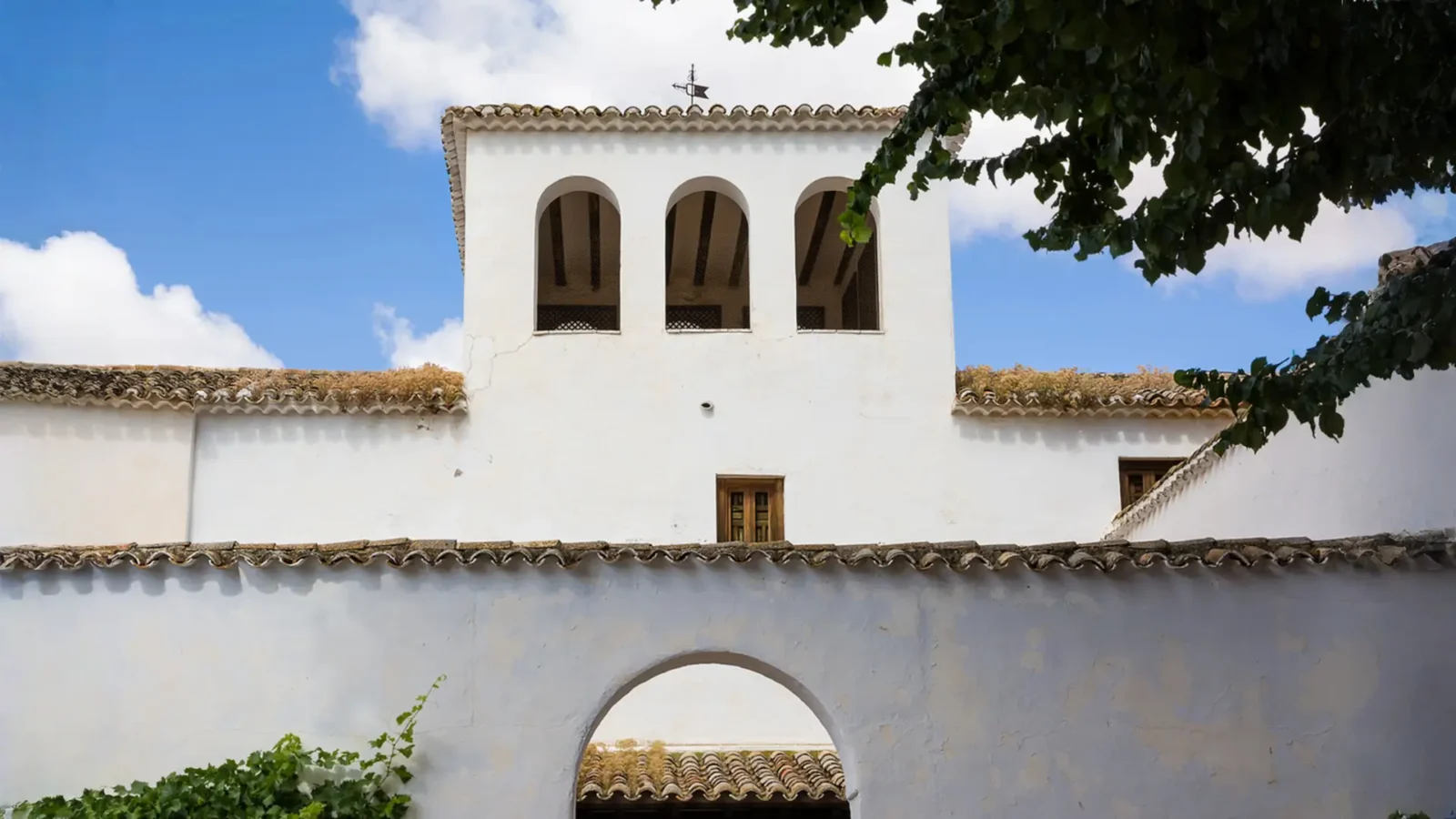
El Toboso is the village where a fictional woman became real. In Cervantes’ Don Quixote, Dulcinea is the knight’s great love, and Cervantes gave her this quiet white town in the province of Toledo as her home. Today her name is everywhere. Lines from the novel sit on ceramic tiles along the walls, a grand church rises over the low roofs, and the streets stay calm even when the famous windmill towns nearby fill with day-trippers. Even her house is here. The whitewashed manor above is the Casa de Dulcinea, kept as it looked in Cervantes’ day.
Most visitors treat El Toboso as a quick photo stop between the windmills of Campo de Criptana and the road south. That is the mistake this page wants to fix. El Toboso rewards the traveller who slows down and reads the town like a book.
El Toboso — a town you read like a book
The whole village is a literary route. Cervantes describes Don Quixote and Sancho entering El Toboso at night in chapter nine of the second part, and the town leans into that scene. Ceramic tiles on house fronts carry lines from the novel in many languages. Street names honour great writers, from Antonio Machado to Miguel Hernández. The plan is simple: follow Dulcinea through the lanes to her house, then let the church, the convents and the small museums fill in the rest.
What makes El Toboso different is the quiet. It is genuinely uncrowded, and that is the point, not a problem to solve. There are no coach queues and no ticket scrums. You can stand alone in the main square, look up at the great church, and hear almost nothing. For readers, writers and anyone who likes a town they can have to themselves, this is a rare and calm reward.
Day trip or overnight?
You can see the main sights of El Toboso in an afternoon. But that means leaving just as the town gets good. The magic here is the silence after the last car leaves, when the church is lit and the white lanes are empty. Our honest advice is to stay the night. A perfect short visit looks like this: arrive in the late afternoon and follow the tiled quotes to the Casa de Dulcinea. Walk back through the old lanes to the Plaza de Juan Carlos I as the light drops, and stand under San Antonio Abad, the church locals call the cathedral of La Mancha. Have a slow dinner of Manchego dishes, then walk the empty streets after dark. In the morning, see the Museo Cervantino before the day-trippers arrive.

What to See in El Toboso
Iglesia de San Antonio Abad — the "Cathedral of La Mancha"
The parish church of San Antonio Abad towers over the main square and gives the town its skyline. Building began in 1525 on the site of an older church, and it grew over the next century into a huge late-Gothic hall with three naves and tall stone columns. Locals proudly call it the cathedral of La Mancha for its size. Cervantes even names it in the novel, in the famous line where Don Quixote realises, in the dark, that they have reached the church. It is the anchor of any visit.
Plaza de Juan Carlos I & the Don Quixote–Dulcinea monument
The Plaza de Juan Carlos I is where the town gathers its best. The great church, the town hall and old noble houses with carved stone crests all frame the square. In the middle stands the well-known monument to Don Quixote and Dulcinea, with the knight forever paying his respects. It is the natural place to start and end a walk.
Casa-Museo de Dulcinea
The Casa-Museo de Dulcinea is the emotional heart of the town. This is a real 16th-century manor house that once belonged to Ana Martínez Zarco de Morales, the local woman many believe inspired the character of Dulcinea. Rebuilt in the last century, it keeps its old layout and shows how a well-off La Mancha family lived in Cervantes’ time. You can walk through the kitchen, the bedrooms, the courtyard and the wine and oil presses. It is a protected monument and one of the clearest windows into daily life on the plains.
Convento de las Trinitarias
The Convento de las Trinitarias is the town’s other great monument. This sober, elegant convent is built in the plain Herreran style and is often called the little Escorial of La Mancha. Behind its round-arched doorway you will find a cloister, a Baroque church and a valuable collection of 17th-century art. It is a quiet, dignified place that rewards a slow look.
Museo Cervantino
The Museo Cervantino is a book lover’s treasure. It holds hundreds of editions of Don Quixote, printed in dozens of languages, many of them gifts signed by famous heads of state and public figures. Together they show how far this one story has travelled around the world. The town tourist office shares the building, and this is one of the places where you can get your stamp for the Dulcinea or Hidalgo de La Mancha diploma.
Museo del Humor Gráfico "Dulcinea"
The Museo del Humor Gráfico “Dulcinea” is a lighter stop. Set in a 16th-century house, it gathers a large collection of cartoons and drawings of Dulcinea by well-known Spanish and foreign artists. It is a warm, funny counterpoint to the grand church and the solemn convents, and it shows how much affection the character still inspires.
What to Do in El Toboso
Walk the literary route
This is the main thing to do in El Toboso, and it costs nothing. Follow the ceramic tiles set into the house fronts, each carrying a line from the novel, and trace the night-time path of Don Quixote and Sancho as they search for Dulcinea’s palace. The tourist office can point you to the start, and the walk works just as well on your own with a simple map. It is a rare chance to read a whole town.
Tour the museums and monuments at your own pace
The Casa de Dulcinea, the Museo Cervantino, the Museo del Humor Gráfico and the Trinitarias convent are all close together in the small old centre. Opening times shift with the season and some sights keep shorter winter hours, so it is worth checking on the day. A guided visit adds the deeper story behind Cervantes, Dulcinea and the real Ana Zarco, which is easy to miss on your own.
Taste the flavours of La Mancha
This is wine and cheese country, and the plains around El Toboso are covered in vines. Several local bodegas make robust reds and whites, and the village shops sell strong Manchego cheese and other regional food. A wine tasting is a fine way to understand the land the novel is set in, led by someone who can explain what you are drinking.
Prefer to go with a guide for any of this? Ask where you’re staying, or at the tourist office by the Museo Cervantino on Calle Daoíz y Velarde — they’ll know what’s running, in which language, and can point you to something that fits.
Seasonal Events and Festivals
Jornadas Cervantinas en honor a Dulcinea (late April into early May)El Toboso’s headline festival and a Fiesta de Interés Turístico Regional. The town dresses in period Cervantine costume, and the streets fill with theatre, a 17th-century-style market, exhibitions and re-enactments of Don Quixote and Sancho arriving in the village. It runs around Book Day (23 April) and into the first days of May. The town council publishes the full programme each year. For current dates and what is on, ask at the tourist office by the Museo Cervantino.
Patronal fiestas / “Pascua de Mayo” (early to mid-May)The town’s most solemn local celebration, honouring the Santísimo Cristo de la Humildad, with processions from the hermitage to the parish church. Dates follow the local festival calendar rather than a fixed day, so ask at the tourist office or the parish for the year’s schedule.
Carnaval (February)El Toboso is known for one of the first carnivals of the year in the area, with parades, contests and dances. The date moves with the pre-Lent calendar, so confirm locally before planning around it.
Getting There and Around
El Toboso sits on the flat La Mancha plains in eastern Toledo province, between the A-4 (Madrid–Andalucía) motorway to the west and the towns of the Ruta del Quijote. It is reached by a short drive off the main roads on the CM/TO local network.
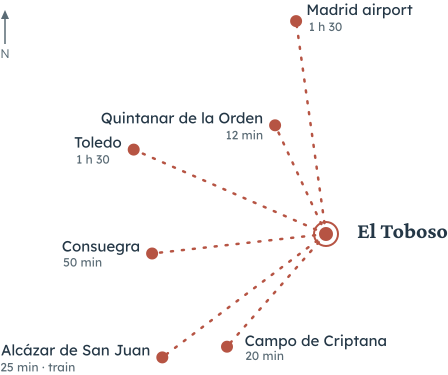
From Madridabout 1 h 30 by car, roughly 120 km, mostly on the A-4 before turning off onto local roads. Grupo Samar runs a limited bus service, but a car is far easier.
From Toledo(the regional capital) about 1 h 30 by car, roughly 115 km.
Nearest airportAdolfo Suárez Madrid–Barajas (MAD) is the main international option, about 1 h 30 / 120 km north. Valencia (VLC) and Alicante (ALC) are further alternatives to the east.
Nearest train stationAlcázar de San Juan, about 25 minutes / 23 km southwest, is the practical rail gateway — it sits on the Madrid–Alicante/Andalucía lines. From there you need a car or taxi for the last stretch; there is no direct train to El Toboso.
Getting around
You do not need a car inside El Toboso — the old centre is tiny and flat, and everything (church, museums, Casa de Dulcinea, main square) is a few minutes’ walk apart. Park at the edge of the centre and explore on foot. You do want a car for the region, though: El Toboso is one stop on the Ruta del Quijote, and the windmills of Campo de Criptana, the castle at Belmonte and Consuegra’s ridge of mills are all short drives away. This is prime road-trip country.
Looking for a ready-made plan? See our Castilla-La Mancha road trips.
Practical Info
- Tickets and hoursthe museums (Casa de Dulcinea, Cervantino, Humor Gráfico) and the church keep modest, season-dependent hours, and some close on Mondays and for a long lunch. A combined or town ticket is usually the cheapest way to see several sights. Hours and fees change yearly, so check the current figures at the tourist office when you arrive rather than relying on any printed price.
- Getting around townthe historic centre is small, flat and walkable; park at the edge and walk. A car is useful for the wider Ruta del Quijote.
- Best time of daylate afternoon into the evening is the reward here — the church floodlit, the lanes empty after the day-trippers leave. Morning is best for the Museo Cervantino before any groups arrive.
- ClimateEl Toboso sits at about 635 m on the semi-arid La Mancha plateau, so summers are hot and dry and winters are cold. July is the hottest month, with average highs around 33°C; January is coldest, with highs near 10°C. The most comfortable spells are May (highs about 23°C) and September (about 27°C), with April and October cooler still (roughly 18–21°C). Rain is light all year and falls mostly in autumn, with October the wettest month; July and August are almost rainless.
- Official infoThe Ayuntamiento de El Toboso is the most current source for museum hours and festival programmes, but it is Spanish-only with no English version and no translation offered.
Where to Eat in El Toboso
You will eat and drink well in El Toboso, at every budget, and the food is pure La Mancha. This is a land of hearty plates: garlic-rich ajoarriero, pisto manchego, migas, roast lamb and duelos y quebrantos, the eggs-and-pork dish Cervantes himself mentions. Two simple rules make it easy. For a light lunch while you walk, the bars around the main square serve good tapas and set menus. For dinner, sit down at one of the town’s kitchens and try a full Manchego meal. The picks below cover both, from a quick tapas stop to a proper regional feast.
One of the town’s best-rated tables, spacious and popular, with a sophisticated touch to its tapas and mains — the torreznos and croquetas get particular praise. Open Thursday to Sunday; worth booking at busy times.
A step up in ambition, serving refined takes on regional dishes to a strong local reputation. Open mainly at weekends, so plan around it — a good choice for a proper sit-down dinner rather than a quick bite.
A big, friendly local institution on the main avenue, open long hours and busy with locals. Generous, good-value plates of home cooking — the tortilla and the day’s specials draw a loyal crowd. A reliable, unpretentious first stop.
A long-running local kitchen with a large dining room and a well-liked Manchego tasting menu that runs through the regional classics in one sitting. Diners praise the value and the original, well-presented plates. Handy if you are also staying here.
El Sueño de Quijano
Reopened in a handsome old building right on the main square, with a spacious terrace beside the Don Quixote and Dulcinea monument. Homemade tapas, toasts and burgers, friendly young staff and long hours — perfect for a coffee, a beer or a light bite between sights.
Bar Rocinante
A large, welcoming bar on the main avenue where the food is homemade and fairly priced — think honest white beans, breaded chicken and a well-dressed local tomato salad. A classic spot for a relaxed lunch on the walk.

Where to Stay in El Toboso
Picture your evening in El Toboso. The day-trippers have driven off toward the windmills, the church is floodlit above the white roofs, and the only sound in the lanes is your own footsteps. That is the town this page keeps promising, and it only exists after dark, once you have decided to stay. Here is where we would sleep to have it.
El Toboso is a small village, so it does not have a big luxury hotel. What it does have is a handful of characterful, well-run places in the old centre and a couple of options just outside, all honestly priced. Because the choice is small, we have included a strong nearby option in Miguel Esteban too, clearly marked, so you can still find a room in a busy week.
Casa Rural Entre Almendros
A whole-house country stay on the edge of the village, set in a large walled garden with a pool, a barbecue and space to spread out — six en-suite bedrooms make it ideal for a family or a group touring the Quixote route. Wake up to birdsong and the open plains, then drive the short distance into the centre. Book the whole house and make it your base.
Check prices & availability for Casa Rural Entre Almendros on the accommodation's websiteCasa Rural Tía Sofía
A newer country house in the village that can be taken as a two-bedroom apartment or as the whole house for a larger group — a flexible, self-catering option with room to relax after a day on the road. Good for families who want their own space within walking distance of the sights.
Check prices & availability for Casa Rural Tía Sofía on the accommodation's websiteEl Loft de Dulcinea
A compact, modern loft in the centre, styled around La Mancha’s vaults and beams, with a rooftop terrace looking over toward the great church — the kind of place where you can eat dinner under the stars on a warm night. Its own kitchen and central spot make it a neat, private base for a couple.
Check prices & availability for El Loft de Dulcinea on Booking.comHospedería Casa de la Torre
Sleep inside the story. This characterful 17th-century house in the heart of the old town is furnished with antiques and centred on a library-lounge with a fireplace and a quiet patio — guests single out the owners’ warm welcome and their deep local knowledge of Cervantes and the town. A few steps from the church and museums, it is the most atmospheric bed in the village.
Check prices & availability for Hospedería Casa de la Torre on the accommodation's websiteHostal Restaurante Dulcinea de El Toboso
Simple, comfortable and right in the village, this long-running guesthouse pairs recently renovated rooms with its own well-liked Manchego restaurant downstairs — so dinner and a good regional breakfast are a staircase away. A dependable, good-value choice for a night on the road.
Check prices & availability for Hostal Restaurante Dulcinea de El Toboso on Booking.comHotel El Torreón del Miguelete
The nearest full hotel, in a castle-like brick building on the plains a short drive from El Toboso, with relaxed rooms, free parking and a well-regarded restaurant serving Manchego cooking — handy when the village’s few beds are full, or if you want a hotel with a proper front desk. An easy, comfortable regional base.
Check prices & availability for Hotel El Torreón del Miguelete on the accommodation's website
Region, Nearby and Routes
Part of Castilla-La Mancha
El Toboso is in Castilla-La Mancha
Part of these routes
El Toboso is one stop on our In the Footsteps of Don Quixote road trip see the full trip.
Nearby places
- ConsuegraTwelve windmills and a Knights’ castle crown the ridge above this classic La Mancha town.
- Campo de CriptanaTen white windmills rise straight from a whitewashed old town, giants and cave houses together.
- ToledoA hilltop UNESCO city of cathedrals, synagogues and mosques, at its finest in the early and late hours.
- BelmonteA complete walled town crowned by one of Spain’s best-preserved castles, just off the windmill trail.
- Villanueva de los InfantesThe Golden Age capital of the Campo de Montiel, where Quevedo died and Don Quixote may have lived.
Frequently Asked Questions
Yes — especially for anyone who loves the Don Quixote story. El Toboso is the village Cervantes chose as the home of Dulcinea, and it wears that literature openly, with quotes from the novel on ceramic tiles along the streets. It is small, calm and genuinely uncrowded, with a vast Gothic church and several Cervantes museums. Slow travellers and readers get the most from it.
El Toboso is famous as the home of Dulcinea, Don Quixote’s idealised love. The town is built around that fame: the Casa-Museo de Dulcinea, the Museo Cervantino with its hundreds of editions of the novel, a literary walking route through the streets, and the huge church of San Antonio Abad, known as the cathedral of La Mancha.
Half a day is enough to see the main sights, but the town is best with an overnight stay. The reward is the evening, when the day-trippers leave, the church is floodlit and the white lanes go quiet. Arrive in the afternoon, walk the literary route and have dinner, then see the museums the next morning.
Spring and early autumn are the most comfortable. May has average highs around 23°C and September around 27°C, with April and October cooler still. July and August are hot and dry, with average highs near 33°C and almost no rain, while January is cold, with highs near 10°C. Rain is light and falls mostly in autumn.
Yes — it is about 1 h 30 by car from either Madrid or Toledo, and it pairs naturally with the windmills of Campo de Criptana, about 20 minutes away. But a day trip means missing the quiet evening that is the town’s best feature, so an overnight is better if you can manage it.
El Toboso is in the province of Toledo, in the Castilla-La Mancha region — in the Mancha Alta de Toledo. It is often assumed to be in Ciudad Real because it sits close to the windmill town of Campo de Criptana, which is in Ciudad Real, but El Toboso itself is Toledo.
For character in the old town, the Hospedería Casa de la Torre is a historic 17th-century house full of antiques. Casa Rural Entre Almendros is a whole-house country stay just outside the village, and the Hostal Restaurante Dulcinea and the central El Loft de Dulcinea are good-value options in town. If the village is full, Hotel El Torreón del Miguelete is a short drive away in Miguel Esteban.
For a light lunch on the main square, El Sueño de Quijano and Bar Rocinante serve homemade tapas, while Restaurante El Quijote is a busy, good-value local favourite. For a fuller Manchego dinner, try Casa Gastronómica El Rincón de la Mancha, la Competencia de Andrés or the restaurant at the Hotel Dulcinea.