
Belmonte: The Castle Town the Windmill Trail Drives Past
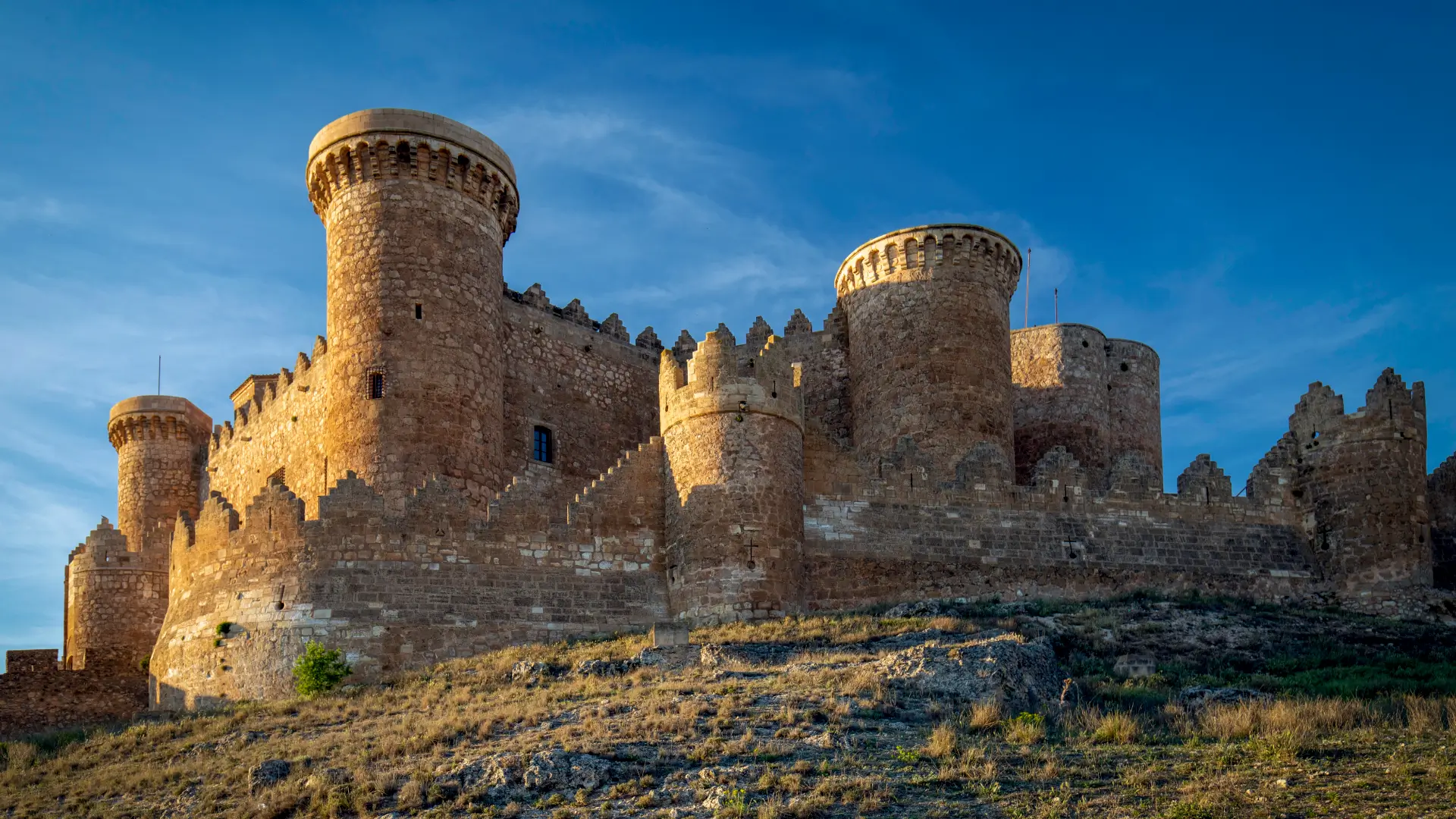
Belmonte is a small walled town in the province of Cuenca, in the heart of La Mancha. Above it stands one of Spain’s best-preserved castles, built in the 15th century by the powerful Marqués de Villena. Most Don Quixote travellers pass close by and never turn off for it. That is the point: a complete medieval town, a great castle, and almost none of the crowds.
Why Visit Belmonte
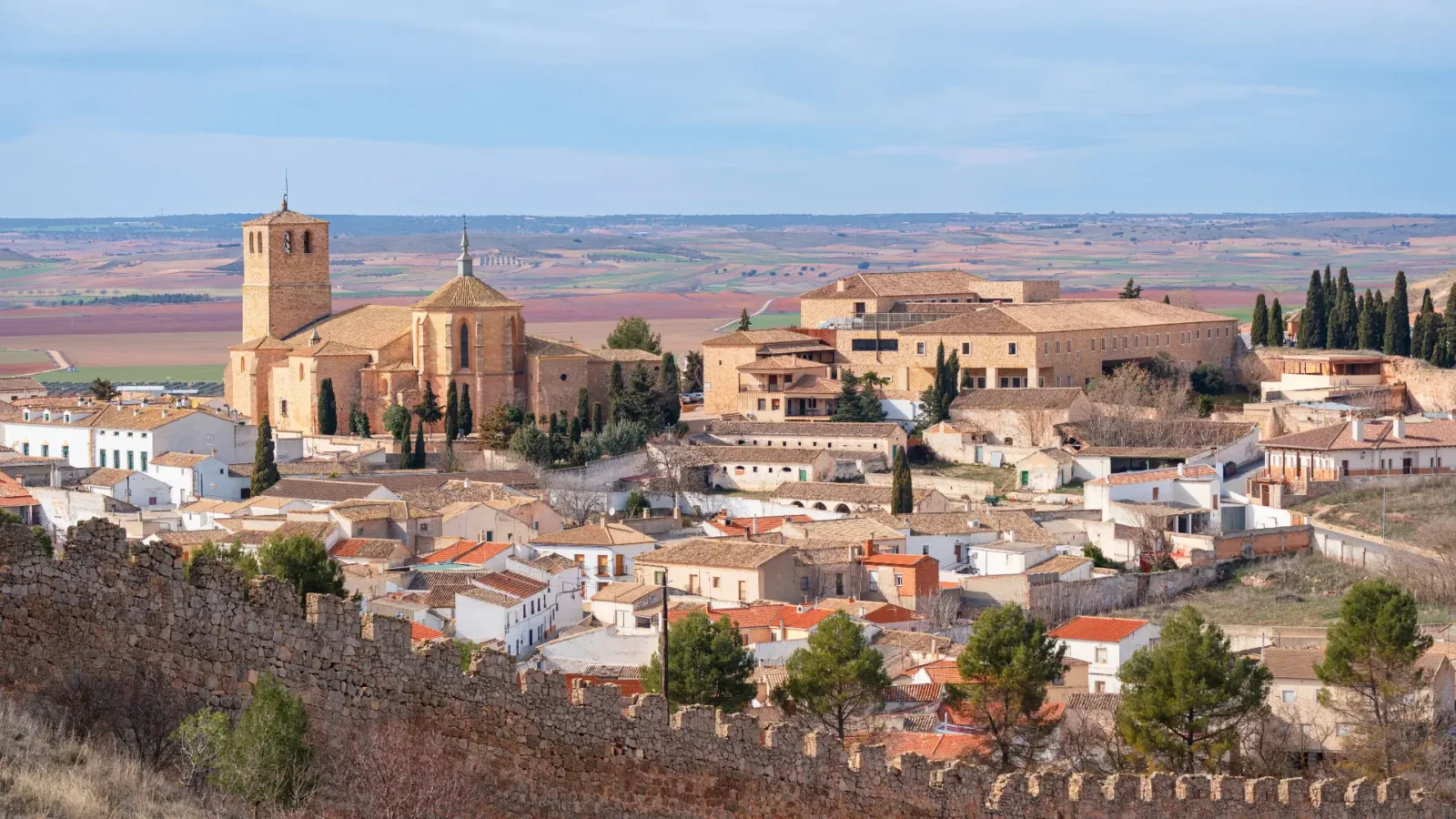
Belmonte is the rare small town that feels complete. It kept its castle, its walls, its gates and its old upper streets, all in one tight, walkable place. The castle on the hill of San Cristóbal is one of the best-preserved in Spain, and the town below still looks much as it did five hundred years ago. Yet it sits just off the main Don Quixote windmill route, so the coaches rarely stop. You get the full medieval picture without the queues.
Belmonte — a calm base, not a photo stop
Most people give Belmonte an hour and drive on. It deserves more. The castle alone takes over an hour with its audio-guide, and the town rewards a slow wander: the collegiate church, the three old gates, the quiet squares, and the birthplace of the poet Fray Luis de León. Stay a little longer and you can pair it with the windmills of Mota del Cuervo, 15 minutes away, and the wider Cuenca countryside. It works best as a place to slow down, not to tick off.
Day trip or overnight?
You can see Belmonte in an afternoon. The castle, the church and a loop of the upper town fit into three or four hours, and Madrid, Cuenca or Toledo are all close enough for a day trip. But a day trip means arriving with the tour cars and leaving before the town is at its best. Our honest advice: stay the night. A good short visit looks like this. Reach the castle when it opens, before the coaches, and take the audio-guide slowly. Walk down into the old town for lunch and the collegiate church. In the late afternoon, drive out to the windmills for the low light, then come back for dinner. By evening the day-trippers are gone, the castle glows on its hill, and the streets are yours. That is the Belmonte worth the drive — and you only get it if you stay.
What to See in Belmonte
Castillo de Belmonte
The castle is the town’s landmark and one of the best-preserved in Spain. The Marqués de Villena, Don Juan Pacheco, ordered it built in 1456 on the hill of San Cristóbal. Inside, it is now a museum, furnished in the 19th-century style of Empress Eugenia de Montijo, who restored it. You can walk the adarve, the narrow wall-walk that runs between the battlements and towers. From the north tower it looks straight down over the rooftops of the town below. An audio-guide in several languages walks you through five centuries of its story.
Colegiata de San Bartolomé
This large Gothic church sits in the walled upper town, next to the old alcázar. The Marqués de Villena founded it in the 15th century, and it has been a National Monument since 1943. At the stone font here, the poet Fray Luis de León was baptised as a baby. The church also keeps a carved walnut choir, the oldest of its kind in Spain, brought here from Cuenca cathedral. The side chapels hold fine ironwork and the tombs of the Pacheco family.
The stone windmills
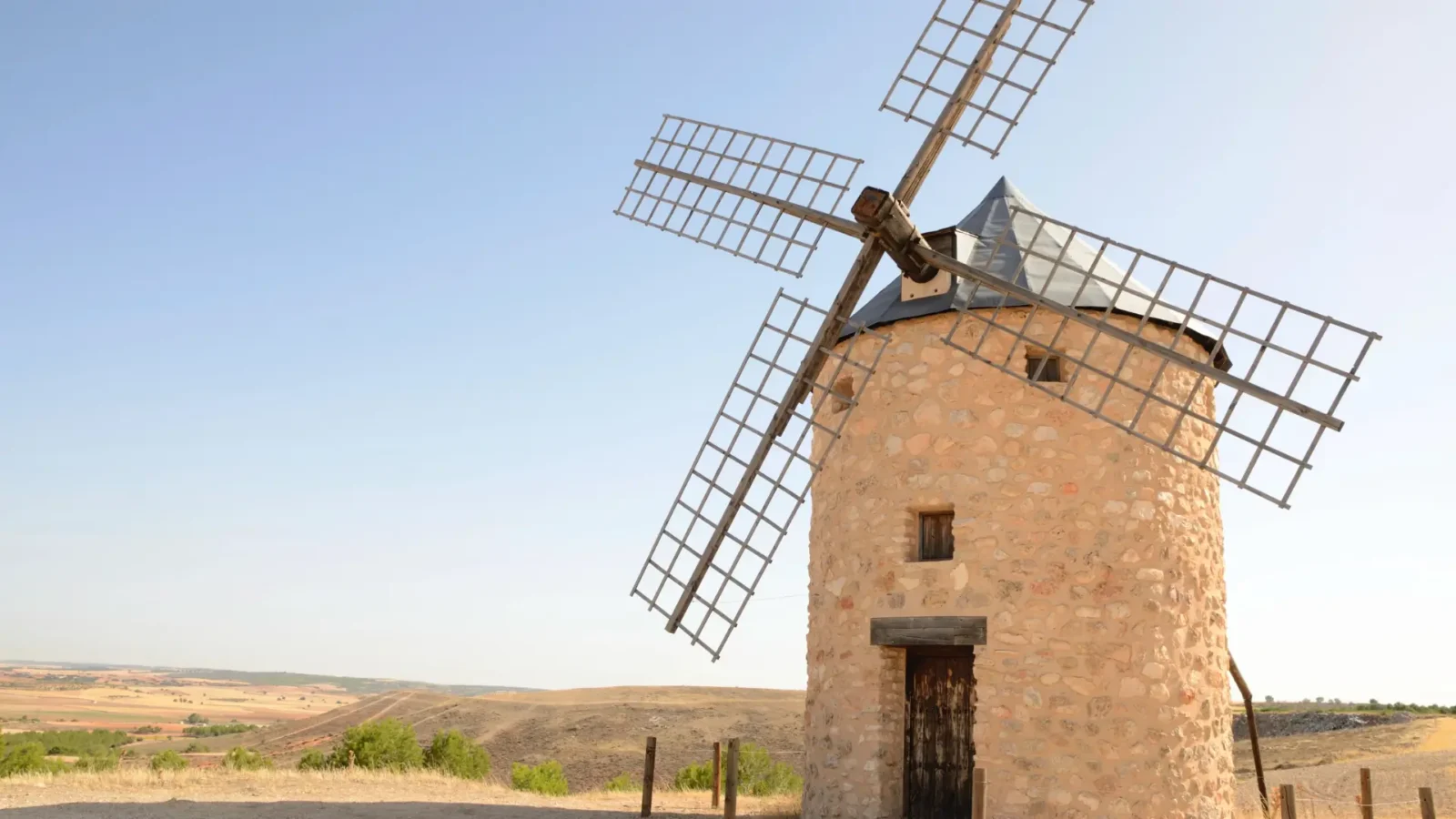
The hills around Belmonte keep several traditional windmills. These are not the white, plastered mills of the famous postcards; they are built of bare stone, which makes them unusual. Step inside the Molino del Puntal and you can see the wooden gears and grinding stones still in place. It is a small museum now. The mills are an easy add-on to a windmill drive through this part of La Mancha.
The walled old town and its gates
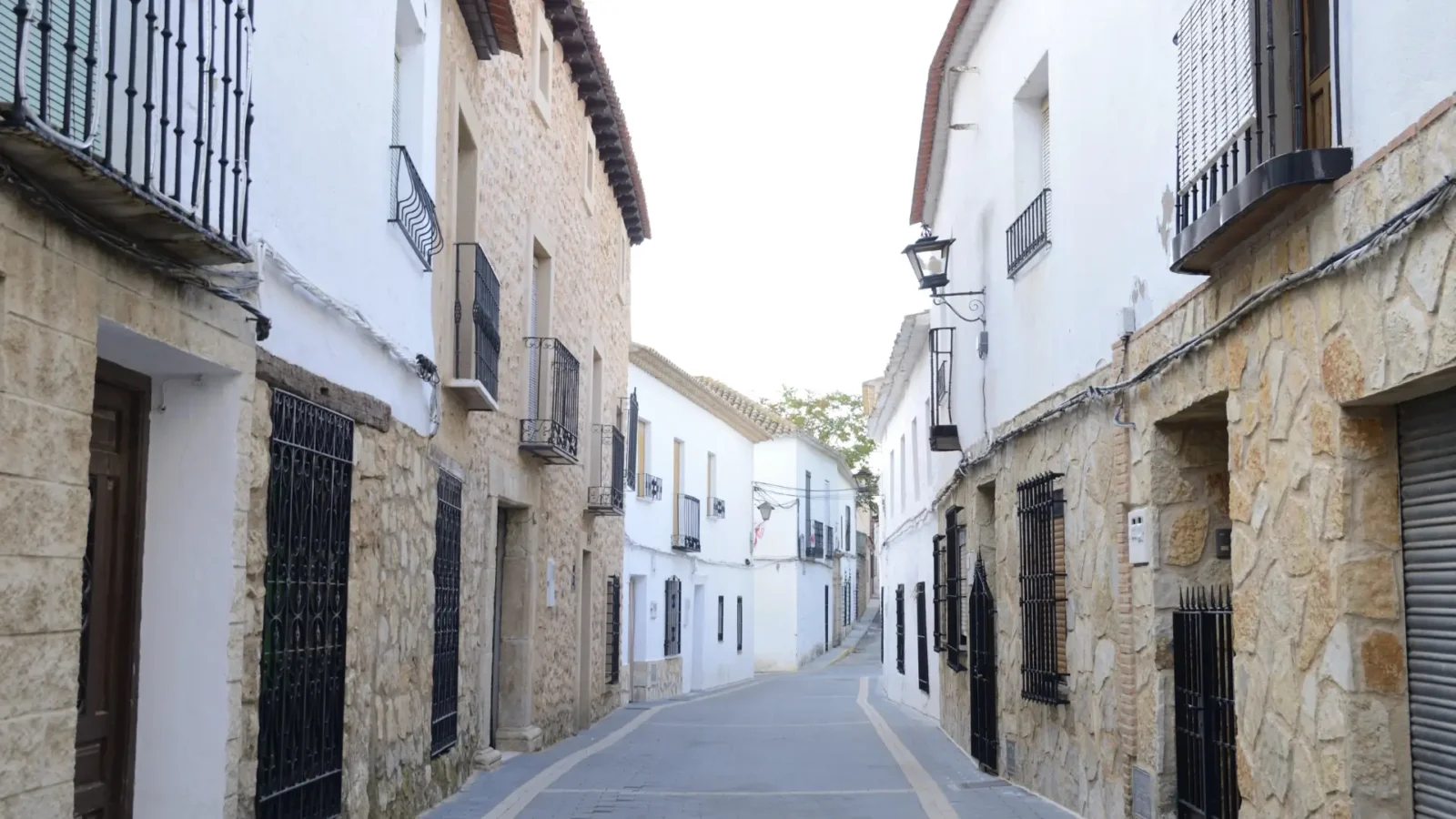
Belmonte still has long stretches of its town wall and three of its old gates. The upper town, the barrio alto, is a knot of narrow, steep streets around quiet squares like the Plaza del Pilar. Walk up from one gate to the next and you pass the castle, the church and the wall in one short loop. It is small and easy to cover on foot. The climb gives you the whole medieval town in half an hour.
Birthplace of Fray Luis de León
The poet and scholar Fray Luis de León was born in Belmonte around 1527. A marble plaque marks the house where he spent his first years, on the street that carries his name. You can stand on his street, then walk to the church font where he was baptised as a child. It is a simple stop, but a real one. He is one of the great voices of Spanish Golden Age poetry, and this quiet town is where his story began.
What to Do in Belmonte
Tour the castle at your own pace
The castle is set up for independent visitors. There is an audio-guide in several languages and a short intro film. You can take the rooms, towers and courtyard in your own time, so allow an hour to an hour and a half. Go when it opens to have it almost to yourself. It is also worth checking ahead: the castle hosts medieval tournaments and re-enactments through the year, and timing your visit to one is a real treat.
Meet the siege machines at Trebuchet Park
Right beside the castle is the Trebuchet Park, billed as the largest real-scale siege-machine park in the world. You can walk among full-size trebuchets, catapults and other war machines. It is hands-on, easy to enjoy, and a genuine hit with children — a good change of pace from churches and old streets. Allow around 45 minutes to an hour.
Drive the windmill viewpoints
Belmonte’s own stone mills sit on the hills around town. The famous “Balcón de La Mancha” at Mota del Cuervo, with its row of white windmills, is only about 15 minutes away. Late afternoon is the time to go, when the light turns gold over the plain. It is an easy self-guided loop by car, and one of the most photogenic short drives in La Mancha.
Walk the walls and the miradores
A slow circuit of the upper town links the three gates, the quiet squares and the viewpoints that look out over the castle and the flat Manchego plain. It costs nothing and takes an hour. Early evening is best, when the low sun catches the stone and the streets empty out.
Taste La Mancha
This is wine and cheese country. Look for local wines under the La Mancha label, cured Manchego cheese, and Cuenca specialities like morteruelo, a warm game pâté. Nearby Las Pedroñeras is famous across Spain for its purple garlic. A tasting with a local producer or winemaker is where a guide adds real value. Someone who can pour the good bottles and explain what you are eating turns it into more than a snack. It is the kind of experience worth booking rather than doing blind.
Prefer to go with a guide for any of this? Ask where you’re staying, or at the tourist office on Plaza del Ayuntamiento — they’ll know what’s running, in which language, and can point you to something that fits.
Seasonal Events and Festivals
Belmonte’s calendar leans on its castle. Medieval tournaments, jousting and historical re-enactments are staged there through the warmer months, and the castle has hosted international medieval-combat events more than once. Dates move year to year, so check the castle’s website for the programme before you plan around one.
Jornadas GastronómicasThe town also runs its Jornadas Gastronómicas (gastronomy days), when local kitchens put La Mancha’s dishes centre stage. For exact dates each year, see the official town tourist office rather than any fixed calendar.
Getting There and Around
Belmonte sits on the N-420, in the south-west of Cuenca province, right on the edge of the Don Quixote country. You reach it by car.
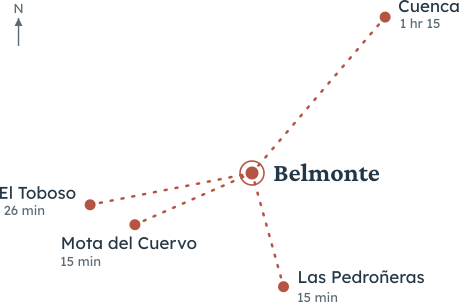
From Madridabout 1 hr 45 by car via the A-3 and the N-420 (roughly 150 km). A direct Samar bus (line 004) also runs from Madrid’s Estación Sur, calling at Mota del Cuervo on the way.
From Cuencaabout 1 hr 15 by car via the N-420 (roughly 95 km). Monbus runs the bus link from the provincial capital.
On the Don Quixote routeEl Toboso, the last stop before Belmonte, is about 26 minutes away (34 km). Campo de Criptana is about 45 minutes (45 km).
Nearest airportMadrid-Barajas (MAD) is the main international gateway, about 1 hr 45 by car. Valencia (VLC) is a second option to the east, a little over two hours away.
By trainthere is no station in Belmonte. The nearest sensible option is to take the train to Cuenca or fly into Madrid, then drive.
Getting around
You don’t need a car inside Belmonte. The town is small and easy to walk; park below the upper town and climb up on foot. But you do want a car for everything around it — the windmill towns, Cuenca, and the rest of the Don Quixote route all need one. If you’re flying in and touring La Mancha, picking up a hire car at the airport is the simplest way to do this stretch.
Looking for a ready-made plan? See our Castilla-La Mancha road trips.
Practical Info
- Castle ticketsThe castle sells its own tickets directly, and the visit includes an audio-guide in several languages and a short intro film. There is a separate ticket for the neighbouring Trebuchet Park, and combined options may be offered. Hours and prices change with the season, so check the castle’s official site for the current details before you go.
- Church (Colegiata)Opening times are limited and vary; check locally or with the town tourism office before planning your visit around it.
- Best time of dayReach the castle when it opens to beat the tour cars. Save the town walk and the windmill viewpoints for the late afternoon and early evening light.
- ParkingFree street parking is usually easy below the walled upper town. Leave the car there and walk up.
- ClimateBelmonte sits high on the La Mancha plateau (about 745 m), so summers are hot and dry and winters are cold. July is the hottest month, with average highs near 32°C and the odd day pushing past 40°C. The most comfortable months are May, June, September and October, roughly 20–26°C by day with cool evenings. Rain is light all year (about 400 mm total) and falls mostly in autumn; July is almost dry.
Where to Eat in Belmonte
You’ll eat and drink well in Belmonte, and honestly, at every budget. This is deep La Mancha: game country and cheese country, washed down with local wines under the La Mancha label. Look out for the Cuenca classics. There is morteruelo, a warm game pâté; ajoarriero, a cod-and-garlic mash; and zarajos, grilled lamb wound on vine shoots. Alongside them come gachas, pisto manchego and plates of cured Manchego cheese. For lunch while you’re out walking, the bars and plazas of the lower town are easy and good value. For dinner, settle into one of the traditional tables and eat slowly. The picks below cover both.
Restaurante Palacio Buenavista
The restaurant of a 16th-century palace in the upper town, with a stone-columned patio. The kitchen builds around local products — lamb, game, Manchego cheese — done simply and well. A good-value sit-down meal near the church.
The town’s best-known kitchen, tucked by the walls and busy at weekends. It leans into local game — venison and stews — and regional classics, with a much-loved cheese flan to finish. Portions are generous. Closed on Wednesdays.
La Gata Negra
A relaxed café for a lighter bite: burgers, crêpes, waffles and good coffee, handy between sights. Simple, friendly and easy with kids. Closed Tuesdays.
Set inside a former convent, with a beautiful cloister for coffee, this is the calm, characterful choice. The menu mixes regional dishes with a lighter touch, and the staff are good on local wine. Open daily.
Entre Tapas (Hogar del Pensionista)
A no-frills, authentic local bar where the tapas are generous and the prices low. This is the real, everyday Belmonte — migas, patatas bravas, a caña at the bar. Friendly, unpolished and well worth finding.
Not local cuisine, but a genuinely good, award-winning pizzeria that uses La Mancha ingredients — and a welcome change of pace with children. It fills up fast and doesn’t take bookings, so arrive early. Closed Mondays and Tuesdays.
Where to Stay in Belmonte
Picture the evening you’d have if you stayed. The coaches have gone. The castle is floodlit on its hill. You walk back through empty stone streets after dinner, and the only sound is your own footsteps. That is Belmonte’s real reward, and you only get it by sleeping here. The town is small but has a good spread of places, from a two-star palace to a five-star country hotel. Here’s where we’d start.
Hotel El Bálsamo
A five-star country hotel in a restored 16th-century manor, and the town’s standout stay. Its best feature is unusual: a heated pool set inside a centuries-old cave, under a stone vault. Warm service and a strong breakfast. This is the one for a special night.
Check prices & availability for Hotel El Bálsamo on the accommodation's websiteAlojamientos El Paseo
Family-run rooms and apartments in the centre, by the paseo and the pool, with free parking at the door. Spotless, welcoming and easy — the kind of straightforward, good-value stay that makes an overnight simple.
Check prices & availability for Alojamientos El Paseo on Booking.comPalacio del Infante Don Juan Manuel Hotel & Spa
Built into Belmonte’s oldest fortress, this four-star hotel wraps around a restored cloister and adds a spa, a pool and a quiet garden against the old town wall. It’s a short walk to the castle. Come here for history plus a proper soak at the end of the day.
Check prices & availability for Palacio del Infante Don Juan Manuel Hotel & Spa on the accommodation's websiteCasa Rural Descanso del Quijote
A comfortable Manchego-style country house in the centre, with a garden, a barbecue and a heated pool. It sleeps a larger group, so it suits families or friends travelling together who want a whole house to themselves.
Check prices & availability for Casa Rural Descanso del Quijote on the accommodation's websiteCasa Rural La Casa de la Vieja
Rustic, charming apartments on the Plaza del Pilar, two minutes from both the castle and the main square. Rooms are spotless and thoughtfully done, with a small pool for warm days. A relaxed, central base with your own space.
Check prices & availability for Casa Rural La Casa de la Vieja on the accommodation's websiteHotel Palacio Buenavista
A simple, friendly two-star hotel in a 16th-century palace, high in the old town beside the church. It’s basic, but some rooms look out at the castle, and it’s the easiest affordable base right in the heart of things. Good value for the location.
Check prices & availability for Hotel Palacio Buenavista on the accommodation's website
Region, Nearby and Routes
Part of Castilla-La Mancha
Belmonte is in Castilla-La Mancha
Part of these routes
Belmonte is the eastern finale of our road trip In the Footsteps of Don Quixote the first stop over the line into Cuenca province. See the full trip.
Nearby places
- El TobosoThe white Toledo village Cervantes gave to Dulcinea, with Quixote quotes on the walls and a Gothic church locals call the cathedral of La Mancha.
- Campo de CriptanaTen white windmills rise straight from a whitewashed old town, giants and cave houses together.
- Villanueva de los InfantesThe Golden Age capital of the Campo de Montiel, where Quevedo died and Don Quixote may have lived.
- CuencaA UNESCO city where medieval houses hang over a river gorge — busy by day, magical at dawn and after dark.
Frequently Asked Questions
Yes. It’s a small, complete walled town under one of Spain’s best-preserved castles, and it sees far fewer visitors than the famous Don Quixote windmill stops nearby. If you like history without crowds, it’s well worth the short detour.
Its 15th-century castle, ordered by the Marqués de Villena and beautifully preserved, and its Gothic collegiate church with the oldest carved choir in Spain. It’s also the birthplace of the poet Fray Luis de León, and a film location for the 1961 epic El Cid.
Half a day covers the castle, the church and a walk of the old town. But an overnight is better: it lets you see the castle early, catch the windmills at sunset, and have the streets to yourself in the evening.
Yes. It’s about 1 hr 45 from Madrid and 1 hr 15 from Cuenca by car, so a day trip is easy. Staying the night is still the better experience, once the day-trippers leave.
Spring and autumn are ideal — May, June, September and October bring comfortable days around 20–26°C with cool evenings. July is the hottest month, with highs near 32°C and the odd day above 40°C. Rain is light all year and falls mostly in autumn.
There’s a good range for a small town. Hotel El Bálsamo is the standout five-star, with a cave pool, and the Palacio del Infante Don Juan Manuel adds a spa. La Casa de la Vieja and Descanso del Quijote are comfortable casas rurales, while Hotel Palacio Buenavista and Alojamientos El Paseo are the friendly, affordable choices in the centre.
For traditional Manchego cooking and local game, try Restaurante La Muralla or the cloister setting of Gastronomía El Convento; Restaurante Palacio Buenavista is another good sit-down option. For something casual, Entre Tapas is the authentic local bar, and Bar Pizzería El Arco is a reliable, well-rated change of pace.