
Cuenca: A City on the Edge of a Gorge
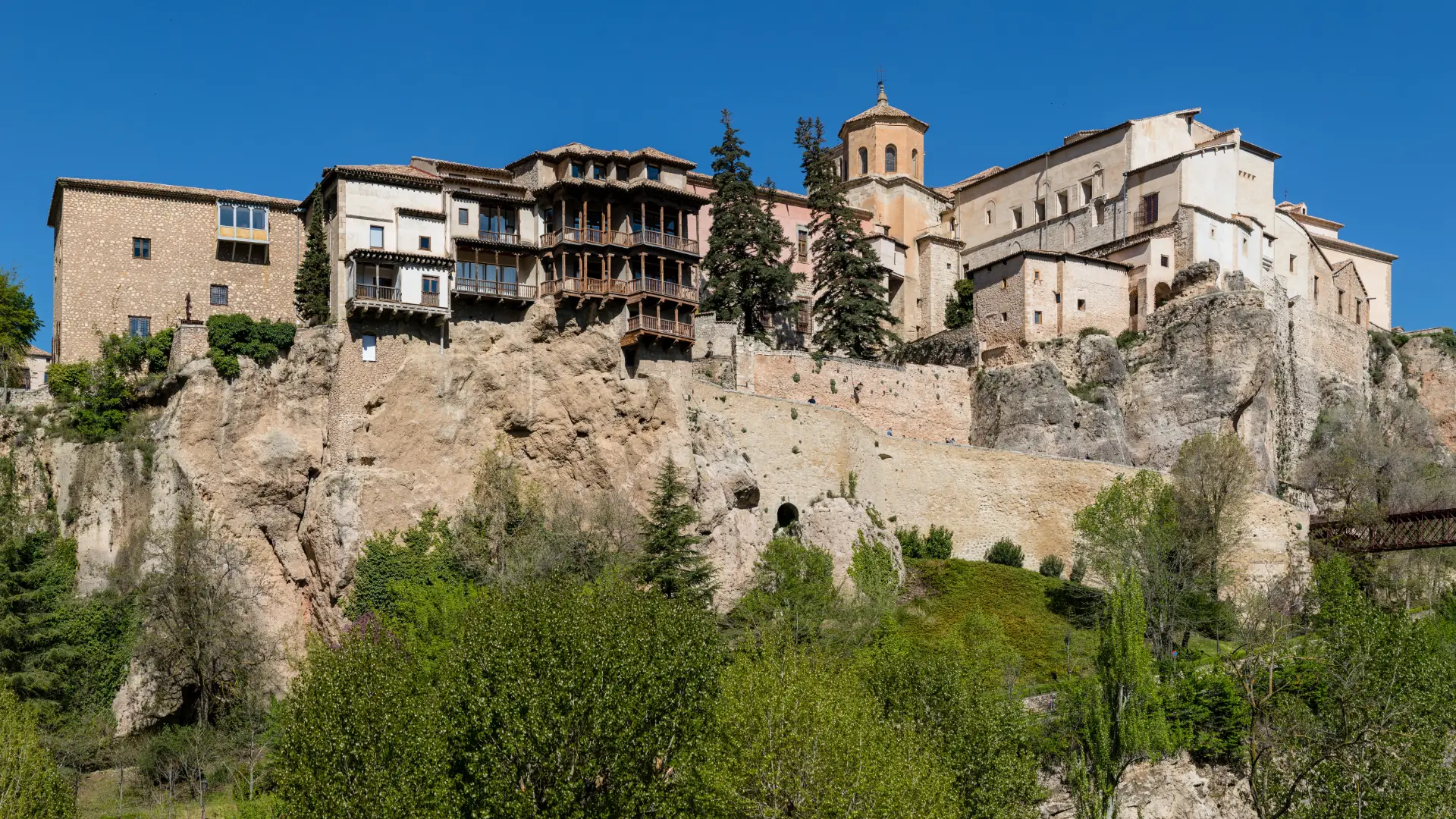
Cuenca hangs on a rocky spur between two river gorges in Castilla-La Mancha. Its famous Casas Colgadas — the “hanging houses” — cling to the cliff above the Huécar, and the whole old town is a UNESCO World Heritage Site. Yes, it fills with day-trippers. The trick is to stay: at dawn and after dark, the steep streets empty out and the city becomes yours. It is the perfect gateway before the empty mountains beyond.
Why Visit Cuenca
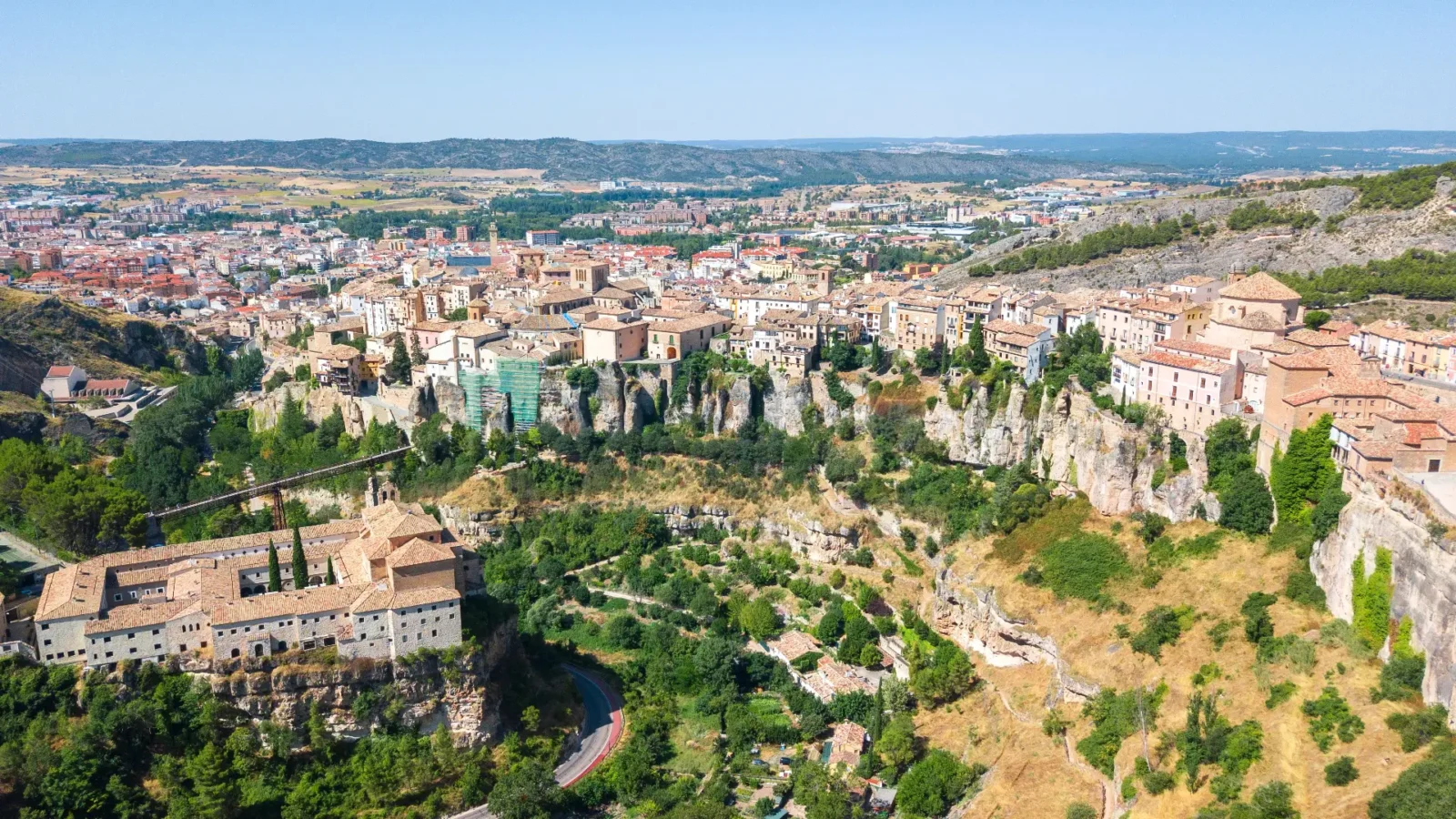
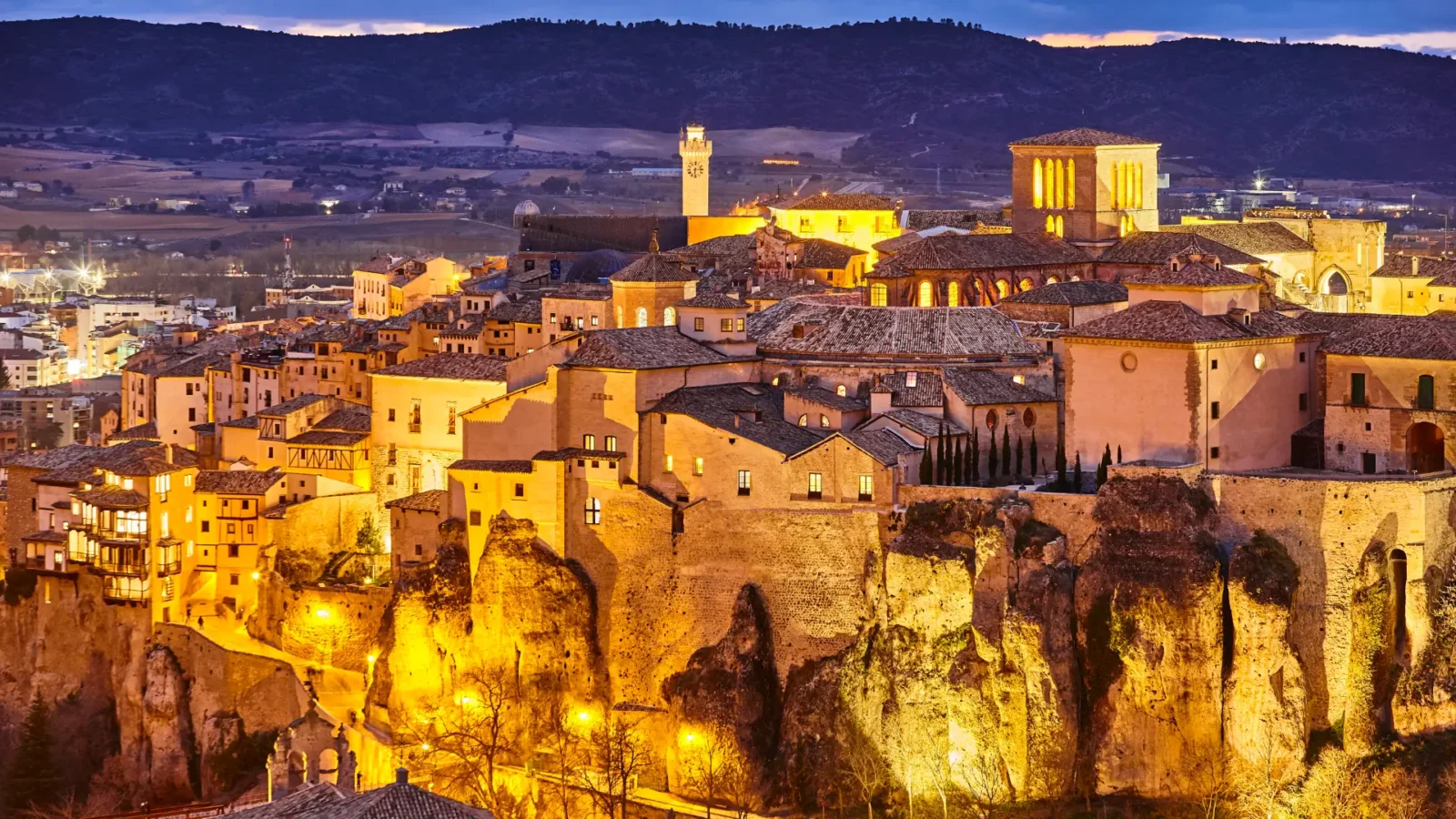
Some places are famous for one photo, and Cuenca is one of them. The hanging houses, with their wooden balconies jutting out over a 40-metre drop, are on every postcard of the city. But Cuenca is far more than that single view. The old town sits high on a narrow rock, squeezed between the gorges of the Júcar and Huécar rivers. Steep lanes climb past tall, colour-washed houses to a wide, handsome Plaza Mayor and one of the earliest Gothic cathedrals in Spain. Below, footpaths trace both rivers, and the mountains of the Serranía de Cuenca rise just beyond the edge of town.
We will be honest with you: Cuenca is not a hidden village. It is a well-known city, and in the middle of the day its main streets and the San Pablo bridge get busy with visitors. That is not a reason to skip it — it is a reason to visit it the right way.
Who Cuenca is for
Cuenca suits travellers who like their history with a view, and who would rather walk a quiet lane than queue for a photo. It rewards slow mornings and long evenings. It is also the natural starting point for a road trip into the Serranía de Cuenca, the wild, pine-covered highlands to the north-east. Come for the city, then use it as your base camp before the empty country begins.
Day trip or overnight?
You can see the headline sights of Cuenca in an afternoon. Cross the San Pablo bridge, look at the hanging houses, walk up to the Plaza Mayor and the cathedral, and you have "done" the city. But that means arriving with the coaches and leaving just as the place gets good. Our honest advice: stay the night. A perfect short visit looks like this — arrive in the late afternoon, drop your bags, and walk the old town while the day-trippers drive home. Have dinner inside the walls, then step out after dark, when the cathedral and the gorge are lit and the streets are almost empty. The next morning, be on the San Pablo bridge early, before the crowds, for the hanging houses in soft light. Then drive out into the mountains. A day trip gives you the photo; a night gives you the city.
What to See in Cuenca

The Hanging Houses (Casas Colgadas)
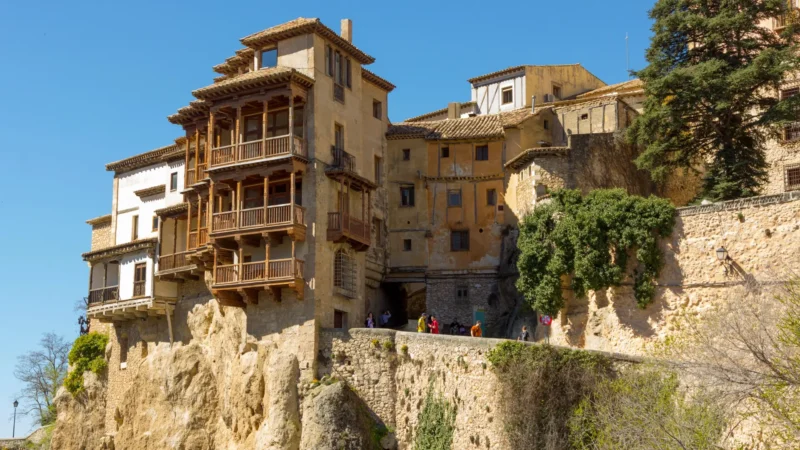
The Casas Colgadas are Cuenca’s signature sight: medieval houses built right at the cliff edge, their wooden balconies hanging out over the Huécar gorge. The surviving group dates in part from the 15th century. They are best seen from the outside and from below — but you can also step inside. The largest of them holds the Museo de Arte Abstracto Español, a museum of Spanish abstract art built around the “Abstract Generation” of the 1950s and 60s (Tàpies, Saura, Chillida, Zóbel, Torner), with later work into the 1980s and 90s. Founded by the painter Fernando Zóbel in 1966, it was Cuenca’s first contemporary art museum and is now run by the Fundación Juan March. Entry is free, and the bright rooms hanging over the gorge are as much a draw as the art.
The San Pablo Bridge (Puente de San Pablo)
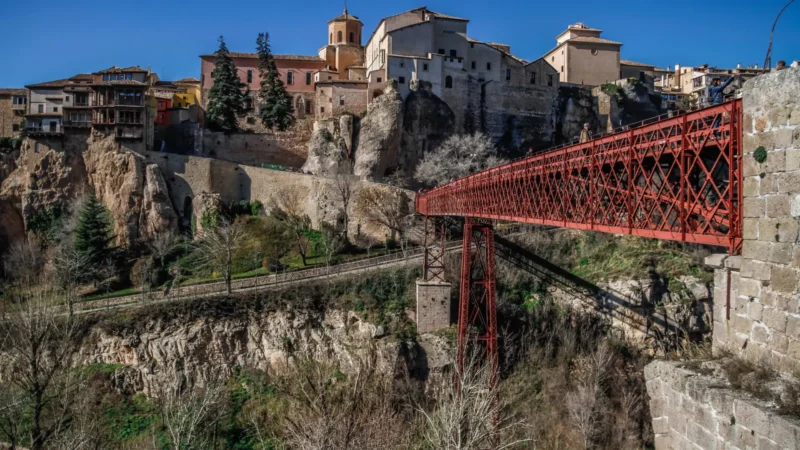
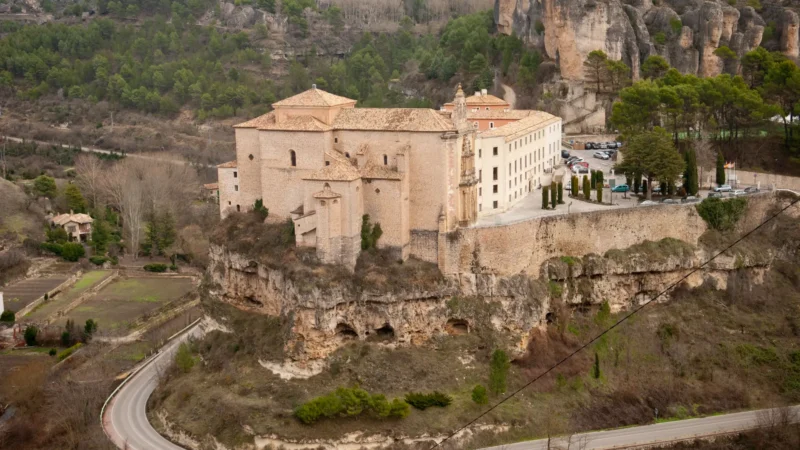
This iron footbridge is the classic viewpoint. It crosses the Huécar gorge at around 40 metres up, linking the old town with the former Convent of San Pablo (now the Parador). From the middle of the bridge you get the postcard view of the hanging houses clinging to the rock. It sways a little and is not for anyone who hates heights — but the view is the best in the city. Access is free.
The Cathedral (Catedral de Santa María y San Julián)
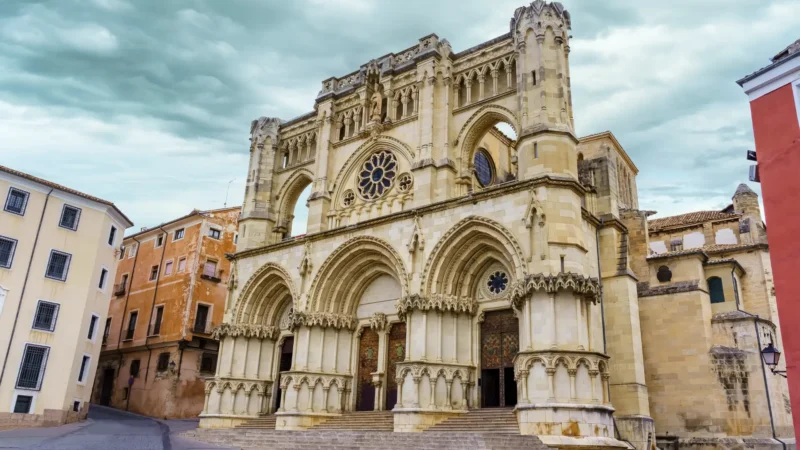
Begun around 1196, Cuenca’s cathedral is counted among the first Gothic cathedrals built in Spain. Its front is unfinished, which gives it an unusual, blunt look, and inside you’ll find Norman-Gothic vaulting, a rare triforium and modern stained glass by 20th-century artists. A combined ticket lets you climb to the triforium for a high view over the nave and the Plaza Mayor. Hours change with the season and the church’s own services.
Plaza Mayor and the Old Town
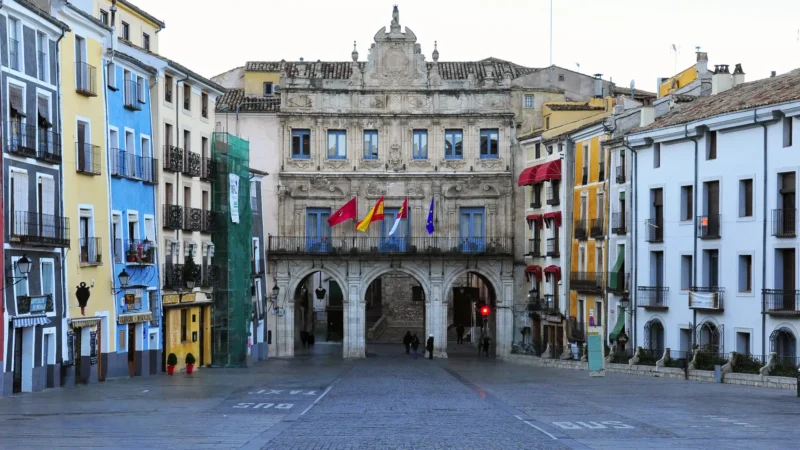
The heart of the upper town is the Plaza Mayor, framed by the arches of the town hall (built right over the road) and the cathedral front. From here, narrow lanes such as Calle de los Canónigos drop down toward the hanging houses and the San Pablo bridge, while others climb to the castle ruins and the old walls. This is the part of Cuenca to wander slowly, especially in the evening.
Espacio Torner (Church of San Pablo)
Across the gorge from the hanging houses, beside the Parador, the former Church of San Pablo holds the Espacio Torner. This stripped, light-filled Gothic church — no longer used for worship — displays about forty works by the Cuenca artist Gustavo Torner, several on loan from the Reina Sofía in Madrid. The bare stone and the art were arranged together by Torner himself, making the building and the collection one piece.
The River Gorges (the hoces of Júcar and Huécar)
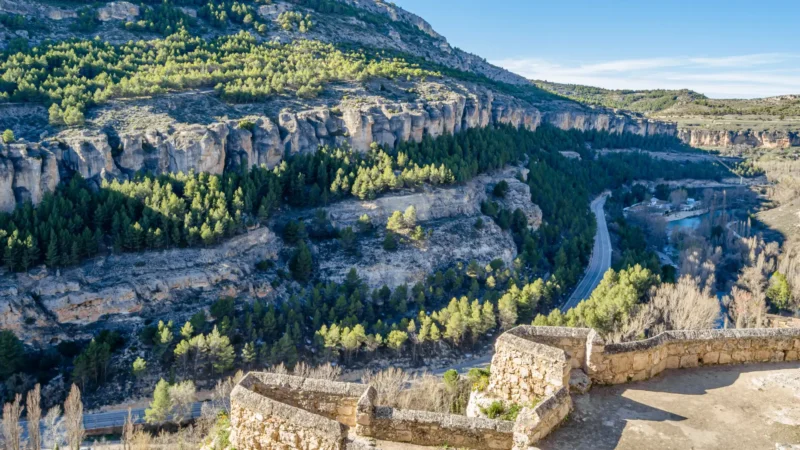
The two rivers that wrap around the old town have carved deep gorges, or hoces, on either side. Walking paths run along both — the Hoz del Huécar below the hanging houses, and the Hoz del Júcar on the far side. A stroll along the bottom gives you the town from below: the tall houses seem to grow straight out of the rock. It is the easy way to swap the crowded lanes for quiet in a few minutes.
What to Do in Cuenca
Walk both gorges in one loop
Cuenca’s best free activity is a walk that links its two river gorges. Drop down from the old town into the Hoz del Huécar, follow the river path beneath the hanging houses, then loop around the tip of the rock and back up the Hoz del Júcar. It takes a couple of hours at an easy pace and shows you the city from angles the day-trippers never see. Good shoes and water are enough; the climbs back up are short but steep.
See the old town at dawn and after dark
This is less a “thing to do” than the whole point of staying. In the early morning and late evening, the San Pablo bridge, the Plaza Mayor and the lanes around the cathedral are quiet and beautifully lit. Walk the same route twice — once at night, once at first light — and you’ll understand why an overnight beats a day trip here.
Drive into the Serranía de Cuenca
Cuenca is the gateway to one of central Spain’s great natural parks. Within an hour you can reach the Ciudad Encantada, a maze of wind-and-water-carved rock shapes in a pine forest, and the road climbs on toward the source of the Cuervo river and mountain villages like Uña and Tragacete. This is why we treat Cuenca as a base, not just a stop: the empty country starts right here.
Taste the local table
Cuenca sits in a region of strong, rustic food (see Where to Eat). Doing it properly is an activity in itself — a slow lunch of morteruelo or roast lamb, or an evening of local tapas and Manchego wine in the old town. It rewards taking your time far more than ticking off a checklist.
Prefer to go with a guide for any of this? Ask where you're staying, or at the tourist office on the Plaza Mayor — they'll know what's running, in which language, and can point you to something that fits.
Seasonal Events and Festivals
Semana Santa (Holy Week, March–April)Cuenca’s Easter processions are among the most famous in Spain, declared of International Tourist Interest. The medieval streets of the old town make a dramatic stage, and the best-known moment is Las Turbas — the “rabble” — on the dawn of Good Friday, with drums and bugles. The exact dates move each year with Easter. For the current programme and times, see the official cofradías’ site (Spanish) or at the tourist office.
San Julián (feria and fiestas, around late August)Cuenca’s main city festival, with fairs, music and events over several days. Dates are set each year; check the local listings at the tourist office.
Getting There and Around
Cuenca sits in east-central Castilla-La Mancha, roughly halfway between Madrid and Valencia, at the western edge of the Iberian mountains.
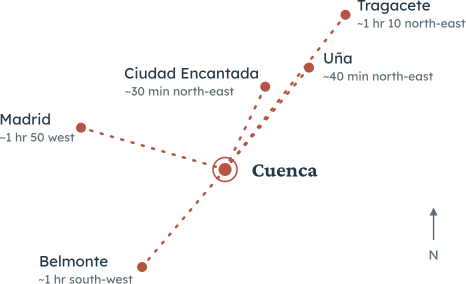
From Madridabout 1 hour 50 minutes to 2 hours by car via the A-3 and A-40 (roughly 167–172 km, toll-free).
From Valenciaabout 2 hours 10 minutes by car via the A-3 (roughly 199 km).
Nearest airportsMadrid–Barajas (MAD) is the main international gateway, about 2 hours by road; Valencia (VLC) is a similar distance to the east.
By train (AVE)Cuenca is on the Madrid–Valencia high-speed line. Fast trains reach Cuenca’s Fernando Zóbel station from Madrid in about 55–60 minutes, and from Valencia in about 50–60 minutes, with several operators a day (Renfe AVE, Avlo, OUIGO and iryo).
Getting around
Note one thing about the AVE: the Fernando Zóbel station sits a few kilometres outside the historic centre, so from the train you’ll want a taxi or the city bus up to the old town. Inside Cuenca you don’t need a car at all — the upper town is walkable, if steep. Leave the car in one of the free car parks or near the castle, and climb up on foot. But you do want a car for the region: the whole reason to base yourself here is to drive out into the Serranía de Cuenca, and public transport into the mountains is thin. Park in the town, explore on foot, and keep the car for the days you head into the hills.
Looking for a ready-made plan? See our Castilla-La Mancha road trips.
Practical Info
- Old town on footthe historic centre is small but steep. Wear comfortable shoes; some lanes and the climbs from the gorges are hard going. There are lifts and buses to help with the height difference if needed.
- Parkingdon’t drive into the upper old town. Use the free car parks in the lower town or near the castle and walk up.
- Ticketsthe Museo de Arte Abstracto Español is free. The Cathedral charges a small entry fee that includes an audioguide, with a combined ticket if you want to add the triforium climb; buy at the door or on the cathedral’s own site. Hours and prices change with the season — check before you go.
- ClimateCuenca sits high, at about 950 m, so it runs cooler than the plains and evenings are fresh even in summer. July is the hottest and driest month, with highs around 32°C. The most comfortable months are May and mid-September to October, with daytime highs roughly 18–23°C. Rain is heaviest in spring and autumn (April and October are the wettest); winters are cold, with lows near freezing and the odd snowfall.
Where to Eat in Cuenca
You’ll eat and drink well in Cuenca, at every budget — this is hearty, mountain-edge cooking, built around lamb, game and strong local dishes like morteruelo (a warm pâté of game and spices) and zarajos (grilled lamb offal), washed down with Manchego wines. Two simple rules make it easy: for a quick lunch while you’re out walking, the bars around the Plaza Mayor and the lower town do good, fair-value plates; for dinner, stay up in the old town so you’re already where the evening is at its best. The picks below cover both, from a tapas lunch to a special table.
A short, seasonal menu of local dishes given a light, creative twist, with a terrace looking across to the Parador and the hills. Warm, careful service; book ahead.
The chef greets you at the door and talks you through a tasting menu built on top-quality beef and local produce. Cuenca’s stand-out for a longer, special meal.
A classic old-town bodega for regional plates: fried kid, bull’s tail, home-style dishes and good local wine by the glass.
A long-running family asador where the locals go for slow-roast lamb (cordero lechal). Honest, generous cooking away from the busiest streets.
Set inside a cave dug into the Huécar gorge, this is one of the city’s most atmospheric tables. Come for well-cooked steaks and a lively evening buzz.
Up in the old town, good for tapas, aged steaks and one of the widest Spanish wine lists in the city — a fine spot for an evening in the walls.
Where to Stay in Cuenca
Picture the old town after the coaches have gone: the hanging houses lit against the dark, the San Pablo bridge empty, your footsteps the only sound on the way back from dinner. That evening is the whole reason to stay the night in Cuenca — and where you sleep decides how much of it you get. Here’s where we’d book.
Parador de Cuenca
Sleep inside history: this Parador fills the former Convent of San Pablo, right across the gorge from the hanging houses, reached by its own footbridge. Recently refreshed, with a quiet courtyard and rooms that look straight at the old town. The Cuenca stay if you can stretch to it.
Check prices & availability for Parador de Cuenca on the accommodation's websiteHotel Leonor de Aquitania
A comfortable old-town hotel with rooms that look out over the valley; ask for one with the view. Central, well-run and handy for the sights.
Check prices & availability for Hotel Leonor de Aquitania on the accommodation's websiteHotel Convento del Giraldo
A converted convent in the heart of the old town, steps from the Plaza Mayor. Characterful rooms and an easy walk to everything worth seeing.
Check prices & availability for Hotel Convento del Giraldo on the accommodation's websiteHostal Cortés
A clean, friendly, well-priced hostal in the lower town, close to the bus station and a short walk from the old town. The budget-friendly base if the upper town’s prices run high.
Check prices & availability for Hostal Cortés on the accommodation's websiteHospedería del Seminario
A calm, well-kept guesthouse inside a working seminary in the upper old town, minutes from the cathedral, with gorge views and a good breakfast. Excellent value for the location.
Check prices & availability for Hospedería del Seminario on the accommodation's websitePosada de San José
A characterful old house clinging to the edge of the Huécar gorge, with steep stairs and some of the best window views in the city. For travellers who want atmosphere over polish.
Check prices & availability for Posada de San José on the accommodation's website
Region, Nearby and Routes
Part of Castilla-La Mancha
Cuenca is in Castilla-La Mancha
Part of these routes
Cuenca is the first stop on our Into the Enchanted Mountains road trip see the full route.
Nearby places
- BelmonteA complete walled town crowned by one of Spain’s best-preserved castles, just off the windmill trail.
- UñaA tiny lagoon hamlet ringed by limestone cliffs — the calmest base for the Ciudad Encantada and the karst walks of the Serranía de Cuenca.
- TragaceteA high stone village and the mountain base for the Río Cuervo spring, forest waterfalls and the source of the Júcar.
Frequently Asked Questions
Yes. Cuenca is a UNESCO World Heritage city famous for its “hanging houses” set above a river gorge, with one of Spain’s earliest Gothic cathedrals and a dramatic old town. It gets busy by day, but it is well worth a visit — especially if you stay overnight.
Cuenca is best known for the Casas Colgadas, or hanging houses, whose wooden balconies jut out over the Huécar gorge. It is also known for its steep medieval old town, its Gothic cathedral, its abstract art museum, and its famous Holy Week processions.
You can see the main sights in an afternoon, but one night is much better. An overnight lets you walk the old town at dawn and after dark, when the day-trippers have gone and the streets are quiet.
Yes — the AVE high-speed train reaches Cuenca from Madrid in under an hour, and it is under two hours by car. But because the city is at its best early and late, staying the night rewards you far more than a day trip.
May and mid-September to October are the most comfortable, with daytime highs of roughly 18–23°C. July is hot and dry, with highs around 32°C, though the high altitude keeps evenings cool. Winters are cold, near freezing at night, with occasional snow. Rain is heaviest in spring and autumn.
Stay up in the old town if you can, to be there for the quiet evenings and mornings. Standout choices are the Parador de Cuenca, in a former convent across the gorge; the Hospedería del Seminario and Hotel Convento del Giraldo in the old town; and the well-priced Hostal Cortés in the lower town.
For a special dinner, try 5 Sentidos de Fran Martínez or Casa Manzar. For atmosphere, Grotte del Huécar sits in a cave in the gorge. For roast lamb and honest local cooking, Asador de Antonio and Bodeguita Capuz are reliable choices.