
Tragacete: A High Mountain Base in the Serranía de Cuenca
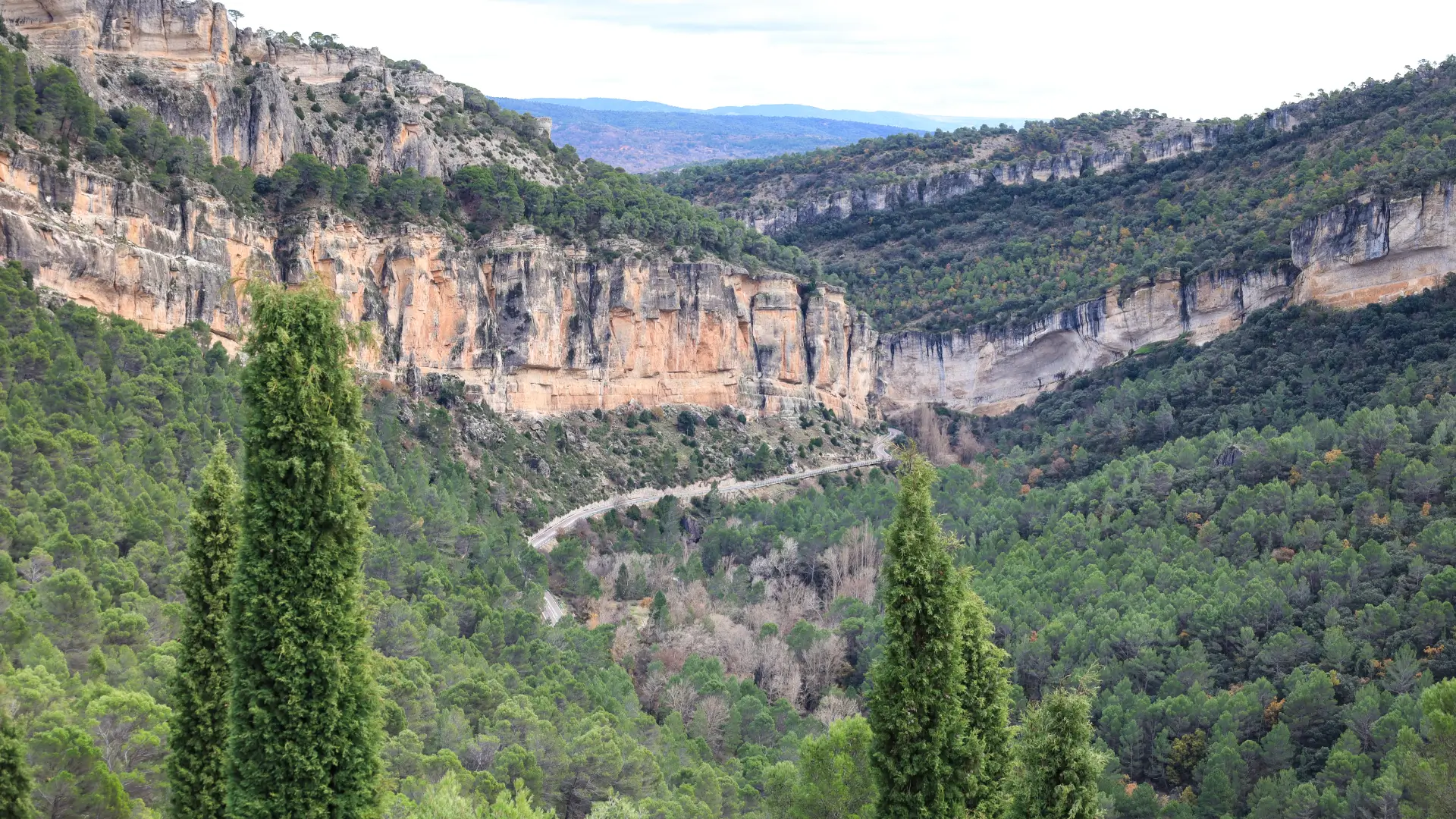
Tragacete is a small stone village near the top of the Serranía de Cuenca, in the east of Castilla-La Mancha. At about 1,281 metres, it is one of the highest villages in the region. People come for what lies around it: the Nacimiento del Río Cuervo, forest waterfalls, and the cold springs where the River Júcar is born. The air is fresh, the pine woods are deep, and the crowds of the plains never reach this far.
Why Visit Tragacete
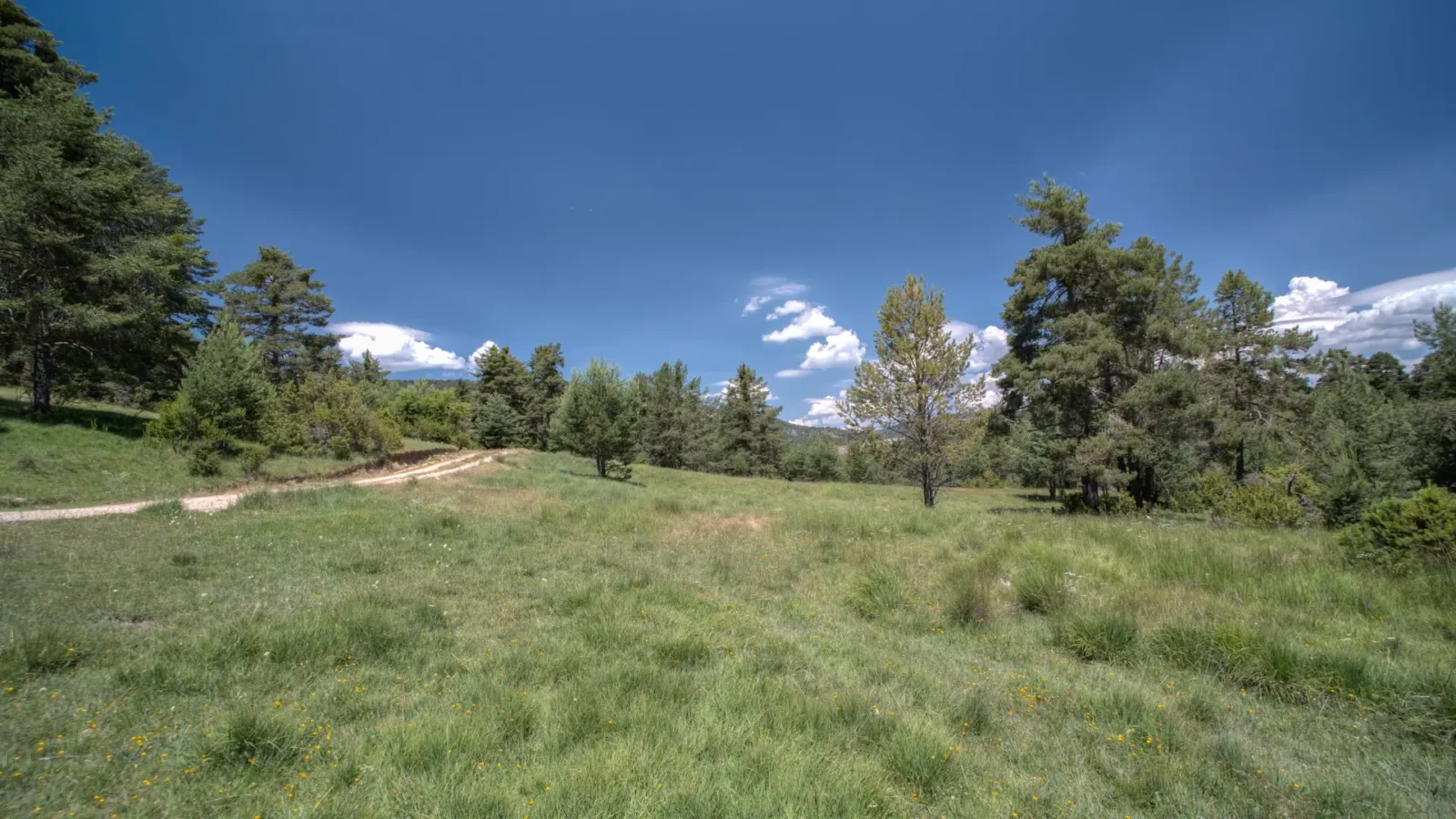
Tragacete is small, and it does not pretend otherwise. This is a village of stone houses, wooden balconies and steep streets, wrapped in some of the deepest pine forest in Spain. You do not come for grand monuments. You come for the mountains that surround it, and for the rare pleasure of a place that most visitors to Cuenca never reach.
The setting is the point. Tragacete sits high in the Serranía Alta, hemmed in by peaks that top 1,800 metres. Two of Spain's great rivers are born within a short drive: the Cuervo, with its famous spring and waterfalls, and the Júcar, which first rises in the woods just above the village. In autumn the forest fills with mushroom foragers. In winter, snow settles on the roofs. At any time of year, the air is clean and cool, and the pace is slow.
Who Tragacete is for
Tragacete suits walkers, drivers and anyone who wants nature over nightlife. If your idea of a good day is a forest trail to a waterfall, a slow lunch of local game, and a quiet evening under a sky full of stars, this is your kind of place. It is not for travellers who need shops, bars and buzz — the village is tiny, and that is exactly its charm. Families do well here too: the main walks are short and gentle, and children love the boardwalks and the running water.
Day trip or overnight?
You can treat Tragacete as a lunch stop on a day out from Cuenca — plenty of people do, driving up for the Río Cuervo and heading back down by dark. But that means an hour on the road each way, and you leave just as the mountains soften into evening. Our honest advice: stay the night. Tragacete is small, so the village itself won't fill a day — the springs, the forest and the high, cool air are the reason to be here, and they reward an unhurried visit. A perfect short stay looks like this: arrive for a late lunch of venison in the village, walk the botanical path to the Chorrera del Molino waterfall in the golden afternoon light, sleep at altitude with the windows open, then drive the short road to the Nacimiento del Río Cuervo first thing, before any day-trippers arrive. That shape simply doesn't fit into a day trip — and it is the difference between seeing Tragacete and feeling it.
What to See in Tragacete
Nacimiento del Río Cuervo
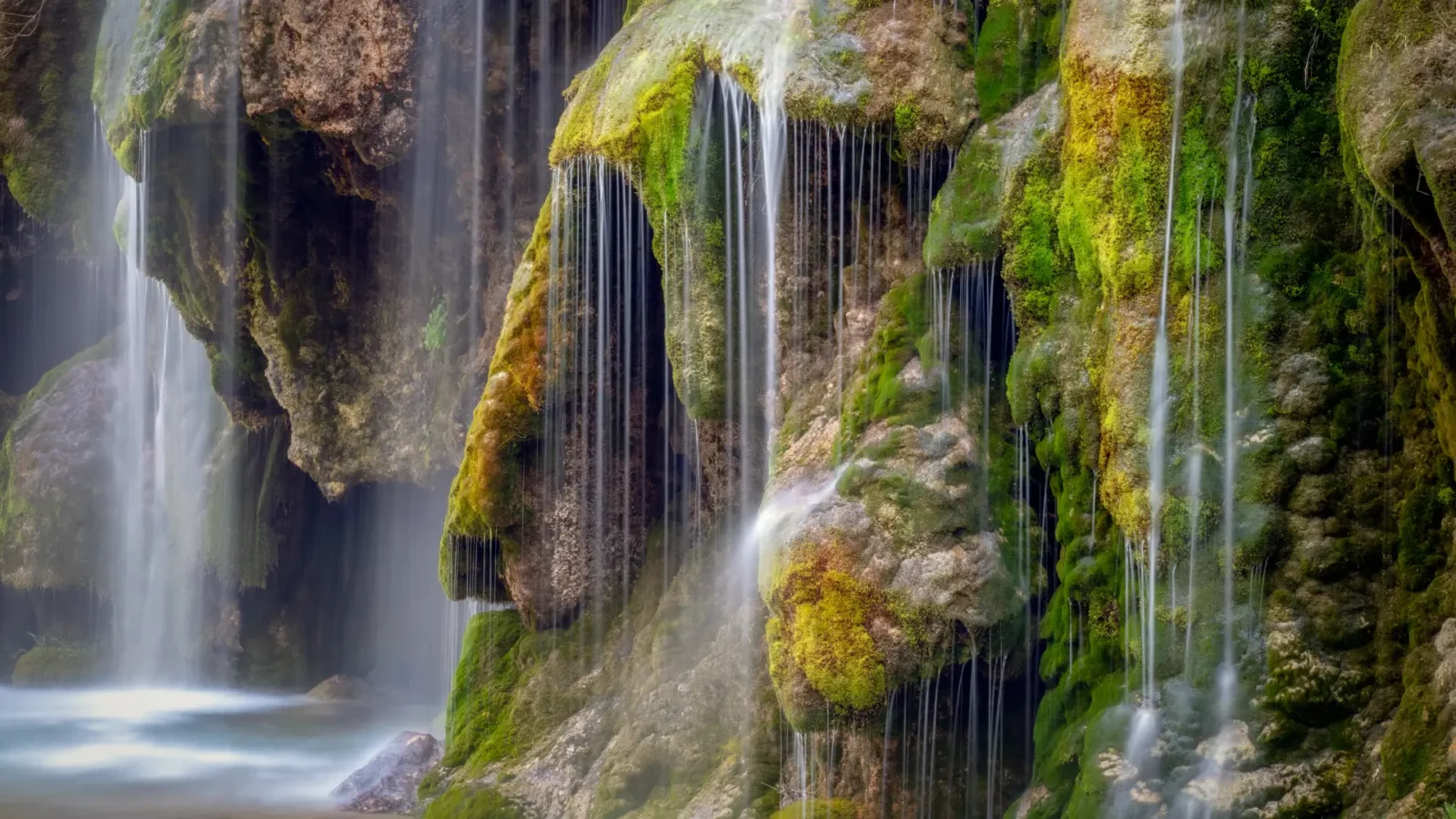
This is the reason most people climb into these mountains, and it earns the trip. The Nacimiento del Río Cuervo is a protected natural monument where the River Cuervo surfaces from a mossy cave mouth high in the forest, about 12 km (10–15 minutes) from Tragacete near the hamlet of Vega del Codorno. A free, easy trail of roughly 2 km leads up to it. The first stretch is a wooden boardwalk, gentle enough for most and passable with a pushchair as far as the main waterfalls; after that, steps and rough ground take over on the fuller circular walk. Allow one to two hours. Along the way the water spills over travertine rock in a run of small falls — the chorreras — draped in moss and green. One honest caveat, and it matters. The falls depend on the season. They are fullest in spring, after the snowmelt, and again after autumn rain. In a dry late summer or early autumn they can thin to a trickle or nearly dry out — the spring and the forest are always there, but the waterfalls may not be. In hard winter they can freeze into a spectacular sheet of ice. Set your expectations by the season, and you won’t be disappointed. Entry and parking are free, and the site is open all year. Dogs are welcome on a lead.
Nacimiento del Río Júcar
For a quieter, longer walk, carry on past the San Blas refuge to the source of the Júcar itself, in the forest below the Cerro de San Felipe. This is where one of Spain’s major rivers begins its 500-plus-kilometre journey to the Mediterranean. Far fewer people make it up here, so you often have the woods to yourself. It is a hushed, out-of-the-way spot — best kept for a day when you have time and energy to spare, as the round trip is longer and rougher than the Chorrera walk.
Chorrera del Molino
Closer to home, a second walk leads to the Chorrera del Molino, a waterfall of around 30 metres on the young River Júcar. It is about 2 km on foot from the village: cross the small bridge over the Júcar, follow the track toward the San Blas refuge, pass the little San Antonio shrine, and take the signed botanical path down to the river. The final riverside stretch is a boardwalk, easy for all ages, with benches to sit and watch the water. You can drive the first kilometre or so to a car park and walk from there, but the walk from the village is the nicer way. Like the Río Cuervo, the fall runs best after rain or snowmelt.
The village of Tragacete
The village rewards a slow wander. Its old quarter keeps the local mountain style: masonry houses with wooden beams and grille balconies, gathered around the Plaza de la Constitución and the church of San Miguel Arcángel. There is a park interpretation centre for the Serranía de Cuenca on the Travesía de San Felipe, a good first stop to understand the range you have come to explore — though it opens mainly at weekends and in high season, so treat it as a bonus rather than a fixed plan.
What to Do in Tragacete
Walk to a waterfall
The two waterfall walks are the heart of a stay. The Chorrera del Molino path (about 2 km each way from the village, easy) is the one to do on your first afternoon; the Río Cuervo trail (a short drive away, then a 2 km boardwalk-and-forest loop) is the classic morning outing. Both are well signed and suit most fitness levels. Wear proper shoes — the paths are stone and can be slippery when wet — and check the season, since the falls run low in dry spells.
Hike the high sierra
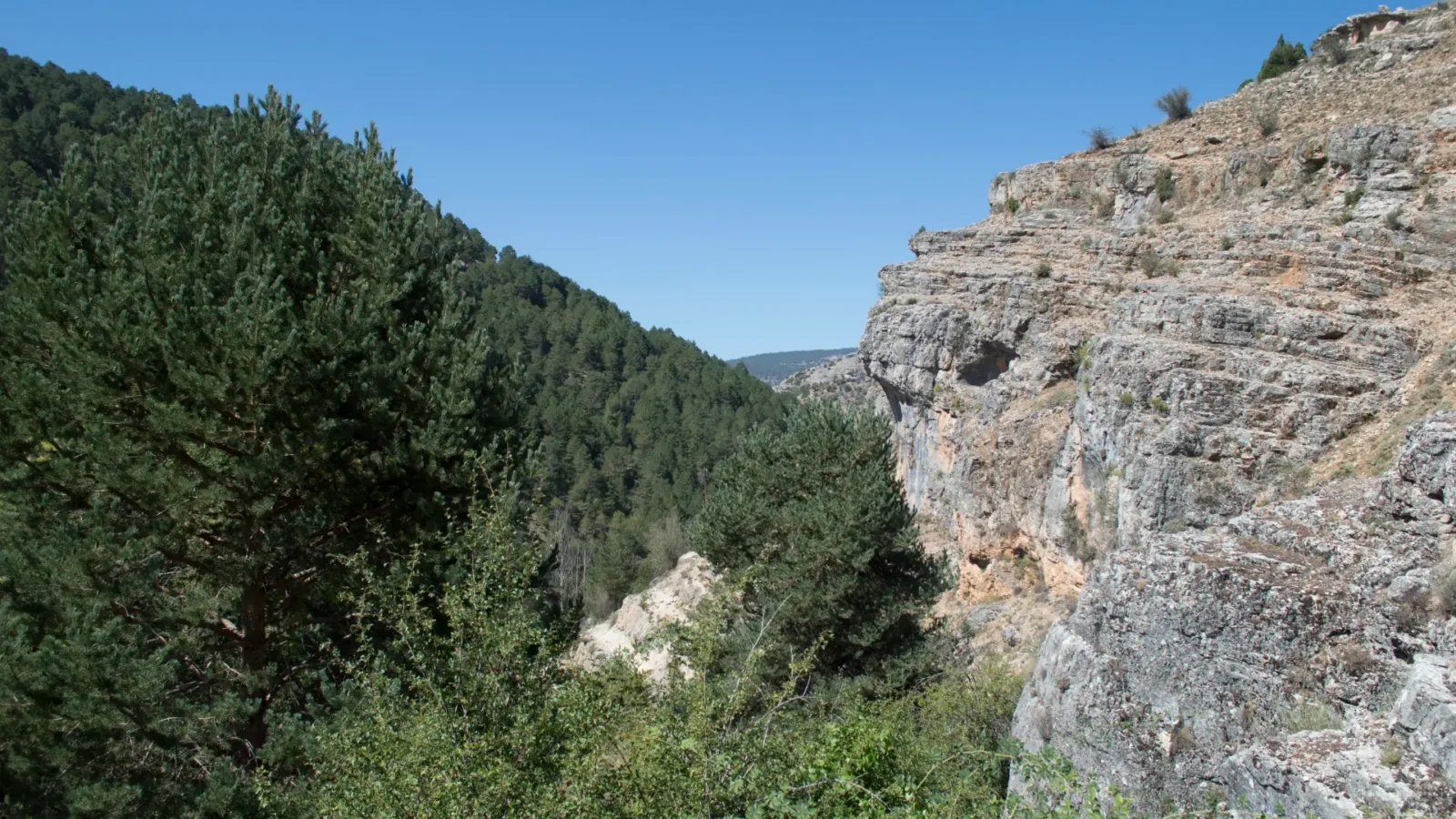
Beyond the easy walks, Tragacete is a serious base for the mountains. Marked trails climb toward the Cerro de San Felipe and La Mogorrita, two of the highest points in Cuenca province, with wide views over the whole range. These are longer, steeper routes for confident walkers, not gentle strolls. Ask at the interpretation centre or your accommodation about current conditions before you set off, especially outside summer.
Forage in mushroom season
In autumn, the pine forests around Tragacete draw mushroom foragers from across Spain. It is a genuine local season, and it shapes village life — rooms fill up on autumn weekends, and menus turn to wild mushrooms. If you want to forage yourself, go with someone who knows the woods and the rules; picking is regulated here. Even if you don’t, autumn is a beautiful time to visit, with the forest at its richest.
Eat the mountain kitchen
Tragacete’s food is an activity in its own right. The village kitchens are known for game you rarely find on the plains below — venison and fallow deer (gamo) — cooked slowly and served in generous mountain portions. A long lunch after a morning on the trails is part of the rhythm here. See Where to Eat below for where to start.
Prefer to go with a guide for any of this? Ask where you’re staying, or at the park interpretation centre on the Travesía de San Felipe — they’ll know what’s running, in which language, and can point you to something that fits.
Seasonal Events and Festivals
Tragacete’s calendar is quiet and tied to the mountains rather than to big festivals. Two seasons stand out for planning.
Mushroom season (autumn)the forests fill with foragers and the village gets busy at weekends. Book accommodation ahead if you come in autumn. Menus turn to wild mushrooms and game.
Snow season (winter)snow is common at this altitude, and the Río Cuervo falls can freeze into ice. Beautiful, but come prepared for cold and check road conditions.
Getting There and Around
Tragacete sits high in the Serranía Alta de Cuenca, at the end of the mountain roads north of the city of Cuenca. There is no useful public transport up here — this is self-drive country.
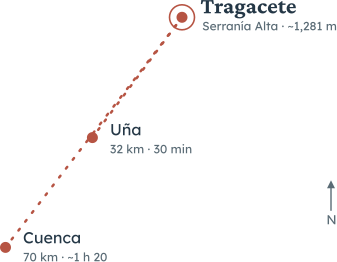
From Cuencaabout 1 hour 20 minutes with stops (roughly 70 km), north on the CM-2105 then CM-2106, climbing the Júcar gorge through Uña into the high sierra. It is a beautiful, winding drive, best done in daylight.
From Uñaabout 30 minutes by car (roughly 32 km), continuing north on the CM-2105 and CM-2106 — the previous stop on the road up.
Nearest airportMadrid (Adolfo Suárez–Barajas, MAD) is the main international gateway, about 220 km and roughly 2 hours 40 minutes to Cuenca plus the mountain drive; Valencia (VLC) is a good second option, about the same distance. There is no airport anywhere near the sierra — part of why it stays so quiet.
By trainthe fastest link is to Cuenca: a direct AVE high-speed train from Madrid reaches Cuenca’s Fernando Zóbel station in about an hour. From Cuenca you still need a car for the mountains.
Getting around
You don’t need a car inside Tragacete — it is tiny, and you park easily on the edge and walk. But you very much want one for the region: the Río Cuervo, the Júcar source, the high trails and the neighbouring villages are all short drives apart, with no bus to link them. One practical warning: fill your tank in Cuenca before you head up. Petrol stations are scarce in the high sierra, and you don’t want to climb toward Tragacete on a near-empty tank.
Looking for a ready-made plan? See our Castilla-La Mancha road trips.
Practical Info
- ClimateTragacete is high, so it is much cooler than the La Mancha plains — the yearly average is around 9.5°C. Winters are cold, with frequent snow and ice. Summers are mild for Spain: July and August days often sit in the mid-to-high 20s°C, though heatwaves can push them into the low 30s, and nights stay cool even in high summer. Pack a warm layer whatever the month. It is wettest in spring and autumn (April is the rainiest month); July is the driest.
- Free and open all yearThe Río Cuervo natural monument has free entry and free parking, open year-round; the walk is a boardwalk-and-forest trail. No booking needed.
- Waterfalls follow the seasonThe Río Cuervo, Chorrera del Molino and Júcar-source falls run fullest after snowmelt (spring) and autumn rain, and can run very low in a dry late summer. The springs and forest are worth it either way — just set expectations by the season.
- Cash is handySmall mountain villages can be cash-first, and card payment is not guaranteed everywhere. Bring some.
- Interpretation centreThe Serranía de Cuenca park interpretation centre in Tragacete (Travesía de San Felipe) opens mainly at weekends and in high season, and hours change through the year — check the official protected-areas site for current times rather than relying on a fixed schedule.
- Sturdy shoes and waterFor the stone paths and the stepped sections; river water isn’t drinkable on the longer walks.
Where to Eat in Tragacete
You’ll eat well in Tragacete, and it is one of the real pleasures of coming up here. This is mountain-game country: venison and fallow deer (gamo) that you won’t find on the plains, alongside hearty stews, wild mushrooms in autumn, and zarajos — the Cuenca speciality of lamb offal wound on vine shoots. The village is small, so the rule is simple: reserve ahead at weekends and on holidays, because there are only a handful of kitchens and they fill fast. One important note for planning — out of season, some of Tragacete’s restaurants close, which is a strong reason to sleep at a hostal that has its own restaurant (see Where to Stay).
Signature to try: local venison or gamo*, and* zarajos if you want the true Cuenca mountain plate.
A long-standing village restaurant on the square, known for hearty local cooking and game at fair prices. A homely, old-inn feel and a reliable stop after a morning on the trails.
Mesón El Vasallo
On the Plaza de la Constitución, a good place to try local dishes like zarajos, ajoarriero and wild-boar meatballs. Generous portions in a lively village-bar setting.
The restaurant at the family-run hostal (see Where to Stay) is a dependable choice, popular with hikers and riders, and it keeps you fed when other kitchens are closed out of season. Ask about the rabo de toro.
El Bar de Molina
A small, welcoming bar on Calle Real doing well-priced local food — pickled trout, venison with fruit — in more than generous portions. A find for a leisurely, low-key meal.
A simple village bar-restaurant with affordable set menus and honest home cooking. Friendly and unpretentious — a good-value option for a relaxed lunch.
Where to Stay in Tragacete
Picture it: the day-trippers have driven back down to Cuenca, the light drops behind the peaks, and Tragacete goes quiet. You’ve eaten venison by a warm fire, and tomorrow the Río Cuervo is a ten-minute drive rather than an hour. That is the case for sleeping up here — and in a village this high, a warm bed with dinner attached is worth more than any view. The options below are small, family-run and honest; this is not a place for chain hotels.
Hostal Restaurante Serranía
A family-run mountain hostal in the village, popular with hikers and riders, with its own restaurant — worth knowing here, because Tragacete’s kitchens can close out of season and this one keeps you fed after a day in the high forest. A plain, warm base at ~1,281 m, a short walk from the Chorrera del Molino path and a short drive from the Río Cuervo. Book ahead in autumn (mushroom season) and on long weekends.
Check prices & availability for Hostal Restaurante Serranía on Booking.comHotel El Gamo
A straightforward two-star village hotel on Calle Fernando Royuela, well placed for the walks and 12 km from the Río Cuervo. Rooms are simple and comfortable; the location and the mountain quiet are the draw. Handy if you want a conventional hotel rather than a hostal. (No dinner service — plan meals in the village.)
Check prices & availability for Hotel El Gamo on the accommodation's websiteEl Capricho de la Serranía
A set of beautifully kept rural houses on the edge of the village, warmly run and spotless, with kitchens and space to spread out. Ideal for a couple’s getaway or a family who want their own front door. Consistently high praise from guests.
Check prices & availability for El Capricho de la Serranía on Booking.comApartamentos Patas y Patetas
Warmly run, spotless mountain apartments in the heart of the village, on Calle Mariano Catalina. Renovated but keeping their original wooden beams, with well-equipped kitchens and a pellet stove for cold nights — the kind of cosy, independent base that suits a couple or a small family who’d rather cook and settle in. A welcome basket is a nice touch.
Check prices & availability for Apartamentos Patas y Patetas on the accommodation's websiteApartamentos Júcar (Hostal Rural)
Simple, well-located apartments on Calle Fernando Royuela, a budget-friendly self-catering base in the middle of the village. Basic but comfortable, and handy if you’d rather cook than eat out every night.
Check prices & availability for Apartamentos Júcar (Hostal Rural) on the accommodation's websiteAlojamiento Rural Los Gancheros
A rural house in the village, a comfortable self-catering option for a small group or family wanting a quiet, independent base at altitude.
Check prices & availability for Alojamiento Rural Los Gancheros on Booking.com
Region, Nearby and Routes
Part of Castilla-La Mancha
Tragacete is in Castilla-La Mancha
Part of these routes
Tragacete is the final stop stop on our Into the Enchanted Mountains road trip a three-day drive from Cuenca up into the high Serranía de Cuenca. It is the mountain base for the third night, and where the optional fourth day (a there-and-back trip to the Hoz de Beteta) begins, with a second night here.
Frequently Asked Questions
Yes, if you love mountains and quiet. Tragacete is a small stone village high in the Serranía de Cuenca, and the draw is what surrounds it: the Río Cuervo spring and waterfalls, the source of the River Júcar, deep pine forest and cool, clean air. It is not a monument town — it is a nature base, and a lovely one.
For its setting near the top of the Serranía Alta de Cuenca, at about 1,281 metres, and for the natural sights around it — above all the Nacimiento del Río Cuervo. It is also known for mountain game on its menus (venison and fallow deer) and, in autumn, for wild-mushroom foraging.
One or two nights. The village itself is tiny, but the walks and springs around it fill a full day or two comfortably: an afternoon on the Chorrera del Molino path, a morning at the Río Cuervo, and a longer walk to the Júcar source if you have time. If you add the Hoz de Beteta day trip, plan two nights.
You can — it is about 1 hour 20 minutes each way, and many people drive up just for the Río Cuervo. But you spend a lot of the day on winding mountain roads, and you miss the best of it: the quiet evening and early morning once the day-trippers have gone. Staying the night is far more rewarding.
Late spring and early autumn are ideal — the waterfalls run well and the forest has colour. Summer is green and pleasantly cool at altitude, with July and August days usually in the mid-to-high 20s°C (occasionally low 30s in a heatwave) and cool nights. Winter is beautiful under snow but cold, with ice on the trails; pack warm whatever the season, as the sierra is far cooler than the plains.
It depends on the season. The Río Cuervo and Chorrera del Molino falls are fullest in spring after snowmelt and after autumn rain. In a dry late summer or early autumn they can run very low or nearly dry, though the springs and the forest walks are still worth the trip. In hard winter the Río Cuervo can freeze into ice.
For most travellers, the family-run Hostal Restaurante Serranía in the village is the pick — warm, welcoming, and with its own restaurant, which matters when other kitchens close out of season. Hotel El Gamo is a simple hotel alternative, and El Capricho de la Serranía and Apartamentos Júcar are good self-catering options for couples and families. Book ahead in autumn and on long weekends.
Try Restaurante El Gamo or Mesón El Vasallo on the square for hearty local cooking and game, El Bar de Molina or Bar-Restaurante El Coto for well-priced village food, or the restaurant at Hostal Serranía if you’re staying there. Look for venison, fallow deer and zarajos — the mountain dishes you won’t find down on the plains. Reserve at weekends, as kitchens are few and fill fast.