
Toledo: The City of Three Cultures, After the Crowds Have Gone
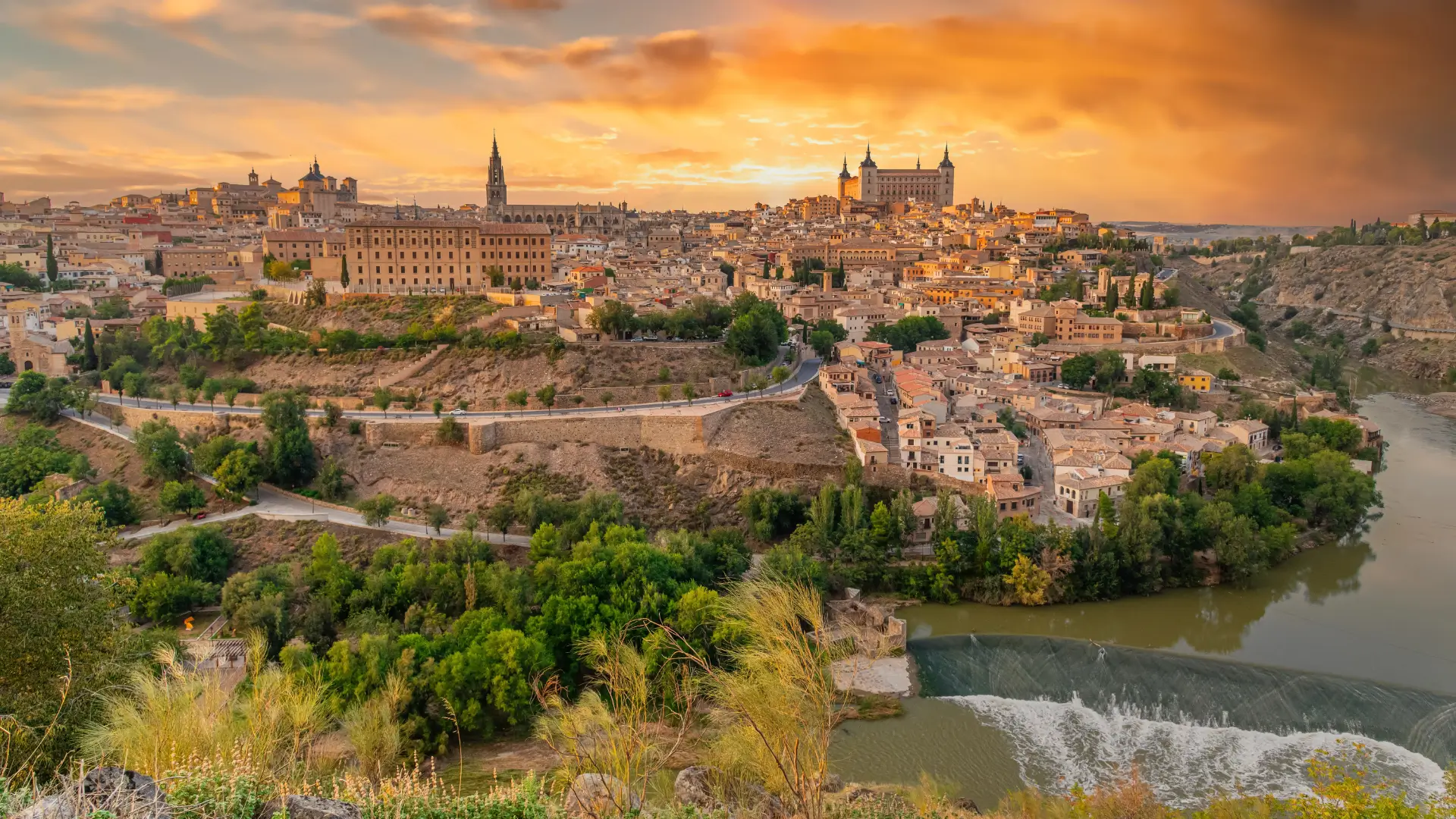
Toledo sits on a granite hill above a loop of the River Tagus. It lies an hour south of Madrid, and it opens our Don Quixote route. The old town is a UNESCO World Heritage Site. A Gothic cathedral, a Moorish fortress, two medieval synagogues and a mosque from the year 999 all stand within a few streets. Millions come here. Almost all of them leave by evening — and that is the point.
Why Visit Toledo
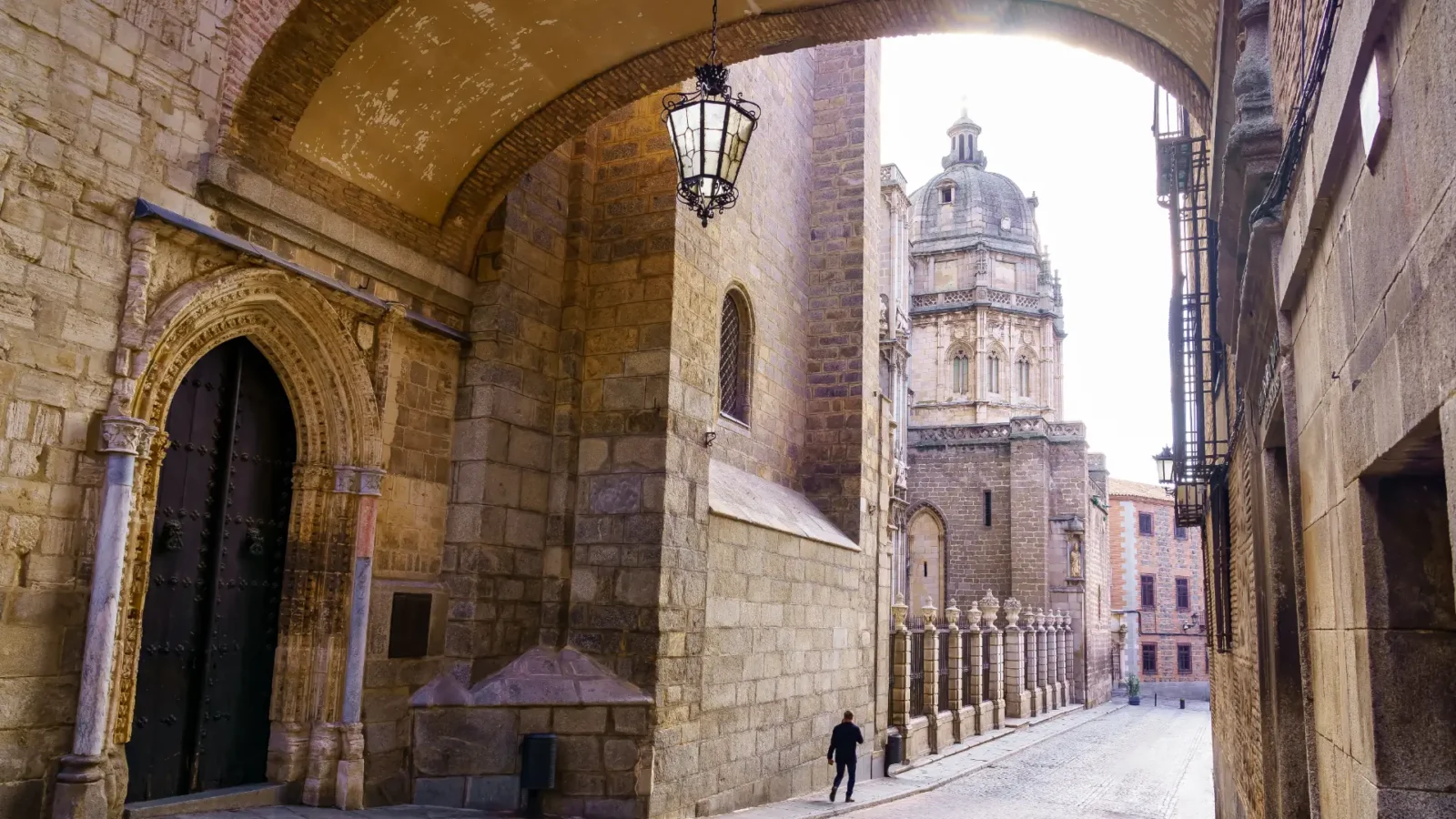
Toledo is not a quiet village, and this page will not pretend otherwise. It is one of the great cities of Spain. It draws large numbers of visitors, and for good reason. For almost a thousand years, Christian, Jewish and Muslim Toledo grew side by side on the same hill. You can walk that history in one afternoon. A cathedral stands on the site of a mosque. A synagogue rises on horseshoe arches. A mosque from the year 999 later became a chapel. Few places in Europe hold so much in so small a space.
What day-trippers miss in Toledo
Most visitors come from Madrid by coach or train. They spend four or five hours inside the walls, then leave. That rhythm is predictable, so you can plan around it. The streets fill through the late morning and stay busy until mid-afternoon. By early evening they empty again. What follows is a different city: lit stone, near-silent lanes, and restaurants full of people who live here. You have a car and your own schedule. That lets you reach what the day circuit skips — the viewpoints across the river, the quiet convent where El Greco was buried, and the free Visigothic museum in a Mudéjar church.
Day trip or overnight?
You can see Toledo's headline sights in a single full day. Plenty of people do. But a day trip puts you inside the walls at exactly the hours everyone else is there, and takes you out again just as the city becomes itself. Our honest advice: stay one night, ideally two. A perfect short visit looks like this. Arrive mid-afternoon, park below the walls and ride the escalators up. Walk the Jewish quarter as the light softens, then cross the Puente de San Martín and climb to the Mirador del Valle for the classic skyline at sunset. Eat late inside the walls, then wander back through empty lanes. Next morning, be at the cathedral when it opens, before the first coaches arrive — you will have Spain's greatest Gothic interior almost to yourself. That sequence does not fit into a day trip. That is the whole argument.
What to See in Toledo

Catedral Primada de Santa María
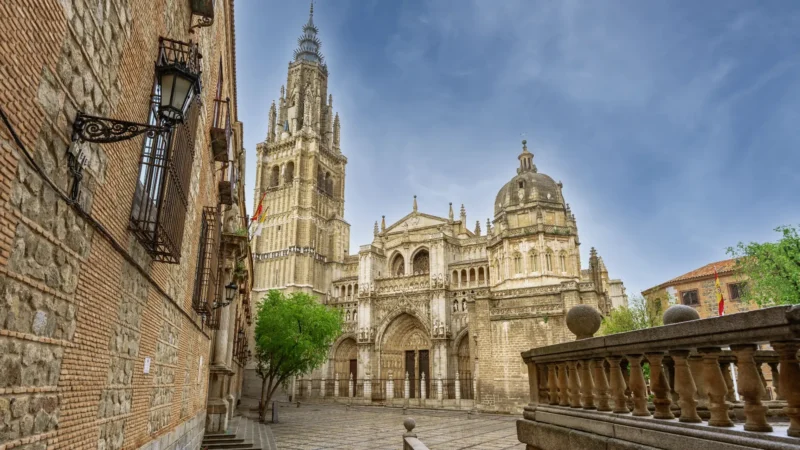
Spain’s primatial cathedral was begun in 1226 on the site of the city’s main mosque, which itself replaced a Visigothic church. It took more than two centuries to finish, so Gothic bones carry Renaissance and Baroque additions. The cultural visit covers the main chapel, the choir, the sacristy, the cloister and the treasury. Come at opening time: the first ninety minutes are the calmest of the day.
Alcázar de Toledo & Museo del Ejército
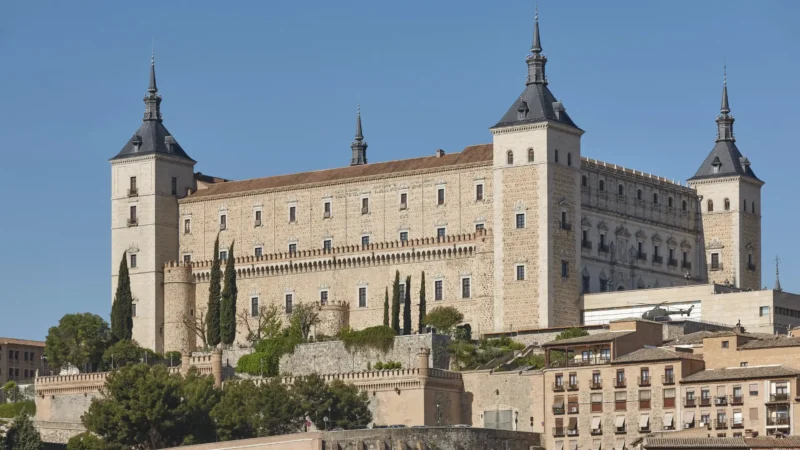
The square fortress crowning the hill began as a Moorish citadel and was rebuilt many times over. It now holds the national Army Museum, which traces Spanish history alongside archaeological remains found during the works. Two rooms are currently closed for building work, and the museum shuts on Mondays. Entry is free on Wednesdays.
Iglesia de Santo Tomé — El Greco's "Burial of the Count of Orgaz"
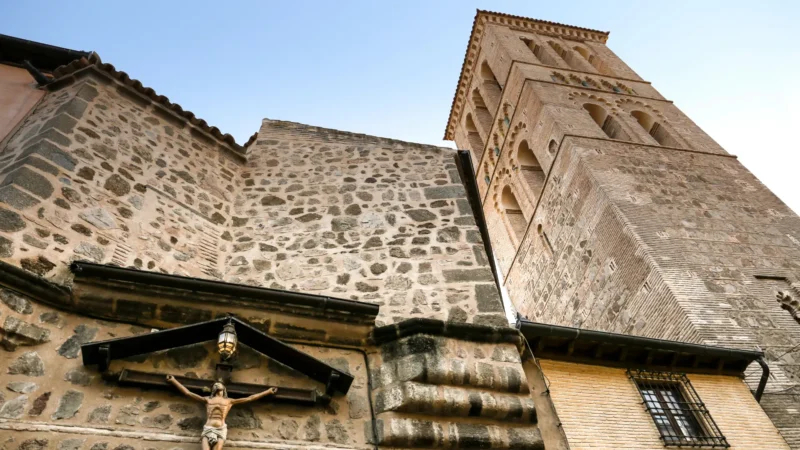
This modest Mudéjar church holds one painting, and it is enough. El Greco finished “The Burial of the Count of Orgaz” here in the 1580s, and it still hangs in the space it was painted for — earthly mourners below, a swirling heaven above. The room is small, so the queue moves in waves. Early or late is far better than midday.
Sinagoga de Santa María la Blanca
Older than El Tránsito and stranger. Rows of white horseshoe arches on brick pillars give the interior an airy, almost North African feel. It was built as a synagogue by Muslim craftsmen for a Jewish congregation under Christian rule — the three cultures in one building. It is one of the seven monuments covered by the Pulsera Turística.
Mezquita del Cristo de la Luz
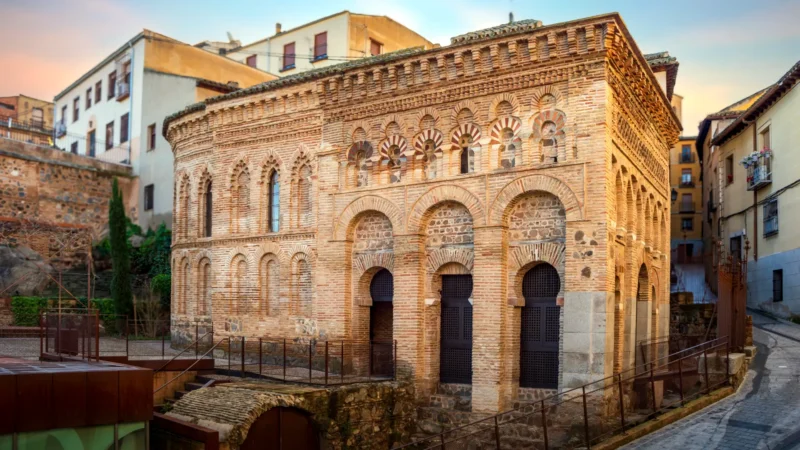
The oldest standing building in Toledo, raised in the year 999 as a small mosque beside a city gate. A Christian apse was added after the conquest, leaving a hybrid of horseshoe arches and a faded Christ Pantocrator fresco. The garden behind it looks out over the northern edge of the city, and is usually quiet.
Monasterio de San Juan de los Reyes
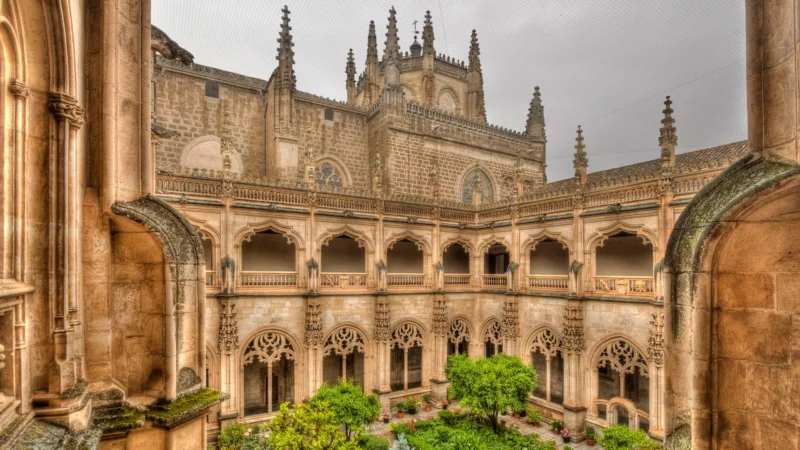
Ordered by the Catholic Monarchs, this is Isabelline Gothic at full volume. The two-storey cloister, with its carved arcades and orange trees, is the reason to come — one of the calmest enclosed spaces in the old town, even on a busy day. The chains hanging on the outer wall are said to be those of Christian prisoners freed at Granada.
Sinagoga del Tránsito & Museo Sefardí
The outside is plain brick. Step inside and it changes: this is the finest old synagogue interior left in Spain. The walls are carved stucco, with Hebrew script and a rich cedar-wood ceiling. It was built in the fourteenth century for Samuel Levi, treasurer to King Pedro I. Today it holds the Sephardic Museum, on Jewish life in Spain. Closed on Mondays.
Puente de San Martín & Puente de Alcántara
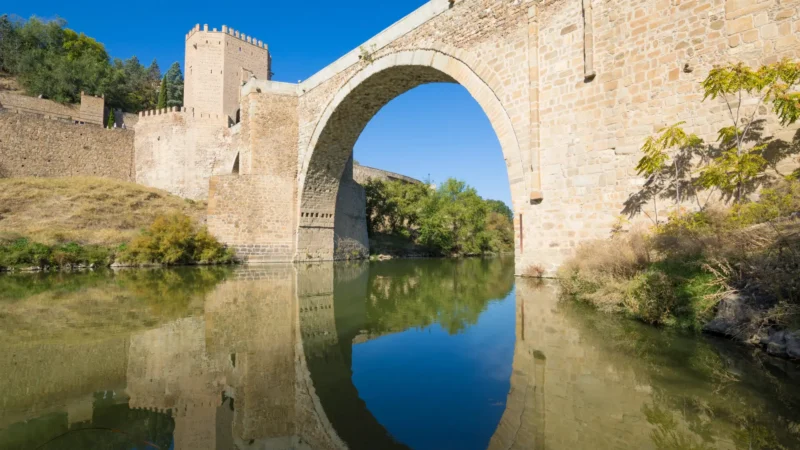
Two medieval bridges guard the two ends of the gorge. San Martín, to the west, is the one to cross on foot at golden hour; Alcántara, to the east, sits below the Alcázar on Roman foundations. Both are free, open at all hours, and give the views that explain why the city was built here.


What to Do in Toledo
Walk the three quarters in one loop
Toledo is best understood on foot. The old town is small enough to cross in twenty minutes. A natural circuit runs from Plaza de Zocodover down to the cathedral. It then heads west into the Jewish quarter, past Santo Tomé and the two synagogues, out to San Juan de los Reyes. Come back up through the quieter northern lanes, past Santo Domingo el Antiguo and the free Visigothic museum in the Mudéjar church of San Román. Walk it once in daylight for the buildings, and again after dark for the city itself. Signposting is good, and the lanes are lit at night.
See the cathedral properly, not quickly
The cathedral visit takes far longer than people allow. There are five naves, a sacristy hung with El Grecos and a Goya, a carved double choir, the Baroque Transparente, and the Custodia de Arfe in the treasury. Rushing it is the most common mistake here. Book a fixed entry slot ahead and give it two hours. A guide will explain the layers rather than leave you guessing — who built what, why the mosque was demolished after a promise to keep it, and what the Transparente was designed to do with sunlight. That earns its cost here more than at any other sight in the city.
Take an evening walking tour
Toledo has a strong tradition of after-dark tours. They cover legends, underground passages and the illuminated monuments. These suit the overnight visitor exactly. They run at the hour the day-trippers have gone, when the streets are yours. A good guide knows which courtyards and viewpoints stay open late, and will show you corners you would not find alone.
Cross the river and climb to the viewpoints
Here is the walk most visitors never make. Cross the Puente de San Martín, then climb the far bank on the Senda Ecológica path to the Mirador del Valle. It takes about forty minutes uphill. The reward is the view the city is famous for. With a car you can drive the Carretera de Circunvalación instead, stopping at several miradors along it. Sunrise is the quiet slot. Sunset is beautiful, but shared with a crowd.
See El Greco's tomb where almost no one goes
El Greco is buried in the crypt of the Convento de Santo Domingo el Antiguo, a working convent north of the main circuit. You look down at his tomb through a small opening in the floor. Several of his earliest Spanish paintings hang above the altar, in the setting they were made for. It is often almost empty. The nuns sell their own marzipan through a wooden turntable, so you never see who served you — buy some on the way out.
Taste the marzipan where it is made
Mazapán de Toledo carries EU protected status. The rules are strict: at least half the paste must be ground almond. It is made and sold all year, not just at Christmas. Buy it from an obrador rather than a souvenir stall — or from the convent turntable described above, which is the quietest version of the errand.
Prefer to go with a guide for any of this? Ask where you're staying, or at the tourist office on the Plaza del Consistorio, opposite the cathedral — they'll know what's running, in which language, and can point you to something that fits.
Seasonal Events and Festivals
Corpus Christi (late May or June)Toledo’s great fiesta, and a Fiesta de Interés Turístico Internacional. Corpus is a moveable feast tied to Easter, so the date shifts every year; Toledo keeps it on the Thursday rather than moving it to a Sunday. The Custodia de Arfe, a towering silver-gilt monstrance, leaves the cathedral and is carried through streets covered with awnings and strewn with thyme and rosemary. Sixteenth- and seventeenth-century tapestries are hung on the cathedral walls for the day, and private courtyards open to the public during the festival week — the only time of year you can see inside them. Be honest with yourself about this one: it is crowded, hot, and you will need to claim a spot on the route hours ahead. It is still the single best day to be in Toledo. Book accommodation months in advance.
Semana Santa (March or April)Holy Week processions wind through the old town, and churches, convents and monasteries that stay shut all year open their doors. The night processions in near-empty medieval streets are the ones to see.
Romería de la Virgen del Valle (1 May)A fixed-date local pilgrimage to the hermitage across the river, on the hill below the Mirador del Valle. This one is for Toledans more than for visitors, which is precisely its appeal.
Fiestas de la Virgen del Sagrario (around 15 August)The city’s patronal feast, anchored to the fixed feast of the Assumption, with a week of events around it. On the day itself, people queue in the cathedral cloister from early morning to drink water from clay botijos, a tradition several centuries old. A medieval market fills the streets during the same week.
For exact dates each year, check the municipal tourism site and the cathedral’s own calendar — both publish the programme once it is set.
Getting There and Around
Toledo sits about 70 km south of Madrid, at the end of the A-42 motorway, on a hill wrapped almost entirely by the River Tagus.
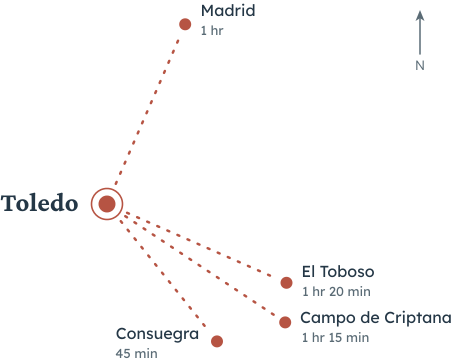
From Madridabout 1 hour by car via the A-42 (roughly 70 km). Direct Renfe Avant high-speed trains run from Madrid Puerta de Atocha in about 33–35 minutes, roughly 15 services a day.
From Madrid-Barajas airportabout 1 hour 5 minutes by car; this is the main international gateway and the obvious place to collect a hire car.
To Consuegrathe next stop on the Don Quixote route, about 45 minutes south-east via the CM-42 (roughly 62 km).
Nearest airportsAdolfo Suárez Madrid-Barajas is the practical choice at about 80 km. There is no commercial airport closer.
By trainToledo’s station is a Neo-Mudéjar landmark in its own right, but it sits outside the walls across the river — reckon on a bus, a taxi, or a steep twenty-minute walk up to Zocodover.
Getting around
Inside the walls you do not want a car. The old town is small, steep and largely pedestrian, and the lanes were built for mules. Leave the car below and walk. Free-standing escalators run up from the lower town at Safont (near the bus station) and at Recaredo, and they climb most of the hill in under ten minutes.
Parking is the one real friction. Street parking inside the historic centre is tightly zoned and not worth attempting. The large car parks below the walls — Safont, Azarquiel, Circo Romano — are the sensible choice, and the escalators connect them to the centre; note that Safont moved from free to a paid ORA zone in 2025, so check the signage on arrival. There are paid underground garages inside the walls if your hotel has no space, and several old-town hotels offer parking for a nightly fee. If you are staying overnight, ask your hotel about access before you drive in: some streets are restricted, and the approach lanes are genuinely narrow.
But you do want a car for the region. Toledo is where this route begins, and everything that follows — the windmill ridge at Consuegra, the plains around Campo de Criptana, the back roads to El Toboso — is only realistically reachable by road. Collect the car at Barajas, use it to reach the city, park it below the walls, and pick it up again when you head east.
Looking for a ready-made plan? See our Castilla-La Mancha road trips.
Practical Info
- How ticketing worksThere is no single ticket for the whole city. The Pulsera Turística is a fabric wristband covering seven monuments — Santa María la Blanca, San Juan de los Reyes, Santo Tomé, the Mezquita del Cristo de la Luz, the Iglesia de El Salvador, the Iglesia de los Jesuitas and the Real Colegio de Doncellas Nobles — and works out considerably cheaper than paying at each door. It is valid for one entry per monument, is sold online or at the ticket desk of any of the seven, and runs for a week from first use. Buy it from the official operator, Toledo Monumental, which has an English site. Note what it does not cover: the cathedral and the Alcázar are ticketed separately.
- Cathedral ticketscome from the cathedral’s own site, which also lists current hours. Entry is by timed slot through the Puerta Llana; booking ahead saves a queue at the shop opposite.
- Army Museum / Alcázarinformation is on the museum’s own site, which has an English version. It closes on Mondays, is free on Wednesdays, and two rooms of the permanent display are shut for building work at the time of writing.
- Best time of dayThe first ninety minutes after opening and the last two hours of daylight are the calm windows. Between about 11am and 4pm the main circuit is at its busiest.
- Mondays are awkwardThe Sephardic Museum, the Museo del Greco, the Museo de los Concilios and the Army Museum all close. The Pulsera monuments and the cathedral stay open, so a Monday visit still works — it just changes the order.
- Hours and prices are not listed here on purposeThey change with the season and the year. Use the official links above for current figures.
- WalkingSteep cobbled lanes, many steps, few level routes. Wear proper shoes. The escalators solve the climb from the lower town but not the gradients inside.
- ClimateToledo has hot, dry summers and cool winters. July is the hottest month, with average highs around 34–35°C and almost no rain. April, May, September and October are the comfortable months, roughly 20–29°C by day. Rain is modest all year, around 450 mm, falling mostly in spring and autumn — October is the wettest month, July by far the driest.
Where to Eat in Toledo
You will eat well in Toledo, at every budget — but not on the cathedral square, where the menus are printed in six languages and priced for people who will never come back. Walk two streets off the main circuit and the city changes. This is game country: partridge, venison and boar appear on menus all winter, alongside the local Manchego, and the city’s own dish, carcamusas — a pork and tomato stew with peas, invented here in the 1950s and still the thing to order. Finish with mazapán, the protected Toledo marzipan. Two simple rules make it easy: eat lunch late and away from the plazas, and book dinner inside the walls so you are already where the evening is best.
The city’s benchmark kitchen, in a building near the cathedral with a ninth-century cellar beneath it holding tens of thousands of bottles. Tasting menus built on local game, and a wine list that justifies the trip on its own. Book well ahead. Closed Mondays.
Outside the walls near the Roman circus, and a Toledo institution for well over a century. Partridge is the house dish, and the garden terrace is a genuine relief in summer. Easy to reach by car, with parking nearby — useful on an arrival or departure day.
A tavern with a serious kitchen below, on a quiet lane near the cathedral. The cooking is contemporary Spanish with ideas borrowed from further afield, and the cocktail list is unusually good. Open late, which makes it one of the better answers to dinner after an evening walk.
North of the tourist circuit and full of locals who all seem to know each other. Straightforward Castilian cooking done very well — carcamusas, artichokes, venison in adobo, excellent croquetas. Lunch is the main event; book ahead, because it fills. Closed Sundays.
The birthplace of carcamusas, on a small square just off Zocodover, and still the place to eat them. A 1950s room with wooden beams, tiled walls and no interest in changing. Small, always full, and worth the wait. Closed Wednesdays.
In the Jewish quarter, a short walk from the synagogues, which makes it a natural lunch stop mid-circuit. Carcamusas, torreznos and handmade croquetas, plus their own wine. Friendly, and used to visitors without being a tourist trap.
Where to Stay in Toledo
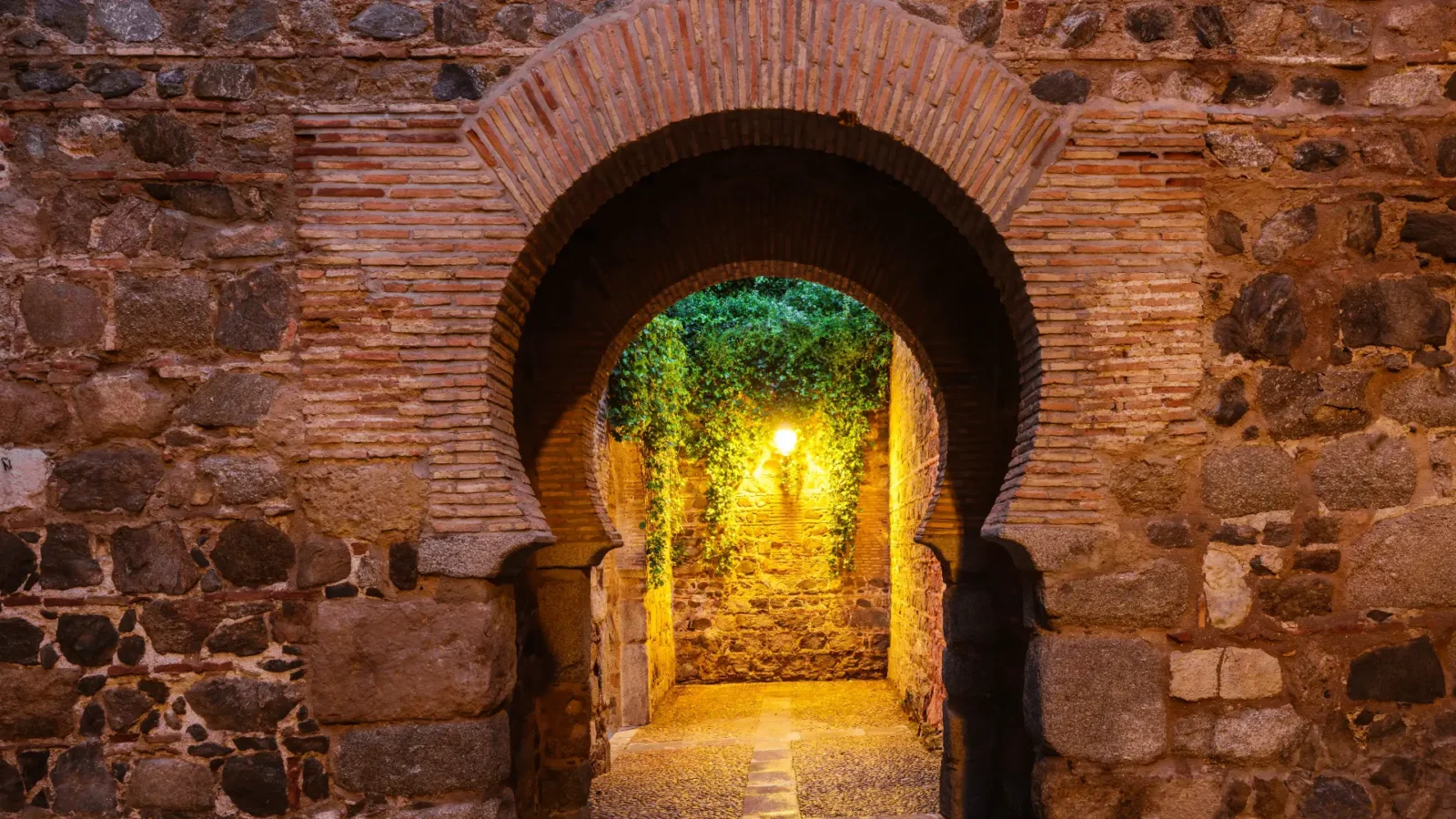
Here is the argument for staying, in one picture. It is ten at night. The last train to Madrid went hours ago. You are walking back from dinner through lanes that were shoulder-to-shoulder at noon and are now completely empty, with the cathedral lit above the rooftops and your own footsteps echoing off the stone. That city is only available to people who booked a bed. These are the ones we would book.
Eugenia de Montijo, Autograph Collection
The former residence of Empress Eugénie, on a quiet square in the old town and a seven-minute walk from the cathedral. The most polished stay inside the walls, with a spa and a bar worth an evening. For travellers who want the historic setting without giving up modern comfort.
Check prices & availability for Eugenia de Montijo, Autograph Collection on the accommodation's websiteParador de Toledo
Across the river on the Cerro del Emperador, with the view that appears on every postcard of the city — the whole of Toledo, framed by the Tagus, straight from the terrace. Ask for a city-facing room with a balcony; the sunset from it is the reason to book. Easy parking, and a real advantage on a road trip. You are a short drive from the walls rather than inside them.
Check prices & availability for Parador de Toledo on the accommodation's websiteLa Posada de Manolo
In a building dating from 1450, a hundred metres from the cathedral. Each floor is themed around one of the three cultures, which sounds gimmicky and somehow isn’t. Breakfast is served on a roof terrace facing the cathedral. Steep approach on foot — take a taxi with luggage.
Check prices & availability for La Posada de Manolo on the accommodation's websiteHospedería Casa de Cisneros
A sixteenth-century house directly opposite the cathedral, built over Moorish remains that are visible in the rooms. Rooms are small; the location and the rooftop terrace are extraordinary. You step out of the door into the best square in the city.
Check prices & availability for Hospedería Casa de Cisneros on the accommodation's websiteHotel Boutique Posada de Sillería
A restored sixteenth-century inn built around a Castilian courtyard, on a lane just off Zocodover. It sits on one of the streets the Corpus procession passes, which during that week is worth knowing. Restaurant on site, quiet rooms, four minutes from the cathedral.
Check prices & availability for Hotel Boutique Posada de Sillería on the accommodation's websiteHotel Santa Isabel
A restored fifteenth-century building on a quiet lane, two minutes’ walk from the cathedral and about five from Zocodover. The roof terrace looks straight across the old-town skyline, which is a remarkable thing to get at this price. Simple rooms, genuinely warm staff, on-site parking for a nightly fee. This is the night-one pick on our Don Quixote route.
Check prices & availability for Hotel Santa Isabel on the accommodation's website
Region, Nearby and Routes
How Toledo works as a road-trip bookend. A busy city is a welcome change of pace on this trip. The rest of the route is about empty plains. Toledo can sit at either end of the drive. As an opening, fly into Barajas and collect the car. Spend one or two nights here, then head south-east into La Mancha with the biggest sights behind you. As a finish, come back off the plain for a last urban night before the flight. Toledo is about an hour from the airport. That makes it a far more civilised final stop than Madrid. You can also extend beyond the route. From the eastern end, Cuenca and its hanging houses are roughly 1 hour 30 minutes away. Valencia and the coast are about 2 hours 30 minutes. Both are real options rather than recommendations — the plain is what you came for.
Part of Castilla-La Mancha
Toledo is in Castilla-La Mancha
Part of these routes
Toledo is the opening stop on our In the footsteps of Don Quixote road trip see the full route.
Nearby places
- ConsuegraTwelve windmills and a Knights’ castle crown the ridge above this classic La Mancha town.
- Campo de CriptanaTen white windmills rise straight from a whitewashed old town, giants and cave houses together.
- El TobosoThe white Toledo village Cervantes gave to Dulcinea, with Quixote quotes on the walls and a Gothic church locals call the cathedral of La Mancha.
- Villanueva de los InfantesThe Golden Age capital of the Campo de Montiel, where Quevedo died and Don Quixote may have lived.
Frequently Asked Questions
Yes. Toledo is one of Spain’s great historic cities, and its old town is a UNESCO World Heritage Site. A Gothic cathedral, a hilltop fortress, two medieval synagogues, a tenth-century mosque and several El Greco masterpieces sit within a few streets of each other. It is busy in the middle of the day, but the crowds thin sharply in the early morning and the evening.
Toledo is known as the City of Three Cultures, because Christian, Jewish and Muslim communities lived there side by side for centuries and left buildings from all three traditions. It is also known for El Greco, who spent most of his working life there, for its steel and damascened metalwork, and for mazapán, its protected almond marzipan.
One full day covers the main sights. Two days is much better, and lets you see them without rushing. The strong recommendation is to stay at least one night, because the city is at its best in the hours when the day-trippers from Madrid are not there.
Yes, easily. Direct high-speed trains take about 33 to 35 minutes from Madrid Atocha, and driving takes about an hour on the A-42. However, day-trippers arrive in a wave through the late morning and leave by early evening, so a day trip puts you in the city at its most crowded and takes you out before it quietens.
April, May, September and October are the most comfortable months, with daytime temperatures roughly between 20 and 29°C. July is the hottest month, with average highs around 34 to 35°C and almost no rainfall. Rain is light all year at around 450 mm, falling mostly in spring and autumn, with October the wettest month.
Staying inside the old town walls is what makes an overnight visit worthwhile. Hotel Santa Isabel is a well-priced fifteenth-century building with a roof terrace near the cathedral, and La Posada de Manolo is a characterful guesthouse in a building from 1450. For a special stay, the Parador de Toledo sits across the river with the classic panoramic view, and Eugenia de Montijo is the most comfortable option inside the walls.
Avoid the restaurants directly on the main tourist circuit. Bar Ludeña, just off Zocodover, invented the local dish carcamusas and still serves the best version. El Peñón is a locals’ favourite for traditional Castilian cooking, Lo Nuestro Taperia is a reliable lunch stop in the Jewish quarter, and Adolfo Restaurante is the city’s finest kitchen, with a ninth-century wine cellar.
Not inside the city — the old town is small, steep and mostly pedestrian, and free escalators carry you up from the car parks below the walls. You do want a car to explore the region, since the windmill towns of La Mancha are hard to reach any other way.