
Lagunas de Ruidera: Turquoise Water in the Heart of La Mancha
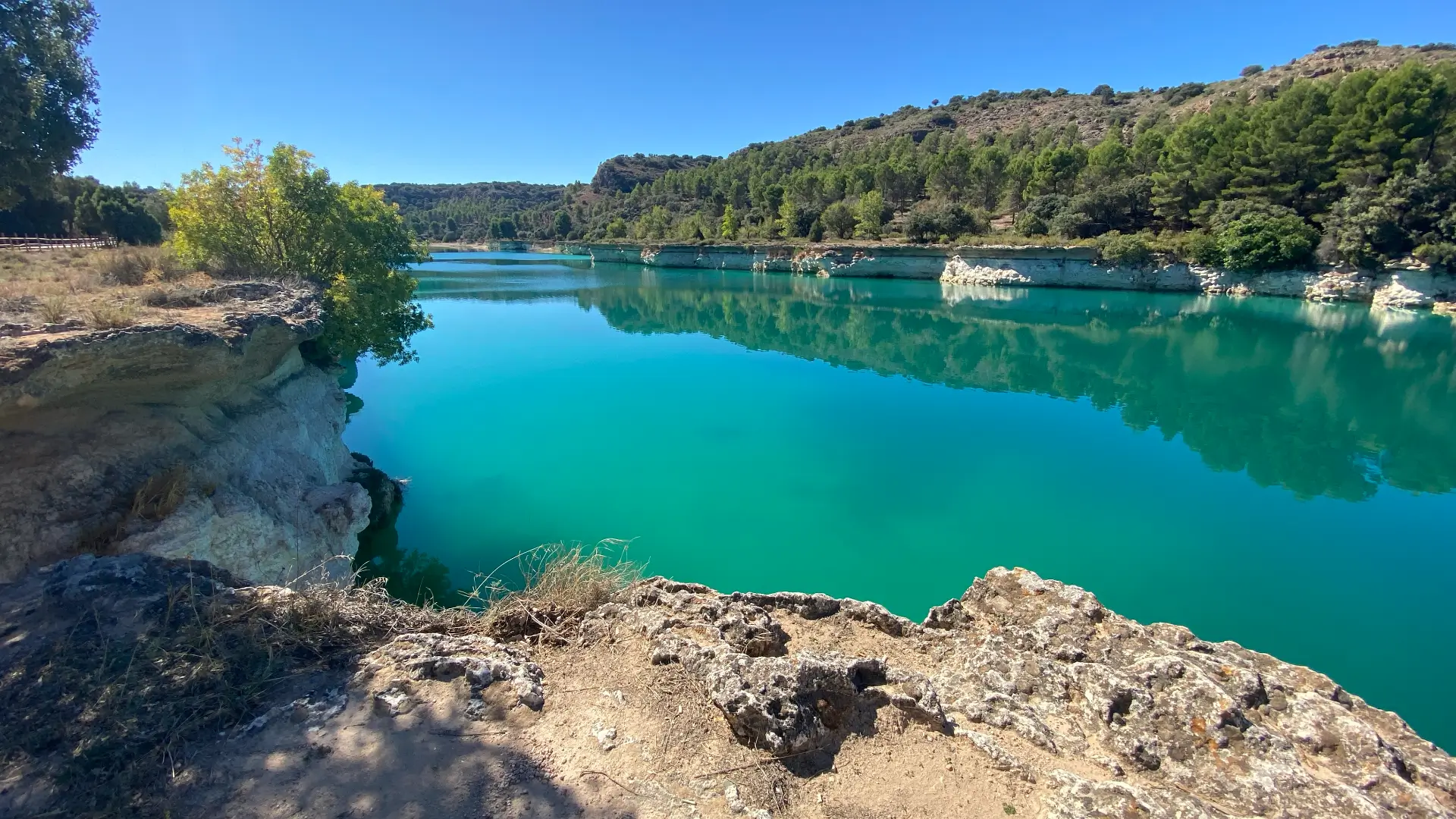
After hours of flat, dry La Mancha, the Lagunas de Ruidera come as a shock: fifteen turquoise lagoons, strung together by waterfalls, high on the plain in Castilla-La Mancha. The chain crosses the Ciudad Real–Albacete border and feeds the young River Guadiana. It is also pure Don Quixote country — Cervantes sent his knight down into a cave here for the book’s strangest dream.
Why Visit Lagunas de Ruidera
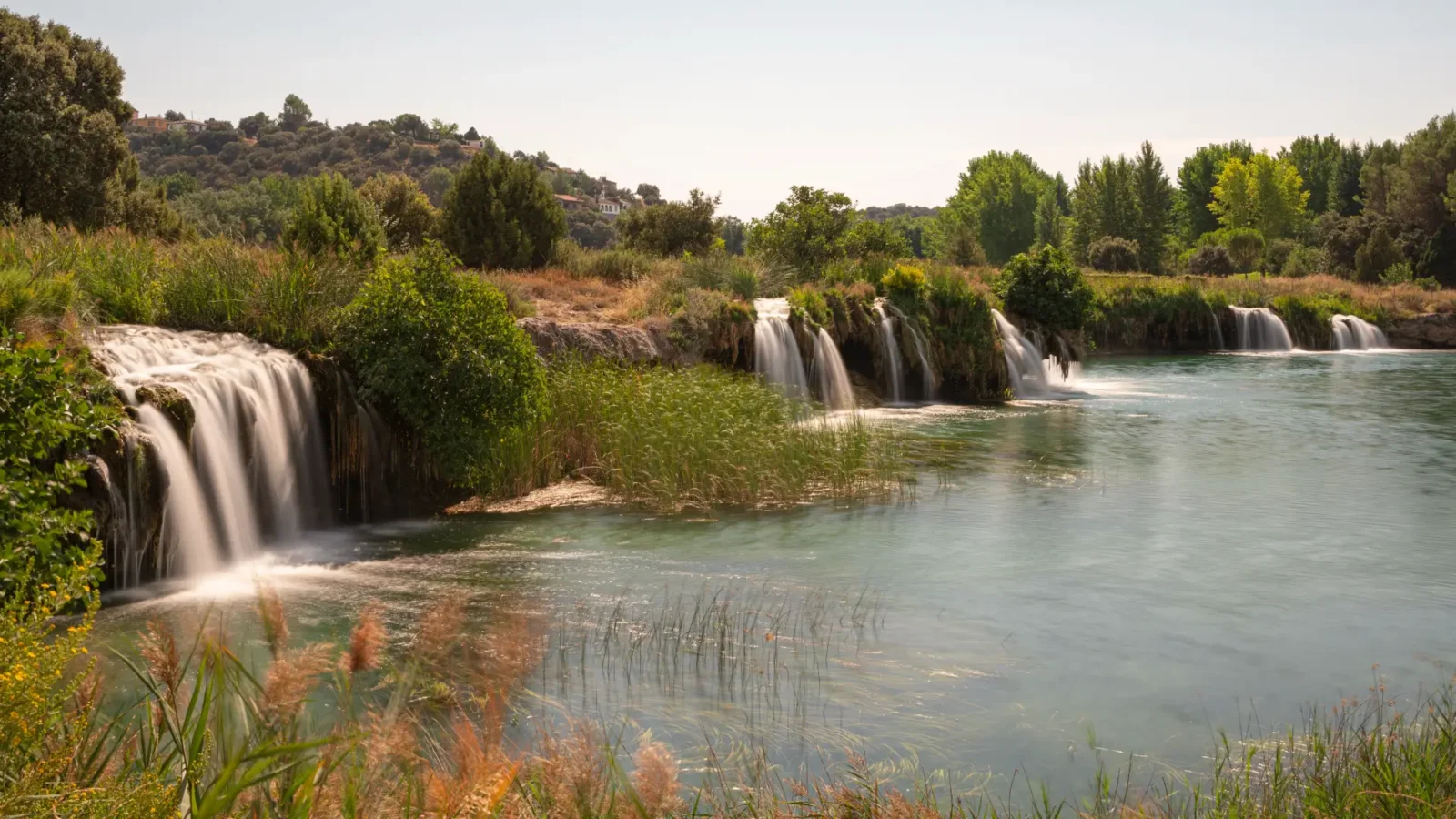
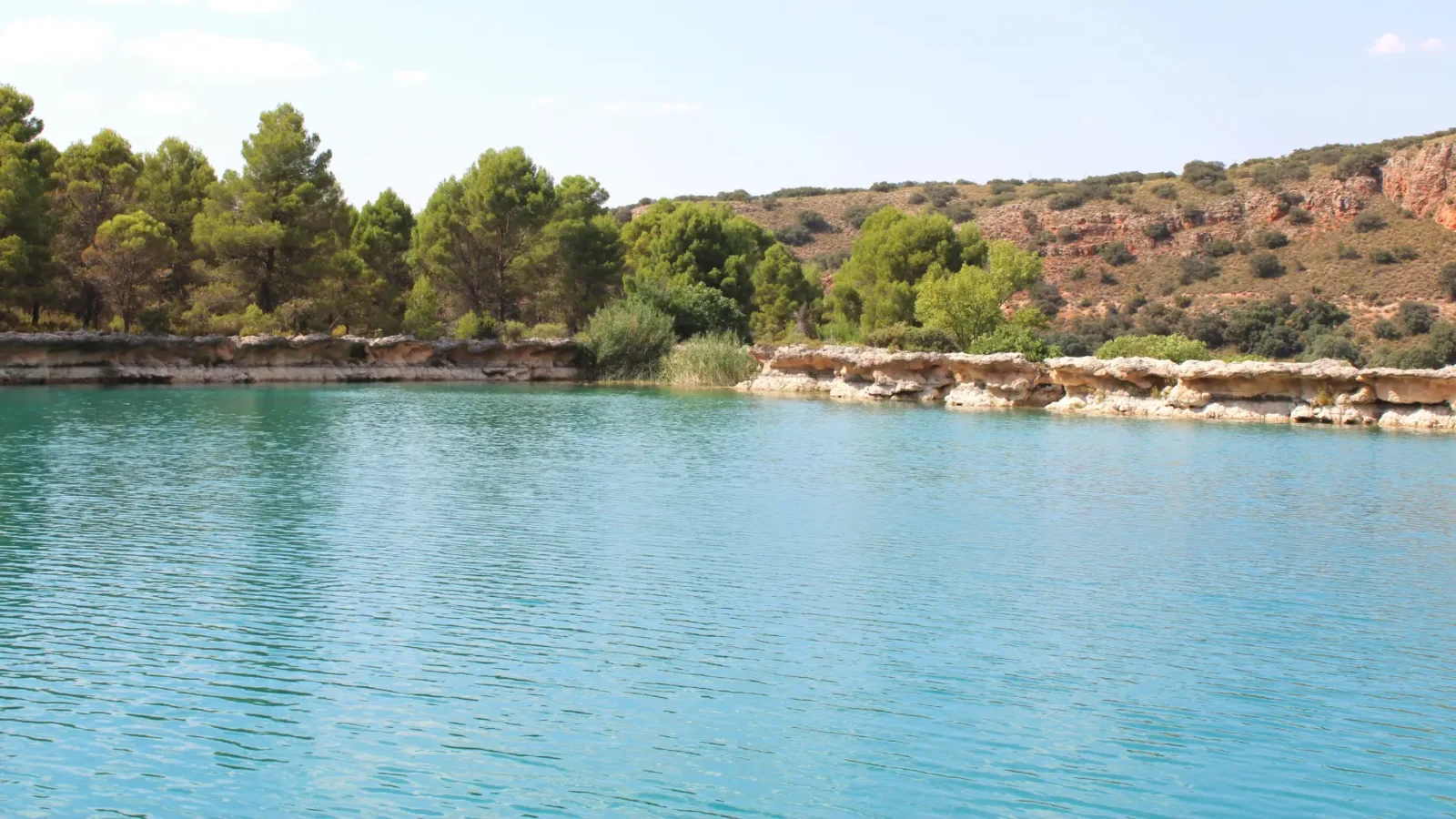
The Lagunas de Ruidera are one of Spain’s great natural surprises. You drive for a long time across the dry, wide plain of La Mancha, and then, almost without warning, a valley of clear turquoise water opens up. A string of fifteen lagoons steps down the valley, one into the next, joined by small waterfalls and reed beds. The colour comes from the limestone in the water, and it looks almost tropical against the pale fields around it. This is high country, above 800 metres, so the air is fresh even when the plain below bakes.
The park is the natural drain of a huge underground aquifer, and the water shapes everything: pine and juniper on the slopes, herons and other water birds on the shallows, and quiet paths between one lagoon and the next. It sits right on the line between Ciudad Real and Albacete. Ruidera, the main village and your easiest base, is on the Ciudad Real side; the larger share of the water, plus the famous Cueva de Montesinos, lies over the border in Albacete. You will cross that line without noticing — the park does not care about it.
Lagunas de Ruidera — who is it for
This is a place for slow days more than a checklist of sights. It suits walkers, families, birdwatchers and anyone who wants a swim in clean water after days of driving and stone towns. It is also a literary pilgrimage: this is where Cervantes set one of the oddest episodes in Don Quixote. If you like your travel to mix nature with a good story, few places in inland Spain give you both so neatly.
Day trip or overnight?
You can see the headline lagoons in half a day — park near Ruidera, walk to the Laguna del Rey and the Hundimiento waterfall, and move on. But that means arriving with the crowds and leaving before the water turns gold in the late light. Our honest advice: stay a night. A perfect short visit looks like this — arrive in the afternoon, settle into Ruidera or a country house by the water, and take an early evening walk to a quiet upper lagoon while the day-trippers drive home. Next morning, be at the Laguna Colgada viewpoint before nine, when the water is glass and yours alone, then drive out to the Cueva de Montesinos for a late-morning guided descent. That gentle rhythm simply will not fit into a day trip — and the empty, glowing evenings are the whole reward.
What to See in Lagunas de Ruidera
The lagoon chain and its waterfalls
The heart of the park is the chain of lagoons itself. Fifteen of them (some sources count sixteen, if you include the man-made Peñarroya reservoir at the bottom) step down the valley over roughly 25 to 30 kilometres. Where one lagoon spills into the next, the water drops over natural limestone barriers to form waterfalls and rapids. The falls run hardest in spring and after wet winters; in dry summers they can shrink to a trickle, so a wet year rewards you far more here.
Laguna del Rey
The Laguna del Rey is the largest lagoon and the one closest to Ruidera village, which makes it the busiest and the easiest to reach. It has a beach area and is a main summer swimming spot. Come early or out of season and it is lovely; come at midday in August and you share it with many families. It is the natural first stop, and the standard against which the quieter upper lagoons feel like a discovery.
Laguna Colgada and the upper lagoons
Higher up the chain, lagoons like the Colgada, Salvadora and Santo Morcillo are calmer and framed by pine and rock. Roadside viewpoints look down onto water so clear you can read the bottom. These upper pools reward the walker and the early riser — the crowd thins the further you go from Ruidera, and the light at either end of the day is the reason to stay overnight.
Castillo de Peñarroya
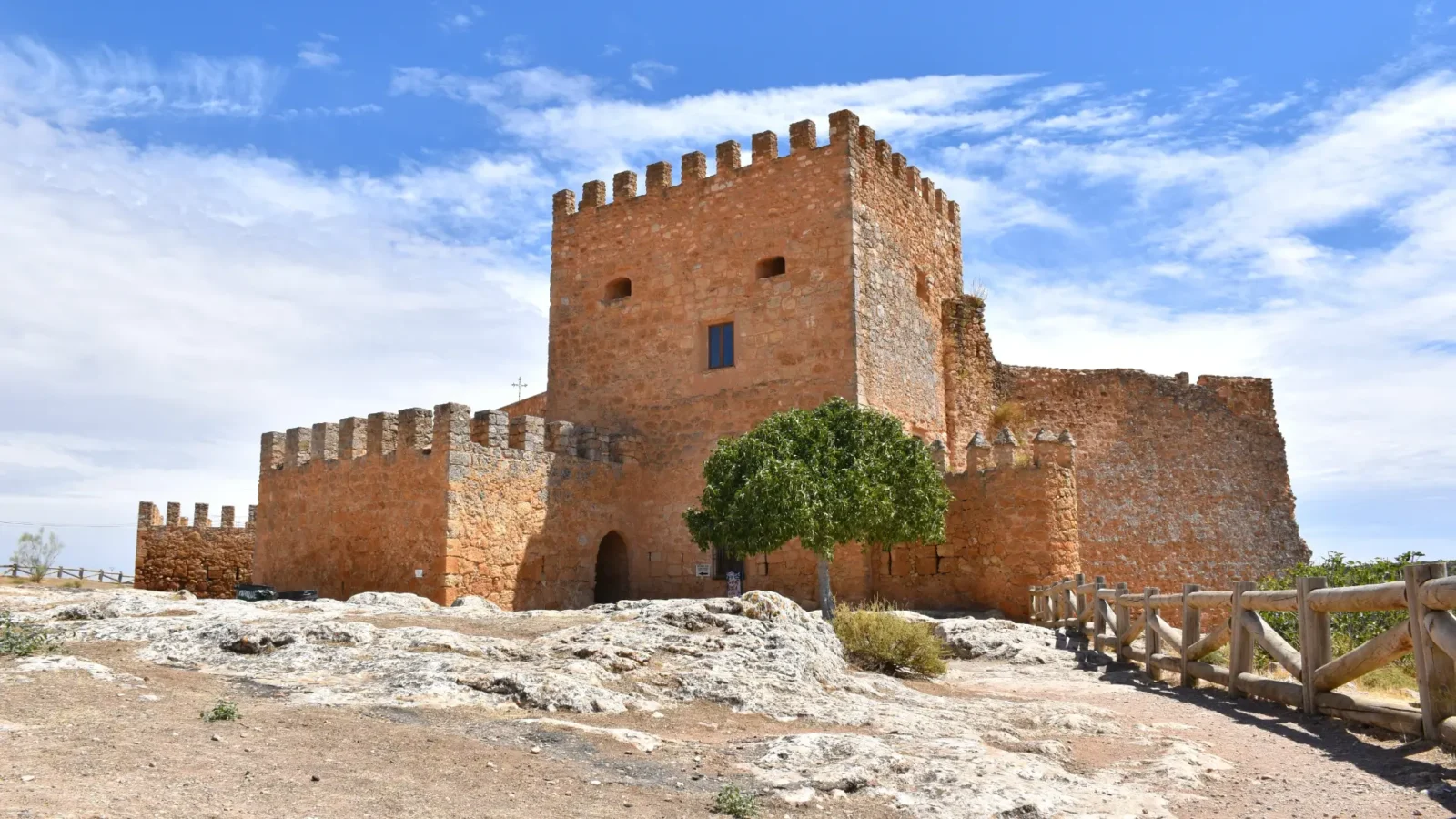
On a rise above the lower end of the park stands the Castillo de Peñarroya, a castle of medieval Christian and earlier Muslim origin, beside the reservoir that shares its name. It has a small chapel with a much-venerated Virgin. It makes an easy, atmospheric stop for anyone driving the lower valley, and gives the water a human, historical frame.
Ruins of Castillo de Rochafrida
Near the upper lagoons stand the sparse ruins of Castillo de Rochafrida, an old fortress tied to Spanish ballad tradition. A marked path of about 4.3 kilometres runs to it from the San Pedro area — a good, quiet leg-stretch that most day visitors skip, through classic Campo de Montiel scrub.
Cueva de Montesinos
This cave, in the Albacete part of the park, is the park’s literary star. In Don Quixote, Cervantes sends the knight down into it, where he falls into an enchanted dream — one of the strangest passages in the whole book. The cave drops more than 80 metres and holds water at the bottom. You can no longer wander in alone; there is a gate, and entry is only with a guide by prior arrangement (see What to Do). The walk to the mouth passes statues of Quixote and Sancho.
What to Do in Lagunas de Ruidera
Swim in the lagoons
Swimming is one of the real reasons people come, so it is worth knowing how it works. Bathing is allowed only in certain lagoons — usually including the Del Rey, Colgada, Santo Morcillo, Salvadora, San Pedro, Tomilla and Cueva Morenilla — and each has its own parking and access. There is an official summer bathing season, roughly July and August, when some beaches have lifeguards; cover varies year to year and by province, so check locally on arrival. The water is cool and clean. Dogs are not allowed in the swimming areas.
Walk the lagoon paths
Marked trails link the lagoons and climb to viewpoints over the water. You can do short, flat strolls around Ruidera and the lower lagoons, or longer routes up to the quieter pools and out to the Rochafrida ruins. Wear proper shoes, carry water, and go early in summer — midday sun on the plain is fierce. The paths are where the park rewards you most, well away from the roadside picnic crowds.
Descend the Cueva de Montesinos with a guide
The Cueva de Montesinos can only be visited on a guided tour, booked in advance, and the descent takes about an hour. Helmets and head-torches are provided; you follow the guide throughout. This is where a guide truly earns their place — you are not just looking at a cave, you are walking into the exact spot behind one of literature’s most famous dreams, with someone who can read the Cervantes text into the dark around you. Tours are arranged through the Ossa de Montiel town hall and licensed local operators; ask when you book about language and current fees.
Get out on and under the water
Beyond swimming, the park is set up for gentle active days: kayaking and paddling on the larger lagoons, snorkelling in marked zones, and cycling the same routes open to walkers. Several local operators around Ruidera and Ossa de Montiel run equipment hire and guided outings. It is an easy, family-friendly way to see the water from a different angle.
Prefer to go with a guide for any of this? Ask where you’re staying, or at the park visitor centre in Ruidera or Ossa de Montiel — they’ll know what’s running, in which language, and can point you to something that fits. The centres keep limited, seasonal days (the Ossa de Montiel one opens Wednesday to Sunday and holidays; hours change through the year), so call ahead on 926 528 116 rather than counting on walking in.
Getting There and Around
The Lagunas de Ruidera sit deep in the Campo de Montiel, between the A-4 motorway to the west and the plains of Albacete to the east. There is no train and no real public transport into the park, so this is a drive.
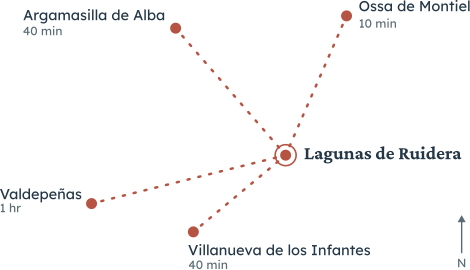
From Villanueva de los Infantesabout 40 minutes by car (roughly 40 km), north-east across the Campo de Montiel. This is the natural approach if you are finishing our Don Quixote route.
From Valdepeñasabout 1 hour by car (roughly 45 km) — the closest town on the A-4, and the way back onto the motorway heading south or towards Madrid.
From Argamasilla de Albaabout 40 minutes by car (roughly 32 km), from the north-west and the windmill country.
Nearest airportMadrid-Barajas (MAD) is the main international gateway, about 2 hours 45 minutes north. Valencia and Alicante on the coast are also reachable in roughly the same time.
By public transportthere is no direct bus into the park; sparse regional services reach nearby towns only. A car is effectively essential.
Getting around
There is no single “town centre” here — the park is a valley you drive through, not a place you walk end to end. Ruidera, Ossa de Montiel and the San Pedro area are three separate footholds, and the lagoons string out over 25 to 30 kilometres between them. Pick your base first (most visitors choose Ruidera village or a country house by the water), then drive short hops between lagoons and park at each access point. Parking fills fast on summer weekends, so arrive early. You do not need a car to enjoy a single lagoon on foot, but you very much need one to move between them and to reach the Cueva de Montesinos and the castles — this is road-trip country, and a hire car is the sensible way to do it.
Looking for a ready-made plan? See our Castilla-La Mancha road trips.
Practical Info
- Ticketsthe park itself is free to enter and walk. There is no gate fee for the lagoons. The one paid, ticketed sight is the Cueva de Montesinos, which is guided-only and booked ahead — fees are set locally, so we don’t print a figure that would go stale. Check current details with the official source below.
- Best time of dayearly morning and the hour before sunset. The water is stillest and clearest early, the light is best late, and both avoid the midday summer crush at the popular lagoons.
- Swimming seasonroughly July and August, with lifeguard cover on some beaches (it varies by year and by province — verify on arrival).
- Water levelsthe lagoons and waterfalls depend on rainfall. Spring and wet winters bring them to full, roaring life; late in a dry summer the falls can be low. Manage expectations by season.
- Parkingat marked access points by the lagoons; fills early on summer weekends and holidays.
- Visitor centresthere are two park visitor centres, in Ruidera and in Ossa de Montiel, with maps, route advice and swimming-zone information. They keep limited, seasonal days — not open every day — so don’t build your plan around walking in. Call ahead (926 528 116) or e-mail [email protected] if you need them.
- Climatethis is high plain, above 800 metres, with hot dry summers and cold winters. July is the hottest month, with daytime highs into the low-to-mid 30s °C and very little rain. Spring and autumn are the most comfortable, milder and greener, and are when the waterfalls run best. Winters are cold, with January lows near freezing.
Where to Eat in Lagunas de Ruidera
You’ll eat well and simply around the Lagunas de Ruidera, and often with a lagoon in view. This is hearty Campo de Montiel country cooking — grilled and roasted meats, game in season, and the local pisto manchego (a slow ratatouille) and migas. Two easy rules: for a lunch break while you’re out at the water, the lakeside spots on the Ossa de Montiel side are hard to beat; for dinner, Ruidera village has the steadiest choice. The picks below cover both, from a quick plate by the water to a proper sit-down grill.
The dining room of the lakeside Hotel Entrelagos, handy if you’re staying by the Laguna del Rey and want to eat without driving. Straightforward regional cooking in an easy setting on the water.
Restaurante La Lengua
A friendly, good-value spot on the lagoons road with a lake view from the tables. Classic Manchego dishes and combination plates at fair prices for the setting. Open daily.
The steadiest table in Ruidera village and a local benchmark. Generous plates of traditional La Mancha cooking; portions are large, so order fewer starters than you think. Open daily.
Restaurante Victoria Café-Bar
A simple village café-bar in Ruidera doing an honest weekend set menu — a reliable, low-cost option for a homely lunch between walks. Closed Wednesdays.
Asador La Granja
A grill-house in a pretty streamside setting near the lower lagoons. The roast and grilled meats are the thing to order — the chicken is the house favourite. Popular, so reserve. Open daily.
Right on the shore of the Laguna San Pedro, with tables looking over the water and famous sunsets. Grilled meats and honest home cooking, often a good-value set menu. A lunch here is a highlight in itself. Closed Wednesdays; busy at weekends, so book ahead.
Where to Stay in Lagunas de Ruidera
Picture the evening the day-trippers miss: the last cars gone, the water flat and gold, a country house terrace above a quiet lagoon and nothing but birdsong and the far sound of a waterfall. That evening is the whole case for staying — and it starts with the right base. Ruidera village keeps you close to the food and the main lagoons; a country house on the Ossa de Montiel side puts a lagoon almost at your door. Here’s where we’d book.
Hotel Entrelagos
The best-known hotel actually on the water, sitting right by the Laguna del Rey with its own lake beach. Older in style but full of character, and unbeatable for stepping out of your room straight to a swim. There’s a restaurant on site for no-drive dinners.
Check prices & availability for Hotel Entrelagos on the accommodation's websiteHostal Guadiana
A plain, central village hostal in Ruidera — the budget-friendly, walk-everywhere choice. Rooms are simple and dated, but you’re a short stroll from the restaurants and the main lagoons, and the price is right for a place to sleep between water days.
Check prices & availability for Hostal Guadiana on Booking.comDoña Ruidera – Apartamentos Turísticos
Bright, spacious apartments above Ruidera with views down over the Laguna del Rey — a kitchenette, room to spread out, and that lagoon panorama from the window. A comfortable, self-catering base for a family or a couple who want space.
Check prices & availability for Doña Ruidera – Apartamentos Turísticos on the accommodation's websiteCasas Rurales Lagunas de Ruidera II
A cluster of country houses on the Albacete side, a few minutes’ drive from the lagoons, with a shared pool and barbecue — one is set in an old mill. Peaceful, family-friendly and pet-friendly, this is the classic “wake up in the country and walk to the water” stay.
Check prices & availability for Casas Rurales Lagunas de Ruidera II on Booking.comEl Rincón de la Laguna
A newer, tastefully done country house near the Laguna Colgada, praised for watching the sunset over the water from the living room, just metres from a lagoon. A small, characterful base for a couple or family who want quiet and a very short walk to a swim.
Check prices & availability for El Rincón de la Laguna on Booking.comHotel Rural Albamanjón
A characterful stone hotel set right on the bank of the San Pedro lagoon, inside the natural park, with lake-view rooms and a restaurant serving Manchegan dishes. Waking by the water is the gentlest possible end to the route.
Check prices & availability for Hotel Rural Albamanjón on the accommodation's website
Region, Nearby and Routes
Part of Castilla-La Mancha
Lagunas de Ruidera is in Castilla-La Mancha
Part of these routes
The Lagunas de Ruidera are the final stop stop on our In the Footsteps of Don Quixote road trip the water-and-legend finale after two days on the dry plain. See the full trip.
Nearby places
- Villanueva de los InfantesThe Golden Age capital of the Campo de Montiel, where Quevedo died and Don Quixote may have lived.
Frequently Asked Questions
Yes. After the dry La Mancha plain, a valley of fifteen turquoise lagoons linked by waterfalls is a genuine surprise, and one of inland Spain’s most beautiful natural spots. Add the Don Quixote link at the Cueva de Montesinos and it rewards both nature lovers and readers.
A chain of about fifteen clear, turquoise lagoons that step down a valley, joined by natural waterfalls, high on the La Mancha plain. They’re also famous in literature: Cervantes set one of Don Quixote’s strangest dreams in the Cueva de Montesinos here.
Half a day covers the main lagoons near Ruidera, but a full day plus one night lets you walk the quieter upper pools, swim, and do a guided descent into the Cueva de Montesinos — and enjoy the empty, golden evenings the day-trippers miss.
Yes, in certain designated lagoons (usually including the Del Rey, Colgada, Santo Morcillo, Salvadora, San Pedro, Tomilla and Cueva Morenilla), each with its own access and parking. There’s a rough July–August bathing season with lifeguards on some beaches; cover varies by year and province, so check on arrival. Dogs aren’t allowed in swimming areas.
Spring and autumn are best — mild, green, uncrowded, and when the waterfalls run strongest. Summer (July, with highs into the low-to-mid 30s °C) is peak swimming season but also the busiest, with big weekend crowds; go early in the day. Winters are cold, with January lows near freezing.
For being close to the food and the main lagoons, stay in Ruidera village — Hostal Guadiana for budget, Hotel Entrelagos on the water, or the Doña Ruidera apartments for space and a lagoon view. For a country-house feel by the water on the Albacete side, choose Casas Rurales Lagunas de Ruidera, El Rincón de la Laguna, or the upper-tier Hotel Rural Albamanjón opposite the Laguna San Pedro.
In Ruidera village, Mesón de Juan is the steady local benchmark and Restaurante La Lengua is good value with a lake view. On the Ossa de Montiel side, Bar-restaurante La Vega sits right on the Laguna San Pedro with fine sunsets, and Asador La Granja is the spot for grilled and roasted meats.
Effectively yes. There’s no train and no useful bus into the park, and the lagoons spread over 25–30 km with the Cueva de Montesinos and castles further out. You can enjoy one lagoon on foot, but you need a car to see the park properly.