
Arnedillo: hot springs and vulture cliffs in the Cidacos valley
Arnedillo is a small spa village at the head of the Cidacos valley, in the south-east of La Rioja. Hot water rises here from deep underground and fills three free pools on the edge of the river. You can sit in them at any hour, all year round. Above the village, griffon vultures nest on the limestone cliffs. It is a place to slow down, not to tick off sights.
Why Visit Arnedillo
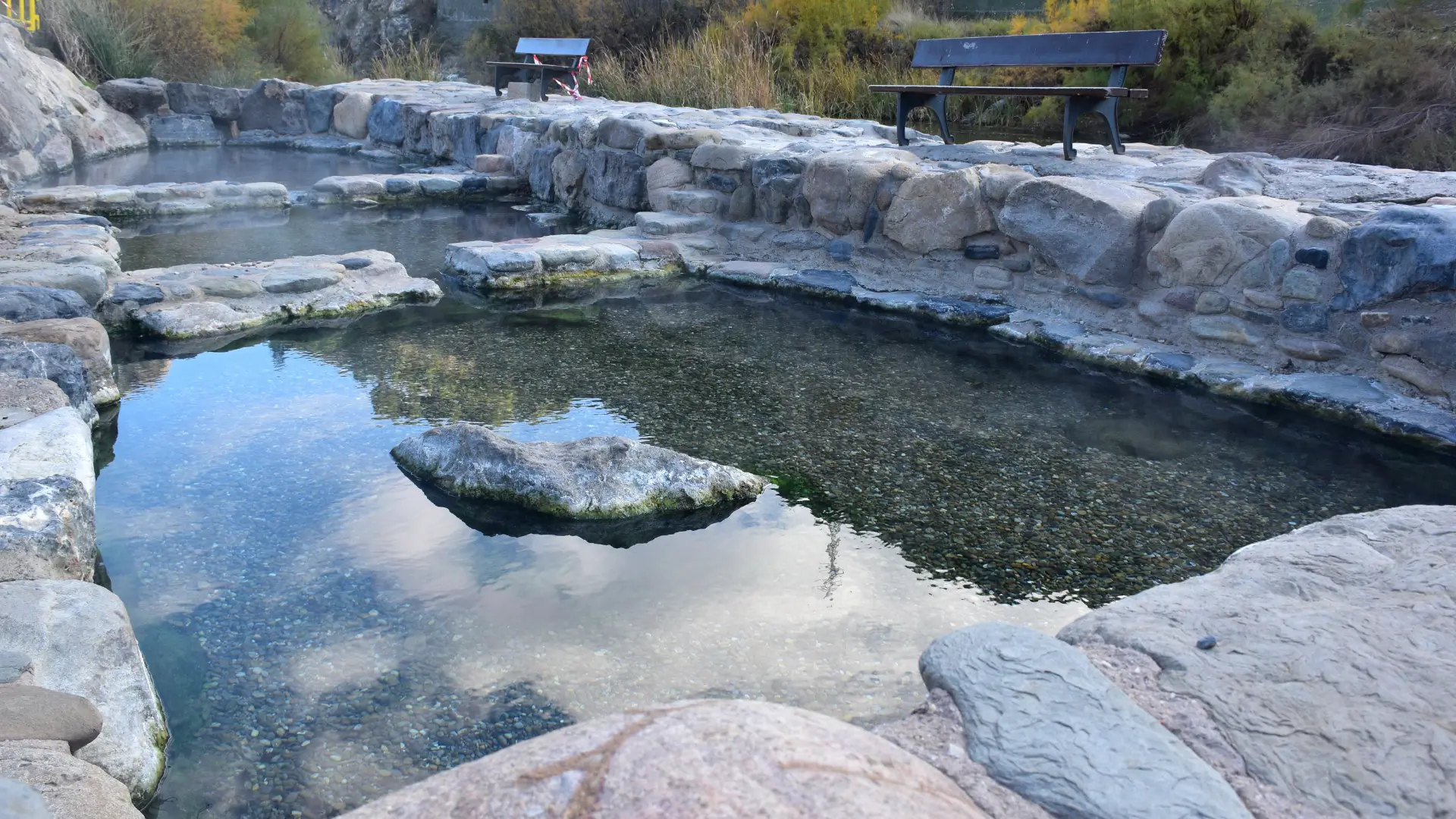
Arnedillo is about one thing first: warm water. The springs rise at around 52°C and run down into three stone pools at the edge of the Cidacos river. The water cools a little in each pool, so you can pick your heat. Next to them, the river runs cold and clear, one step away. There is no ticket, no gate and no closing time.
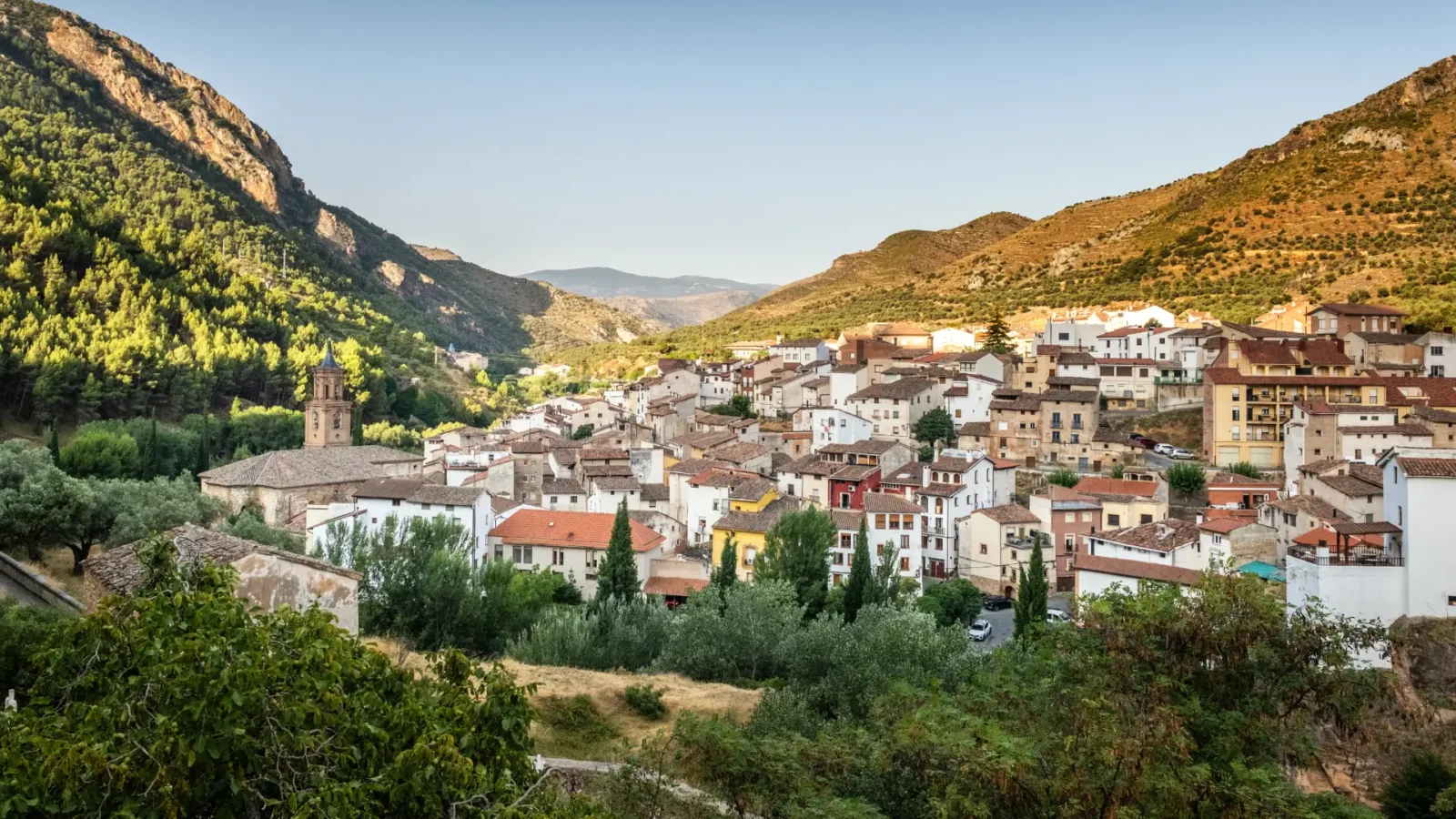
The village itself is small and quiet, with fewer than 500 people. Its houses climb from the river towards the church, and steep cliffs close the valley in on both sides. The whole valley is part of a UNESCO Biosphere Reserve. On a clear day you can watch griffon vultures circling over the cliffs.
Who Arnedillo is for
Arnedillo suits the traveller who wants a slow day after the busy wine towns of Rioja Alta. You walk to old hermitages in the morning, soak in the pools after lunch and eat grilled lamb chops at night. Be honest with yourself about the crowds, though. The free pools fill up at weekends and on winter afternoons. Come on a weekday, or go early or late, and you often share them with only a few people.
Day trip or overnight?
You can see Arnedillo in a few hours. A soak in the pools and a walk through the village fit easily into an afternoon from Logroño. But the pools are busiest in the middle of the day, and they are at their best when the day visitors have driven home. Our honest advice is to stay one night. A perfect short visit looks like this. Walk the hermitage loop in the morning and stop at the Peñalba hermitage for the view. Have a long lunch on the Avenida del Cidacos. In the afternoon, watch for vultures over the cliffs, or book a weekend slot at the Mirador del Buitre. Then go back to the pools after dark. The air is cold, steam rises off the water and the stars come out over the valley. That hour in the pools is the reason to stay.
What to See in Arnedillo
The free thermal pools (Pozas de Arnedillo)
The free thermal pools are the heart of Arnedillo. Three stone pools sit on the riverbank, a five to ten minute walk from the village centre. The water comes out of the rock at about 52°C and cools to around 35°C by the last pool. Step from the hot water into the cold river, then back again. The pools are open day and night, all year, and they cost nothing. There are cold showers but no changing rooms, so bring a robe and sandals.
Open in Google MapsChurch of San Servando and San Germán
The Church of San Servando and San Germán stands at the top of the village. It was built in the early 16th century, with three naves under ribbed stone vaults. Look at the main altarpiece from 1560. It shows the two patron saints of Arnedillo dressed as soldiers of the Spanish army of Flanders. The church also keeps a Romanesque statue of the Virgin of Peñalba. It is often locked outside Mass, so ask at the tourist office about visits.
Open in Google MapsEl Mirador del Buitre (vulture centre)
El Mirador del Buitre is a small vulture centre in an old quarry, about one kilometre from the village on the road to Arnedo. You climb a short flight of wooden steps to an open platform. From there, telescopes point at the cliffs where griffon vultures nest, and screens show live footage of the nests. The centre opens only on some weekend days, in set time slots. Book through the tourist office before you go.
Open in Google MapsPeñalba and San Tirso hermitages
Arnedillo has seven small hermitages, and two stand out. Santa María de Peñalba is a Mozarabic hermitage from the 10th century, with a rounded, horseshoe-shaped apse. It sits on the highest point of the hermitage walk, looking down on the valley. San Tirso is a cave hermitage dug into the rock about two kilometres from the village, dated by local tradition to the 9th century. Both are simple, bare and very quiet.
Open in Google MapsThe castle tower and the old bridge
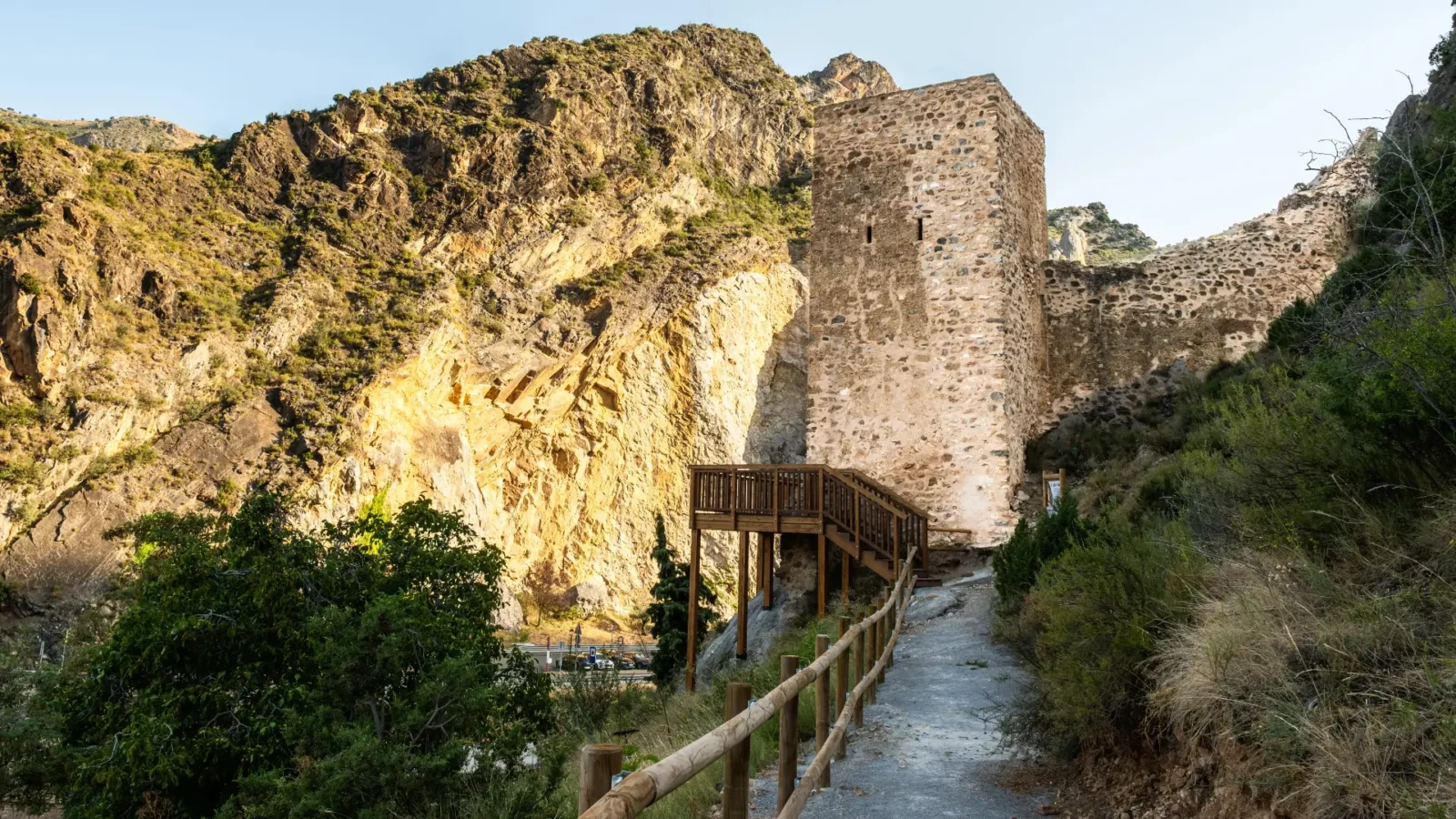
A square stone tower and a line of broken wall stand on the rocky ridge across the river. This is what is left of Arnedillo’s castle. It first appears in records in 1170, when the king of Castile gave it to the bishop of Calahorra. The bishops later used it as a summer home, and then as a prison for rebel priests. The path up is overgrown, so look at it from the old stone bridge below.
Open in Google MapsRock wine presses and the Chequered Caves
Two odd sites lie in the hamlets of Santa Eulalia, a short drive from Arnedillo. At the Cogote de las Pilas, eleven medieval wine presses are cut straight into the rock. It is the largest group ever found in La Rioja, and you reach it by a 60-metre walk from the road. In Santa Eulalia Somera, the Chequered Caves (Cuevas del Ajedrezado) have walls covered in rows of small carved niches, like a chessboard. The caves open only for guided visits on some weekend days, so book through the tourist office.
Open in Google Maps
What to Do in Arnedillo
Walk the hermitage loop
The hermitage loop is the best way to see the valley on foot. It is a marked circular walk of about 7.4 km that starts near the thermal pools. The path climbs to Peñalba, then passes the hermitages of San Miguel, San Andrés y San Blas and San Zoilo. It is easy walking, and most people take around three and a half hours with stops. The views from Peñalba over the cliffs and the village are the reward. Pick up a map at the tourist office before you start.
Walk or cycle the Vía Verde del Cidacos
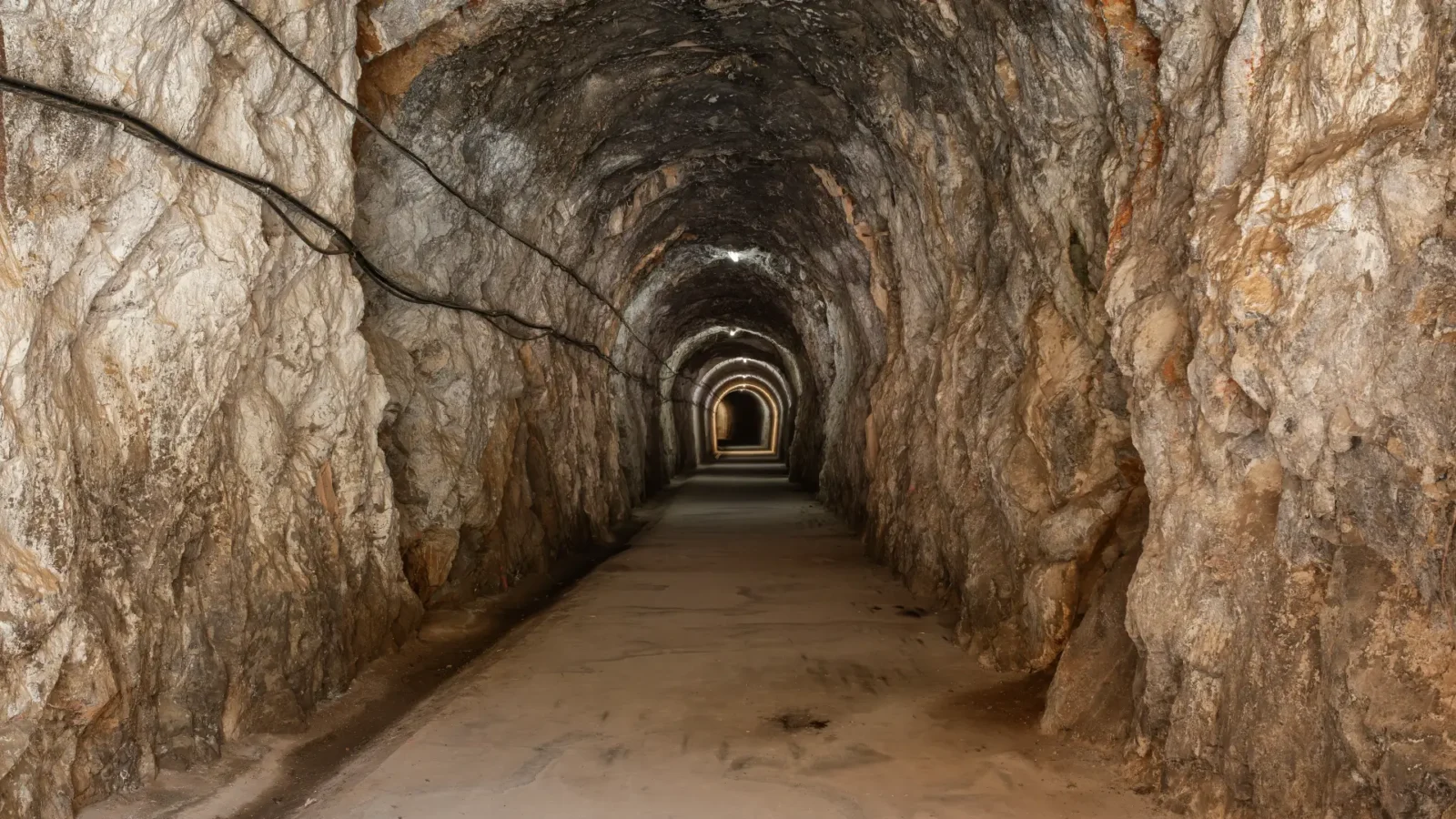
The Vía Verde del Cidacos is a 34 km path on an old railway line from Calahorra to Arnedillo. Arnedillo is the end of the line, so you can start right here and head downstream. The path runs through the gorge below the village, then on to Herce, where the old station is now a youth hostel. About 10 km from Arnedillo you reach the Monastery of Vico, home to a community of Cistercian nuns. Walk as far as you like and turn back, or cycle the whole valley to Calahorra.
Climb the Lombera vía ferrata
The Lombera vía ferrata is a climbing route of nearly 2 km on a rocky ridge above the village. Steel cables and metal rungs are fixed to the rock. It has two short bridges and ends near the rock needle of the Peña del Castillo. The route is public and free, and it is often used by beginners. You need your own harness, helmet and via ferrata lanyards. A local guide brings the gear, clips you in on every tricky step and knows the easiest line. For a first time, that is the safest way to try it.
Spend an afternoon at the balneario
If the free pools feel too busy or too cold, the balneario is the calm option. The spa hotel sits right beside the springs and uses the same water in its indoor and outdoor thermal pools. Hotel guests use the pools as part of their stay, and the spa also sells sessions to non-guests. Ask at reception about the current options.
See the dinosaur tracks at Enciso
Enciso, 12 minutes up the valley, is surrounded by dinosaur footprints. The tracks are pressed into rock slabs at open-air sites around the village, and you can walk out to them yourself. Enciso also has a small palaeontology centre and a dinosaur-themed adventure park for children. It makes an easy half-day from Arnedillo.
Prefer to go with a guide for any of this? Ask where you’re staying, or at the tourist office on Calle Amancio González, at the lower end of the village — they’ll know what’s running, in which language, and can point you to something that fits.
Seasonal Events and Festivals
- Fiesta de San Tirso (late January)
- A pilgrimage walk to the cave hermitage of San Tirso on the last weekend of January.
- ClásicArnedillo (early July)
- A small classical music festival on the first Saturdays of July.
- Summer fiestas (around 5 August)
- The village’s summer festival for the Virgen de las Nieves, with music, processions and street parties.
- San Servando y San Germán (23 October)
- The feast of the two patron saints, with a procession, a vermouth in the square and a dance at night.
- Mushroom days (early November)
- The Jornadas Micológicas, built around the autumn wild mushroom season.
- Procesión del Humo (last Sunday of November)
- The Smoke Procession, Arnedillo’s best-known tradition. It began in 1888 during a smallpox outbreak. Bonfires of juniper and damp rosemary fill the narrow streets with thick, scented smoke, and the statue of San Andrés is carried through it. Afterwards, bacon and sausages are grilled on the embers. The procession is a Fiesta of Regional Tourist Interest.
The Arnedillo tourist office on Calle Amancio González has the exact dates and programme each year.
Getting There and Around
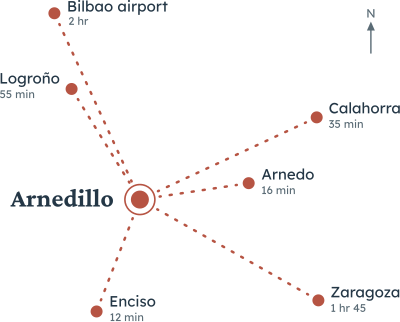
Arnedillo sits at the head of the Cidacos valley on the LR-115, about 13 km upriver from Arnedo.
- From Logroño
- About 55 min by car (roughly 62 km). The fastest route uses a short stretch of the AP-68 toll motorway, then the LR-123 and LR-115 up the valley.
- From Calahorra
- About 35 min by car (roughly 30 km), following the Cidacos valley through Autol and Arnedo.
- From Arnedo
- About 16 min by car (13 km), the nearest town with supermarkets and fuel.
- From Zaragoza
- About 1 hr 45 by car (roughly 153 km) via the AP-68.
- Nearest airports
- Bilbao (BIO) is the main international option, about 2 hr by car. Zaragoza (ZAZ) is about 1 hr 45 to the south-east. Logroño-Agoncillo (RJL) is closer but has very few flights.
- By public transport
- There is no train to Arnedillo and no direct bus from Logroño. The nearest station is Calahorra. Local buses connect Arnedillo with Arnedo and Calahorra, so a trip from Logroño takes two and a half hours or more with a change.
Getting around
You do not need a car inside Arnedillo. The village is small, and a riverside path links the centre with the pools. Park in the free car parks near the pools and along the river. But you do want a car for the valley. The vulture centre, the hermitage trailhead at the far side, the rock wine presses, Enciso’s dinosaur tracks and the Vico monastery are all spread out, and buses are rare.
Looking for a ready-made plan? See our La Rioja road trips.
Practical Info
- Thermal pools
- Free, open day and night all year. Cold showers, no changing rooms or lockers. Bring a towel, a robe and sandals. Busiest at weekends and on winter afternoons; quietest early morning, late evening and on winter weekdays.
- Balneario (spa hotel)
- Thermal pools for hotel guests; sessions also sold to non-guests. Ask at reception for current options.
- Vulture centre and Chequered Caves
- Both open only on set days (mostly weekends and holidays) and both need booking. Email the Arnedillo tourist office ([email protected]) a few days ahead, ask in person at the office, or ask your hotel to call. The tourist office phone line is +34 941 39 42 26.
- Church of San Servando and San Germán
- Often locked outside Mass. Ask at the tourist office.
- Tourist office
- Calle Amancio González 2, at the lower end of the village. Usually closed on Mondays; check ahead. Pick up the free map of the hermitage walks here. Open in Google Maps
- Climate
- Arnedillo sits at about 650 m, so it is a little cooler than the Ebro plain. July and August highs are roughly 26–29°C, with cool nights around 13°C. May, June, September and October are the most comfortable months, with highs of roughly 18–25°C. January highs sit around 7–9°C, with frost at night. Rain falls through the year; spring and autumn are wettest, July and August driest.
Where to Eat in Arnedillo
You’ll eat simply and well in Arnedillo. This is the Rioja Baja end of the region. The Ebro plain grows vegetables, the hills give lamb and mushrooms, and the vines give a full-bodied red. The choice in the village is small, so it helps to know what to ask for.
What to order here
- Lamb chops (chuletillas)
- Tiny lamb chops, rubbed with coarse salt and grilled, are the dish of La Rioja. The true version is cooked over burning vine cuttings. That mostly happens at home or in family wine cellars, so on a menu expect them off the grill.
- Wild mushroom scramble (revuelto de setas)
- In autumn the woods of the valley fill with mushrooms. They come to the table scrambled with egg, and the village serves big pans of it at its mushroom days in early November.
- Winter vegetables from Calahorra
- Down the valley, the gardens along the Ebro grow the Calahorra cauliflower, which has its own protected name. In winter, look for it and other garden vegetables on the set menu.
- A glass of Rioja Oriental
- The local wine zone, once called Rioja Baja, is warmer and drier than the rest of Rioja. Its Garnacha reds are deep in colour and full in the mouth, a good match for grilled lamb.
- Fardelejos
- These small pastries from Arnedo are filled with almond paste. The name is said to come from an Arabic word for paradise. They are the sweet of the valley, and a box of them travels well.
How locals eat
Lunch is the main meal, and it starts late. On weekdays most bars offer a set menu of the day, with two courses and a dessert. It is the best-value way to eat. Dinner is lighter and later still. At weekends, people meet for a vermouth or a small drink at the bar before lunch.
Take home
- Fardelejos from a bakery in Arnedo.
- Queso Camerano, a goat’s cheese with a protected name, made in the Cameros hills to the west.
- A bottle of Rioja Oriental Garnacha from a winery in the valley.
- Shoes from the factory outlets in Arnedo, which calls itself the “City of Footwear”.
Where to Stay in Arnedillo
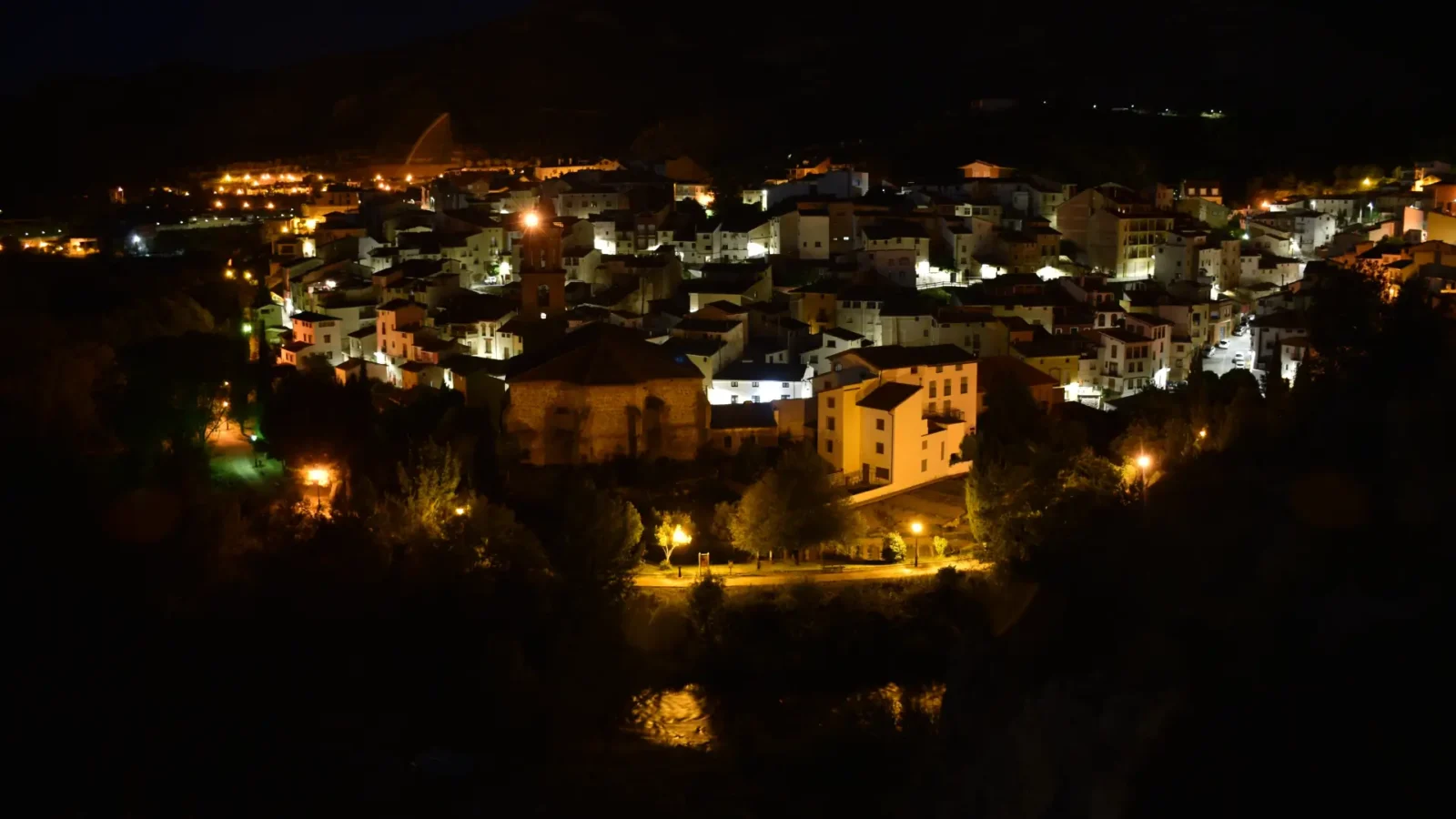
Stay the night in Arnedillo and you get the pools back. Picture a cold, clear evening, steam lifting off the water and the lights of the village above the river. Then a short walk back to a warm room. The real choice is where to sleep: in the village itself, or down the valley in Arnedo.
Staying in Arnedillo
- Good for
- Walking to the pools after dark or at dawn, when they are quietest. Quiet nights, with the valley and the cliffs right outside.
- Watch out for
- A small choice of places to eat, and fewer still open on winter weekdays. Most rooms are in simple family hotels, rural houses and holiday flats, and some older rooms have no air conditioning.
How long to stay
One night is enough if you want the pools and one short walk. Stay two nights if you also want the hermitage loop, the greenway or the vía ferrata, and a half-day at Enciso's dinosaur tracks.
Road-trip realities
- Parking
- Leave the car in the free car parks near the pools and along the river. The upper village around the church is steep, so park below and walk up.
- Noise
- The Avenida del Cidacos is also the valley road, the LR-115. Rooms facing it hear traffic, and at weekends the street stays busy into the evening.
The kind of place you'll sleep in
Arnedillo has three kinds of stay. There is the balneario, a large spa hotel built around the springs. There are small family hotels near it. And there are rural houses (casas rurales) and holiday flats in the old stone houses of the village. Many come with a shared kitchen or one of your own.
Stand-out stay: sleep at the springs
Balneario Arnedillo
The Hotel SPA TermaEuropa Balneario Arnedillo sits right where the hot water comes out of the rock. The springs have drawn visitors since Roman times, and in the 19th century this was a fashionable spa. Staying here, the thermal pools are part of your room. You can soak indoors or out without leaving the building, then walk to the free river pools after dark.
Check prices & availability for Balneario Arnedillo on the accommodation's websiteFind a place to stay in Arnedillo
Most places to stay in and around Arnedillo, from the spa hotel to rural houses and flats, are on Booking.com, with live prices and a map.
Region, Nearby and Routes
Part of La Rioja
Arnedillo is in La Rioja
Part of these routes
Arnedillo is not part of a road trip yet. See all road trips
Nearby places
- LogroñoLa Rioja’s relaxed capital, where the Camino, a twin-towered co-cathedral and Spain’s best-loved pintxos street meet at the gateway to the wine region.
Frequently Asked Questions
Arnedillo is worth visiting if you like hot springs, walking and quiet villages. Its free thermal pools sit right beside the Cidacos river, and the valley around it has vulture cliffs, old hermitages and a greenway on an old railway.
Arnedillo is known for its hot springs. The water rises at about 52°C and fills three free public pools on the riverbank, next to a spa hotel that uses the same springs. The village is also known for its vulture colony and its Smoke Procession in late November.
Yes, the Arnedillo hot springs by the river are free and open day and night, all year. There are cold showers but no changing rooms, so bring a robe and sandals. The spa hotel next door has its own paid thermal pools.
You need half a day to see Arnedillo and soak in the pools, but one night is better. The pools are quietest early in the morning and after dark, once the day visitors have left.
The best time to visit Arnedillo is May, June, September or October, when highs are roughly 18–25°C. July and August reach about 26–29°C, with cool nights. Winter is cold, with January highs around 7–9°C, but the hot pools are at their best on cold days. Spring and autumn are the wettest seasons.
Yes, Arnedillo is about 55 minutes by car from Logroño, so a day trip works. But the pools are busiest in the middle of the day, so staying one night lets you use them at dawn or after dark.
In Arnedillo, sleep in the village if you want to walk to the free pools after dark or at dawn. The choice is small family hotels, rural houses and holiday flats, plus the balneario spa hotel, where the thermal pools are part of your stay. Arnedo, 16 minutes down the valley, has more restaurants and shops but means driving back for the pools.
In Arnedillo, most places to eat are the bar-restaurants on the Avenida del Cidacos and the hotel dining rooms, with home cooking and a set menu at lunch. Order grilled lamb chops, wild mushroom scramble in autumn and a Rioja Oriental Garnacha. Several places close one or two days a week, so check ahead, or drive 16 minutes to Arnedo for more choice.