
Logroño: Rioja’s Easygoing Wine Capital
Logroño is the capital of La Rioja, Spain’s most famous wine region, set on the Ebro River in the north. It is a warm, walkable city built for eating and strolling, best known for Calle Laurel and its wall-to-wall pintxos bars. The old town wears its history lightly: a twin-towered co-cathedral, a stone bridge, and the Camino de Santiago running straight through the middle.
Why Visit Logroño
Most people come to Logroño for one reason: to eat. Calle Laurel and its side streets pack in dozens of small bars, each famous for a single dish done well. The local ritual is to hop from one to the next with a glass of Rioja in hand. But the city is more than its plates. It is the gateway to the whole wine region, an easy first or last night on a Rioja road trip, and a real working city rather than a museum-piece.
Logroño — a calm base for the wine region
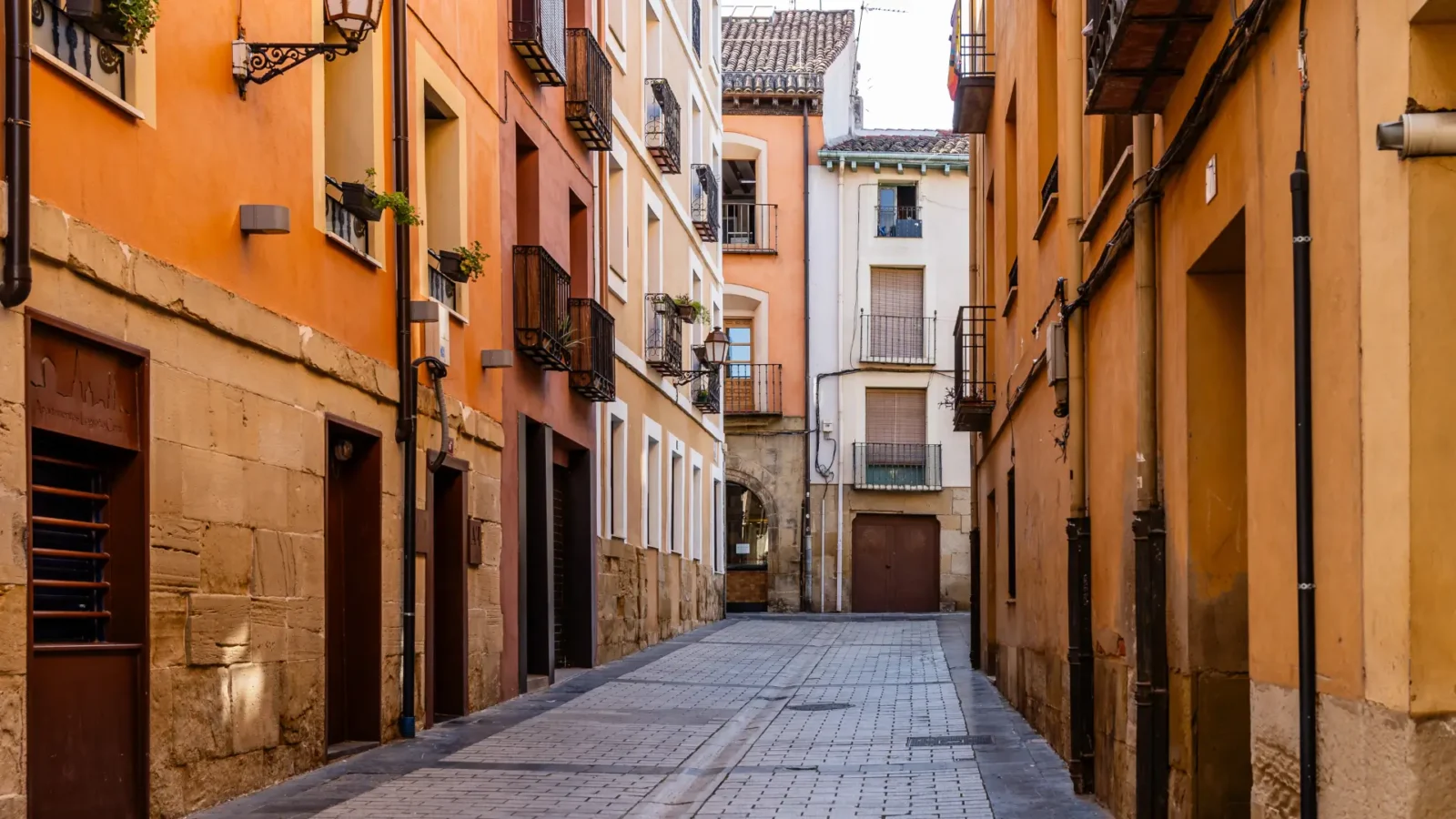
The old town is small and flat. You can walk the main sights in a slow morning and still have the afternoon free. The Camino de Santiago threads through it, so the streets have a steady, friendly buzz without the crush of the big coastal cities. It is the kind of place where you settle in, eat well, and use the long evenings to plan the next day's drive out to the vineyards.
Day trip or overnight?
You can see the centre of Logroño in an afternoon. Walk the old town, look inside the co-cathedral, cross the stone bridge, and you have the shape of the city. But that means leaving just as it gets good. The bars on Calle Laurel only wake up in the evening, when locals fill the narrow streets and the pintxos come out fresh. Our honest advice is to stay the night. A perfect short visit looks like this: arrive in the afternoon, walk the Camino streets and the Paseo del Espolón while the light is soft, then start your pintxos crawl on Calle Laurel as the bars get busy. Sleep in the old town, and you wake up in the middle of the wine region, ready to drive out among the vines.
What to See in Logroño
Calle Laurel
This narrow lane and its side streets are the beating heart of the old town, packed with dozens of small bars barely wider than a doorway. Each one does a single thing well. It might be grilled mushrooms stacked on bread, a slab of seared foie, or a skewer of prawns, and you order by holding up fingers for how many. The tradition is to eat one, drink a small glass of Rioja, and move on to the next. It fills up and comes alive after dark, so it doubles as the city’s main thing to do in the evening.
Concatedral de Santa María de la Redonda
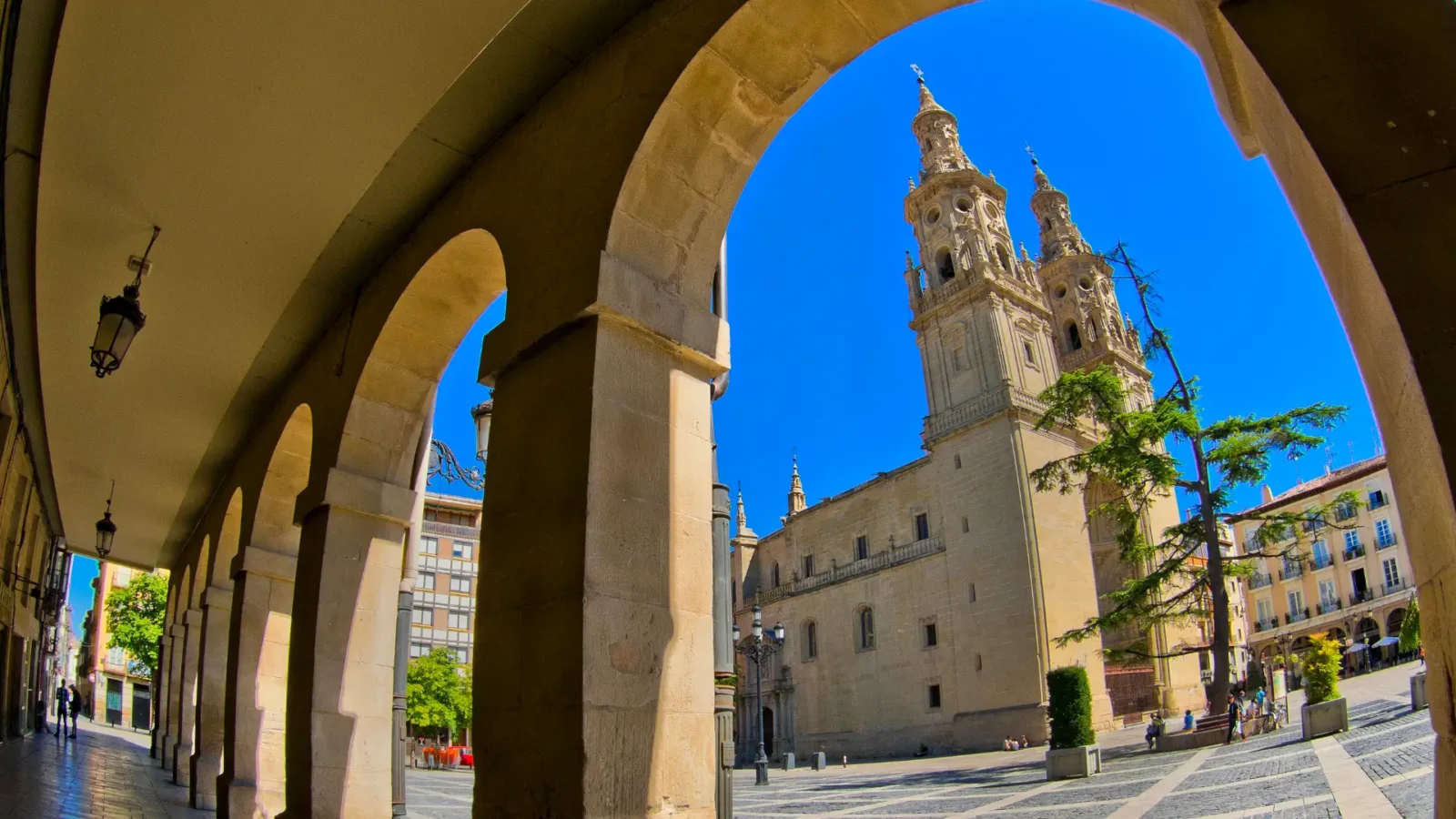
Logroño’s co-cathedral rises over the Plaza del Mercado with two matching Baroque towers, known locally as las gemelas (the twins). Inside, behind the main altar, hangs a small crucifixion painting long attributed to Michelangelo, though its authenticity has never been proven. It stays dark until you drop a coin in the box to light it. Climb the north tower and the old-town rooftops open up below you, with the river beyond.
Iglesia de Santiago el Real
The oldest church in the city stands on Calle Barriocepo, right on the Camino de Santiago. A huge stone statue of Saint James on horseback rides above the door. Pilgrims stop here to get their credential stamped, and the pavement outside is laid out as a giant board version of the Goose Game, its squares marking the stages of the route. The Fuente del Peregrino, where walkers still fill their bottles, bubbles up right beside it.
Puente de Piedra and the Ebro
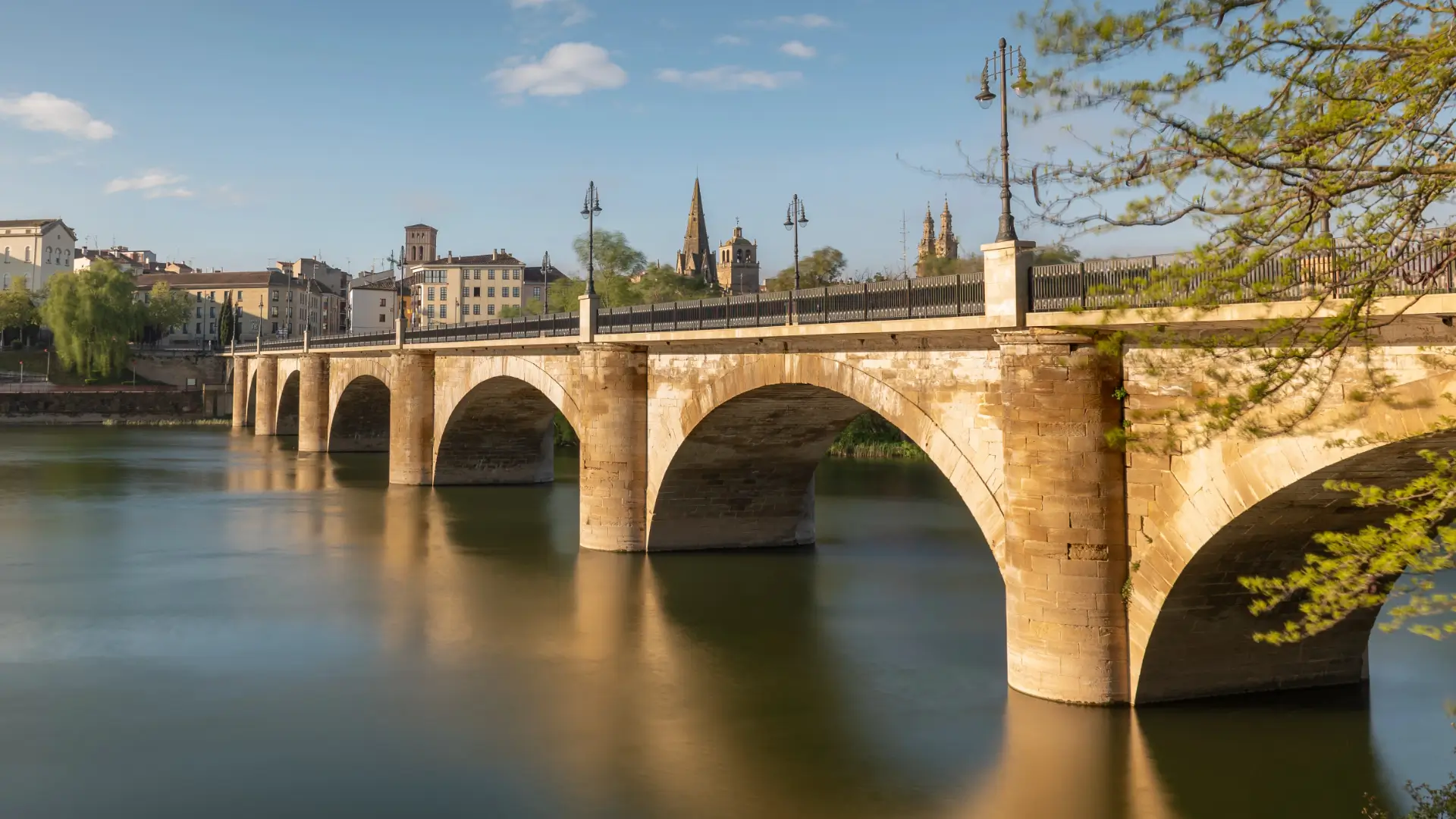
The Stone Bridge carries the Camino across the Ebro on a row of tall arches. From the far bank you get the classic view back over the water to the old town. Below it, the Parque de la Ribera runs along the river, a wide, green space where locals walk off dinner in the long evening light. Cross the bridge as the sun drops and the whole old town glows behind you.
Puerta del Revellín
This 16th-century stone gate is the only original entrance to the walled city still standing. You walk straight through its low archway into the old town, just as pilgrims and traders have for five hundred years. Above the arch sits the double-headed eagle of Emperor Charles V, flanked by the city’s own coat of arms. Its three lilies were granted after Logroño withstood a French siege in 1521. A stretch of the old defensive wall, the Muralla del Revellín, runs alongside it.
Museo de La Rioja
Set in the 18th-century Palacio de Espartero, this free regional museum fills floor after floor. It runs from gilded medieval altarpieces to the wine presses and farm tools of everyday Rioja life. It is a cool, quiet stop between meals, and it costs nothing to step inside. Check the opening days before you go, as regional museums often close on Mondays.
What to Do in Logroño
Walk the pintxos route on Calle Laurel and Calle San Juan
The evening pintxos crawl is the city’s signature experience, and it needs no booking. Start on Calle Laurel, order one thing at each bar — many are known for a single dish — and pair it with a small glass of Rioja. When Laurel gets crowded, slip round to Calle San Juan, which serves the same quality with a more local, less packed feel. Go early (around 8pm) for elbow room, or later for the full buzz.
Follow the Camino de Santiago through the old town
Logroño is a major stop on the French Way, and the marked pilgrim route runs right through the historic centre. You can follow the brass scallop-shell markers from the Puente de Piedra past Iglesia de Santiago el Real and out through the Puerta del Revellín. It is a free, self-guided walk that links most of the old-town sights in one easy loop, whether or not you are a pilgrim.
Taste Rioja at a bodega near the city
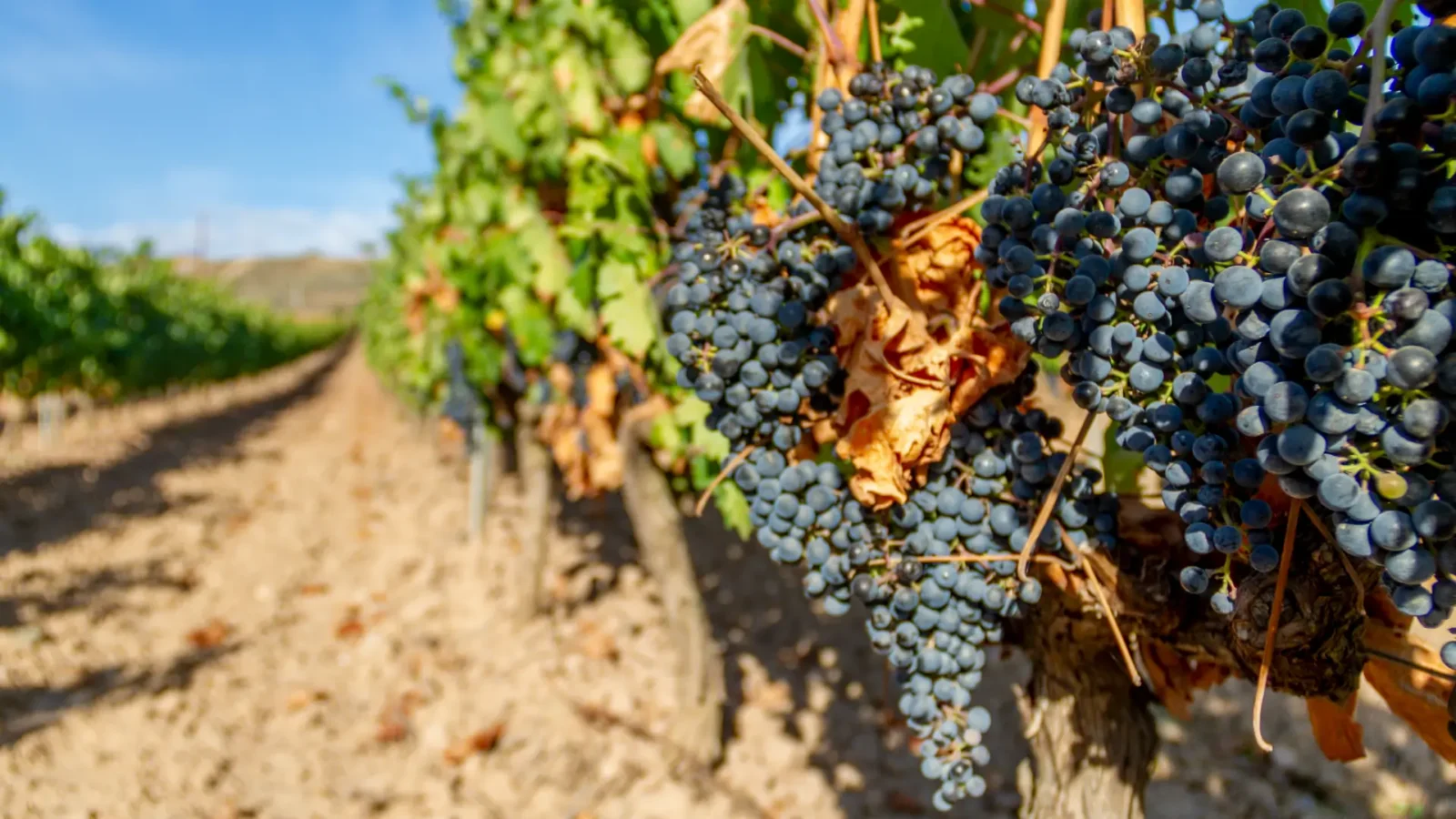
Logroño sits at the centre of the Rioja wine region, and dozens of wineries within a short drive open their doors for tours and tastings. A guided visit is where a booking earns its keep: a good host walks you through the vineyard, the cellar and a tasting flight, and explains what makes a Reserva different from a Crianza — things you cannot get from the bar.
Stroll the Paseo del Espolón and the riverside park
The Espolón is the city’s grand central promenade, lined with trees, benches and a statue of General Espartero on horseback. It is the heart of local life and the main stage for festivals. From there it is a short walk down to the Parque de la Ribera along the Ebro, an easy green loop that makes a good pause between the old town and a meal.
Prefer to go with a guide for any of this? Ask where you’re staying, or at the tourist office on Calle Portales — they’ll know what’s running, in which language, and can point you to something that fits.
Seasonal Events and Festivals
Fiestas de San Mateo / Fiesta de la Vendimia Riojana (around 21 September)La Rioja’s grape-harvest festival and Logroño’s biggest week of the year, anchored on the feast of San Mateo on 21 September and running the surrounding week. The highlight is the ceremonial treading of the first grapes on the Paseo del Espolón, with the first juice offered to the Virgen de Valvanera. Expect parades, concerts, fireworks and packed streets; book accommodation well ahead.
Actual, la Rioja’s culture festival (early January)a short, lively festival of music, theatre and contemporary art that fills the city over the first days of the year. It is a quieter, colder-season reason to visit. Confirm the current programme at the tourist office or on the city site before planning around it.
For the exact dates and events, ask at the tourist office on Calle Portales.
Getting There and Around
Logroño sits in the north of Spain on the Ebro River, at the meeting point of the AP-68 motorway (Bilbao–Zaragoza) and the A-12 (the “Camino de Santiago” motorway from Pamplona toward Burgos).
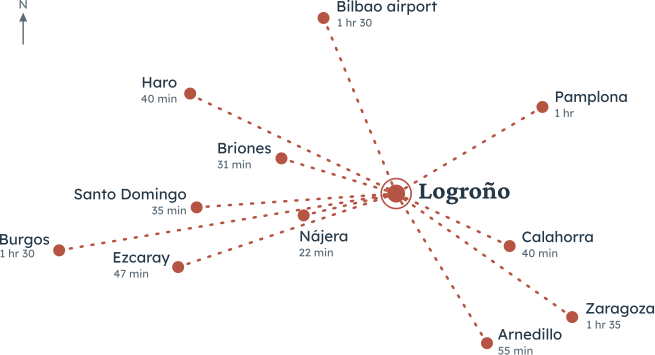
From Bilbaoabout 1 hour 30 minutes by car via the AP-68 (roughly 135 km). Bilbao is the most useful international gateway by air.
From Pamplonaabout 1 hour by car (roughly 90 km) on the A-12.
From Zaragozaabout 1 hour 35 minutes by car via the AP-68 (roughly 175 km).
From Burgosabout 1 hour 30 minutes by car (roughly 115 km) — the natural link to the Castilla y León cathedral cities to the west.
Nearest airports Bilbao (BIO) is the closest major international airport, about 1 hour 30 minutes away. Logroño-Agoncillo (RJL) is tiny, about 15 minutes from the centre, and mainly runs a daily Madrid connection. Zaragoza (ZAZ) and Pamplona (PNA) are secondary options.
By traindirect services reach Logroño from Madrid, Barcelona, Bilbao and Zaragoza, with the station a short walk south of the old town.
Getting around
You do not need a car inside Logroño — the old town is flat, compact and made for walking, and the pintxos streets are all within a few minutes of each other. Park once, on the edge of the centre or in an underground car park, and leave it there; several signposted car parks sit just outside the pedestrian core. You do want a car for the region, though: the whole point of Logroño is that it puts you within a short drive of the Rioja vineyards, the wine towns of Haro and Briones, and the Camino villages. Pick the car up at the airport and keep it for the region, not the city.
Looking for a ready-made plan? See our La Rioja road trips.
Practical Info
- Old town on footThe historic centre is small and level; the main sights, the co-cathedral and the pintxos streets are all a few minutes apart. Wear comfortable shoes and plan to walk everywhere.
- Pintxos timingBars fill up in the evening, roughly from 8pm. Lunchtime (around 2pm) is the other peak. Many kitchens close between services, so plan meals around those windows.
- Closing daysMuseums and some monuments often close on Mondays, and individual bars take their own rest days midweek. Check opening days before a special trip; don’t rely on a fixed timetable.
- TicketsMost old-town sights are free or charge a small admission at the door; there is no single combined ticket to buy ahead. For the co-cathedral tower climb and museum hours, check the official sites for the current details rather than a printed schedule.
- ClimateSummers are warm and dry — July and August highs sit around 28°C, with little rain. The most comfortable months are May, June, September and October, roughly 19–25°C. Winters are cool (January around 5–7°C), and the wettest spells come in spring and late autumn, with November the rainiest month.
- ParkingUse a car park on the edge of the centre; the old-town core is pedestrian and access is restricted, especially during festivals.
Where to Eat in Logroño
You’ll eat and drink well in Logroño, at every budget — this is one of Spain’s quiet food capitals, the heart of Rioja wine and home to three kitchens with a Michelin star. Two simple rules make it easy: for lunch while you’re out walking, the bars around Calle Laurel and Calle San Juan are full of good-value pintxos, each place famous for one thing; for dinner, book a table in the old town and eat slowly. The picks below cover both, from a one-euro mushroom pintxo to a special-occasion table.
A Calle Laurel institution that has served essentially one thing for decades: a champiñón — a stack of garlicky grilled mushrooms topped with a prawn, on bread. You order by holding up fingers for how many. Closed Tuesday and Wednesday.
Another single-dish legend on Laurel, again built around the grilled mushroom pintxo, and often mentioned in the same breath as Soriano. Locals argue over which is better — the honest answer is to try both. Expect a crowd and quick, no-frills service.
A small, well-loved Laurel bar known for its seared fresh foie on crisp bread, a slightly more indulgent stop on the crawl. Portions are generous for the price and it pairs naturally with a glass of Crianza. Evenings mainly.
A step up from the classic one-dish bars, with a broader menu of creative pintxos and a strong wine list, plus a menú del día at lunch. The kitchen puts a modern spin on traditional Rioja dishes. Tables fill fast from about 7:30pm — book ahead.
A well-regarded old-town kitchen on Calle Portales that cooks market-led Riojan food — think seasonal vegetables, local lamb and slow-cooked classics — with a good-value weekday lunch menu. Friendly, unhurried service and a strong regional wine list. Closed Monday; book for dinner.
A traditional roast house just off Calle Portales, close to the co-cathedral, popular with locals for grilled meats and Rioja classics. The suckling pig (cochinillo) and the morcilla are the things to order, with a terrace when the weather is good. Reserve, as it fills quickly.
Logroño’s most celebrated table, holding one Michelin star, on Avenida de Portugal near the old town. The kitchen blends Rioja produce with Ecuadorian flavours across tasting menus, served in a warm, low-key room. This is the special-occasion choice; reserve well ahead.

Where to Stay in Logroño
Stay the night and Logroño changes character. The day’s pilgrims and day-trippers thin out, the pintxos bars fill with locals, and the old-town lanes stay warm and lit long after dark — you’re already where the evening is at its best, a few steps from your bed. Here’s where we’d book, from a simple pilgrim-friendly room to a converted palace.
Áurea Palacio de Correos
Sleep inside the city’s former main post office, a handsome historic building on a central old-town square with a small spa. Rooms are quiet and comfortable despite being steps from the pintxos streets, and the staff are used to guests arriving by car from Bilbao. The most polished stay in the centre.
Check prices & availability for Áurea Palacio de Correos on the accommodation's websiteEurostars Fuerte Ruavieja
A comfortable four-star with a spa, set on Calle Ruavieja right on the Camino in the heart of the old town. Rooms are generous and quiet, and there’s secure parking — useful if you’re touring the region by car. A reliable, central upper-tier base.
Check prices & availability for Eurostars Fuerte Ruavieja on the accommodation's websiteSercotel Calle Mayor
A modern, well-run hotel tucked inside a much older building on a quiet pedestrian street in the old town, a minute from Calle Laurel. Spacious, calm rooms and off-street parking nearby make it an easy mid-range choice for a road-trip stop.
Check prices & availability for Sercotel Calle Mayor on the accommodation's websiteAniana Alojamiento Boutique
A small, lovingly decorated boutique stay in the centre, with thoughtful touches — a welcome bottle of Rioja, a private balcony — and warm, personal service. It reads more like staying in a friend’s beautifully kept flat than a hotel. Great value for the care you get.
Check prices & availability for Aniana Alojamiento Boutique on the accommodation's websitePríncipe de Vergara Rooms
Bright, modern rooms in a great position moments from Calle Laurel, with easy self check-in and quick, helpful WhatsApp support. A simple, well-located option for travellers who want the pintxos streets on the doorstep and no fuss.
Check prices & availability for Príncipe de Vergara Rooms on the accommodation's websitePensión La Bilbaína
A plain, central, budget-friendly guesthouse a short walk from the food streets — the honest affordable choice, and popular with pilgrims on the Camino. Rooms are basic and simple, so set expectations to match the price, but the location is hard to beat for the money.
Check prices & availability for Pensión La Bilbaína on Booking.com
Region, Nearby and Routes
Part of La Rioja
Logroño is in La Rioja
Part of these routes
Logroño is one stop on our La Rioja Road Trip: 12 Days See the full trip
Nearby places
- HaroThe wine capital of La Rioja, home to the world’s densest cluster of century-old bodegas and a hilltop old town of tapas bars.
- Santo Domingo de la CalzadaLa Rioja’s great Camino town, with a cathedral that keeps a live rooster and hen and the region’s longest medieval walls.
- EzcarayA mountain town of arcaded stone squares and cool forest air, off the Rioja wine trail — with one of Spain’s great kitchens.
- NájeraLa Rioja’s old royal capital, where a fortress-like monastery holds thirty kings’ tombs beneath cliffs full of man-made caves.
- BrionesA walled medieval village on a hill in Rioja Alta, home to one of the world’s best wine museums and streets that stay quiet after dark.
- ArnedilloA small spa village in the Cidacos valley, with free hot pools by the river and vultures circling the cliffs above.
- CalahorraA Roman hill town above the Ebro, with a riverside cathedral, a hilltop Jewish quarter and famous vegetable gardens.
- San Vicente de la SonsierraA wine village crowned by a walled castle and Gothic church, with Rioja’s oldest traditions still alive.
Frequently Asked Questions
Logroño is well worth visiting, especially for food and wine lovers. It is the capital of La Rioja and home to Calle Laurel, one of Spain’s best pintxos streets, plus a handsome old town on the Camino de Santiago. It also makes the ideal base for touring the surrounding wine region.
Logroño is known above all for wine and pintxos. It is the capital of La Rioja, Spain’s most famous wine region, and its Calle Laurel packs dozens of bars into a few narrow streets. It is also a major stop on the Camino de Santiago.
Logroño needs about a full day and, ideally, one night. You can see the old-town sights in an afternoon, but the pintxos bars only come alive in the evening, so staying over is what makes the visit. Many travellers use it as a one- or two-night base for the wine region.
The best time to visit Logroño is late spring or early autumn — May, June, September and October — when days are a comfortable 19–25°C. July and August are warm and dry, with highs around 28°C. Late September brings the San Mateo wine-harvest festival and big crowds, so book ahead if you come then.
You can do Logroño as a day trip from Bilbao — it is about 1 hour 30 minutes by car or bus. But a day trip means leaving before the evening pintxos crawl, which is the best part, so staying one night is a better plan if you can.
Stay in Logroño’s old town, within walking distance of Calle Laurel. For an upper-tier stay, the Áurea Palacio de Correos (a converted post office with a spa) and the Eurostars Fuerte Ruavieja are both central. Sercotel Calle Mayor and the boutique Aniana are good mid-range choices, and Pensión La Bilbaína is the reliable budget option.
Eat your way along Calle Laurel and Calle San Juan, where each bar is famous for one dish. Bar Soriano and Bar Ángel are the classic grilled-mushroom stops, and Torrecilla is known for its foie. For a sit-down dinner, try the traditional La Cocina de Ramón or the asador El Portalón; for a special meal, book the Michelin-starred Íkaro.