
Nájera: the royal Rioja the wine tour drives past
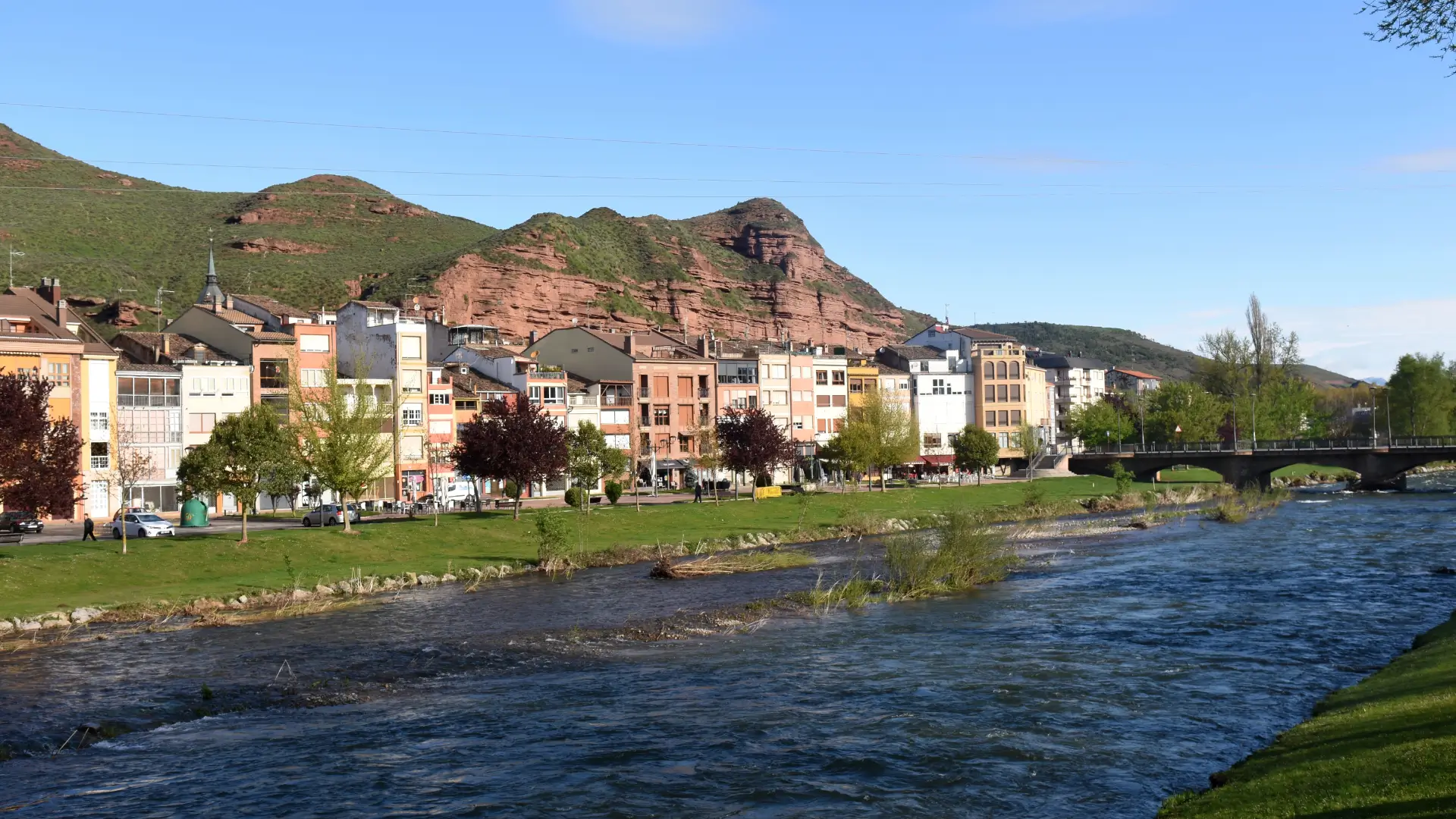
Nájera is the old royal capital of La Rioja that most wine tourists pass through without stopping. It sits on the river Najerilla, backed by a wall of red cliffs riddled with man-made caves. For a few centuries this small town was the seat of the kings of Nájera and Pamplona, and its great monastery holds their tombs. Come for the pantheon, the old streets, and honest Camino cooking.
Why Visit Nájera
Most people know La Rioja for its wine. Nájera adds the region’s royal history to that story. In the 11th century the kings moved the Camino de Santiago so that it passed through their capital, and pilgrims have walked its streets ever since. That same king founded the monastery of Santa María la Real. Legend says he found an image of the Virgin in a cave here while hunting. The town grew around river, cliff, and monastery, and those three still shape it today.
Who Nájera is for
What you notice first is the setting. Red sandstone cliffs rise straight behind the old town, and the Najerilla splits the town in two. The historic centre sits on the left bank — a knot of narrow streets and small squares that you can walk in half an hour. Pilgrims still pass through daily on their way west, which keeps the bars and simple restaurants busy and the pace friendly. It is a working Riojan town, not a polished showpiece. It suits the traveller who wants history and good, honest food without the crowds of the big cities.
Day trip or overnight?
You can see the heart of Nájera in half a day. The monastery, the old streets, and the caves fit comfortably into an afternoon. But staying the night lets you eat well without rushing and catch the town once the day pilgrims have moved on. A good short visit looks like this: start at the monastery when it opens, before the coach groups. Walk the old streets and the riverbank, then climb to the castle hill for the view over the rooftops. Have a long, late lunch of Riojan cooking, and if you stay, take a slow evening drink by the river. It works well as a short stop between Logroño and the wine towns, or as a quiet base for a night.
What to See in Nájera
Monasterio de Santa María la Real
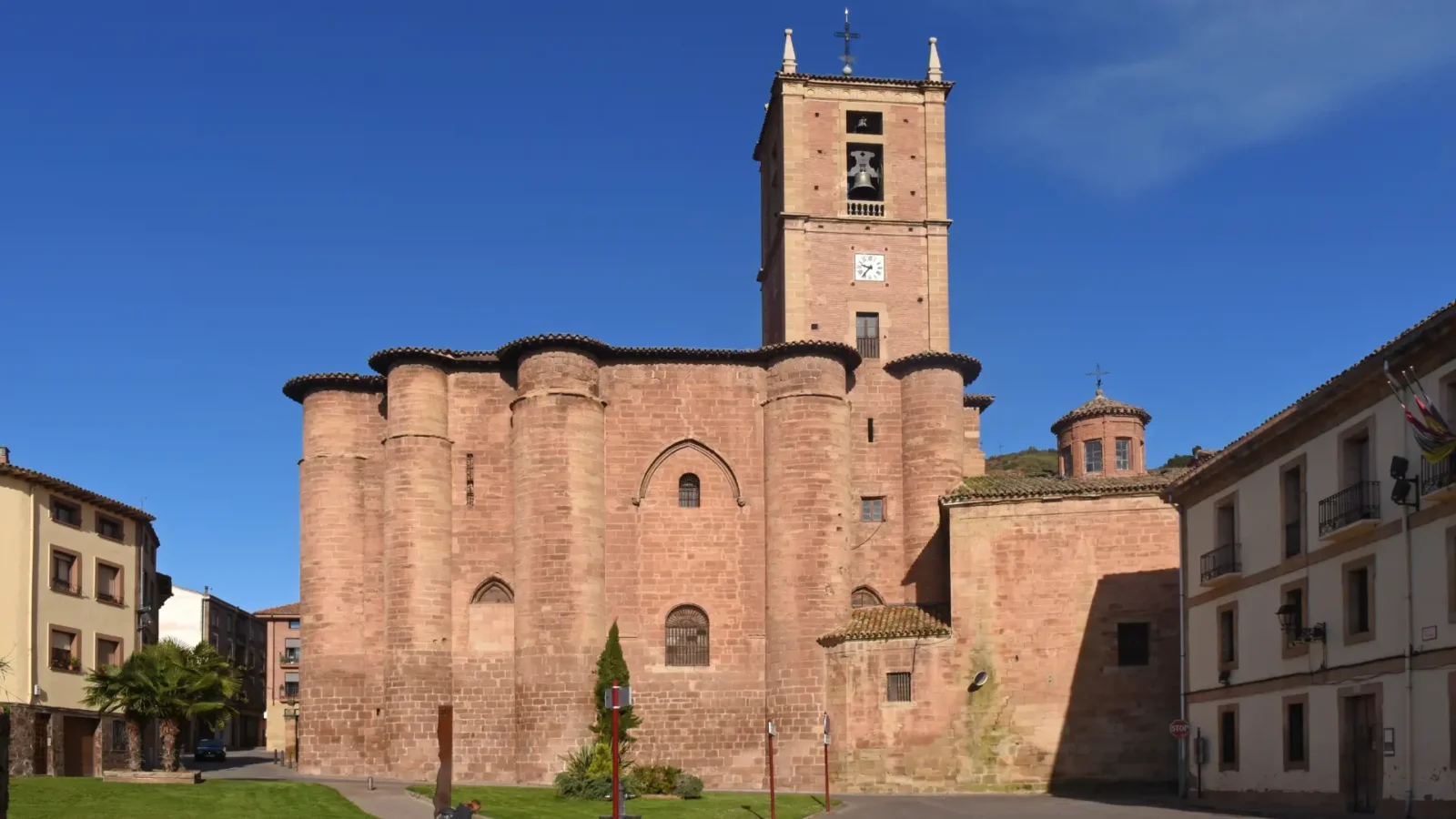
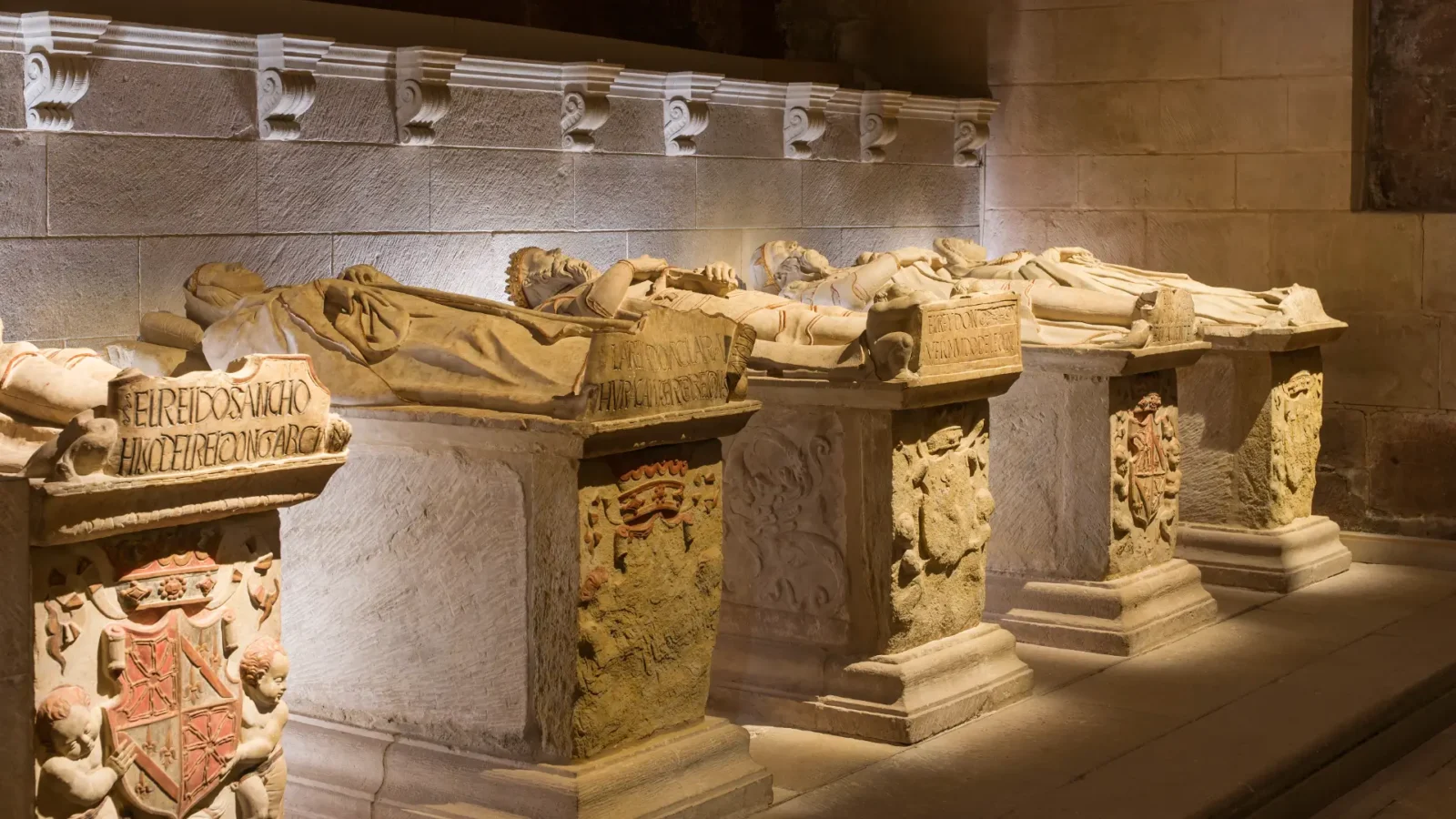
The monastery is the reason to come. Founded in 1052, it was the royal pantheon of the kingdom of Nájera-Pamplona, and it holds the tombs of some thirty kings, queens, and nobles. From outside it looks like a fortress. Inside are three great draws: the Cloister of the Knights, carved in fine stone tracery with each window different from the last; the choir, with walnut stalls counted among the best of their kind in Spain; and a low door that leads to the cave where the king is said to have found the Virgin. The tomb of Doña Blanca de Navarra, a piece of 12th-century Romanesque carving, is the finest single work inside.
The cliff caves (Cuevas de Nájera)
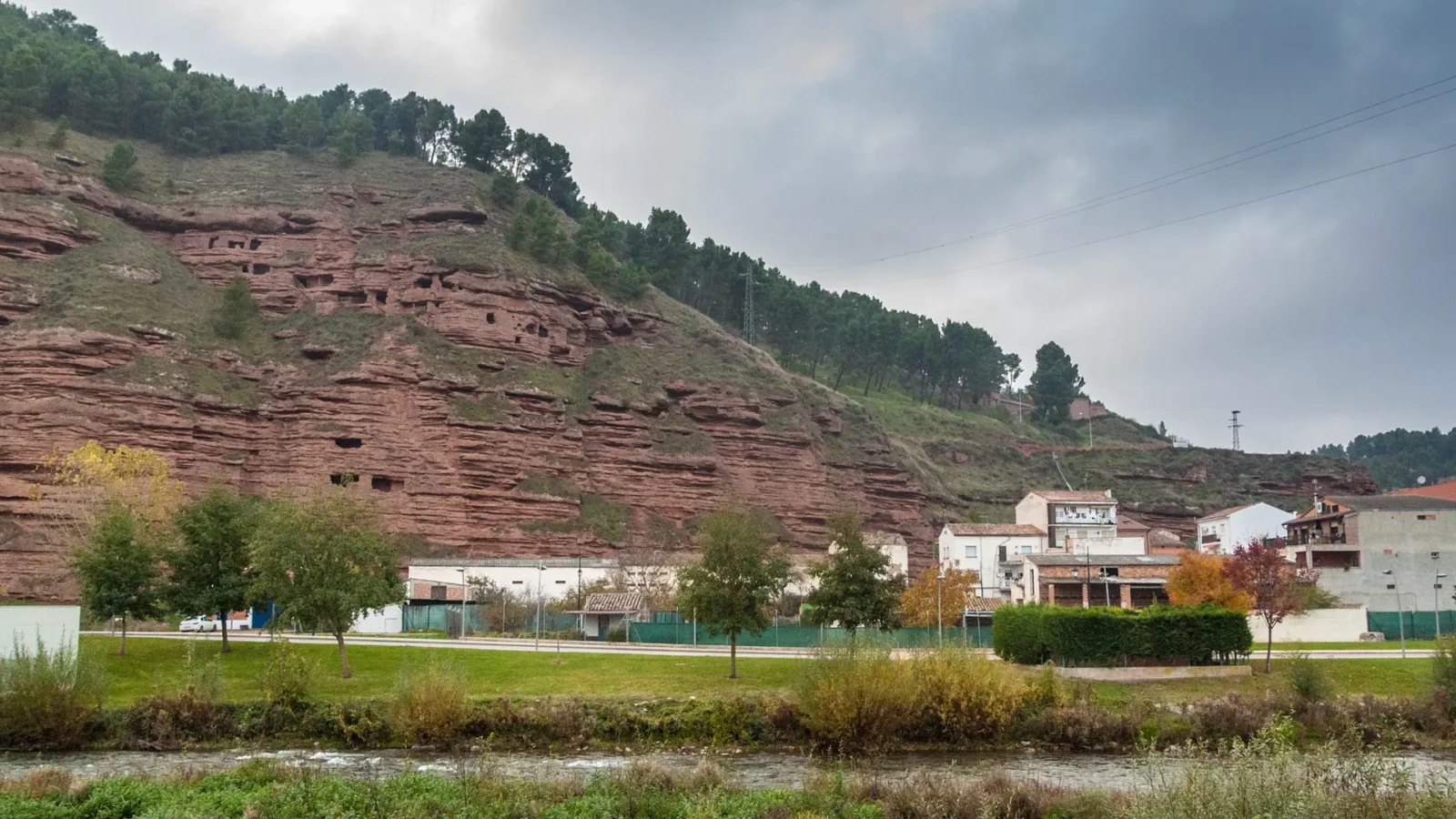
Behind the town, the red cliffs are pierced by rows of man-made caves. People carved them into the soft rock over centuries and used them as refuge, storerooms, and dovecotes. There are more than a hundred cave mouths, set in tiers up the cliff face. The largest group, near the castle, can be visited on a guided tour at certain times of year. The climb up is steep and rough, so wear proper shoes and check first at the tourist office.
The old town & Plaza de España
The old town spreads along the left bank of the Najerilla, below the cliffs. It is small and flat — a walk of narrow lanes and a few squares that takes about half an hour. The Plaza de España sits at its heart, ringed by arcades and cafes. Look for coats of arms above the older doorways and the odd noble house from the town’s grander days. It is an easy wander with the monastery at one end and the river at the other.
Iglesia de Santa Cruz
The church of Santa Cruz stands a few streets from the monastery. Built in the 11th century and much changed since, it holds relics of San Prudencio and paintings moved here from Santa María la Real. It is a quiet, working parish church rather than a grand monument, and it offers an evening Mass for pilgrims. It makes an easy stop as you walk the old town.
Alcázar & castle hill (Cerro de la Mota)
Above the town rise the ruins of the alcázar and castle. Little is left of the walls, but the climb rewards you with the best view in Nájera, out over the red roofs, the monastery, and the river valley below. A path leads up from the old town past the old cemetery. It is a short but steep walk, best done in the cool of the morning or the early evening.
What to Do in Nájera
Walk the riverbank and the old cemetery path
The Najerilla runs right through town, with shaded walks along both banks and bridges linking the two halves. Follow the left bank below the cliffs, then take the path that climbs past the old cemetery toward the castle hill. It is the simplest way to see the town’s setting — river on one side, red rock on the other.
Climb to the castle viewpoint
The path up the Cerro de la Mota is short but steep, and it gives the best view in Nájera. Go early or late, when the light is soft and the climb is cool. There is little shade at the top, so bring water in summer.
Taste Rioja wine nearby
Nájera sits in the heart of the wine country, and several working bodegas around the town run tastings and visits. It is an easy add-on to a Nájera stop, and a gentler introduction than the big Haro houses. Ask where you’re staying, or at the tourist office, for a winery that takes visitors and offers a tour in English.
Want to go into the caves, or join a monastery or winery tour? Ask at the tourist office on Paseo de San Julián (near the bus station) — they’ll know what’s running, in which language, and can point you to something that fits.
Seasonal Events and Festivals
San Prudencio (late April)The town honours its patron saint with religious and civic events over a quieter spring weekend.
San Juan and San Pedro (late June)Nájera’s main summer festival, with music, processions, and its traditional “vueltas” filling the streets for several days. The town is at its busiest and liveliest here.
Crónicas Najerenses (July–August)Historical performances staged around the monastery on summer evenings, which can affect night-time access to the building. Dates change each year.
For the exact daily programme of either festival, check with the local tourist office.
Getting There and Around
Nájera sits on the main road west from Logroño, in the Rioja Alta wine and Camino country.
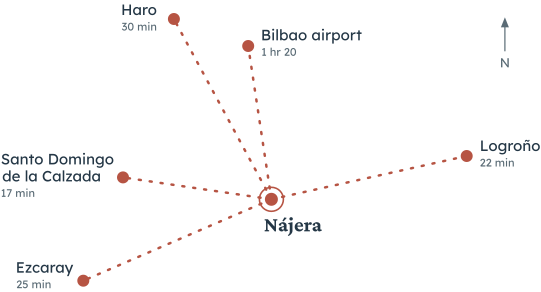
From Logroñoabout 22 minutes by car via the A-12 (roughly 30 km); hourly buses also run.
From Santo Domingo de la Calzadaabout 17 minutes by car (roughly 14 km); direct buses several times a day.
From Ezcarayabout 25 minutes by car.
From Haroabout 30 minutes by car.
From San Millán de la Cogollaabout 20 minutes by car (roughly 17 km); a daily bus also runs.
Nearest airports Bilbao (BIO) is the closest major gateway, about 1 hour 20 minutes (roughly 100 km); Pamplona and Vitoria are alternatives.
By busNájera is linked to Logroño, Santo Domingo de la Calzada, Haro, Navarrete, San Millán de la Cogolla, and Madrid by regional lines; the station is on the edge of the centre.
Getting around
Getting to Nájera is easy, as it sits right on the A-12 motorway and the N-120 west of Logroño. You’ll want a car to explore the wider region. The town centre itself is small and walkable, and you can park near the old town without much trouble. But the point of the area is the drives around it — to the monasteries at San Millán de la Cogolla, the wine towns, and the mountains at Ezcaray — so a car earns its keep across the region even though you won’t need it inside Nájera.
Looking for a ready-made plan? See our La Rioja road trips.
Practical Info
- Getting aroundThe old centre is flat and walkable; park near it. A car is needed for the wider region.
- Ticketing and hoursThe monastery is the one sight that needs planning. It keeps set hours, closes on Monday mornings out of season, and can shut in the evening during the summer history shows — so check before you go. The cliff caves open only on guided tours at certain times, arranged through the tourist office.
- ClimateWarm and dry in summer, with August highs around 27°C, and mild in spring and autumn. The most comfortable months run May to October, roughly 19–27°C by day. Spring is the wettest time (April is the wettest month); winters are cold.
- Best time of dayEarly morning at the monastery (before coach groups); late afternoon and evening for the old town and the castle-hill view.
Where to Eat in Nájera
Nájera sits squarely on the Camino de Santiago, and that shapes the town’s food. Because pilgrims arrive hungry every day, the town is full of good-value places serving a hearty three-course menu, and the standard is higher than the price suggests. You’ll eat classic Riojan cooking here: patatas a la riojana (the potato and chorizo stew), lamb chops grilled over vine cuttings, and local red by the carafe. One simple rule: for a set lunch or an early pilgrim dinner, head for the old-town streets near the monastery — and it is worth booking at the busier tables in summer.
A small, friendly family kitchen serving fresh home-cooked meals and a good pilgrim menu. Plain, honest, and cheap. Closed Mondays — check ahead.
A little way out of the centre but worth the walk — fresh, from-scratch cooking with risottos, fish, and generous salads, and a warm welcome. Closed Mondays — check ahead.
The town’s standout kitchen, just off the main square, where a small team turns out an ambitious set menu and a short list of imaginative plates. A real surprise in a town this size, and still fair value. Book ahead. Closed Mondays and Tuesdays — check ahead.
An old-town favourite in the narrow streets, known for a generous, good-value menu — potato stew, lamb chops, honest Riojan plates. Busy at dinner, so arrive early.
A well-loved spot for charcuterie, cheese boards, and grilled meats, with a handful of tables and a good local crowd after 8pm. Small, so it fills fast. Closed Mondays and Tuesdays — check ahead.
A relaxed place near the bus station with a well-priced set menu built on Riojan classics — good for a proper multi-course lunch. Closed Tuesdays — check ahead.
Where to Stay in Nájera
Stay the night and Nájera changes. The day pilgrims walk on west, the old streets quieten, and the town settles into a slow riverside evening below the cliffs — a glass by the Najerilla, an unhurried dinner, and the monastery lit against the dark. Here’s where we’d sleep.
Albergue Puerta de Nájera
A well-located pilgrim hostel on the better (west) bank of the river, a few steps from the bars and restaurants, clean and welcoming. The budget and sociable pick. (Right on the street — can be lively at weekends; ask for a quieter room.)
Check prices & availability for Albergue Puerta de Nájera on the accommodation's websiteAlojamientos Zabala (AT La Piedra)
Bright, well-kept self-catering apartments tucked against the cliff in the old town, with a kitchen and a warm welcome — good for a couple or a small family who want their own space.
Check prices & availability for Alojamientos Zabala (AT La Piedra) on the accommodation's websiteHostal Ciudad de Nájera
A well-run, welcoming hostal near the river with clean, spacious rooms and air conditioning — good for a comfortable, no-fuss night. (Some rooms have a shared bathroom — check when booking.)
Check prices & availability for Hostal Ciudad de Nájera on the accommodation's websiteHostal Hispano
A simple, central budget hostal a short step off the Camino, with clean rooms and a generous breakfast. Basic but friendly, and one of the cheapest beds in the centre. (No lift; ask about hot-water reliability.)
Check prices & availability for Hostal Hispano on the accommodation's websiteHotel Duques de Nájera
The town’s most comfortable hotel, in a restored building by the river with warm, rustic rooms and a good breakfast. Central, quiet, and an easy walk to the monastery — the obvious mid-range choice.
Check prices & availability for Hotel Duques de Nájera on the accommodation's websitePensión San Lorenzo
A small, spotless guesthouse near the old town, run with real care, with some of the best beds in town and a friendly, English-speaking host. Popular with pilgrims and walkers.
Check prices & availability for Pensión San Lorenzo on the accommodation's website
Region, Nearby and Routes
Part of La Rioja
Nájera is in La Rioja
Part of these routes
Nájera is one stop on our La Rioja Road Trip: 12 Days See the full trip
Nearby places
- Santo Domingo de la CalzadaLa Rioja’s great Camino town, with a cathedral that keeps a live rooster and hen and the region’s longest medieval walls.
- LogroñoLa Rioja’s relaxed capital, where the Camino, a twin-towered co-cathedral and Spain’s best-loved pintxos street meet at the gateway to the wine region.
- EzcarayA mountain town of arcaded stone squares and cool forest air, off the Rioja wine trail — with one of Spain’s great kitchens.
- HaroThe wine capital of La Rioja, home to the world’s densest cluster of century-old bodegas and a hilltop old town of tapas bars.
- BrionesA walled medieval village on a hill in Rioja Alta, home to one of the world’s best wine museums and streets that stay quiet after dark.
- San Vicente de la SonsierraA wine village crowned by a walled castle and Gothic church, with Rioja’s oldest traditions still alive.
Frequently Asked Questions
Nájera is worth visiting for its royal monastery, one of the great sights of La Rioja, plus its old streets, cliff caves, and good-value Camino food. It gives you real history and honest cooking with far fewer crowds than the region’s big cities.
Nájera is known as the old royal capital of the kingdom of Nájera-Pamplona and for the monastery of Santa María la Real, whose royal pantheon holds the tombs of around thirty kings and nobles. It is also a major stop on the Camino de Santiago and sits below cliffs full of man-made caves.
Nájera needs about half a day to see the monastery, the old town, and the castle-hill view. It rewards an overnight stay, which lets you eat well without rushing and see the town once the day pilgrims have moved on.
The best time to visit Nájera is May to October, when days are roughly 19–27°C and summer highs sit around 27°C. Spring is the wettest season and winters are cold, so late spring and early autumn are the most comfortable.
You can visit the largest group of Nájera’s cliff caves on a guided tour at certain times of year, arranged through the tourist office. The climb is steep and rough, so wear proper shoes and check availability before you go.
You can do Nájera as a day trip from Logroño — it’s about 22 minutes by car or a short bus ride. Start early at the monastery, before the coach groups, to see it at its quietest.
In Nájera, Hotel Duques de Nájera is the most comfortable central choice, while Pensión San Lorenzo and Hostal Ciudad de Nájera offer well-kept mid-range rooms. For self-catering try Alojamientos Zabala, and Hostal Hispano or the Albergue Puerta de Nájera are the budget picks.
In Nájera, Meraki Gastrobar is the standout modern kitchen, while Mesón Jamonero and El Askari are strong for tapas and fresh cooking. For a classic Riojan set menu try La Merceria or El Buen Yantar, both good value on the Camino.