
San Vicente de la Sonsierra: the castle village on the Ebro
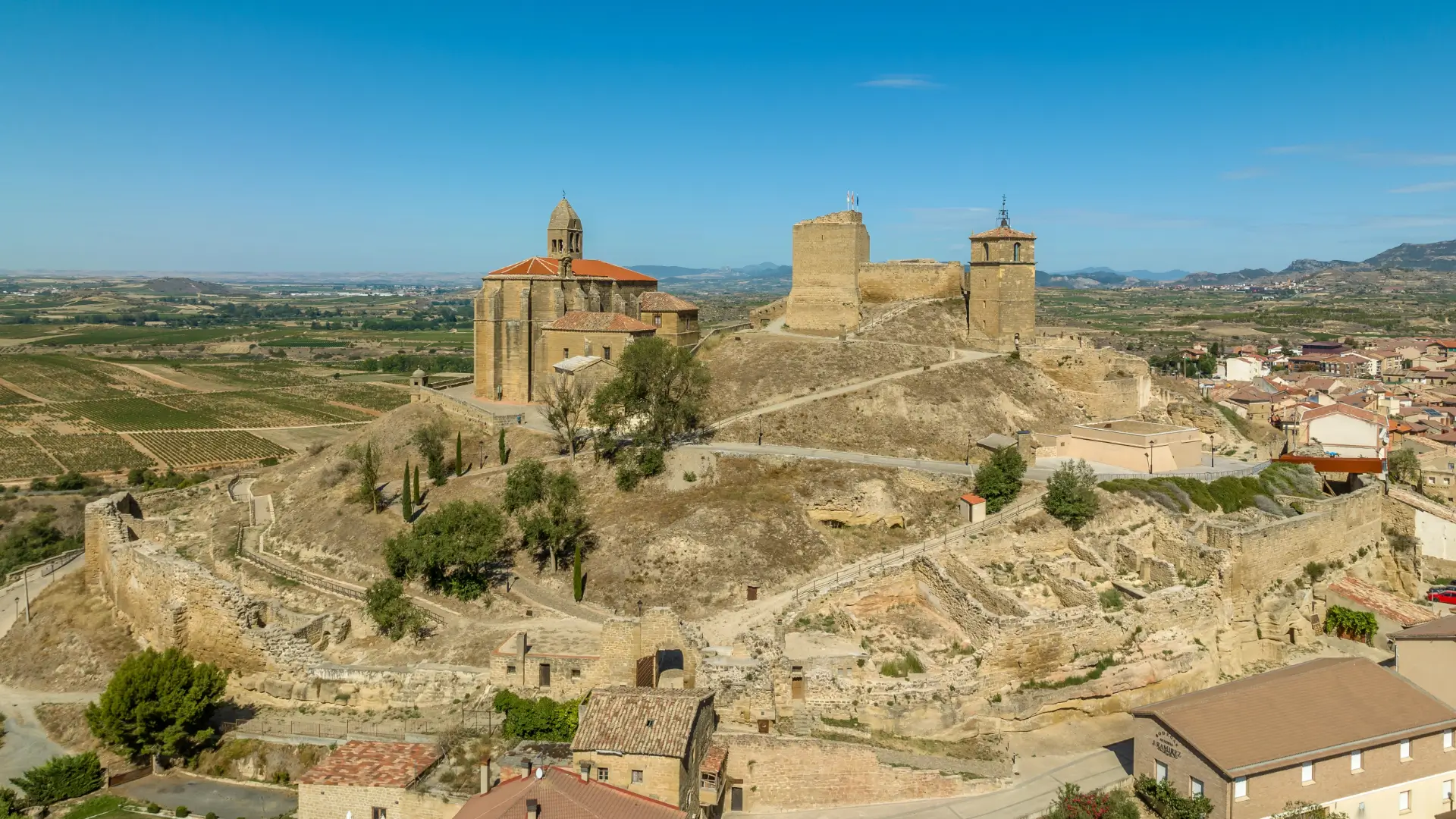
San Vicente de la Sonsierra is a wine village in Rioja Alta, on the north bank of the Ebro. A walled castle and a Gothic church sit on the rock above its roofs. For centuries this was a border fort between Navarre and Castile. Today you climb its ramparts for a view over vineyards and the river. Then you taste wine in a family cellar, in a village of about a thousand people.
Why Visit San Vicente de la Sonsierra
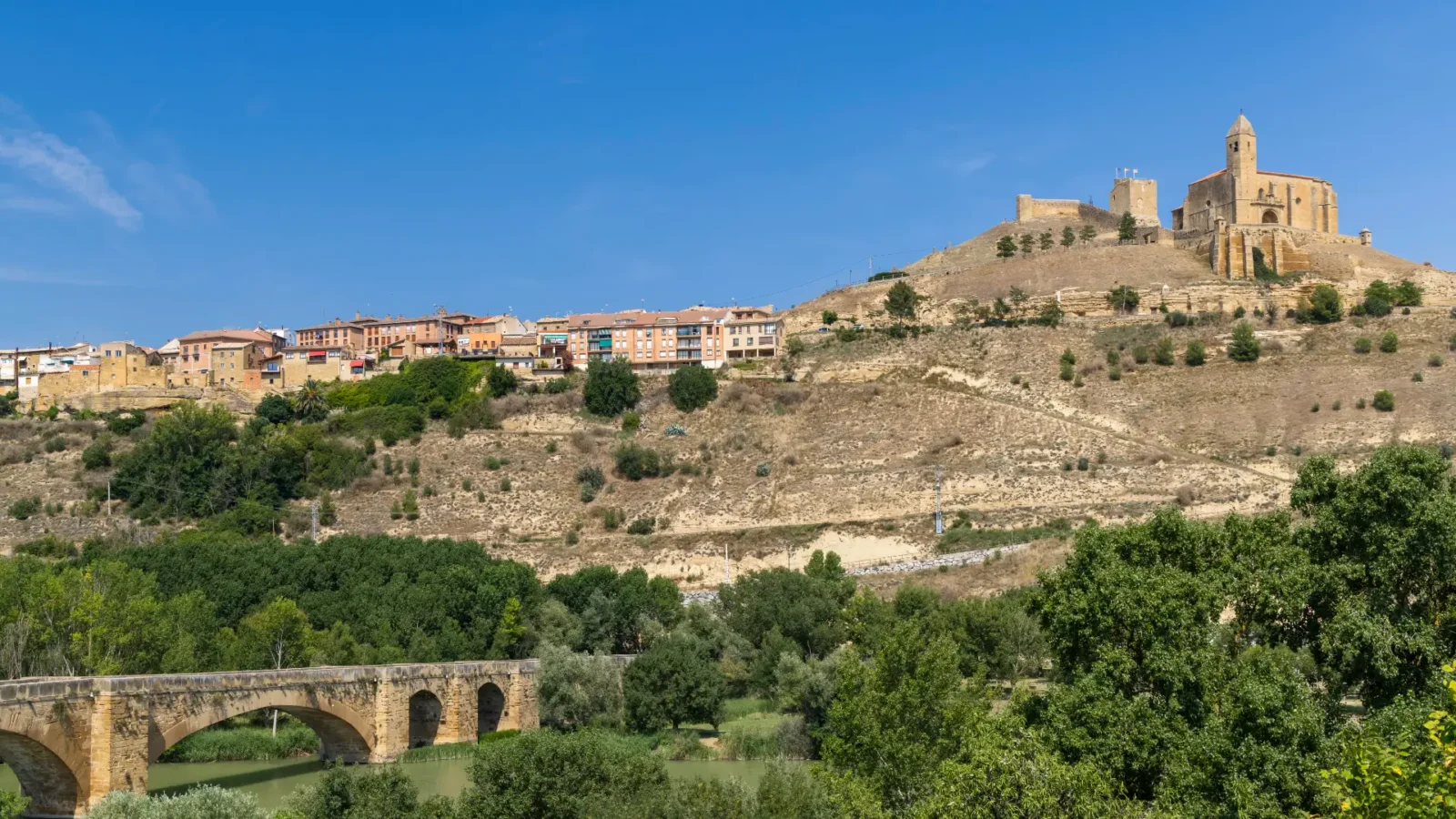
San Vicente de la Sonsierra sits between the Ebro and the Sierra de Cantabria. Kings of Navarre and Castile fought over this spot for centuries, and the castle shows it. Thick walls wrap the top of the hill. Inside them, a Gothic church stands next to a clock tower and a small hermitage. From the Torre Mayor you look out over the Ebro and a sea of vines.
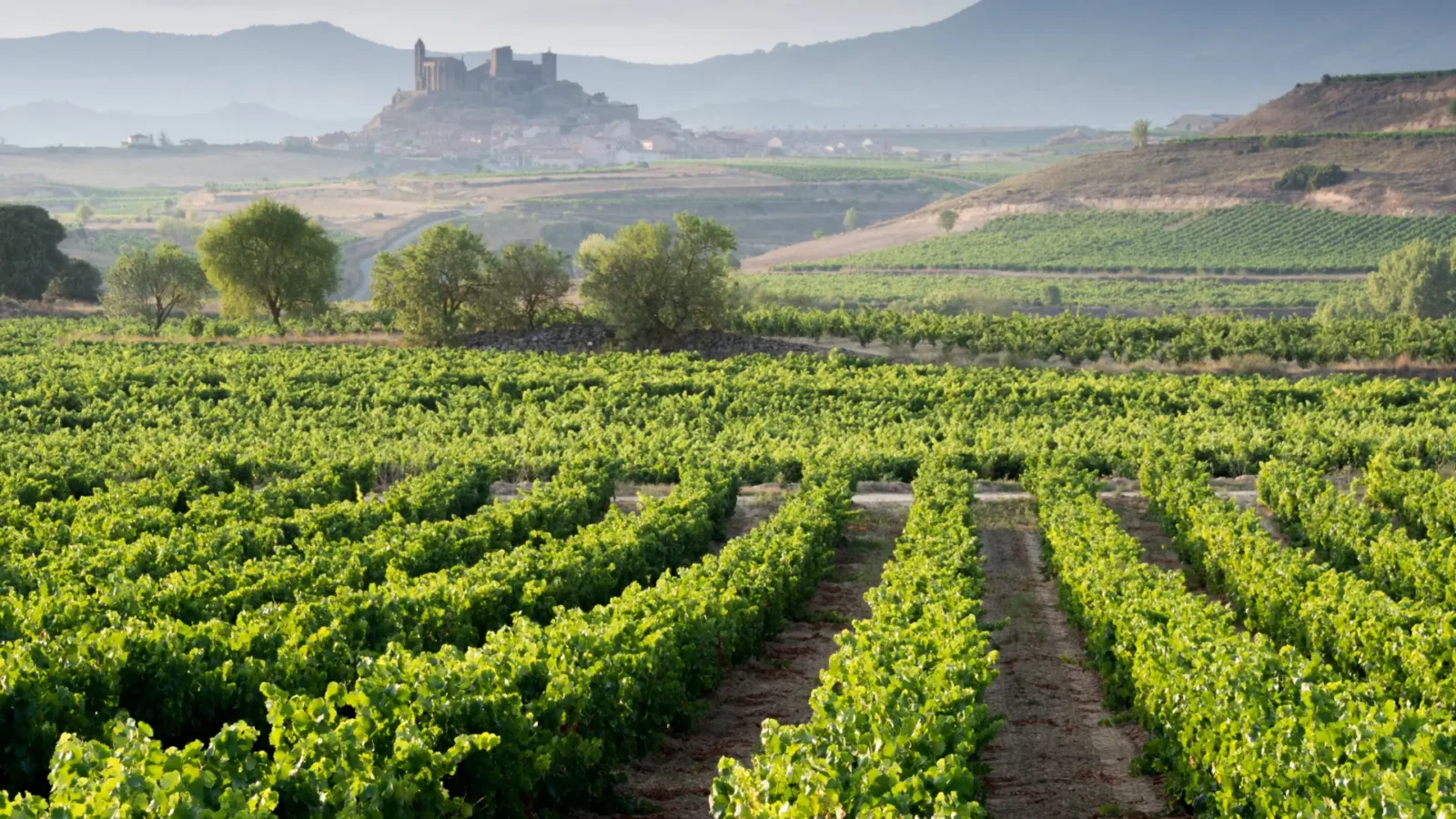
The village lives from wine. More than twenty bodegas work here, and many are small family businesses. Some still ferment whole bunches of grapes in old stone tanks, the old local way of making young red wine. Around the village, farmers once cut wine presses straight into the rock. You find them along the paths between the vines.
Who San Vicente de la Sonsierra is for
San Vicente suits travellers who like history they can walk through, and wine tasted in small family cellars. It also suits anyone curious about old Spanish traditions. In Holy Week, hooded penitents called picaos walk its steep lanes in a ritual that goes back to the 1500s.
Day trip or overnight?
You can see San Vicente in half a day from Logroño or Haro. The castle loop takes about an hour, and a tasting fills the rest. But then you leave before sunset, the best moment on the castle walls. Our honest advice: stay one night. A perfect short visit looks like this. Arrive in the afternoon and walk up to the castle for sunset from the Torre Mayor. Then eat pintxos on the Plaza Mayor. Next morning, drive the short road to Santa María de la Piscina while it is still quiet. End with a tasting at a family bodega, and cross the old bridge on your way out.
What to See in San Vicente de la Sonsierra
The castle enclosure and Torre Mayor
The walled enclosure crowns the hill above the village. A lower ring of walls was added in the 14th century so villagers could live safely inside. Today you walk it on your own, following QR codes along a loop of one to two kilometres. It passes the clock tower from 1675, the hermitage of San Juan and the remains of an old wine press and cellar. Climb the Torre Mayor at the top for the widest view over the Ebro.
Open in Google MapsChurch of Santa María la Mayor
This church was built inside the castle walls from the early 16th century, in late Gothic style. It has a single nave and a many-sided apse. The main altarpiece dates from around 1560, with carved figures from the workshop of the Beaugrant family. The church has been a national monument since 1933. It is often closed outside services, so ask at the tourist office when you can see inside.
Open in Google MapsPlaza Mayor
The main square sits below the castle hill. The town hall on the square was finished around 1726. The fountain in the middle was designed by the engineer Amós Salvador in 1882. In the evening, the bars on the square put their tables outside. The village also keeps the 17th-century Gil Aguiriano palace.
Open in Google MapsThe medieval bridge over the Ebro
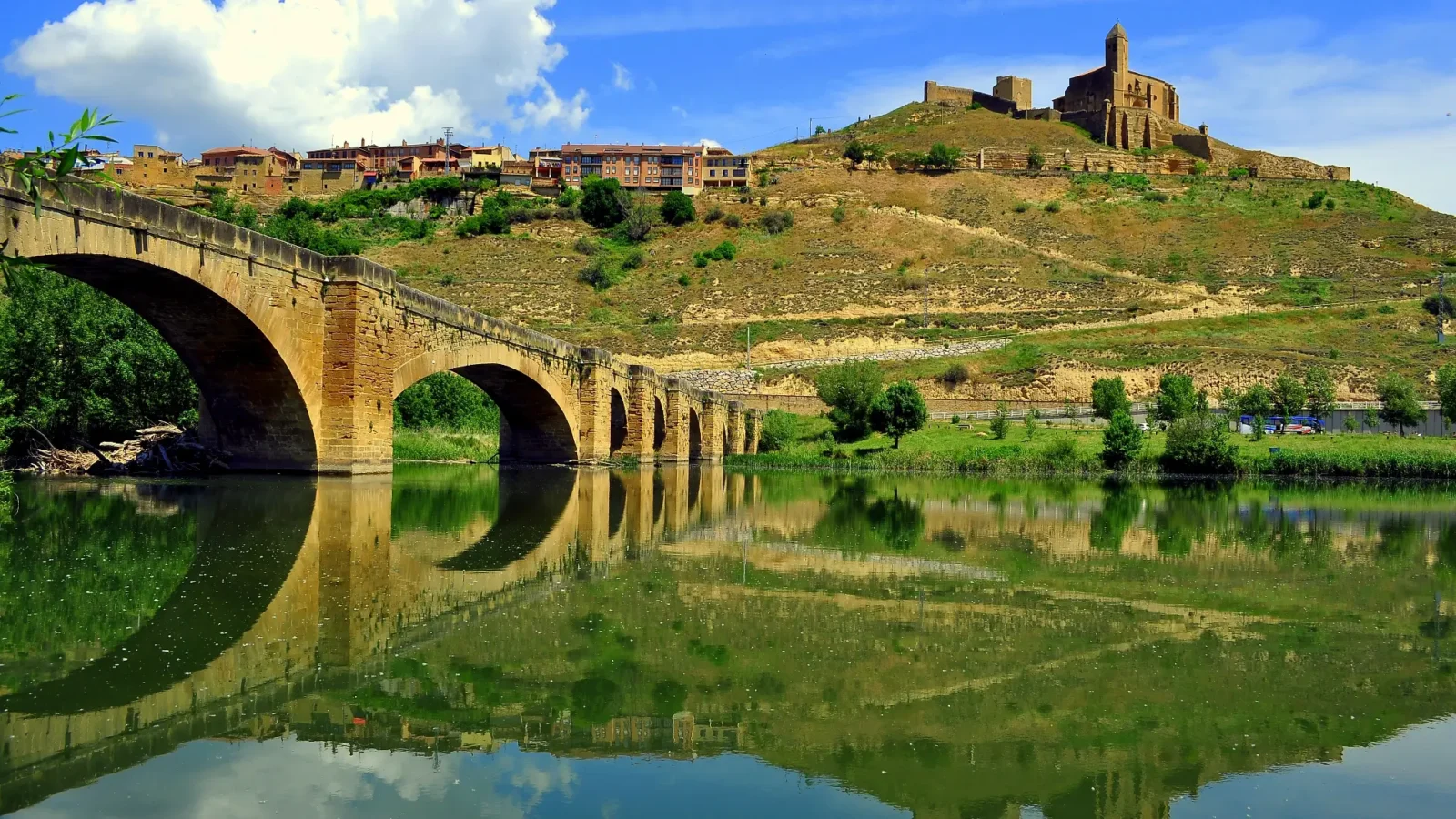
The bridge crosses the Ebro just below the castle, on the old border between Navarre and Castile. Its oldest parts date from the 13th century. Nine arches survive, and they differ in shape: the three oldest are pointed. Heavy traffic now uses a new bridge downstream, so you can walk the old one in peace. Look back from the far bank to see the castle rise above the arches.
Open in Google MapsSanta María de la Piscina
This small Romanesque hermitage stands alone in the vineyards below the Sierra de Cantabria, a few kilometres from the village. It was consecrated in 1137. Its founder brought relics back from the Holy Land, and the name recalls the Pool of Bethesda in Jerusalem. Around the church, dozens of graves are cut into the bare rock. Panels and QR codes explain the site, and the tourist office runs guided visits of the interior.
Open in Google Maps
What to Do in San Vicente de la Sonsierra
Taste wine at a family bodega
More than twenty wineries work in and around San Vicente, from family cellars to larger estates. Some growers still make young red wine the old local way. They put whole bunches of grapes into stone tanks and let them ferment for about a week, which gives a fruity, soft wine. Most bodegas receive visitors by appointment only, so plan this before you arrive. Search for “bodega” around San Vicente on Google Maps, read the reviews, and email two or three a few days ahead. Some family bodegas welcome visitors who just knock, but only when someone is there. No visit booked? Taste Sonsierra wines by the glass in the wine bars on Calle El Remedio.
Walk the rock-cut Sonsierra
A waymarked route links the oldest traces of life in the Sonsierra. It starts at Santa María de la Piscina and passes the Neolithic Dolmen de la Cascaja. Along the way you find graves and wine presses cut into the rock, some of them more than a thousand years old. The last stretch follows the signs of the dolmens-and-hermitages trail.
Follow a wine trail through the vineyards
Two marked circular walks leave from the village into the vineyards, with QR codes along the way. You pass viewpoints and the small stone huts, called guardaviñas, where farmers once kept watch over the grapes. Two more signposted walks, the Paseos por la Sonsierra, focus on heritage and landscape. The tourist office publishes all four routes.
Picnic under the old bridge
Below the medieval bridge, the riverbank has picnic tables, barbecues and a wide lawn. It is a quiet spot for lunch after the castle, with the arches over your head and the castle on the hill above. The walk back up to the village takes about 20 minutes, and it is steep.
Prefer to go with a guide for any of this? Ask where you’re staying, or at the tourist office in the Casa de la Villa on Calle El Remedio, next to the Plaza Mayor — they’ll know what’s running, in which language, and can point you to something that fits.
Seasonal Events and Festivals
- Los Picaos (Holy Week, March or April)
- On Holy Thursday night and Good Friday, hooded penitents in white tunics walk in the processions. Each one strikes his own back with a rope, then a helper pricks the skin to let some blood. A brotherhood with rules from 1551 organises the ritual, and the men stay anonymous. It is a religious act, so watch quietly and with respect. It is a Festival of National Tourist Interest.
- Los Picaos on the Holy Cross days (around 3 May and 14 September)
- Smaller groups of penitents repeat the ritual on the two feasts of the Holy Cross.
- Wine tastings in the castle (late May and late October)
- Local bodegas pour their wines inside the castle walls, with guided visits of the enclosure the same day.
- Fiestas de la Virgen de los Remedios (early to mid-September)
- The village festival, with morning bull runs through the streets and music late into the night.
- Grape harvest (September–October)
- The bodegas are busy with the new grapes, and the vineyards turn red and gold after the picking.
Exact dates change every year. Check with the tourist office in the Casa de la Villa before you plan around an event.
Getting There and Around
San Vicente de la Sonsierra sits on the north bank of the Ebro, between Haro and Logroño in Rioja Alta.
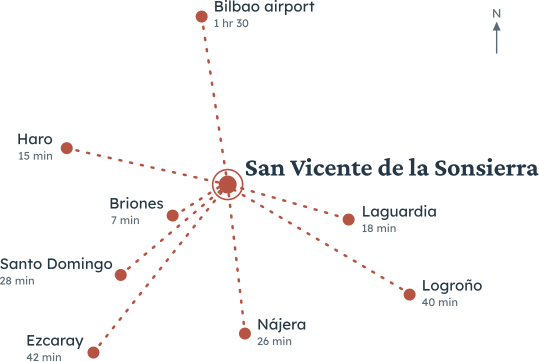
- From Logroño
- About 40 minutes by car (35 km).
- From Haro
- About 15 minutes by car (13 km).
- From Briones
- About 7 minutes by car (4 km), across the Ebro.
- Nearest airports
- Bilbao (BIO) is the main international option, about 1 hour 30 by car (110 km). Logroño-Agoncillo (RJL) is closer but has few flights.
- By train
- There is no station in the village. The nearest one is in Haro, about 15 minutes by car.
Getting around
You don’t need a car inside San Vicente. The village is small, and the castle is a short, steep walk up from the Plaza Mayor. But you do want a car for the rest of the trip. Santa María de la Piscina, most bodegas and the neighbouring villages are spread out, and public transport is limited. Park in the lower village rather than driving up the narrow lanes to the castle.
Looking for a ready-made plan? See our La Rioja road trips.
Practical Info
- Tourist office
- In the Casa de la Villa, Calle El Remedio 2, on the ground floor next to the Plaza Mayor. It books guided visits of the castle and of Santa María de la Piscina, and publishes the walking routes. It is not open every day and hours change, so check before you go. Open in Google Maps
- Castle and church
- You can walk the castle enclosure on your own. The church inside is often closed outside services, so ask the tourist office when you can see it.
- Wineries
- Most bodegas open by appointment. Email a few days ahead, especially for weekends and the harvest.
- Parking
- Park in the lower village. There is also a free car park by the river under the medieval bridge, but the walk up from there is steep.
- Climate
- Summers are warm and dry, with July and August highs around 28°C. May, June, September and October are the most comfortable, with highs of roughly 20–24°C. Winters are cold, with January highs around 9°C. The wettest month is November.
- Accessibility
- The walk up to the castle is short but steep, and the lanes are narrow. Take care with a pushchair or reduced mobility.
Where to Eat in San Vicente de la Sonsierra
You’ll eat simply and well in San Vicente de la Sonsierra, and you’ll drink even better. This is Rioja Alta, so the food is the hearty food of the vineyards: potato stews, lamb grilled over vine cuttings and garden vegetables. The wine comes from the slopes around you.
What to order here
- Patatas a la riojana
- Potatoes stewed with chorizo and sweet red pepper, the classic Rioja dish for a cold day.
- Chuletillas al sarmiento
- Tiny lamb chops grilled over dry vine cuttings, which give them a smoky taste.
- Menestra de verduras
- A stew of seasonal garden vegetables from the Ebro valley.
- Carbonic-maceration red
- The young, fruity red that local growers make from whole bunches of grapes.
How locals eat
Lunch is the main meal of the day. On weekdays, look for a set menu of the day with a starter, a main, dessert and wine. In the evening, people meet for pintxos and a glass of wine at the bar counter, then move on to the next bar.
Where to go
Most bars sit on the Plaza Mayor and along Calle El Remedio, a short walk apart. The choice is small. For a full evening of pintxo bars, drive 15 minutes to Haro. Walk the streets of La Herradura, between the Plaza de la Paz and the church of Santo Tomás.
Take home
- A bottle from a family bodega you visited, ideally a young red made the traditional way.
Where to Stay in San Vicente de la Sonsierra
Stay the night and you get the castle at its best. You watch the sun go down from the Torre Mayor, with the Ebro below and the vineyards turning dark. Next morning you can reach Santa María de la Piscina before the day visitors arrive.
Staying in San Vicente de la Sonsierra
- Good for
- Travellers touring the Rioja Alta wine villages who want a calm, central base. Haro, Briones and Laguardia are all less than 20 minutes away.
- Watch out for
- A small choice of places to stay. Book early for Holy Week, the September fiestas and the harvest weekends.
How long to stay
One night is enough to see the village, the castle and one bodega. Stay two nights if you also want the walks through the vineyards and a day trip to Haro or Laguardia.
Road-trip realities
- Parking
- Leave the car in the lower village or by the river. The lanes up to the castle are narrow and steep.
The kind of place you'll sleep in
You'll mostly find small hotels, casas rurales (village houses let as a whole or by the room) and holiday flats in old stone houses.
Find a place to stay in San Vicente de la Sonsierra
Most places to stay in and around San Vicente de la Sonsierra are on Booking.com, with live prices and a map.
Region, Nearby and Routes
Part of La Rioja
San Vicente de la Sonsierra is in La Rioja
Part of these routes
San Vicente de la Sonsierra is not part of a road trip yet. See all road trips
Nearby places
- BrionesA walled medieval village on a hill in Rioja Alta, home to one of the world’s best wine museums and streets that stay quiet after dark.
- HaroThe wine capital of La Rioja, home to the world’s densest cluster of century-old bodegas and a hilltop old town of tapas bars.
- LogroñoLa Rioja’s relaxed capital, where the Camino, a twin-towered co-cathedral and Spain’s best-loved pintxos street meet at the gateway to the wine region.
- NájeraLa Rioja’s old royal capital, where a fortress-like monastery holds thirty kings’ tombs beneath cliffs full of man-made caves.
- Santo Domingo de la CalzadaLa Rioja’s great Camino town, with a cathedral that keeps a live rooster and hen and the region’s longest medieval walls.
- EzcarayA mountain town of arcaded stone squares and cool forest air, off the Rioja wine trail — with one of Spain’s great kitchens.
If you stay longer
Two wine towns just across the regional border, in the Basque Country, make easy trips from San Vicente.
- Laguardia (about 18 minutes)
- A walled hill town above the vineyards of Rioja Alavesa. See the painted Gothic portico of the church of Santa María de los Reyes. Then look for the old wine cellars dug under the houses: some bars let their guests go down into them.
- Labastida (about 6 minutes)
- A wine village below Mount Toloño. Climb the steep lane to the 12th-century hermitage of Santo Cristo, at the highest point of the village. From there you look back over the Ebro to San Vicente.
Frequently Asked Questions
San Vicente de la Sonsierra is worth visiting if you like castles, wine and quiet villages. You can walk its walled castle on your own and see a Romanesque hermitage from 1137. You can also taste wine at small family bodegas, in a village of about a thousand people.
San Vicente de la Sonsierra is known for its castle and church on the hill above the Ebro, and for its wine. It is also known for Los Picaos, hooded penitents who whip their own backs during the Holy Week processions.
In San Vicente de la Sonsierra, the Picaos walk on Holy Thursday night and on Good Friday during Holy Week. Smaller groups also take part around 3 May and 14 September, on the feasts of the Holy Cross. Check the exact times with the tourist office.
You need half a day to see San Vicente de la Sonsierra. Plan an hour for the castle and a few hours for a winery and the hermitage. One night is better, so you can see sunset from the castle and have the lanes to yourself in the morning.
The best time to visit San Vicente de la Sonsierra is May, June, September or October, with highs of roughly 20–24°C. July and August reach about 28°C. Winter is cold, with January highs around 9°C, and November is the wettest month. The grape harvest runs through September and October.
Yes, San Vicente de la Sonsierra is about 40 minutes by car from Logroño, so a day trip works. Book any winery visit ahead, as most bodegas open by appointment only.
In San Vicente de la Sonsierra, stay in the village itself. Choose a small hotel, a casa rural or a holiday flat in an old stone house. It is a calm, central base for Rioja Alta, with Haro, Briones and Laguardia less than 20 minutes away. One night is enough for the village; two nights suit a base for the wine villages.
In San Vicente de la Sonsierra, order patatas a la riojana, lamb chops grilled over vine cuttings and a glass of young local red. Most bars are on the Plaza Mayor and Calle El Remedio. For more choice in the evening, drive 15 minutes to the pintxo bars of Haro.