
Cabezuela del Valle: the old heart of the cherry valley
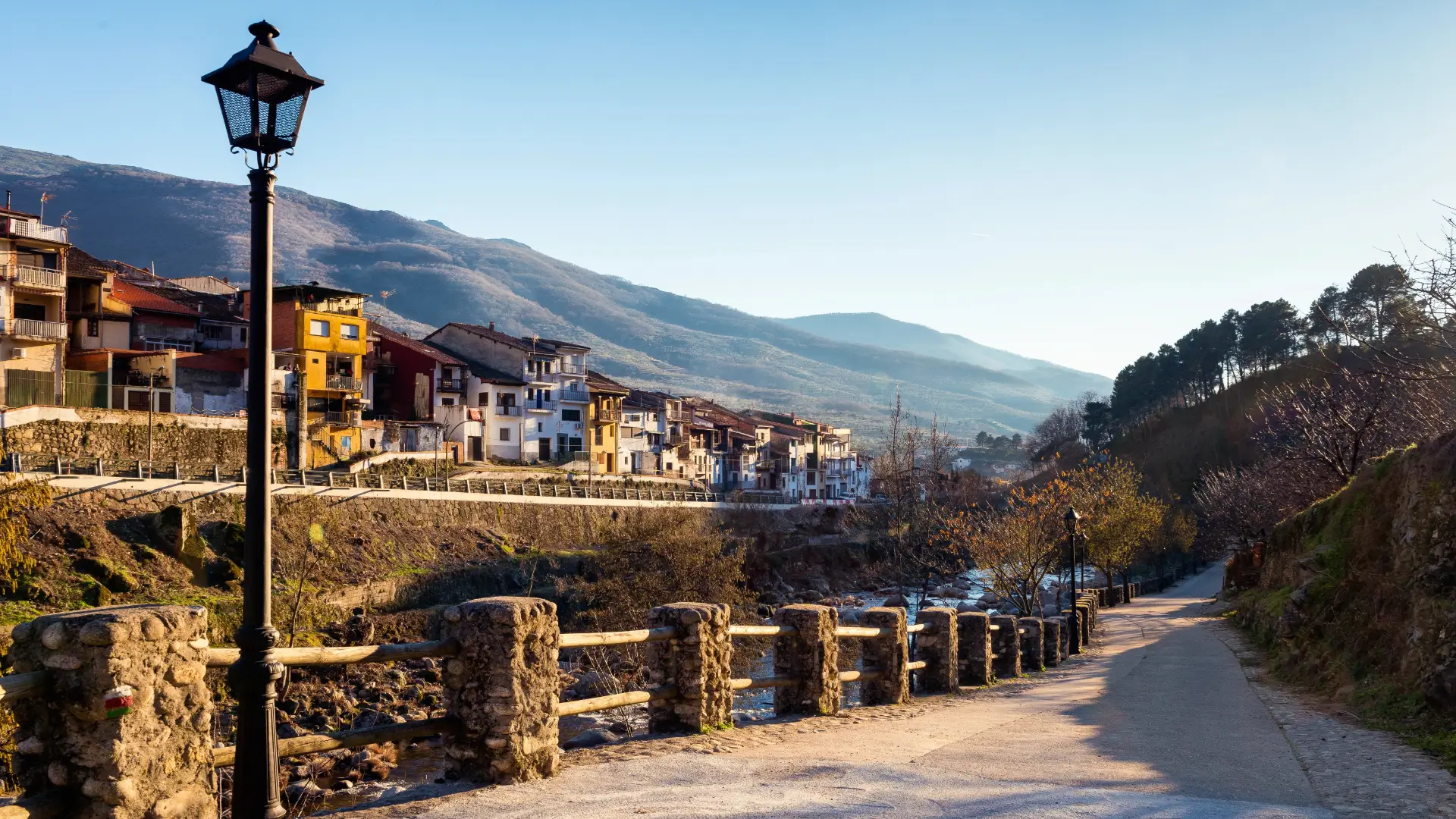
Cabezuela del Valle is the largest and best-preserved town in the Jerte Valley, in the north of Extremadura. Its medieval quarter is a maze of timber-framed houses and narrow lanes, set among a million cherry trees that turn the whole valley white each spring. It is an unspoiled, walkable base for orchards, gorges and quiet mountain roads.

Why Visit Cabezuela del Valle
Most people come to the Jerte Valley for one thing: the cherry blossom. For two weeks each spring, more than a million trees flower at once and the slopes turn white. But the valley rewards a slower look, and Cabezuela del Valle is the best place to take it. It is the largest town in the valley and keeps the finest old quarter, a protected historic site of timber-framed houses, stone arches and lanes that rarely run straight. The old Jewish quarter, La Judería, is the heart of it. You can walk the whole town in an hour, yet it stays quiet even when the orchards are full of day-trippers.
Who Cabezuela del Valle is for
This is a base, not a sight you tick off. It suits the traveller who wants to walk a medieval street in the morning, drive to a gorge or a mountain pass by lunch, and eat local pork and trout at night. The town sits right on the N-110, the road that runs the length of the valley, so everywhere in the Jerte and the neighbouring La Vera is within easy reach. It is calm, real and lived-in — a working town, not a museum.
Day trip or overnight?
You can see Cabezuela in an afternoon. Walk the Judería, find the old stork's nest on the rooftops, cross the river by the bridge and you have the measure of the place. But that means leaving just as it gets good. Our honest advice: stay the night. A perfect short visit looks like this — arrive in the late afternoon, settle in, and walk the old quarter as the light drops and the day visitors drive home. Eat slowly: trout from the valley, or migas with the local paprika. The next morning, drive up to the Mirador del Puerto de Tornavacas before the valley wakes, then walk part of the Garganta de los Infiernos gorge while it is still cool. None of that fits into a day trip, which is exactly why the overnight is worth it.
What to See in Cabezuela del Valle
Church of San Miguel Arcángel
The town’s main church stands in the centre of the old quarter. It was raised on the site of the former synagogue, a reminder of the town’s Jewish past, and its plain stone tower is a useful landmark when you lose your way in the lanes. Worth a look inside when open.
La Judería (old Jewish quarter)
The oldest and most striking part of town, and a protected historic-artistic site. Its narrow lanes are lined with timber-framed houses built of wood, adobe and stone, many with overhanging upper floors. It is the best-kept example of traditional Jerte architecture in the whole valley, and the place to simply wander.
The Cherry Museum (Museo de la Cereza)
A small museum on the fruit that shaped the valley. It explains how the cherry became the heart of the local economy and culture, and why the spring blossom draws so many visitors. Opening hours are limited and change with the season, so check before you go.
The riverside walk and Roman bridge
The Jerte river runs along the edge of the old town. It is crossed by a Roman bridge, which spans the water at a fair height — one of the town’s oldest pieces of heritage. A short, easy riverside path follows the water past the bridge. It is one of the prettiest, most peaceful corners of Cabezuela, and a fine spot for a slow evening stroll.
Mirador de la Ermita de San Felipe
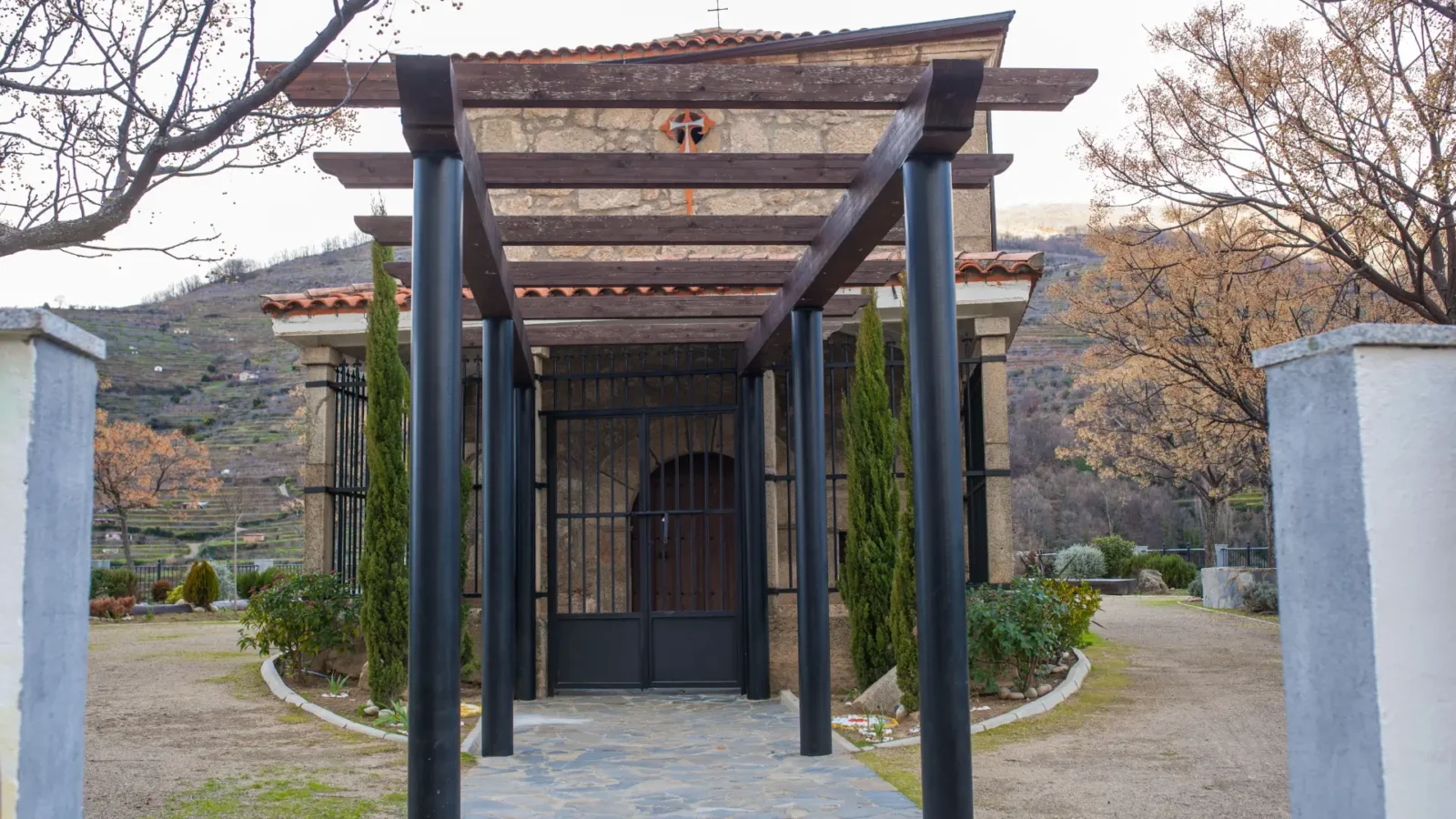
A short walk up from the main square, under 500 m, leads to the San Felipe hermitage on a low hill above the town. From here the view opens over the whole valley, from the Puerto de Tornavacas to the opening at Plasencia, with mountains framing the river on both sides. It pairs naturally with a wander through the Judería. It is especially lovely at blossom time and at sunset.
What to Do in Cabezuela del Valle
Walk the Garganta de los Infiernos gorge
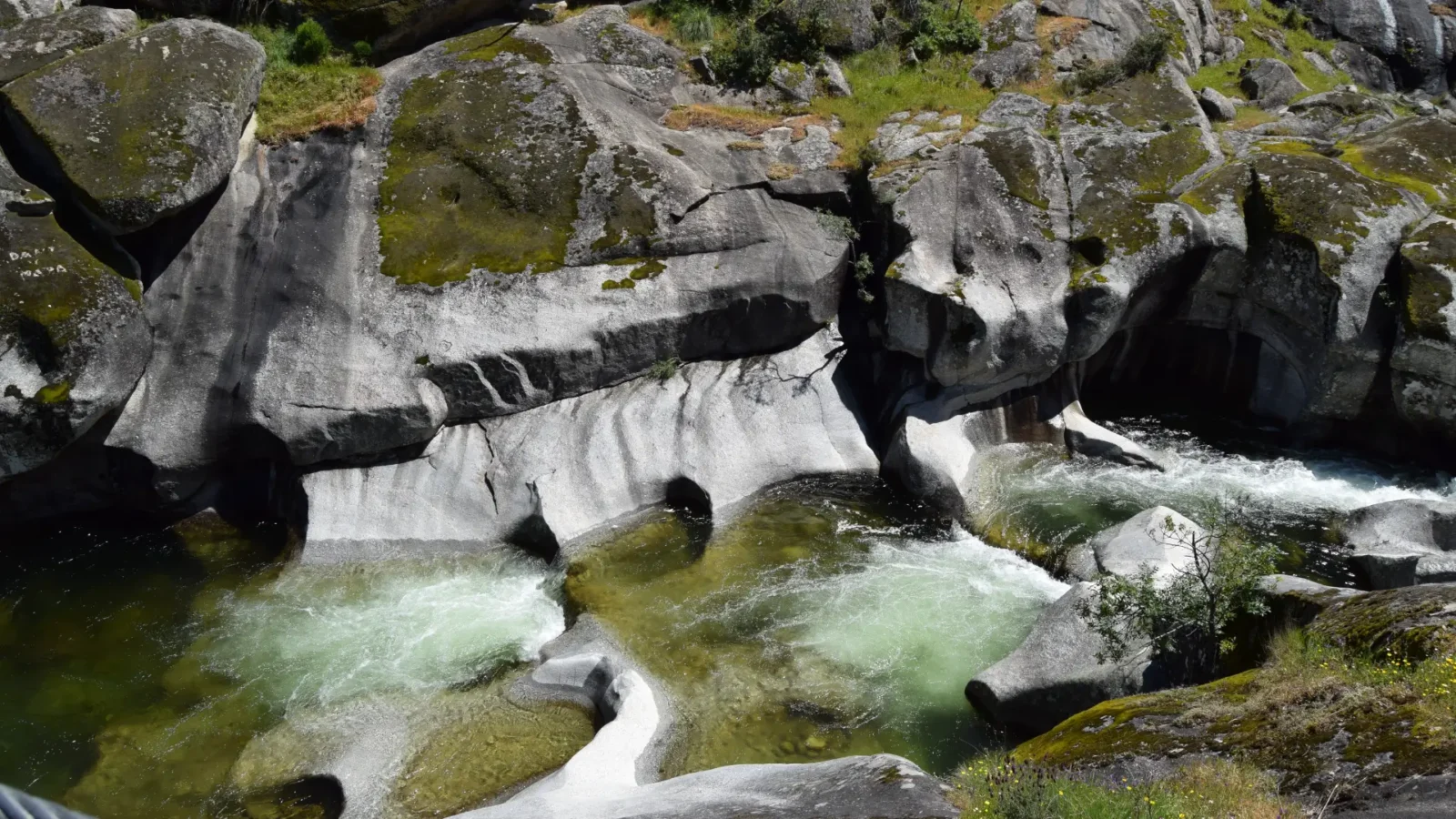
The valley’s star walk starts just outside town, near the reserve’s visitor centre between Cabezuela and Jerte. The classic route leads to Los Pilones, a set of deep rock pools carved by the water. It is busy on summer weekends, so go early. A guided 4×4 trip up to Los Pilones is one option in the cherry season, when you can also see the harvest — useful if you would rather not drive the rough tracks yourself.
See the cherry blossom (late March to mid-April)
For about two weeks each spring, the whole valley flowers white. Cabezuela is a fine base for it: you can walk among the trees on the edge of town, or drive the marked blossom routes through the higher villages. The exact peak shifts each year with the weather, so check the local tourism board close to your trip.
Drive up to the mountain viewpoints
The roads above the valley reach some of the best views in Extremadura. The Mirador del Puerto de Tornavacas, at the head of the valley, looks back over the whole Jerte. From Piornal, the highest village in the region, you look out over both the Jerte and La Vera. Both are a short, scenic drive from town.
Cool off in a natural pool
In summer, the valley’s gorges and rivers fill with cold, clear natural pools (piscinas naturales). There are easy spots right by the river in Cabezuela, and many more in the side valleys nearby — a simple, local way to spend a hot afternoon.
Get active: hiking, biking, canyoning and kayak
The valley is a serious outdoor playground, and Cabezuela is a good base for it. Marked hiking trails pass through town, including the long-distance GR-10 and GR-110 and the shorter PR-CC-8 “Las Juderías”. Beyond walking, local firms run mountain biking, canyoning in the nearby gorges and kayak trips on the river. The tourist office in town and the valley’s official tourism site list the current operators and routes. It’s a good first stop if you want to do more than look.
Prefer to go with a guide for the gorge, canyoning or a 4×4 trip? Local nature-activity firms run these in the valley, and the comarcal tourist office in town can point you to what’s running, in which language. This is nature guiding where a guide adds real value — not a group town tour.
Seasonal Events and Festivals
Cherry blossom season (mid-March to early April)the valley’s biggest draw, when more than a million trees flower at once. The towns run a programme of walks and events; the peak date shifts each year, so check the Valle del Jerte tourism board.
Cherry harvest (late May to mid-July)the working heart of the year, marked by the Cerecera, the valley’s cherry-harvest festival of food, culture and farm visits. Look for boxes of just-picked cherries sold from doorways and roadside stalls along the N-110. For this year’s dates and programme, see the official Cerecera cherry-harvest programme
Jarramplas, in nearby Piornal (19–20 January)one of Extremadura’s most striking festivals, where a costumed figure runs the streets while villagers pelt him with turnips. It is tied to the feast of San Sebastián, so the dates are fixed each year (the 20th is the main day). It takes place in Piornal, a short drive up the mountain, not in Cabezuela itself.
Getting There and Around
Cáceres sits in central-western Extremadura, on the A-66 north–south motorway and the main Madrid–Extremadura rail line. It is an easy stop on a road trip and reachable from Madrid without a car.
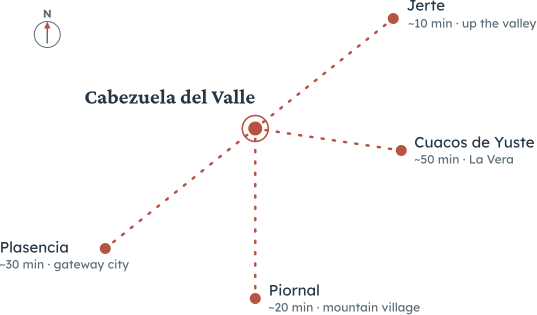
From Plasenciaabout 30 minutes by car (roughly 33 km) on the EX-203 / N-110. Plasencia is the nearest city with a train and bus station, and there is a direct bus to Cabezuela.
From Madridabout 2 hours 45 minutes by car (roughly 230 km) via the A-5 and EX-A1 to Plasencia, then the N-110. A direct Cevesa bus runs from Madrid’s Estación Sur, around 3 hours, stopping in the valley villages.
From Cáceresabout 1 hour 30 minutes by car (roughly 110 km).
Nearest airports Madrid (MAD) is the main international option, about 2 hours 45 minutes by car. Salamanca (SLM) is closer at roughly 130 km but has very few flights.
By trainthere is no station in the valley. The nearest is Plasencia, with services from Madrid and Cáceres; from there, take the bus or hire a car.
Getting around
You do not need a car inside Cabezuela. The old town is small and easy to walk. Park in the lower town or along the main road, not in the narrow lanes. But you do want a car for the region. The cherry orchards, the gorge walks, the mountain viewpoints and the valley villages are spread out, and buses between them are limited. A hire car is the honest answer for this kind of trip.
Looking for a ready-made plan? See our Extremadura road trips.
Practical Info
- Climatethe valley is cooler, greener and far wetter than lowland Extremadura. Summer highs sit around 30°C (not the 35°C of the plains), winters are chilly (around 10°C by day), and autumn is the rainiest, with October the wettest month. For timing: late March to mid-April for the blossom (busiest), June–July for the harvest and warm-weather pools, and autumn for walking in cooler air and golden woods. The blossom peak moves each year, so check before booking.
- How long to stayhalf a day to see the town, but stay one or two nights to use it as a base for the valley and La Vera.
- The Cherry Museumkeeps limited, seasonal hours and is sometimes closed — check locally before visiting. Don’t rely on fixed times.
- Parkinguse the lower town or the N-110, not the old-town lanes.
- Getting around the region needs a carpublic transport between the villages is sparse.
- Tourist officeCabezuela is the valley’s main town, so it holds the comarcal tourist office for the whole Valle del Jerte (in the Mancomunidad building at Paraje de Peñas Albas, just outside the centre near the natural pools). Staff know the walks, gorges and festivals across the valley well. Opening days are seasonal and limited, so check before relying on it rather than assuming fixed hours.
Where to Eat in Cabezuela del Valle
Cabezuela eats well, and simply. The valley’s food is built on pork, river trout, the famous local cherries and the smoked paprika of neighbouring La Vera. Expect migas, patatas revolconas (mashed potato with paprika and pork), grilled Iberian pork and slow-roasted kid. A short affiliate disclosure note is not needed here while these are plain links to the venues’ own pages.
Bar-Restaurante La Plaza
A typical village bar on the square, good for raciones and a cold beer. Warm service, low prices and a local crowd — the easy, unfussy choice.
Chiringuito El Vao
A riverside bar with a shaded terrace by the water — a fine spot in warm weather for grilled meat and a drink after a walk or a swim. Seasonal hours; mainly a spring-to-autumn option.
A well-regarded spot on the edge of town, known for its grilled Iberian pork (the pluma is a favourite) and its cheesecake. The dining room has valley views and a relaxed feel. Booking ahead is wise, as it fills up.
A roadside classic on the N-110 serving real Extremaduran plates: patatas revolconas, roast kid (cabrito), migas and ribeye steak. Simple, hearty and friendly.
Set inside the old Jewish quarter, this is widely seen as the best table in the historic centre. The menu runs long — local meats, fish and a cherry gazpacho in season — and the set menu is good value. An intimate, calm room.
A friendly, good-value local kitchen. Come for honest valley cooking — patatas revolconas, grilled meats and a generous weekend set menu. Popular with locals, so it can be busy at weekends.

Where to Stay in Cabezuela del Valle
Stay the night and the valley changes. The day-trippers drive home, the orchards go quiet, and the old lanes empty out under the streetlights. You wake to mountain air and a town that is yours for the first hour of the day. Here is where we’d sleep — in the old town itself, or close by in the valley.
Apartamentos Rurales Tauro
Rustic, well-kept apartments inside Cabezuela’s historic quarter, built in the traditional valley style with modern comfort. Each has its own kitchen and a terrace — a good self-catering base in the heart of town, a short walk from the natural pools and the old lanes. Warmly run and well reviewed.
Check prices & availability for Apartamentos Rurales Tauro on the accommodation's websiteCasa De Aldaca Rural
A beautifully restored 1810 house in Jerte, run with real care — fireplaces, a garden, a generous breakfast and a calm, grown-up feel. The standout small stay in the valley for couples who want something special.
Check prices & availability for Casa De Aldaca Rural on the accommodation's websiteHospedería Valle del Jerte
A comfortable four-star hotel just up the valley in Jerte, part of Extremadura’s Hospederías network. Pool, restaurant and a restful setting — the easy upper-tier choice when you want more comfort but still want to be in the heart of the valley.
Check prices & availability for Hospedería Valle del Jerte on the accommodation's websiteHotel Judería Valle del Jerte
The one proper hotel inside the old quarter, tucked in a narrow lane beside the church. Rustic rooms, some with a valley view, and its own restaurant downstairs — so you can walk the lamplit Judería and never need the car. The most central choice in town.
Check prices & availability for Hotel Judería Valle del Jerte on the accommodation's websiteHotel Rural Xerete
A friendly, well-run rural hotel a few minutes down the N-110 in Navaconcejo, with a garden and restaurant. A reliable, comfortable mid-range base and an easy stop on a north–south road trip.
Check prices & availability for Hotel Rural Xerete on the accommodation's websitePrado del Abuelo
Simple, good-value apartments in town with city views and a seasonal outdoor pool. A practical, affordable base right in Cabezuela, well rated for breakfast and an easy walk to the old quarter.
Check prices & availability for Prado del Abuelo on the accommodation's website
Region, Nearby and Routes
Part of Extremadura
Cabezuela del Valle is in Extremadura
Part of these routes
Cabezuela del Valle is one stop on our Emperor's Valley Trail
Nearby places
- Cuacos de YusteThe La Vera village beside the monastery where Emperor Charles V chose to spend his last years.
- Jarandilla de la VeraSleep in the castle where Charles V once stayed, then swim the clear pools of the Garganta Jaranda below town.
Frequently Asked Questions
Yes. It is the largest town in the Jerte Valley and keeps the best-preserved old quarter — a protected historic site of timber-framed houses and narrow lanes. It makes a quiet, walkable base for cherry blossom, gorge walks and mountain villages, away from the busier tourist hubs.
It is best known for its medieval old town, La Judería, and as a base in the Jerte Valley — the cherry valley, where more than a million trees flower white each spring. It is also known for its riverside setting and traditional Jerte architecture.
Half a day is enough to walk the old town. But it works best as a one or two night base, so you can use it to reach the gorge walks, the mountain viewpoints and the villages of the Jerte and neighbouring La Vera.
Late March to mid-April for the cherry blossom, which is the busiest and most spectacular time. June and July bring the harvest and warm-weather natural pools; up in the valley summer highs sit around a comfortable 30°C, cooler than the plains. Autumn is quieter and good for walking, though it is the rainiest season. The blossom peak shifts each year, so check before booking.
Yes — it is about 30 minutes by car from Plasencia, so a day trip is easy. But staying overnight is better: the old town is at its best in the evening, once the day visitors have left and the lanes go quiet.
For valley cooking, La Ermita is well-regarded for its grilled Iberian pork, and Restaurante Judería is the best-known table in the old quarter. For honest, good-value local food, try Restaurante MAVI or El Castillo, and Bar-Restaurante La Plaza on the square is the easy, unfussy choice.
For the old town itself, Hotel Judería is the only proper hotel in the historic quarter, and Apartamentos Rurales Tauro offers comfortable self-catering apartments in the same area. For more comfort nearby, Hospedería Valle del Jerte and the adults-only rural hotel Casa De Aldaca are both a short drive up the valley in Jerte.