
Cuacos de Yuste: the village an emperor chose for his last years
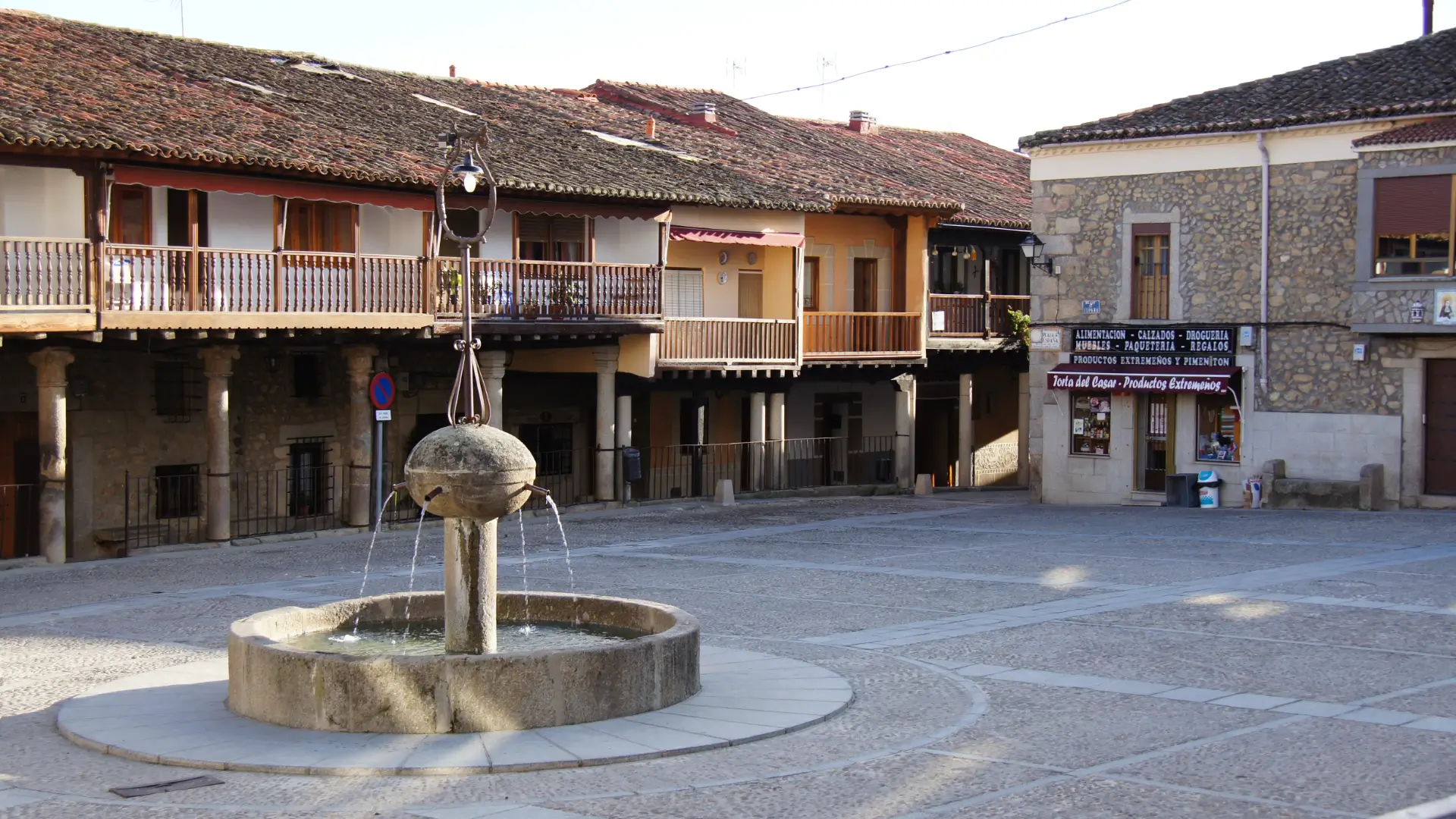
Cuacos de Yuste is a small stone village in La Vera, in northern Extremadura, two kilometres from the monastery where Emperor Charles V — who ruled an empire that spanned Europe and the Americas — chose to end his days. The old quarter is a maze of timber-framed houses, arcaded plazas and running fountains, and the air around harvest smells of drying paprika. A place this storied would be overrun almost anywhere else in Europe. Here, most days, you’ll have the plazas to yourself.
Why Visit Cuacos de Yuste
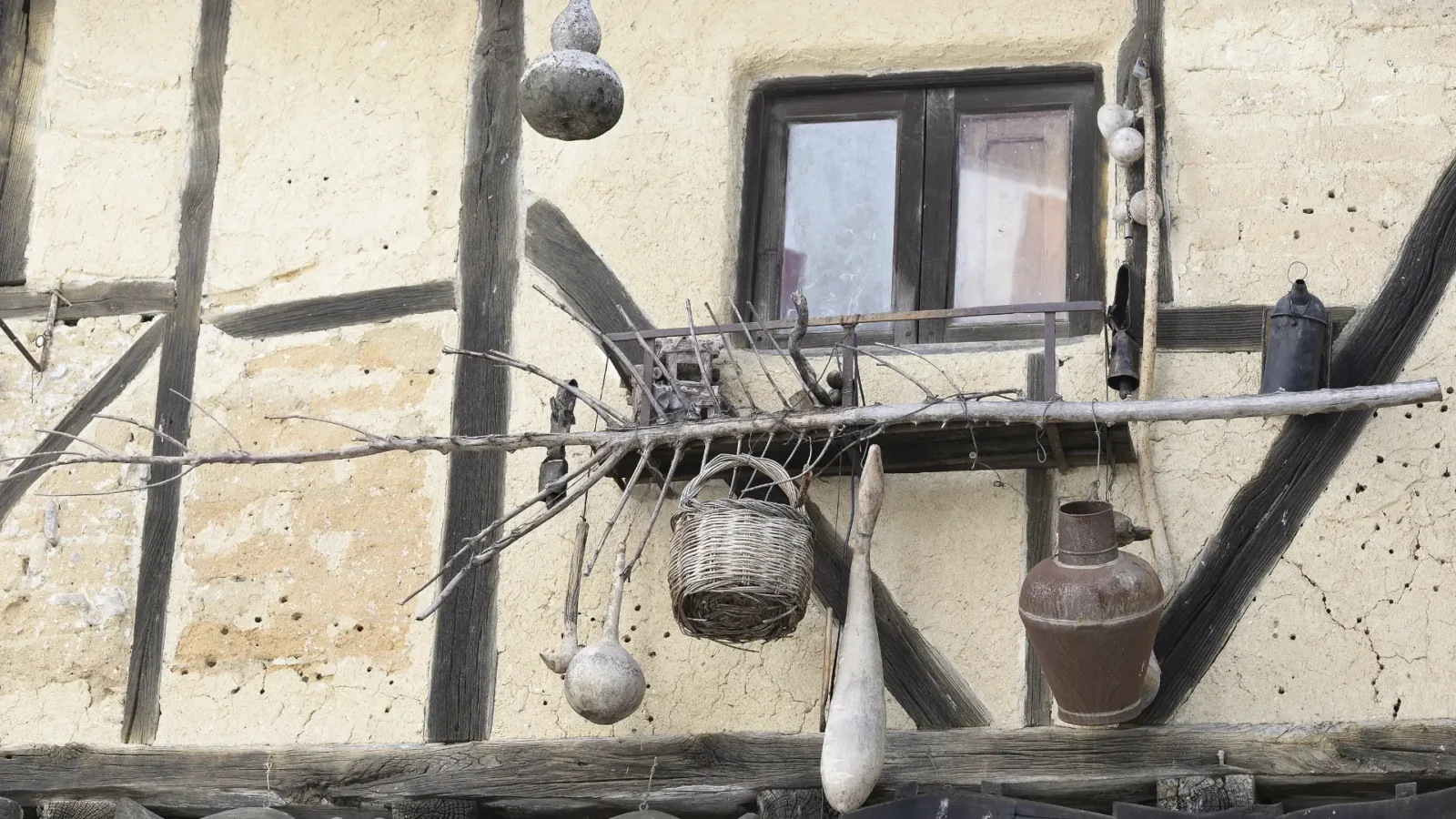
Most visitors come for one reason: the Monastery of Yuste, just up the road, where Charles I of Spain (Charles V of the Holy Roman Empire) retired in 1557 and died a year later. But the village he chose as his neighbour is the real reward of a slow visit. Cuacos de Yuste is a working La Vera village of stone, adobe and timber, declared a Conjunto Histórico-Artístico in 1959. Its streets are narrow and shaded, its plazas arcaded on rough wooden columns — some of them carried down from the monastery itself. Fountains run on quiet corners. This is the heart of pimentón de la Vera, the smoked paprika that gives Spanish cooking its deep red colour, and the air around harvest time carries the smell of drying peppers.
Who Cuacos de Yuste is for
This is a village for travellers who like history they can walk through and towns that have not been smoothed over for tourists. You can see the main sights in a couple of hours, but the pleasure is in the unhurried wander: the Casa de Jeromín, where the emperor's illegitimate son lived as a boy; the little Plaza de la Fuente de los Chorros; the route up to the monastery through chestnut and oak. It rewards anyone touring La Vera and the Jerte Valley by car, looking for a calm, real base rather than a busy hub.
Day trip or overnight?
You can see Cuacos de Yuste and the monastery in an afternoon, and many people do exactly that on a loop from Plasencia or Cáceres. But that means arriving with the tour buses and leaving before the village is at its best. Our honest advice is to stay the night. A perfect short visit looks like this: reach the monastery for the morning, before the heat and the crowds; walk down into the village for a long lunch of migas and local goat's cheese; spend the afternoon getting lost in the old quarter and cooling off at a natural pool nearby; then watch the plazas empty as the day-trippers drive off, and have the arcades, the fountains and the evening light to yourself. None of that fits into a day trip — which is exactly the point.
What to See in Cuacos de Yuste
Monastery of Yuste
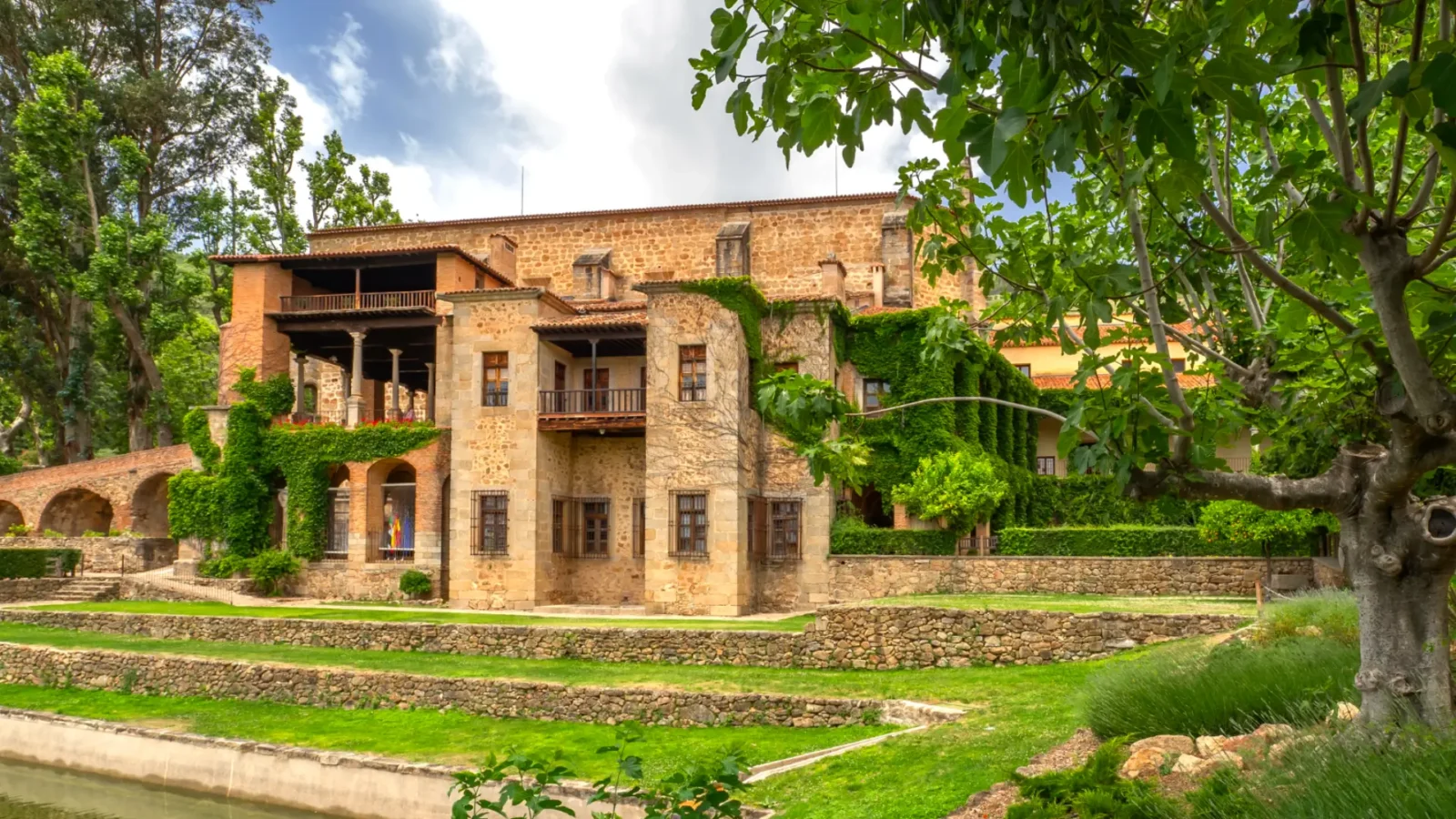
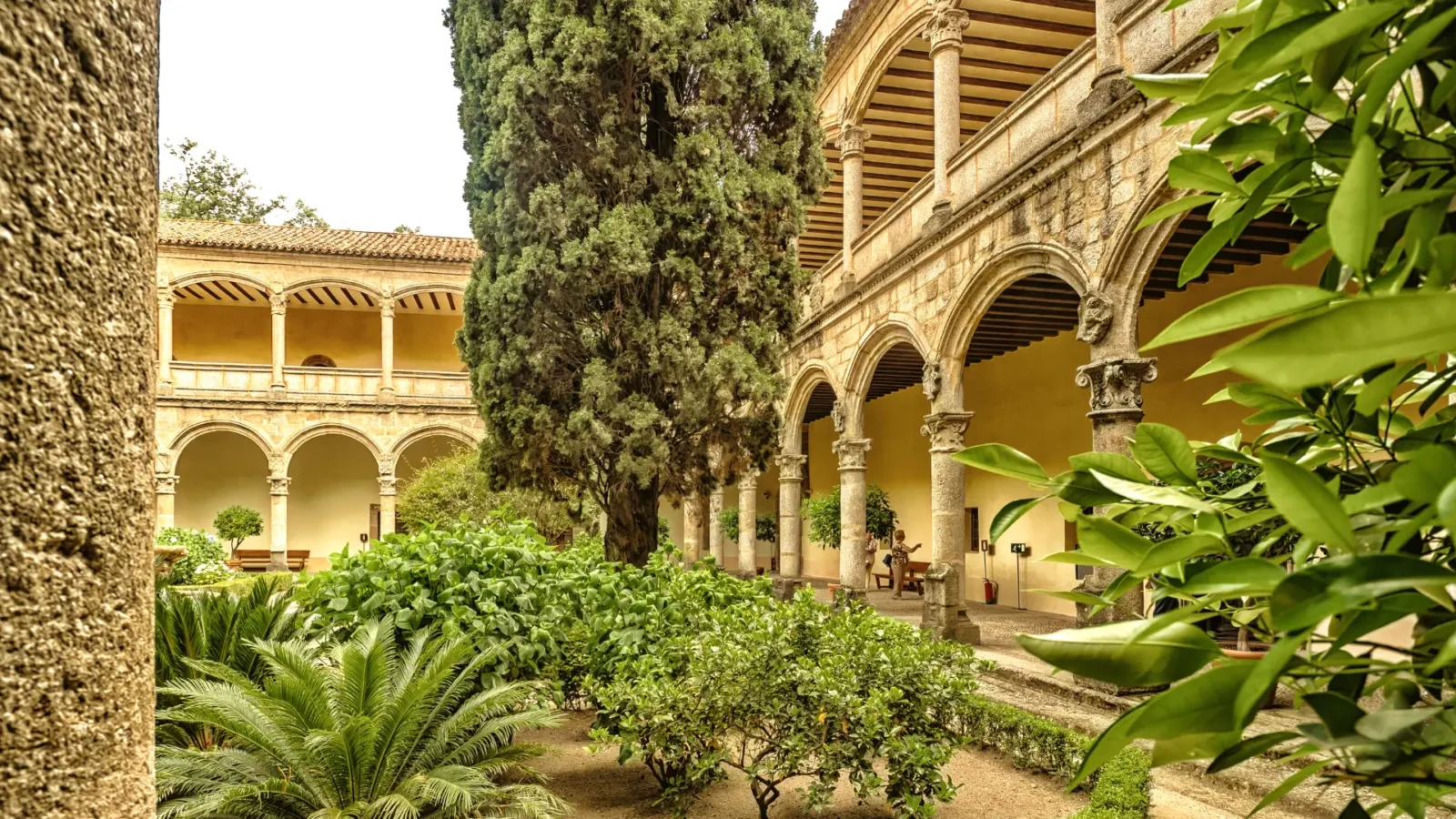
The reason most people come, two kilometres above the village. This is where Charles V — ruler of Spain, the Low Countries, much of Italy and the New World — retired in 1557 after giving up his crowns, and where he died in 1558. The visit covers a Gothic cloister, a Renaissance cloister, the church and the simple Cuarto Real, the emperor’s own palace rooms. It is part of Spain’s Patrimonio Nacional and carries the European Heritage Label.
Casa de Jeromín
A modest house in the old quarter where, by tradition, the boy known as Jeromín was raised near the monastery. He was the emperor’s illegitimate son and would grow up to become Don Juan de Austria, the commander who led the Christian fleet to victory at the Battle of Lepanto in 1571. The building now houses the offices of the La Vera district council.
Plaza de España and the old quarter
The village’s main arcaded square, lined with timber-framed houses on stone and wooden columns, some brought down from the monastery after it was sold off in the 19th century. From here the lanes lead to the smaller, much-photographed Plaza de la Fuente de los Chorros and past old manor houses, running fountains and the Casa de Rafael Castaño. The whole quarter is the protected Conjunto Histórico-Artístico — best seen simply by walking it.
Church of Nuestra Señora de la Asunción
The village’s 15th-century parish church, listed as a Monument of Cultural Interest. Inside are carved figures, a neoclassical altarpiece and, in the choir, a fine 16th-century organ made in Antwerp and brought from the Monastery of Yuste. A quiet, worthwhile stop a few steps off the main square
German Military Cemetery
About half a kilometre from the monastery, on the road up, lies the only German military cemetery in Spain. It holds the remains of 180 servicemen — sailors and airmen of the First and Second World Wars who died on or near Spanish coasts — gathered here from across the country and laid out under dark granite crosses among olive trees. It was placed here deliberately, beside the resting place of an emperor who was also a German sovereign. A sober, unexpected and quietly moving place.
What to Do in Cuacos de Yuste
Walk the old quarter at your own pace
The best thing to do in Cuacos is simply walk. Start in the Plaza de España, follow the lanes to the Plaza de la Fuente de los Chorros, and let the arcades, timber balconies and fountains lead you. A free village map from the information point in the Plaza de España marks the main houses; early morning and the hour before sunset are the quietest and the prettiest for photos.
Swim in a natural pool
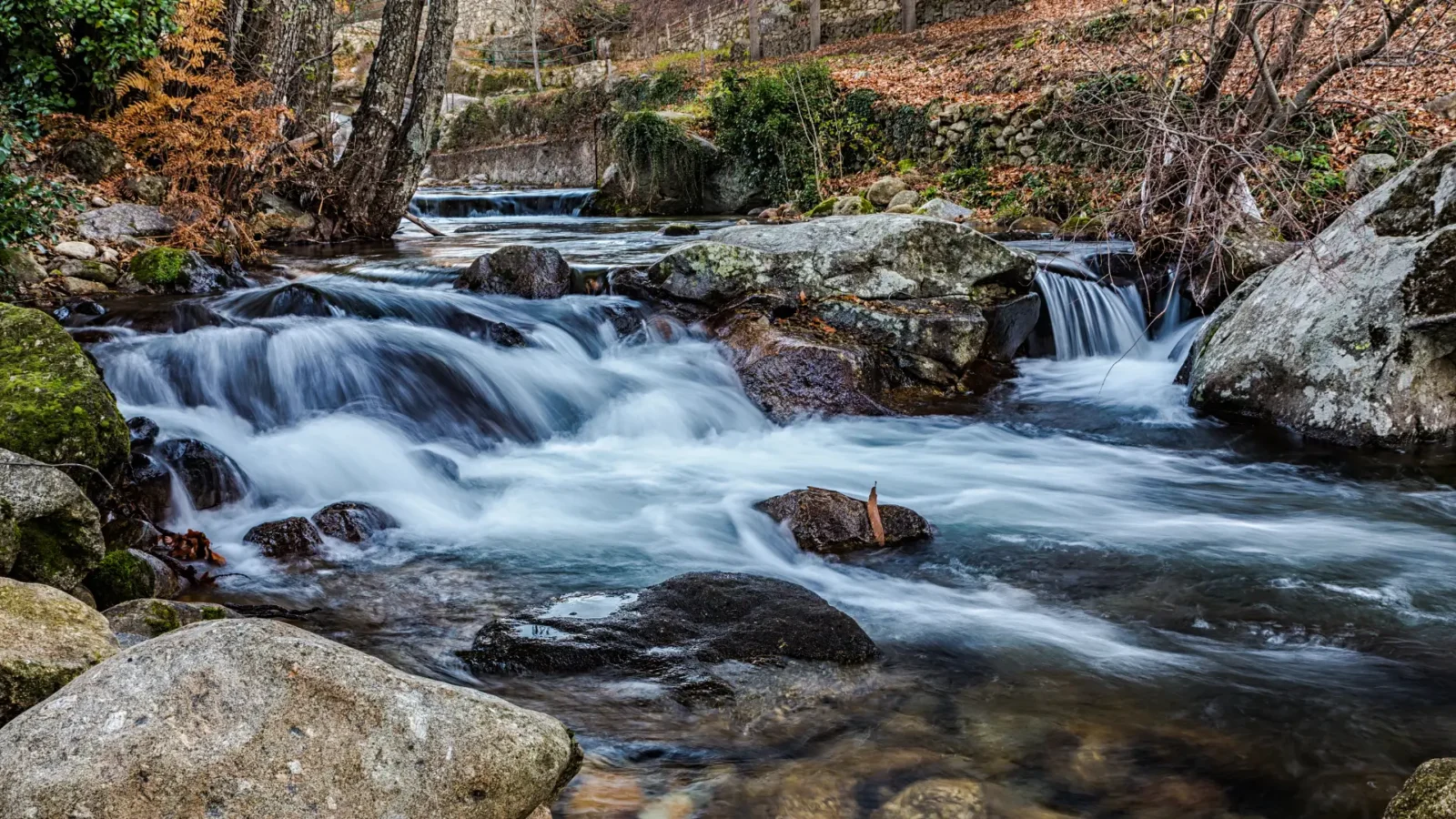
La Vera is famous for its gargantas — cold mountain streams that pool into natural swimming spots. Close to the village you’ll find places such as El Bañaero and the Garganta de Cuacos at Las Ollas, where smooth granite holds clear, cool water through the summer. Bring proper footwear; the rocks are slippery and access can be rough. These are local, unfenced spots, so go carefully and take your litter home.
Visit Garganta la Olla
One of La Vera’s prettiest villages sits about ten minutes west, easily reached by car. Garganta la Olla is also a Conjunto Histórico-Artístico, with steep cobbled lanes, timber houses and the bright-blue Casa de las Muñecas — once a brothel said to serve the emperor’s retinue, now a small private house whose owner sometimes shows visitors the doorway. Pair it with the church of San Lorenzo and its restored Baroque organ, then walk down to the river pools at the edge of the village.
Buy real pimentón de la Vera
This valley is the home of Spain’s smoked paprika, made by drying peppers slowly over oak fires and stone-grinding them. Village shops sell tins of the real thing, in sweet (dulce), bittersweet (agridulce) and hot (picante) grades — far better than anything in a supermarket, and the most useful souvenir you can carry home. The local goat’s cheese is worth a look too.
Prefer to go with a guide for any of this? Ask where you’re staying, or check the official Cuacos de Yuste village site for what’s currently running.
Seasonal Events and Festivals
Ruta del Emperador Carlos V (February) La Vera’s best-known event re-walks the emperor’s last journey, from the castle at Jarandilla de la Vera up to the monastery, the route he travelled in early 1557. It is held each February and is recognised as a festival of regional tourist interest. Check the regional tourism board for the exact weekend.
Virgen de Agosto / Fiesta del Emigrante (15–17 August)the village’s main summer festival, with bulls in the La Vera style, music and dancing in the plazas. A lively time to visit, though a busier one.
San Juan (23–24 June)midsummer celebrations, with a young oak carried to the square at midnight and village games the next day.
For exact dates and yearly programmes, check the official Cuacos de Yuste village site.”
Getting There and Around
Cuacos de Yuste sits in La Vera, in the northeast of Cáceres province, just off the EX-203 that runs the length of the comarca. Here’s where it sits in relation to its neighbours.
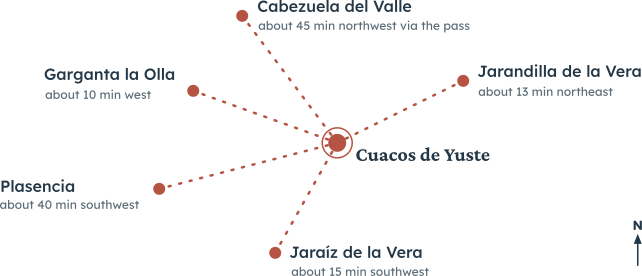
From Plasenciaabout 40 minutes by car (roughly 41 km), the nearest city and a natural gateway from the A-66 motorway.
From Cáceresabout 1 hour 30 minutes by car via the A-66 and EX-203.
From Madridabout 2 hours 20 minutes by car (roughly 230 km) via the A-5, turning off at Navalmoral de la Mata.
Nearest airports Madrid (MAD) is the main international option, about 2.5 hours by car. Seville (SVQ) is a similar distance to the south.
By public transportALSA runs a few buses a day through La Vera, but services are limited; this is a trip that strongly favours having your own car.
Getting around
Inside the village you don’t need a car — the old quarter is small and made for walking, and you should park on the edge rather than try the narrow lanes. But for everything this page links to — the monastery, Garganta la Olla, the natural pools, the other villages of La Vera and the Jerte Valley — a car is what makes the region open up. Most readers are touring Extremadura on a road trip, which is exactly how Cuacos is best reached and best used as a base.
Looking for a ready-made plan? See our Extremadura road trips.
Practical Info
- ClimateLa Vera is greener and wetter than lowland Extremadura, tucked under the mountains. Summer highs sit around 32°C (July and August are hot, and the season for the natural pools), winters are cool (around 12°C by day) and the wettest months are in autumn, October being the rainiest. Spring and autumn are best for walking weather.
- Best time of daythe morning at the monastery, before the heat and the coaches, then the village in the late afternoon and evening once day-trippers have left.
- Monastery ticketsthese are sold by Patrimonio Nacional, at the gate or online to skip the queue in high season. A guided tour costs a little extra. There are also set free-entry times each week. Buy and check current prices on the official Patrimonio Nacional site rather than relying on figures here, as they change.
- Opening hoursat the monastery change with the season and around religious services and official events. Always check the official site for the day you plan to go.
- Parkingeasiest on the edge of the old quarter; the historic centre is narrow and partly stepped.
- Festival dayson these days the road up to the monastery is sometimes closed to cars, with a free shuttle bus running from the village — check locally.
Where to Eat in Cuacos de Yuste
You’ll eat and drink well in Cuacos de Yuste, and it’s honest, regional cooking rather than anything fancy. This is pimentón de la Vera country, so the paprika turns up everywhere — in migas (fried breadcrumbs with pork), in patatas revolconas (paprika-mashed potatoes), in the local caldereta de cabrito (kid-goat stew). Two simple rules make it easy: for a quick lunch while you’re out walking, the arcades of the Plaza de España have easy, good-value spots; for a proper dinner, book ahead, as the village is small and the best tables fill fast.
The village’s standout kitchen, run by chef Rubén Hornero inside the Hotel Rural Abadía de Yuste. It takes La Vera classics — migas, patatas revolconas, slow-cooked meats — and plates them with real care, alongside a deep wine list and a pretty courtyard. Expect thoughtful touches like paprika in the cheesecake and local cherry ice cream. Well enough regarded that it served the Royal Family when King Felipe VI presented the European Charles V Award nearby. Book ahead; there’s no fixed menu and tables fill fast.
Bar Piscina Municipal de Cuacos
A genuinely local spot beside the village swimming pool, with a big terrace and a kitchen that, unusually, barely closes all day. Generous plates of regional food — paella, combinados, grilled dishes — at honest prices, and in summer you can pair lunch with a €2 dip in the pool. Busy at weekends, so a reservation helps.
Café Bar la Posada
Right under the arcades on the Plaza de España, this is the easy, good-value choice for a square-side lunch or an evening drink. Generous plates of local food, quick and friendly service, and a terrace looking straight onto the fountain. The fried squid and the homemade desserts get singled out. Closed Mondays.
The bar-restaurant of a simple village hotel, a short walk from the historic centre. Honest, fairly priced tapas, beer and wine, popular with locals and reliably open — the kind of unfussy spot that’s there when you need it, with easy parking outside and good-value breakfasts too.
Taberna Las Gemelas
Worth the ten-minute drive to Garganta la Olla — and an easy pairing if you’re already visiting the village. This warm, family-run taberna is one of the most loved in the whole comarca, serving generous, homemade La Vera cooking: migas, kid-goat stew, long-marinated venison, craft beer and local wine, and home-made desserts. Small and popular, so book ahead, especially for lunch.
Where to Stay in Cuacos de Yuste
Stay the night and Cuacos changes character. Once the last coach has pulled away from the monastery, the plazas empty, the fountains are the loudest thing you’ll hear, and the arcades glow under a few warm lamps. You can walk the whole old quarter in the cool of the evening with almost no one else about — and be first up the hill to the monastery in the morning. Here’s where we’d stay, from the village itself out to a famous castle a few minutes away.
Casa Rural El Camino de Yuste
A warm, spotless rural house a few metres from the village centre and close to the monastery road. Run by a hands-on host who’ll point you to the best corners of La Vera — the kind of small, personal place that makes a village stay feel like more than a hotel room.
Check prices & availability for Casa Rural El Camino de Yuste on the accommodation's websiteHotel Moregón
The simple, affordable choice, a short walk from the historic centre, with its own bar and restaurant. Rooms are plain but clean and comfortable, parking is easy, and it’s reliably open — a sensible budget base for a road trip that’s spending its money on the road, not the room.
Check prices & availability for Hotel Moregón on the accommodation's websiteHotel Rural Abadía de Yuste
The most comfortable base in the village itself, an easy walk from the old quarter and minutes from the monastery road. Apartment-style rooms, a courtyard for a quiet drink and the village’s best restaurant downstairs — the natural choice if you want everything within reach without giving up comfort.
Check prices & availability for Hotel Rural Abadía de Yuste on Booking.comLa Posada de la Gula
A small, highly rated guesthouse in central Jarandilla, about 13 minutes away, with large, calm rooms and a bar known for good cocktails. A relaxed, characterful base if you’d rather wake in a slightly larger village with more to walk to in the evening.
Check prices & availability for La Posada de la Gula on the accommodation's websiteParador de Jarandilla de la Vera
Sleep where the emperor slept. This 15th-century castle of the Counts of Oropesa, about 13 minutes northeast, is where Charles V actually stayed while his rooms at Yuste were being finished — now a Parador with towers, a Gothic gallery and a courtyard. The standout upper-tier stay in the cluster, and a piece of the same story you came for.
Check prices & availability for Parador de Jarandilla de la Vera on the accommodation's websiteVaquería CantaElGallo
For a quieter, more rural night, this finca sits among olive groves and cork oaks about 15 minutes south, near both the monastery and Garganta la Olla. Beautifully decorated rooms, a fireplace for cool evenings and complete calm — a small upper-tier hideaway for travellers who want the countryside, not the village.
Check prices & availability for Vaquería CantaElGallo on the accommodation's website
Region, Nearby and Routes
Part of Extremadura
Cuacos de Yuste is in Extremadura
Part of these routes
Cuacos de Yuste is one stop on our Emperor's Valley Trail
Cuacos de Yuste is also a stop on our Castilla y León & Extremadura Road Trip: 9 Days
Nearby places
- Cabezuela del ValleThe best-preserved old town in the cherry valley, with a medieval quarter and a million blossoming trees on its doorstep.
- Jarandilla de la VeraSleep in the castle where Charles V once stayed, then swim the clear pools of the Garganta Jaranda below town.
Frequently Asked Questions
Yes. It pairs one of Spain’s most storied monasteries — where Emperor Charles V retired and died — with a beautifully preserved old quarter of timber houses, arcaded plazas and running fountains, and it stays far quieter than the better-known towns of Extremadura.
It’s best known as the village beside the Monastery of Yuste, the place Charles V chose for his final years. It’s also at the heart of pimentón de la Vera, Spain’s smoked paprika, and is a protected Conjunto Histórico-Artístico.
You can see the monastery and the village in half a day, but it’s better as an overnight: morning at the monastery, an afternoon in the old quarter and at a natural pool, and the evening once the day-trippers have gone.
Yes — it’s about 40 minutes from Plasencia and around 1.5 hours from Cáceres by car. But staying the night gives you the quiet plazas and the early monastery that day-trippers miss.
Spring and autumn are ideal for walking weather, cooler and green in this valley below the mountains. High summer is hot — July and August highs reach around 32°C — but that is the season for the natural pools. February brings the Ruta del Emperador, which re-walks Charles V’s last journey to the monastery.
In the village itself, the Hotel Rural Abadía de Yuste and the Casa Rural El Camino de Yuste are the most comfortable bases, with the simpler Hotel Moregón for a budget stay. A few minutes away, the Parador de Jarandilla de la Vera lets you sleep in the castle where Charles V actually stayed.
For regional cooking, the Restaurante Abadía de Yuste is the village standout, while Café Bar la Posada under the plaza arcades is the easy, good-value choice for lunch or a drink. Hotel Moregón and Cafetería Moregonas are reliable, simple options.