
Jaén: the Renaissance city the tour buses forget
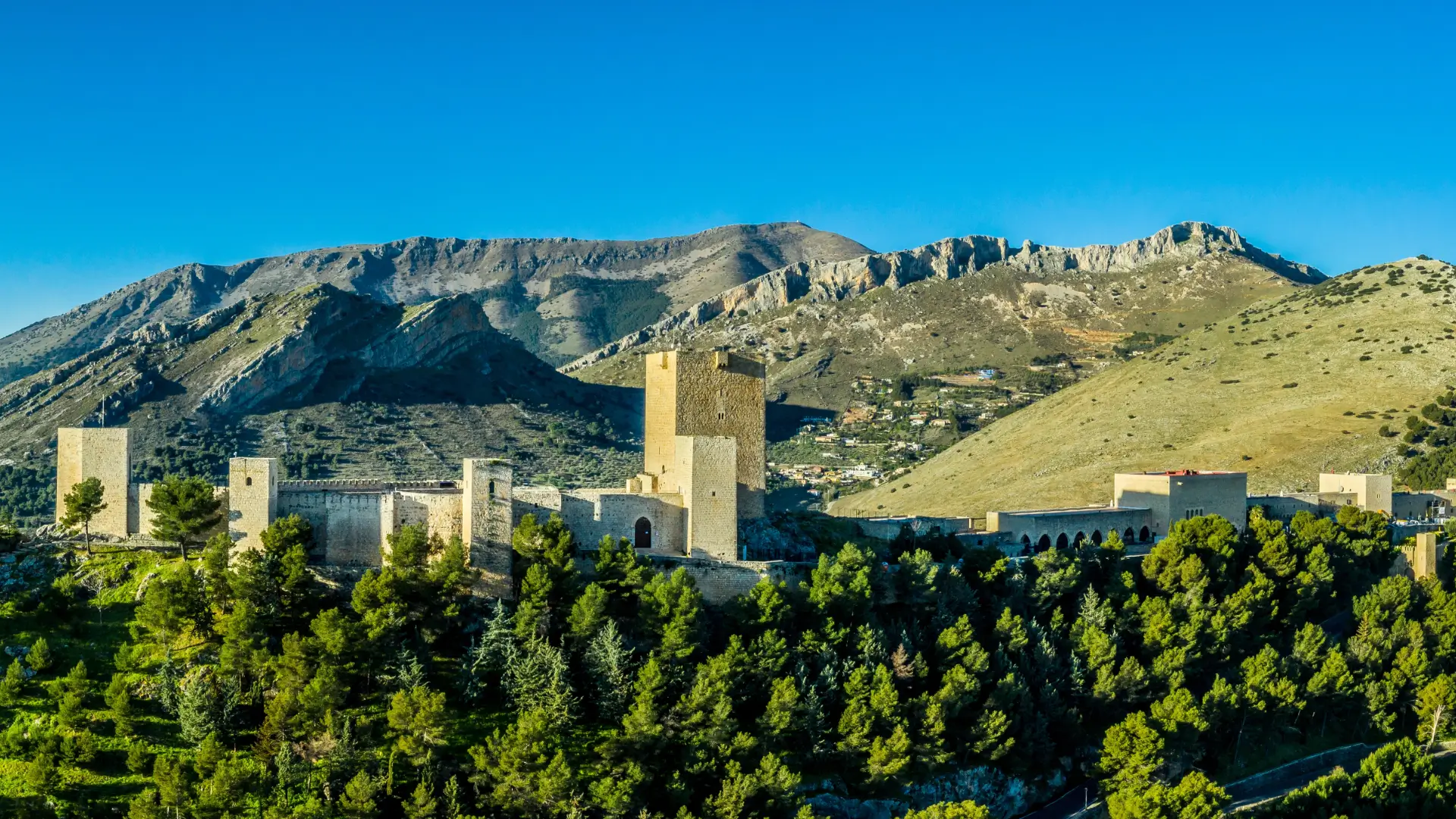
Jaén sits where Andalucía’s great olive plain meets the mountains, a working provincial capital most travellers drive straight past. That is its gift. Here you get a vast Renaissance cathedral by Vandelvira, the largest Arab baths you can visit in Spain, and a Moorish castle on the hill above — all without the crowds of Granada or Seville. It is the honest, unpolished start to the Renaissance & Olive Trail.
Why Visit Jaén
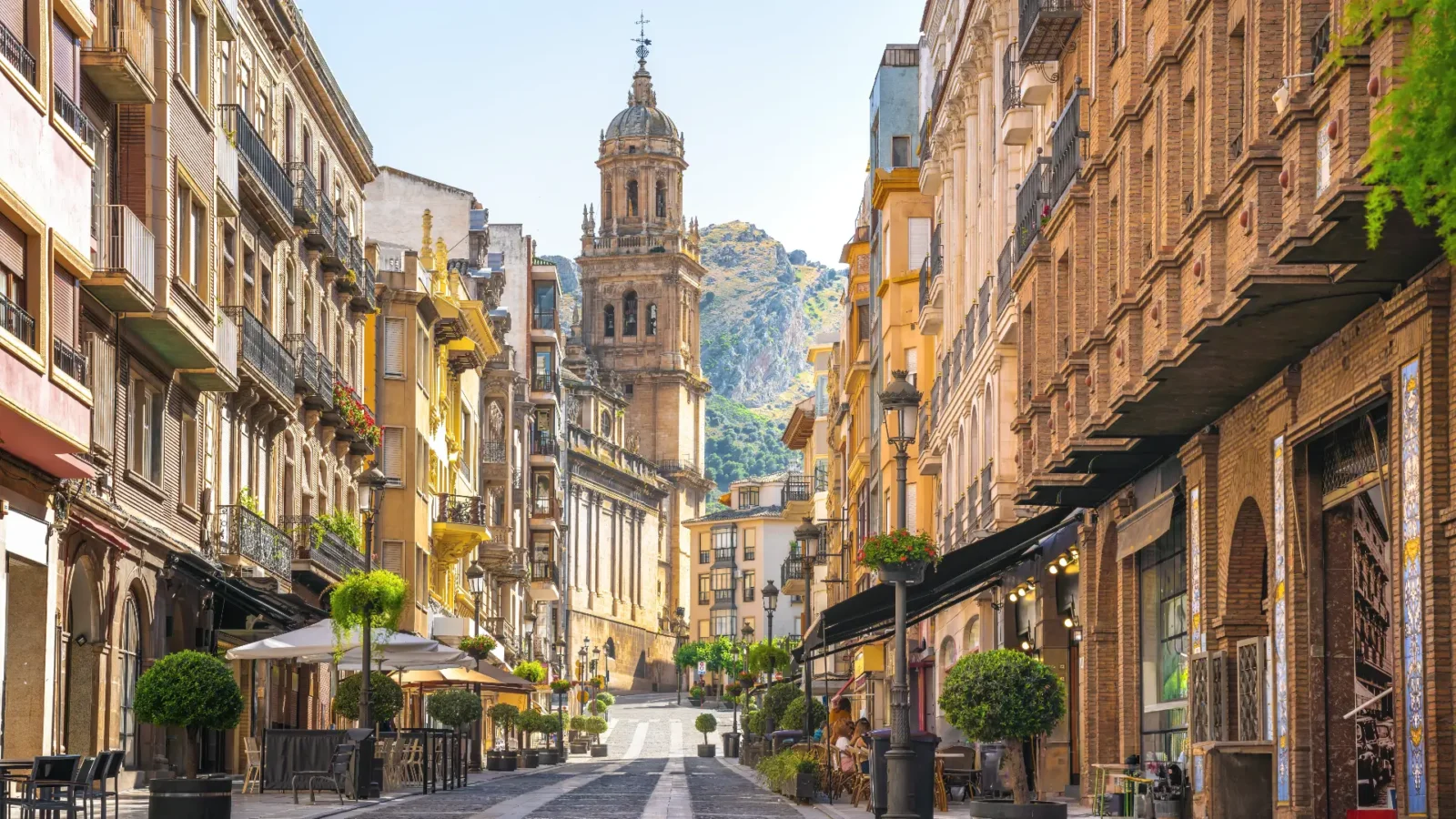
Jaén is not a pretty little village, and it does not pretend to be. It is a real city of about 110,000 people, built up the side of a hill, with a grand old centre and ordinary modern streets around it. What makes it worth a stop is the quality of the few big things it holds. The cathedral is one of the most important Renaissance buildings in Spain. The Arab baths beneath the Villardompardo Palace are the largest open to visitors in the country. And the castle on Santa Catalina hill looks out over a “sea of olives” that runs to the horizon. Jaén is the world capital of olive oil, and you taste it in every meal.
Who Jaén is for
Jaén suits the traveller who wants the real thing over the polished thing. You will hear far more Spanish than English here. The old quarter, the Barrio de la Magdalena, is a maze of Moorish and Jewish lanes with almost no gift shops. If you like a city that goes about its own business — great tapas, serious food, deep history, no queues — Jaén rewards you. If you only want postcard-perfect streets, this is not that place, and that is the point.
Day trip or overnight?
You can see Jaén's headline sights in an afternoon: the cathedral, the Arab baths, a walk through the old town, and a drive up to the castle. But that means missing the best of it. Our honest advice is to stay the night. The city empties of day-trippers by early evening, and the tapas bars fill with locals instead. A perfect short visit looks like this: arrive by mid-afternoon, tour the cathedral and the Arab baths before they close, then wander the Magdalena quarter as the light softens. Drive up to the Cruz de Santa Catalina for sunset, when the whole city glows below and the olive plain turns gold. Come back down for a long tapas dinner near the Plaza de la Constitución. That evening is the reason to stay — and it does not fit into a day trip.
What to See in Jaén

Catedral de la Asunción
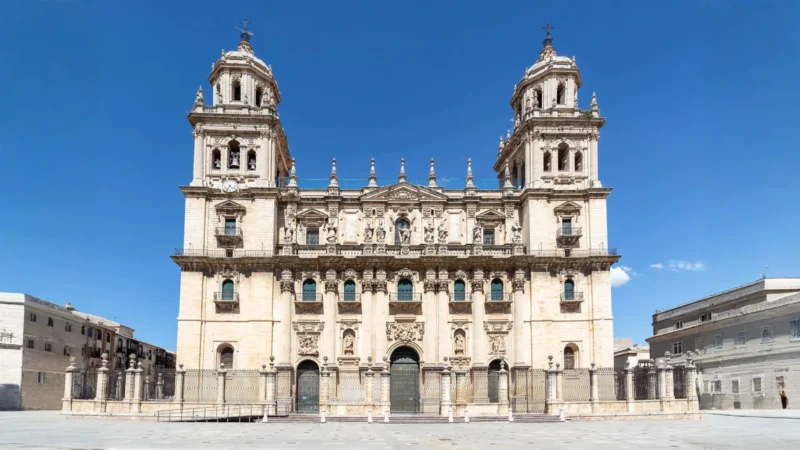
Jaén’s cathedral is the third great Renaissance work by Andrés de Vandelvira, after Úbeda and Baeza — and the largest. Its huge twin-towered west front dominates the Plaza de Santa María. Inside, the sacristy and the chapter house are considered Vandelvira’s masterpiece and among the finest Renaissance rooms in Spain. The cathedral also holds the Santo Rostro, a relic said to bear the face of Christ, shown to the public on certain days.
Castillo de Santa Catalina
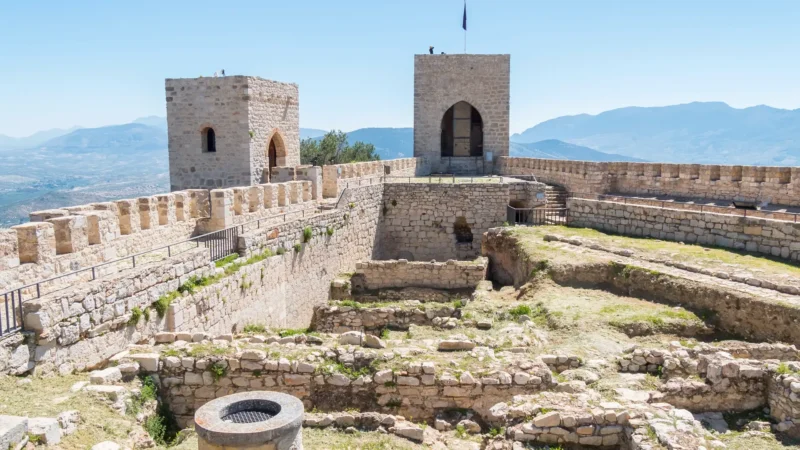
A Moorish fortress crowns the hill above the city, rebuilt and extended over centuries and now a protected monument. You can walk the walls and towers, and part of the site is the Parador hotel. The real draw is the setting: the city far below on one side, olive groves to the horizon on another, and mountains behind.
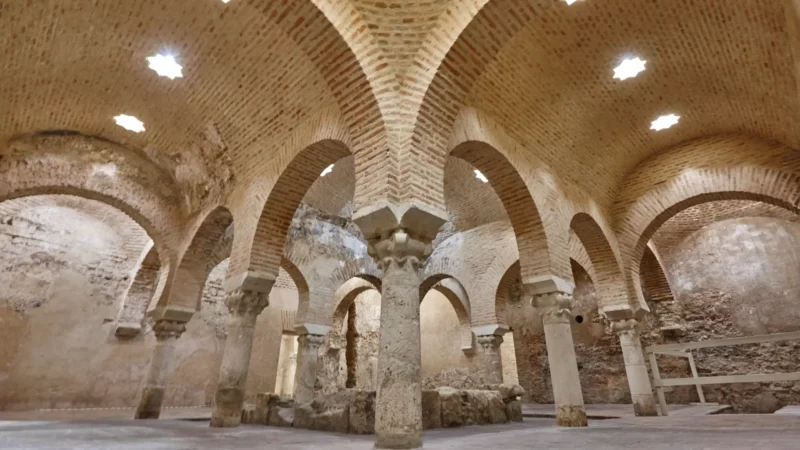
Baños Árabes (Palacio de Villardompardo)
Hidden in the basement of a 16th-century palace lie the best-preserved and largest Arab baths open to visitors in Spain. Built in the 11th century and covering around 450 square metres, they follow the classic cold, warm and hot rooms, lit by star-shaped skylights in the vaults. The same palace houses two small museums, so one ticket covers all of it.
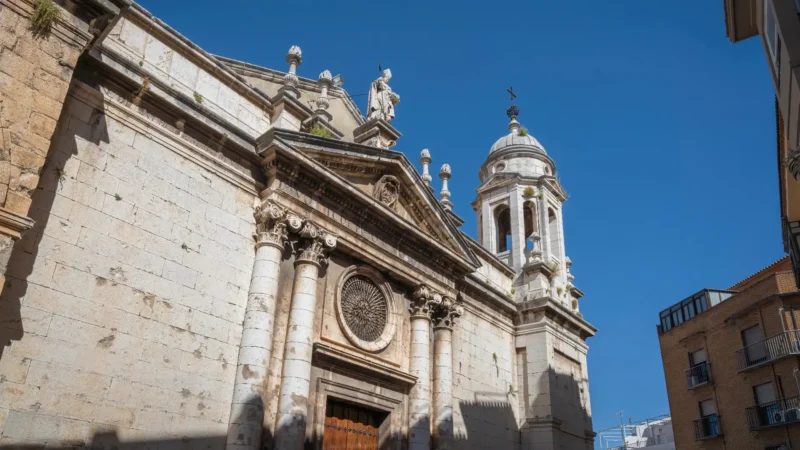
Basílica de San Ildefonso
This large basilica near the old town has three doorways in three different styles — Gothic, Renaissance and Neoclassical — added over the centuries. It is the church of the Virgen de la Capilla, the patron of the city, and its square is a good spot for a coffee.
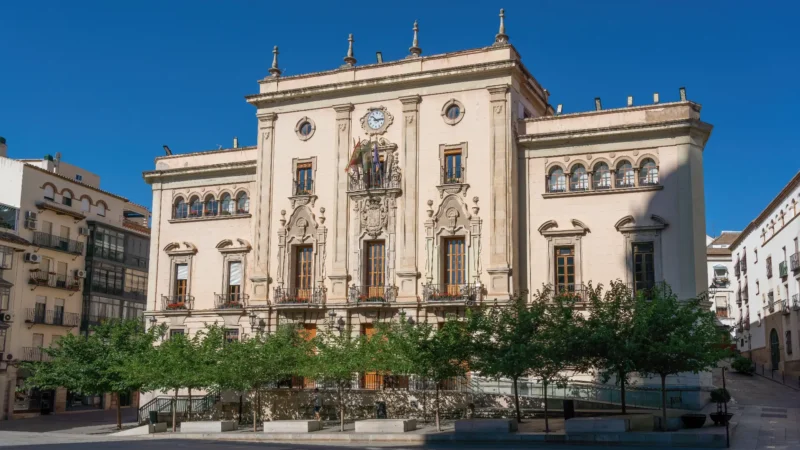
Palacio Municipal
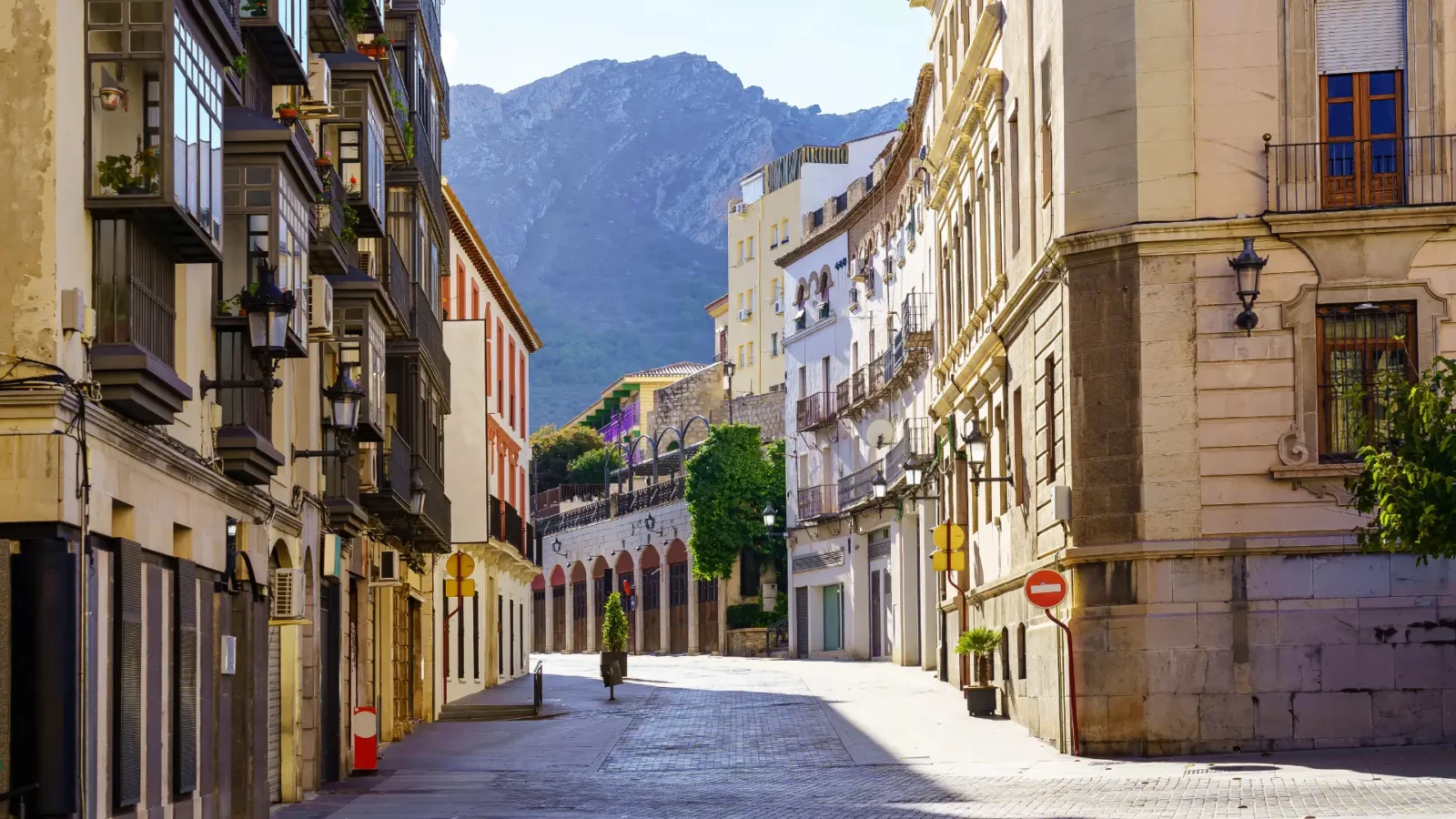
Jaén’s town hall, also known as the Municipal Palace, is a handsome three-storey building with a clock on its front and a run of balconies. It faces a broad pedestrian square in the heart of the city, a natural place to pause on a walk through the centre. A fine, easy-to-photograph example of the city’s civic architecture.
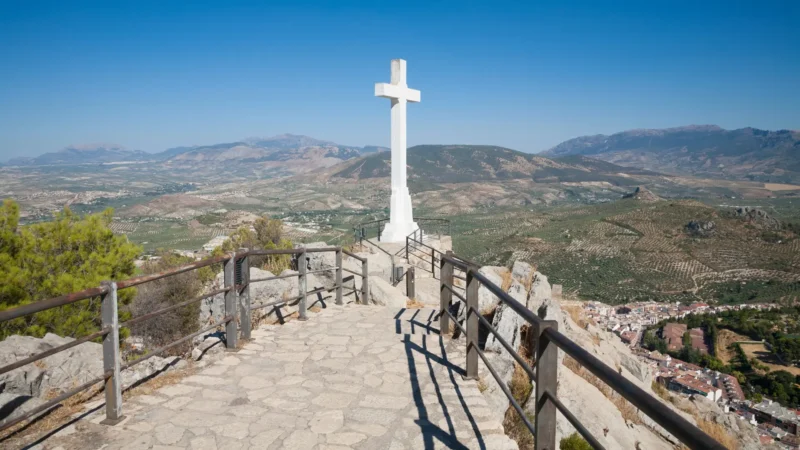
Cruz de Santa Catalina
Just beyond the castle, a short path leads to a huge stone cross on a rocky spur. This is the city’s best viewpoint. From here you look straight down on the cathedral and out over the endless olive plain. It is the classic Jaén photo, and it is at its finest at sunset.
What to Do in Jaén
You do not need a guide for most of Jaén — the city is made for slow, self-led wandering.
Walk the old town and the Barrio de la Magdalena
The best way to see Jaén is on foot. Walk uphill from the Plaza de la Constitución to the cathedral, then on into the Barrio de la Magdalena. This is the city’s oldest quarter, a warren of narrow streets with almost no gift shops. It was once the Moorish and Jewish heart of Jaén. At its centre sits the Iglesia de la Magdalena, the oldest church in the city, built on a former mosque. Its courtyard pool is fed by the Raudal spring, which local legend ties to the “Lizard of Jaén”. It is a short, steep, rewarding loop, and a free town map from the tourist office is all you need. Go early or late to dodge the midday heat.
Taste Jaén's olive oil
Jaén produces more olive oil than anywhere on earth, and the local extra-virgin is a world away from a supermarket bottle. Many bars pour it over toast at breakfast for the price of a coffee. For the deeper version, an olive-oil tasting or a mill visit in the countryside teaches you to read the fruit, the bitterness and the pepper the way a local does — the difference a guide makes here is learning to taste, not just to sip.
Chase the sunset at the Cruz de Santa Catalina
Drive up to the castle in the late afternoon and walk out to the cross for golden hour. The light across the olive plain is the thing people remember most about Jaén. Bring water and decent shoes — the path is short but the sun is strong.
Eat your way around the tapas streets
In Jaén, a drink usually comes with a free tapa, so a tapas crawl is a cheap and delicious way to spend an evening. The lanes around the Plaza de la Constitución and Calle Nueva are thick with bars. Order a local wine or a cold beer and see what arrives.
Prefer to go with a guide for any of this? Ask where you're staying, or at the tourist office on Calle Maestra, near the cathedral — they'll know what's running, in which language, and can point you to something that fits.
Seasonal Events and Festivals
Semana Santa (Holy Week, March–April)Jaén’s Easter processions are among the most heartfelt in Andalucía, winding up the steep streets between churches. Solemn, local, and far less packed than Seville’s.
Feria de San Lucas (October)The city’s biggest fair, held around the feast of Saint Luke in mid-October, with bullfights, music, food stalls and a fairground. This is Jaén at its most festive.
Fiesta de la Virgen de la Capilla (June)A city-wide celebration of Jaén’s patron saint, centred on the Basílica de San Ildefonso.
For exact dates each year, check the Ayuntamiento de Jaén or the tourist office.
Getting There and Around
Jaén sits at the foot of the A-44 motorway, the main road up the middle of eastern Andalucía. It is an easy, scenic drive from Granada, Córdoba or the Baeza–Úbeda cluster.
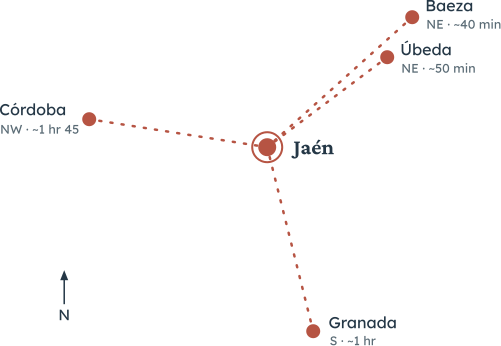
From Granadaabout 1 hour by car via the A-44 (roughly 95 km).
From Córdobaabout 1 hour 45 minutes by car (roughly 110 km).
From Baeza and Úbedaabout 40–50 minutes by car via the A-316 / A-44 (roughly 48–57 km) — the next stops on the Renaissance & Olive Trail.
Nearest airportsGranada (GRX) is closest, about 1 hour by car; Málaga (AGP) is the main international option, about 2 hours 15 minutes.
By trainJaén has direct services from Madrid (about 3.5 hours) and from Córdoba and Cádiz; the station sits at the lower, northern end of the city.
Getting around
You do not need a car inside Jaén — the old town is walkable, though steep, and best explored on foot. Park in one of the paid garages in the lower town and climb up. You do want a car for the region, though: the castle sits high above the city, and the trail’s next stops, the olive-oil mills, and the villages all need wheels. If you are touring the province, hiring a car is the way to see it.
Looking for a ready-made plan? See our Andalucía road trips.
Practical Info
- TicketsThe Arab baths are free — bring photo ID. The cathedral charges a standard entry, and the castle a small one, though the castle is free on Wednesdays if you book ahead. There is no single combined city pass. Hours change with the season, and some sights close on Sunday afternoons and Mondays. For current hours and fees, check each sight’s own official page or ask at the tourist office near the cathedral.
- Best time of dayVisit the cathedral and Arab baths in the morning or early afternoon when they are open, and save the castle and the Cruz de Santa Catalina for late afternoon and sunset.
- Getting up to the castleThe castle is about 3–5 km from the centre by a winding road, with free parking at the top. A taxi from the centre is quick and cheap; walking up is long and partly without pavement, so most people drive or take a taxi.
- ClimateJaén sits high, at about 570 metres, so it is a touch milder than the valley — but summers are still very hot. July and August highs sit around 34°C and can top 40°C in a heatwave. The most comfortable months are March to May and September to October, roughly 18–29°C. Rain is rare in summer and falls mainly in late autumn and winter, wettest around November and December.
Where to Eat in Jaén
You’ll eat and drink very well in Jaén, at every budget — this is the world capital of olive oil, and the local extra-virgin turns simple food into something special. Try the pipirrana jiennense, a cold salad of tomato, pepper, tuna and egg bound with garlic and oil, and the ochíos, paprika-and-aniseed bread rolls from the city’s bakeries. Two simple rules make it easy: for a cheap, delicious evening, do a tapas crawl near the Plaza de la Constitución, where a drink comes with a free tapa; for a serious dinner, Jaén punches far above its size, with three Michelin-starred kitchens for a small city. The picks below cover both.
A tiny Michelin-starred room with only a handful of seats, widely rated one of the most exciting kitchens in Andalucía. The tasting menu reworks local ingredients — olive oil, game, mountain herbs — into something you will not forget. Book well ahead.
Another Michelin-starred table, on the Plaza de la Constitución, built around inventive tasting menus that tell a story of the province. Elegant, warm and a genuine special-occasion night out.
A busy all-day place with a covered terrace looking at the cathedral, and a focus on top local olive oils. Good for a relaxed tapas lunch in the thick of the old town.
A stylish old-town restaurant that opens the meal with a shot of the region’s own extra-virgin oil. Creative plates, careful presentation and friendly service.
Restaurante Sabor Flamenco
A well-loved spot near the cathedral for honest local cooking — the pipirrana, lomo de orza and morcilla with pine nuts draw a loyal crowd. Small, so booking helps.
Taberna Las Bernardas
A packed, cheerful tavern where the free tapas that come with your drink are generous and good. Buzzy, local, and cheap — exactly what a Jaén evening should be.
Where to Stay in Jaén
Picture the city after the day-trippers have gone: the cathedral floodlit, the tapas bars filling with locals, and — if you climb to the castle — the whole olive plain glowing at sunset. That evening is the reason to stay the night, and Jaén has rooms for every budget, from a castle parador to a cathedral-view apartment.
Parador de Jaén
Sleep inside the walls of the Santa Catalina castle, high above the city, in a 1960s parador built in bold defensive-castle style. Stone vaults, huge views over the olive plain, and the Cruz de Santa Catalina on your doorstep for sunset. The standout stay in Jaén.
Check prices & availability for Parador de Jaén on the accommodation's websiteRoyar Casa del Reloj Apartamentos
Brand-new, stylish apartments right by the cathedral, several with terraces looking straight at its towers and the castle cross. A modern, self-catering base in the best possible spot.
Check prices & availability for Royar Casa del Reloj Apartamentos on the accommodation's websiteApartamentos Velalma
Beautifully restored apartments in a historic building in the heart of the old town, blending Andalusian character with modern comfort, some with cathedral views from the balconies. A short walk from the tapas streets.
Check prices & availability for Apartamentos Velalma on the accommodation's websiteHotel Europa
A friendly, central three-star on a quiet plaza, an eight-minute stroll from the cathedral, with a small rooftop pool. A simple, reliable base for exploring on foot.
Check prices & availability for Hotel Europa on the accommodation's websiteHotel Xauen
A central, no-nonsense hotel a few minutes’ walk from the cathedral, with a rooftop sun terrace that looks out over the old town and cathedral — a lovely spot for a drink at dusk. Walk everywhere from here.
Check prices & availability for Hotel Xauen on the accommodation's websitePensión Martín
A clean, welcoming budget guesthouse in a great central spot, run by attentive hosts. No frills, but everything you need within a short walk. Good value for the location.
Check prices & availability for Pensión Martín on the accommodation's website
Region, Nearby and Routes
Part of Andalucía
Jaén is in Andalucía
Part of these routes
Jaén is one stop on our Renaissance and Olive Trail see the full route.
Nearby places
- ÚbedaA UNESCO Renaissance city of golden palaces and calm squares, set in Jaén’s endless sea of olive groves.
- BaezaA small, golden-stone Renaissance town in Jaén’s olive country — UNESCO-listed and far quieter than most.
- CazorlaA white mountain town under a Moorish castle, and the gateway to Spain’s largest natural park.
Frequently Asked Questions
Yes, if you want authentic Andalucía without the crowds. Jaén is the least-touristy of the region’s cities, and it holds a first-rate Renaissance cathedral, the largest Arab baths open to visitors in Spain, and a hilltop castle with sweeping views over a sea of olive trees. It is also a serious food city.
Jaén is the world capital of olive oil — the province produces more than anywhere on earth. It is also known for its Vandelvira cathedral, the 11th-century Arab baths beneath the Villardompardo Palace, and the Castillo de Santa Catalina above the city.
Half a day covers the main sights, but an overnight stay is far better. Staying lets you see the castle and the Cruz de Santa Catalina at sunset and enjoy the tapas bars in the evening, once the day-trippers have left.
Spring and autumn are ideal. March to May and September to October are the most comfortable months, roughly 18–29°C. Summers are very hot — July and August highs sit around 34°C and can top 40°C — while rain falls mainly in late autumn and winter. Jaén’s altitude of about 570 metres keeps it a touch cooler than the valley.
Yes — Granada is only about an hour away by the A-44 motorway, so Jaén makes an easy day trip. But if you are driving the Renaissance & Olive Trail, it is better to stay the night and carry on to Baeza and Úbeda the next day.
For something special, the Parador de Jaén sits inside the Santa Catalina castle, high above the city with huge views. In the centre, Hotel Xauen has a rooftop cathedral view, while Apartamentos Velalma and Royar Casa del Reloj offer stylish apartments near the cathedral. Pensión Martín is a good budget choice, and Hotel Europa a reliable mid-range one.
For a special dinner, Jaén has two Michelin-starred kitchens, Bagá and Malak. For traditional local cooking, try Sabor Flamenco or Restaurante Herencia. For a cheap, delicious tapas evening — where a drink comes with a free tapa — head to Taberna Las Bernardas near the Plaza de la Constitución.