
Úbeda: Andalucía’s Renaissance City in the Olive Groves
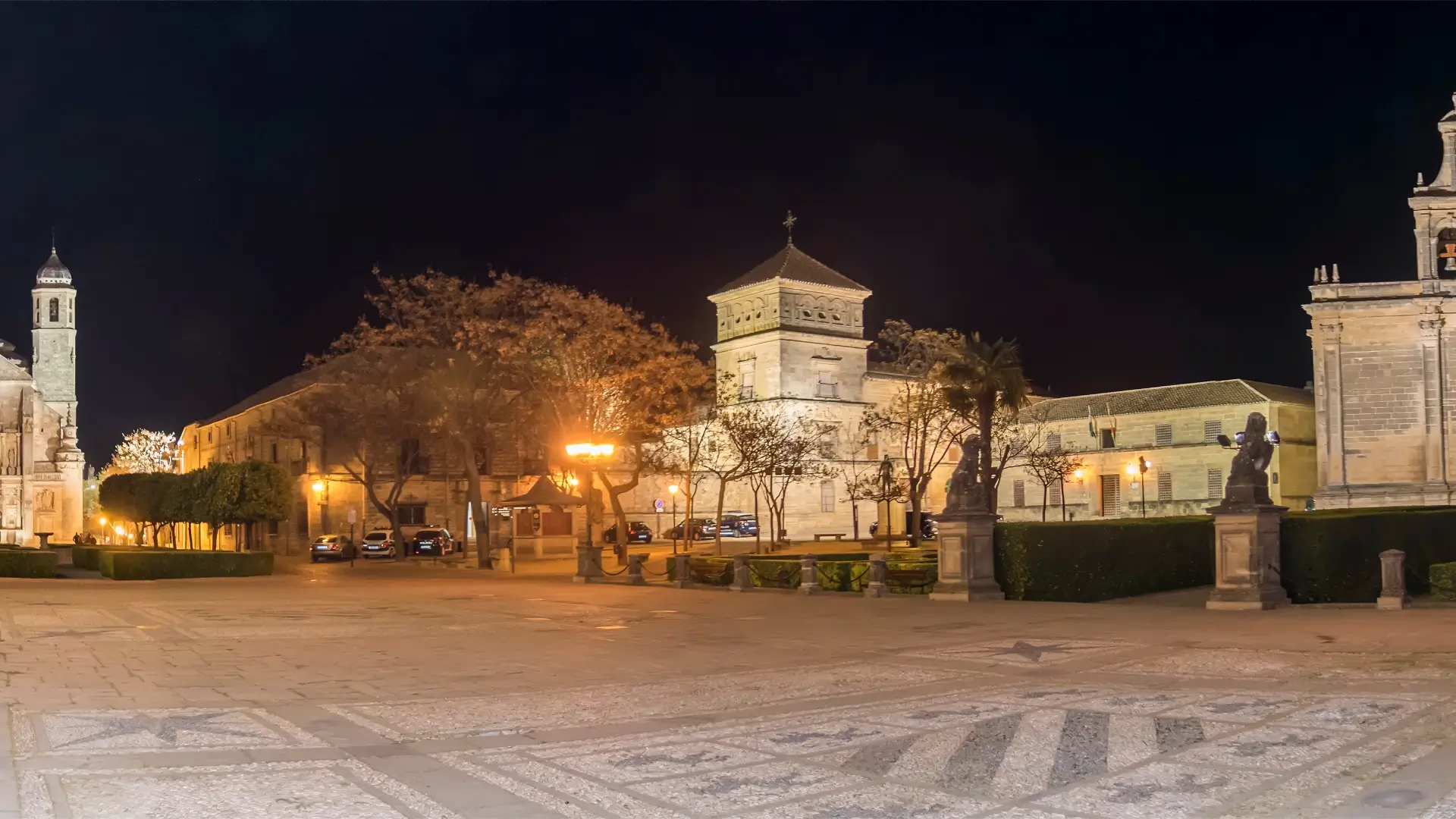
Úbeda is a Renaissance city in Jaén, in eastern Andalucía. Its old town is a UNESCO World Heritage Site, built in golden stone in the 16th century. The great square, Plaza Vázquez de Molina, is one of the finest in Spain. Yet Úbeda stays calm and largely local — far from the crowds of Granada or Seville, and ringed by a wide sea of olive trees.
Why Visit Úbeda
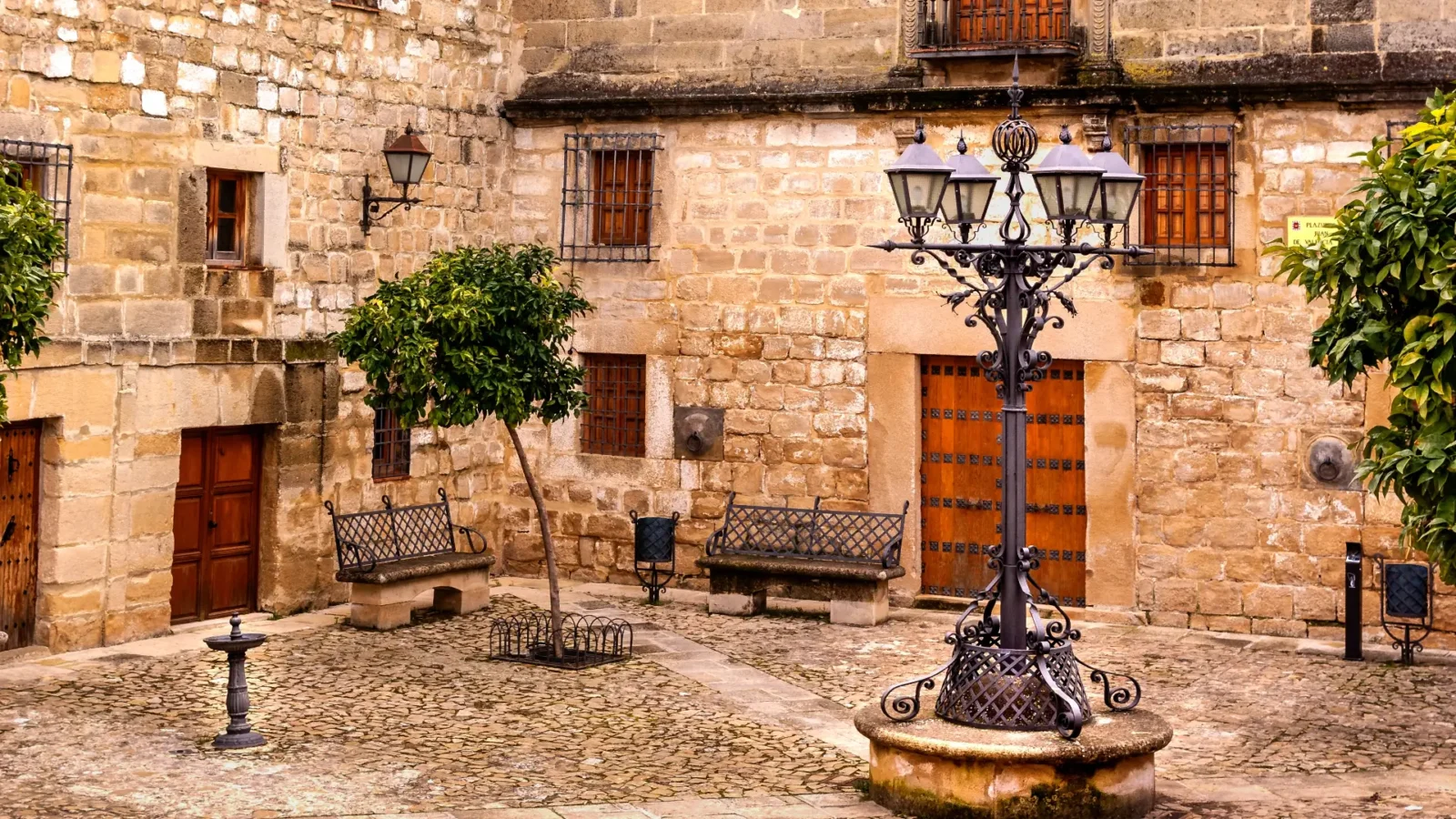
Úbeda feels like a small Italian city that wandered south. In the 1500s, powerful local families grew rich on olive oil and trade. They spent that money on grand stone buildings. Above all, they hired one architect, Andrés de Vandelvira. He shaped the city’s squares, palaces and churches. The result is one of the best sets of Renaissance buildings in Spain. In 2003, UNESCO listed Úbeda and its smaller twin, Baeza, together as a World Heritage Site.
What makes Úbeda special is not just the buildings, but the quiet. This is inland Jaén, a farming province that most foreign visitors drive past on the way to Granada. So the streets stay calm, the prices stay low, and the city still belongs to the people who live here. You walk the same golden lanes the day-trippers rush through, but you can take your time.
Who Úbeda is for
Úbeda suits travellers who like history, art and slow days more than beaches or nightlife. It rewards anyone touring by car, as it sits at the heart of a rich corner of Andalucía. The twin city of Baeza is minutes away, and the green mountains of the Sierra de Cazorla rise just to the east. It is also a natural base for olive oil lovers, since Jaén makes more olive oil than anywhere on earth.
Day trip or overnight?
You can see Úbeda in an afternoon. Most day-trippers do — they park, walk the main square, look inside a church or two, and drive on. But that means leaving just as the city gets good. Our honest advice: stay the night. When the coaches leave, the golden squares empty out, and the old town turns quiet and warm under the streetlights. A perfect short visit looks like this: arrive by mid-afternoon and settle in; walk Plaza Vázquez de Molina in the low sun and step into the Sacra Capilla del Salvador; wander the potters' quarter on Calle Valencia before the workshops close; eat tapas on Plaza Primero de Mayo after dark; then start the next morning early, before Baeza, with the streets to yourself. That visit does not fit into a day trip — which is rather the point.
What to See in Úbeda
You’ll see most of Úbeda’s great buildings on one short, flat walk through the old town — most of them ringing the Plaza Vázquez de Molina, the golden Renaissance square at its heart. Here is what to look for.

Sacra Capilla del Salvador
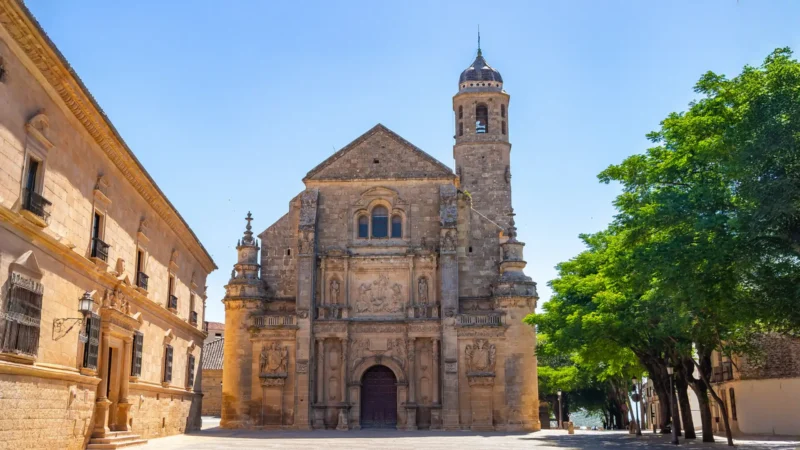
The Chapel of the Saviour is the symbol of Úbeda and its single most striking building. It was built from 1536 as a private funerary chapel for Francisco de los Cobos, secretary to the Emperor Charles V. Behind the grand carved front lies a rich, gilded interior with a dramatic altarpiece by the sculptor Berruguete. It is the most ambitious private religious building of the whole Spanish Renaissance.
Basílica de Santa María de los Reales Alcázares
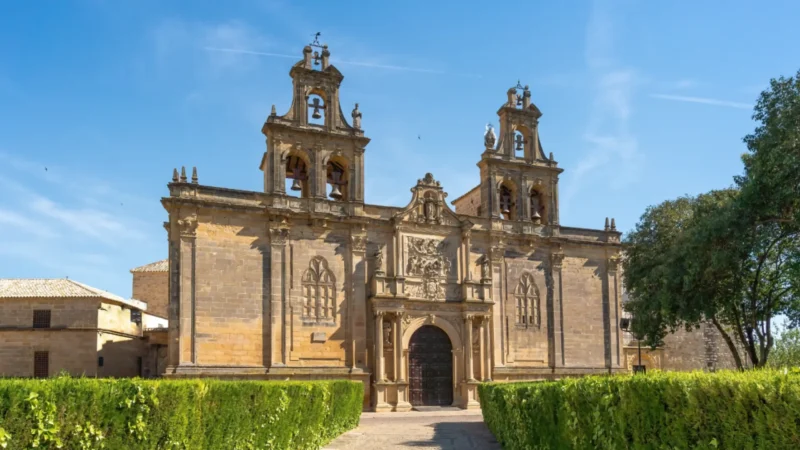
This large church closes one end of Plaza Vázquez de Molina, on the site of the old main mosque. It blends styles across the centuries, from Gothic through Renaissance. Inside are a peaceful cloister and fine chapel screens in wrought iron. It reopened after a long restoration and rounds out the square.
Iglesia de San Pablo
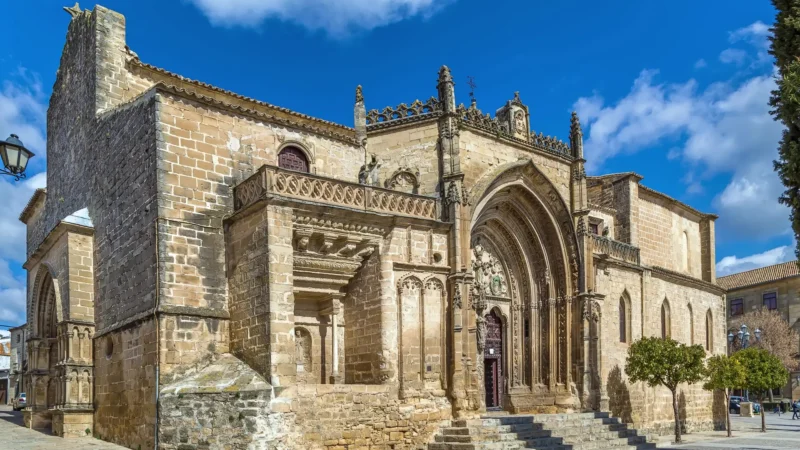
One of Úbeda’s oldest and finest churches stands on the Plaza Primero de Mayo, the town’s second great square. Its Gothic and Plateresque front stands out sharply against the Renaissance buildings around it. It also keeps the only surviving late-Romanesque doorway in the city, the Puerta de los Carpinteros. The plainer interior is worth a look, and the square outside is one of the best spots in town for evening tapas.
Palacio de las Cadenas (Úbeda town hall)
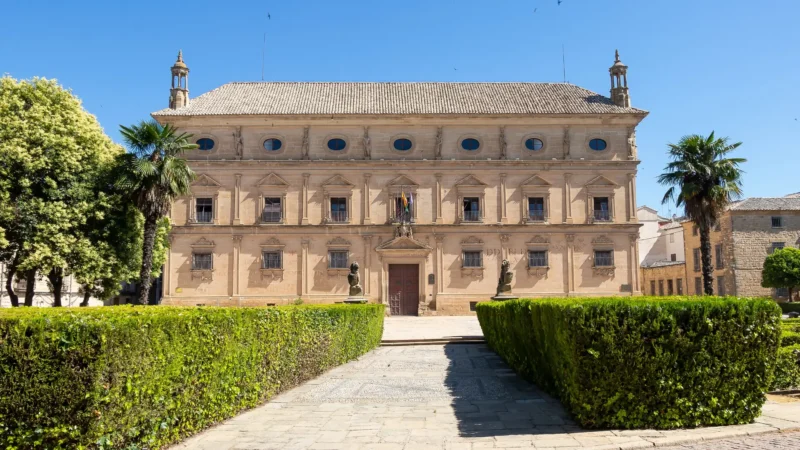
This elegant palace by Vandelvira — its full name is the Palacio Vázquez de Molina — has served as Úbeda’s town hall since the 19th century. Its balanced, symmetrical front, lined with round windows, is a textbook of Renaissance design. You can step into the courtyard during office hours to see the inner gallery, even though the offices themselves are closed to visitors.
Hospital de Santiago
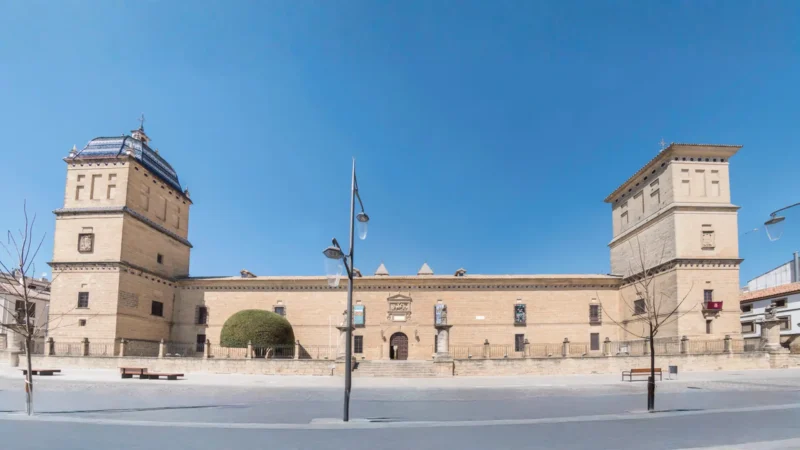
Vandelvira’s last great work, finished in 1575, is a huge, plain-fronted building on the edge of the old town. Its scale and calm have earned it the nickname “the Andalusian Escorial”. Inside, a wide arcaded courtyard and a grand painted staircase open up. Today it works as the city’s culture and conference centre, and its rooms often host concerts and shows.
The potters' quarter (Barrio Alfarero)
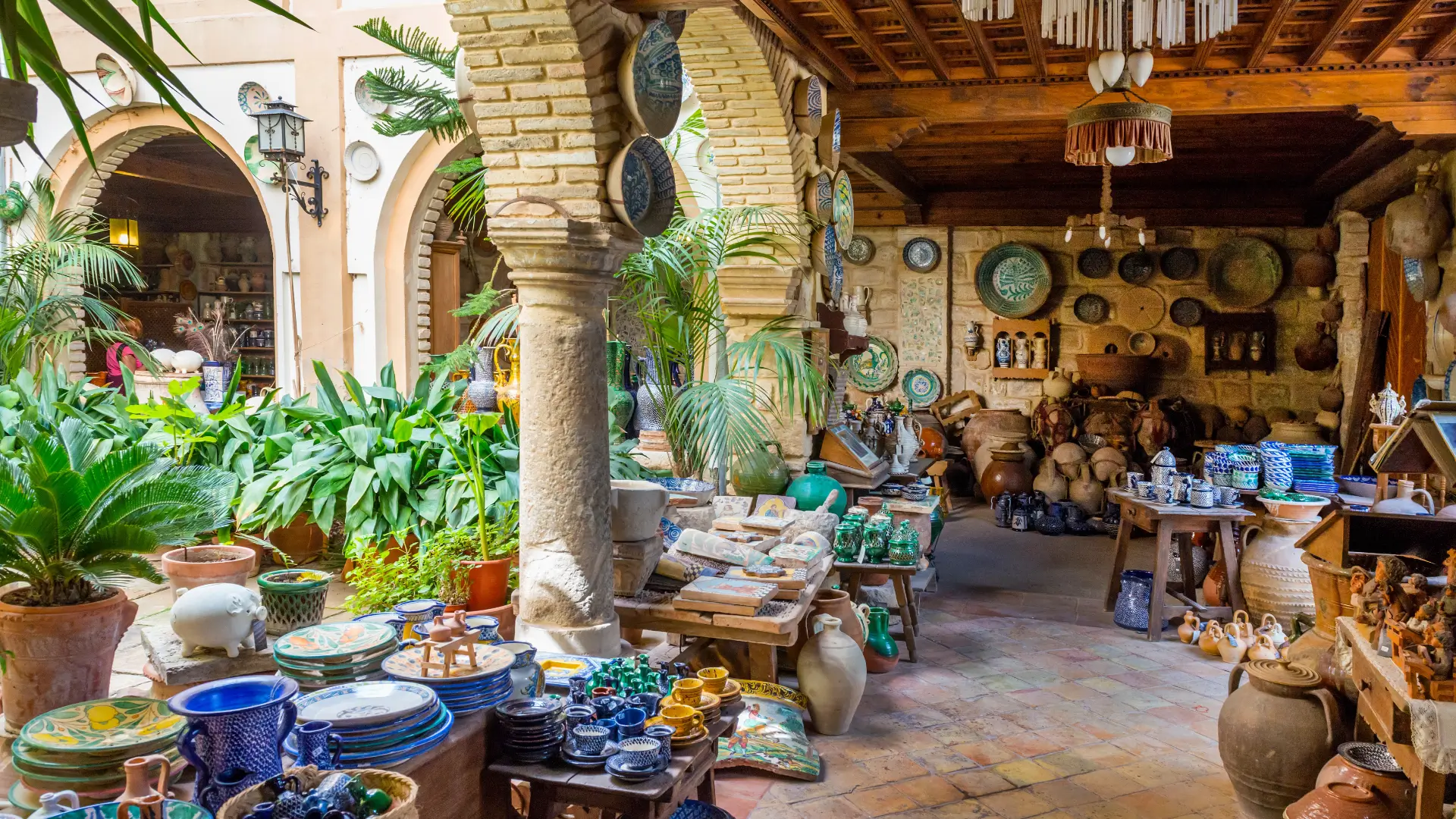
Úbeda is one of Spain’s great pottery towns, and Calle Valencia is the heart of the craft. Workshops here still throw and fire the city’s famous deep-green glazed ware. Some are run by the same families for generations. You can watch potters at work, look around a small ceramics museum, and buy straight from the source.
What to Do in Úbeda
Walk the golden old town
Úbeda is made for walking. The old town is small, flat and mostly car-free. You can see the main sights on one easy loop from Plaza Vázquez de Molina. Wander out to the quieter corners too: the Plaza Primero de Mayo, the old Jewish quarter, and the Redonda de Miradores, a walkway on the old walls with long views over the olive groves. Early morning and the hour before sunset are best, both for the light and for the calm. Down in the old Jewish quarter, look out for the Sinagoga del Agua, a medieval synagogue. It was found by chance during building work and opened in 2010. Below ground it keeps arches, the old prayer hall and a ritual bath fed by a spring — a rare trace of the Jewish Úbeda that stood here before 1492. It can only be seen on a short guided tour, given in Spanish, so it rewards visitors who speak some Spanish.
Taste Jaén's olive oil at a working mill
Jaén makes more olive oil than any region on earth, and Úbeda sits right in the middle of that endless “sea of olive trees”. The best way to understand it is to visit a working almazara (oil mill) and taste the fresh extra-virgin oils side by side. A guided mill visit adds what you can’t get alone: someone who walks you through the harvest and pressing, then teaches your palate to tell a peppery early-harvest oil from a mild one — the difference between the real thing and the supermarket version. One well-run option nearby is Oleícola San Francisco, a family producer near Baeza (about 20 minutes from Úbeda), whose English-language tour ends with a tutored tasting of three oils.
See the pottery being made
The potters’ quarter on Calle Valencia is a “do”, not just a “see”. Several workshops welcome you in to watch the wheel and the kilns, and to hear how the deep-green Úbeda glaze is mixed and fired the old way. It is a genuine living craft, not a show for tourists, and a hand-thrown piece makes a far better souvenir than anything in a gift shop.
Use Úbeda as a base for the Sierra de Cazorla
Úbeda is the natural launch point for the Sierra de Cazorla, Spain’s largest protected natural area. It begins about 45 minutes east. Wild, green and full of deer, ibex and birds of prey, it is a complete change of scene from the Renaissance streets. You can drive in for a day of walking, river valleys and viewpoints, then come back to a comfortable dinner in town.
Prefer to go with a guide for any of this? Ask where you're staying, or at the tourist office on Plaza de Andalucía — they'll know what's running, in which language, and can point you to something that fits.
Seasonal Events and Festivals
Festival de Música Antigua de Úbeda y Baeza (FeMAUB) — late November to early DecemberEach year this early-music festival fills the Renaissance churches, palaces and squares of both cities with concerts. Playing centuries-old music inside the buildings it was written for makes it a special, atmospheric time to visit. A wider provincial strand, the Festival Andrés de Vandelvira, carries concerts out to castles and churches across Jaén. Check the official festival site for the exact dates and programme each year.
Semana Santa (Holy Week) — March or AprilÚbeda’s Easter processions are among the most respected in the province, with robed brotherhoods carrying heavy floats through the old town. The dates move with the church calendar each year.
Getting There and Around
Úbeda sits in the north-east of Jaén province, in eastern Andalucía, reached by the A-32 and A-316 through the olive country. Here is how it lines up with the places around it.
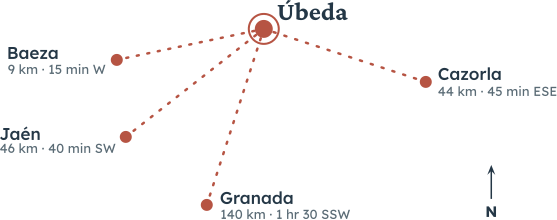
From Granada about 1 hour 30 minutes by car (roughly 140 km) via the A-44 and A-32. This is the usual gateway for international visitors, as Granada has the nearest major airport.
From Jaén(the provincial capital) about 40 minutes by car (roughly 46 km) on the A-316.
From Baezaits twin city, about 15 minutes by car (roughly 9 km) — the two are almost always visited together.
Nearest airportsFederico García Lorca Granada–Jaén (GRX) is closest, about 1 hour 50 minutes by road. Málaga (AGP) is the larger international hub, roughly 2 hours 45 minutes away.
By trainthere is no station in Úbeda itself. The nearest is Linares–Baeza, about 25 minutes away, with connections from Madrid, Córdoba and beyond; from there it is a short taxi or bus into town.
Getting around
You don’t need a car inside Úbeda — the old town is small, walkable and mostly car-free, and it’s best explored on foot. Park in the newer part of town or in one of the car parks just outside the historic centre and walk in. For the trip as a whole, though, a car unlocks this corner of Andalucía. Baeza, the Sierra de Cazorla and the olive-mill country all sit a short drive away, and are hard to reach by bus. If you’re flying in and touring the region, hiring a car at the airport is the simplest way to do it.
Looking for a ready-made plan? See our Andalucia road trips.
Practical Info
- TicketsMost of the main sights charge a small separate entry fee; the Sacra Capilla del Salvador, the Sinagoga del Agua and the churches each sell their own. A joint ticket sometimes covers several monuments and works out cheaper than paying at each — ask at the tourist office. Fees and hours change with the season, so check the official source rather than a fixed figure here.
- Opening hoursSights generally open in two blocks, morning and late afternoon, with a long midday break; several close on Monday. Confirm current hours before you go.
- On footThe old town is walkable and mostly car-free. Park outside the historic centre and walk in.
- ClimateÚbeda has hot, dry summers and mild winters. July and August are the hottest months, with average highs around 35°C — often uncomfortable for sightseeing at midday. The most comfortable months are April, May, September and October, roughly 19–30°C. Rain is rare in summer and falls mostly in late autumn and winter, with December the wettest month.
- LanguageThis is deeply local Andalucía; English is less widely spoken than in the coastal resorts, so a few words of Spanish help.
Where to Eat in Úbeda
You’ll eat and drink well in Úbeda, at every budget, in the heart of Spain’s olive-oil country. Local kitchens lean on that liquid gold, plus game, slow-cooked pork and strong regional cheeses — try lomo de orza (pork loin cured in olive oil), andrajos (a rustic stew) and the sweet ochíos bread. Two simple rules make it easy: for a relaxed lunch while you’re out walking, the bars around Plaza Primero de Mayo are full of good-value tapas; for dinner, stay in the old town, where the evening is at its best. The picks below run from a quick tapas plate to a special table.
Úbeda’s serious grill house, near the Hospital de Santiago, for well-sourced meat and fish and a strong wine list. A set gastronomy menu offers good value at the higher end; the acorn-fed pork loin is a highlight. A good choice for a special dinner.
One of Úbeda’s most special tables, set inside a beautifully restored former chapel on the edge of the old town. The cooking is careful and modern, rooted in Jaén’s produce and olive oil, and the setting under the old vaults makes it a real occasion. Book ahead, especially at weekends.
A polished but relaxed kitchen on Calle Real serving traditional Andalusian dishes done carefully. The partridge pâté and the game dishes stand out. It fills up fast in the evening, so book if you can.
Gastrobar Llámame Lola
A tiny, buzzy gastrobar right by the Sacra Capilla del Salvador, mixing traditional tapas with lighter international plates. Many of the vegetables come from its own garden, and a drink still comes with a free tapa. Great value, and a minute from the Parador.
A small, well-loved tapas bar on Calle Real, with a short menu of clever, original plates and good local wine. Look for the lomo de orza, the aubergine dishes and the daily specials. Casual, friendly and reliably busy with locals.
A cosy, quirky spot overlooking Plaza Primero de Mayo, known for its newspaper-style menu and some of the best tapas in town. The lomo de orza and cured meats are the thing to order. Seats are limited, so come early or expect to wait.
Where to Stay in Úbeda
Picture the old town after the day-trippers have gone: the golden squares lamplit and near-empty, the only sound your own footsteps on the stone, and a Renaissance palace waiting with your room inside it. That evening is the real reason to stay the night in Úbeda — and the good news is you can sleep inside the history itself. Here is where we’d stay.
Parador de Úbeda (Palacio del Deán Ortega)
Sleep inside the monument. This parador fills the 16th-century Palacio del Deán Ortega, a Vandelvira palace right on Plaza Vázquez de Molina, so you step straight out into the finest square in the city. Two planted courtyards, high-ceilinged rooms and a classic Andalusian dining room make it the standout stay.
Check prices & availability for Parador de Úbeda (Palacio del Deán Ortega) on the accommodation's websiteHotel Palacio de Úbeda 5 G.L.
A five-star hotel set in a restored palace a short walk from the main square, for travellers who want modern comfort with the history. Spacious rooms, a rooftop pool and a full spa set it apart, and the location keeps everything within an easy stroll.
Check prices & availability for Hotel Palacio de Úbeda 5 G.L. on the accommodation's websiteHotel Ordóñez Sandoval
A rare and personal stay: a grand old family palace in the historic centre, still owned by the founding family and run with just a handful of rooms. It is full of antiques and quiet corners, and reads as a living home rather than a hotel. Warm hosting and a strong guest following.
Check prices & availability for Hotel Ordóñez Sandoval on the accommodation's websiteHotel María de Molina
A characterful mid-range hotel in a 16th-century mansion on the town-hall square, with a traditional Andalusian courtyard at its heart. Central, comfortable and steps from the main sights, tapas and shops — an easy, good-value base in the old town.
Check prices & availability for Hotel María de Molina on the accommodation's websiteHotel Don Juan Boutique
A neat, central boutique hotel a couple of minutes from the old town, and one of the better-value stays in Úbeda. Simple, clean and well-run, it suits road-trippers who want a comfortable, affordable base without paying for a palace.
Check prices & availability for Hotel Don Juan Boutique on the accommodation's websiteHotel Alvar Fáñez
A small boutique hotel in a historic building close to the main square, with a courtyard and a café-bar. Comfortable, well-kept rooms at a friendly price make it a solid, central choice for walkers who plan to be out all day.
Check prices & availability for Hotel Alvar Fáñez on the accommodation's website
Region, Nearby and Routes
Part of Andalucía
Úbeda is in Andalucía
Part of these routes
Úbeda is the main stop on our Renaissance and Olive Trail see the full route.
Nearby places
- BaezaA small, golden-stone Renaissance town in Jaén’s olive country — UNESCO-listed and far quieter than most.
- JaénA big-hearted olive-oil city with a Renaissance cathedral, Spain’s largest Arab baths and a castle above the groves.
- CazorlaA white mountain town under a Moorish castle, and the gateway to Spain’s largest natural park.
- CórdobaA great caliphal capital on the Guadalquivir, wrapped around the world-famous Mezquita-Catedral and a maze of flower-filled patios.
- GranadaHome to the Alhambra and the Albaicín, Granada is Moorish Andalucía at its grandest — best seen early, late and at your own pace.
Frequently Asked Questions
Yes. Úbeda is one of Spain’s finest Renaissance cities and a UNESCO World Heritage Site, yet it stays calm and largely uncrowded. Its golden squares and palaces rival better-known towns, without the coach parties, which makes it well worth the short detour into Jaén.
Úbeda is known for its 16th-century Renaissance architecture, most of it by the architect Andrés de Vandelvira, and for its UNESCO listing shared with nearby Baeza. It is also famous for green glazed pottery and for sitting at the centre of Jaén’s world-leading olive-oil country.
You can see the main sights in an afternoon, but an overnight stay is better. Staying lets you walk the old town in the quiet early morning and evening, once the day-trippers have left, and makes it easy to pair Úbeda with Baeza and the Sierra de Cazorla.
Spring and autumn are ideal — April, May, September and October bring comfortable temperatures of roughly 19–30°C. July and August are very hot, with highs around 35°C. Winters are mild but wetter, with most rain falling in late autumn and December.
You can, but it is a long day: Granada to Úbeda is about 1 hour 30 minutes each way by car. Úbeda deserves more than a rushed visit, so it is far better to stay a night, ideally combined with Baeza, rather than drive back and forth in one day.
For the finest stay, the Parador de Úbeda sits in a Vandelvira palace right on the main square. The five-star Hotel Palacio de Úbeda offers modern comfort with a spa. For character at mid-range, try the family-run Hotel Ordóñez Sandoval or the Hotel María de Molina. The Hotel Alvar Fáñez and Hotel Don Juan Boutique are good affordable choices.
For tapas, head to Taberna La Tintorera or Taberna Misa de 12, or the good-value Gastrobar Llámame Lola near the Parador. For a fuller meal, Antique serves careful traditional cooking, the Asador de Santiago is the town’s top grill, and Sacrum offers a special table inside a restored former chapel.