
Baeza: the calmer half of Jaén’s Renaissance pair
Baeza is a small Renaissance town in the olive country of Jaén, in eastern Andalucía. With its twin Úbeda, just 9 km east, it shares a UNESCO World Heritage listing for a dense cluster of 16th-century stone. Baeza is the quieter half: a compact old centre of honey-coloured palaces, a cathedral and an old university where the poet Antonio Machado once taught. Come for monuments without the crowds.
Why Visit Baeza
Baeza packs an astonishing amount of Renaissance stone into a small space. Its old centre is barely a few streets across, yet the cathedral, the flamboyant Palacio de Jabalquinto, the old university and a Roman fountain all sit within a short walk of each other. In 2003, UNESCO listed Baeza and neighbouring Úbeda together as a Renaissance monumental ensemble — two towns that show, better than almost anywhere, how 16th-century Spain built in stone. Much of that work carries the hand of the architect Andrés de Vandelvira.
Who Baeza is for
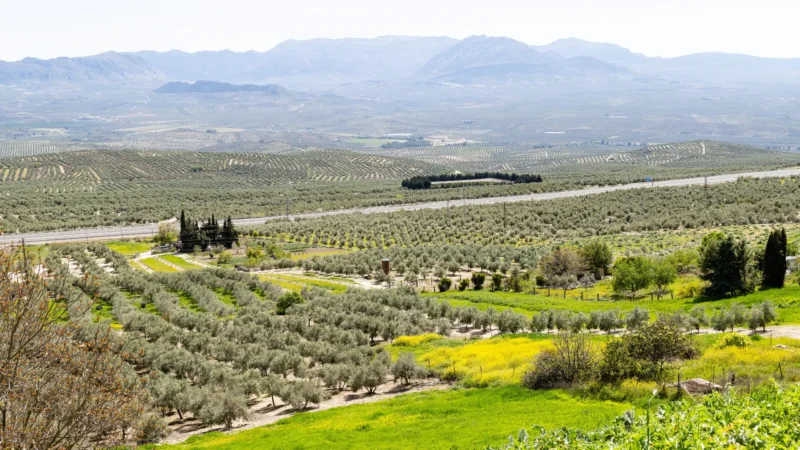
Baeza suits travellers who like history and calm in the same place. It draws far fewer visitors than Andalucía's big cities, so you can walk its plazas without a crowd. Around the town spreads a sea of olive trees, and from the old walls the view runs to the peaks of the Sierra de Cazorla. It is also a town of poets: Antonio Machado taught French here for seven years and wrote about these hills. That literary thread gives Baeza a reflective, unhurried feel that rewards a slow visit.
Day trip or overnight?
You can see Baeza's monuments in an afternoon — the centre is small, and many people visit on a quick stop from Úbeda. But that means leaving just as the town gets good. Our honest advice: stay the night. When the last day-trippers drive off, the golden-stone squares empty out and the streets turn quiet and lamplit. A perfect short visit looks like this: arrive late afternoon, walk the Paseo de las Murallas for the sunset over the olive sea, then have dinner in the old town. Next morning, reach the Plaza de Santa María before the tour groups, see the cathedral and the Palacio de Jabalquinto in soft light, and finish with coffee on the Plaza del Pópulo. That gentle rhythm simply doesn't fit into a day trip.
What to See in Baeza

Plaza del Pópulo
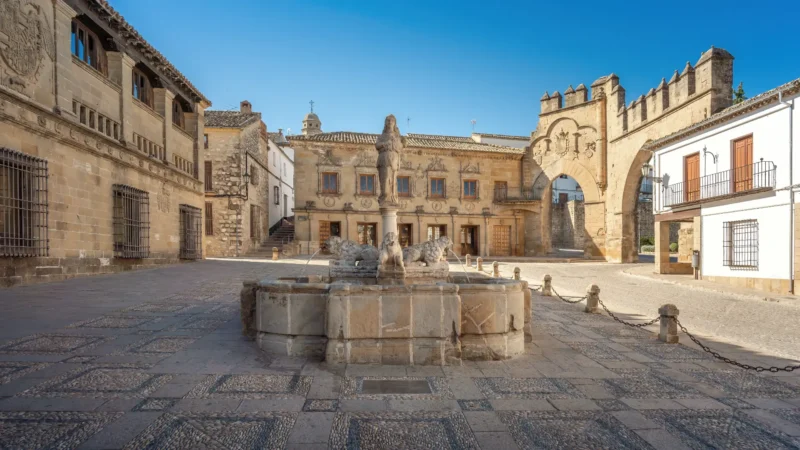
This handsome little square, also called the Plaza de los Leones, is the gateway to the old town. At its centre stands the Fuente de los Leones, a Roman fountain moved here from the nearby Roman city of Cástulo. Around it sit the plateresque Casa del Pópulo — once the civil court, now the tourist office — and the old Antiguas Carnicerías, a 16th-century butchers’ hall that is now the courthouse. The Villalar arch and the Jaén gate close off the square. It is the town’s most photographed corner.
Catedral de Santa María & Plaza de Santa María
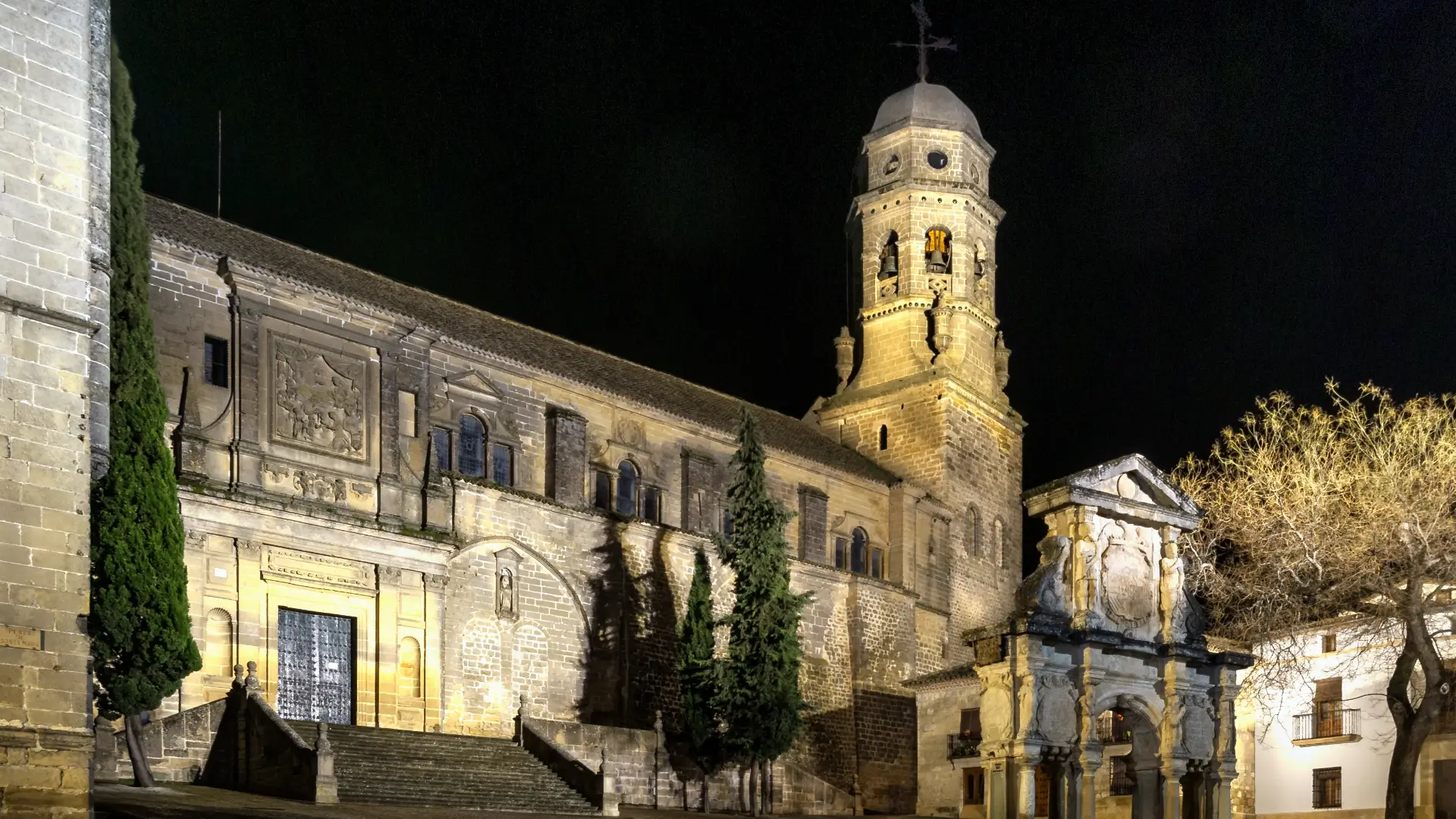
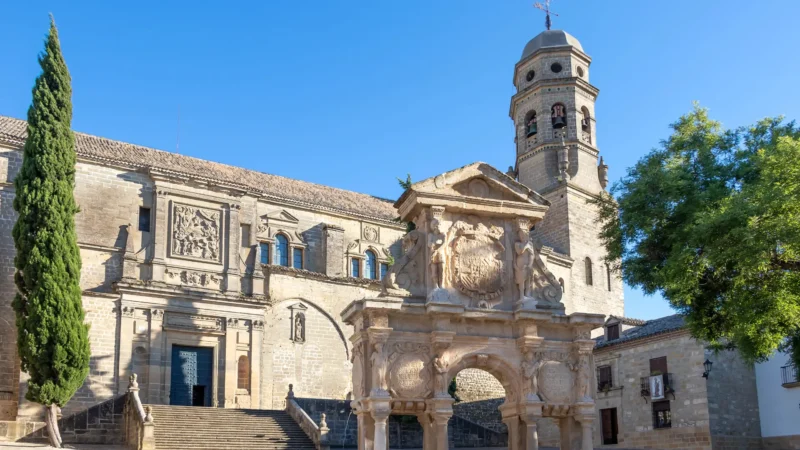
The Plaza de Santa María is the monumental heart of Baeza, and its cathedral rises over the whole square. Built on the site of a former mosque, the cathedral was reshaped in the 16th century by Andrés de Vandelvira and others, giving it a strong Renaissance character over Gothic bones. It was a bishop’s seat even before Jaén’s own cathedral, and it is still one of Spain’s oldest cathedrals in regular use. In the centre of the square stands the Fuente de Santa María, a stone fountain-arch finished in 1564 to mark the arrival of running water to the town. The whole space is quiet and dignified, best in the early morning before the day’s visitors arrive.
Palacio de Jabalquinto
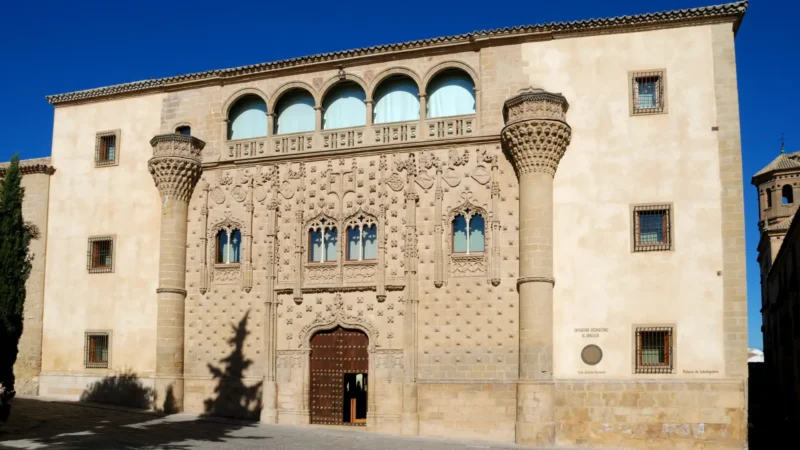
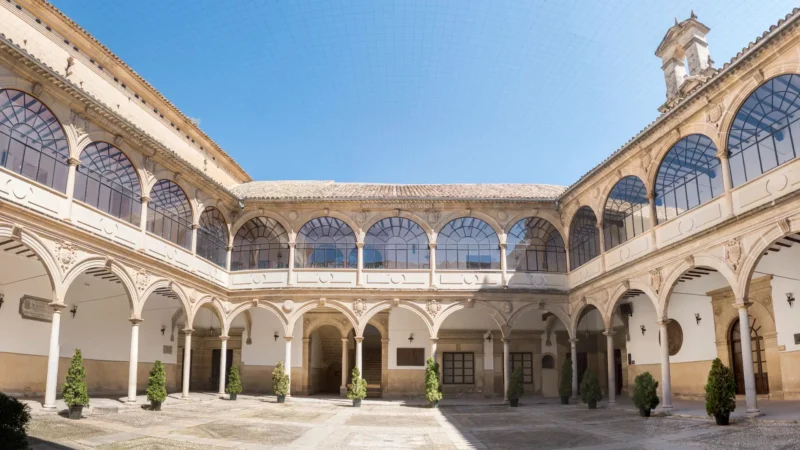
The most striking palace in Baeza has a flamboyant Isabelline Gothic front, carved with diamond points and heraldic shields for a rich, restless surface. Behind it, the courtyard and staircase are calmer and later in date. Built around 1500, the palace now houses the Antonio Machado seat of the International University of Andalusia. You can usually step into the patio.
Antigua Universidad
Baeza’s old university was founded in the 16th century, before those of Jaén or Úbeda, and gave the town a scholarly reputation that lasted for centuries. The building is a rare example of sober Mannerist design here. Inside, it keeps the classroom where the poet Antonio Machado taught French from 1912. Today it serves as a secondary school, but the historic rooms can be visited.
Iglesia de San Pablo
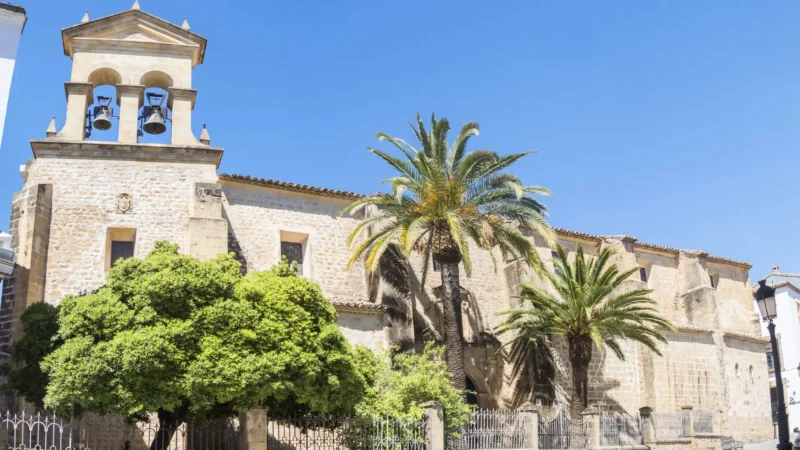
This Gothic parish church, on the Calle San Pablo, is one of only three medieval churches still standing in Baeza. Its side façade and twin-belfry front rise over a street lined with the noble palaces that grew up around the parish from the 15th century. The interior mixes Gothic and later chapels. It is an easy, quiet stop in the north-east of the old town.
Ruinas de San Juan Bautista
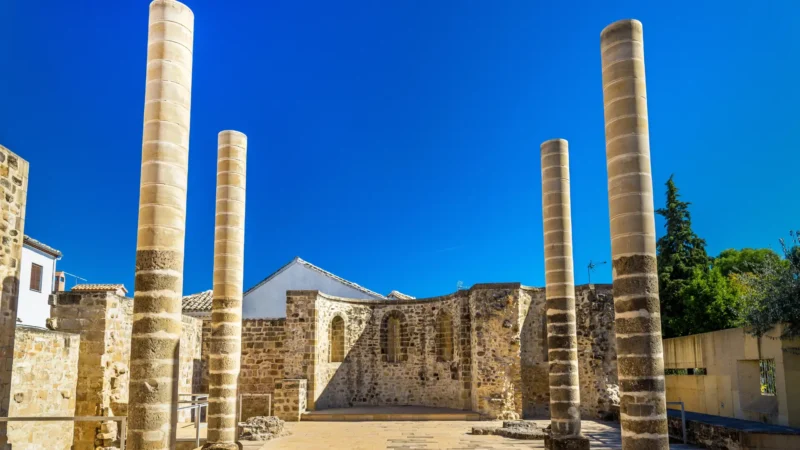
One of Baeza’s most unusual and least-visited corners. San Juan Bautista was a Romanesque church begun in the 13th century, in use until 1843, then stripped and left to decay. A restoration returned it to its bare basilical outline: six tall stone columns stand free in an open space, with the curved apse wall behind. It is now used for open-air events, and you can look in from the street or step inside.
Paseo de las Murallas & Mirador de Antonio Machado
A walk along the line of the old walls gives Baeza its best long views. From the Paseo and the Mirador de Antonio Machado, the land drops away into an endless sea of olive trees, with the Sierra de Cazorla on the horizon. The young Guadalquivir river crosses the plain below. It is the town’s finest spot at sunset, and an easy, level stroll.
Torre de los Aliatares
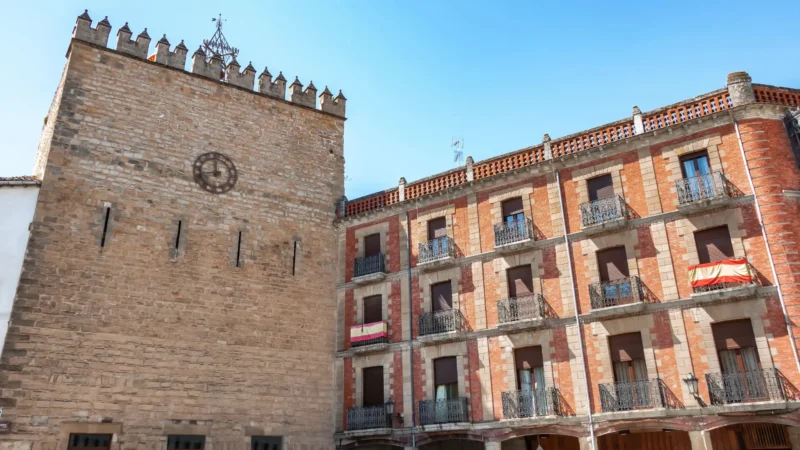
This robust 12th-century tower, on the Plaza de España, is one of the few clear survivors of Baeza’s Muslim-era wall. Queen Isabella ordered most of the town’s towers pulled down in 1476, but this one, about 25 metres tall, remained. The clock on its face, added in the 19th century, was the first public clock in Baeza.
What to Do in Baeza
Walk the golden old town
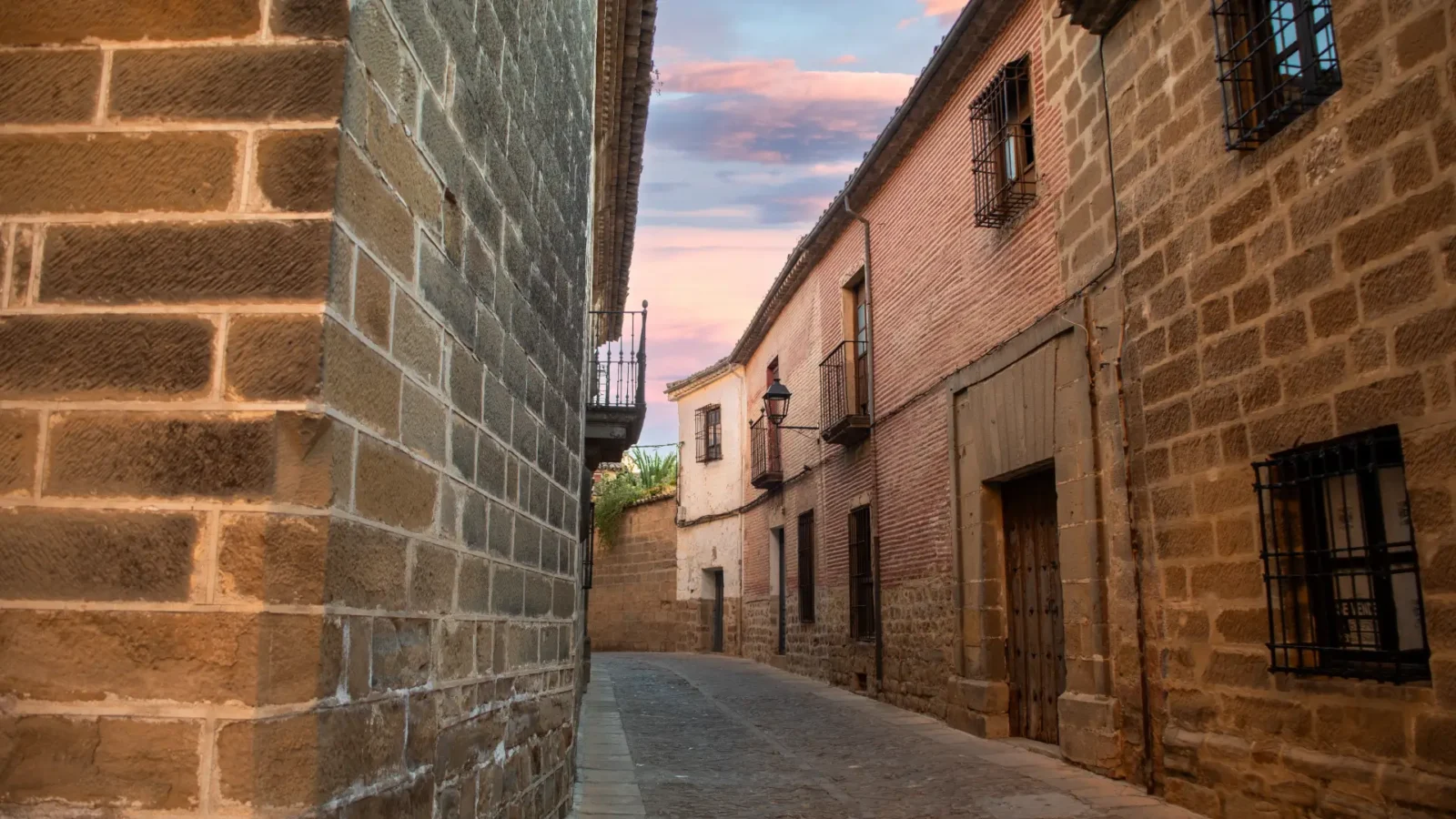
Baeza is made for wandering on foot. From the Plaza del Pópulo, streets of honey-coloured palaces lead up to the Plaza de Santa María and the cathedral, then on to the old university and the Palacio de Jabalquinto. The whole route is short and flat, so you can take it slowly. A free town map from the tourist office marks every stop, and morning light suits the stone best.
Visit an olive-oil mill
Jaén produces more olive oil than anywhere on earth, and Baeza sits in the middle of it. A working mill just outside town, at Begíjar (about 6 km away), opens its doors to visitors every day. You will walk the production line, learn how good oil is made and pressed, and finish with a guided tasting of extra-virgin oils — the difference from supermarket oil is a real surprise. A guided visit at Oleícola San Francisco adds an expert who explains what you are tasting and why, in English, on a 90-minute tour you can book ahead.
Watch the sunset from the walls
The Paseo de las Murallas is the town’s classic evening walk. Follow the old wall line to the Mirador de Antonio Machado and look out over the olive plain as the light turns gold. It costs nothing, takes about half an hour, and is at its best an hour before sunset. Bring a jacket in spring and autumn — the plateau cools quickly once the sun drops.
Follow the Machado trail
Antonio Machado, one of Spain’s great modern poets, lived and taught in Baeza from 1912 to 1919. You can join up the places tied to him: the classroom in the old university, the mirador that carries his name, and the streets he walked while writing. It is a low-key, self-guided theme that gives a short visit some shape, and the tourist office can point you to each spot.
Prefer to go with a guide for any of this? Ask where you're staying, or at the tourist office on the Plaza del Pópulo — they'll know what's running, in which language, and can point you to something that fits.
Seasonal Events and Festivals
Feria de Baeza (mid-August)The town’s main summer fair, with music, stalls and events over several days. A lively, local affair rather than a tourist spectacle.
Semana Santa (Holy Week, March or April)Baeza’s Easter processions are solemn and atmospheric, winding through the narrow old-town streets. The dates move with Easter each year.
Feria del Aceite / olive-oil season (autumn–winter) The olive harvest runs roughly from late autumn into winter, when the mills around Baeza are at their busiest and the new season’s oil appears. It is the best time to taste oil at its freshest.
For exact dates each year, check the Ayuntamiento de Baeza or the tourist office.
Getting There and Around
Baeza sits in the middle of Jaén province, in the olive-growing uplands of eastern Andalucía, close to the A-316 road that links it with Úbeda and Jaén city.
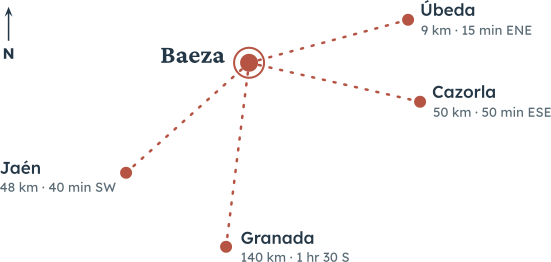
From Úbedaabout 15 minutes by car (roughly 9 km) — the two towns are usually visited together.
From Jaénabout 40 minutes by car (roughly 48 km) via the A-316.
From Granadaabout 1 hour 30 minutes by car (roughly 140 km).
Nearest airportsGranada (GRX) is the closest useful airport, about 1 hour 45 minutes away; Málaga (AGP) is the main international option, about 2 hours 30 minutes.
By trainthe Linares-Baeza station, on the Madrid–Andalucía line, is about 15 km from town; you then need a taxi or bus to reach Baeza itself, so a car is far easier.
Getting around
You don’t need a car inside Baeza — the old town is small and flat, and best seen on foot. Leave the car outside the historic centre (there is parking near the Plaza de Toros and the lower town) and walk in via the Paseo de las Murallas. But you do want a car for the region: Úbeda, the olive mills, and the Sierra de Cazorla all lie within an easy drive, and public transport between them is thin. If you’re touring the Renaissance & Olive Trail, a hire car is the natural choice.
Looking for a ready-made plan? See our Andalucia road trips.
Practical Info
- Tickets and hoursThe main monuments (cathedral, Palacio de Jabalquinto, old university) charge modest separate entry fees, and some are free or donation-based at set times. Hours change with the season. Check the current details with the tourist office on the Plaza del Pópulo before you go.
- Combined visitsBaeza and Úbeda share a joint tourist pass covering the main monuments of both towns — worth it if you’re seeing the pair. Ask at the tourist office.
- Getting aroundThe old town is walkable and flat. Park outside the centre (near the Plaza de Toros) and walk in.
- Best time of dayEarly morning and evening are quietest and best for photos — most day-trippers arrive midday from Úbeda.
- ClimateBaeza has hot, dry summers and cool winters. July and August are the hottest months, with highs often around 34–35°C. Spring and autumn are the most comfortable — April, May, September and October run roughly 18–26°C. Most rain falls in late autumn and winter (wettest around November–December); summers are very dry.
Where to Eat in Baeza
You’ll eat and drink well in Baeza, at every budget. This is the heart of olive-oil country, so good extra-virgin oil, fresh vegetables and grilled meats star on every menu. Look out for two local specialities: ochíos, the town’s little olive-oil flatbreads, and virolos, a sweet Baeza pastry with old convent roots. Baeza also keeps the free-tapa tradition alive — order a drink and a small plate of local food usually comes with it. Two simple rules make eating easy. For a light lunch while you’re out walking, the bars around the Plaza de España and the Paseo have good-value tapas. For dinner, stay in the old town and settle in. The picks below cover both, from a quick tapas stop to a special table.
Grilled meats and vegetables cooked over olive wood, served in the garden of a 200-year-old palace with a fountain. It’s the town’s special-occasion table — relaxed, generous and full of local flavour. Book ahead for the terrace.
Baeza’s most refined kitchen, tucked into the courtyard of the Puerta de la Luna hotel, with creative tasting menus and a strong list of local Jaén wines. Dinner here is a slow, memorable evening. Reserve in advance.
A popular, buzzy grill known for well-judged meats, good local goat’s cheese and fresh tapas. It fills up with locals and visitors alike, so a reservation helps at weekends.
Mama Juana
A small, central spot doing a modern take on Andalusian cooking — sharing plates that are beautifully presented and fairly priced. Good for a relaxed dinner with a few plates and a glass of wine.
A long-running tavern on the Portales Tundidores, serving hearty, traditional plates in a cosy setting. A dependable choice for a proper sit-down lunch in the centre.
A warm, no-frills local bar with a big following, famous for its oversized calamares and a genuinely friendly welcome. Perfect for a cheap, cheerful tapas lunch between sights.
Where to Stay in Baeza
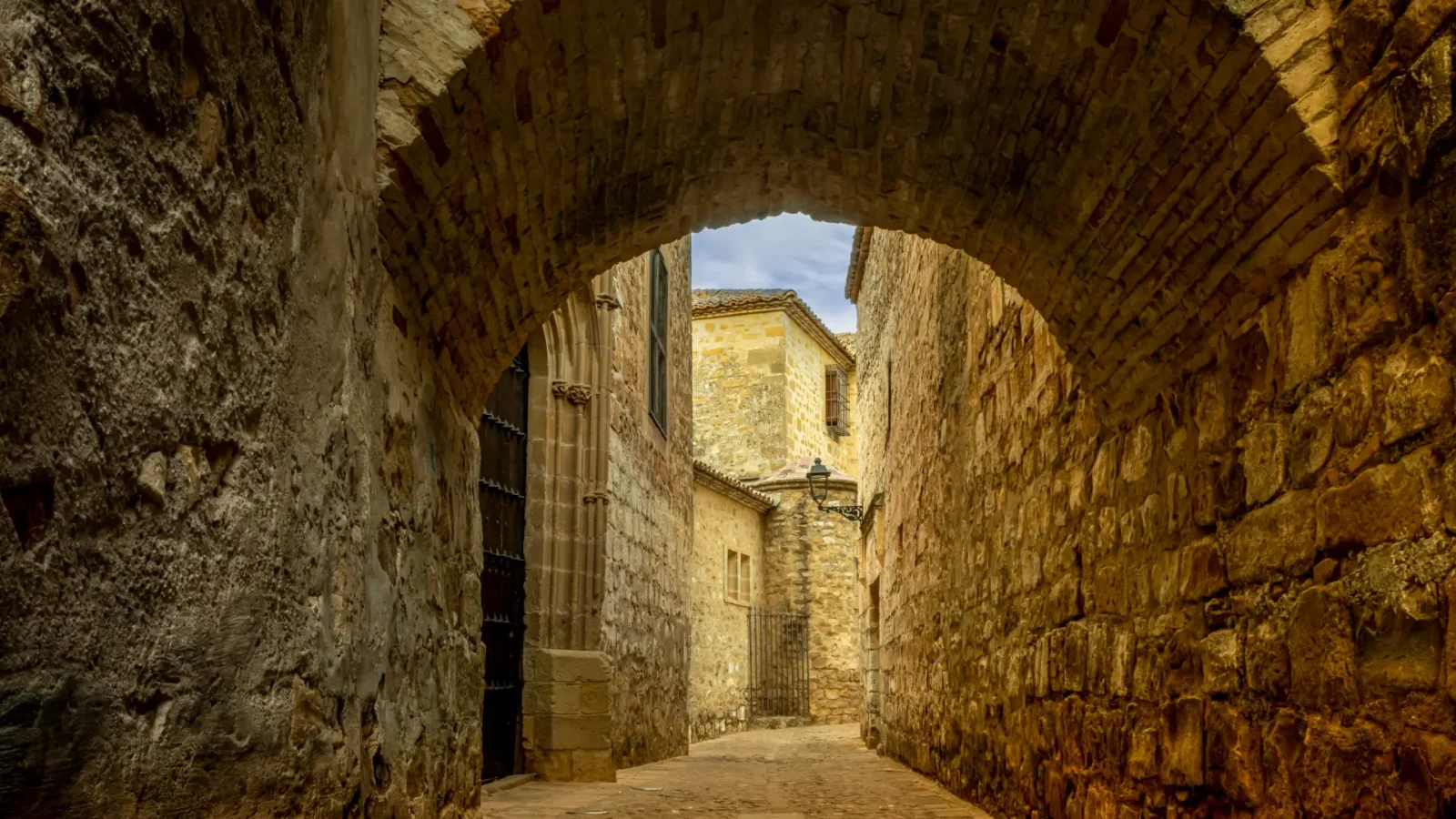
Stay the night and Baeza changes. Once the day-trippers head back to Úbeda, the golden squares fall quiet, the stone glows under the lamps, and the old town feels like it belongs to you. Here’s where we’d sleep to make the most of that evening — all in or beside the historic centre, all bookable online.
Hotel Cetina Palacio de los Salcedo
Sleep inside a 16th-century palace, once home to the Counts of Garcíez, right in the old-town core. Restored rooms sit around a grand arcaded courtyard where breakfast is served, and the cathedral is a two-minute walk. This is the characterful upper-end choice.
Check prices & availability for Hotel Cetina Palacio de los Salcedo on the accommodation's websitePuerta de la Luna
A four-star hotel in a restored old-town building, with a courtyard pool, cathedral views from some rooms, and the well-regarded Acebuche restaurant on site. A comfortable, full-service base a short walk from everything.
Check prices & availability for Puerta de la Luna on the accommodation's websiteHotel La Casona del Arco
A stylishly renovated old building in the historic centre, with a small pool and calm, comfortable rooms. Free public parking is a three-minute walk away, and the main sights are on the doorstep.
Check prices & availability for Hotel La Casona del Arco on the accommodation's websiteHotel Carmen Boutique
A small, quiet boutique stay with a warm welcome and a very good breakfast. Well placed for walking the old town, with free street parking nearby — a friendly mid-range pick that punches above its price.
Check prices & availability for Hotel Carmen Boutique on the accommodation's websiteHostal Aznaitín
A clean, modern hostal on the edge of the old town, with a pool and easy parking — a genuine bargain for the location. Rooms are simple and comfortable, and the centre is a 10-minute walk. The budget choice that doesn’t feel like one.
Check prices & availability for Hostal Aznaitín on the accommodation's websiteLa Casa del AOVE
A charming, olive-oil-themed rural house a few minutes’ walk from the centre, with a reading nook, a small terrace and thoughtful touches throughout. Free parking next door. Ideal if you’d rather have your own space than a hotel.
Check prices & availability for La Casa del AOVE on the accommodation's website
Region, Nearby and Routes
Part of Andalucía
Baeza is in Andalucía
Part of these routes
Baeza is one stop on our Renaissance and Olive Trail see the full route.
Nearby places
- ÚbedaA UNESCO Renaissance city of golden palaces and calm squares, set in Jaén’s endless sea of olive groves.
- CazorlaA white mountain town under a Moorish castle, and the gateway to Spain’s largest natural park.
- JaénA big-hearted olive-oil city with a Renaissance cathedral, Spain’s largest Arab baths and a castle above the groves.
- CórdobaA great caliphal capital on the Guadalquivir, wrapped around the world-famous Mezquita-Catedral and a maze of flower-filled patios.
- GranadaHome to the Alhambra and the Albaicín, Granada is Moorish Andalucía at its grandest — best seen early, late and at your own pace.
Frequently Asked Questions
Yes. Baeza is a UNESCO World Heritage town packed with Renaissance monuments in a small, walkable centre, and it draws far fewer crowds than Andalucía’s big cities. If you like history, calm and olive-country scenery, it’s well worth a stop — ideally overnight.
Baeza is known for its 16th-century Renaissance architecture, listed by UNESCO in 2003 together with neighbouring Úbeda. Highlights include the cathedral, the Palacio de Jabalquinto and the old university where the poet Antonio Machado taught. It sits in the heart of Jaén’s olive-oil country.
You can see the main monuments in an afternoon, as the old town is small. But staying overnight is far better: the squares empty in the evening, and you can see the cathedral and palaces in quiet morning light before day-trippers arrive.
es, and most people do. The two UNESCO Renaissance towns are only 9 km apart, about 15 minutes by car, and share a joint tourist pass. Many visitors base themselves in one and see the other as a half-day trip.
Spring and autumn are ideal — April, May, September and October are comfortable, roughly 18–26°C. Summers are very hot, with July and August highs often around 34–35°C. Most rain falls in late autumn and winter, so summer days are dry but fierce at midday.
For a special stay, the Hotel Cetina Palacio de los Salcedo puts you inside a 16th-century palace in the old-town core, while Puerta de la Luna is a comfortable four-star with a pool. For mid-range, Hotel La Casona del Arco and Hotel Carmen Boutique are well placed and welcoming. On a budget, Hostal Aznaitín and Hostal Poeta Machado are clean and central.
For a special dinner, Palacio de Gallego grills over olive wood in a palace garden, and Acebuche serves refined tasting menus. La Barbería and Mama Juana are excellent mid-range choices, while Café Bar Luis Juárez is the spot for a cheap, friendly tapas lunch. Look out for the local ochío flatbreads and virolo pastries.