
Granada: the Alhambra, and the City That Earns the Overnight
Granada sits at the foot of the Sierra Nevada, in eastern Andalucía. It is home to the Alhambra — the great Moorish palace and one of Spain’s most visited sights. This is no quiet village, and we won’t pretend it is. But time it well and Granada rewards you: an early Albaicín, free tapas with every drink, and warm, empty streets once the day-trippers have gone.

Why Visit Granada
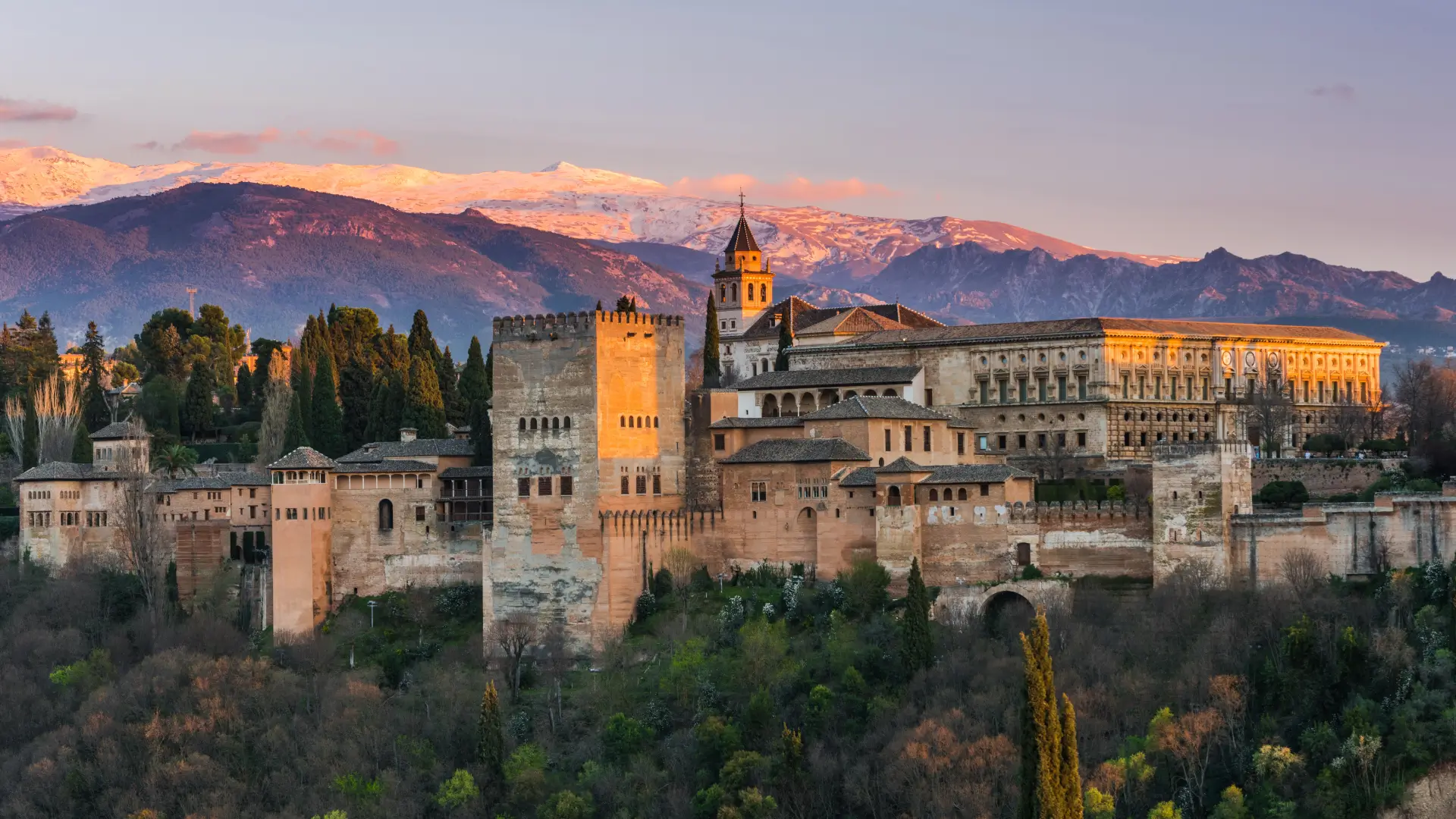
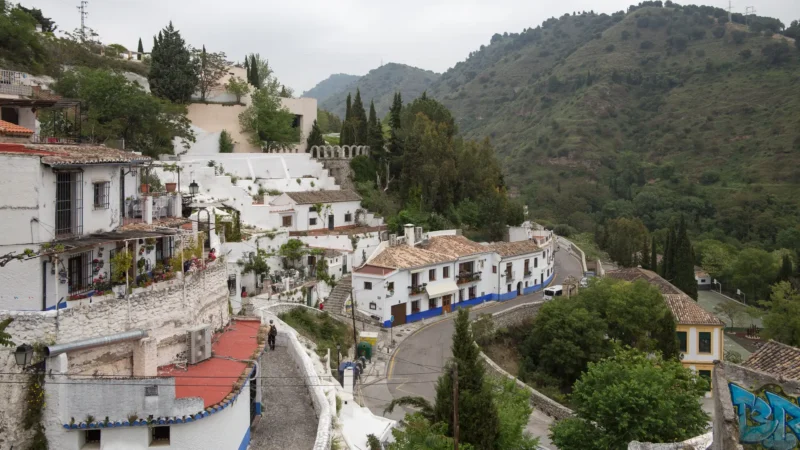
Granada is one of those cities that lives up to its billing. The Alhambra crowns the hill, glowing red at sunset against the snow of the Sierra Nevada. Below it, the old Moorish quarter of the Albaicín spills down in a maze of white houses and walled gardens. Cross the little Darro river and you reach Sacromonte, the cave district where flamenco still runs deep. It is beautiful, it is famous, and it is busy — all at once.
We don't send you here to avoid the crowds. We send you here to see the famous things well, and to find the quiet layer that most day-trippers miss. That layer is real. The Albaicín at eight in the morning is almost empty. The miradores glow at first light. And the tapas bars — where a small plate of food still arrives free with your drink — are a living local tradition, not a show put on for visitors.
Who Granada is for
Granada suits the traveller who wants history and atmosphere in equal measure, and who is happy to walk uphill for it. It rewards slow mornings, long evenings and good food. If you like a city with a strong sense of place, Moorish, Christian and Roma layers all stacked on one hillside, Granada delivers. It is also a natural base: the Sierra Nevada and the white villages of the Alpujarras sit close by for those who stay longer.
Day trip or overnight?
You can see Granada in a long day, and many people do — a rushed Alhambra visit, a look at the cathedral, a coach back to the coast. But that means leaving just as the city turns good. The Alhambra's timed tickets, the free-tapas evenings and the dawn-quiet Albaicín all reward an overnight, so our honest advice is to stay. A perfect short visit looks like this: arrive by mid-afternoon and settle in; walk up to the Mirador de San Nicolás for the sunset view of the Alhambra; drift down into the Albaicín or Realejo for a tapas crawl, one free plate per drink. Next morning, be at the Alhambra for your booked Nasrid slot before the day is warm, then wander the Generalife gardens with room to breathe. That visit simply doesn't fit in a day — which is exactly the point.
What to See in Granada

The Alhambra
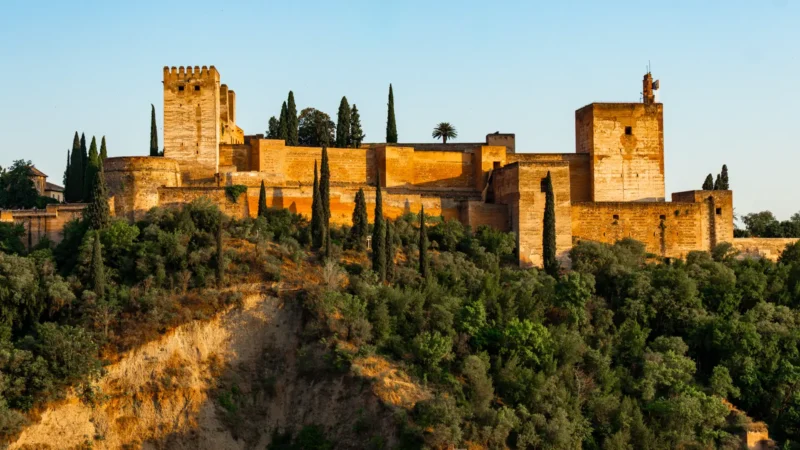
The Alhambra is the reason most people come, and it earns it. This hilltop complex of Moorish palaces, gardens and a fortress was the seat of the last Muslim kingdom in Spain. The highlight is the Nasrid Palaces, a series of carved and tiled rooms of astonishing delicacy. Beside them stand the Generalife summer gardens and the older Alcazaba fortress, whose tower gives the best view over the city. Booking is the key thing to understand — see Practical Info, because the ticket structure trips people up more than the visit itself.
The Generalife
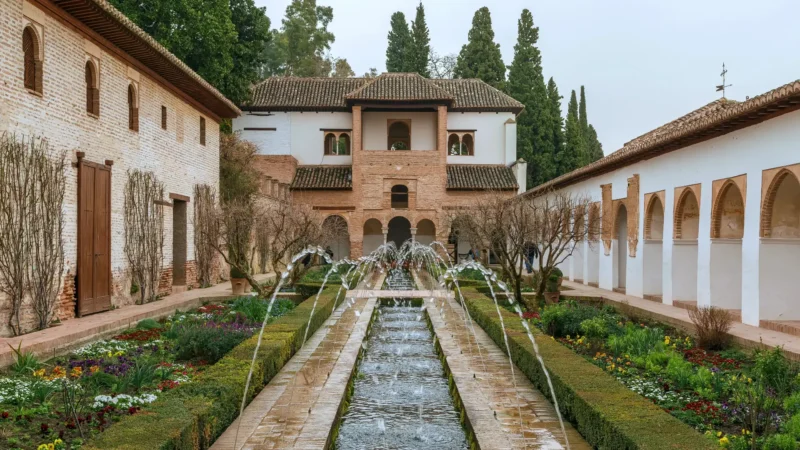
The Generalife was the sultans’ summer estate, a short walk across the hillside from the main palaces. Its gardens are the draw: clipped hedges, long water channels, roses and courtyards built for shade and the sound of running water. On a standard full Alhambra ticket the Generalife is included, and unlike the Nasrid Palaces it has no separate timed slot — you can wander it at your own pace within opening hours.
The Albaicín
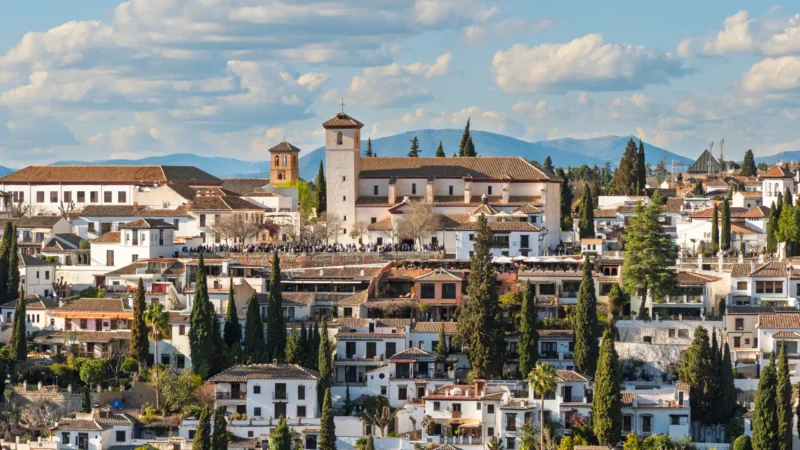
The Albaicín is the old Moorish quarter, a UNESCO-listed tangle of steep white lanes climbing the hill opposite the Alhambra. Behind many walls hide cármenes — private houses with enclosed gardens. Near the top, the Mirador de San Nicolás gives the classic view across to the Alhambra and the Sierra Nevada. It’s stunning and no secret, so it packs out at sunset; come at first light for the same view in near silence, or after dark when the palace is floodlit. Go early to have the alleys to yourself.
Granada Cathedral
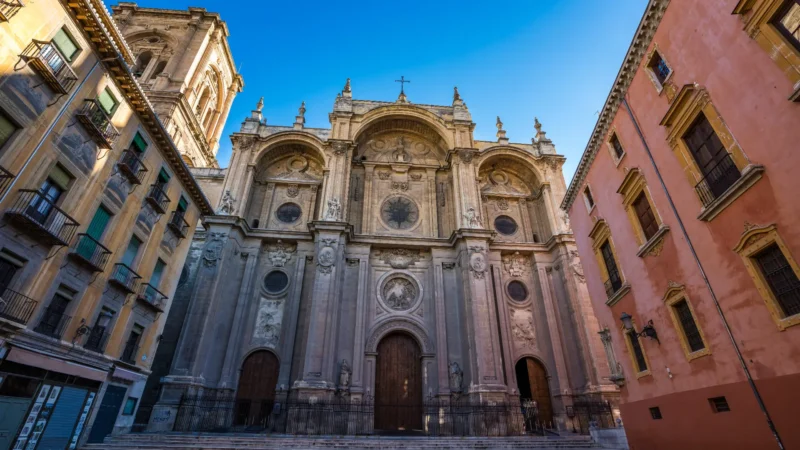
Granada’s cathedral was the first Renaissance cathedral built in Spain, raised on the site of the city’s main mosque. Inside, a huge circular main chapel rises under tall stained-glass windows — a bold, bright design unusual for a Spanish cathedral. It sits right in the centre, wrapped by the old silk-market lanes, and takes about an hour to see.
Capilla Real (Royal Chapel)
Next to the cathedral, but a separate building with its own ticket, the Royal Chapel holds the tombs of the Catholic Monarchs, Isabella and Ferdinand, the rulers who completed the Christian reconquest of Spain in 1492. Their carved marble tombs, and those of their daughter and her husband, sit in a richly decorated Gothic space. It is small, moving and quick to visit; many people pair it with the cathedral next door.
Sacromonte
Sacromonte is the old cave district on the hillside beyond the Albaicín, long home to Granada’s Roma community and the birthplace of the local zambra style of flamenco. Many of its whitewashed cave houses are still lived in; some are now small flamenco venues or a cave museum. The lanes here are quieter than the Albaicín and give another angle on the Alhambra across the valley.
Monasterio de la Cartuja
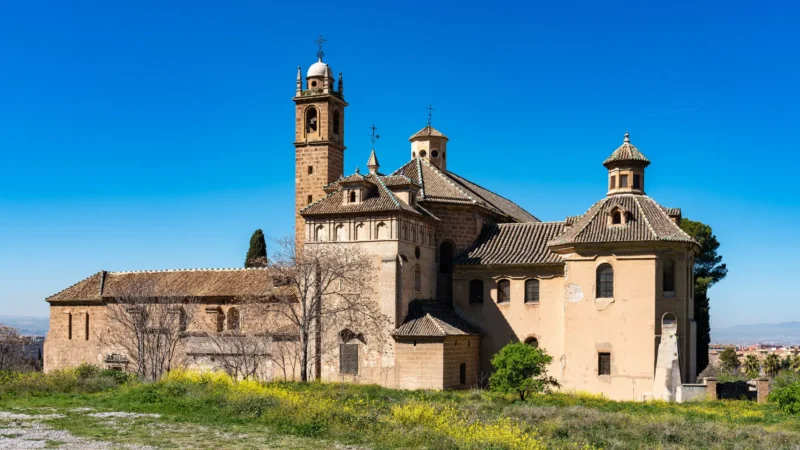
A little outside the centre, the Carthusian Monastery is one of Spain’s great Baroque interiors. Its church and sacristy drip with carved stucco, coloured marble and gilt — the sacristy is often called one of the most beautiful in the world. It sees far fewer visitors than the Alhambra, so it makes a calm, rewarding stop for anyone staying more than a day.

What to Do in Granada
Granada is a city to experience on foot and after dark, not just to look at. These are the things worth doing, and how to do them yourself.
Affiliate note: some links below are affiliate links. If you book through them, we may earn a small commission at no extra cost to you. It helps us keep GoHiddenSpain running and growing. We only suggest services we'd feel comfortable recommending.
Walk the Albaicín early, and climb to the miradores
The single best free thing to do in Granada is walk the Albaicín before the day warms up. Start low near the Darro river and climb slowly through the white lanes to the Mirador de San Nicolás for the Alhambra view. Come at dawn and you often have it almost to yourself; by late morning it is busy. For an even quieter panorama, keep climbing to the Mirador de San Miguel Alto, higher up and rarely crowded. Wear real shoes — the streets are steep and cobbled.
Go tapas-hopping — the free-tapas tradition
Granada is one of the few Spanish cities where a free tapa still comes with every drink you order. Walk into a local bar, ask for a beer, wine or vermouth, and a plate of food arrives with it, unasked and uncharged. Order a second drink and you get a different plate. The bar chooses what you get. It is a real local custom and a cheap, sociable way to eat your way across the city — best in the Realejo quarter and along Calle Navas and Calle Elvira, and weakest in the tourist strips right by the Alhambra gates, where the tradition has quietly faded. Try the local specialities as you go: habas con jamón (broad beans with ham), remojón granadino (an orange, cod and olive salad) and, for the brave, tortilla del Sacromonte.
See flamenco in a Sacromonte cave
Granada is one of the cradles of flamenco, and Sacromonte’s cave venues stage the local zambra — a raw, close-up style rooted in old Roma wedding dances. Watching it a few feet away in a low cave, with the Alhambra lit up across the valley, is a genuine Granada experience rather than a generic show. You can simply turn up at a zambra, but seats are limited and the best-known caves fill fast, so many visitors book ahead.
Take an Arab bath (hammam)
Granada’s Moorish-style hammams — warm, cool and hot pools in candlelit, tiled rooms, with an optional massage — are a relaxing way to end a day of hills and heat. They are a discretionary treat rather than a sight, and they book up, so reserve a slot in advance.
Book an Arab bath / hammam session on TiqetsConsider a day up into the Sierra Nevada or Alpujarras
If you stay longer, the mountains are close. The Sierra Nevada rises straight behind the city — a ski resort in winter, cool hiking in summer. On its southern flank, the white villages of the Alpujarras (Pampaneira, Bubión, Capileira) keep an older, slower Andalucía, famous for cured ham and hand-woven rugs. Both are best reached by car and make an easy full-day loop from a Granada base.
Book it on the official site,
Prefer to go with a guide for any of this? Ask where you’re staying, or at the municipal tourist office on Plaza del Carmen (in the town hall) — they’ll know what’s running, in which language, and can point you to something that fits.
Seasonal Events and Festivals
Semana Santa (Holy Week, spring)Granada’s Easter processions wind through the old streets. The most striking is the Cristo de los Gitanos, which climbs into Sacromonte by bonfire light on the Wednesday. Dates follow the church calendar. Check with the tourist office.
Corpus Christi & the Feria (late May / early June)Granada’s biggest party. A week of fairground casetas, parades, bulls and dancing, tied to the moveable feast of Corpus Christi. Check with the tourist office for dates.
Festival Internacional de Música y Danza (mid-June into July)classical music and dance staged inside the Alhambra and the Generalife gardens, most nights across several weeks. Tickets and info on the official site: Granada Festival
Getting There and Around
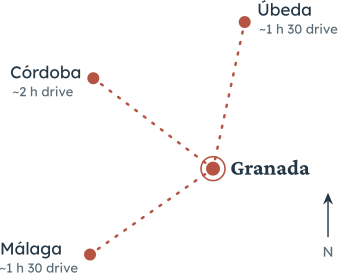
Granada sits in eastern Andalucía, ringed by motorways (the A-44 north–south, the A-92 east–west) with the Sierra Nevada rising right behind the city.
From Madridabout 3 hours 20 minutes by high-speed AVE train (Granada has had AVE service since 2019), or roughly 4 hours 15 minutes by car via the A-44.
From Córdobaabout 2 hours by car, or around 1 hour 35 minutes on the direct high-speed train.
From Sevillaabout 2 hours 30 minutes by car; trains run via a change at Antequera.
From Málagaabout 1 hour 30 minutes by car via the A-92, or roughly 1 hour 20 minutes on the direct Avant train.
Nearest airportsGranada’s own airport (Federico García Lorca, GRX) is small, about 17 km west of the city, with a limited set of routes. Málaga (AGP), about 130 km and 1 hour 30 minutes away by car, is the main international gateway with far more flights.
By traindirect services reach Granada from Madrid, Córdoba, Málaga, Sevilla, Almería and Barcelona (some via a change at Antequera). The station is a short ride from the centre.
Getting around
Inside Granada you don’t need a car, and you won’t want one. The centre, the Albaicín and Sacromonte are walkable — but the Albaicín is steep, with narrow lanes cars struggle to enter. Note too that Granada has a low-emission zone (ZBE), active since October 2025, covering parts of the centre and old quarters; older or non-labelled vehicles risk a fine, so check your rental’s eco-label and leave the car outside the zone. Small red minibuses (the C-line routes) climb up to the Albaicín, Sacromonte and the Alhambra for those who’d rather not walk the hills. Park in one of the car parks outside the old centre. For the wider trip, you do want a car: the Sierra Nevada, the Alpujarras and the road on to Córdoba or the Jaén cluster all open up once you’re driving.
Looking for a ready-made plan? See our Andalucía road trips.
Practical Info
- Booking the Alhambra — read this firstThe Alhambra is Spain’s most visited monument and sells out daily. The standard full ticket covers the Alcazaba, the Generalife gardens and the Nasrid Palaces. The catch: the Nasrid Palaces have their own fixed, timed entry slot, printed on your ticket. Miss that half-hour window and you are refused entry — no refund, no change. The Nasrid slots are the part that sells out first. Book weeks ahead (months for summer), only through the official site, and plan your day around the Nasrid time you’re given.
- Buy from the official site onlyBook at the official Patronato de la Alhambra ticket site Many look-alike sites resell the same tickets at a markup. The official site works in English and takes international cards.
- Other tickets are separateThe Cathedral and the Royal Chapel each have their own ticket, as does the Cartuja monastery Click the links to purchase online. A combined ticket covers several of the city’s Christian monuments at a discount — worth it if you plan to see more than one. Hours change with the season, so check the official pages for current times and prices rather than trusting a fixed figure.
- Best time of dayStart the Alhambra early or take a late-afternoon Nasrid slot; walk the Albaicín at dawn; save the miradores for first light or after dark.
- Getting aroundThe old quarters are steep and cobbled — bring proper shoes. Use the C-line minibuses for the hills, and mind the low-emission zone if you’re driving.
- ClimateGranada sits at about 680 m, so it runs hotter in summer and colder in winter than the coast. July and August highs sit around 34–35°C. The most comfortable months are April, May, June, September and October, roughly 18–26°C by day. Winters are cold, with January highs around 12°C, chilly nights and snow on the Sierra Nevada behind the city. Rain is heaviest in late autumn and winter; summers are dry.
Where to Eat in Granada
You’ll eat and drink well in Granada, at every budget — and often for less than you’d expect, thanks to the free-tapas custom that still runs strong here. The city’s food mixes hearty mountain cooking with Moorish sweetness: acorn-fed ham from Trevélez, habas con jamón in spring, remojón salad in summer, and the famous piononos pastries from nearby Santa Fe. Two simple rules make it easy: for tapas, follow the locals into the Realejo, Calle Navas and the Albaicín edges rather than the terraces right by the Alhambra; for a special dinner, book ahead. The picks below run from a free-tapas crawl to a proper tasting menu.
Bodegas Castañeda
A Granada institution near Plaza Nueva, all barrels, hanging hams and marble counters. Order a drink and a generous free tapa lands with it; the vermouth on tap is a local rite of passage. Busy and bustling — go with the flow.
Bar Ávila Tapas
A tiny, wildly popular spot in the Realejo where the free tapas are the whole point — roast pork, croquettes, fried fish. It fills the moment it opens, so arrive early and expect to stand. This is the free-tapas tradition at its liveliest.
Up in the Albaicín, a proper neighbourhood bar where a drink still buys you a real plate of food — fried fish, meatballs, potatoes. Warm, local and a world away from the tourist strips, it’s a fine place to break an Albaicín walk.
A snug wine tavern near the Realejo with one of Andalucía’s deepest wine lists and thoughtful tapas to match — cold-sliced veal, local chorizo, good cheese. Small and popular, so book. A place to linger over a glass rather than rush.
El Rincón de Julio
Just off Calle Navas, a small, family-run kitchen turning out slow-cooked classics: rabo de toro (oxtail), homemade croquettes, tender ham hock. Reserve ahead — it’s tiny and beloved, and the cooking punches well above the price.
A carmen restaurant tucked into the Albaicín, with a garden terrace and a full-on view of the floodlit Alhambra at night. The food is honest regional cooking; the setting is the reason to book. One of the loveliest tables in the city for a special evening.
For a proper occasion, Cala is Granada’s Michelin-starred table — a tight, intimate room and a tasting menu that reworks local Andalusian produce with a light French hand. Book well ahead; it’s small and in demand. Honest framing: this is a destination meal, not a casual drop-in.
Where to Stay in Granada
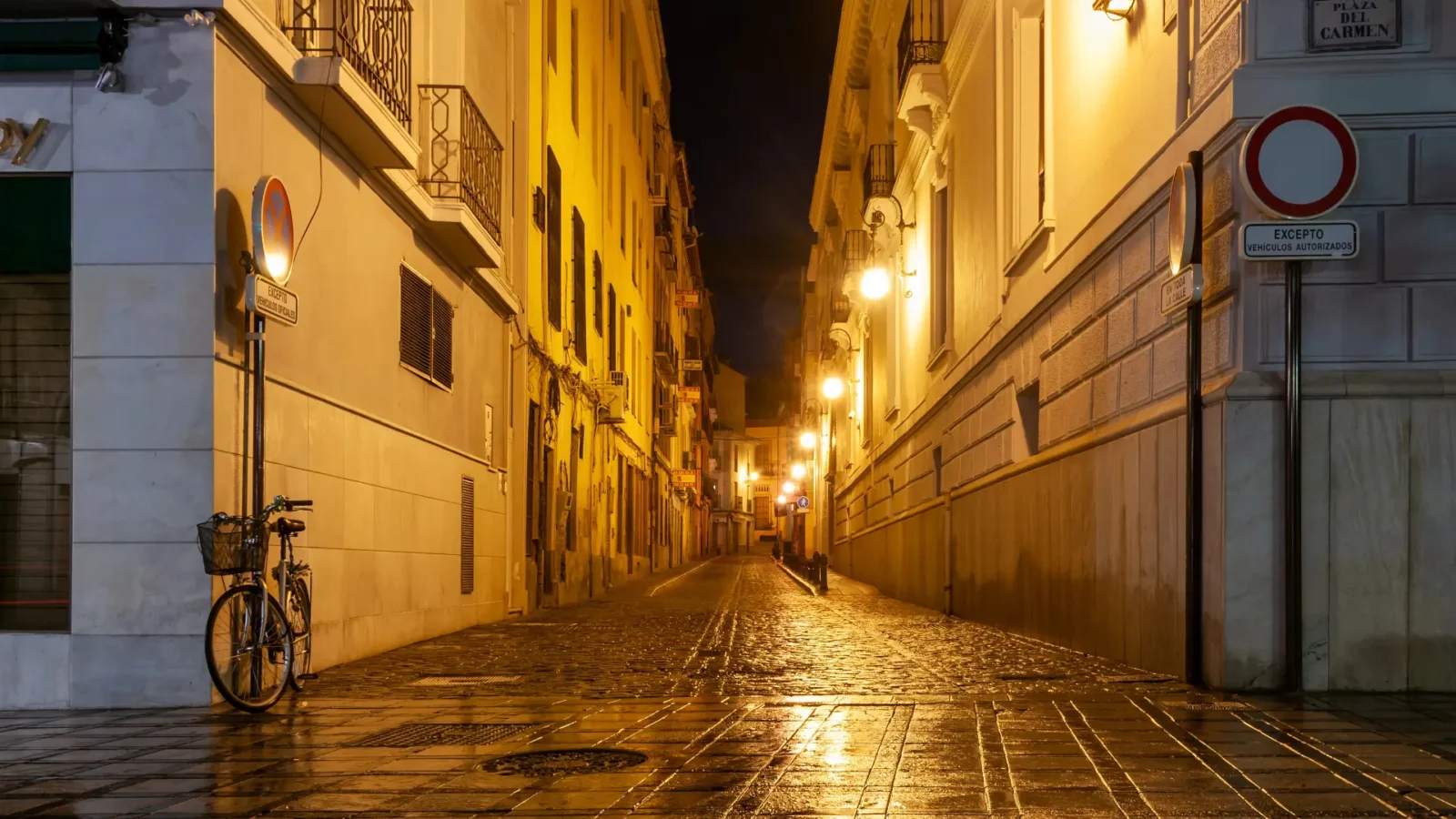
Picture the evening you’d have if you stayed: the day-trippers gone, the Albaicín lanes lamplit and quiet, the Alhambra glowing gold across the valley, and a slow tapas crawl with a free plate at every stop. That evening is the whole reason to sleep in Granada rather than rush back to the coast — and it’s easiest from a base in the old quarters. Here’s where we’d stay, across every budget.
Hostal Moni Albayzín
A simple, friendly guesthouse high in the Albaicín, with basic rooms and — the real prize — quiet terraces looking over the rooftops to the Alhambra. Steep to reach and short on frills, but unbeatable value for the location and the view.
Check prices & availability for Hostal Moni Albayzín on the accommodation's websitePensión Boutique Gomérez-Gallegos
A small, tidy guesthouse right at the foot of the Alhambra hill, minutes from Plaza Nueva. Rooms are simple and spotless, some with a glimpse of the Alhambra, and everything worth seeing is a short walk away. A well-run budget base in a prime spot.
Check prices & availability for Pensión Boutique Gomérez-Gallegos on the accommodation's websiteHotel Casa Morisca
A romantic small hotel in a restored 15th-century house at the edge of the Albaicín, built around a columned courtyard with a pool. Old timbers, tiled floors, and a genuine sense of the city’s Moorish past — with the centre a short walk downhill. Warm, characterful and quiet.
Check prices & availability for Hotel Casa Morisca on the accommodation's websiteCasa 1800 Granada
A charming boutique hotel in an old mansion on a narrow lane below the Albaicín, known for its warm service and a complimentary afternoon tea. Some rooms look out to the Alhambra. Central, comfortable and full of period character — an easy, well-liked choice.
Check prices & availability for Casa 1800 Granada on the accommodation's websiteApartamentos Carmen de Ramilla
Self-catering apartments in an Albaicín carmen, with a walled rose garden, a small pool and Alhambra views — a “live like a local” base a short stroll from the sights. Ideal for families or anyone wanting space, a kitchen and a private courtyard to read in at day’s end.
Check prices & availability for Apartamentos Carmen de Ramilla on the accommodation's websiteParador de Granada
The Parador sits inside the Alhambra complex — the most privileged address in the city, in a converted 15th-century convent among the gardens. It is expensive and books out far ahead, but no other hotel lets you stroll the Alhambra grounds after the gates close and before they open. For a once-in-a-trip splurge, it’s unmatched.
Check prices & availability for Parador de Granada on the accommodation's website
Region, Nearby and Routes
Granada is the eastern anchor of Moorish Andalucía, and it pairs naturally with our other stops. To the west lies Córdoba, the caliphal counterpart with its great Mosque-Cathedral — about two hours by car, or a fast train away, and an easy add-on to a southern-Spain trip. To the north sits the Renaissance-and-olive country of the Jaén province: the golden twin towns of Úbeda and Baeza, the provincial capital Jaén, and the mountain gateway of Cazorla, all part of our Renaissance & Olive Trail. Granada makes a comfortable southern gateway to, or send-off from, that trail.
Part of Andalucía
Granada is in Andalucía
Nearby places
- CórdobaA great caliphal capital on the Guadalquivir, wrapped around the world-famous Mezquita-Catedral and a maze of flower-filled patios.
- ÚbedaA UNESCO Renaissance city of golden palaces and calm squares, set in Jaén’s endless sea of olive groves.
- BaezaA small, golden-stone Renaissance town in Jaén’s olive country — UNESCO-listed and far quieter than most.
- CazorlaA white mountain town under a Moorish castle, and the gateway to Spain’s largest natural park.
Frequently Asked Questions
Yes. Granada is home to the Alhambra, one of the finest Moorish palaces in the world, and to the atmospheric Albaicín and Sacromonte quarters. It is busy and famous, but time your visit well — early mornings, evenings, an overnight stay — and it is one of the most rewarding cities in Spain.
Yes, and it matters more here than almost anywhere. The Alhambra is Spain’s most visited monument and sells out daily. The Nasrid Palaces have a fixed, timed entry slot that sells out first, and if you miss your slot you are refused entry with no refund. Book weeks ahead — months for summer — through the official Patronato site only.
One full day and one night is the sensible minimum: an early Alhambra, the cathedral and Royal Chapel, a sunset mirador and a tapas evening. Two nights let you add the Albaicín and Sacromonte at a slower pace, the Cartuja monastery, or a day up in the Sierra Nevada.
You can, but we don’t recommend it. A day trip means a rushed Alhambra and a coach out before the city’s best hours. The timed tickets, the free-tapas evenings and the dawn-quiet Albaicín all reward staying the night, so an overnight is the honest call.
Spring and autumn are ideal — April, May, June, September and October run roughly 18–26°C by day. July and August are hot, around 34–35°C, and winters are cold (January highs near 12°C) with snow on the Sierra Nevada behind the city. Rain falls mostly in late autumn and winter.
Yes. The Sierra Nevada rises right behind the city, and the white villages of the Alpujarras are an easy day’s loop by car. Córdoba and the Jaén towns of Úbeda and Baeza are also within reach for a longer stay.
Stay in or near the old quarters. For character on a budget, Hostal Moni Albayzín and Pensión Boutique Gomérez-Gallegos put you in the Albaicín and by the Alhambra hill. For mid-range charm, Hotel Casa Morisca and Casa 1800 Granada sit in restored old houses. For a splurge, the Parador de Granada is inside the Alhambra grounds; Apartamentos Carmen de Ramilla offers a garden carmen with Alhambra views.
For the free-tapas tradition, head to Bodegas Castañeda, Bar Ávila Tapas or Casa Torcuato in the Albaicín. For sit-down meals, Taberna La Tana is a fine wine-and-tapas stop and El Rincón de Julio does great traditional dishes like oxtail. For a view, book Mirador de Morayma in the Albaicín; for a special occasion, the Michelin-starred Restaurante Cala.