
The Renaissance and Olive Trail: Jaén Road Trip
Five unhurried days from Jaén to Cazorla — golden Renaissance towns, a sea of olive groves, and the edge of Spain’s wildest mountains.
- StartJaén
- EndCazorla
- Duration5 days, 5 nights
- Total distanceAbout 200 km of driving (Jaén to Cazorla), plus the optional airport legs
- NightsJaén ×1 · Úbeda ×2 · Cazorla ×2
- Best forCar or motorbike
- DifficultyEasy — good main roads, with one short mountain climb near Cazorla
- Best seasonSpring and autumn (April–June, September–October)
- PaceRelaxed
- Flying in?Granada (GRX) is the closest airport, about an hour from Jaén; Málaga (AGP) is the bigger hub, about 2.5 hours. If you fly, allow an extra arrival and departure day on top of the five above.
Why this Route?
Most people driving through Andalucía never turn off for Jaén. They keep to the coast, or tick off Granada and move on. That is exactly why this corner stays quiet. It also pays back the traveller who does turn off. In five relaxed days you walk two of the finest Renaissance towns in Spain. You drive through the biggest olive-growing country on earth. And you end among the peaks of the largest protected wilderness in the country. The crowds are somewhere else. The roads are mostly yours.
Three landscapes in five days
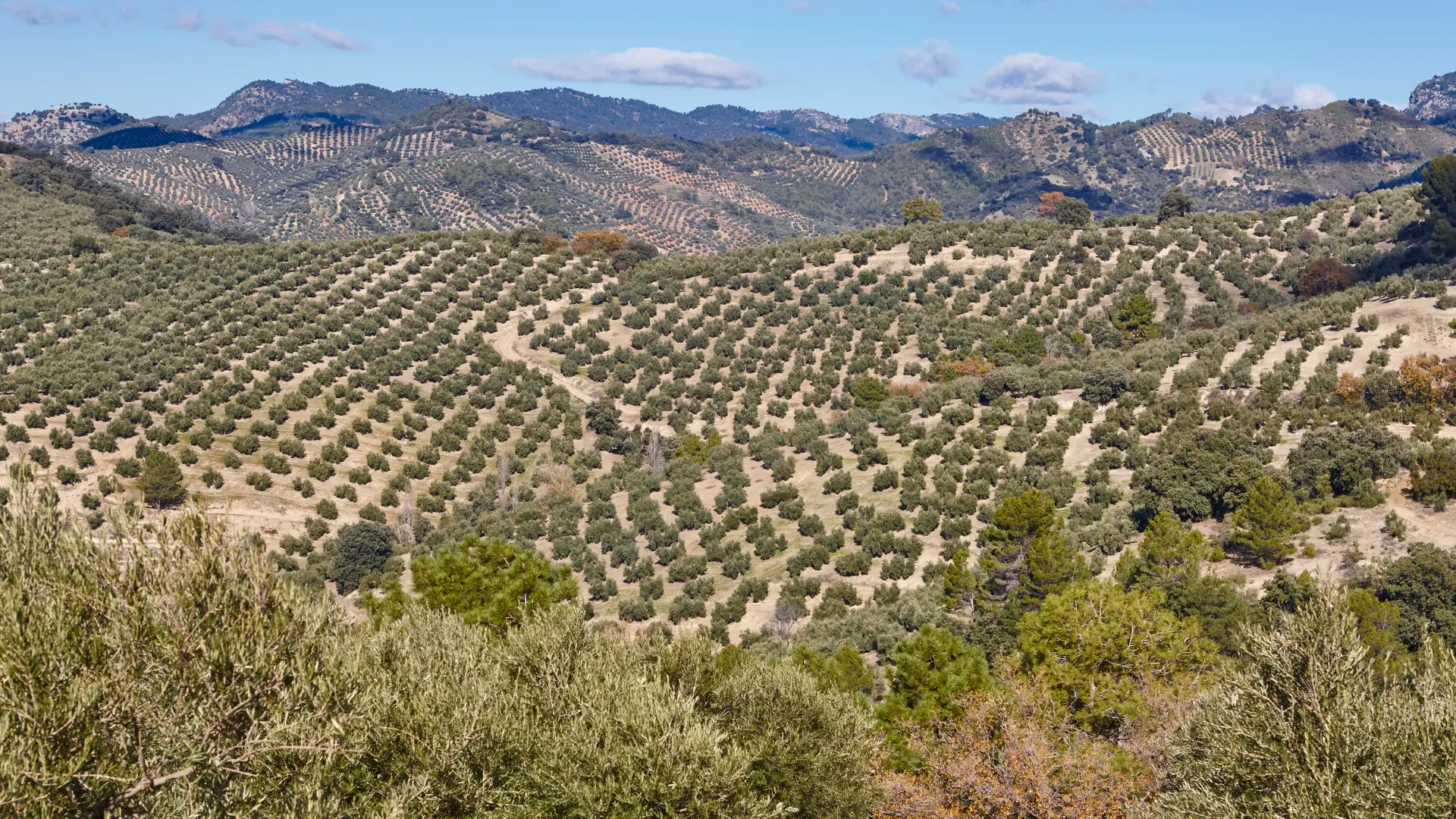
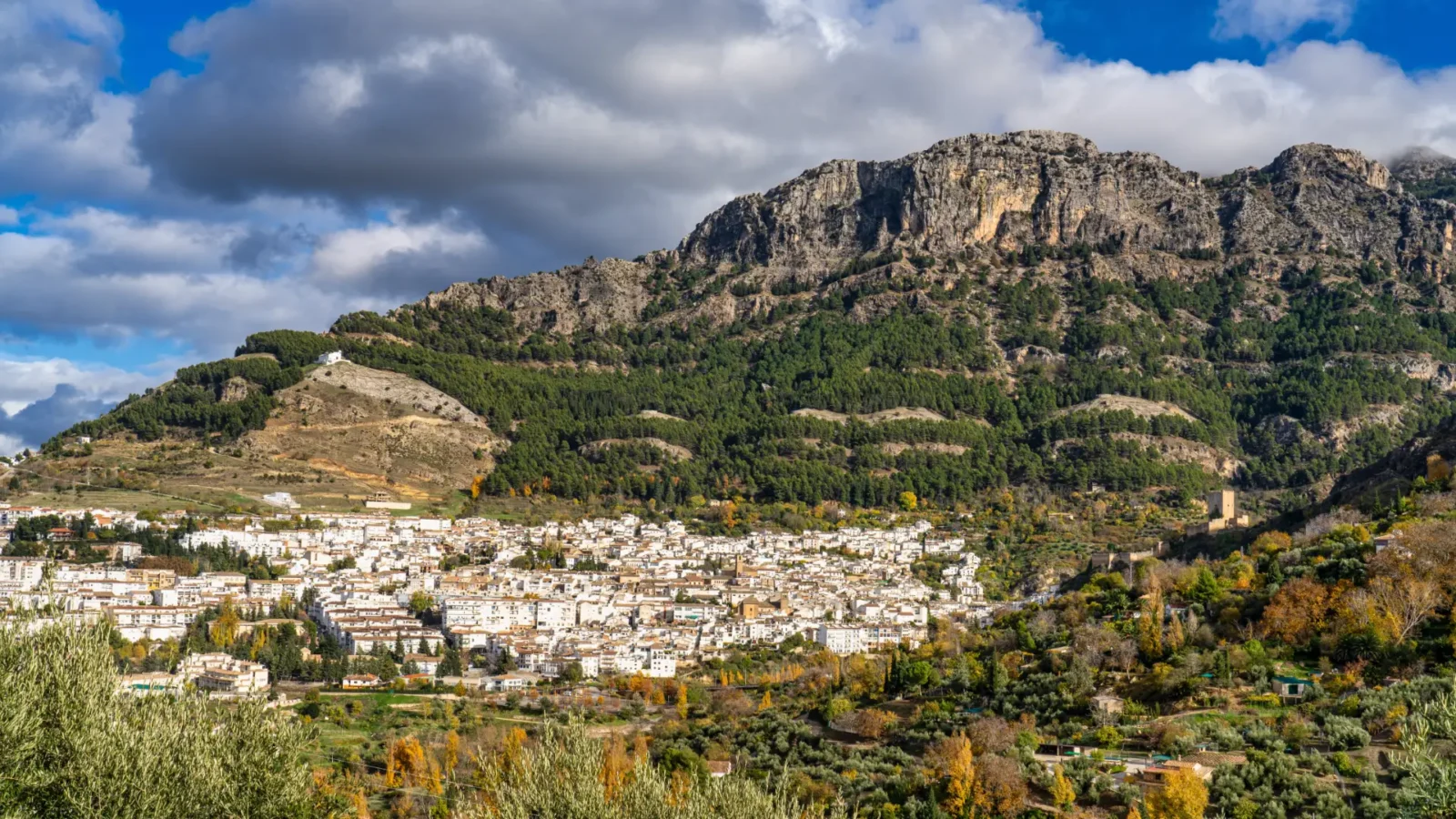
Few short trips change their scenery so completely. Úbeda and Baeza are honey-coloured towns of palaces, courtyards and churches. They were built in one burst of 16th-century wealth, and listed together by UNESCO. Around them rolls the olive country. Jaén makes more olive oil than anywhere on earth, and the groves run to the horizon. Then the land climbs into the Sierra de Cazorla, all pine forest, deep gorges and vultures overhead. You start in a working city, slow down in golden stone, and finish where the tarmac meets the mountains. The thread that ties it together is olive oil. You drive through it, and you taste it at every meal.
A calm plan, not a checklist
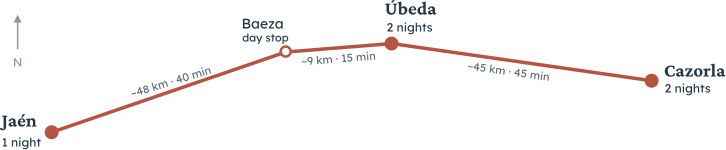
This is a relaxed trip, built around two-night stops rather than a new hotel every evening. You sleep once in Jaén, twice in Úbeda with Baeza a few minutes away, and twice in Cazorla so the mountains get a full day. The driving is light. The longest leg between towns is about 45 minutes, so your time goes on the places, not the road. It reads the same whether you fly into Granada and pick up a car or a motorbike, or drive down from home and start straight in Jaén. Either way, the trip is the drive from Jaén to Cazorla; how you reach the start is up to you.
Getting there and around
The trip begins in Jaén, the provincial capital, tucked under a castle hill in western Jaén. There are two ways to arrive: fly into a nearby airport and hire a car or motorbike, or drive down from home and start straight in Jaén.
Flying inJaén has no airport of its own — part of why the province stays so quiet — so you fly into one of these and drive in:
- Granada (GRX)The closest airport, about 1 hour / ~100 km to Jaén on the A-44. Our suggested gateway. The airport sits west of Granada city, so allow the full hour.
- Málaga (AGP)About 2.5 hours / ~250 km to Jaén, but by far the busiest airport for flights from the UK, Ireland and northern Europe — often the cheapest and easiest to reach.
- Madrid, by trainDirect Renfe intercity services run to Linares-Baeza station in about 3 hours; it is roughly 20 minutes from Baeza, so you can hire a car there and start in the Renaissance towns.
Flying adds an arrival day at the start and a departure day at the end, on top of the five trip days.
If your flight lands lateIf your flight lands in the evening, don’t start the drive tired. Sleep near the airport that first night and set off fresh in the morning — and check your hire desk’s hours, as not all run late off-season. See our Practical Info page for driving-in-Spain details.
Self-drive — car or motorbikeHire at your arrival airport and keep the vehicle until you fly home. Most people take a car; a touring motorbike suits this route well — good main roads, olive-hill curves, and one mountain climb at the end.
If you’re arriving in your own car or motorbikeMany travellers drive down from home, already have a place in Spain, or roll off the end of another trip. You don’t need the flights or the hire desk — the trip simply begins in Jaén, and you skip the fly-in detail above. Use the link to plot the drive from wherever you actually start.
See the drive to the startOpen in Google Maps. This shows the route to Jaén. Set your starting point in the “from” field — your home if you’re driving down, or your arrival airport if you’re flying in — then send it to your phone or car if you want it ready for the road.
The Itinerary
Five days, three bases, moving gently north-east: a night in Jaén, two in Úbeda with Baeza next door, and two in Cazorla at the mountain’s edge. The plan below is the backbone, not the full list: each day links to that town’s own guide, so head there for every sight, restaurant and guided tour once you know which day is yours.
Day 1 — Jaén
The driveIf you’re flying in, Granada (GRX) to Jaén is about 100 km, roughly an hour on the A-44. Arriving in your own car, or from an earlier stop, you just reach Jaén when you do — see Getting there for the ways in.
The shape of the dayAn easy arrival afternoon: settle in, see the cathedral and the Arab baths before they close, and time the castle for sunset.
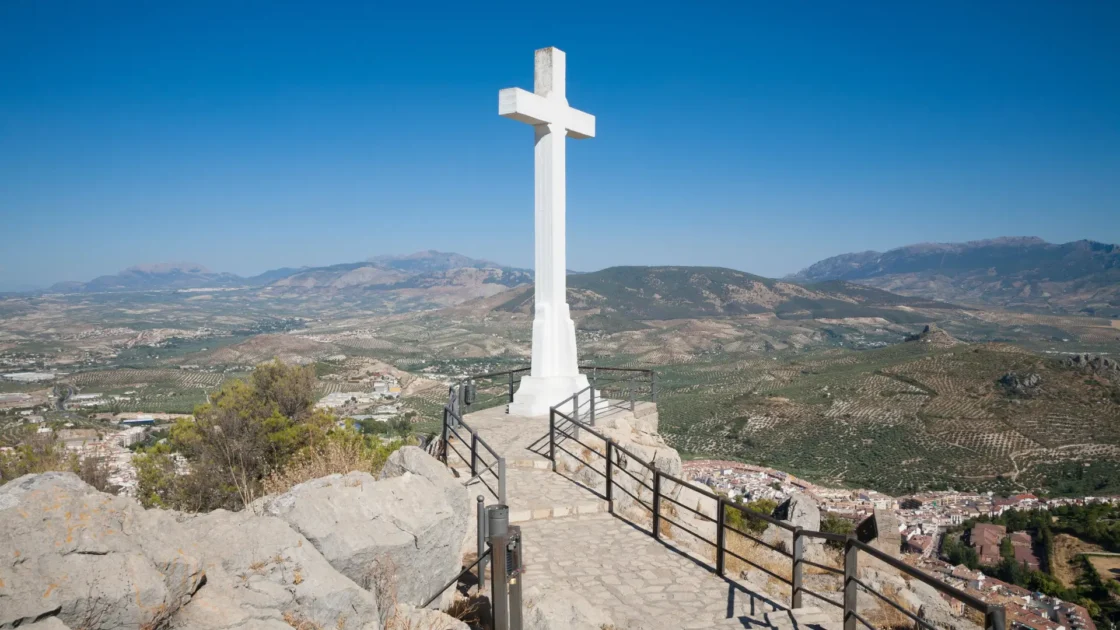
Jaén is the honest, unpolished start to the trail — a working city of 110,000 that most travellers drive straight past. Allow a relaxed afternoon. Start at the cathedral, the third and largest of Andrés de Vandelvira’s great Renaissance churches after Úbeda and Baeza. Step into the sacristy, a room considered his masterpiece. Then drop below the Palacio de Villardompardo to the Baños Árabes, the largest Arab baths open to visitors in Spain. Eleventh-century vaults sit lit by star-shaped skylights (bring photo ID; entry is free). As the light softens, drive up to the Castillo de Santa Catalina. Walk out to the Cruz de Santa Catalina, the stone cross on the spur beyond it, where the whole olive plain turns gold at sunset. For deeper detail, see the Jaén guide.
Want a different pace?Pick at most one — it’s still one day, your base unchanged. Trade the sights for a slow tapas evening: in Jaén a drink usually comes with a free tapa, so a crawl through the bars near the Plaza de la Constitución is a cheap, easy way to spend the night. Or add a short wander through the Barrio de la Magdalena, the old Moorish and Jewish quarter, on the way up to the cathedral.
Where to eatJaén’s dish is pipirrana jiennense, a cold salad of tomato, pepper, tuna and egg bound with garlic and the local oil; look too for ochíos, the paprika-and-aniseed bread rolls.
- Lunch tip (if you arrive in time)Panaceite Centro (€€ · Tapas / bistro · Jaén) has a covered terrace looking at the cathedral, a menu served all day, and a free tapa with your drink; it’s open daily, an easy first meal.
- Dinner tipRestaurante Herencia (€€ · Modern Andalusian · Jaén) opens the meal with a shot of the region’s own extra-virgin oil and cooks careful, creative plates (closed Tuesday, check ahead). If it’s shut, Restaurante Sabor Flamenco (€€ · Traditional · Jaén) near the cathedral does honest local cooking — the pipirrana, lomo de orza and morcilla with pine nuts (closed Wednesday).
Where you sleep tonightTonight you sleep in Jaén, up at the castle if you can, your base for one night. See where we’d stay.
Day 2 — Baeza and Úbeda
The driveJaén to Baeza is about 48 km, roughly 40 minutes on the A-316 through open olive country. Baeza to Úbeda is only 9 km, about 15 minutes — the two towns sit side by side.
The shape of the dayTwo UNESCO towns at a gentle pace: a morning in Baeza, the short hop to Úbeda, and Úbeda’s great square in the evening light.
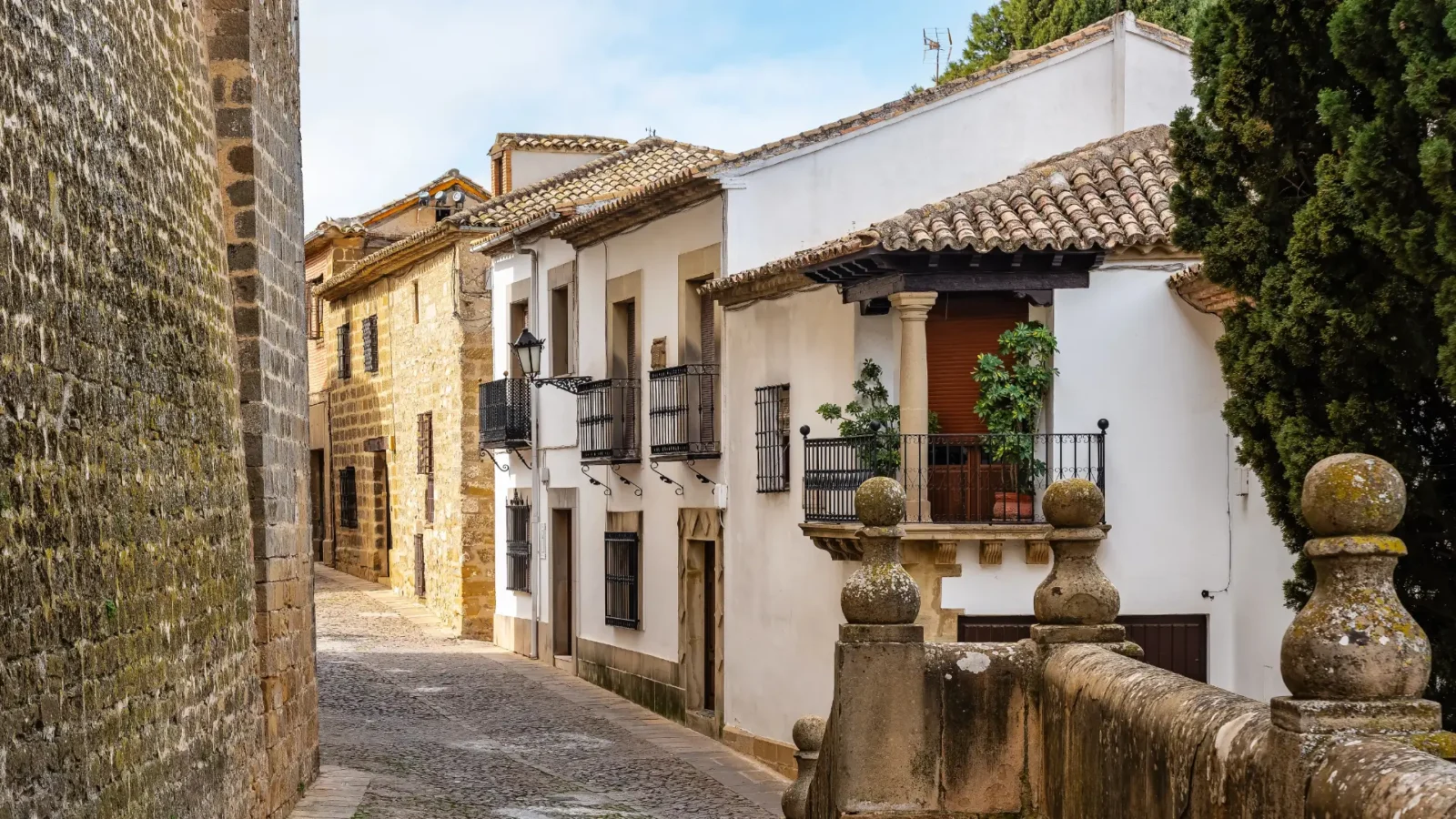
Today is the heart of the trip: two UNESCO towns in one relaxed day. Start in Baeza, the quieter, more compact twin. Walk the Plaza del Pópulo, where a Roman lion fountain stands among plateresque stone. Then head up to the Plaza de Santa María for the cathedral and its fountain-arch, best before the midday groups arrive. Look into the Palacio de Jabalquinto, its front carved with stone diamond-points. Finish along the Paseo de las Murallas, where the old walls drop away to a sea of olive trees, the Sierra de Cazorla on the skyline. See the Baeza guide for the full walk.
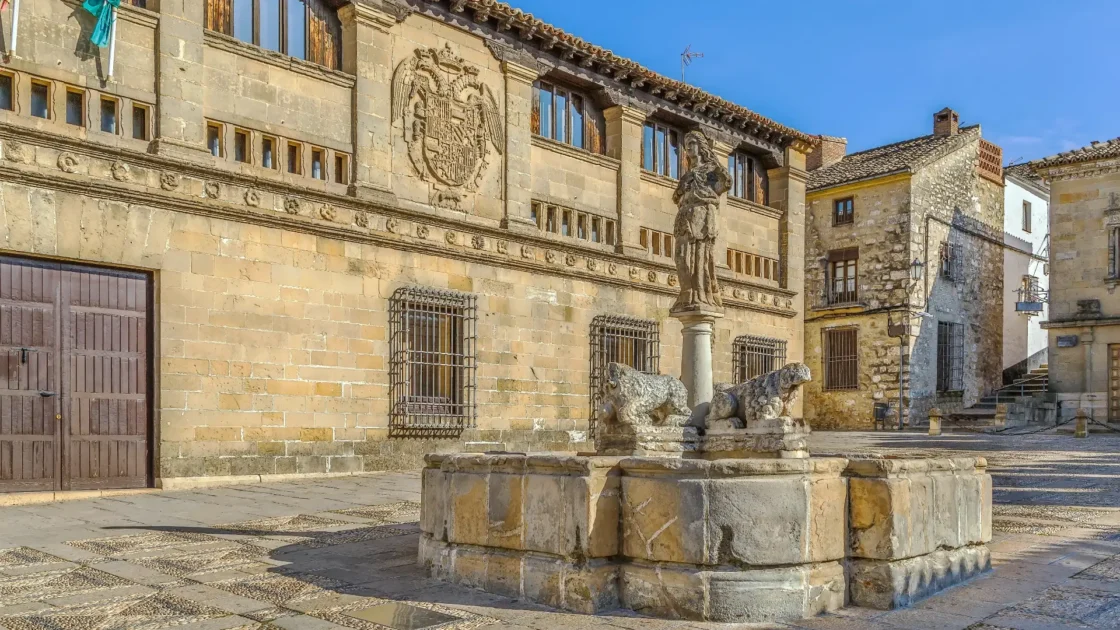
Then hop the 9 km to Úbeda, the larger, grander twin, and settle in for two nights. Save the museums and interiors for tomorrow. Tonight is just for arriving: walk out to the Plaza Vázquez de Molina in the low evening light, the near-perfect Renaissance square ringed by Vandelvira’s palaces, and take it in with a drink as the day-trippers leave. This is the hour Úbeda is at its best. You’ll come back in the morning to go inside. Full detail on the Úbeda guide.
Want a different pace?Pick at most one. Slow it down in Baeza: linger over a long lunch and the Machado trail, the spots tied to the poet who taught here, then reach Úbeda in time for the evening square. Or arrive early: skip straight to Úbeda after Baeza’s main sights and spend the late afternoon wandering its quiet lanes before dinner.
Where to eatBaeza’s bites are ochíos flatbreads and virolos, a sweet local pastry.
- Lunch tipCafé Bar Luis Juárez (€ · Tapas bar · Baeza)is a warm, busy spot famous for oversized calamares, open daily. Úbeda’s dishes lean on the oil — lomo de orza (pork loin cured in olive oil) and andrajos, a rustic stew.
- Dinner tipAntique Restaurante y Tapas (€€ · Traditional · Úbeda) on Calle Real cooks careful Andalusian plates — the partridge pâté and game stand out — and is open daily; book if you can, it fills fast.
Where you sleep tonightTonight you sleep in Úbeda, in the old town near Plaza Vázquez de Molina, your base for two nights. See where we’d stay.
Day 3 — Úbeda
The driveNo driving today — Úbeda is yours to explore, with Baeza 15 minutes back if you want a second look.
The shape of the dayA slow, on-foot day in one town: the quieter corners of Úbeda in the morning, and olive oil, the trail’s signature, in the afternoon.
A full, unhurried day in Úbeda, this time going inside. Start back at the Plaza Vázquez de Molina while it’s quiet, and step into the Sacra Capilla del Salvador, the private chapel at the head of the square. Its carved golden façade and gilded altarpiece are the town’s masterpiece, and the reason Úbeda earned its UNESCO listing. From there it’s a short walk to the other faces of the old town: the Sinagoga del Agua, a medieval synagogue found by chance during building work, with a spring-fed ritual bath below street level, and Calle Valencia in the potters’ quarter, where workshops still throw and fire the town’s deep-green glazed ware.
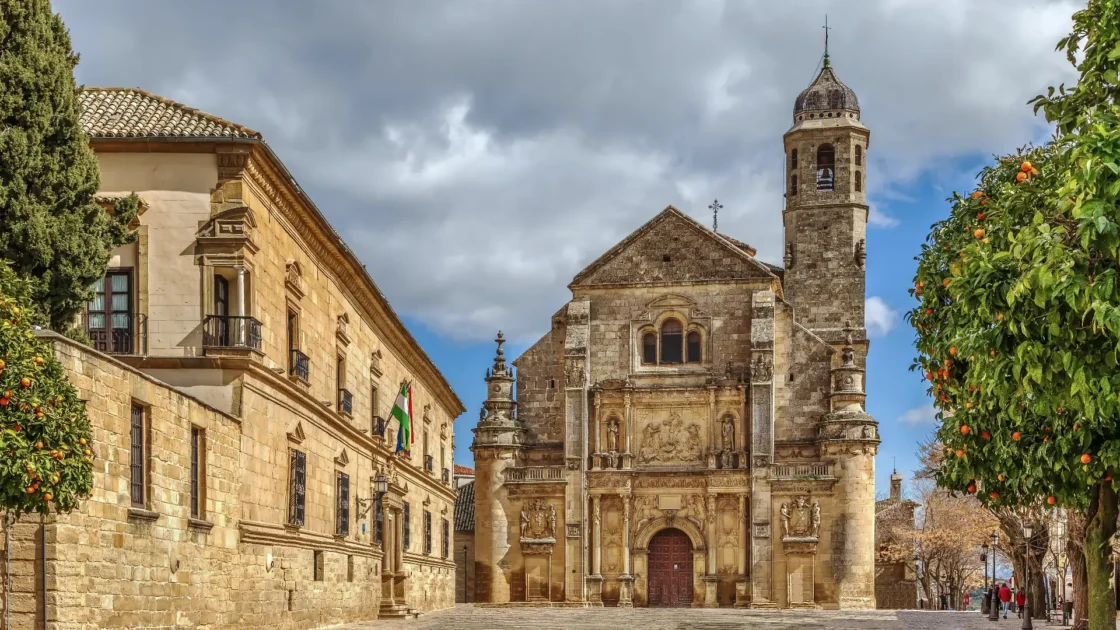
The afternoon belongs to the trail’s signature theme, olive oil. Jaén makes more of it than anywhere on earth, and a guided visit to a working mill (almazara) turns the endless sea of olive trees into something you can taste. You learn to tell a rough oil from a fine one, and why this is called liquid gold. It’s the single best way to read the landscape you’ve been driving through. See the Úbeda guide for the chapel, the synagogue and the specific mills and tastings.
Want a different pace?Pick at most one. Go deeper into the craft: spend the afternoon in the potters’ quarter instead of the mill, watching the wheels turn and buying a piece of the green-glazed ware straight from the workshop. Or slow right down: skip the mill, take a long lunch on a shaded terrace on Plaza Vázquez de Molina, and save your feet for the mountains tomorrow.
Where to eat
- Lunch tipTaberna Misa de 12 (€ · Tapas bar · Úbeda) overlooks Plaza Primero de Mayo and is known for lomo de orza and cured meats (seats are limited, come early).
- Dinner tipAsador de Santiago (€€€ · Asador · Úbeda) is the town’s serious grill, strong on well-sourced meat and fish with a good-value gastronomy menu (closed Sunday evening; Antique from yesterday is the daily fallback).
Where you sleep tonightA second night in Úbeda keeps the pace gentle before the mountains. See where we’d stay.
Day 4 — Cazorla
The driveÚbeda to Cazorla is about 45 km, roughly 45 minutes, east across the last of the olive country. The final stretch climbs and winds as the land rises — an easy, pretty drive; take it in daylight.
The shape of the dayOlive plain to mountain: an easy morning drive, then an afternoon climbing Cazorla’s steep white lanes to the castle and the old square.
Cazorla is where the trip stops being about towns and turns to mountains. The white houses climb a steep hillside beneath the Castillo de la Yedra, the dark Moorish-and-Gothic castle that holds the Alto Guadalquivir folk museum. The climb up is short, and the view over the town and the olive country is the best in Cazorla. Down in the old heart, the roofless Ruinas de Santa María frame the sky. It is a 16th-century church very likely by Vandelvira, which ties Cazorla back to Úbeda and Baeza, with the hidden Cerezuelo river running in a vault beneath the square. Settle into the rhythm of the Plaza de Santa María and the oval Plaza de la Corredera as the evening fills the bars. See the Cazorla guide.
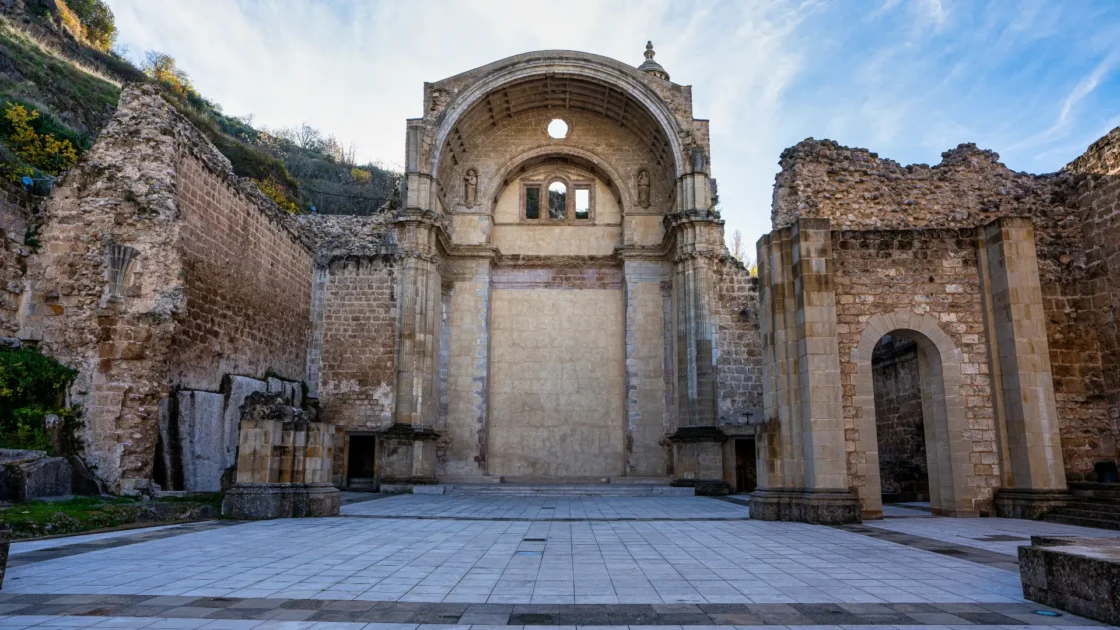
Want a different pace?Pick at most one. Add the castle spur: just outside town, La Iruela’s tiny castle sits on a sheer rock spire, a short climb for a big view. Or take the evening slow on the Plaza de Santa María, where the hidden river runs under the paving and the castle lights up above.
Where to eatThis is honest mountain cooking — game, river trout and the region’s own oil; look for rin-ran (a cold mash of potato, dried pepper, cod and olives) and andrajos with hare or partridge.
- Lunch tipTaberna Quinito (€ · Tapas bar · Cazorla) on Plaza de Santa María serves deer and honest mountain plates (closed Monday).
- Dinner tipMesón Asador Leandro (€€ · Asador · Cazorla) is a Michelin-Guide grill strong on well-sourced meat and mountain trout, with a lighter modern touch (closed Monday). If it’s shut, Mesón Don Chema (€€ · Traditional game · Cazorla) does venison and wild boar the old way (closed Thursday).
Where you sleep tonightTonight you sleep in Cazorla, in the old town, your base for two nights. See where we’d stay.
Day 5 — Cazorla and the Sierra
The driveNo driving between towns today — the day is spent up in the park, then back to Cazorla for the night.
The shape of the dayA full day in the wild: an early start up the mountain road, a gorge walk or the drive to the river’s source, and back to town by evening.
This is the day the whole trip has been building to: the Sierra de Cazorla, Segura y Las Villas. It is the largest protected natural area in Spain and a UNESCO Biosphere Reserve. Drive up early, while the air is cool and the griffon vultures are already circling. The classic short walk is the Cerrada del Utrero, an easy loop of under two kilometres through a limestone gorge past the Cascada de Linarejos. With more time, follow the valley road (the A-319) to the Torre del Vinagre visitor centre. From there carry on toward the source of the Guadalquivir, the modest spring that becomes the river of Córdoba and Seville. Red and fallow deer, ibex on the crags and vultures overhead are all easy to see. See the Cazorla guide for routes and the visitor centre.
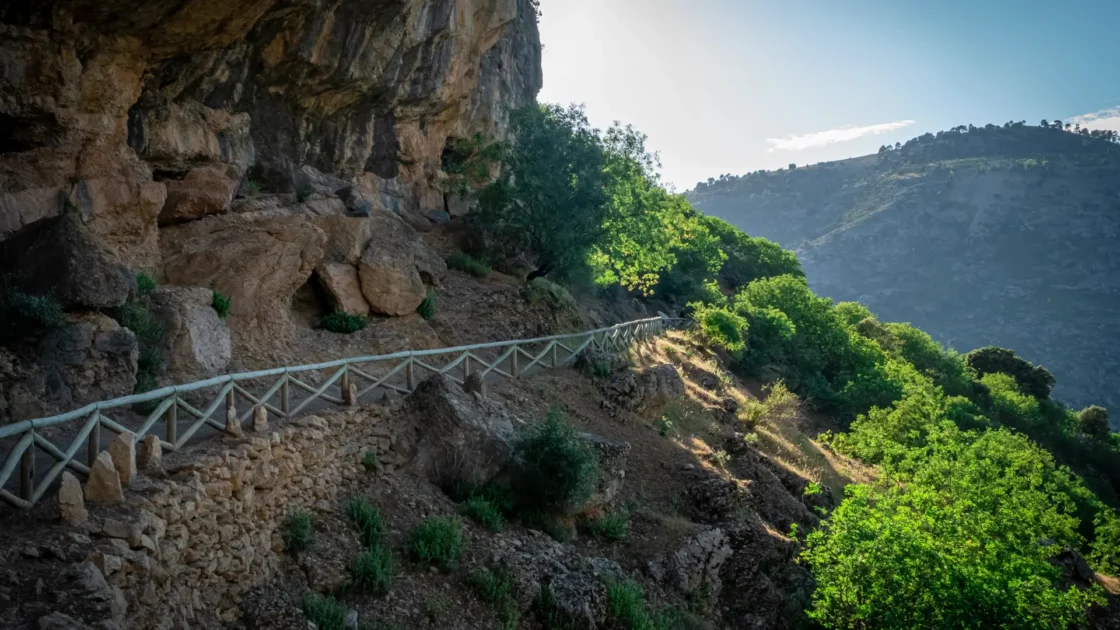
Want a different pace?Pick at most one — the calm version of the day. Swap the long park drive for the short one: just the Cerrada del Utrero loop and the Linarejos waterfall, then back for a slow afternoon in the old town and its miradors, like the Balcón del Pintor Zabaleta. Or, for the active swap, take on the Río Borosa, one of Spain’s finest river walks, up through the Cerrada de Elías on walkways and rock-cut tunnels — turn back whenever you like; the full route is a long day.
Where to eatPack a picnic for the park — services thin out fast once you’re up the mountain road, and a lunch by the young Guadalquivir beats driving back down. Back in town for your last dinner, return to one of Cazorla’s mountain kitchens (see Day 4), or for a special final night:
- Dinner tipRestaurante Alfonso X el Sabio (€€ · Creative · Cazorla). Tasting menus built around the local olive oil and careful, creative plating. The place for a special dinner in Cazorla.
Where you sleep tonightA last night in Cazorla before you turn for home or drive on. See where we’d stay.
Practical Info
- Roads and tollsThe whole trip is on toll-free roads — the A-44 (Granada–Jaén) and A-316 (Jaén–Baeza–Úbeda) are good dual carriageways. The one demanding stretch is the climb from Cazorla town up into the park: a narrow, winding mountain road, fine in a normal car but best driven slowly and in daylight.
- Low-emission zones (ZBE)Only Jaén city is large enough to fall under Spain’s ZBE law; Úbeda, Baeza and Cazorla are well under the threshold and have none. In Jaén, park in a public garage in the lower town and walk up. A foreign-plated car can’t get a Spanish DGT emissions sticker, so a garage keeps it simple; an electric or hybrid with a 0/ECO label has no restrictions anywhere on this route.
- Fuel and chargingFill up (or charge) in the towns — Jaén, Úbeda and Cazorla — not on the mountain roads. Fast chargers are common along the A-44 and around the bigger towns, but thin inside the Sierra de Cazorla; if you’re driving an EV, top up in Úbeda or Cazorla before heading up the park roads and plan the high stretches with a charging app.
- ParkingThe old centres of Úbeda and Baeza are tight and partly pedestrian — park at the edge and walk in. Cazorla is steep; use the car parks lower down and climb on foot.
- Timing and siestaJaén province is one of the hottest parts of Spain in high summer, so spring and autumn are far kinder for walking the towns and the mountains. Many sights and smaller restaurants close in the early afternoon and several monuments close on Mondays — plan the big cathedral or castle visits for the morning, and check the day’s closing before you count on it.
- Mountain roadThe Puerto de las Palomas pass and the deeper park roads can be affected by weather in winter; check conditions locally before heading high out of season.
- Sturdy shoesPack them for the steep, cobbled climbs in Cazorla and the park’s gorge walks.
- LayersBring extr clothing for the Sierra de Cazorla — it sits high and runs notably cooler than the olive plains below, even in warm months.
Where we’d Stay
Your five nights, in order — one strong pick per night, so you can just book and go. Flying in? On a late landing you can sleep near Granada airport (GRX) before Day 1, and near GRX again before an early flight home — optional nights outside the five below. For the full range of places to stay in each town, across every budget, see that town’s own guide, linked from its day in the itinerary above.
Hotel El Cruce Chauchina
A simple, well-run roadside hotel less than a minute from Granada airport, and the easy answer to a late-night landing. Free parking, an on-site restaurant and bar for a meal after you land, and staff used to booking early-morning taxis for the first flight out. Nothing fancy — but it lets you sleep the moment you arrive and start the drive north to Jaén fresh in the morning, instead of tackling an unfamiliar road in the dark.
Check prices & availability for Hotel El Cruce Chauchina on the accommodation's websiteParador de Jaén
Sleep inside the walls of the Santa Catalina castle, high above the city, in a 1960s parador built in bold defensive-castle style. Stone vaults, huge views over the olive plain, and the Cruz de Santa Catalina on your doorstep for sunset. The standout stay in Jaén.
Check prices & availability for Parador de Jaén on the accommodation's websiteHotel Ordóñez Sandoval
A rare and personal stay: a grand old family palace in the historic centre, still owned by the founding family and run with just a handful of rooms. It is full of antiques and quiet corners, and reads as a living home rather than a hotel. Warm hosting and a strong guest following.
Check prices & availability for Hotel Ordóñez Sandoval on the accommodation's websiteHotel Guadalquivir
A friendly, family-run hotel on a quiet side street just off Cazorla’s main square, a few minutes’ walk from its bars and restaurants. The owners know the mountains well and can arrange picnics or 4×4 trips into the park — a natural base for both the old town and the drive up into the Sierra.
Check prices & availability for Hotel Guadalquivir on the accommodation's website
For the full range of places to stay in each town — every budget — see the individual town guides linked through the itinerary above.
Frequently Asked Questions
Five days is the comfortable length for this Jaén road trip: a night in Jaén, two in Úbeda with Baeza alongside, and two in Cazorla for the natural park. You can shorten it to three or four at a faster pace, or add days to walk more in the Sierra de Cazorla.
For a Jaén road trip, Granada (GRX) is the closest airport, about an hour from Jaén on the A-44. Málaga (AGP) is bigger with more international flights, about 2.5 hours away. Madrid works well by train to Linares-Baeza, near Baeza.
Yes — a car (or a touring motorbike) is essential for this Jaén and Cazorla trip. The towns, the olive-mill country and the Sierra de Cazorla are barely linked by public transport, so hire a vehicle at your arrival airport and keep it for the whole trip.
The driving is easy for most of the Renaissance & Olive Trail — good, toll-free main roads between Jaén, Baeza and Úbeda, with light distances of under an hour between towns. The one exception is the winding climb from Cazorla up into the natural park, which is straightforward but best driven slowly and in daylight.
The best time to visit Jaén and the Sierra de Cazorla is spring (April–June) and autumn (September–October). Inland Jaén is among the hottest parts of Spain in midsummer, so those shoulder seasons are far more comfortable for walking the towns and the mountains.
No — the 5-day Renaissance & Olive Trail is built to be relaxed, with two-night stops in Úbeda and Cazorla and short drives between towns. You spend your time in the places rather than on the road, with an unhurried day for the park at the end.
Yes — the Renaissance & Olive Trail works just as well in your own car or motorbike; simply start in Jaén and skip the fly-in details. To extend it, drive on north over the Despeñaperros pass into La Mancha and pick up our In the Footsteps of Don Quixote route, or add nights in the Sierra de Cazorla.
Yes, with a little planning. Fast chargers are common along the A-44 and around Jaén, Úbeda and Baeza, but thinner inside the Sierra de Cazorla, so top up in Úbeda or Cazorla before the park roads. An EV’s 0/ECO label also lets it into Jaén city’s low-emission zone freely.
Where to Next
The trip ends in Cazorla, at the mountain’s edge, so from here you either turn for home or drive on.
- Flying home from GranadaCazorla back to Granada (GRX) is about 185 km, roughly 2 hours 15 minutes, west across the olive country and down the A-44.
- Flying home earlyIf you have an early flight, spend your last night near the airport instead of in Cazorla — the same five nights, just a different final base, so the trip stays five days.
- See the drive onwardFrom Cazorla you can go home, but you’re well placed to carry on. This starts from Cazorla. Set your destination in the “to” field — the fly-out airport, your next route’s first stop, or home — and send it to your phone if you want to navigate it. Open in Google Maps
- Extend the trip — on to La ManchaHeading north toward Madrid rather than the coast? The A-4 runs up from Jaén province through the dramatic Despeñaperros pass onto the plains of La Mancha.
- The land of the windmillsIn about 2 hours 15 from Úbeda you reach the Lagunas de Ruidera, the string of turquoise lakes at the southern end of our In the Footsteps of Don Quixote road trip. Run it and you climb from olive country into the land of windmills and Cervantes — a natural second week for a longer drive.
Essential Reading
Regions this trip crosses
Related routes
- In the Footsteps of Don Quixote: La Mancha Road Trip
Here you find optional road-trips to extend your route.