
Córdoba: the great mosque, and the quiet hours around it
Córdoba sits on the Guadalquivir in the heart of Andalucía, a small, walkable old town wrapped around one of the great buildings on earth — the Mezquita-Catedral, a mosque turned cathedral whose forest of striped arches stops people in their tracks. This is a famous city, and it gets busy. The reward here is timing: come early, stay late, and give it a slow day or two.
Why Visit Córdoba
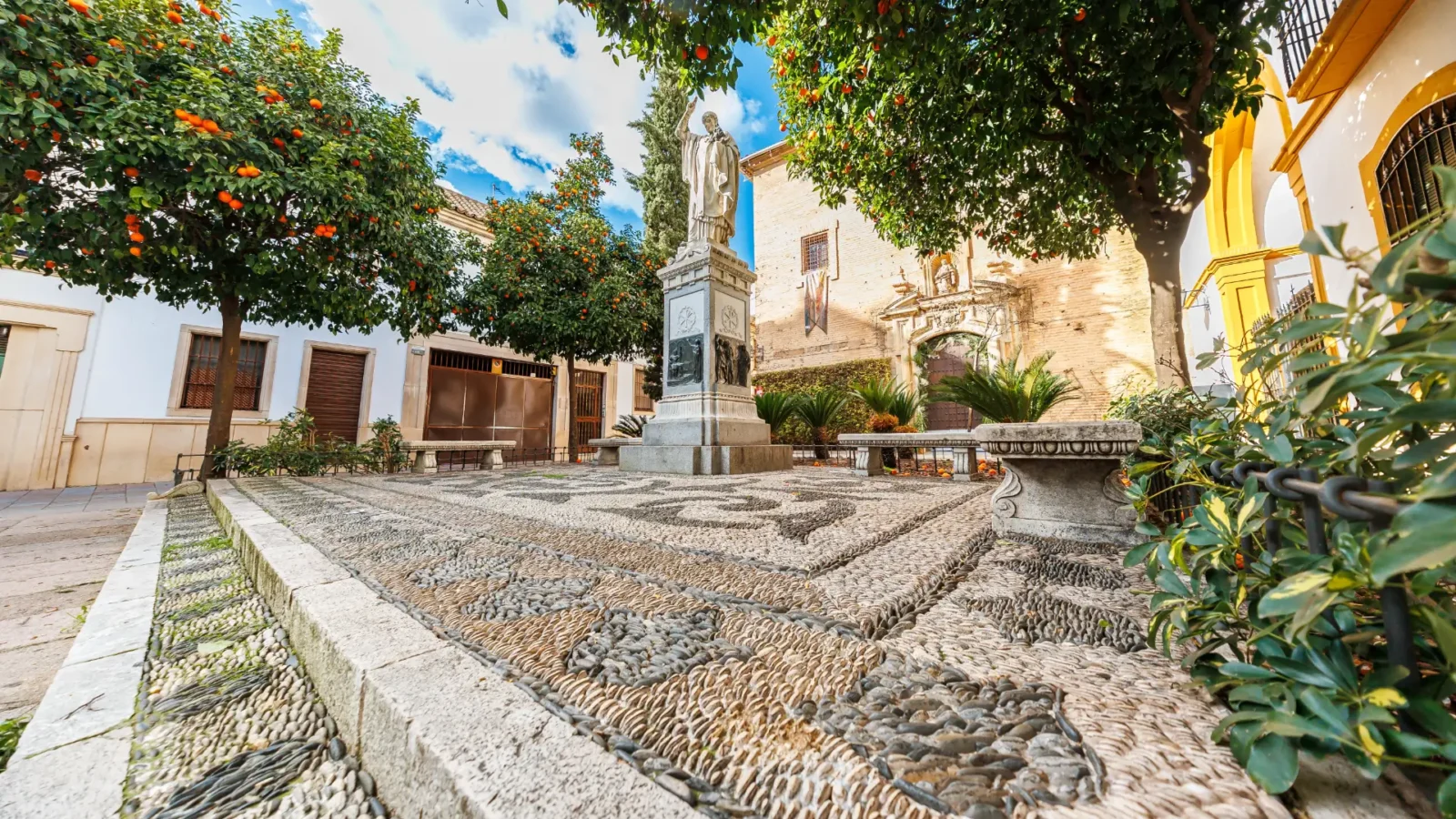
Córdoba wears its history on the surface. For three centuries it was the largest city in western Europe, the capital of a caliphate that led the medieval world in learning, medicine and poetry. That golden age left the Mezquita-Catedral, a single building where a vast Moorish prayer hall and a full Renaissance cathedral share one roof. Around it spreads the Judería, the old Jewish and Moorish quarter — a maze of white lanes, flower-filled patios and small squares that reward slow, aimless walking. Córdoba is dense, human-scale and deeply atmospheric, and it never asks you to walk far.
It is also, honestly, a busy place. The Mezquita drew more than two million visitors last year, and in spring and high summer the lanes around it fill fast. We don't pretend otherwise. The GoHiddenSpain way with a famous city is to manage the crowds, not avoid them: arrive at opening, use the empty first hour, retreat from the midday heat, and let the evening give the old town back to you. Handled like this, Córdoba is one of the most rewarding stops in Andalucía — not despite its fame, but because you learn to see it around the edges of it.
Who Córdoba is for
Córdoba is for the traveller who wants a headline sight without the full crush of Seville or Granada. It rewards a slow pace. Walk into the Mezquita as the doors open, wander the Judería before the tour groups fill it, sit by the Roman bridge at dusk. The city is compact enough to see the main sights in a full day, yet it holds enough quiet corners to fill two. It suits anyone who likes their history dense, their streets narrow, and their evenings warm and unhurried. It is a superb base too, with fast trains to Seville and Málaga and an easy morning run out to Medina Azahara.
Day trip or overnight?
You can do Córdoba as a day trip from Seville — the AVE train takes about 45 minutes, and thousands ride it in and out each day. It works, but it means arriving with the crowds and leaving before the best part. The magic here is early and late. Book the first entry to the Mezquita, walk the empty Judería while the shops are still shut, then break for a long lunch out of the heat. In the afternoon, cross the Roman bridge and rest by the river; climb the Calahorra tower for the view back over the old town. As the day-trippers drift to the station, the whitewashed lanes soften and empty and the Mezquita lights up above the water. That evening is the reward a day trip never sees — so our honest advice is to stay the night.
What to See in Córdoba

Mezquita-Catedral de Córdoba
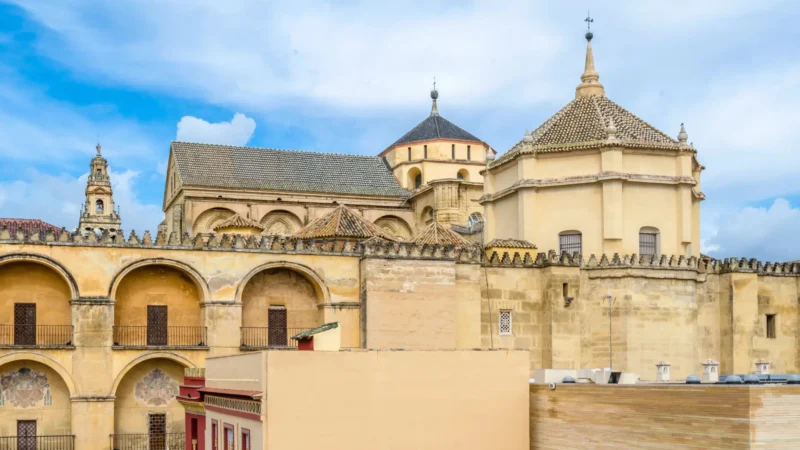
The reason most people come, and it lives up to it. Built as a great mosque from 785, then reworked into a cathedral after 1236, it sets a Renaissance nave inside a vast hall of red-and-white double arches — over 800 columns fanning out in every direction. Entry is timed and ticketed through the official site; there is also a free early-morning window on weekdays for individuals, and the bell tower (the old minaret) is a separate climb. It is a working cathedral, so shoulders and knees stay covered. (UNESCO World Heritage.)
Official info & ticketsThe Judería (old quarter)
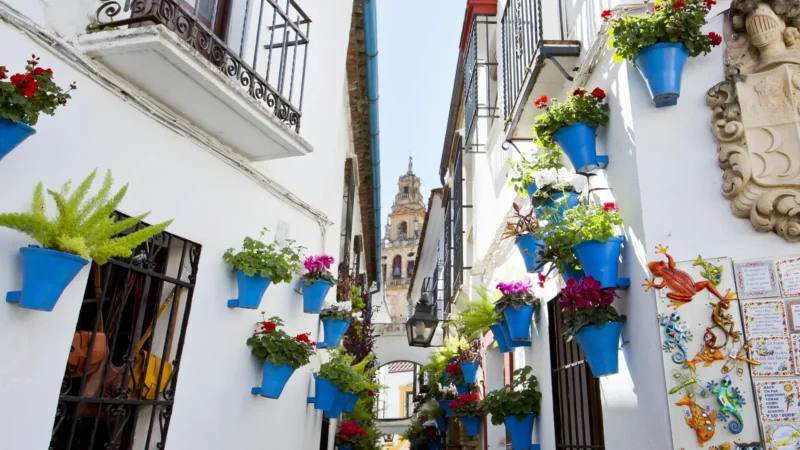
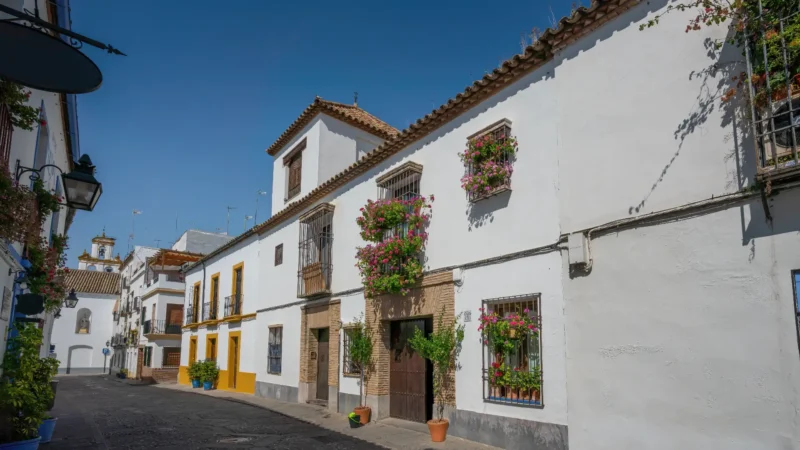
The tangle of lanes north and west of the Mezquita is the heart of old Córdoba: whitewashed walls, hanging geraniums, and doorways that open onto cool tiled patios. Tucked among them is the 14th-century Synagogue, one of only three medieval synagogues left in Spain, and the narrow, flower-hung Calleja de las Flores, which frames the bell tower at its end. Walk it early or after dark, when the day’s foot traffic thins and the quarter feels its age.
Puente Romano & Torre de la Calahorra
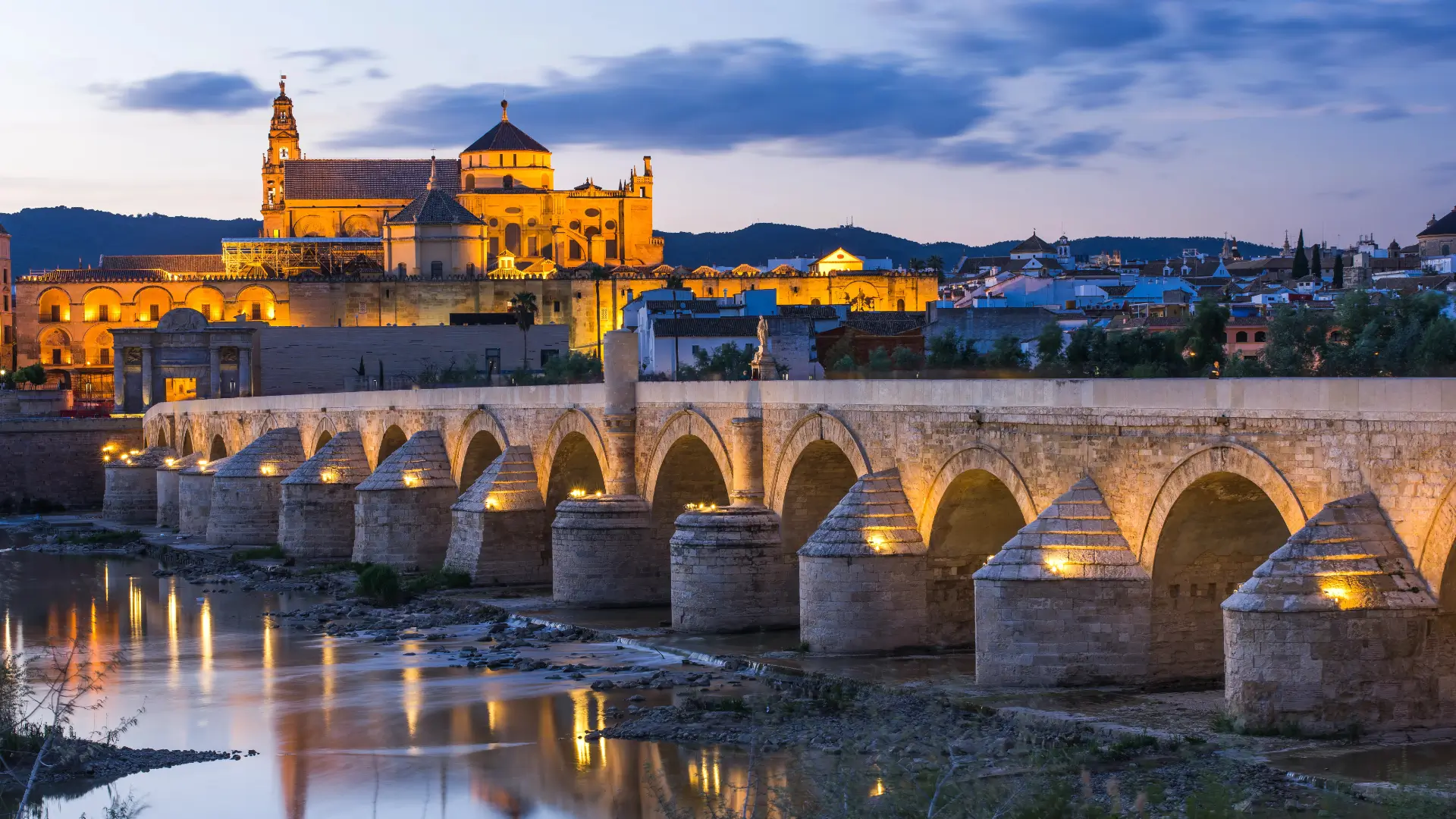
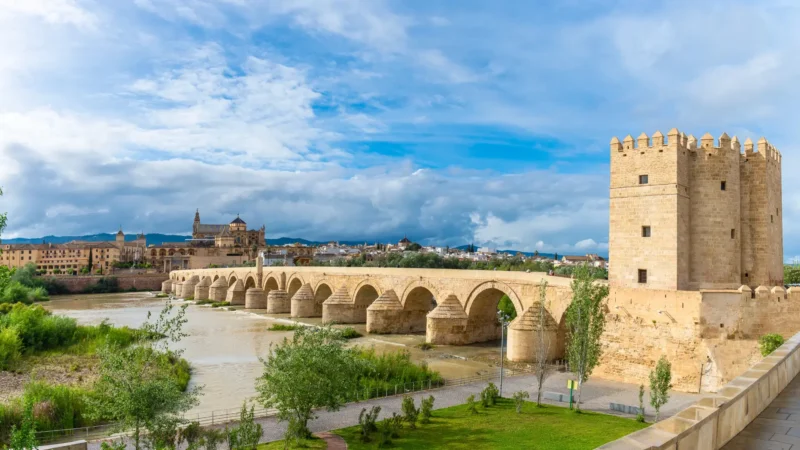
A Roman bridge, much rebuilt, still carries walkers across the Guadalquivir on sixteen stone arches, with the Mezquita rising behind it — the city’s classic view, and best at dawn or dusk. At the far end, the squat Calahorra tower guards the crossing and now holds a small museum; climb it for a wide look back over the old town and river. The Puerta del Puente, a Renaissance gate, marks the near end.
Alcázar de los Reyes Cristianos
A fortress-palace of Moorish and Christian layers, later a seat of the Inquisition, wrapped in terraced gardens of pools, hedges and orange trees. The gardens are the highlight, especially in the cooler hours. Tickets are timed and sold through the city’s official system, with reduced summer hours and free-entry windows; the towers can close in extreme heat.
Official info & ticketsPalacio de Viana
Nicknamed the “museum of patios,” this noble house north of the centre gathers twelve distinct courtyards, each added by a different generation across five centuries. You can buy a ticket for the patios alone or add the furnished palace rooms. It is the best year-round way to understand Córdoba’s patio tradition, and far calmer than the Judería.
Official info & ticketsSan Basilio and the patio streets
Córdoba’s signature is the private patio — a cool inner courtyard packed with potted geraniums, jasmine and a central fountain. The best neighbourhood to feel it any month is San Basilio (the Alcázar Viejo), a run of white lanes and flower-hung walls just west of the Alcázar, with the Centro de Interpretación de los Patios de San Basilio explaining the living tradition; the streets around Santa Marina keep fine examples too. Come in the first hour after opening, and start here before the Judería — most groups do it the other way round. (The city’s medieval Fernandine churches — San Lorenzo, Santa Marina, San Francisco among them — stud these same northern quarters and reward a quiet detour, though none needs a dedicated stop.)
Plaza de la Corredera
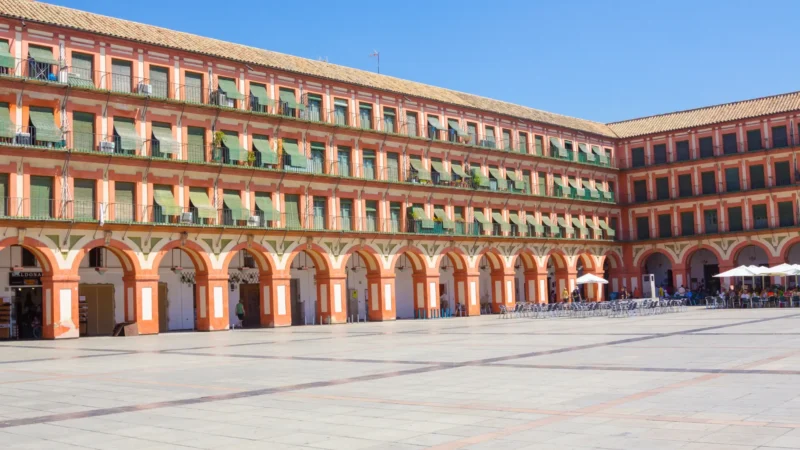
A rare survivor: Andalucía’s only grand, fully enclosed arcaded square, built in a Castilian style you won’t see elsewhere in the south — three storeys of uniform ochre-and-red façades over a run of ground-floor arches. It hosted markets and bullfights for centuries and still holds a morning market under the arcades. Come early for a coffee before the day warms; it’s a calm, genuinely local corner a few minutes from the busier lanes.


What to Do in Córdoba
Affiliate note: some links below are affiliate links. If you book through them, we may earn a small commission at no extra cost to you. It helps us keep GoHiddenSpain running and growing. We only suggest services we'd feel comfortable recommending.
Time the patios right
Córdoba lives outdoors, in its courtyards. The famous ones open to the public during the May patio festival (see Seasonal Events), but the tradition is year-round: the San Basilio quarter keeps working patios you can visit any month, and the Palacio de Viana holds twelve under one roof. Go in the first hour after opening for the best light and the fewest people, and start in San Basilio before the Judería — most groups do it the other way round.
Walk the river and the bridge at golden hour
When the heat drops, the Guadalquivir is where Córdoba slows down. Cross the Roman bridge as the sun lowers, watch the Mezquita turn gold above the water, then follow the riverside path past the old mills and the Molino de Martos. It costs nothing, it is at its best exactly when the day-trippers leave, and it is the walk that sells the overnight.
Make a half-day of Medina Azahara
Eight kilometres west of the city lie the ruins of Madinat al-Zahra, the palace-city a caliph built around 936 and abandoned within a century — now a UNESCO site with an excellent modern museum. Every visitor rides a short shuttle bus from the visitor centre to the ruins (private cars stop at the car park). Start in the museum, then take the shuttle up; allow half a day. A dedicated tourist bus also runs from the city centre if you’re not driving. A guided visit earns its keep here twice over. The site is mostly foundations, so a good guide — often a working historian or archaeologist — rebuilds the vanished palace-city in your mind’s eye. It also solves the logistics: the guided tour bundles the return coach from the city, the entrance and the compulsory site shuttle into one booking, so you skip the drive out, the parking and the ticket queue.
Book the Medina Azahara guided tour on TiqetsEat your way through the tabernas
Córdoba is a serious food city, and grazing its old bodegas and tabernas is an activity in itself: salmorejo, flamenquín, rabo de toro, aubergines with cane honey, and cold Montilla-Moriles wine straight from the barrel. Build an evening around three or four small stops rather than one big table (see Where to Eat for the picks), and drift away from the Mezquita’s edge to where locals actually eat. The one thing hard to do alone is read the local wine. Montilla-Moriles looks like sherry but isn’t, and a short guided tasting is the quickest way to tell a bone-dry Fino from a nutty Oloroso from a syrupy Pedro Ximénez. A small-group session pairs each pour with a tapa and explains what you’re drinking, so the rest of your trip you order like you know.
Book a Montilla-Moriles wine & tapas tasting on TiqetsSee the Mezquita after dark
On select evenings the Mezquita runs a night visit, “The Soul of Córdoba” (El Alma de Córdoba). It’s a lit, narrated walk through the empty prayer hall, with light and sound picking out the arches. This is a completely different experience from the daytime crowds, and one of the best reasons to be in town after dark. It runs on limited dates and sells out, so book ahead. The night visit is sold directly by the Mezquita itself, so there’s no middleman.
Book it on the official site,
Prefer to go with a guide for any of this? Ask where you’re staying, or at the municipal tourist office by the Mezquita (Plaza del Triunfo) — they’ll know what’s running, in which language, and can point you to something that fits.
Seasonal Events and Festivals
Festival de los Patios (early-to-mid May)Córdoba’s signature festival and a UNESCO Intangible Cultural Heritage tradition. For about two weeks, dozens of private courtyards across San Basilio, the Judería, Santa Marina and San Lorenzo open free to the public, banked floor-to-roof with flowers. It is glorious and very busy; book accommodation months ahead and do the San Basilio route early. Exact dates and the festival programme are on the city council’s official patios page
Cruces de Mayo (very end of April into early May)flower-decked crosses fill the squares just before the patios open, with music, tapas and neighbourhood bars. The two together make May Córdoba’s biggest month.
Feria de Córdoba / Feria de Nuestra Señora de la Salud (late May)the city’s spring fair, with casetas, flamenco dress and horses at the fairground; a lively, local counterpoint to the patios.
Semana Santa (spring, moveable — Holy Week)solemn processions wind through the old town in the week before Easter. Dates move with the church calendar each year; check the local Semana Santa listing.
Getting There and Around
Córdoba sits on the A-4 motorway and the main high-speed line, halfway between Madrid and the Andalusian coast — one of the best-connected cities in the south.
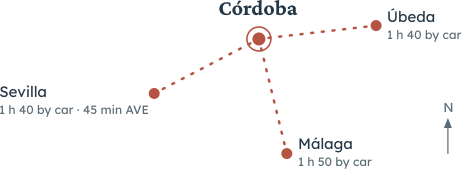
From Sevilleabout 1 h 40 by car via the A-4 (around 145 km) — but the AVE train is the easy way, at roughly 45 minutes, with trains most of the day.
From Málagaabout 1 h 50 by car (around 163 km); the AVE covers it in under an hour.
From Madridabout 4 h by car via the free A-4, or from about 1 h 40 on the AVE.
Nearest airportsCórdoba has no major airport of its own. Seville (SVQ) is about 1 h 40 by road and Málaga (AGP) about 1 h 50 — both are easy onward AVE rides too.
By traindirect high-speed services (Renfe AVE, plus iryo and OUIGO) reach Córdoba-Central from Seville, Málaga, Madrid and beyond; the station sits about a 20-minute walk (or short taxi) north of the Mezquita.
Getting around
Inside Córdoba you don’t want a car. The old town is small, flat and made for walking, and its heart is a Low Emission Zone (ZBE) plus a web of pedestrian lanes — only Eco or Zero-sticker vehicles may enter freely, all day, every day. If your hotel is inside the zone, give them your registration number at check-in so they can register the plate; otherwise park at a peripheral car park and walk in (10–20 minutes to the Mezquita). You do want a car for the region — to reach Medina Azahara, the Jaén olive towns and the wider Guadalquivir countryside the site links to.
Renting for the road-trip stretch? Check car-hire deals on LocalRent
We may earn a small commission if you book through this link, at no extra cost to you — it helps us keep this guide growing.Looking for a ready-made plan? See our Andalucía road trips.
Practical Info
- TicketsThe main sights sell timed, capacity-limited tickets, so book the Mezquita ahead in spring and summer and go for an early slot. Prices and hours change with the season, so we don’t print figures — use the official sources as given in What to See for the current numbers.
- Best time of dayFirst entry at the Mezquita and an early Judería beat the crowds and the heat; the river and bridge are best at golden hour and after dark.
- Getting around and parkingOld town is walkable; the centre is a Low Emission Zone; park outside and walk in unless your hotel registers your plate (see Getting There).
- ClimateCórdoba is the hottest city in Spain — July and August highs sit around 36–37 °C and regularly top 40 °C, with warm nights. The most comfortable months are April, May and October (highs roughly 23–28 °C), with March and November milder still. Rain is light and falls mainly between November and February; summer is bone dry. In July and August, plan sights for the morning and evening and rest through the afternoon.
Where to Eat in Córdoba
You’ll eat and drink well in Córdoba, at every level from a €2 tapa to a three-star tasting menu — this is one of Andalucía’s great food cities, the home of salmorejo (a thick, cold tomato cream, richer than gazpacho), flamenquín (rolled, breaded and fried pork), rabo de toro (slow-cooked oxtail), berenjenas con miel (fried aubergine with cane honey) and the local Montilla-Moriles wines that stand in for sherry. One rule saves you: step back from the streets that ring the Mezquita, where prices climb and quality dips, and eat where Córdobans do — a couple of lanes north, or out in San Basilio and the northern quarters. For lunch while you’re out walking, the tabernas near the sights do good-value plates; for dinner, head into the neighbourhoods below; and if you’re here for the cooking itself, the city’s Michelin tables sit at the end of the list.
A local room a short walk out of the tourist ring, where Córdobans take their long lunch. The rabo de toro and the carrillada (braised cheek) are the dishes to order, and the value is excellent. Exactly the kind of place the crowd around the Mezquita never finds.
A characterful, mostly-local taberna near Plaza de las Tendillas, with a bullfighting room and a long list of half-portions to share. Come for the salmorejo, the croquetas and the honeyed aubergine, and lean on the staff’s recommendations — the menu is Spanish only, which tells you who eats here.
A reliable, well-run bodega for a first, wide taste of the local table — salmorejo, mazamorra, oxtail and the almond-and-saffron Mozarabic meatballs — with its own wines. Close to the Mezquita but a clear cut above the tourist traps beside it; book a table at busy times.
A tavern going since 1868 in the local San Lorenzo quarter, a short walk out of the tourist ring. Here the Spanish outnumber the visitors, and few of the staff bother with English. The rabo de toro and its oxtail croquettes are the standouts, with a proper salmorejo alongside. The house is also known for its cod dishes. Excellent value, and one of the city’s most careful kitchens for gluten-free diners.
Out in the San Basilio patio quarter, a warm, family-run room that turns out some of the best salmorejo, ensaladilla and rabo de toro in the city at fair prices. A fine dinner stop when you’re basing your evening away from the Mezquita’s edge.
A calm, intimate tasting-menu restaurant on the city’s northern edge, Michelin-recommended, where local ingredients drive an inventive, well-priced menu introduced course by course. The special-occasion table for anyone who wants to see what Córdoba’s kitchens can do; reservations essential.
Córdoba’s culinary landmark, with three Michelin stars for chef Paco Morales. His idea is unusual: he rebuilds the lost cooking of the Córdoba Caliphate from medieval sources. Forgotten flavours come back — carob instead of chocolate, mastic, sumac, even a salmorejo from before the tomato reached Spain. It arrives as a long tasting menu tied to the city’s golden age. This is a serious splurge, well into three figures per person, and a proper food pilgrimage rather than a casual dinner. It sits in a residential district just out of the centre; book weeks ahead, tasting menu only.

Where to Stay in Córdoba
Picture the old town after the last coach has gone. The lamps come on along the whitewashed lanes, the Mezquita glows above the river, and the patios you queued to see in the afternoon sit silent behind their gates. This is the Córdoba that day-trippers never meet — and it’s the whole reason to sleep inside the walls. Stay in the Judería or its edges and the evening, and the early morning, are yours alone. Here’s where we’d book.
Hotel Boutique Caireles
A small, tasteful hotel right beside the Mezquita with a rooftop terrace looking straight at the bell tower — remarkable value for the location. Rooms are compact and the lanes are lively, so pack earplugs; you’re paying for a doorstep that money usually can’t buy.
Check prices & availability for Hotel Boutique Caireles on the accommodation's websiteHotel Mezquita
An old Córdoban house full of antiques and tiled patios, a few steps from the mosque’s north door. Simple, characterful and central — the kind of honest, well-placed base that lets you be first through the Mezquita’s gates in the morning.
Check prices & availability for Hotel Mezquita on the accommodation's websiteNH Collection Palacio de Córdoba
A restored palace in the Judería with courtyards and a small pool, and the reassuring polish of a good chain — valet parking gets you through the narrow lanes without stress. An easy, comfortable choice for first-timers who want the old quarter with none of the friction.
Check prices & availability for NH Collection Palacio de Córdoba on the accommodation's websiteBalcón de Córdoba
A former 14th-century convent turned ten-room boutique hotel, steps from the Mezquita, built around a plant-filled courtyard with a roof terrace over the old town. Ask for a room with a Mezquita view; it’s the intimate, romantic end of this tier.
Check prices & availability for Balcón de Córdoba on the accommodation's websitePatio del Posadero
A beautifully restored old house down a quiet lane ten minutes from the Mezquita, with a courtyard, a plunge pool and cooking good enough to eat in. Calm, personal and design-led — the place to unwind once the day’s sights are done.
Check prices & availability for Patio del Posadero on the accommodation's websiteLas Casas de la Judería de Córdoba
A cluster of linked historic houses in the heart of the Judería, threaded with shaded patios, fountains and an honesty bar — an atmospheric warren where you’re never more than a short walk from the Mezquita. The full “sleep inside old Córdoba” experience.
Check prices & availability for Las Casas de la Judería de Córdoba on the accommodation's website
Region, Nearby and Routes
Córdoba isn’t a formal stop on one of our routes — but it’s the natural gateway between two of them. It’s the classic day trip (or better, overnight) from Seville, about 45 minutes away on the AVE, and it sits on the road east toward the Renaissance olive towns of the Jaén cluster. Use it as a hinge: a caliphal-city counterpoint to Seville to the west, and a launch pad for our Renaissance & Olive Trail to the east.
Part of Andalucía
Córdoba is in Andalucía
Nearby places
- SevilleAndalucía’s grand capital, with three UNESCO monuments, orange-tree squares and Spain’s best tapas scene.
- BaezaA small, golden-stone Renaissance town in Jaén’s olive country — UNESCO-listed and far quieter than most.
- ÚbedaA UNESCO Renaissance city of golden palaces and calm squares, set in Jaén’s endless sea of olive groves.
- GranadaHome to the Alhambra and the Albaicín, Granada is Moorish Andalucía at its grandest — best seen early, late and at your own pace.
Frequently Asked Questions
Yes — comfortably. The Mezquita-Catedral is one of the most extraordinary buildings in Europe, and the old town around it is small, atmospheric and easy to walk. It’s a famous, busy city rather than a hidden village, but early mornings, warm evenings and an overnight stay let you see it at its calm best.
A full day covers the headline sights: the Mezquita, the Judería, the Roman bridge and the Alcázar gardens. Stay a second day and you can add the Palacio de Viana, the San Basilio patios and a half-day out to Medina Azahara — and, more importantly, have the old town to yourself in the evening.
Spring and autumn. April, May and October are the most comfortable, with highs around 23–28 °C. Córdoba is the hottest city in Spain in summer — July and August highs sit around 36–37 °C and often pass 40 °C — so if you come then, sightsee early and late and rest through the afternoon. Rain is light and falls mainly between November and February.
You can — the AVE takes about 45 minutes and runs all day. But a day trip drops you into the busiest hours and pulls you out before the best ones. If you can, stay the night: the early Mezquita and the empty, lamplit lanes after the day-trippers leave are the real reward.
Yes. It’s well placed and well connected: Medina Azahara is a half-day just west of the city, Seville and Málaga are both under an hour by AVE, and the Renaissance olive towns of Jaén province (Úbeda, Baeza) are around an hour and a half east by car.
Stay inside or beside the Judería so the old town is on your doorstep morning and night. For character on a budget, Hotel Mezquita and Hotel Boutique Caireles sit right by the mosque; for mid-range comfort, the NH Collection Palacio de Córdoba and the convent-turned-boutique Balcón de Córdoba; and at the top end, the courtyard-filled Las Casas de la Judería or the design-led Patio del Posadero.
Eat the local dishes — salmorejo, flamenquín, rabo de toro and aubergines with cane honey — and get a street or two back from the Mezquita. Taberna San Cristóbal, Taberna Góngora and the 1868 Sociedad Plateros María Auxiliadora are honest, local and good value; Bodegas Mezquita and Taberna La Viuda do the classics well; and for a special dinner, Terra Olea, or the three-Michelin-star Noor at the destination top end.