
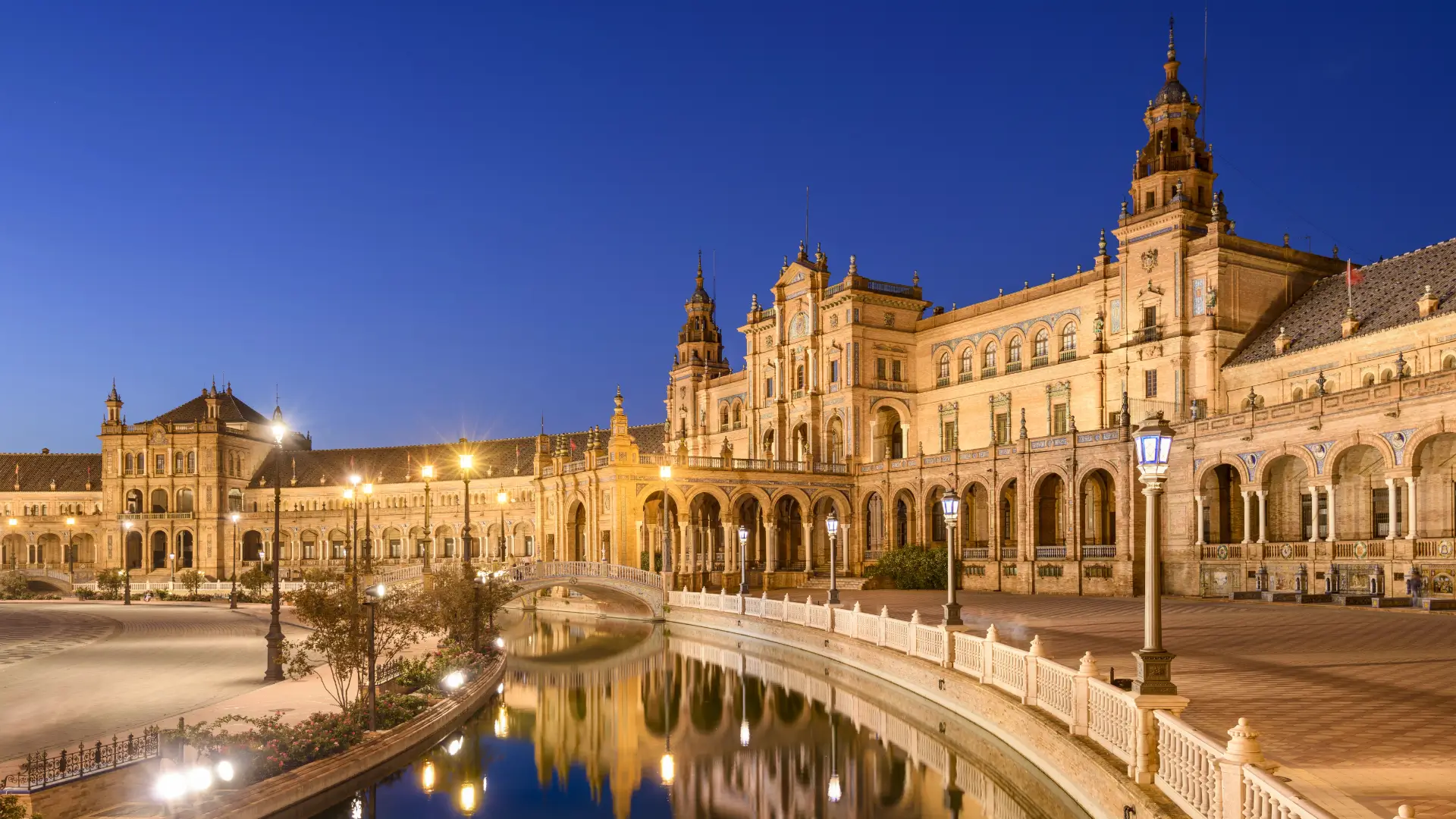
Seville: Andalucía’s Grand Capital, Seen the Quiet Way
Seville is the big, beating heart of Andalucía, set on the Guadalquivir in southern Spain. It is the busiest place we cover — and worth every minute. The Real Alcázar, the world’s largest Gothic cathedral and the tangled lanes of Santa Cruz draw crowds all day. The reward comes early and late: the first hour at the gates, and the warm, emptying streets after dark.

Why Visit Seville
Seville is not a hidden town, and we won’t pretend it is. It is Andalucía’s capital and one of Spain’s most visited cities. By late morning the queues at the Alcázar are long and the lanes near the cathedral are shoulder to shoulder. We say this plainly because the honest version is also the better trip. Seville rewards the traveller who works around the crowds, not the one who tries to see it all at midday.
The city packs an extraordinary amount into a small, walkable centre. Three UNESCO World Heritage monuments sit within a few minutes of each other: the cathedral with its Giralda tower, the Real Alcázar palace, and the Archivo de Indias. Around them spread the orange-tree squares, tiled patios and narrow streets of the old Jewish quarter. It is grand and intimate at the same time, and it is made for slow walking.
Who Seville is for
Seville suits the road-tripper who wants one proper city in the trip. It's a change of pace from quiet villages, with big monuments, deep history and a food scene that rewards a few unhurried days. It fits first-time visitors to Andalucía who want the headline sights done well. It also suits returning travellers who know the drill and come for the back streets, the patios and the long evenings. And it is the natural gateway or finish for a wider Andalucían loop, thanks to its own airport and fast train links.
Day trip or overnight?
You can see Seville's highlights in a long day, and many people do it as a stop between other places. But a day trip means arriving as the crowds build and leaving before the city is at its best. The magic here is early and late: the Alcázar patios in the cool first hour, Santa Cruz emptying as the light softens, the cathedral lit up at night. Our honest advice is to stay at least one night, and two if you can. A perfect short visit looks like this: book the Alcázar for opening and have its courtyards almost to yourself; break for a slow tapas lunch off the tourist lanes; rest through the hot afternoon; walk Barrio Santa Cruz and Plaza de España in the golden evening light; then eat late and wander the lamplit old town when the day-trippers have gone. That evening simply does not fit into a day trip — which is exactly why we'd stay.
What to See in Seville

Real Alcázar
A working royal palace and one of the oldest still in use in Europe. The Alcázar is a masterpiece of Mudéjar design: carved plaster, glazed tiles, still pools and deep gardens shaded by orange and palm. It grew from a 10th-century Muslim fort and was rebuilt across centuries, so Islamic and Christian styles sit side by side. Entry is by timed slot and books out fast; see Practical Info for how tickets work.
Seville Cathedral & La Giralda
The largest Gothic cathedral in the world, built over the city’s main mosque after 1248. Inside sit a vast gilded altarpiece and the tomb of Christopher Columbus. The bell tower, La Giralda, is the mosque’s old minaret: you climb it not by stairs but by 34 gentle ramps, built so guards could ride up on horseback, to a wide view over the rooftops.
Archivo de Indias
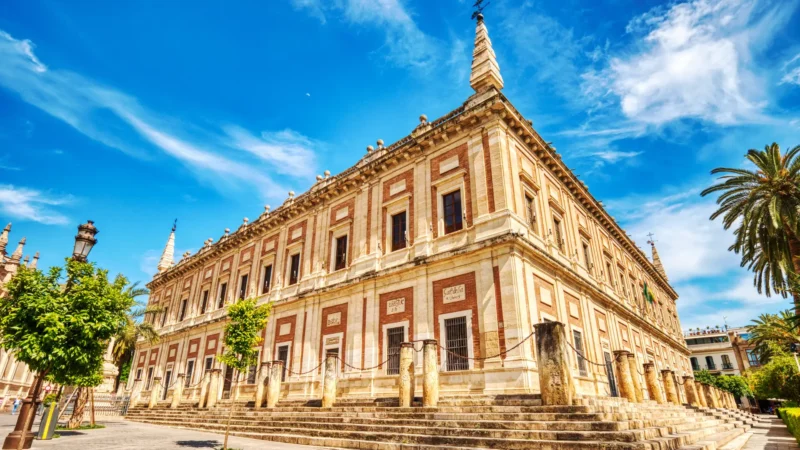
The third UNESCO monument of the central trio, and the quietest. This handsome 16th-century building holds the archive of Spain’s empire in the Americas — millions of documents, maps and letters. Entry to the exhibition halls is free, and it makes a calm, cool pause between the cathedral and the Alcázar.
Plaza de España
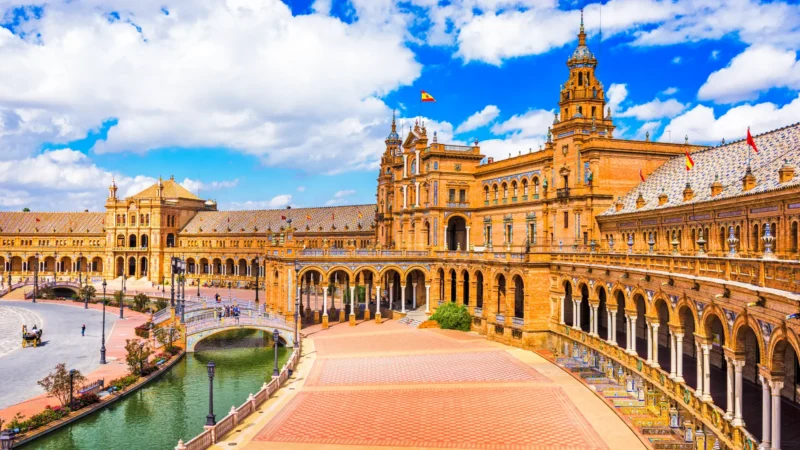
A grand half-circle of brick, tile and bridges built for the 1929 Ibero-American Exposition, set inside the green Parque de María Luisa. It is open, free and unmissable, with painted tiled alcoves for each Spanish province and a canal you can row on. Come early or late — the low sun on the tilework is the whole point.
Barrio Santa Cruz
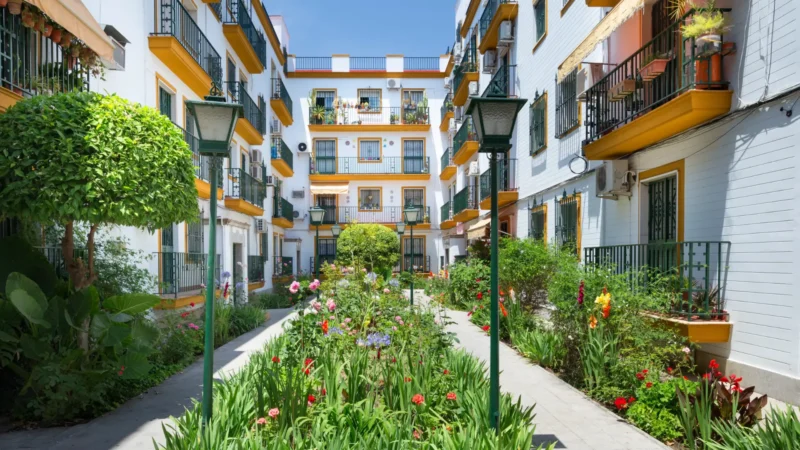
The old Jewish quarter, a maze of whitewashed lanes, hidden patios and tiny squares wrapped around the cathedral and Alcázar. It is beautiful and very popular. Walk it early in the morning or in the evening, when the day crowds thin and the orange-scented streets feel like the city’s own.
Torre del Oro
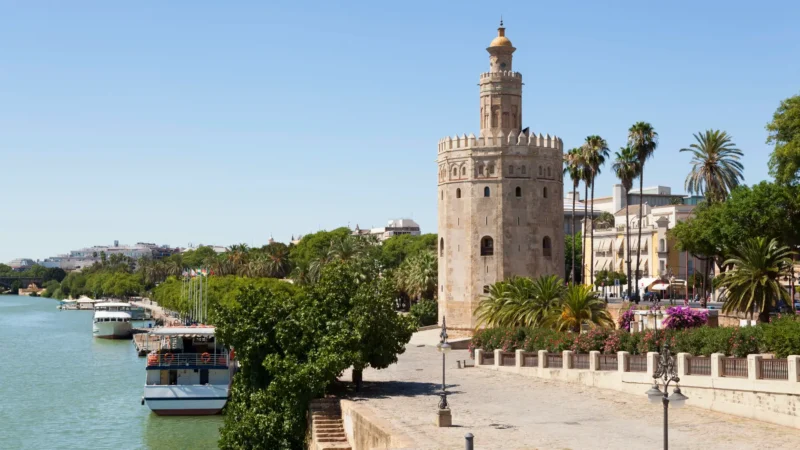
A 13th-century watchtower on the bank of the Guadalquivir, once part of the city’s river defences. It is a fine short stop and a small maritime museum; entry is by a modest voluntary contribution. The riverside path here is one of the best places for an easy evening walk.
Casa de Pilatos
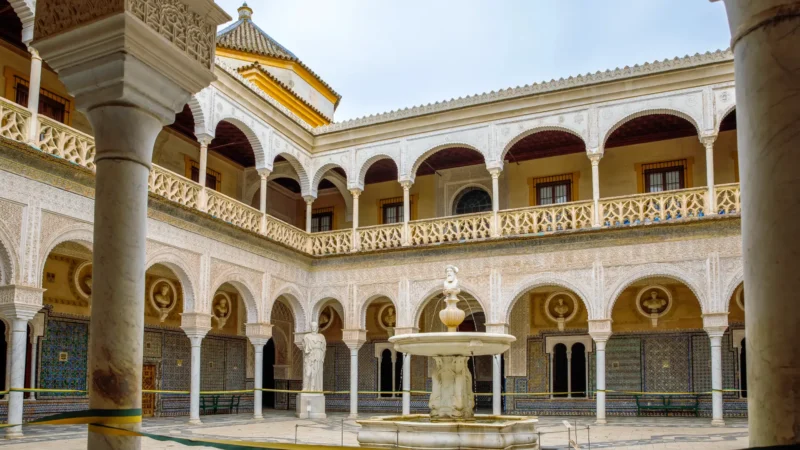
Often called the finest palace in Seville after the Alcázar — and, better for us, far quieter. This 15th–16th-century mansion mixes Mudéjar, Gothic and Italian Renaissance styles around a beautiful tiled courtyard. There are cool gardens too, and one of Spain’s best collections of classical sculpture. It’s a short walk from the crowds near the cathedral, and you can wander the ground floor and patios at your own pace with an included audioguide. A calm, rewarding stop most visitors miss.
Hospital de la Caridad
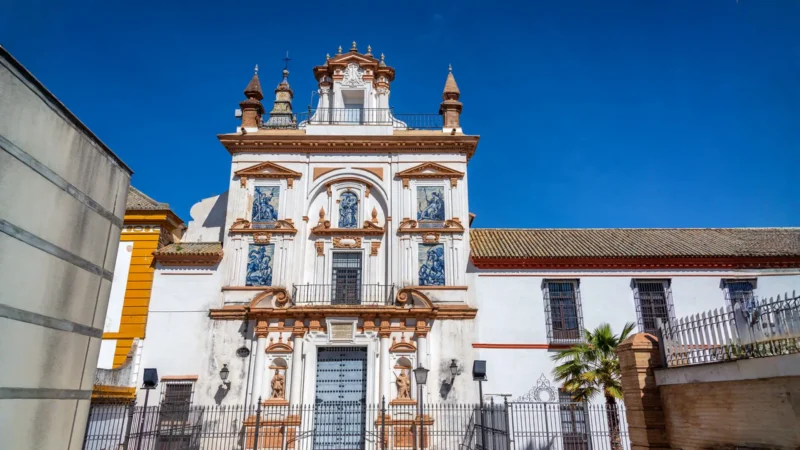
A 17th-century charity hospital with a jewel of a baroque church, still run by the brotherhood that founded it. Inside hang major works by Murillo and the dramatic “death” paintings of Valdés Leal — a small, quiet space that rewards a slow look. It sits near the river and the bullring, sees few tour groups, and is one of the city’s real hidden pleasures for anyone who likes art and calm.
Metropol Parasol (Las Setas)
A huge modern wooden structure — locals call it “the mushrooms” — rising over Plaza de la Encarnación. A lift and a curving walkway lead to a rooftop viewpoint about 25 metres up, with a full circle of the old town and the cathedral. Access to the walkway is ticketed; it is one of the few high, open views in the centre and works well at sunset.
Triana
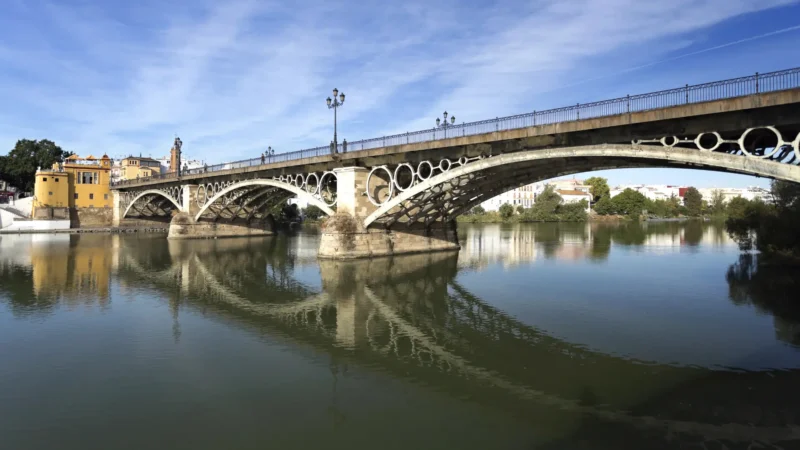
Across the river, Triana is Seville’s old ceramics and flamenco quarter, with a covered market, tile workshops and a long riverside of bars looking back at the city. It feels more lived-in and less polished than the centre, which is exactly its charm. It is a fine place to eat, and an easy walk over the Isabel II bridge.



What to Do in Seville
Affiliate note: some links below are affiliate links. If you book through them, we may earn a small commission at no extra cost to you. It helps us keep GoHiddenSpain running and growing. We only suggest services we'd feel comfortable recommending.
See flamenco the honest way
Flamenco runs deep in Seville, and how you see it matters. The polished shows are easy to book and reliably good, if a little smooth for the crowd. The rawer, more local experience is a members’ flamenco club (a peña), or a small, serious venue where the singing and dancing come first — like La Casa del Flamenco in Barrio Santa Cruz. It’s an intimate show with real artists — two dancers, two singers and a guitarist — rather than a big tourist production, in a venue small enough to actually see and hear the performers.
Book a show at La Casa del Flamenco on TiqetsGo tapas-hopping — learn to tapear
In Seville, eating is a walk, not a sitting. You move from bar to bar, one or two small plates at each, standing at the counter with a cold fino or a beer. The word for it is tapear. Start in the Alfalfa or Santa Cruz lanes for the classics: espinacas con garbanzos (spinach and chickpeas), jamón and salmorejo. Then cross to Triana for fried fish. You can do this perfectly well on your own; a good tapas walk needs only an appetite and a rough plan. (A guided tapas tour can add a local’s route and the story behind each dish — a good one takes you to the hidden, historic bars you’d walk straight past: the oldest tavern in the old Jewish quarter, the tiny family bar that gave Seville its orange wine.)
Book a tapas & taverns tour on TiqetsWalk or cruise the Guadalquivir
The river is the city’s calm edge. Walk the bank from the Torre del Oro down past the bullring, or cross to Triana and follow the water back — best in the cool of early morning or the golden hour. A short river cruise is an easy, low-effort way to see the city from the water, and a gentle option in the afternoon heat. A guided one adds the history and local stories as you pass the Torre del Oro and the Triana bridge — worth it over a boat that just floats you past the sights.
Book a guided river cruise on TiqetsGo beyond the headline sights
Seville rewards a little wandering off the main circuit. Want more grand interiors after the Alcázar and Casa de Pilatos? The Palacio de las Dueñas — the Duchess of Alba’s family palace, with gorgeous gardens — is a lovely, low-key visit. Audioguide visits run at set times, so check the official site. Art lovers should make time for the Museo de Bellas Artes, Spain’s finest picture gallery after the Prado. It sits in a former convent, is rarely busy, and is strong on Murillo, Zurbarán and the Sevillian masters. Neither draws big crowds, and both add real depth to a second day.
Use Seville as a base for exploring Andalucía
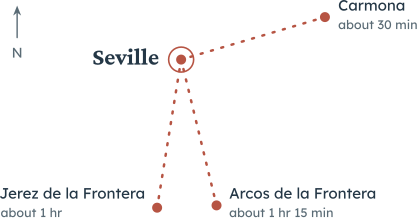
Seville is one of the best bases in Spain for day trips, with fast trains and easy roads fanning out across Andalucía. If you’d rather settle in one place and explore from there, you can reach a lot within about 90 minutes. Córdoba and its great Mezquita mosque are just 45 minutes away by high-speed train. Cádiz, on the Atlantic, offers an ancient old town and city beaches, about 1 hour 20 minutes by car or train. Closer in, Carmona is a quiet walled town with Roman roots, half an hour east, and the Roman ruins of Itálica — birthplace of two emperors, and a Game of Thrones filming spot — sit 20 minutes north at Santiponce. Jerez de la Frontera, the home of sherry and Andalucían horses, is about an hour south. And our own White Villages Trail — Arcos, Grazalema, Ronda and more — starts just over an hour away. Base yourself in Seville for the evenings and mornings in the city, and take the region in day by day.
Prefer to go with a guide for any of this? Ask where you're staying, or at the tourist office near the cathedral on Plaza del Triunfo — they'll know what's running, in which language, and can point you to something that fits.
Seasonal Events and Festivals
Seville’s two great festivals fall in spring, one after the other, and both fill the city completely.
Semana Santa (Holy Week)the week before Easter, so it shifts each year with the date of Easter (usually late March or April). Elaborate processions carry religious floats through the streets day and night. It is extraordinary to witness, but the city is packed and rooms cost far more; book months ahead. Check the official diocesan or city tourism source for the exact dates and route each year.
Feria de Abril (April Fair)usually about two weeks after Easter, so it also moves year to year (commonly late April, sometimes early May). A week of flamenco dress, horses, casetas (marquees) and dancing on the fairground across the river. Like Semana Santa, it sends demand and prices soaring, so plan early and confirm the dates with the official source.
Both events are wonderful and both make the city its busiest. If you want a calmer Seville, come well outside these weeks.
Getting There and Around
Seville sits on the Guadalquivir in western Andalucía, on the A-4 motorway from Madrid and Córdoba, with its own airport and a high-speed rail line.
From Madridthe AVE high-speed train reaches Seville-Santa Justa in about 2 hours 30 minutes — the fastest and easiest option from the capital.
From Córdobaabout 45 minutes by AVE, or under an hour by car on the A-4.
Nearest airportsSeville Airport (SVQ, “San Pablo”) is about 10 km north-east of the centre — roughly 15–20 minutes by taxi, or about 35 minutes on the EA airport bus, which stops at Santa Justa station and Plaza de Armas. There is no train or metro to the airport.
By trainSeville-Santa Justa is the city’s main station, on the northern edge of the centre, with fast links to Córdoba, Madrid, Málaga and Cádiz.
On the White VillagesSeville is the natural airport gateway and city finish for our White Villages Trail — Arcos de la Frontera is about 1 hour 15 minutes south by car.
Getting around
Inside Seville you do not need a car. The historic centre is small, flat and made for walking, with a tram, metro line, buses and a well-used bike-share to fill the gaps. Driving into the old town is a bad idea: the streets are narrow, parking is scarce, and the centre has restricted-access and low-emission rules that catch out visitors. Park on the edge of the centre, or leave the car at your hotel’s recommended garage, and walk.
That said, a car earns its keep for the wider trip. Seville is the obvious place to pick one up for a road trip into the Sierra de Cádiz, the white villages or the sherry country around Jerez — reach the countryside and the villages the rest of this site covers, then come back and drop the car before exploring the city on foot.
Looking for a ready-made plan? See our Andalucía road trips.
Practical Info
- Tickets — book the big two aheadThe Real Alcázar uses timed-entry slots and sells out in peak season; buy online in advance and enter within your slot. There is a limited free-entry window (the last hour on Mondays) that still needs an online reservation, and an optional add-on for the Upper Royal Apartments (Cuarto Real Alto). The cathedral and Giralda also use timed entry, with a standard ticket that covers the cathedral, the Giralda climb and the Church of El Salvador; rooftop tours are separate. Hours change with the season. Check the official sources for current prices and slots: the Alcázar at alcazarsevilla.org and the cathedral at catedraldesevilla.es. (Note: The Alcázar site defaults to Spanish, so use your browser’s translate function if you need English. Tickets sell out in peak season, so book a few days ahead)
- Free and low-cost sightsThe Archivo de Indias and Plaza de España are free. The Torre del Oro asks only a small voluntary contribution. Both the cathedral and the Alcázar offer free-entry windows by advance reservation.
- The quieter palaces and the art.The Casa de Pilatos sells a ground-floor-plus-audioguide ticket, with an upper-floor guided visit as an add-on, and a free window on Monday afternoons (limited places, collected at the door) — book via the official Fundación Casa Ducal de Medinaceli site. The Hospital de la Caridad charges a small admission with a free window on Sunday afternoons. The Museo de Bellas Artes and, for EU citizens, several state museums have free-entry rules — check each official site for current times and prices
- Best time of dayBook the Alcázar for opening, walk Santa Cruz and Plaza de España early or in the evening, and save the middle of the day for a long lunch and a rest — this is how you dodge both the crowds and the heat.
- Getting aroundThe centre is walkable; use the tram, metro or bike-share for longer hops. Don’t drive into the old town.
- ClimateSeville is one of the hottest cities in Spain. July and August highs sit around 36°C and regularly climb past 40°C on the hottest days, with warm nights — plan for shade, water and a midday break. The most comfortable months are April, May, October and November, roughly 20–26°C by day. Winters are mild (January highs around 16°C). Rain is rare in summer and falls mostly in late autumn and December, the wettest month.
Where to Eat in Seville
You’ll eat and drink well in Seville, at every budget — this is Spain’s tapas capital, and here eating is a verb: tapear, moving bar to bar with a plate and a cold drink at each. The local repertoire is generous and cheap: salmorejo and gazpacho (chilled tomato soups), espinacas con garbanzos (spinach and chickpeas), pescaíto frito (crisp fried fish), Iberian jamón and a hundred croquettes. One honest warning first: skip the terraces packed tight around the cathedral and the Alcázar. They cost more and cook worse; the good places sit two or three streets back, or across the river. Two simple rules make it easy: for lunch while you’re out walking, the Alfalfa lanes are full of good-value counters; for dinner, stay in the old town or cross to Triana for the fried-fish bars by the river. The picks below run from a €3 tapa to a special table.
Eat where the Sevillanos eat. For the real thing, walk north to Calle Feria and the Mercado de Feria — the city's oldest market, more locals than tourists, with tapas counters wedged among the produce stalls (late morning is best). Then have a drink on the Alameda de Hércules, the wide, leafy square that's the heart of young, local Seville and a world away from the cathedral crowds. Cross to Triana for its neighbourhood freidurías (fried-fish shops), where families queue for crisp pescaíto by weight — this is Seville eating as the locals do it.
A Michelin-starred seafood house built around a kitchen bar, where the day’s catch drives an inventive tasting menu. The special-occasion table — reserve well in advance.
A warm, family-run kitchen in the San Lorenzo quarter with a very good-value tasting menu and creative takes on regional dishes. Book ahead.
A relaxed, well-run tapas bar near the centre with a strong Spanish cheese board and generous vegetable dishes. Reserve — it’s small and busy.
Tiny, characterful and rightly popular, on the corner of the Alfalfa quarter. Andalucían classics with a few Italian touches; the mushroom croquettes and the salmorejo are the ones to get. Expect to stand.
A loud, packed, gloriously local counter steps from the cathedral, with tapas from around €3 and a pringá montadito that regulars swear by. Order at the bar, find a spot on the street, and soak up the noise.
A tiny husband-and-wife freiduría near Triana, where the fried fish comes out fresh and light, not greasy, and you order by weight to take away or eat standing. Warm, family-run and firmly local — the owners will happily steer you to the best of the day. Closed Mondays.
A no-frills Triana neighbourhood freiduría where you pick your fish by weight and it’s fried to order — squid, adobo, prawns, the lot. Little English, plenty of locals, and some of the best-value fried fish in the city. This is the Triana that the crowds across the river never reach.
A modern, friendly spot with sharp cooking and low prices — Iberian pork cheek over potato purée, excellent croquettes, homemade desserts. Worth the short wait for a table.

Where to Stay in Seville
The reason to stay is the evening. When the last day-trippers head for the station, the old town softens: lamplit lanes in Santa Cruz, orange trees over quiet patios, the cathedral floodlit against the dark. Wake early and you’ll have the Alcázar’s courtyards nearly to yourself. Sleep inside the historic centre — Santa Cruz, Alfalfa or the Arenal — and both the empty morning and the warm night are yours. Here’s where we’d stay.
CoolRooms Palacio Villapanés
An 18th-century palace turned quiet luxury hotel in the calmer San Bartolomé quarter, with a grand courtyard, spa and rooftop. The characterful splurge — sleep inside real Sevillian history, a short walk from the noise.
Check prices & availability for CoolRooms Palacio Villapanés on the accommodation's websiteHotel Casa 1800 Seville
A polished small hotel in a restored old-town mansion beside the cathedral, with a rooftop plunge pool looking at the Giralda and complimentary afternoon tea. A treat, and superbly placed.
Check prices & availability for Hotel Casa 1800 Seville on the accommodation's websiteEl Rey Moro Hotel Boutique
A characterful boutique hotel wrapped around a classic Sevillian patio in the heart of Santa Cruz. Calm courtyard, warm service, and the cathedral a two-minute walk away.
Check prices & availability for El Rey Moro Hotel Boutique on the accommodation's websiteHotel Fernando III Sevilla
A comfortable mid-size hotel on a quiet Santa Cruz street, with a small rooftop pool and bar for the hot afternoons and a walk-everywhere position. An easy, familiar choice for first-timers.
Check prices & availability for Hotel Fernando III Sevilla on the accommodation's websiteHotel Un Patio en Santa Cruz
A small, welcoming house right in Santa Cruz with a lovely roof terrace over the tiled roofs. Rooms are compact — you’re paying for the location, and it’s the right one for wandering the old town after dark.
Check prices & availability for Hotel Un Patio en Santa Cruz on the accommodation's websitePensión Doña Trinidad
A simple, spotless pensión in the Santa María la Blanca lanes, minutes from the cathedral, with a small rooftop terrace and a kind host. Honest value in an unbeatable spot for early mornings at the Alcázar.
Check prices & availability for Pensión Doña Trinidad on the accommodation's website
Region, Nearby and Routes
Seville isn’t a stop on one of our set routes, but it’s the natural way in and out of the region. It’s the airport gateway and city finish for our White Villages Trail — fly in, spend a day or two in the city, then drive south into the Sierra de Cádiz; or come off the trail at the end for a city bookend before your flight home. Think of Seville as the grand front door to white-village Andalucía, not a stop along the way.
Part of Andalucía
Seville is in Andalucía
Nearby places
- Arcos de la FronteraA white town perched on a sandstone cliff, ringed by the Guadalete, with sudden sweeping views at every turn.
- RondaThe dramatic gorge town split by the Puente Nuevo — the biggest, best-known stop on the White Villages Trail.
- CórdobaA great caliphal capital on the Guadalquivir, wrapped around the world-famous Mezquita-Catedral and a maze of flower-filled patios.
- Jerez de la FronteraThe birthplace of sherry, with dancing horses and deep flamenco roots — a working Andalusian city that stays real.
Frequently Asked Questions
Yes. Seville is Andalucía’s capital and one of Spain’s most rewarding cities, with three UNESCO monuments, a superb food scene and a beautiful, walkable old town. It’s busy, especially by day — but seen early, late and after dark, it’s one of the best city stops in southern Spain.
Two nights is the sweet spot. One full day covers the headline sights if you start at opening, but a second day lets you slow down, cross to Triana, and enjoy the long evenings that are the whole point of staying. A rushed day trip sees the crowds and misses the magic.
Spring and autumn — April, May, October and November — are ideal, with comfortable days around 20–26°C. Summer is very hot: July and August highs sit around 36°C and often pass 40°C, so plan early starts and a long midday break. Winters are mild (January highs near 16°C). Avoid Semana Santa and the Feria de Abril unless you want the festivals, as the city is at its most crowded and expensive then.
You can, and many people stop for a day between other Andalucían towns. But a day trip lands you in the heaviest crowds and takes you away before the city is at its best. Staying at least one night gets you the quiet Alcázar at opening and the old town after dark — a completely different, better experience.
Yes — it’s one of the best bases in Andalucía. Fast trains and easy roads put a lot within about 90 minutes. Córdoba and its Mezquita are 45 minutes by high-speed train; Cádiz on the coast is about 1 hour 20 minutes; Carmona (30 minutes) and the Roman ruins of Itálica (20 minutes) make easy half-days; Jerez, the sherry town, is about an hour; and our White Villages Trail — Arcos, Grazalema, Ronda — starts just over an hour away. Stay in the city for the mornings and evenings, and take the region in day by day.
Stay inside the historic centre so the early mornings and late evenings are yours. For character on a budget, Pensión Doña Trinidad or Hotel Un Patio en Santa Cruz put you in the old lanes. For a comfortable mid-range hotel, Hotel Fernando III or the boutique El Rey Moro sit right in Santa Cruz. For a special stay, Hotel Casa 1800 by the cathedral or the palace CoolRooms Palacio Villapanés are hard to beat.
Eat like a local by tapear-ing — moving bar to bar, and skip the pricey terraces right by the cathedral. For classic tapas, try Bodega Santa Cruz or Bar Alfalfa; La Bartola is great value a little further out. For crisp fried fish, cross to Triana for a neighbourhood freiduría like La Estrella or Reina Victoria. For the most local scene, head north to the Mercado de Feria and the Alameda de Hércules. For something special, Az-Zait for warm traditional cooking or Cañabota for a Michelin-starred seafood tasting menu.