
Ronda: the Gorge Town, Best Seen at Dawn and Dusk
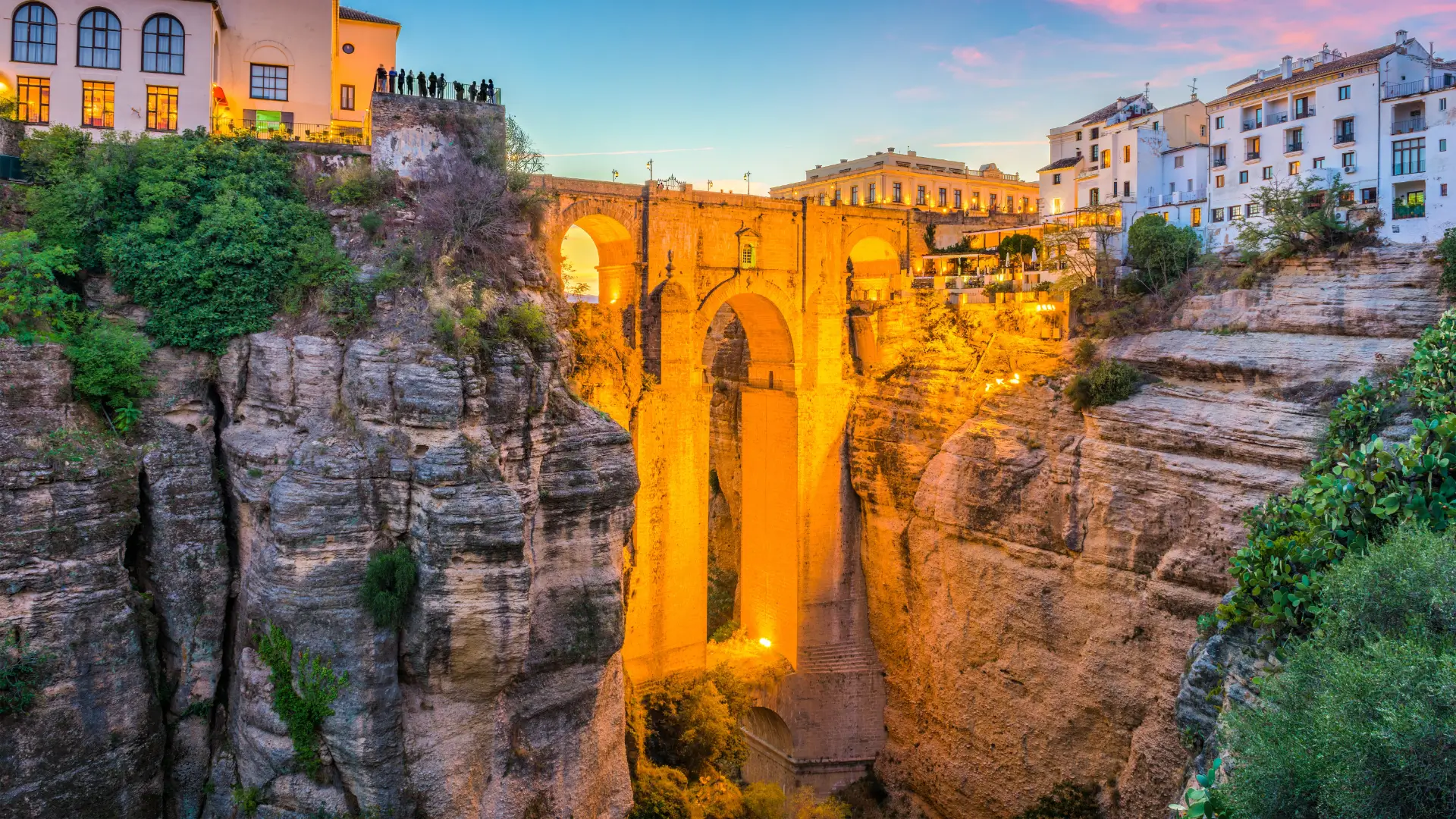
Ronda sits on a high plateau in the Málaga sierra, split in two by El Tajo — a gorge more than 100 metres deep. The great Puente Nuevo leaps across it, joining the old Moorish town to the newer quarter. It is the largest and most famous stop on the White Villages Trail, and by day it fills with visitors. Come early or stay late, and the drama is all yours.
Why Visit Ronda
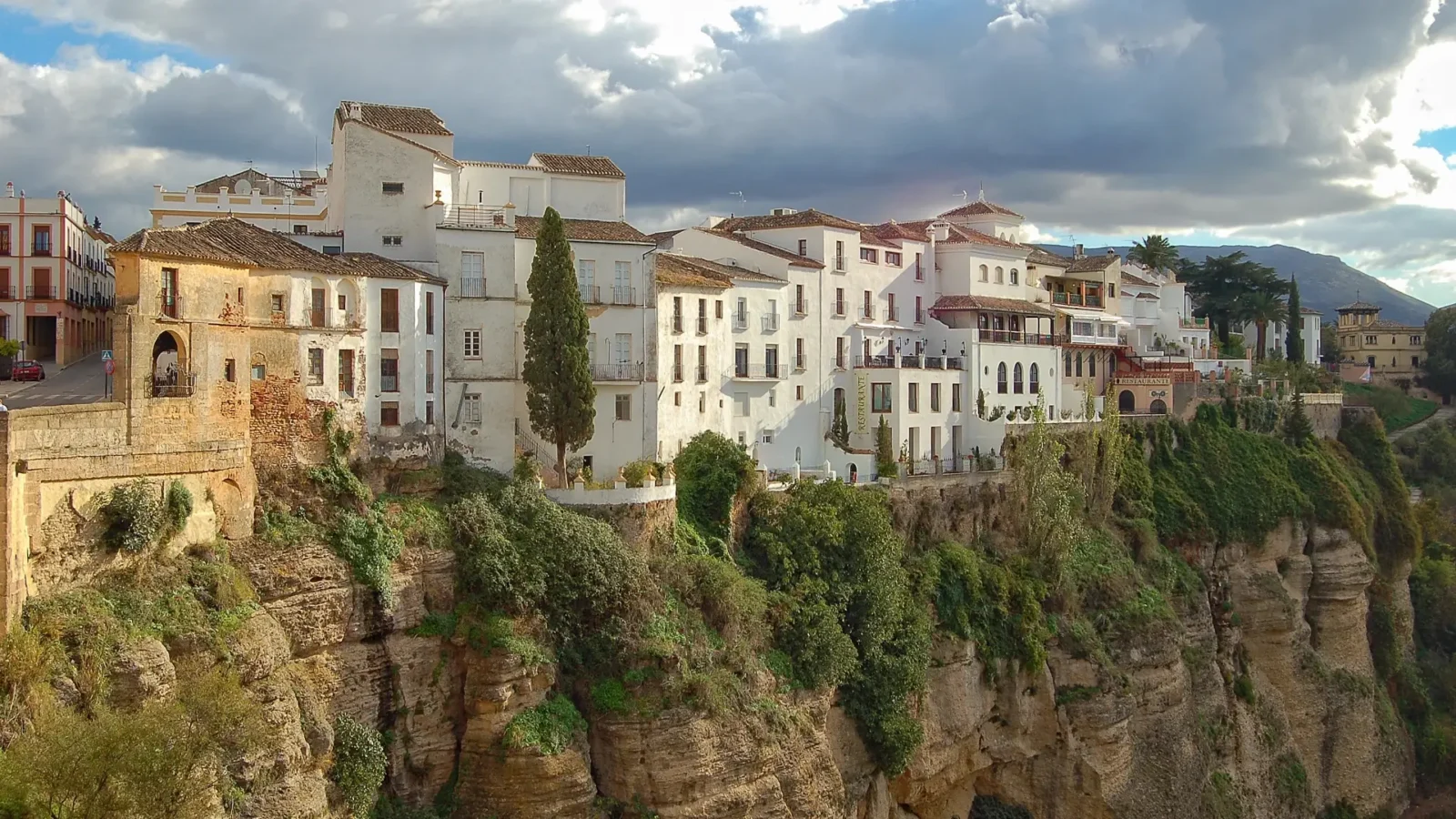
Ronda is built on the edge of a cliff, and that is the whole point of it. The town stands on a plateau, cut clean through by the Guadalevín river. The result is El Tajo, a gorge that drops more than 100 metres straight down. The 18th-century Puente Nuevo spans it in one bold arch, linking the two halves of the town. Stand on it, and the sierra opens out on every side. Few towns in Spain have a setting this dramatic.
But Ronda is more than one bridge. It has one of the oldest bullrings in Spain, a walled old town full of Moorish remains, well-preserved Arab baths, and a string of viewpoints along the gorge. Writers and artists — Hemingway and Orson Welles among them — fell for it a century ago, and it has drawn a crowd ever since.
Who Ronda is for
Ronda suits the traveller who wants big drama and real history in one walkable place, and who does not mind sharing it — at least in the middle of the day. It rewards slow walking, an early start and a good camera. If you have followed the trail through the quiet white villages, Ronda is the loud, grand finale: the biggest town, the deepest gorge, the most to see.
Day trip or overnight?
You can see Ronda's headline sights in an afternoon — the bridge, a viewpoint or two, the bullring. But Ronda is the most visited place on this whole route, and by mid-morning the coach parties from Málaga and the Costa del Sol arrive. See it only by day and you see it at its most crowded. Our honest advice: stay the night. The day-trippers leave by late afternoon, and the town empties out. A perfect short visit looks like this: arrive, settle in, then walk the gorge and the miradores at golden hour when the light is best and the crowds have thinned. Have dinner in the old town. Next morning, be at the Puente Nuevo early — before the coaches — with the bridge and the views almost to yourself. That quiet dawn-and-dusk Ronda is the one worth coming for, and it does not fit into a day trip.
What to See in Ronda

Puente Nuevo & El Tajo
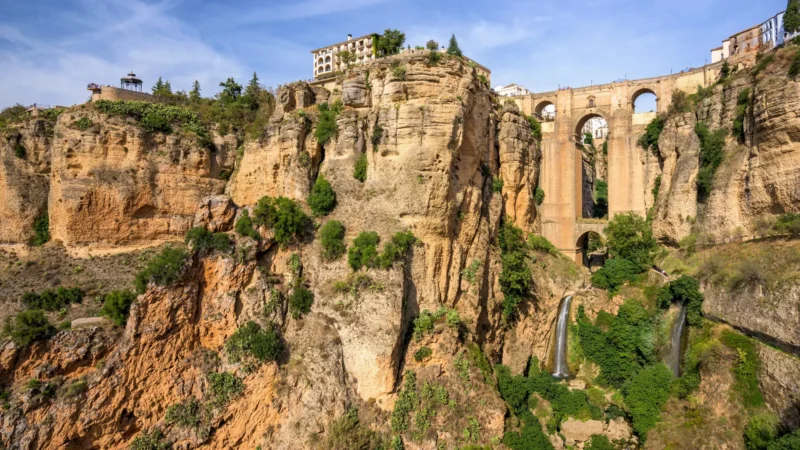
The Puente Nuevo is Ronda’s symbol and the reason most people come. Built in the 18th century, it stands about 98 metres high and crosses El Tajo, the gorge carved by the Guadalevín river. It joins the old Moorish town on one side to the newer Mercadillo quarter on the other. The chambers inside the bridge once served as a prison and now hold a small interpretation centre. The view from the bridge — and of the bridge, from the miradores nearby — is the classic image of Ronda.
Plaza de Toros (Real Maestranza)
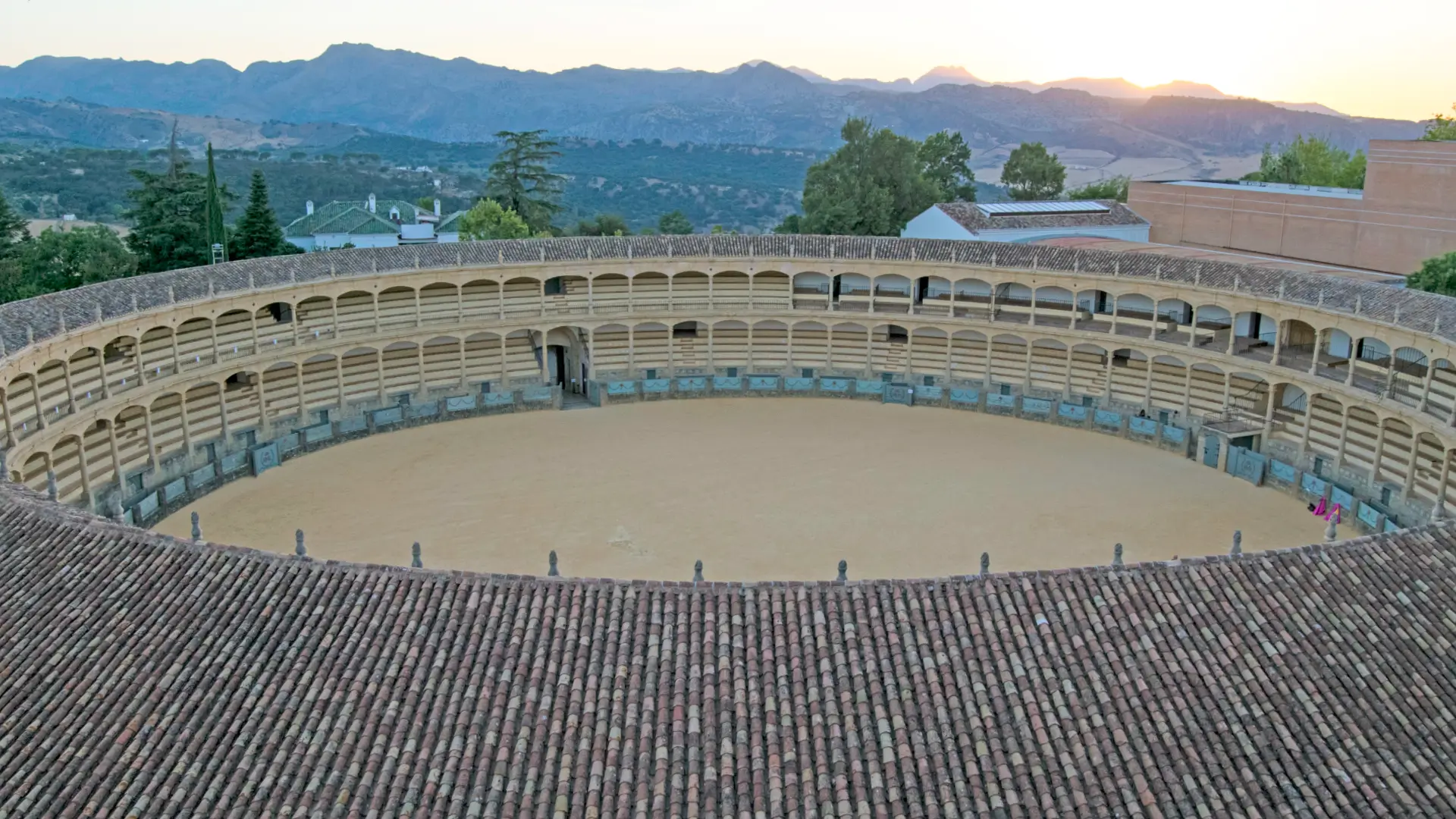
Ronda’s bullring is one of the oldest and most monumental in Spain, and the town claims it as the birthplace of modern bullfighting on foot. The stone arena, built by the Real Maestranza de Caballería, is a graceful two-tier ring you can visit whether or not the fights interest you. Inside is a bullfighting museum with costumes, old posters and artefacts.
La Ciudad (the old town)
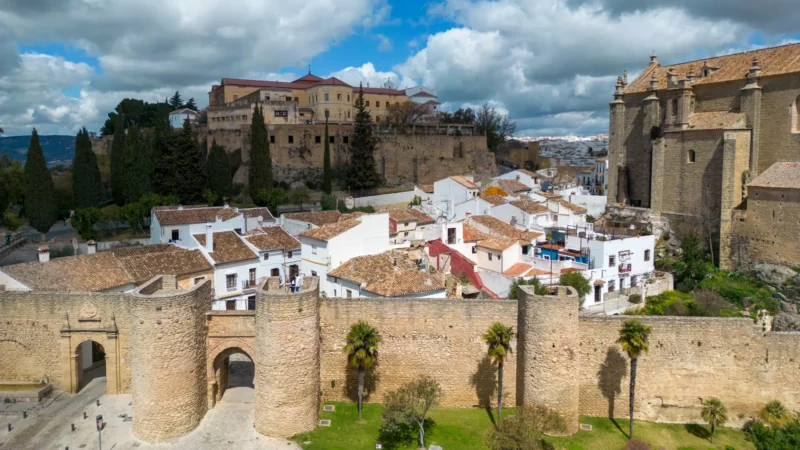
Across the bridge from the modern centre lies La Ciudad, Ronda’s walled old town and its Moorish heart. Its lanes wind past palaces, churches and small squares, and the old Islamic walls still stand in long stretches — among the largest walled circuits on the Iberian peninsula. This is the part of Ronda best explored slowly and without a map, letting the streets lead you between the gorge-edge viewpoints and the quiet plazas.
Baños Árabes (Arab Baths)
Down by the old Puente Viejo, in what was the tanners’ and Jewish quarter, sit the best-preserved Arab baths in Spain — some say in Europe. Built in the 13th and 14th centuries, they kept the classic hammam layout of cold, warm and hot rooms, lit by star-shaped openings in the vaulted ceilings. The horseshoe arches and brick columns give a clear picture of daily life in Moorish Ronda.
Casa del Rey Moro & La Mina
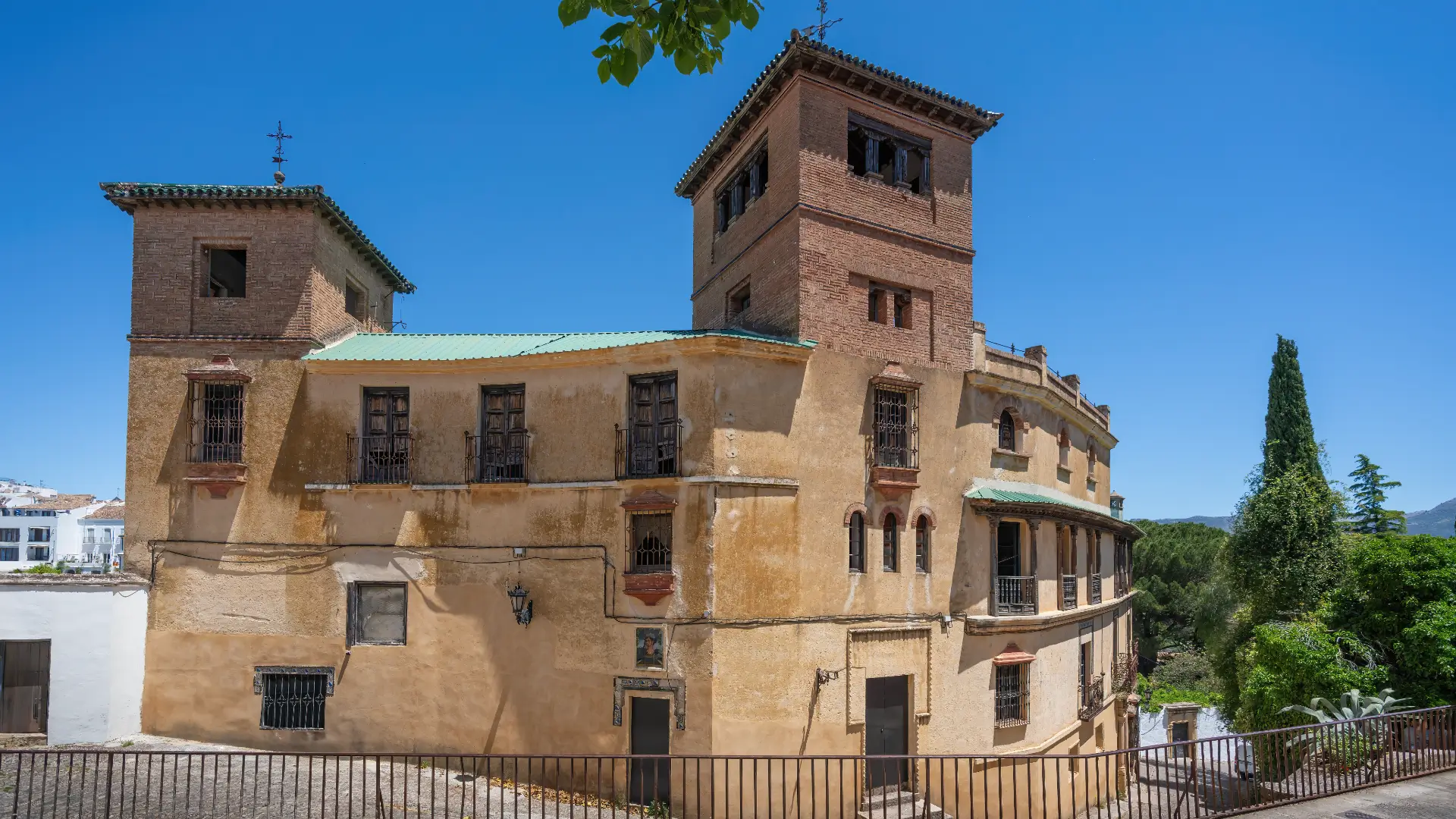
The “House of the Moorish King” is really an 18th-century mansion, but its garden and its secret are what draw visitors. From here, a rock-cut water mine — La Mina — drops through the cliff on 194 stone steps to the bottom of the gorge, once Ronda’s protected water supply during a siege. The terraced gardens above give fine views of the bridges. The stairs are steep and can be slippery, so take care.
Palacio de Mondragón
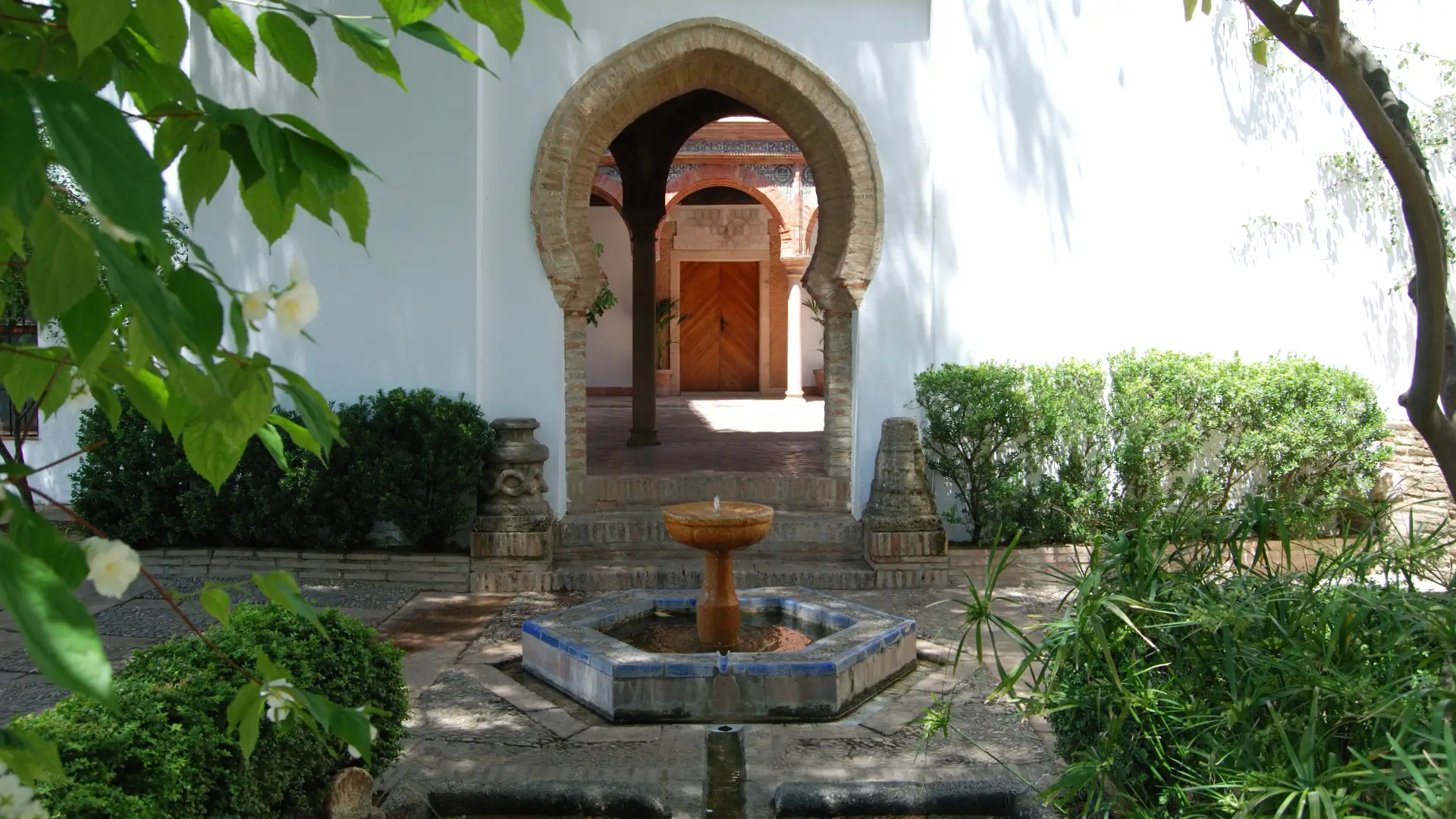
This handsome Mudéjar palace was once the home of Moorish rulers and later of Christian nobility. Today it houses Ronda’s municipal museum, and its three interior patios — with Arab-style fountains and tilework — are the highlight. The garden terrace at the back looks straight out over the sierra. It is one of the calmest corners of the old town.
Iglesia de Santa María la Mayor
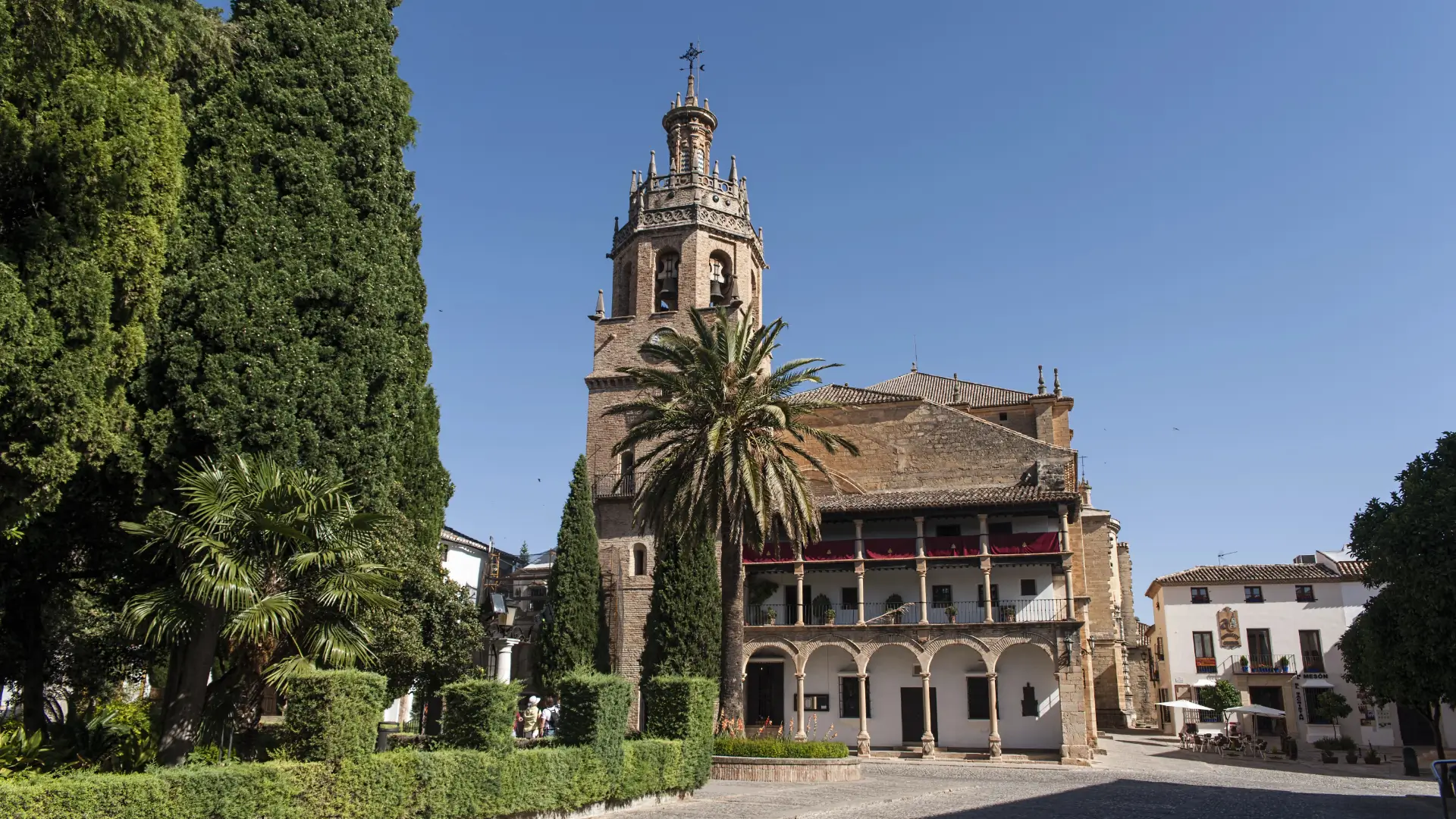
Ronda’s main church stands on the pretty Plaza Duquesa de Parcent, built over the town’s former main mosque. It mixes Gothic and Renaissance styles, and a horseshoe arch survives inside as a reminder of the mosque beneath. The bell tower was raised on the old minaret. It anchors one of the loveliest squares in the old town.
The miradores (gorge viewpoints)
Ronda is ringed with free viewpoints over El Tajo. The Alameda del Tajo is a shaded 19th-century promenade along the cliff edge, with benches and long views. The Mirador de Aldehuela, beside the Puente Nuevo, gives the postcard angle on the bridge and gorge, and is a favourite for sunset. Others — the Jardines de Cuenca and the small tiled Mirador de los Viajeros Románticos — string along the rim. All are free and open at any hour.


What to Do in Ronda
Affiliate note: some links below are affiliate links. If you book through them, we may earn a small commission at no extra cost to you. It helps us keep GoHiddenSpain running and growing. We only suggest services we'd feel comfortable recommending.
Walk the gorge and the two bridges
The best free thing to do in Ronda is simply to walk its rim. Cross the Puente Nuevo, then work down through the old town to the Puente Viejo and the little Puente Árabe below it, taking in the viewpoints as you go. The whole circuit is short but steep in places, so wear proper shoes and carry water — the old town has little shade. Do it once in the late afternoon and again early the next morning for two very different moods.
See the Puente Nuevo from below
For the classic shot — the full height of the bridge rising out of the gorge — you need to get underneath it. A path, the Camino de los Molinos, drops from near the bridge to the valley floor. It is about 15 minutes down and a stiffer climb back up, roughly 40 minutes round trip on foot, though you can also drive part of the way. The reward is the view every postcard uses, with the bridge towering overhead.
Taste the wines of the Serranía de Ronda
Ronda sits in a real wine country. The vineyards of the Serranía de Ronda, under the D.O. Málaga / Sierras de Málaga, ring the town, and more than twenty wineries work the hills nearby. A cellar visit here is a genuine activity, not a tourist add-on: you taste reds and whites grown at altitude, in a landscape of oak woods and mountains. A guided tasting adds what you can’t get alone — someone who explains why the height and the soils make these wines what they are, and pours you the bottles you’d never find on a shop shelf. Several bodegas take visitors by arrangement; book ahead.
Book a guided tour + wine tasting at Bodega Doña Felisa on TiqetsDay-trip to Acinipo and the Cueva del Gato
Two easy trips sit within reach of Ronda. Acinipo — “Ronda la Vieja” — is a ruined Roman town on a hill about 20 km north, with a stone theatre and huge views; check opening days before you go, as they are limited. The Cueva del Gato, near Benaoján, is a dramatic cave mouth where a river pours out into a natural pool, a popular spot for a walk and, in summer, a cold swim. Both make a good half-day out of Ronda by car.
Prefer to go with a guide for any of this? Ask where you're staying, or at the tourist office on the Paseo de Blas Infante by the bullring — they'll know what's running, in which language, and can point you to something that fits.
Seasonal Events and Festivals
Feria de Pedro Romero (early September) Ronda’s biggest fair, held in the first week of September and named after the town’s legendary matador. Expect a week of processions, folk galas, flamenco cante grande, fireworks and the ladies in Goya-era dress, the Damas Goyescas. It is one of Spain’s most distinctive local fairs.
Corrida Goyesca (September, during the Feria) the fair’s most famous event: a historic bullfight in the old stone ring, with matadors dressed in the costumes of Goya’s paintings. It has drawn a glamorous crowd since 1954, and after two years of restoration work the historic arena reopened for the fair. Tickets sell out well ahead. For exact dates and the current programme, check the official tourist office.
Ronda Romántica (May) a lively historical re-enactment that turns the town back to the 19th century, with period dress, horses, carriages and street theatre recalling the age of the Romantic travellers and the bandoleros (bandits).
Semana Santa (spring, Holy Week)solemn Easter processions wind through the old town, as across Andalucía; dates move each year with the Christian calendar.
For exact dates each year, check the official municipal source: Ayuntamiento Ronda
Getting There and Around
Ronda sits high in the Málaga sierra, inland from the Costa del Sol, reached by winding mountain roads from every direction. On the White Villages Trail it is the eastern base — nights 3 and 4 — the largest town on the loop and the hub for the eastern villages.
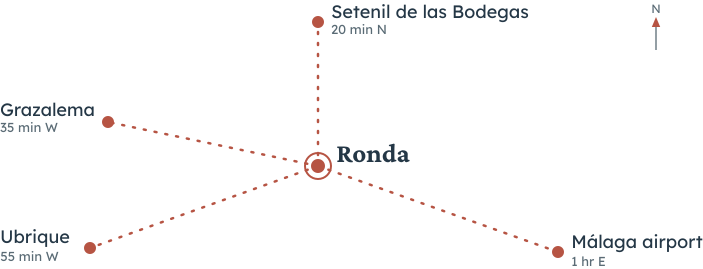
From Málaga (AGP)about 1 hour 15 by car — Málaga is the closest airport and the usual gateway to Ronda. The quicker A-397 is a twisting mountain road; the A-7 then A-374 is longer but easier.
From Setenil de las Bodegasabout 20 minutes north — the nearest trail village.
From Sevilleabout 1 hour 45 to 2 hours by car; a bigger airport with more flights, worth it if the fares suit your trip.
Nearest airportsMálaga (AGP) is closest and best connected for Ronda; Seville (SVQ) and Jerez (XRY) are the other options if you’re running the loop from the Cádiz side.
By trainRonda has its own station on the scenic Algeciras–Bobadilla line. Direct trains reach it from Málaga (about 2 hours, usually with a change at Antequera), and from Algeciras and Granada. The station is a short walk from the modern centre.
Getting around
You do not need a car inside Ronda — the town is walkable, and the old town is best on foot. Park in the modern quarter or in one of the car parks on the edge of the centre; free parking near the old town is hard to find in high season. But you do want a car for this route: the White Villages Trail links villages that regular buses barely connect, and the freedom to stop at a viewpoint is half the pleasure.
Looking for a ready-made plan? See our Andalucia road trips.
Practical Info
- TicketsSeveral of Ronda’s paid sights — the bullring, the Arab baths, Palacio de Mondragón, Casa del Rey Moro, Santa María la Mayor — charge separately. A combined tourist voucher (bono turístico) covers a set of the main monuments for less than paying each one. Buy it at the tourist office or the participating sites. Many of the best sights — the bridge from above, the viewpoints, the old-town walls — are free.
- Best time of dayearly morning and late afternoon. The middle of the day brings the coach parties; dawn and dusk bring the light and the quiet.
- On footthe old town is steep and cobbled, with little shade. Wear proper shoes, carry water, and take a hat in summer.
- ClimateRonda sits high and dry — cooler and less humid than the coast. July is the hottest month, with daytime highs around 32°C, and August close behind. The most comfortable months are April to June and September to October, roughly 19–27°C. Most rain falls in late autumn and winter, with December the wettest month; summer is very dry.
Where to Eat in Ronda
You’ll eat and drink well in Ronda, at every budget — this is proper mountain country, where the food is hearty and the local wine is a point of pride. The dish to try is rabo de toro, oxtail slow-cooked until it falls off the bone; you’ll also find game, cured meats, aubergines with cane honey, and the reds and whites of the Serranía de Ronda. Two simple rules make it easy: for a quick lunch while you’re out walking, the tapas bars around the Plaza del Socorro and Carrera Espinel are easy and good value; for dinner, head into the old town or the quieter Barrio de San Francisco, where the evening is at its best. The picks below cover both, from a legendary cheap tapas bar to a special-occasion table.
In the Barrio de San Francisco, a big, friendly bodega pairing traditional Ronda cooking with a strong wine list and a terrace looking toward the old town. Good tapas and raciones at fair prices.
A long-standing restaurant on the lively Plaza del Socorro, spread over two floors, serving classic Serranía de Ronda dishes — oxtail, aged beef chuletón, its own home-grown tomatoes — with a good local wine list. A central, easy choice after a day’s sightseeing.
A Ronda institution: a small, old-style tapas bar where locals and visitors queue for a long list of cheap, generous tapas. Great value and full of life. The famous mini rabo de toro burger is worth the wait.
A warm, family-run spot in the heart of the old town serving classic Ronda mountain cooking — oxtail, lamb, hearty salads — with friendly, attentive service. A reliable choice for a proper sit-down dinner of local dishes.
A step up for a special dinner, well regarded for its rabo de toro and its aubergines with honey, and for attentive service. A good choice when you want to sit down and be looked after.
A sleek, modern kitchen that reworks the region’s traditional products into inventive small plates. Beautifully presented, high-quality tapas with a twist — a favourite of visitors looking for something beyond the usual. Book ahead; it fills up.
Where to Stay in Ronda
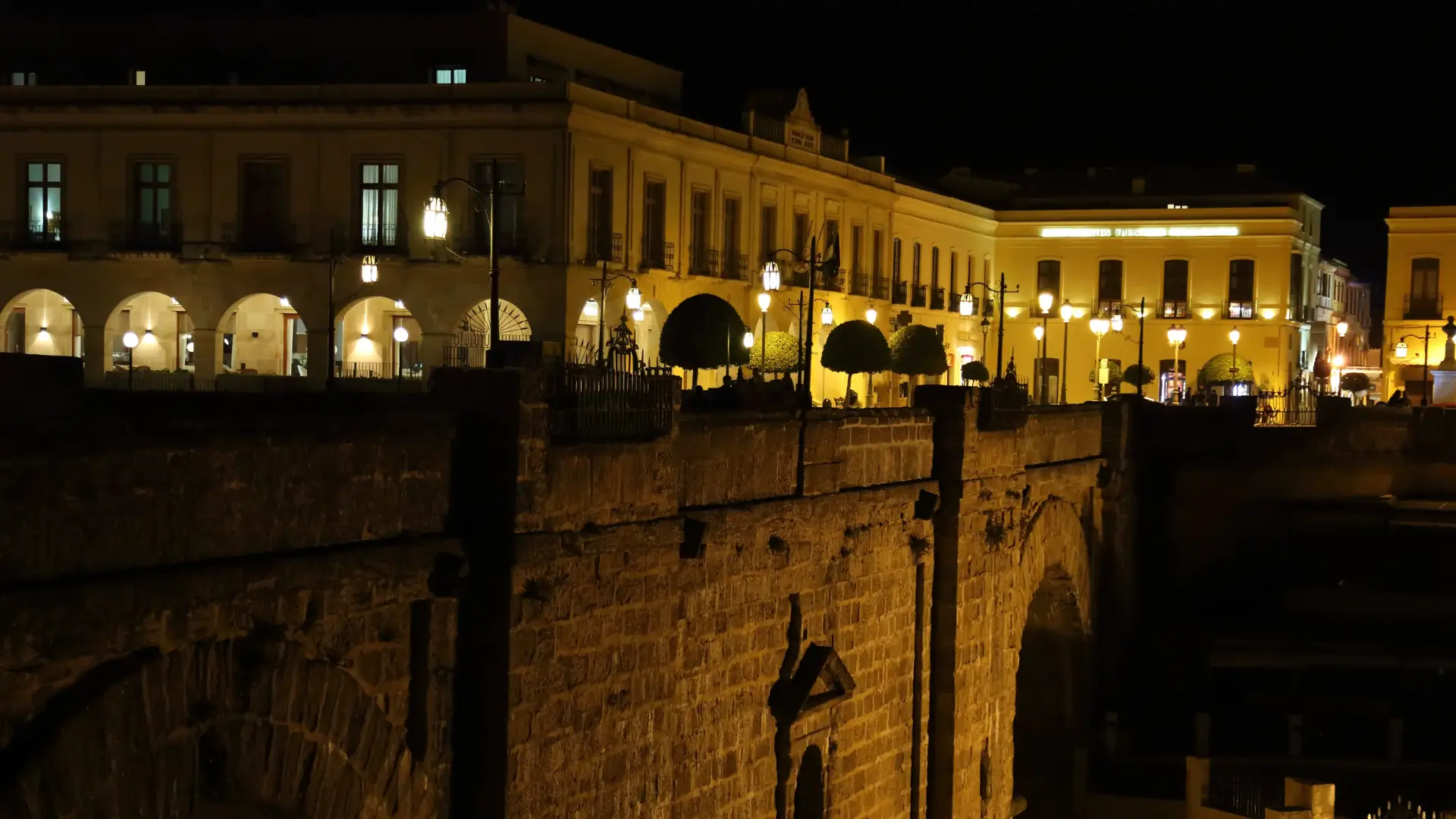
Picture the town after the last coach has gone: the gorge glowing in the low sun, the Puente Nuevo lit against the dark, the lanes of La Ciudad quiet under the lamps. That is the Ronda most day-trippers never see — and it is the whole reason to stay the night. Sleep on the gorge edge or in the old town, and the finest hours of Ronda, dawn and dusk, are simply yours. Here’s where we’d book.
Parador de Ronda
The best-placed hotel in town: the Parador stands on the very edge of the gorge, in Ronda’s former town hall, right beside the Puente Nuevo. Many rooms and the pool terrace look straight down into El Tajo. Sleep here and the bridge is the first thing you see at dawn.
Check prices & availability for Parador de Ronda on the accommodation's websiteCanaan boutique hotel
A quirky, art-filled hotel with a rambling garden, terraces and gorge views, a short walk from the centre. Relaxed and characterful, with a generous buffet included — good value for the atmosphere and the setting.
Check prices & availability for Canaan boutique hotel on the accommodation's websiteCatalonia Reina Victoria Wellness & Spa
A grand 1902 hotel perched over the gorge, with gardens, a spa and a pool, and long views from its terrace. A comfortable, classic base with a sense of Ronda’s Belle Époque past — this was where the travellers of a century ago stayed.
Check prices & availability for Catalonia Reina Victoria Wellness & Spa on the accommodation's websiteHostal San Cayetano
A friendly, well-kept budget hostal on Calle Sevilla in the newer quarter, a short walk from the Puente Nuevo and close to the train and bus stations. Clean, simple air-conditioned rooms and helpful staff, at a fair price in a town where beds can run dear — a sound base for a night or two.
Check prices & availability for Hostal San Cayetano on the accommodation's websiteHotel Montelirio
A 17th-century palace sensitively restored on the gorge edge, with a Mudéjar-ceilinged lounge, a small pool, a hammam and a well-regarded restaurant. Intimate and quiet, with magical views straight down to the Guadalevín.
Check prices & availability for Hotel Montelirio on the accommodation's websiteHotel Soho Boutique Palacio San Gabriel
An 18th-century palace of 22 rooms in the heart of the old town, a few steps from Ronda’s best-known monuments and about five minutes from the Puente Nuevo. It’s full of character, with unique furniture and pieces rescued from historic buildings. Nice extra touches include a wine cellar and a small private cinema room. You can drive to the door to drop bags, then use nearby public parking. Warm and atmospheric for two nights.
Check prices & availability for Hotel Soho Boutique Palacio San Gabriel on the accommodation's website
Region, Nearby and Routes
Part of Andalucía
Ronda is in Andalucía
Part of these routes
Ronda is one stop on our The White Villages Trail see the full route.
Nearby places
- Setenil de las BodegasA white village where houses are tucked under vast rock overhangs, famous for its cave streets and cave-cool tapas bars.
- GrazalemaA cool, green mountain village in the Sierra de Grazalema park, built for hiking and payoyo cheese.
- UbriqueThe biggest white village and Spain’s leather-craft capital, wrapped in cliffs and Roman history.
- OlveraA white town crowned by a Moorish castle and a great church, and the start of the Vía Verde greenway.
- SevilleAndalucía’s grand capital, with three UNESCO monuments, orange-tree squares and Spain’s best tapas scene.
- Jerez de la FronteraThe birthplace of sherry, with dancing horses and deep flamenco roots — a working Andalusian city that stays real.
Frequently Asked Questions
Yes. Ronda has one of the most dramatic settings of any town in Spain — split by a 100-metre gorge and joined by the great Puente Nuevo — plus a Moorish old town, one of Spain’s oldest bullrings, and well-preserved Arab baths. It is the biggest and best-known stop on the White Villages Trail.
Ronda is known for El Tajo, the deep gorge that splits the town, and the 18th-century Puente Nuevo that crosses it. It is also famous for its historic bullring, its Moorish heritage, and its links to writers like Hemingway and Orson Welles.
Ronda is the most visited place on the White Villages Trail, and it does get busy — mostly with day-trippers from Málaga and the Costa del Sol, who arrive mid-morning and leave by late afternoon. The simplest way to avoid them is to stay the night and see the gorge, the bridge and the viewpoints at dawn and dusk, when the town is quiet and the light is best.
You can see the main sights in half a day, but an overnight stay is far better. It lets you enjoy the town in the early morning and evening, once the day-trip crowds have gone — which is when Ronda is at its most beautiful.
Spring and autumn are ideal. July is the hottest month, with daytime highs around 32°C and August close behind. The most comfortable months are April to June and September to October, roughly 19–27°C. Most rain falls in late autumn and winter, with December the wettest; summers are very dry.
For the views, stay on the gorge edge: the Parador de Ronda sits beside the Puente Nuevo, the Catalonia Reina Victoria and Hotel Montelirio both overlook El Tajo. For old-town character, the Soho Boutique Palacio San Gabriel is a restored mansion in the heart of La Ciudad, and Hotel Enfrente Arte is a relaxed, art-filled choice; Hostal San Cayetano is a good central budget base.
For traditional Ronda cooking and oxtail, try Mesón Rondeño, Casa Ortega or Restaurante Puerta Grande; for modern, inventive tapas, Tragatá. El Lechuguita is a much-loved cheap tapas bar, and Bodega San Francisco pairs local dishes with a strong wine list.
Yes — Ronda is about 1 hour 15 by car from Málaga, and you can see the headline sights in an afternoon. But it is also the busiest time to visit. Staying overnight lets you enjoy the quieter, more beautiful Ronda of early morning and evening.