
Ubrique: Spain’s Leather Town in the White Villages
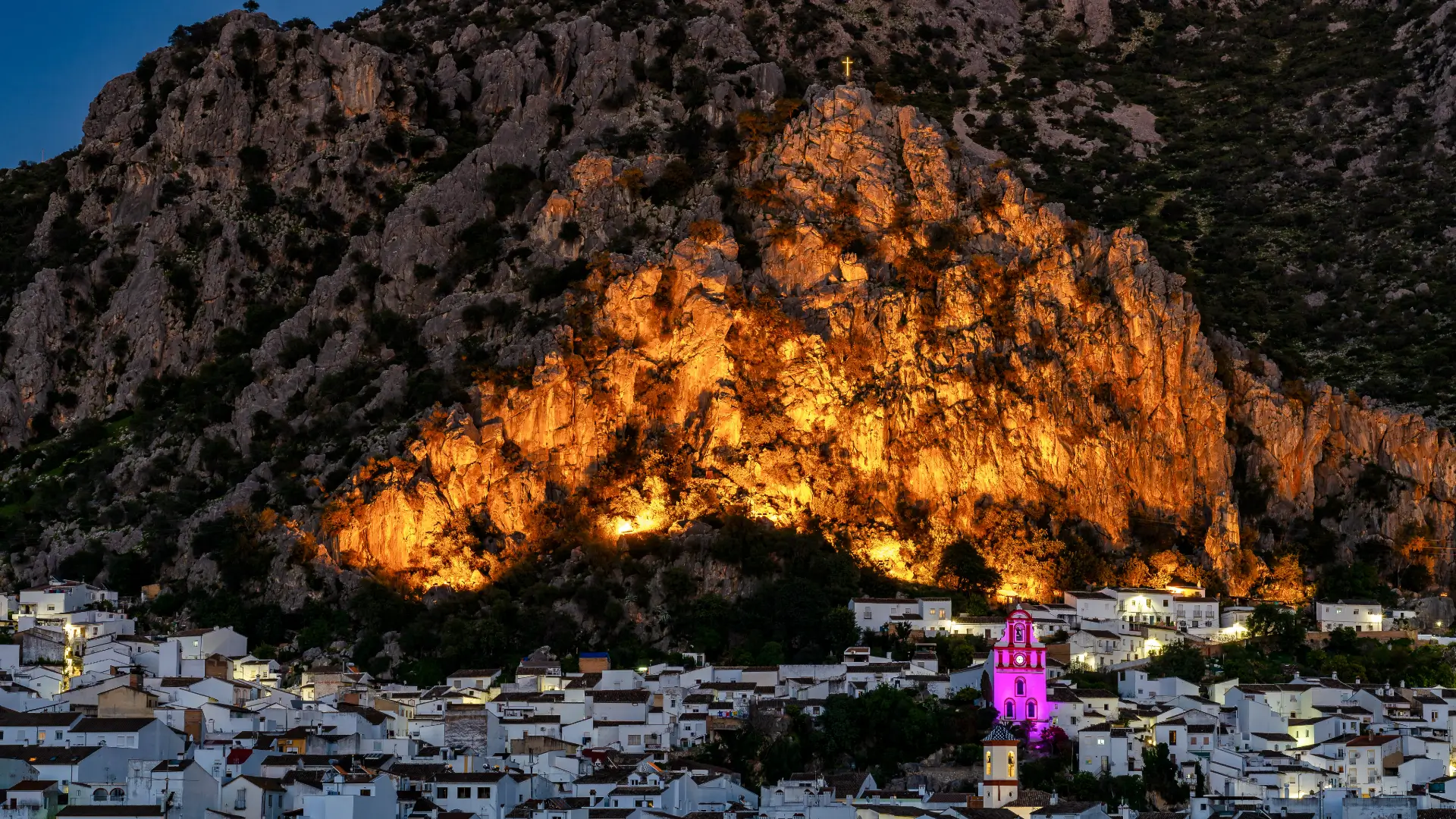
Ubrique is the largest of Andalucía’s famous white villages, tucked below sheer limestone cliffs in the Sierra de Grazalema. It is a real working town, not a museum piece — and the leather-craft capital of Spain, where fine bags are still made for the world’s luxury names. Add Roman ruins on the hill above and a steep, whitewashed old town, and you have one of the least touristy stops on the White Villages Trail.
Why Visit Ubrique
Most white villages live off their looks. Ubrique lives off its hands. This is the largest of the Pueblos Blancos and, above all, a working leather town. Much of Spain’s fine leatherwork, its marroquinería, is still cut and stitched here — including bags for some of the biggest luxury brands in the world. That gives Ubrique a different feel from its pretty neighbours: busy shopfronts, real streets, a town getting on with its day rather than posing for photos.
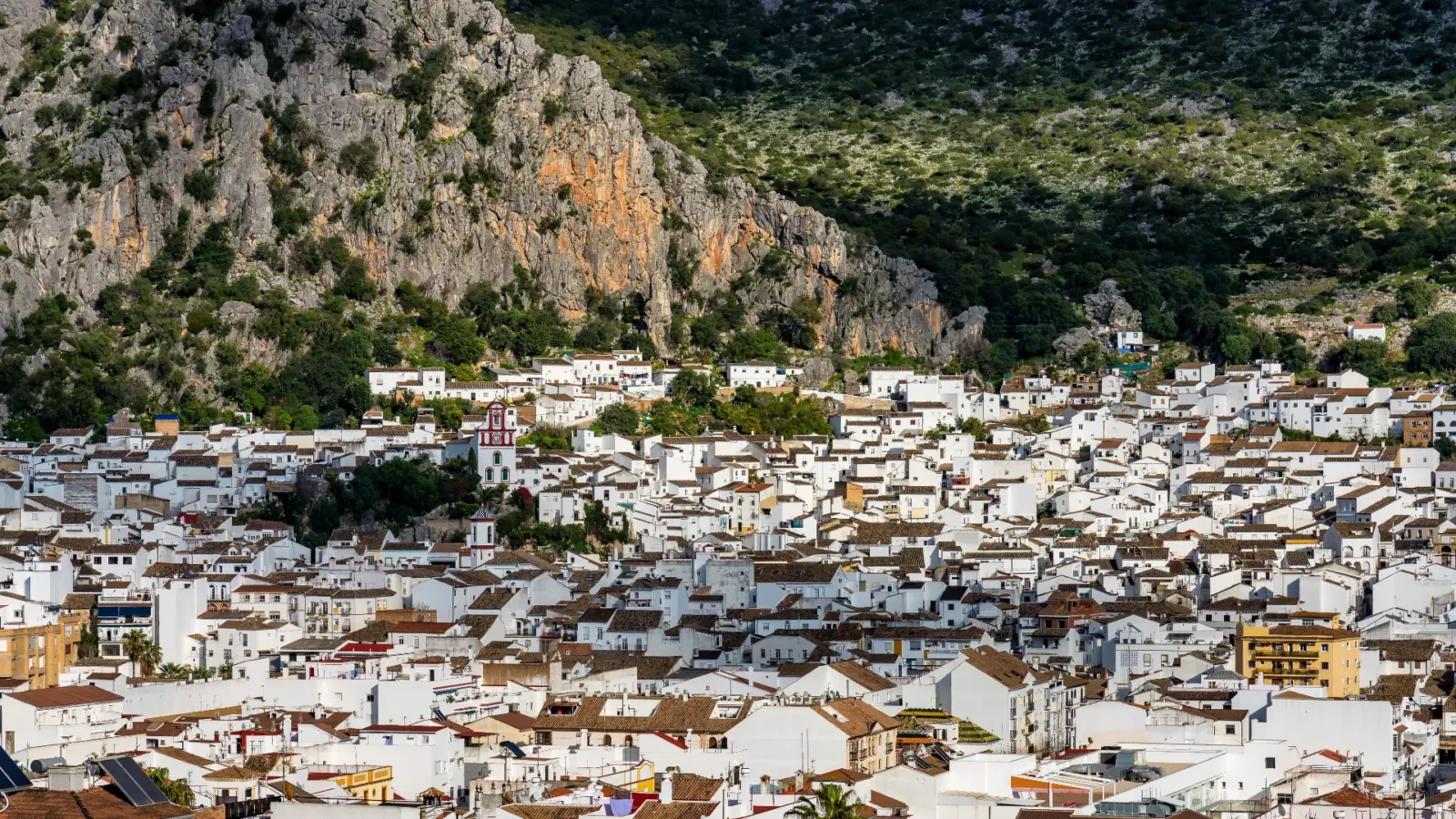
The setting matches the craft. Ubrique sits at the foot of steep limestone mountains, wedged between two natural parks — the Sierra de Grazalema and Los Alcornocales. The old town climbs the slope in a tangle of narrow, whitewashed lanes, with fountains, small churches and viewpoints at almost every turn. Above it all, on a rocky hilltop a short way out of town, stand the Roman ruins of Ocuri, reached by a well-kept stretch of Roman road.
Who Ubrique is for
Ubrique suits travellers who like their white villages lived-in rather than polished. If you want leather shopping straight from the source, a proper walk in the mountains, a slice of Roman history and a town where locals still outnumber visitors, this is your stop. It is less about postcard squares and more about character, craft and dramatic scenery.
Day trip or overnight?
You can see central Ubrique in an afternoon — the old town is compact, if steep. But the best of it needs more time. A visit to the Roman city of Ocuri runs on guided slots and needs booking ahead, the leather museum works the same way, and the mountain walks want a whole morning. Our honest advice: stay the night. A perfect short visit looks like this — arrive for lunch, wander the steep old-town lanes and browse the leather shops in the afternoon, then catch golden hour on the mirador circuit as the cliffs turn amber above the white roofs. Next morning, before the heat, take a booked slot at Ocuri or walk the Roman road down from Benaocaz. Day-trippers only ever get the shopping; stay over and you also get the history, the walking and the quiet.

What to See in Ubrique
Centro de Interpretación de la Historia de Ubrique
Housed in the small, octagonal Ermita de San Juan de Letrán, this history centre tells Ubrique’s whole story, from prehistory to the present. It is the best place to understand the Roman city of Ocuri before or after visiting the site itself. There’s a permanent display and a 3D reconstruction of the ancient town. The single leather-museum ticket includes entry here, so the two pair naturally.
Convento de Capuchinos & the Leather Museum
This robust 17th-century Capuchin convent is the town’s cultural anchor, and it holds two things at once. Its church guards the image of Ubrique’s patron, Nuestra Señora de los Remedios. Its old monks’ cells and cloister now house the permanent leather exhibition “Manos y Magia en la Piel” (Hands and Magic in Leather). This is the town’s museum of its own craft, tracing tanning, tools and finished pieces from the earliest days to today’s luxury designs. Entry is by guided visit and should be booked ahead; the same ticket also covers the history centre.
Roman city of Ocuri
On a limestone hilltop about a kilometre above the town stand the ruins of Ocuri, the most important Roman site in the Sierra de Cádiz. First dug out in the late 18th century, the walled city preserves cyclopean stone walls, huge water cisterns and the forum. It also has baths — the only Roman baths found in these mountains. Its showpiece is a rare columbarium mausoleum, said to have no equal in Andalucía. The site is reached on foot up a paved path and can only be seen on a guided visit, booked in advance (see What to Do and Practical Info).
The churches: Nuestra Señora de la O & Ermita de San Pedro
The parish church of Nuestra Señora de la O, built in the late 18th century, is the largest religious building in town and the heart of local festivals. Nearby, the neoclassical Ermita de San Pedro sits on the old Plaza del Perdón by the town-hall square — small, elegant and easy to fold into an old-town wander. Ubrique’s oldest temple, the Ermita de San Antonio, adds a third stop for anyone who enjoys quiet village churches.
The mirador circuit
A ring of viewpoints — the town counts seven miradores, linked as a short signposted walk — wraps around Ubrique and shows it off from every angle: white houses below, bare limestone above, and the wide valley beyond. It is an easy, photogenic loop that also passes the old-town churches and hermitages. Late afternoon, when the low sun warms the cliffs, is the moment to walk it.
The old town (Casco Antiguo)
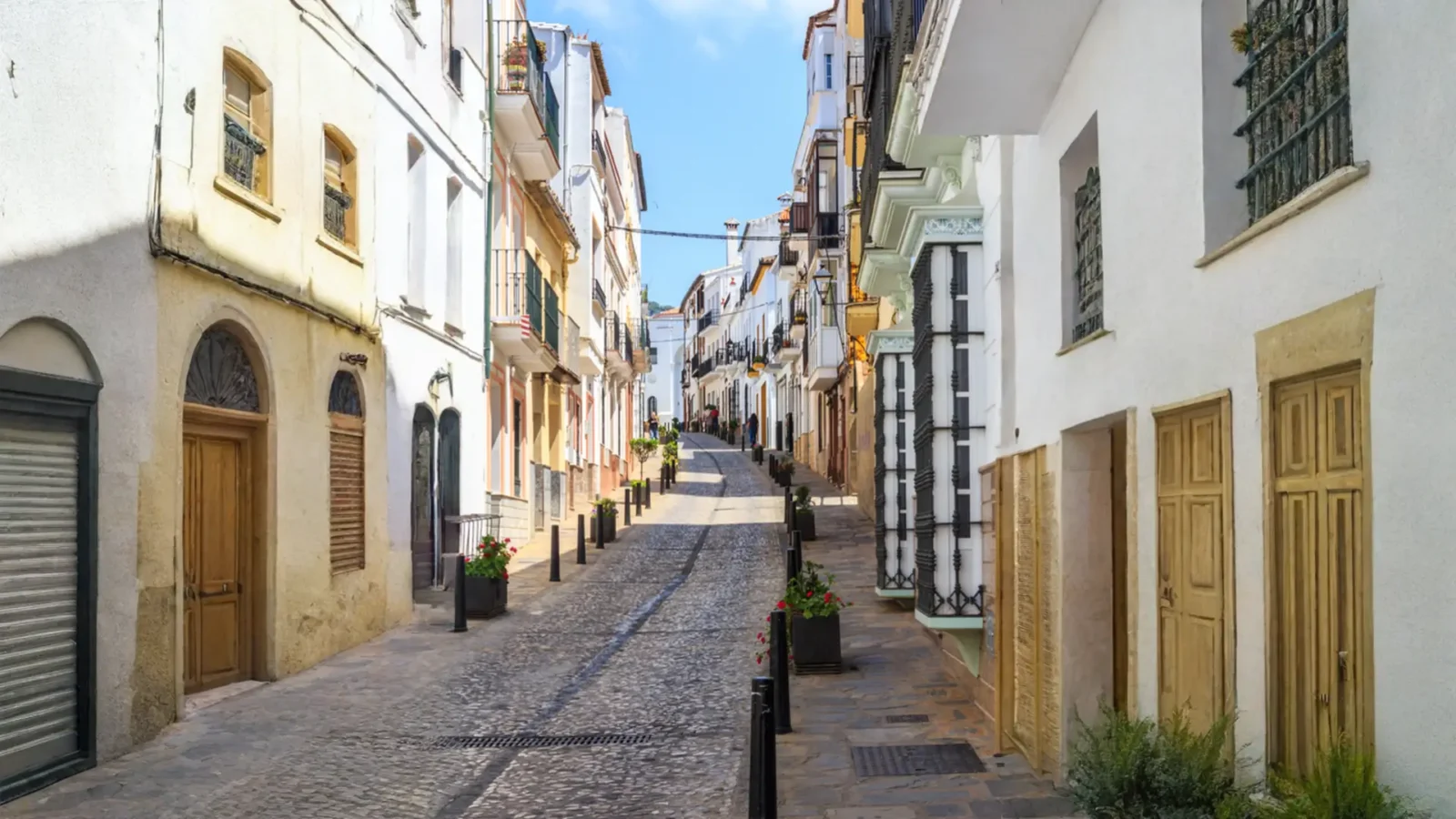
Ubrique’s old town is a protected historic site with a medieval street plan. Narrow, steep lanes twist up the hillside between whitewashed houses, tiny plazas and old public fountains — among them the barroque town fountain and the Moorish-era Nueve Caños (“Nine Spouts”). It is a place to wander slowly rather than tick off. Cameras love the contrast of white walls against the grey limestone peaks that rise straight behind the roofs.
What to Do in Ubrique
Walk the Roman road to Ocuri
The old Roman road (Calzada Romana) between the neighbouring village of Benaocaz and Ubrique is one of the best-preserved stretches of its kind in the area — the same route that once linked the Roman towns of the sierra. Many walkers start high in Benaocaz and descend the paved path down to Ubrique, ending near the leather museum, then visit the Ocuri ruins along the way or afterwards. It is a moderate, scenic walk of a couple of hours through classic Sierra de Grazalema country.
Visit the Roman city of Ocuri
Ocuri can only be entered on a guided visit, and places per slot are limited, so book ahead by phone, email or the site’s own booking form. The tour is led by heritage guides and follows a set path up to the walls, cisterns, forum, baths and the rare mausoleum. From the top there are wide views over Ubrique and, on the far side, Benaocaz and Villaluenga. It is an easy visit of around an hour and a half and works well with children.
Book your visit on Ciudad Romana de OcuriShop for leather, straight from the source
Leather is not a souvenir gimmick here — it is the town’s living trade, and browsing the workshops and shops is a genuine Ubrique activity. Streets like Avenida de España are lined with leather goods, from belts and wallets to bags made to the same standards as the luxury names the town supplies. Prices and quality vary, so take your time and compare.
Walk in the Sierra de Grazalema
Ubrique sits on the edge of the Sierra de Grazalema Natural Park, so good walking starts almost from the door. Gentle options include the riverside Río de Ubrique loop and the mirador circuit around town; harder days climb into the sierra or link to neighbouring villages. The dramatic Salto del Cabrero gorge and the trails around Benaocaz and Villaluenga del Rosario are within easy reach. Note that some park trails need a free permit in peak season — check locally before setting out.
Prefer to go with a guide for any of this? Ask where you’re staying, or at the tourist office in town — they’ll know what’s running, in which language, and can point you to something that fits.
Seasonal Events and Festivals
Ubrique’s calendar leans on its faith, its food and its craft. Verify exact dates each year with the Ayuntamiento de Ubrique (official source).
Carnival (February–March)Ubrique’s carnival is known for its gastronomic events: the Chorizá, Chicharroná and Tortillá (communal fry-ups of chorizo, pork and omelette) and the playful “burial of the Patacabra.”
Crujía de Gamones / Cruces de Mayo (early May) A striking and unusual spring fiesta, listed as a Fiesta of Tourist Interest in Andalucía, with deep local roots.
Romería de San Isidro y Día del Petaquero (late May)A country pilgrimage that doubles as the town’s tribute to its leather workers (the petaqueros) — a rare festival built around the craft itself.
Bajada Romana (late May / early June) A Roman historical re-enactment staged by the town’s “Romanos de Ubrique” association, playing on Ubrique’s ancient past at Ocuri.
Semana Santa (Holy Week, spring)From Palm Sunday to Easter Sunday, processions and orange blossom fill the old-town streets.
Feria y Fiestas de Nuestra Señora de los Remedios (patron saint 8 September; feria mid-September)The town’s biggest celebration, honouring its patron with processions, music, horses and a full fairground.
Getting There and Around
Ubrique sits in the southwest of the Sierra de Grazalema, deep in the mountains between the Grazalema and Los Alcornocales natural parks, on the A-373/A-374 roads.
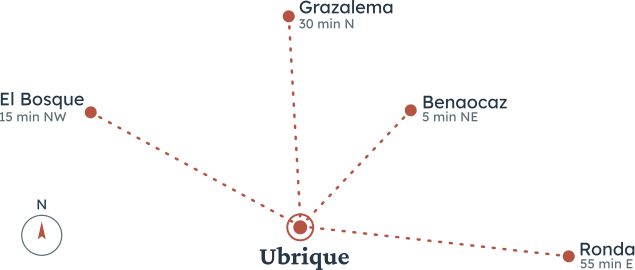
From Arcos de la Fronteraabout 45 minutes by car (roughly 43 km on the A-373/A-372) — this is the western base on the White Villages Trail.
From Rondaabout 55 minutes by car on the scenic A-374 mountain road through the park (roughly 50 km) — the eastern base on the trail.
From Jerezabout 1 hour 15 minutes by car; Jerez is the closest airport.
Nearest airports Jerez (XRY) is closest, about 1h15 by car; Málaga (AGP) is the main international option, about 1h45–2h; Seville (SVQ) is a third choice, about 1h45.
By busDamas runs local buses linking Ubrique with nearby villages (Benaocaz, Grazalema, El Bosque) and larger towns, but services are infrequent — a car is far more practical.
Getting around
You don’t need a car inside Ubrique — the old town is walkable, if steep, and best explored on foot. Park in the lower, newer part of town and climb up. But you very much want a car for the region: the White Villages Trail, the Roman road, Ocuri and the surrounding sierra villages are all far easier with your own wheels, and public transport between them is thin. If you’re touring the Pueblos Blancos, this is the classic self-drive loop.
Looking for a ready-made plan? See our Andalucia road trips.
Practical Info
- Ocuri & the leather museum run on guided slots. Both the Roman city of Ocuri and the “Manos y Magia en la Piel” leather museum are seen only on guided visits with limited places — book ahead. One combined ticket covers the leather museum and the history centre together. Opening structure changes with the season, so check the official pages for current hours and prices rather than turning up cold. Official information sources: Ciudad Romana de Ocuri and Museo de la Piel “Manos y Magia en la Piel”
- The old town is steepWear proper shoes and expect a climb; leave the car in the lower town.
- A car is essential for the regionthough not for the town itself (see Getting Around).
- Some sierra trails need a free permit in peak seasoncheck locally before heading into the park.
- ClimateSummers are hot and dry: July and August highs sit in the low-to-mid 30s °C, with almost no rain. The most comfortable months are April, May, September and October, roughly the high teens to mid-20s °C. Ubrique lies in the Sierra de Grazalema, the wettest corner of Spain — its yearly rainfall (around 770 mm) is high, and the wider sierra sees some of the heaviest rain on the peninsula. The rain falls mostly in late autumn and winter (wettest around December), leaving summer bone-dry; spring and autumn bring the odd shower but plenty of clear days.
Where to Eat in Ubrique
You’ll eat well in Ubrique, and honestly — this is a working town, so the food is unfussy, generous and good value rather than showy. The local kitchen is mountain cooking: hearty stews and pucheros, game in season, grilled Iberian meats, and country dishes like sopa de espárragos (wild asparagus soup) and hot gazpacho caliente. Save room for the town’s own sweet, the anise-scented piñonate, made in the old-town bakeries especially around Easter. Two simple rules make it easy: for a quick lunch while you’re out walking or shopping, the bars along Avenida de España are full of good tapas; for a slower dinner or a terrace with a view, head to the edges of town.
A busy, family-friendly restaurant with a good-value set menu and homemade dishes; part of the Abrasador group that works with its own farm-raised meats. Handy after a morning of leather shopping.
A grill house known for good steaks and lamb cutlets at fair prices — the place to go when you want meat done simply and well.
La Venta de Ocuri
Just below the Ocuri ruins on the Benaocaz road, this country venta has a big terrace with valley views and lanterns in the trees — homemade local dishes in an idyllic setting. Worth pairing with a visit to the Roman site; book ahead, and go for sunset if you can.
Mesón Juan Gómez
A proper local tavern near the Paseo del Prado, praised for honest home cooking, fast, friendly service and excellent value. A reliable first stop for tapas.
A surprising, well-loved spot for ceviche and other Peruvian dishes — a fresh change of pace after a run of traditional mountain menus, with genuinely warm service.
Sarao Gastropub
A modern gastrobar on Avenida de España turning out well-made tapas and small plates, with a strong local following and a lively evening buzz.
Where to Stay in Ubrique
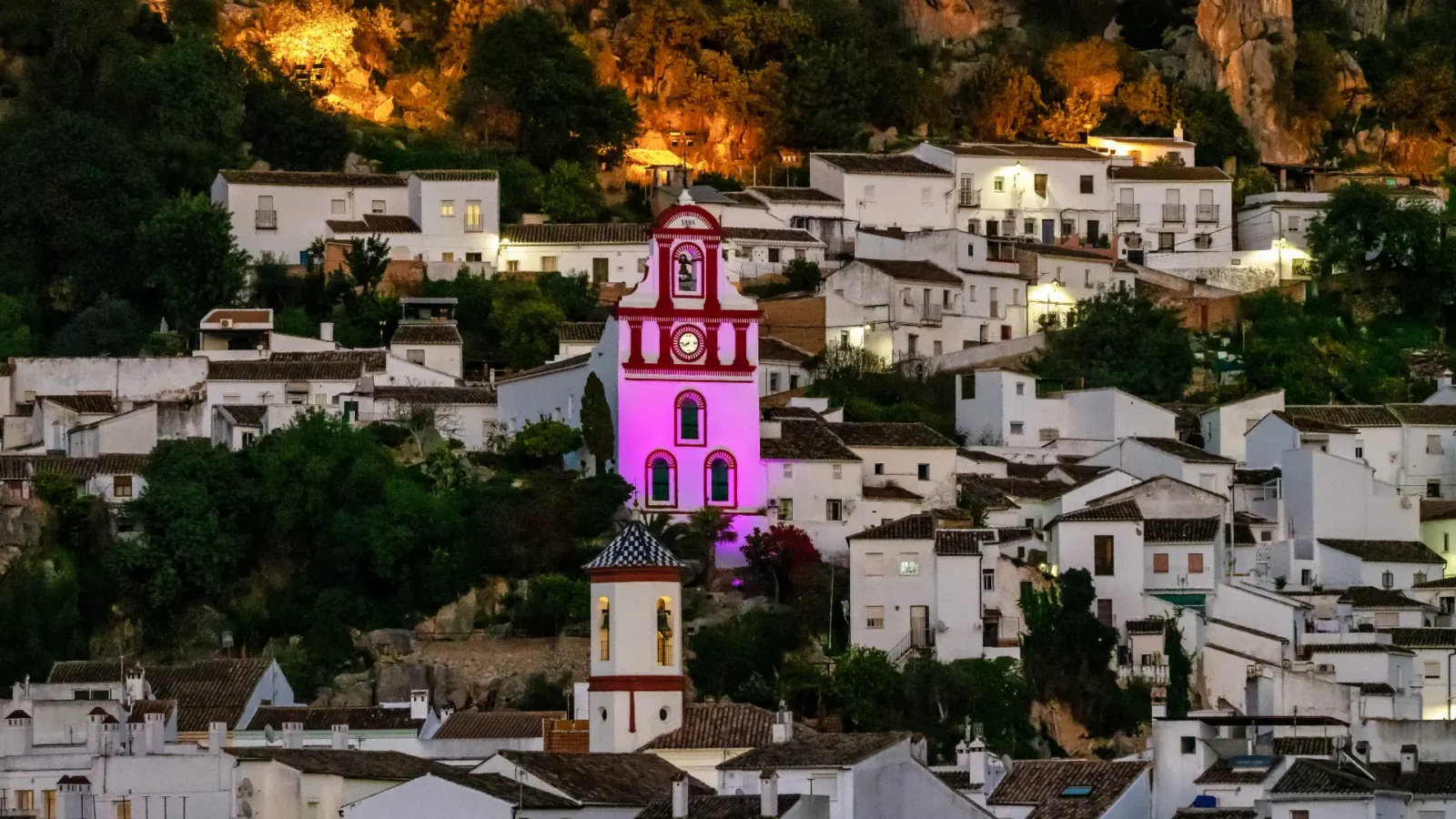
Stay the night and Ubrique changes. The day-trippers and the leather-shopping coaches leave, the working town winds down, and the steep white lanes fall quiet under the cliffs — a warm, still evening with the mountains going dark above the roofs. Because Ubrique is a real town rather than a tourist village, the beds here are different too. Expect a comfortable mountain hotel on the edge, plus a good spread of stylish little apartments and lofts in the centre — not the cave houses and boutique hotels of its neighbours. Here’s where we’d stay.
Hotel Sierra de Ubrique
The town’s main hotel, on the lower edge with a pool, big mountain views and easy parking — the simplest, most reassuring base for international bookers, with an on-site restaurant serving local game and Iberian meats. A short, downhill-then-up walk from the centre.
Check prices & availability for Hotel Sierra de Ubrique on the accommodation's websiteCasa Rural Ubrique Los 20 Pilares
A large country house with a pool and huge terrace views, set among trees just a minute from town at the foot of the cliffs — vultures overhead, real isolation, and space for a group or family who want the sierra on the doorstep.
Check prices & availability for Casa Rural Ubrique Los 20 Pilares on the accommodation's websiteAlvarado Loft Rural
A characterful rural-style loft in the centre, popular with couples and highly rated for its comfort and location — an easy, self-contained base within walking distance of everything.
Check prices & availability for Alvarado Loft Rural on Booking.comApartamentos La Palma
Simple, air-conditioned apartments with a private entrance in a quiet part of town — a straightforward, good-value option for travellers who just want a clean, central base.
Check prices & availability for Apartamentos La Palma on Booking.comLaverdura
A welcoming central guesthouse with spacious rooms and standout mountain views from a chill-out terrace, well reviewed by couples — a warmer, more personal alternative to a standard hotel room.
Check prices & availability for Laverdura on Booking.comUbrique Loft Rural
A stylish, well-kept central loft for two, with a jacuzzi, right in the middle of town — perfect for a couple who want to step straight out into the old-town lanes and leather shops after dark.
Check prices & availability for Ubrique Loft Rural on Booking.com
Region, Nearby and Routes
Part of Andalucía
Ubrique is in Andalucía
Part of these routes
Ubrique is one stop on our The White Villages Trail see the full route.
Nearby places
- GrazalemaA cool, green mountain village in the Sierra de Grazalema park, built for hiking and payoyo cheese.
- Arcos de la FronteraA white town perched on a sandstone cliff, ringed by the Guadalete, with sudden sweeping views at every turn.
- RondaThe dramatic gorge town split by the Puente Nuevo — the biggest, best-known stop on the White Villages Trail.
Frequently Asked Questions
Yes — especially if you want a white village that still works for a living. Ubrique is the largest of the Pueblos Blancos and the leather-craft capital of Spain, with a steep, whitewashed old town, Roman ruins on the hill above, and dramatic limestone scenery. It’s less polished and less touristy than its neighbours, which is exactly its appeal.
Leather. Ubrique is world-famous for its marroquinería — fine leather goods still made here for major international luxury brands. It’s also known for the Roman city of Ocuri, its old Roman road, its historic old town, and its setting between two natural parks.
Half a day covers the old town and the leather shops. But to also fit the Roman city of Ocuri (guided, booked ahead), the leather museum and a mountain walk, give it a full day, and ideally an overnight stay.
Yes, easily, from Arcos de la Frontera (about 45 minutes) or Ronda (about 55 minutes), and it fits naturally into the White Villages Trail. But the guided visits to Ocuri and the leather museum run on limited slots, so an overnight lets you plan around them without rushing.
The town’s main hotel is Hotel Sierra de Ubrique, on the edge with a pool and mountain views — the easiest base. In the centre, stylish self-catering options like Ubrique Loft Rural, Alvarado Loft Rural and the guesthouse Laverdura put you right among the old-town lanes. For a country stay with space and a pool, Casa Rural Los 20 Pilares sits a minute from town below the cliffs.
For honest, good-value tapas in the centre, Mesón Juan Gómez is a reliable local favourite, with Sarao Gastropub for something more modern. Asador Ubrique Verdú and Abrasador El Laurel are the picks for grilled meats, Rami serves a surprising Peruvian menu, and La Venta de Ocuri, up by the Roman ruins, has the best terrace and valley views.
Spring and autumn are ideal — April, May, September and October bring comfortable days of roughly the high teens to mid-20s °C. July and August are hot and dry, with highs in the low-to-mid 30s °C. Ubrique is in the wettest part of Spain, so late autumn and winter (wettest around December) can be genuinely rainy; summer stays bone-dry.