
Olvera: two crowns above the olive groves
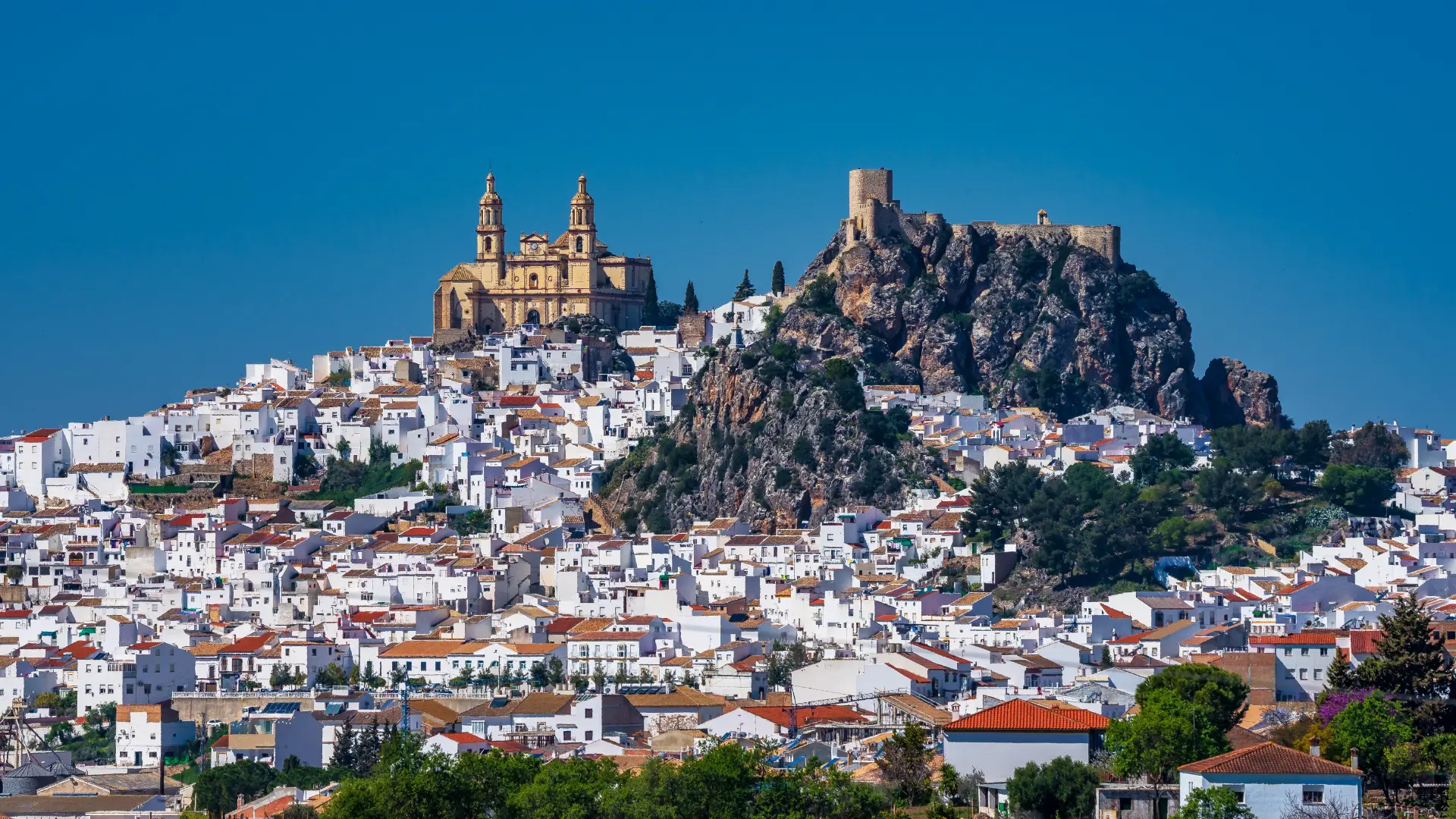
Olvera rises from a sea of olive trees in the Sierra de Cádiz, one of Andalucía’s white towns. A 12th-century Moorish castle and a huge honey-coloured church stand side by side at the top, a twin skyline you can read from miles away. It is also the start of the Vía Verde de la Sierra, one of Spain’s finest greenways, and a calm, real stop on the White Villages Trail.
Why Visit Olvera
Some white towns blur into one white wall on a hillside. Olvera does not. Two shapes rise above the packed white houses: the pale stone of a Moorish castle, and the tall twin towers of a great neoclassical church right beside it. Locals sum the town up in one old line — a street, a church and a castle, but what a street, what a church, what a castle. That twin crown, seen across the olive groves as you drive in, is the picture people remember.
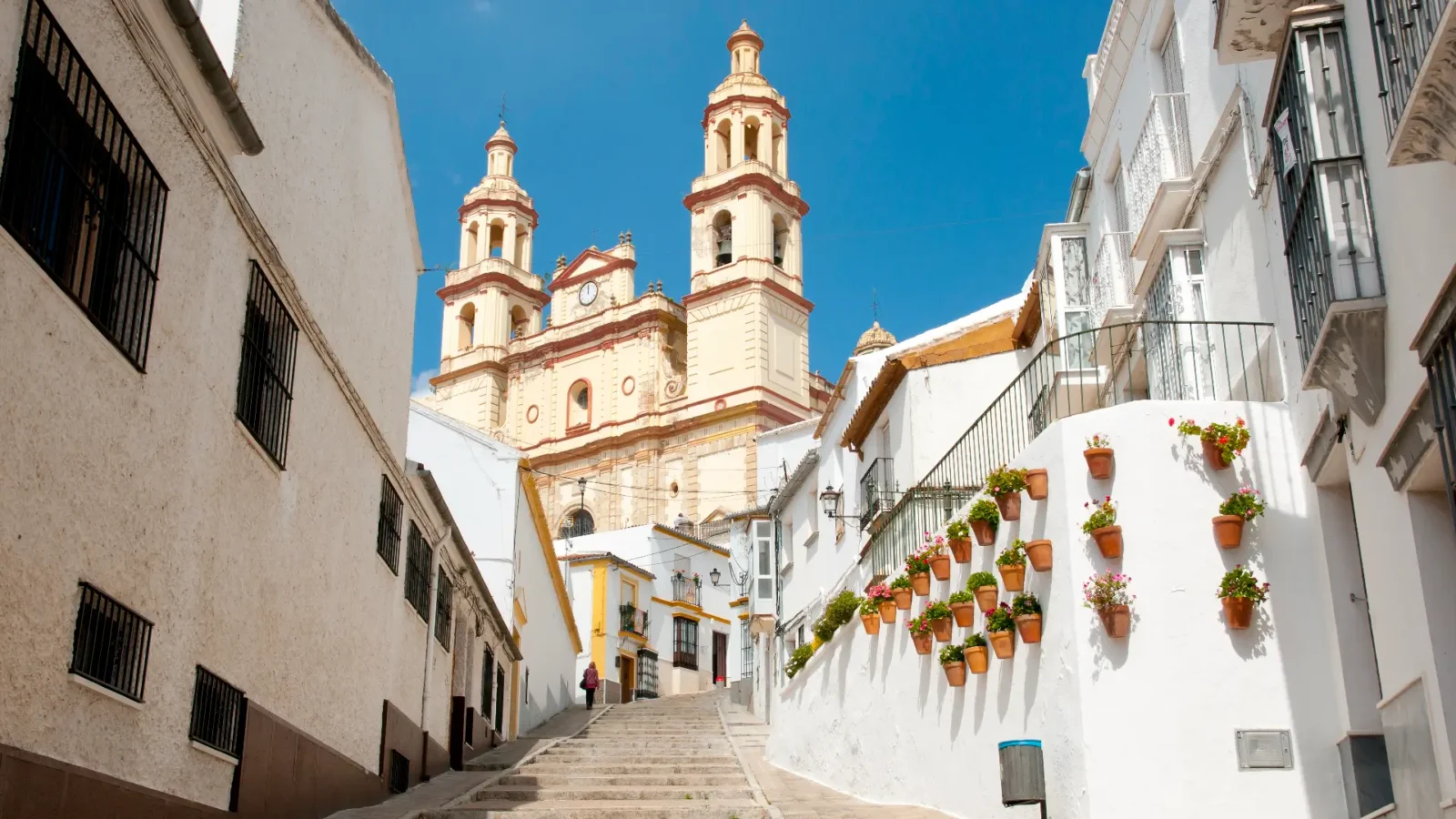
The town below rewards the climb up to it. Steep white lanes wind through the old Barrio de la Villa, the oldest Moorish core, past small squares and iron balconies heavy with flowers. Olvera sits where the provinces of Cádiz, Seville and Málaga meet, wrapped in one of Spain's largest mountain-olive landscapes. It was named a Historic-Artistic Site in 1983 and one of Spain's most beautiful villages, yet it stays a working town, not a stage set.
Who Olvera is for
Olvera suits travellers who want the real Andalucía, not the busy honeypots. It rewards slow walkers, keen photographers, cyclists and anyone who likes a town that still belongs to its own people. The Vía Verde greenway on its edge makes it a natural base for walking and biking, and the food is honest and cheap.
Day trip or overnight?
You can see Olvera in an afternoon. Climb to the castle, look inside the church, wander the Barrio de la Villa, and you have the shape of the place. But an afternoon means driving off just as the light turns gold and the day-trippers leave. Our honest advice: stay the night. A perfect short visit looks like this — arrive by mid-afternoon and climb to the castle keep while the sun is still high, then drop into the old town for tapas as the heat fades. Watch the church towers glow at sunset from the Peñón del Sagrado Corazón, eat a slow dinner on a quiet square, and start the next morning early on the Vía Verde before the day warms up. That is a stay, not a stop — and it is why the town is worth a bed.

What to See in Olvera
Castillo de Olvera
The castle is the older of the town’s two crowns. Built in the late 12th century, it was part of the Nazari kingdom’s frontier defences, perched on the highest rock in town. The climb up is short but steep, through the old quarter. Inside you can visit the two floors of the keep, a stretch of wall, and the old aljibe (water cistern). From the top, the views over the white roofs, the church and the olive country are the best in town. A combined ticket covers the castle and the town museum; buy it at the tourist office on the Plaza de la Iglesia.
Iglesia de Nuestra Señora de la Encarnación
Right beside the castle stands the town’s second crown: a huge neoclassical church, finished in 1843, built by order of the Dukes of Osuna. Its two tall towers are visible from every corner of Olvera and far across the valley. Unusually for a church, the front carries a large clock, added in 1902. Inside are three naves, an Italian-marble main altar and a great organ above the door. Its scale, set against such a small town, is what makes it striking. Opening hours are limited, so check locally before you climb up.
Barrio de la Villa
This is the oldest part of Olvera, the Moorish core that once sat inside the walls with the castle and the church. Walking its narrow lanes is the closest thing to stepping back seven centuries. You find tight streets, hidden corners, whitewashed houses and short stretches of the old town wall. It is small and easy to walk, and best explored slowly with no fixed route. Look for the surviving buttresses of the vanished old parish church along the way.
La Cilla and the town museum
On the Plaza de la Iglesia, between the church and the castle, stands La Cilla. This handsome old building was once the Dukes of Osuna’s grain store, and later, for a time, a women’s prison. Today it holds the “Olvera, La Frontera y los Castillos” museum, which tells the story of this frontier land and its Moorish and Christian castles through hands-on, family-friendly displays. The same building houses the tourist office and the Vía Verde interpretation centre, so it is the natural first stop. Its courtyard tower doubles as a viewpoint.
Peñón del Sagrado Corazón
In the Plaza de Andalucía, a rocky outcrop rises in the middle of town, topped by a stone statue of the Sacred Heart placed here in 1929. A path climbs through a small vertical garden to the top. From there you get a wide view of the castle and the church face to face — one of the finest photo spots in Olvera. The little park has fixed opening hours, so it is a daytime stop rather than a sunset one.
Santuario de Nuestra Señora de los Remedios
Two kilometres outside town, on a low hill, sits this 18th-century sanctuary — a baroque church built over an older shrine. It holds the image of the town’s patron, the Virgen de los Remedios, and its walls are covered with offerings left by the faithful. It is also a fine viewpoint back toward Olvera, so many travellers stop here first for the classic view of the two crowns, or last as a farewell. The sanctuary is the heart of the town’s biggest festival.
What to Do in Olvera
Ride or walk the Vía Verde de la Sierra
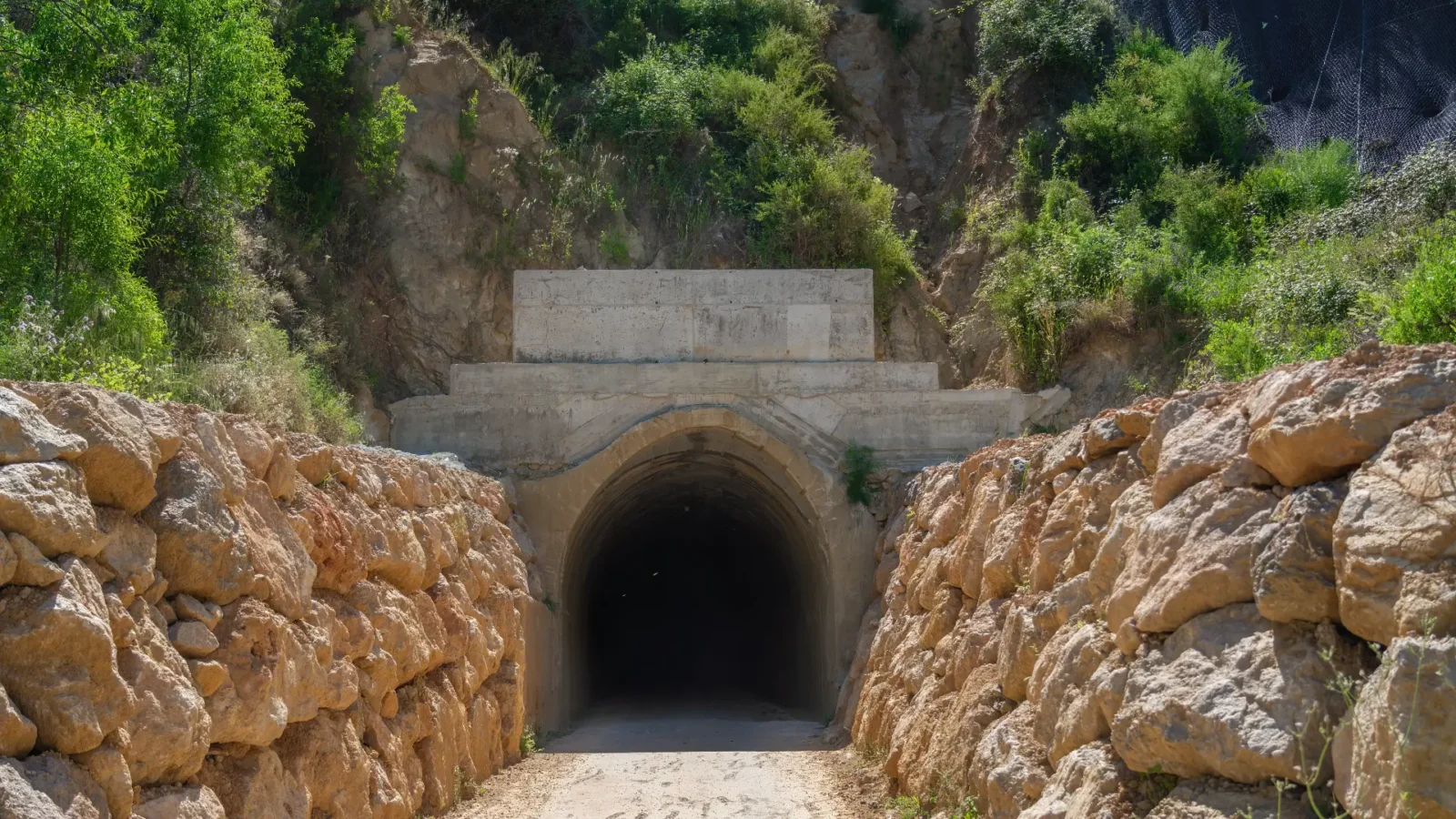
Olvera marks one end of the Vía Verde de la Sierra. It is widely rated one of Spain’s finest greenways, and the only route in Andalucía declared of tourist interest. It follows an old railway line that was built but never used. The route runs 36.5 flat, car-free kilometres to Puerto Serrano, through 30 tunnels and over four viaducts. You can walk a short stretch or cycle the whole thing; from Olvera the ride starts with a long descent, so many people ride out and take a taxi transfer back. It is easy, scenic and suits families. A guided cycle with a local outfitter adds bikes sized for everyone and a taxi shuttle, so you never double back. You also get someone who knows exactly where the vultures are circling that week. It’s worth it if you want the greenway without the logistics.
See the vultures at Zaframagón
About halfway along the greenway, near the Peñón de Zaframagón, is one of Europe’s largest griffon vulture colonies. The old Zaframagón station is now an observatory and interpretation centre. A hidden 360° camera streams the nesting cliffs live onto a screen, so you watch the birds fly, feed and return to their nests in close-up. The centre sits at roughly kilometre 21 of the Vía Verde, reached on foot or by bike, or by road via the hamlet of Zaframagón. It opens daily, but booking ahead through the greenway foundation is advised, especially in busy periods (see the FAQ for the link).
Climb to the castle keep
Even if you only have half a day, the walk up through the old town to the castle is the single best thing to do in Olvera. The lanes climb steeply past the church and small squares, and the reward at the top — the twin-crown view and the wide sweep of olive country — earns every step. Go early or late to avoid the midday heat, wear proper shoes for the cobbles, and take water; the town’s fountains are marked along the way.
Taste the local olive oil
Olvera is the home of the Sierra de Cádiz protected olive oil, and its co-operative mill runs guided visits. On a tour of the working almazara you follow the oil from olive to bottle. Then you sit down to a led tasting. It teaches you to read a good oil’s aromas and bitterness — the difference between a real extra-virgin and the supermarket kind. It is a genuine, unpolished producer visit rather than a show, and a good rainy-day or midday option. Booking ahead is essential, as visits run to a schedule.
Prefer to go with a guide for any of this? Ask where you’re staying, or at the tourist office on the Plaza de la Iglesia — they’ll know what’s running, in which language, and can point you to something that fits.
Seasonal Events and Festivals
Olvera’s calendar is full of religious and popular festivals; a few are worth planning around. For exact dates each year, check the town hall’s site.
Lunes de Quasimodo (spring, the second Monday after Easter)Olvera’s signature festival and the oldest romería in Cádiz province, held since 1715 to give thanks for rain that ended a drought. Riders, decorated carts and pilgrims escort the Virgen de los Remedios to her sanctuary. There are fairground rides and contests for local dishes like hornazos and sopas pegás. It is a Fiesta of Tourist Interest of Andalucía.
Semana Santa (Holy Week, moves with Easter)Olvera’s Holy Week processions are a Fiesta of National Tourist Interest of Andalucía, among the most important events of the town’s year.
Feria del Ganado / Feria de Mayo (17–19 May)a traditional livestock fair, still centred on horses, on the town’s fairground.
Fiestas de la Virgen de los Remedios (mid-August)days of Masses and celebrations around 15 August in honour of the town’s patron.
Real Feria y Fiestas de San Agustín (27–31 August) the big late-summer fair, first granted in the early 18th century and now the town’s liveliest week.
Getting There and Around
Olvera sits in the far north-east of Cádiz province, at a crossroads between Cádiz, Seville and Málaga, on the A-384 and A-374 roads.

From Jerez de la Fronteraabout 1 hour 25 minutes by car (roughly 100 km); Jerez is the nearest airport.
From Sevilleabout 1 hour 30 minutes by car (roughly 120 km) via the A-375/A-384.
From Rondaabout 40 minutes by car (roughly 33 km) via Setenil.
Nearest airports Jerez (XRY) is closest, about 100 km and 1 hour 25 minutes; Seville (SVQ) is a similar drive at about 120 km; Málaga (AGP) is the largest international option, about 111 km and 1 hour 50 minutes.
By busregional services link Olvera with Ronda, Setenil and other white villages, but they are slow and infrequent; a car is far easier for touring the trail.
Getting around
You do not need a car inside Olvera — the old town is small and best walked, though the lanes are steep and cobbled. Park in the lower town and climb up on foot. For the region, though, a car is what makes the White Villages Trail work: the nearby villages, the greenway trailheads and the viewpoints are spread out and thinly served by bus. If you are flying in to tour the sierra, hiring a car at the airport is the simplest plan.
Looking for a ready-made plan? See our Andalucia road trips.
Practical Info
- TicketsA combined ticket covers the castle and the “Olvera, La Frontera y los Castillos” museum, and is sold at the tourist office in La Cilla on the Plaza de la Iglesia. Buying the two together costs less than paying separately.
- Best time of dayClimb to the castle early or late; the midday sun on the treeless upper town is strong in summer. Sunset from the Peñón del Sagrado Corazón or the Los Remedios sanctuary is the classic photo.
- Getting around townPark in the lower town and walk up. The old quarter is steep and cobbled — wear good shoes and carry water.
- ClimateOlvera has hot, dry summers and mild, wetter winters. July and August are the hottest, with highs around 32°C and almost no rain. The most comfortable months are April and May (highs about 18–23°C) and September and October (about 22–27°C). Rain falls mainly from late autumn to early spring, peaking around December. Inland and higher than coastal Cádiz, Olvera runs hotter and drier in summer than rainy Grazalema, and a little warmer than higher-altitude Ronda.
Where to Eat in Olvera
You’ll eat and drink well in Olvera, at every budget — this is honest Sierra de Cádiz cooking, built on the town’s own extra-virgin olive oil, slow-cooked pork cheeks (carrillada), rabo de toro (oxtail) and hearty tapas made to share. Two simple rules make it easy. For lunch while you’re out walking, the squares near the top of town are full of easy, good-value spots with a view. For dinner, settle into one of the old-town tabernas, where the evening is at its best. The picks below cover both, from a quick tapas lunch to a special table.
A modern take on Sierra cooking that has held a Michelin Bib Gourmand for several years running, in a small dining room on the Plaza de Andalucía. Artichoke salad, garlic prawns and pork cheeks are standouts, with fair prices and a good wine list. Reserve ahead; it fills up.
Bar Boulevard
A small, friendly bar that punches above its size on tapas and value, with typical regional plates done well. A good, low-key choice for lunch or an early dinner.
Bar La Plaza
Right on the Plaza del Ayuntamiento with a lovely view of the church, this is the spot for a light lunch or a cold drink between sights. Simple, honest food — the dish of the day and the oxtail are reliable choices.
Bodeguita Mi Pueblo
A small, warm bar serving generous home-style dishes, where the owner will happily steer a table through a spread to share. Good value and a genuinely local feel; the menu has pictures if your Spanish is rusty.
The hotel restaurant offers both a good-value set menu and a fuller à-la-carte list, mixing modern plates with traditional mountain cooking, in a calm setting near the old town.
Taberna Juanito Gómez
A busy, much-loved tapas bar with a fine view, where the plates are made fresh and priced low. Locals and returning travellers rate it as the town’s tapas benchmark. Come hungry and order broadly.
Where to Stay in Olvera
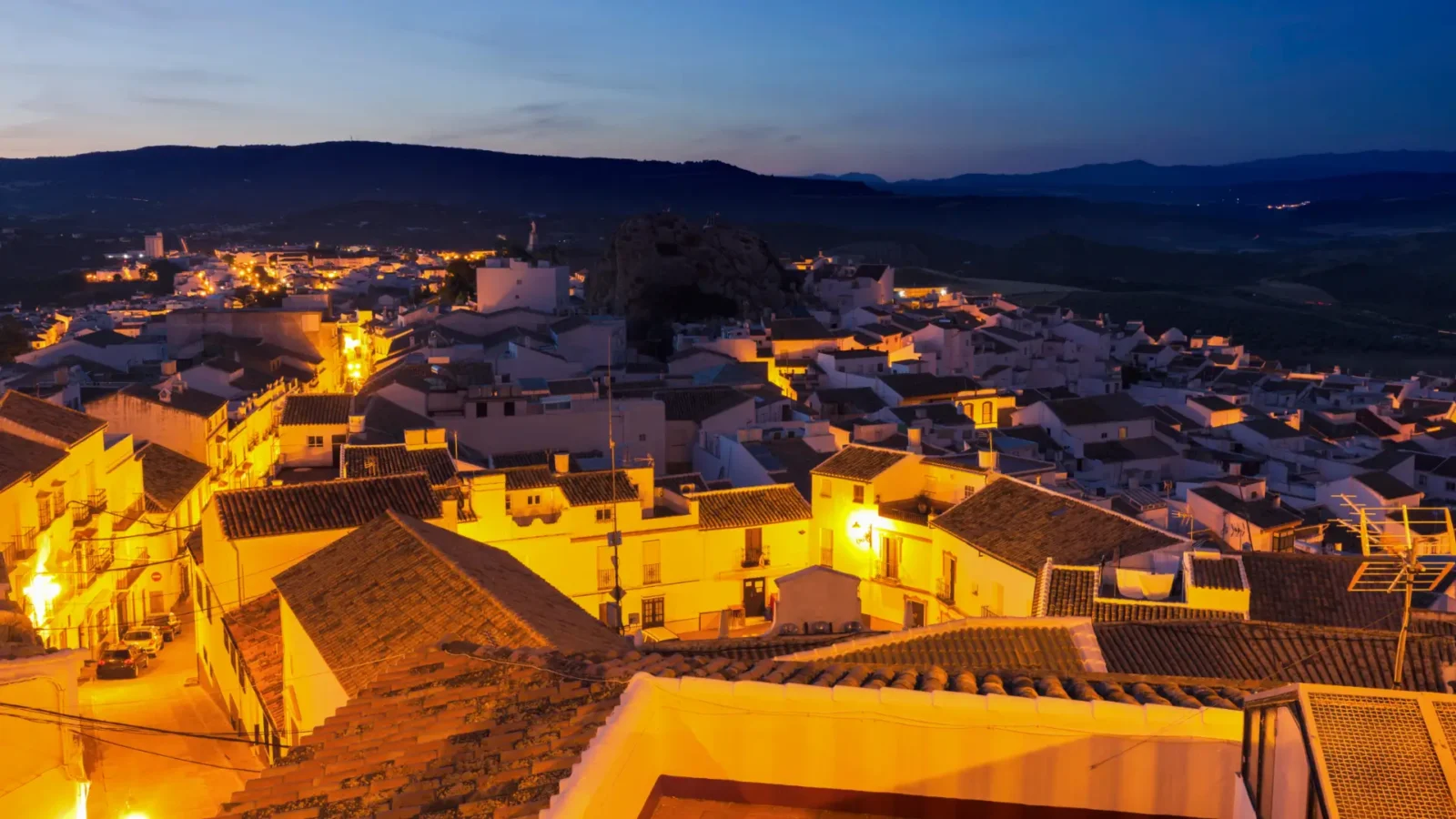
Stay the night and the town changes. The day-trippers drive off, the church towers turn gold, and the steep white lanes empty out into a quiet that belongs only to people who stayed. You eat a slow dinner on a square, walk it off under the lit-up castle, and wake to the greenway before the heat. These are places we’d be happy to stay in ourselves, each within easy reach of that evening.
No 31 Bed & Breakfast
A beautifully restored townhouse in the historic centre, a short (steep) walk from the castle and church, with a roof terrace framing both. Warm, art-filled rooms and a proper breakfast make it the town’s standout stay; sleep in the heart of the old town and step straight out into it.
Check prices & availability for No 31 Bed & Breakfast on the accommodation's websiteAcogedora Casa Rural en Olvera "La Morada"
A cosy, recently renovated house in the historic centre, with heating, a proper bathtub and everything you need to settle in for a few nights, steps from the bars and the climb up.
Check prices & availability for Acogedora Casa Rural en Olvera "La Morada" on Booking.comCasa Cal y Sol
A pretty, well-kept house with a rooftop terrace, wide sierra views and a small dipping pool for the hot afternoons — a favourite with couples who want their own space and a place to watch the sun go down.
Check prices & availability for Casa Cal y Sol on the accommodation's websiteHostal-Restaurante Estación Vía Verde
The old Olvera railway station, restored right on the greenway with a pool, a restaurant and bike hire on the doorstep — the obvious base if the Vía Verde is why you came. A short ride or drive from the old town.
Check prices & availability for Hostal-Restaurante Estación Vía Verde on the accommodation's websiteHotel Mesón Fuente del Pino
A relaxed, good-value hotel just outside town, with a seasonal pool, garden and free parking — handy for arriving late or leaving early, and a comfortable spot for families on a road trip.
Check prices & availability for Hotel Mesón Fuente del Pino on the accommodation's websiteHotel Tugasa Sierra y Cal
A comfortable 34-room hotel in a quiet part of the old town, with a pool, a garden and its own restaurant — an easy, familiar base and one of the natural starting points for the Vía Verde. Good value and reliably rated.
Check prices & availability for Hotel Tugasa Sierra y Cal on the accommodation's website
Region, Nearby and Routes
Part of Andalucía
Olvera is in Andalucía
Part of these routes
Olvera is one stop on our The White Villages Trail see the full route.
Nearby places
- Arcos de la FronteraA white town perched on a sandstone cliff, ringed by the Guadalete, with sudden sweeping views at every turn.
- Zahara de la SierraA white village wrapped round a crag under a Moorish tower, high above a turquoise mountain lake.
- Setenil de las BodegasA white village where houses are tucked under vast rock overhangs, famous for its cave streets and cave-cool tapas bars.
- RondaThe dramatic gorge town split by the Puente Nuevo — the biggest, best-known stop on the White Villages Trail.
Frequently Asked Questions
Yes. Olvera is one of the most striking of the white towns, with a Moorish castle and a huge church standing side by side above a steep white village. It is quieter and more authentic than the busier stops, and it marks the start of the Vía Verde greenway, so it rewards both a sightseeing visit and an active one.
Olvera is best known for its “two crowns” skyline: the 12th-century Moorish castle and the great neoclassical church of Nuestra Señora de la Encarnación. It is also one end of the Vía Verde de la Sierra, one of Spain’s finest greenways. It is also a centre of Sierra de Cádiz olive oil and one of Spain’s most beautiful villages.
Half a day is enough to climb to the castle, see the church and walk the old town. But staying the night lets you enjoy the golden light, the empty evening lanes and an early start on the greenway, so an overnight is well worth it.
Yes. Olvera works as a day trip from Ronda (about 40 minutes) or as a stop between the white villages. To see it at its best, though, arrive in the afternoon and stay overnight rather than leaving at sunset.
Spring and autumn are the most comfortable: April and May bring highs of about 18–23°C, and September and October about 22–27°C. July and August are hot, around 32°C, with almost no rain. Rain falls mainly from late autumn to early spring, peaking around December. For the big festivals, aim for the Lunes de Quasimodo romería in spring.
The Zaframagón observatory on the Vía Verde opens daily, but booking ahead through the greenway foundation is recommended, especially in busy periods. Requests are made by email to the Fundación Vía Verde de la Sierra; see their official site for the current details.
For the old town, No 31 Bed & Breakfast is the standout, with a roof terrace facing the castle and church. Hotel Tugasa Sierra y Cal and Casa Cal y Sol are comfortable mid-range choices, while the Hostal-Restaurante Estación Vía Verde sits right on the greenway — the best base if cycling is your plan.
La Tarara Neotaberna is the town’s best table, with a long-held Michelin Bib Gourmand. For classic tapas, Taberna Juanito Gómez and Bodeguita Mi Pueblo are local favourites, and Bar La Plaza is a fine spot for a light lunch with a church view.