
Setenil de las Bodegas: the white village under the rock
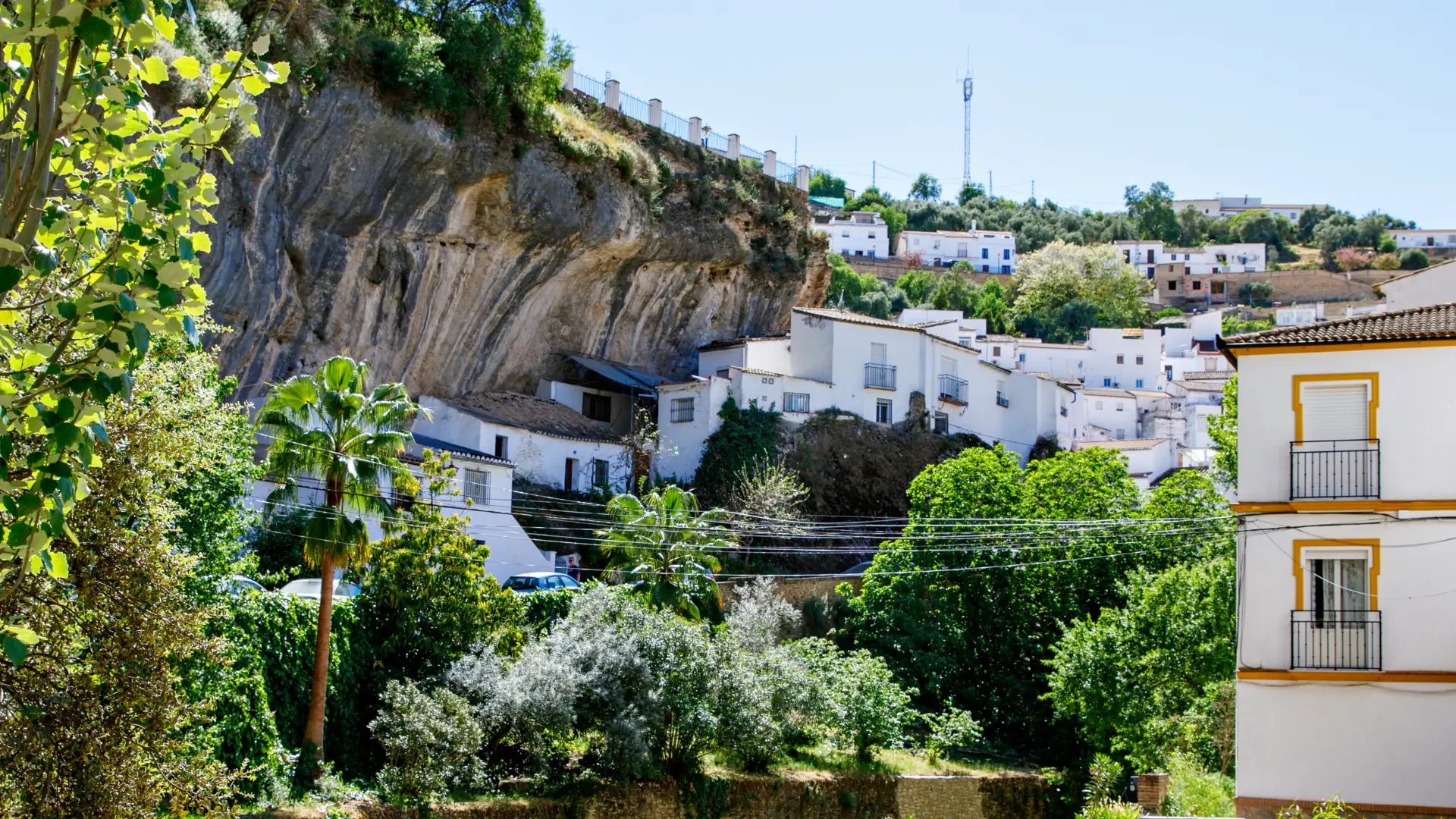
Setenil de las Bodegas is one of Andalucía’s most unusual villages. It sits in a river gorge in northern Cádiz, on the White Villages Trail. Here whitewashed houses are built right under huge overhanging rock, so the stone becomes their roof. The famous cave streets, a Moorish tower and a strong local food scene make it worth far more than a quick photo stop.
Why Visit Setenil de las Bodegas
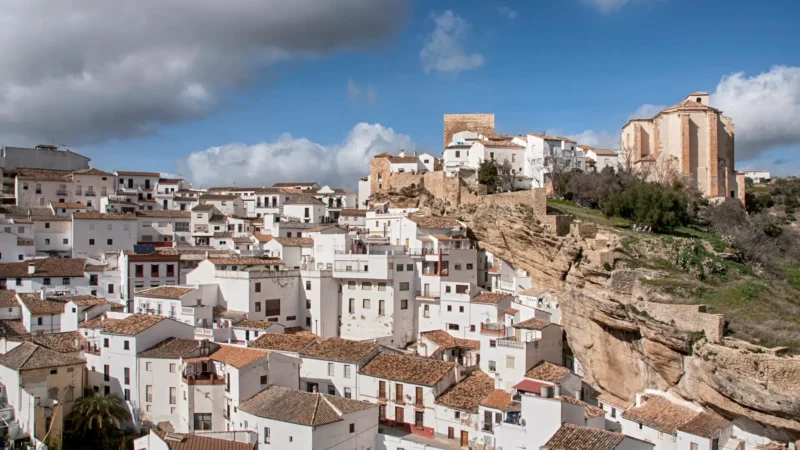
Most white villages sit on top of a hill. Setenil does the opposite. It grew inside a narrow gorge cut by the Río Trejo, and its houses press right up against the rock walls. In places a single vast slab of stone hangs over the whole street, turning it into a tunnel of shade. People have lived under these rocks for thousands of years. The result is a village that feels like nowhere else in Spain: white walls, ochre stone above, and the constant sound of the river below.
The name tells its own story. Setenil comes from the Latin septem nihil, "seven times nothing", after the many sieges the town survived before it finally fell to the Catholic Monarchs in 1484. "Las Bodegas" was added later, for the wine cellars once kept cool in the caves. Today those same cool caves hold tapas bars instead.
Who Setenil de las Bodegas is for
Setenil suits travellers who like their history strange and their pace slow. It rewards anyone happy to wander steep lanes, climb to a viewpoint and eat well under the rock. It is small, so it is easy to walk, but the hills are steep and the streets are cobbled — good shoes matter here. Day-trippers crowd the two cave streets from late morning, so early risers and those who stay the night get the best of it.
Day trip or overnight?
You can see Setenil in an afternoon. The core is small, and two hours covers the famous streets and the climb to the tower. But that means arriving with the coach crowds and leaving before the village empties. Our honest advice: stay the night. When the day-trippers drive back to Ronda, the cave streets fall quiet and the bars turn local. A perfect short visit looks like this: walk Calle Cuevas del Sol and cross to Cuevas de la Sombra in the late afternoon, climb to the Torreón and the Mirador del Carmen for the golden-hour view, then eat slowly under the rock as the lights come on. The next morning, walk the empty lanes before the first cars arrive. That rhythm simply doesn't fit into a day trip.
What to See in Setenil de las Bodegas

Calle Cuevas de la Sombra
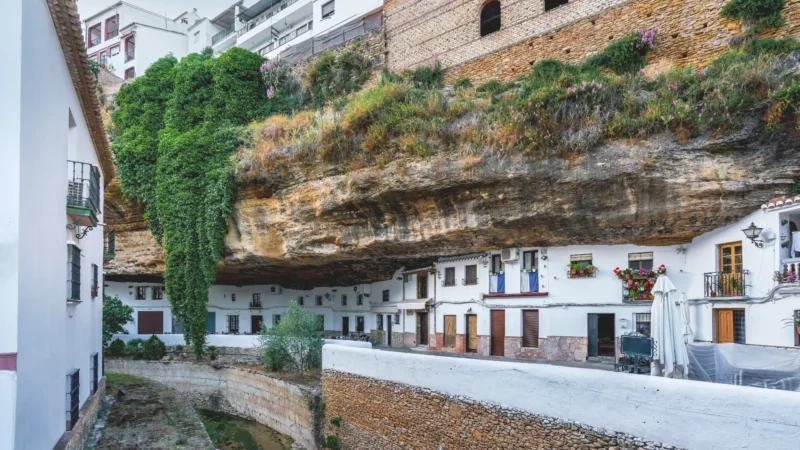
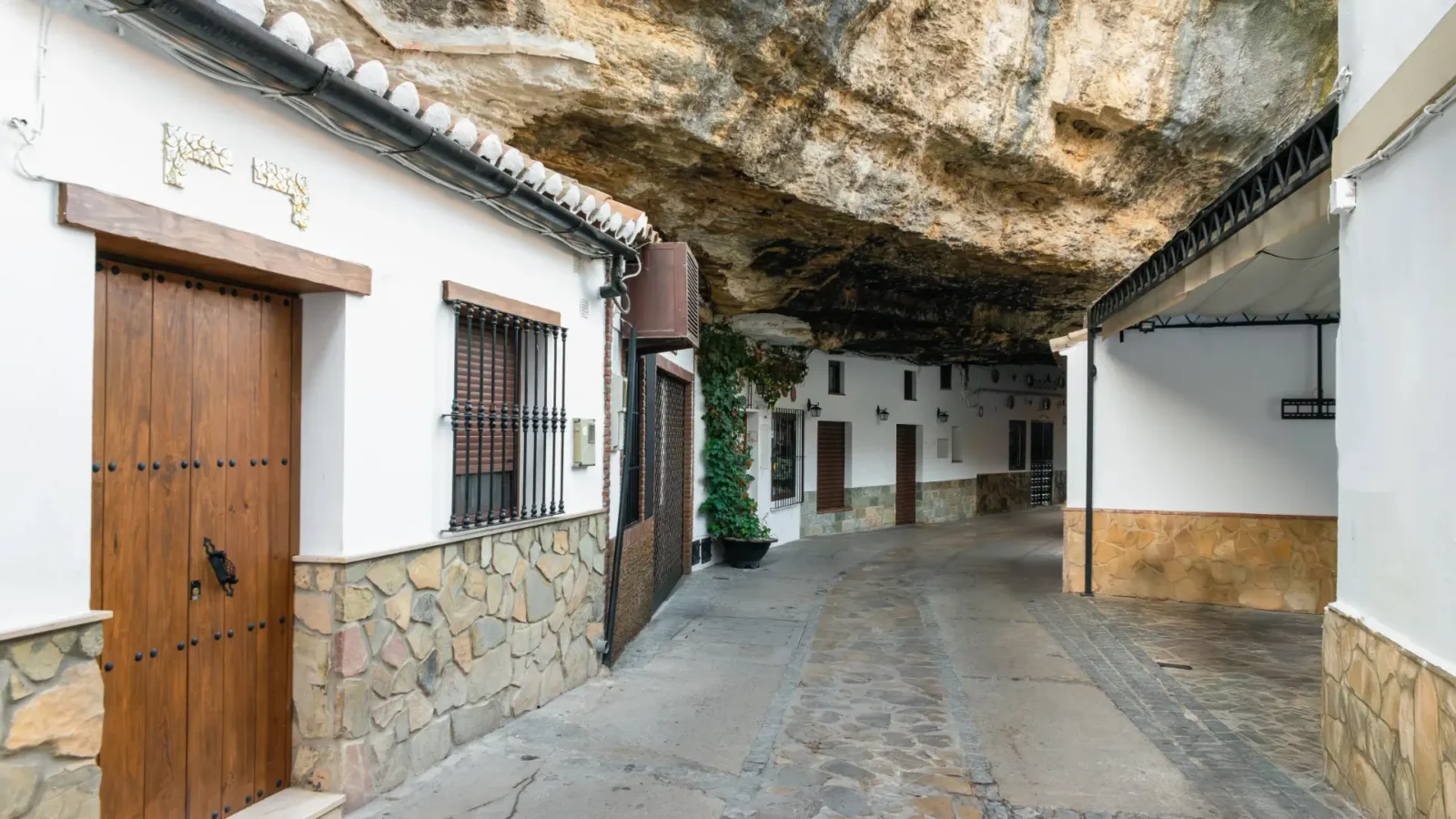
Just across the river, and narrower, lies the twin street: “Caves of the Shade”. Here the rock closes right over the lane, so the sky almost disappears and the street stays cool even in high summer. The contrast with the sunny side is the whole point — cross one of the little bridges over the Trejo and the light, temperature and mood all change in a few steps.
Calle Cuevas del Sol
This is the street everyone comes to see. A huge overhang of rock leans out over the lane, and whitewashed houses sit beneath it along the Río Trejo. It faces south, so it catches sun for much of the day — hence the name, “Caves of the Sun”. Bars and terraces line the street, many set inside old cave houses where the temperature barely changes all year. Start your visit here, down by the river.
El Torreón and the Moorish castle
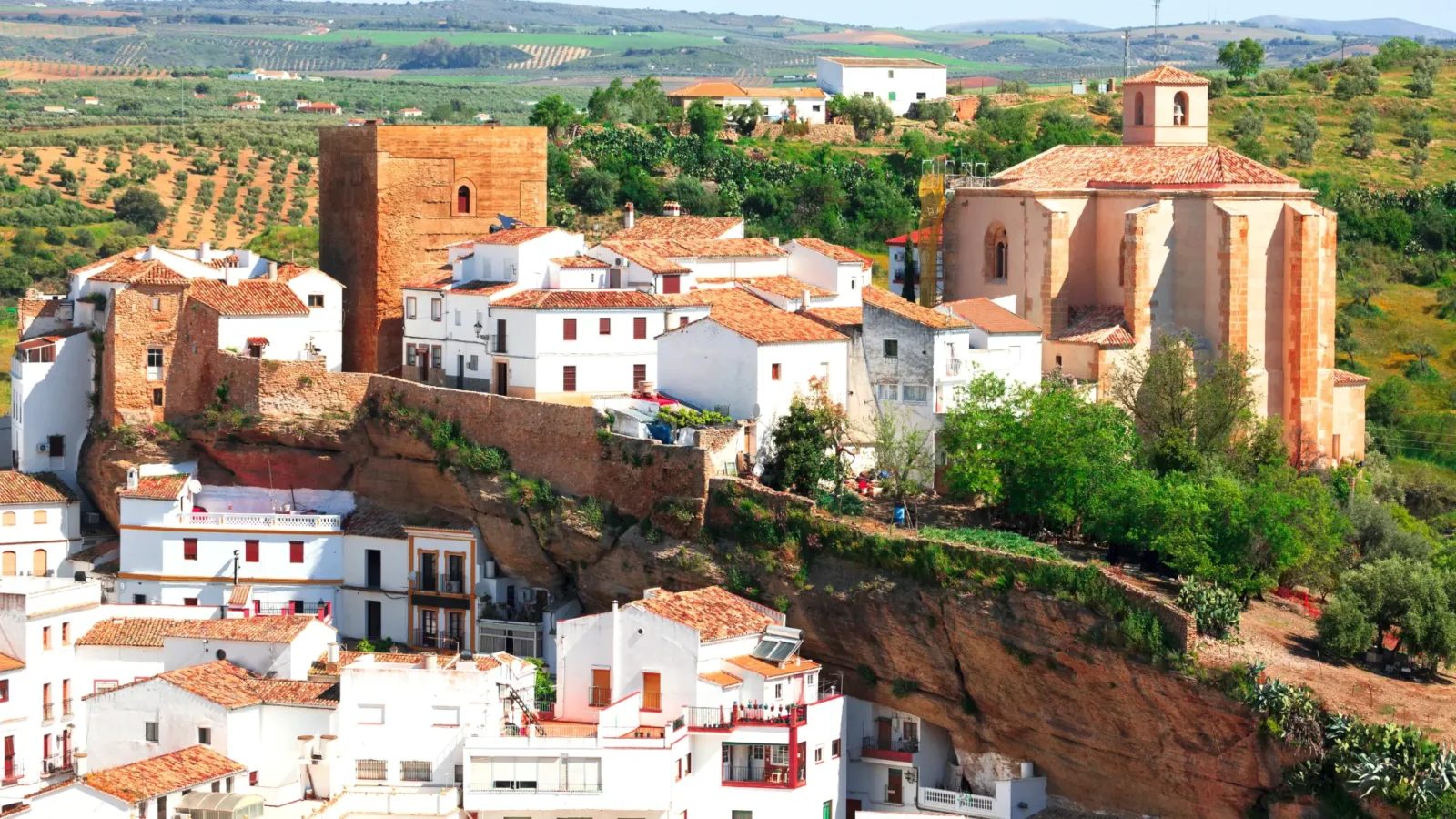
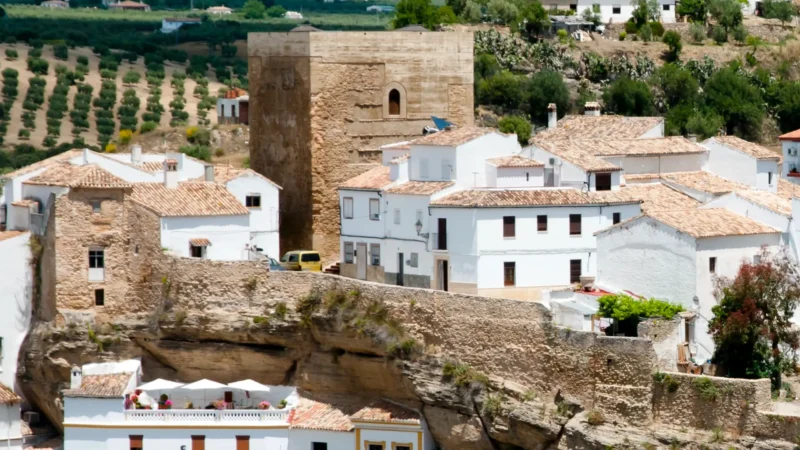
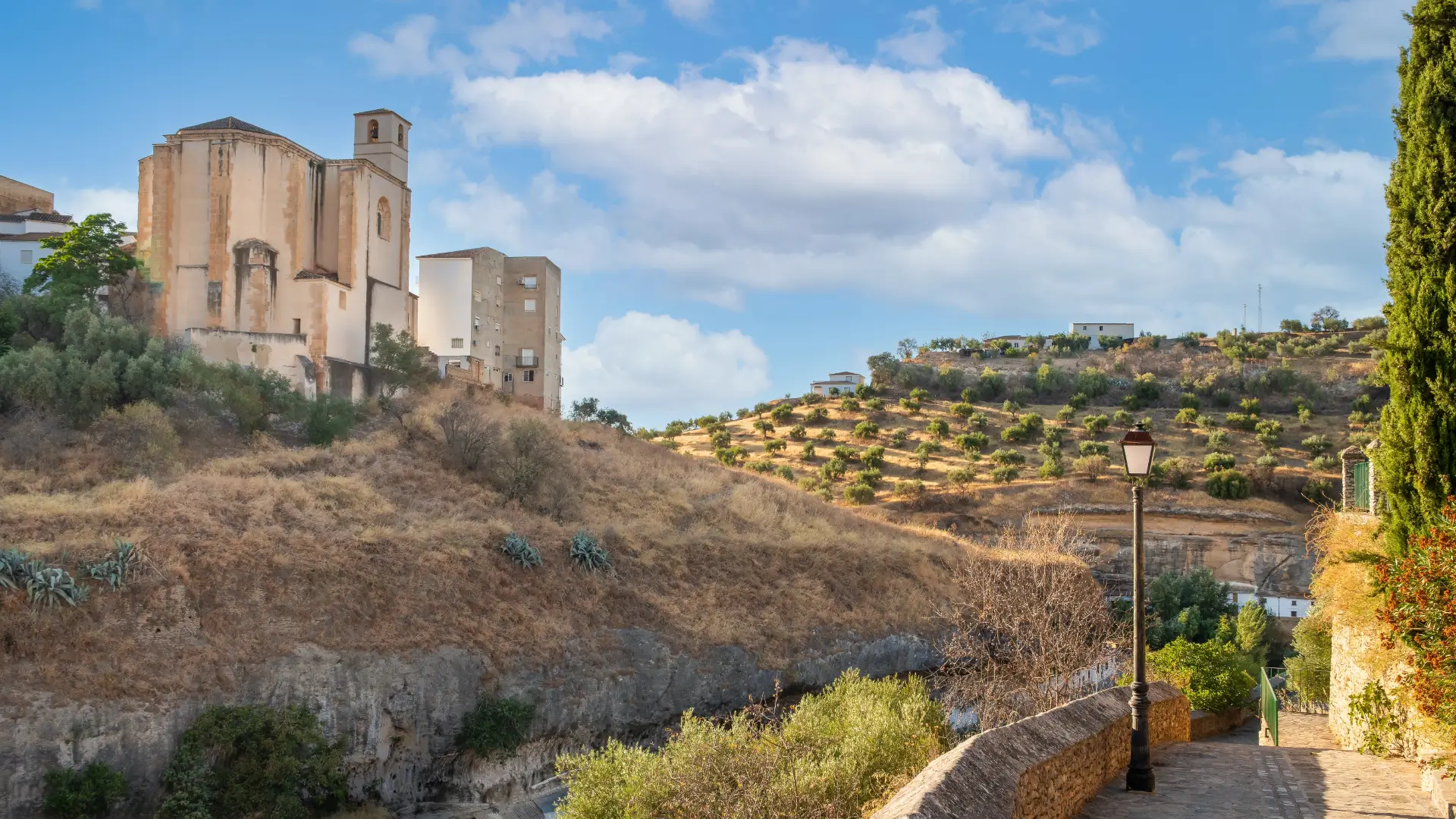
At the top of the village stands the Torreón del Homenaje, the keep of the old Moorish fortress that guarded the rock from the 12th century. It is the main surviving piece of a castle that once had long walls and many towers. You can climb the tower for a wide view over the rooftops and the gorge; below it sit the Nasrid aljibe (an underground water cistern) and the small Casa de la Damita museum, home to a 5,000-year-old carved figure found nearby. One low-cost ticket usually covers all three. Buy it at the tourist office; hours change with the season.
Iglesia de Nuestra Señora de la Encarnación
Next to the castle stands the parish church, built on the site of the town’s old main mosque after the 1484 conquest. Work dragged on for over a century, so it mixes styles — early Mudéjar detail giving way to late Gothic. Inside are an early-17th-century crucified Christ and a painted altarpiece from the late 15th century. Entry is free during worship hours, and the church anchors the skyline with the tower.
The miradores
For the view that makes sense of Setenil, climb to its lookouts. The Mirador del Carmen, beside the little hermitage of the same name, gives the fullest panorama of the white houses stacked in the gorge, with the church and tower above. The Mirador El Lizón, near the Torreón, looks straight down onto the cave streets. Both are open-air and free, and both reward the steep walk up from the river.

What to Do in Setenil de las Bodegas
Walk the two cave streets, then go one lane deeper
The famous walk is Cuevas del Sol to Cuevas de la Sombra, and you should do it. But the village keeps its best corners just off the crowd’s path. Calle Herrería drops toward the river in a steep run of cave houses; Calle Calcetas climbs from Plaza de Andalucía between orange trees and stone walls; and the “Bésame en este rincón” corner (“kiss me in this spot”) has become a favourite photo stop. Give yourself an extra half-hour to lose the crowd and you’ll see the Setenil that people actually live in.
Climb to the Torreón for the golden-hour view
The walk up to the tower and the miradores is short but steep, on cobbles and steps. Time it for late afternoon: the low sun turns the white walls gold and throws the great rock overhangs into sharp relief. From the top you understand why the town was so hard to take — and you get the photo that no ground-level shot can match. Bring water and steady shoes.
Eat under the rock
Setenil takes its food seriously, and the setting is half the pleasure. Local kitchens lean on the sierra: acorn-fed Iberian pork and chorizo, slow-cooked meats, wild asparagus, and sopas cortijeras (a hearty bread, oil, asparagus and egg soup). The olive oil here belongs to the DOP Sierra de Cádiz. Grab a table under the overhang on Cuevas del Sol or de la Sombra, order a spread of tapas and a glass of local wine, and let the rock do the rest.
Walk the river and the old paths
Setenil sits on a web of marked trails along the Río Trejo and its gorges. The Escarpes del Río Trejo route follows the cliffs and river out of the village; the Ruta de los Molinos passes old mills and an olive press; and the Ruta de los Bandoleros (“bandits’ route”) runs through cork oak and holm oak toward the Roman ruins of Acinipo. They range from easy to moderate and are best in spring and autumn, when the sierra is green and the days are mild.
Prefer to go with a guide for any of this? Ask where you're staying, or at the tourist office on Calle Villa — they'll know what's running, in which language, and can point you to something that fits.
Seasonal Events and Festivals
Setenil’s festivals make the most of its dramatic streets. Check the town’s official calendar for exact dates before you travel, as most move each year.
Semana Santa (Holy Week, March or April)the village’s biggest event, and a Interés Turístico Nacional de Andalucía. The narrow, rock-covered streets make the processions spectacular, and a long-running rivalry between two brotherhoods — “los blancos” and “los negros” — gives it a charge you won’t see elsewhere.
Romería de San Isidro (mid-May)a country pilgrimage to the Puerto del Monte, where families spend the weekend outdoors with horses, music and food.
Virgen del Carmen (mid-July) the patron saint’s festival, with a procession, religious acts and an evening verbena.
Feria de Agosto (early August)the summer fair runs about four days. By day the party fills Calle Cuevas del Sol; by night it moves to the fairground on the edge of town.
Moros y Cristianos (weekend nearest 21 October) a lively re-enactment of the 1484 conquest, with locals dressing as Moors and Christians across the whole village.
For current dates and times, see the Ayuntamiento de Setenil de las Bodegas
Getting There and Around
Setenil sits between the Sierra de Cádiz and the Serranía de Ronda, at the edge of Cádiz province and close to the Málaga border. It is reached by small mountain roads, so a car makes it much easier.
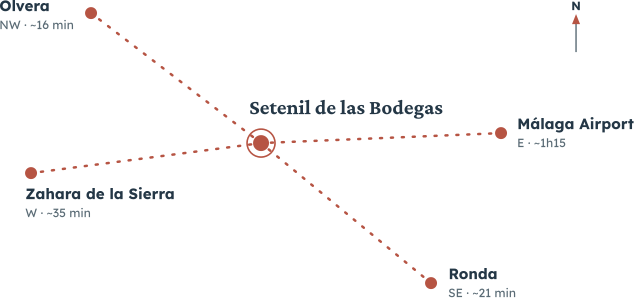
From Rondaabout 21 minutes by car (roughly 18 km) via the A-374 and the local road through Arriate. There’s also a daily bus (Monday–Saturday) that takes about 45–50 minutes.
From Olveraabout 16 minutes by car (roughly 15 km), passing through Torre Alháquime.
From Sevilleabout 1 hour 45 minutes by car (roughly 130 km) via the A-384 toward Olvera.
Nearest airportsMálaga (AGP) is the most useful, about 1 hour 15 minutes by car (roughly 96 km); Jerez (XRY) is around 80 km and Seville (SVQ) around 90 km.
By trainthe Setenil station sits on the Bobadilla–Algeciras line, but it is about 5 km outside the village, so most visitors arrive by car or bus.
Getting around
You don’t need a car inside Setenil — the village is small and walkable, though steep and cobbled. What you do need is a car for the region: the White Villages Trail, Ronda and the Sierra de Grazalema are all short drives away. Don’t try to drive into the old centre. Leave the car in the public car parks in the upper town (Los Caños is the handiest) and walk down; the lanes are narrow, one-way and hard to reverse out of.
Looking for a ready-made plan? See our Andalicia road trips.
Practical Info
- Ticketsone low-cost combined ticket covers the Torreón, the aljibe and the Casa de la Damita, sold at the tourist office. Prices and hours change with the season, so check locally. The church and the miradores are free.
- Best time of dayarrive early or stay late. The two cave streets fill with day-trippers from late morning; mornings and evenings are far calmer.
- On footthe village is small but steep, on cobbles and steps. Wear good shoes and take water for the climb to the tower.
- Parkinguse the upper-town car parks (Los Caños is central) and walk down. Don’t drive into the old centre.
- Climatesummers are hot and dry — July and August highs reach about 32°C. The most comfortable months are April, May, September and October, with highs around 18–27°C. Most rain falls from late autumn into winter, wettest around December; July is bone dry. The climate is much like nearby Ronda and Olvera.
Where to Eat in Setenil de las Bodegas
You’ll eat and drink well in Setenil, and the setting is unforgettable — many tables sit right under the rock. This is sierra country, so expect acorn-fed Iberian pork and chorizo, slow-cooked meats, wild asparagus, and sopas cortijeras (the local bread, oil, asparagus and egg soup), all cooked with DOP Sierra de Cádiz olive oil. A simple rule makes it easy: for the classic experience, grab a terrace under the overhang on the two cave streets; for a calmer, often better meal, head up to Plaza de Andalucía or just outside the centre. The picks below cover both.
Bar Frasquito
A much-loved classic on Calle Cuevas del Sol, right under the rock. Big plates of grilled Iberian meat, croquetas and honest tapas at fair prices, with a genuinely local buzz.
La Tasca
Another cave-set favourite on the sunny street, known for grilled meats and roast pork. Fast, friendly and good value, if often busy.
La Telera 1860
On Cuevas de la Sombra, overlooking the river, with a strong line in Iberian cured meats, cheeses and well-made classics. Good bread, calm terrace.
Up on Plaza de Andalucía, away from the crowds, serving fresh, homemade dishes and a well-regarded paella. A quieter, friendlier alternative to the cave-street terraces.
On the edge of the village with parking and valley views, this is where many locals send you for a proper meal — try the rabo de toro (oxtail) or the Iberian pork.
El Patio de María Teresa
A relaxed spot near the lower town with some of the best rooftop views over the gorge. Tender octopus and honest cooking at reasonable prices.
Where to Stay in Setenil de las Bodegas
Picture the village after the last coach leaves: the cave streets quiet, the rock glowing under the lamps, and dinner a short walk from a bed carved into the same stone. That evening is the real reason to stay — and Setenil’s speciality is the cave house, a room with a rock wall or ceiling, cool in summer and cosy in winter. Here’s where we’d sleep.
Apartamento Cantareria
A smart, well-kept apartment right in the centre with a private terrace and spectacular views over the white houses and the gorge. The terrace at dusk is the whole point.
Check prices & availability for Apartamento Cantareria on Booking.comCasa Cueva El Arrabal
A beautifully renovated cave house in the historic centre, with one wall and the upper-floor ceiling made of living rock. Sleeps up to five, so it suits couples or a small group who want the full “sleep under the stone” experience.
Check prices & availability for Casa Cueva El Arrabal on Booking.comCasa Cueva Las Calcetas
A modern, spotless cave house on Calle Calcetas with a rock ceiling and a small spa circuit, steps from the upper-town car park. A romantic bolt-hole for two.
Check prices & availability for Casa Cueva Las Calcetas on the accommodation's websiteCasas Rurales El Tajo
Cosy, well-equipped cave apartments in the heart of the old town, tucked between the shaded and sunny streets. Steep steps and a walk from parking, but an unbeatable location.
Check prices & availability for Casas Rurales El Tajo on the accommodation's websiteHotel El Almendral
A relaxed country hotel just north of the village, with 28 rooms, private terraces, a pool and a well-liked restaurant. A short walk or drive from the centre, with easy parking — handy for road-trippers.
Check prices & availability for Hotel El Almendral on the accommodation's websiteHotel Villa de Setenil
The village’s main hotel, central and well run, with clean rooms, terraces and mountain or river views, plus a good on-site restaurant. The easy, familiar choice if you’d rather a hotel than a cave.
Check prices & availability for Hotel Villa de Setenil on the accommodation's website
Region, Nearby and Routes
Part of Andalucía
Setenil de las Bodegas is in Andalucía
Part of these routes
Setenil de las Bodegas is one stop on our The White Villages Trail
Nearby places
- GrazalemaA cool, green mountain village in the Sierra de Grazalema park, built for hiking and payoyo cheese.
- OlveraA white town crowned by a Moorish castle and a great church, and the start of the Vía Verde greenway.
- Zahara de la SierraA white village wrapped round a crag under a Moorish tower, high above a turquoise mountain lake.
- RondaThe dramatic gorge town split by the Puente Nuevo — the biggest, best-known stop on the White Villages Trail.
Frequently Asked Questions
Yes. It is one of the most unusual villages in Andalucía — a white town built inside a river gorge, with houses tucked under huge overhanging rock. The cave streets, the Moorish tower and the cave-cool tapas bars make it stand out even among the famous white villages of Cádiz.
It is known for its cave streets, where whitewashed houses sit under enormous rock overhangs. The two most famous are Calle Cuevas del Sol and Calle Cuevas de la Sombra, along the Río Trejo. The name recalls seven sieges the town survived, and its old wine cellars once kept cool in the caves.
Two to three hours cover the main streets and the climb to the tower. But it is better as an overnight stop: when the day-trippers leave, the cave streets fall quiet and the village turns local, which is when it is at its best.
Yes, easily. Ronda is about 21 minutes away by car, and there’s a daily bus. Many people come for a half-day. If you can, though, stay the night — the early morning and the evening, without the crowds, are the real reward.
Spring and autumn are ideal. April, May, September and October bring comfortable highs of about 18–27°C. July and August are hot and dry, with highs near 32°C and the busiest cave streets. Most rain falls from late autumn into winter. Come early or late in the day in summer to beat the crowds and the heat.
For the classic experience, eat under the rock on the two cave streets — Bar Frasquito and La Tasca are lively, good-value favourites. For a calmer meal, head up to Plaza de Andalucía for Restaurante La Plaza, or just outside the village to Venta Mirabueno, which locals rate highly. Try the Iberian pork, the oxtail and the sopas cortijeras.
Setenil’s speciality is the cave house — a room with a rock wall or ceiling. Casa Cueva El Arrabal and Casa Cueva “Las Calcetas” are lovely renovated options in the centre. If you’d rather a hotel, Hotel Villa de Setenil is central and well run, while Hotel El Almendral, just outside the village, has a pool and easy parking.