
Burgos: Spain’s Gothic Heart, Beyond the Coach Hours
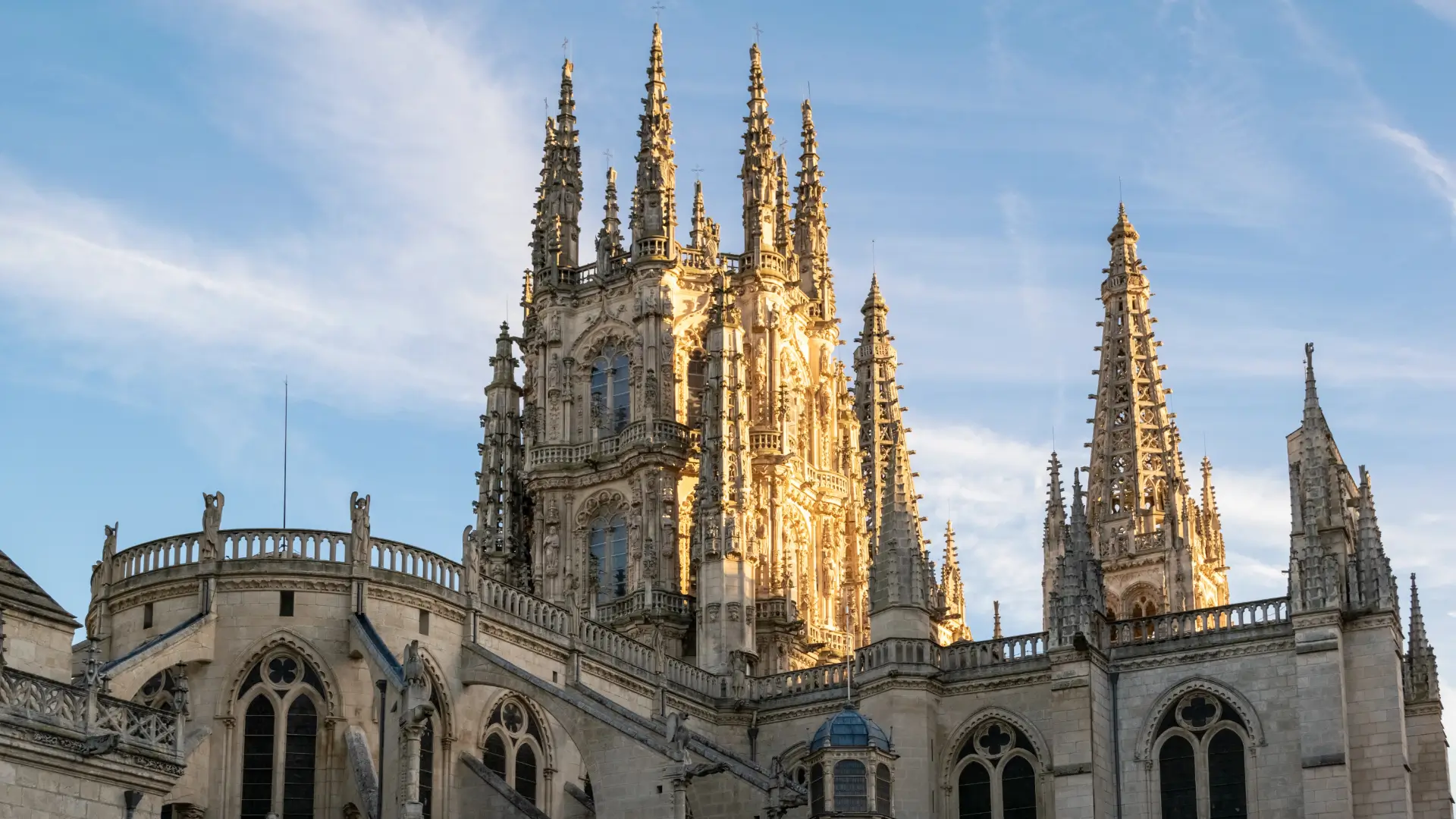
Burgos sits high on the northern plains of Castilla y León, on the old Camino Francés. Its cathedral is one of Spain’s great Gothic buildings — a UNESCO World Heritage Site in its own right, and the resting place of El Cid. Coaches and pilgrims fill the centre by midday. But early mornings, the quiet cloisters and the green banks of the River Arlanzón show you the real, calmer city.

Why Visit Burgos
Burgos is a real, working city, not a museum town — and that is its charm. It is the old capital of Castile, and its history is written in stone. There is a cathedral that stops you in the street, medieval gates, and the tomb of El Cid, Spain’s most famous knight. Yet it stays far calmer than Toledo or Segovia. Locals still fill the tapas bars on Calle San Lorenzo. And you can have a Gothic masterpiece almost to yourself if you come early.
Who Burgos is for
Burgos rewards the traveller who likes history but hates queues. The famous cathedral draws tour coaches and Camino pilgrims. So the centre is busy from late morning through the afternoon, and lively on summer weekends. But the crowds thin fast. Walk the tree-lined Paseo del Espolón, cross the Arlanzón, or drive out to the near-empty Cartuja de Miraflores, and the city slows right down. It is also a natural base: the Atapuerca sites and the Museum of Human Evolution turn a city break into a journey back to the first Europeans.
Day trip or overnight?
You can see Burgos in a long day: the cathedral, a walk along the river, and a plate of morcilla. But a day trip means arriving with the coaches and leaving before the city exhales. Our honest advice: stay the night. A perfect short visit looks like this. Arrive by mid-afternoon and settle in. Stroll the Paseo del Espolón as the light softens, and cross to the Arco de Santa María. Eat late on Calle San Lorenzo, where the tapas bars fill with locals. Then be at the cathedral door soon after it opens, when the Escalera Dorada and the star vault above El Cid's tomb are quiet. Add a morning at the Cartuja de Miraflores or the museum, and you have a trip that does not fit inside a day. Burgos is also high and cold — over 800 metres up. An overnight lets you time your day around the weather, not the bus.
What to See in Burgos

Burgos Cathedral
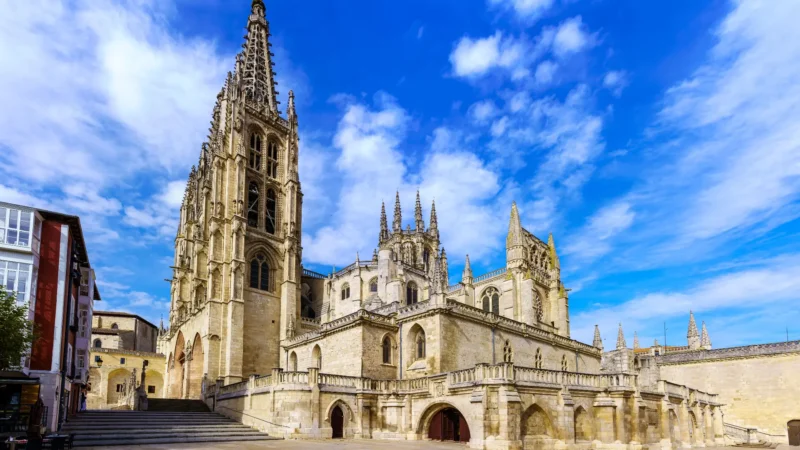
The Cathedral of Saint Mary is the reason most people come, and it earns it. Begun in 1221, it is one of Spain’s largest and purest Gothic churches, and a UNESCO World Heritage Site on its own — a rare honour, as most Spanish cathedrals are listed only as part of a wider old town. Look up for the lace-like openwork spires, the star-shaped Cimborrio dome over the tomb of El Cid and his wife Doña Jimena, and the gilded Escalera Dorada staircase. Come soon after opening to see it in near silence.
Cartuja de Miraflores
This working Carthusian monastery sits about three kilometres east of the centre, in the green Fuentes Blancas park. It is quiet, little visited and free to enter (a donation is welcome). Inside is some of the finest late-Gothic sculpture in Europe: Gil de Siloé’s astonishing star-shaped royal tomb and his richly carved main altarpiece, gilded, so the story goes, with gold Columbus brought back from the New World. A strong “hidden” counterpoint to the busy cathedral.
Monasterio de las Huelgas
West of the centre, this royal Cistercian convent was founded in the 12th century by King Alfonso VIII. It is run by Patrimonio Nacional and can only be seen on a guided tour, so plan ahead. The reward is a pantheon of Castilian kings and queens, some of Spain’s oldest stained glass, and a museum of beautifully preserved medieval textiles. Do not confuse it with the Cartuja de Miraflores — two different monasteries, on opposite sides of the city.
Arco de Santa María
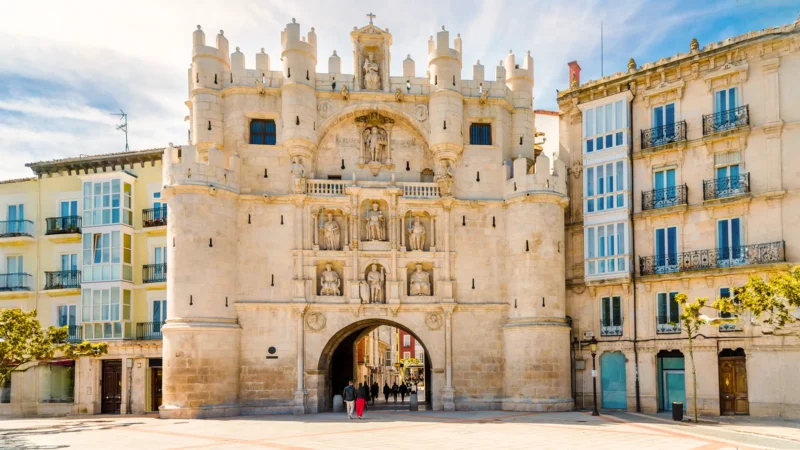
This grand fortified gateway once guarded the old bridge into the city. Its carved façade lines up statues of Castile’s founders and kings, including El Cid and Charles V, and frames the approach to the cathedral. It is free to admire from the outside and is one of the city’s most photographed spots — not to be confused with Santa María the cathedral itself.
Museum of Human Evolution (MEH)
A short walk from the cathedral, on the riverbank, this modern museum holds more than 200 original fossils from the nearby Sierra de Atapuerca — including Miguelón, one of the most complete early-human skulls ever found. It tells the story of human evolution clearly and vividly, and makes the perfect first stop before visiting the digs themselves. Closed Mondays; free on Wednesdays.
Sierra de Atapuerca archaeological sites
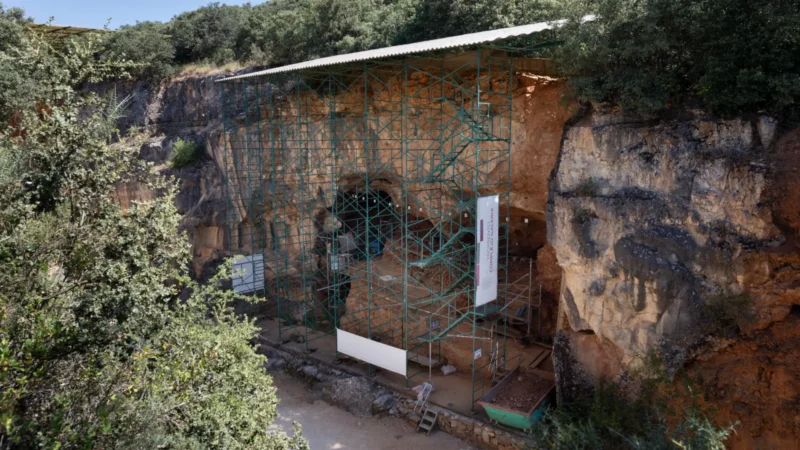
About 15 kilometres east of the city lie the UNESCO-listed Atapuerca digs, home to the earliest known human remains in Western Europe. Visits are guided only and must be booked in advance; you travel to the trench sites by shuttle bus from the visitor centres at Ibeas de Juarros or the CAREX centre, not by private car. See the MEH first for context. This is a genuine half-day trip, best for anyone curious about deep human history.
Paseo del Espolón
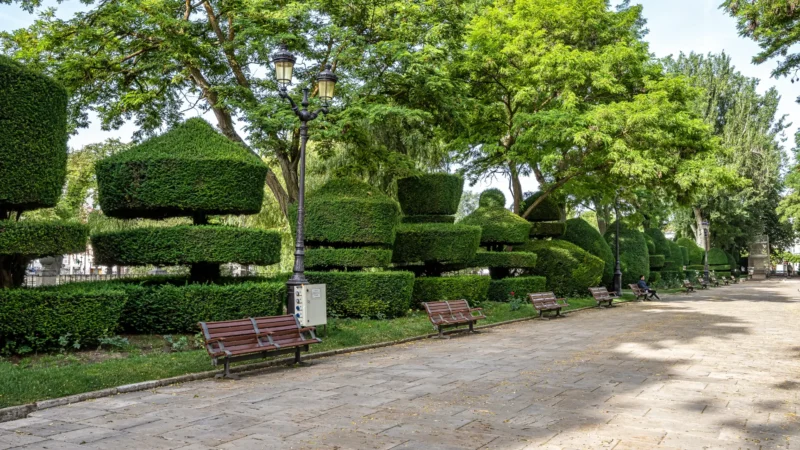
The heart of local life is the Paseo del Espolón, a shaded promenade of plane trees along the river, with clipped hedges, old lamps and café terraces, leading toward the cathedral. Come in the early evening, once the coaches have gone, for the calmest, most local stretch of the city — a fine, slow walk before dinner.
Castillo de Burgos
On the hill above the old town stand the walls and round towers of the city castle, a short but steep climb from the centre. The stronghold was largely destroyed over the centuries, so it is the ramparts, the stonework and the walk up — with the old town falling away below — that reward the effort, rather than a grand interior. Go near sunset, when the light is warm on the stone.




What to Do in Burgos
Walk the old town and the Camino
Follow the yellow Camino arrows through the city on foot: from the eastern edge past San Juan, through the arcaded old streets to the cathedral, and out west toward Las Huelgas. It is flat, walkable and free, and it is the best way to feel Burgos as pilgrims have for a thousand years. A paper map from the tourist office is all you need.
Taste morcilla, cheese and roast lamb
Burgos is a serious food city. Its morcilla — black pudding made with rice — is famous across Spain, and so is its fresh queso de Burgos. Add lechazo (milk-fed roast lamb) and the hearty olla podrida stew, and you have a full day of eating. Graze the tapas bars on Calle San Lorenzo, or sit down at an asador for the lamb. A local guide or a food-focused tasting can show you how to tell a proper Burgos morcilla from a supermarket one — ask at the tourist office for what is running.
Visit the Atapuerca digs
Book a guided visit to the Atapuerca sites (see What to See) for a genuinely rare experience: standing at the trench where the first Europeans were found. Pair it with the Museum of Human Evolution in the city for the full picture. Reserve ahead — places are limited and access is by shuttle only.
Walk out to the Cartuja de Miraflores
The walk east to the Cartuja de Miraflores, through the Fuentes Blancas park along the river, is one of the nicest short outings from the city — around 45 minutes on foot each way, or a short drive. You get a peaceful riverside path and a free Gothic masterpiece at the end.
Prefer to go with a guide for any of this? Ask where you’re staying, or at the tourist office by the cathedral on Calle Nuño Rasura — they’ll know what’s running, in which language, and can point you to something that fits.
Seasonal Events and Festivals
Fiestas de San Pedro y San Pablo (late June)Burgos’s big summer festival, known locally as the “Sampedros”, is anchored on Saint Peter and Saint Paul’s day (29 June) and runs for over a week around it, with parades of giant figures, floral offerings, funfairs and a lively street scene.
Curpillos (early summer)a historic festival tied to the days after Corpus Christi (the date shifts each year with the Church calendar), traditionally centred on the Monasterio de las Huelgas and the meadows of El Parral.
Semana Santa (spring)Holy Week brings solemn processions through the old town in the week before Easter, movable each year with the date of Easter.
For exact dates each year, ask at the Burgos tourist office by the cathedral rather than relying on a fixed date here.
Getting There and Around
Burgos sits in northern Castilla y León, where the A-1 (Madrid–north) meets the A-62 and the A-231, about two hours north of Madrid.
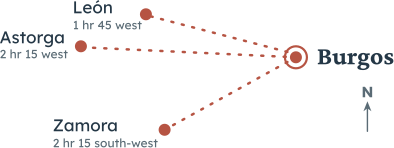
From Madridabout 2 hours 30 by car via the A-1 (roughly 245 km). Direct trains from Madrid Chamartín reach Burgos–Rosa de Lima station in around 2 hours.
From Leónabout 1 hour 45 by car via the A-231, the “Autovía del Camino de Santiago” (roughly 175 km).
From Bilbaoabout 1 hour 50 by car via the AP-1/A-1 (roughly 160 km).
Nearest airportsBilbao (BIO) is the most useful international gateway, about 1 hour 50 by car; Valladolid (VLL) is closer but smaller, about 1 hour 20; Madrid (MAD) is the largest, about 2 hours 30. Burgos has its own small airport (RGS), but flights are very limited.
By traindirect services link Burgos with Madrid, Valladolid, Bilbao and San Sebastián. The station, Burgos–Rosa de Lima, sits a few kilometres from the centre, with a shuttle bus and taxis into town.
Getting around
You do not need a car inside Burgos — the old town, cathedral and river are all walkable, and driving in the historic core is awkward. Park in one of the underground car parks or across the river and walk in. You do want a car for the region, though: it is the easy way to reach the Cartuja de Miraflores, the Atapuerca digs 15 km east, and onward to León, Zamora or the Ribera del Duero wine country. If you are touring Castilla y León by road, pick up a hire car at your arrival airport.
Looking for a ready-made plan? See our Castilla y León road trips.
Practical Info
- Cathedral ticketsthe main tourist visit is ticketed and includes an audioguide (via the cathedral’s own phone app). Entry is free on Tuesday mornings, but those free tickets are only available at the box office — there is no advance booking and no online sale for them. A combined “pulsera turística” wristband covers the cathedral plus the churches of San Gil and San Esteban. Buy the standard ticket online or at the door; check the official site for current prices and hours, which change with the season. Worship areas may limit access during Mass.
- Miraflores and Las Huelgasthe Cartuja de Miraflores is free (donation) with limited hours and is closed during services. The Monasterio de las Huelgas is guided-tour only, run by Patrimonio Nacional, with its own ticket; book ahead in peak season.
- Atapuerca and the MEHthe Museum of Human Evolution is central and open most days (closed Mondays, free Wednesdays). The Atapuerca digs are a separate site ~15 km east, guided and reservation-only, reached by shuttle bus from the visitor centres — not by private car. Book by phone or email in advance.
- Best time of dayvisit the cathedral soon after it opens to beat the coach groups; save the river, the castle mirador and the tapas bars for the evening.
- Getting aroundthe centre is flat and walkable; the castle hill is a short steep climb.
- ClimateBurgos is high (about 860 m) and one of the coldest provincial capitals in Spain. Summers are mild and pleasant — July and August highs around 26–27°C, cool at night. Winters are long and genuinely cold — January highs around 6–7°C with lows near freezing, frequent frost and the odd snowfall. The most comfortable months are May, June and September, roughly 18–24°C by day. Spring (around April) is the wettest.
Where to Eat in Burgos
You’ll eat and drink well in Burgos, at every budget. This is one of Castile’s great food cities, home to morcilla de Burgos (rice-and-blood pudding), fresh queso de Burgos, milk-fed roast lamb and the slow-cooked olla podrida stew. Two simple rules make it easy: for a casual meal, graze the tapas bars around Calle San Lorenzo and the cathedral squares, where a euro or two buys a superb pincho; for dinner, sit down at a proper asador for the lamb, or book ahead for a special table. The picks below cover both, from a quick morcilla-and-vermut stop to a Michelin-level dinner.
The city’s most ambitious kitchen, set over several floors, where a single tasting menu (Humanidad) turns the story of Atapuerca and human evolution into a meal. The gourmet Cobo Evolución floor holds a Michelin star (status changes — verify before publishing); the more relaxed Cobo Tradición floor serves updated Burgos classics, including a fine grilled morcilla. Booking essential.
A Burgos institution near the Casa del Cordón, famous for its wood-oven lechazo (roast lamb). Grand, old-school and reliable; the downstairs bar is a good spot for a quicker bite.
A much-loved San Lorenzo institution for morcilla, mushroom pinchos and a glass of wine at the bar; a small dining room upstairs.
A lively two-level spot on Calle San Lorenzo: pinchos and drinks downstairs, a good-value set lunch upstairs. Arrive early, it fills fast.
A friendly, good-value old-town table for the local hits: fried eggs with morcilla, suckling lamb, hearty starters. Popular, so book.
A tiny, buzzing bar in the shade of the cathedral, pouring its own house vermut with sharp little pinchos and a terrace with a cathedral view.
Where to Stay in Burgos
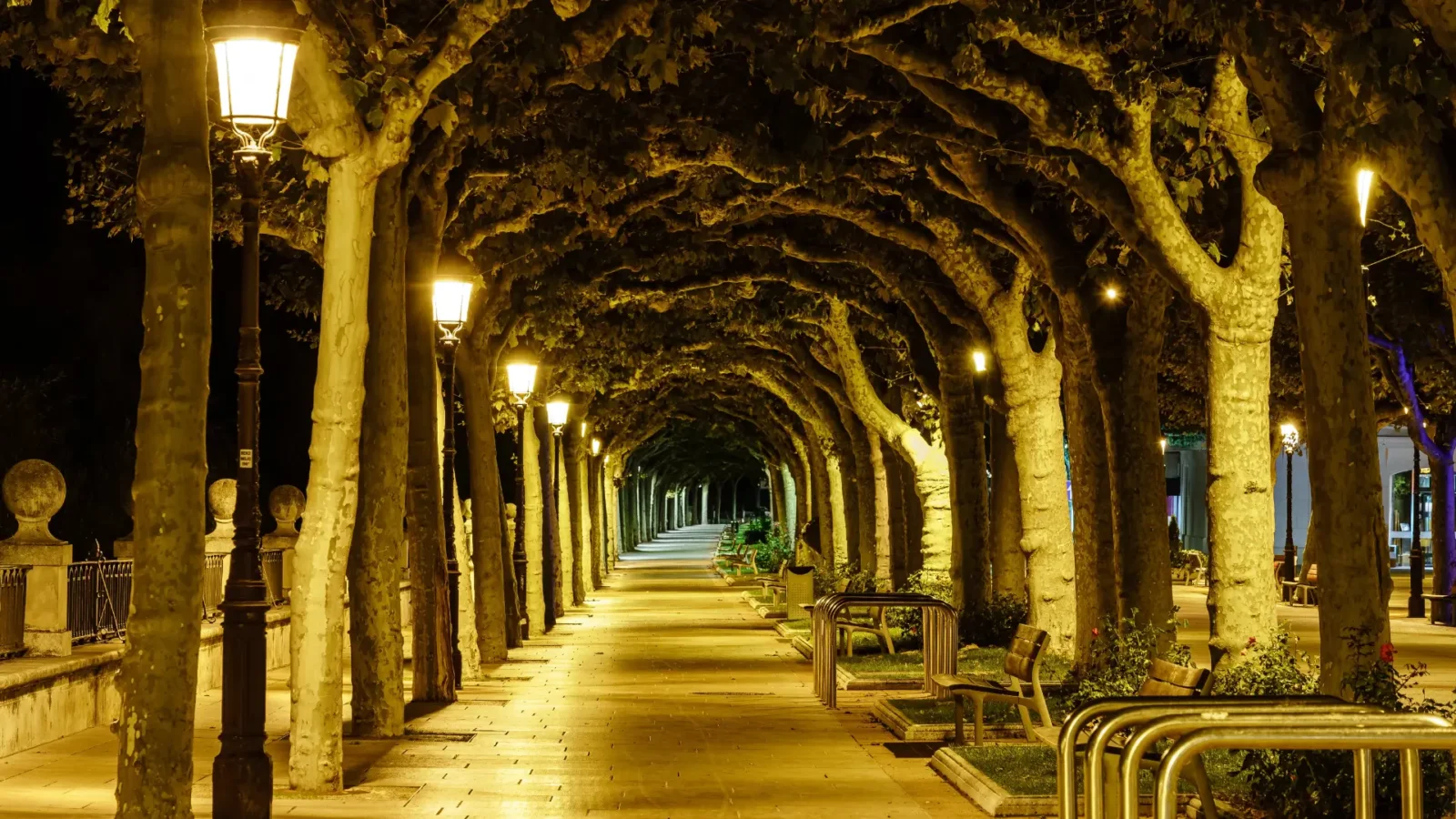
Picture Burgos after the coaches leave: the cathedral floodlit above the river, the Paseo del Espolón lamplit and half-empty, and a plate of morcilla waiting on Calle San Lorenzo. That evening is the whole reason to stay the night, and where you sleep sets it up. Below is a mix of characterful places, from a former convent by the cathedral to a castle-like hotel on the edge of town.
NH Collection Palacio de Burgos
Sleep inside a 500-year-old former convent with a Gothic stone cloister, just across the footbridge from the cathedral. Grand common spaces, modern rooms, some with cathedral and river views.
Check prices & availability for NH Collection Palacio de Burgos on the accommodation's websiteLanda
A romantic, family-run hotel built around an old tower on the southern edge of the city, one of Spain’s first Relais & Châteaux members, with a striking Gothic-style indoor pool and a renowned restaurant. A destination in itself.
Check prices & availability for Landa on the accommodation's websiteHotel Vía Gótica
A modern, comfortable base a step from the cathedral and the bus station, handy for both sightseeing and onward travel; some rooms face the church.
Check prices & availability for Hotel Vía Gótica on the accommodation's websiteHappy Hostal Carrales
Bright, spotless private rooms just across the river, a short walk to the cathedral; a favourite good-value base for Camino walkers and road-trippers alike.
Check prices & availability for Happy Hostal Carrales on the accommodation's websiteCrisol Mesón del Cid
A classic hotel right opposite the cathedral, with some rooms looking straight onto the spires. Ask for a cathedral-view room and you can watch it light up from bed.
Check prices & availability for Crisol Mesón del Cid on the accommodation's websitePensión Peña
A simple, friendly, budget guesthouse in the centre with clean rooms (some with shared bathrooms) — the honest low-cost option a few minutes from the cathedral.
Check prices & availability for Pensión Peña on the accommodation's website
Region, Nearby and Routes
Part of Castilla y León
Burgos is in Burgos — Castilla y León
Part of these routes
Burgos is part of The Cathedral Cities road trip
Nearby places
- LeónA great cathedral city on the Camino, León glows with medieval stained glass, painted Romanesque royal tombs and free-tapa bars in the Barrio Húmedo.
- ZamoraHome to more Romanesque churches than any other European city, quiet Zamora rewards a slow evening on the Duero.
- AstorgaAstorga crowns a small Maragato town with a Gaudí palace, a Gothic cathedral and deep Roman roots.
Frequently Asked Questions
Yes. Its cathedral is one of Spain’s finest Gothic buildings and a UNESCO World Heritage Site on its own, and the city stays far calmer than the big-name destinations. Add El Cid’s tomb, quiet cloisters, the Atapuerca fossils and a great food scene, and it easily fills a day or two.
Its Gothic cathedral, El Cid (Rodrigo Díaz de Vivar, who is buried inside it), the nearby Atapuerca archaeological sites and the Museum of Human Evolution, its place on the Camino de Santiago, and its food — especially morcilla de Burgos and roast lamb.
Half a day covers the cathedral and a river walk, but stay overnight to enjoy the calm evening city. Two nights lets you add the Cartuja de Miraflores, Las Huelgas and a guided visit to the Atapuerca digs.
May, June and September are the most comfortable, with daytime highs around 18–24°C. Summers are mild — July and August highs around 26–27°C, cool at night. Winters are long and cold, with January highs near 6–7°C, frost and occasional snow. Spring is the wettest.
Book ahead: the digs are a guided, reservation-only site about 15 km east of the city, reached by shuttle bus from the visitor centres, not by private car. See the Museum of Human Evolution in the city first for the full context; it holds the original fossils.
Two different monasteries on opposite sides of the city. The Cartuja de Miraflores (east) is a working Carthusian charterhouse, free to enter, famous for Gil de Siloé’s royal tombs. The Monasterio de las Huelgas (west) is a royal Cistercian convent, guided-tour only, with royal tombs and a medieval textile museum.
For tapas, graze Calle San Lorenzo at spots like Mesón Los Herreros and Casa Pancho, or stop at Vermutería Victoria near the cathedral. For roast lamb, book Casa Ojeda or an asador like Casa Peña; for a special dinner, Cobo Estratos. Don Nuño is a reliable, good-value old-town table.
For character, the NH Collection Palacio de Burgos (a former convent by the cathedral) or the castle-like Landa on the edge of town. For a cathedral view, Crisol Mesón del Cid or Hotel Vía Gótica. On a budget, Happy Hostal Carrales or Pensión Peña are clean, central and friendly.