
Astorga: a Gaudí Palace, Roman Streets and a Quiet Maragato Town
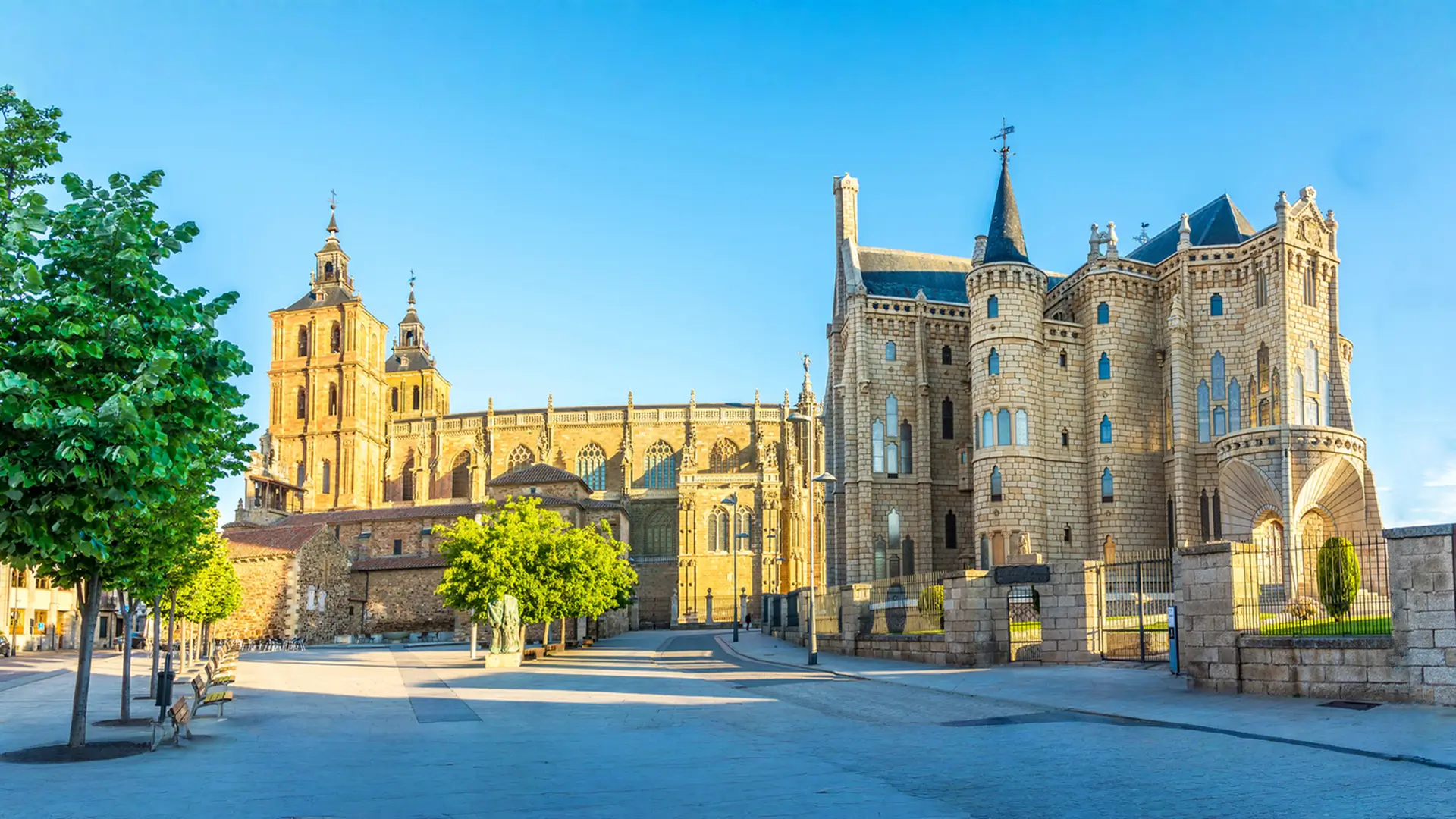
Astorga sits where the plains of Castilla y León rise towards the mountains, in the Maragatería. It is small, but it holds two big sights side by side: a fairy-tale palace designed by Antoni Gaudí and a late-Gothic cathedral. Add deep Roman roots, a chocolate past and a famous local stew, and you have a rewarding stop on the Camino — calm once the day visitors leave.
Why Visit Astorga
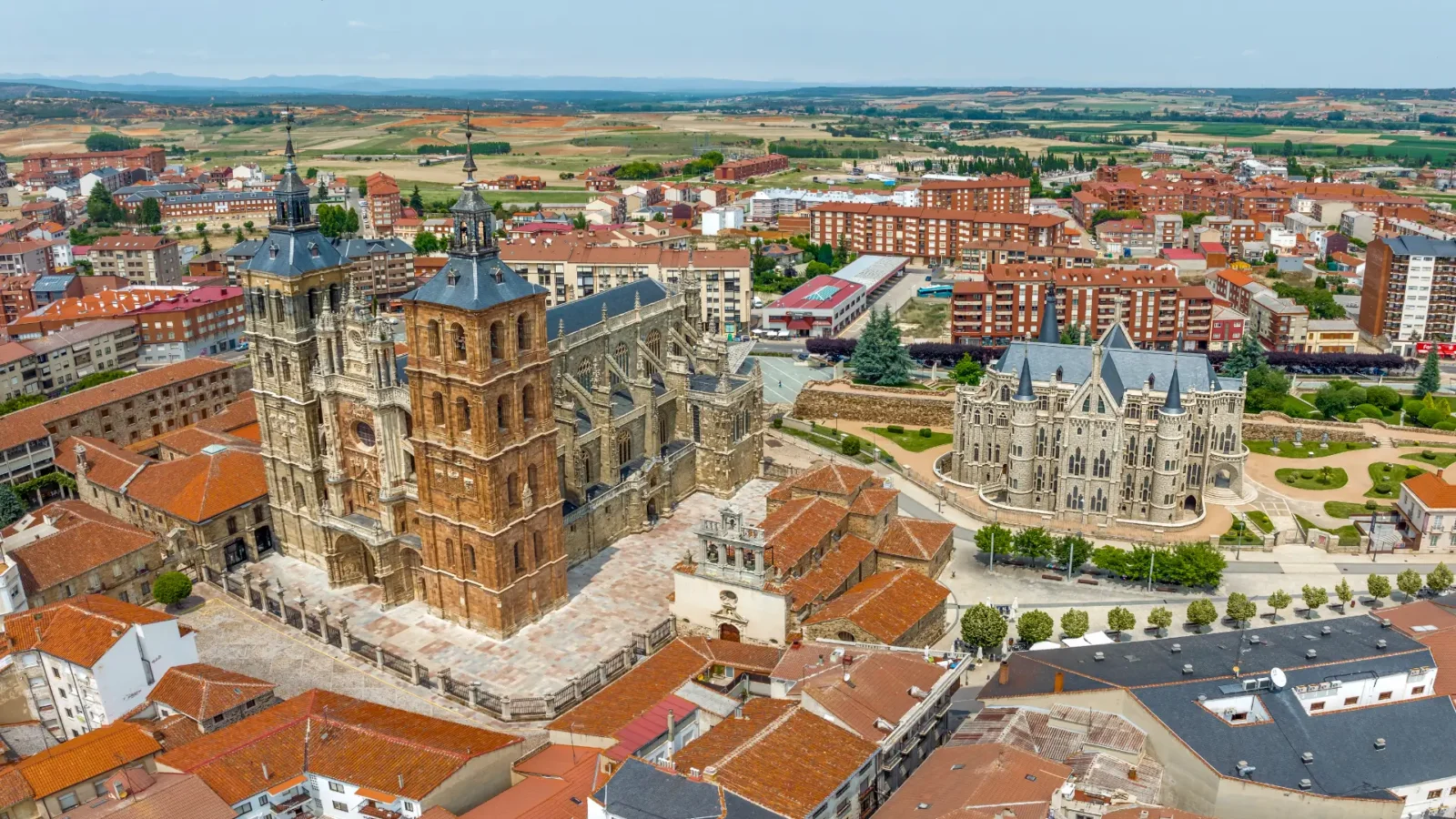
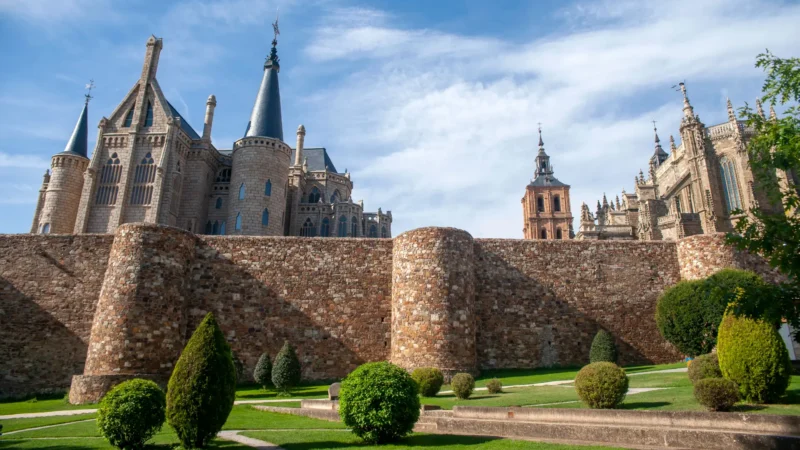
Most people come to Astorga for two buildings that stand almost side by side. One is the Palacio de Gaudí, a pale, turreted palace that looks like it belongs in a fairy tale. The other is the cathedral, a tall late-Gothic church with a grand Baroque front. Seeing them together, on one small square, is the image people carry home. But Astorga is far older than either. It began as a Roman city, Asturica Augusta, and Roman walls and streets still run through the old town.
More than its two famous sights
What makes Astorga special is how much sits under the surface of a small, easy-going town. It is the capital of the Maragatería, a quiet upland region with its own customs and its own food. It has a long chocolate-making past and a museum to prove it. It is also a busy point on the Camino de Santiago, where several pilgrim routes meet. All of this fits inside a compact centre you can walk in an afternoon. The two big sights draw coaches and day-trippers, and pilgrims pass through all year. Yet step a street away and Astorga turns calm, local and unhurried. That is the real reward.
Day trip or overnight?
You can see Astorga's headline sights in an afternoon. The Gaudí palace, the cathedral and the town-hall clock all sit within a few minutes' walk of each other, so a half-day covers the essentials. But that means leaving just as the town gets good. Our honest advice is to stay the night. A perfect short visit looks like this: arrive for a late lunch of cocido maragato, then tour the Gaudí palace and the cathedral in the afternoon light. Walk a stretch of the Roman wall by the palace gardens, then catch Juan Zancuda and Colasa strike the hour on the town hall. Buy a box of mantecadas before the shops close. Then have the evening streets almost to yourself, once the coaches have gone — which is exactly why a night here beats a rushed stop.
What to See in Astorga

Palacio de Gaudí (Episcopal Palace)
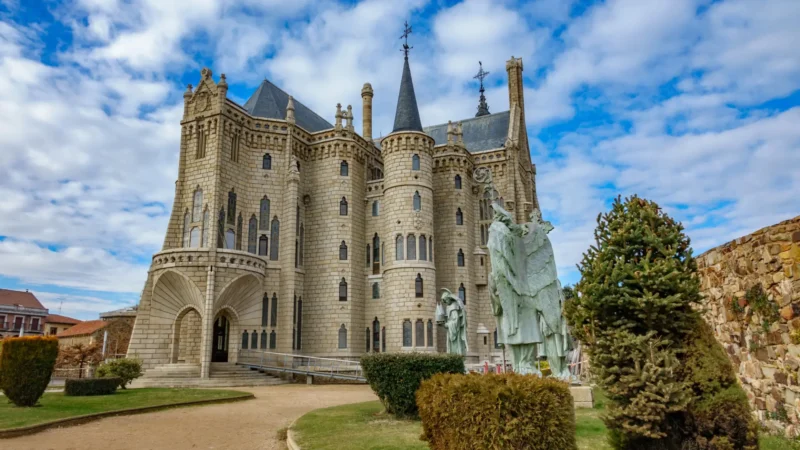
This is Astorga’s star sight: a pale, turreted palace designed by Antoni Gaudí, one of only three buildings he made outside Catalonia. Gaudí took the project on after a fire destroyed the old bishop’s palace, but he left before it was finished, so later hands completed it. Inside is the Museo de los Caminos, a museum about the Camino de Santiago, which lets you walk the whole building. 2026 marks 100 years since Gaudí’s death, with special events through the year.
Catedral de Santa María
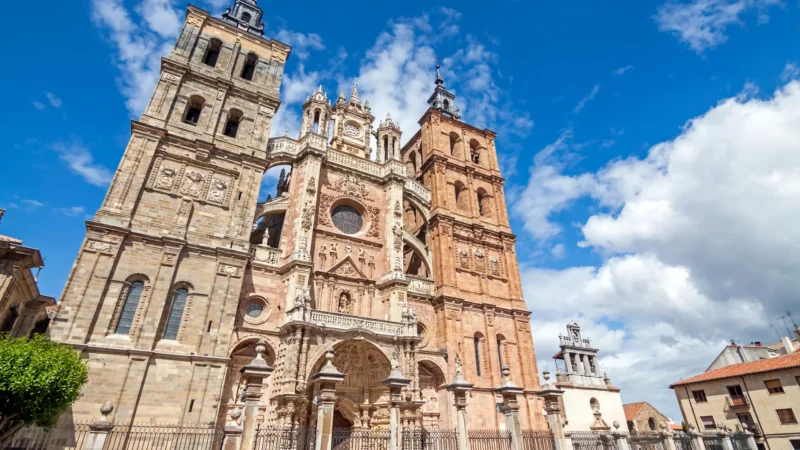
Right beside the Gaudí palace stands the cathedral, begun in the 15th century and built over some 300 years. That long span shows: the main body is Gothic, the north door Renaissance, and the great front is Baroque. The ticket to the cathedral museum also gets you into the church itself, where you can see chapels, the cloister and a rich collection of religious art. The two buildings together — palace and cathedral — are the classic view of Astorga.
Roman Astorga: the Ruta Romana
Astorga was Asturica Augusta, an important Roman city on the routes north and west. The Ruta Romana is a guided walk, run from the Roman Museum. It takes you to remains you cannot reach alone: the small baths, part of the forum, a fine Roman house, and a stretch of the sewers — among the best-preserved in Europe. Places are limited and you must book, so plan ahead. Some other Roman spots, like the Domus by the museum, are free to see on your own.
Roman walls & the Puerta Romana
Astorga’s walls go back to Roman times, and several stretches survive around the old town. The best-kept sections can be seen from the Gaudí palace gardens and from the Mirador de la Vega, a small viewpoint near the Plaza Mayor that also looks out over the river valley. The Puerta Romana, a Roman gate on the edge of the old town, marks one of the historic ways in. Together they show how old Astorga really is, long before Gaudí arrived.
Plaza Mayor & Ayuntamiento
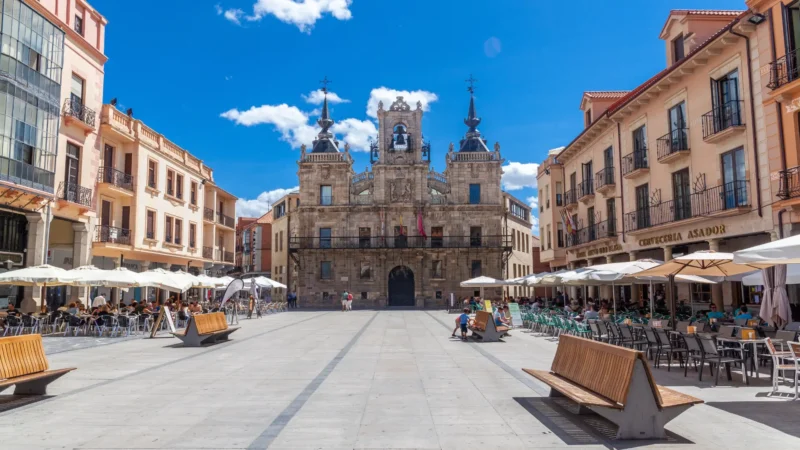
The Plaza Mayor sits on the old Roman forum and is the heart of town life. Its Baroque town hall carries a clock with two figures in Maragato dress, Juan Zancuda and Colasa, who strike the hour with mallets — they have done so since 1748. People gather on the hour to watch. The square is free to enjoy, with cafés under its arcades, and it makes a good place to pause between sights.
Iglesia de San Bartolomé
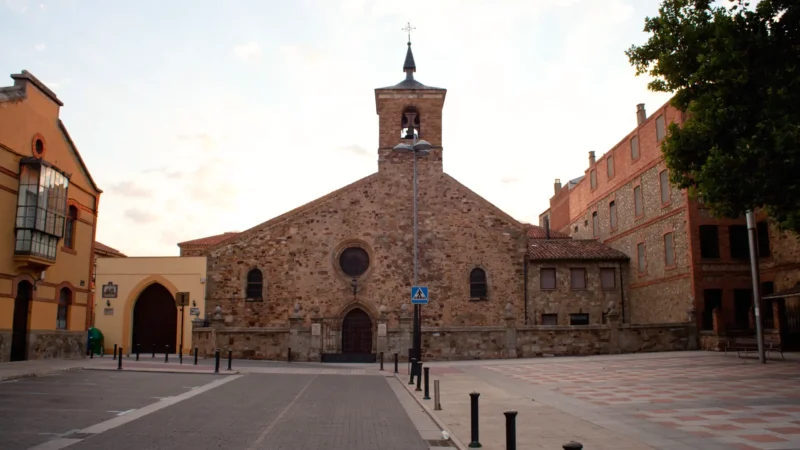
The oldest church in town sits on the small square that also holds the Roman Museum, a short walk from the Plaza Mayor. Founded in the 11th century, it has been rebuilt many times, so it mixes Romanesque, Gothic and Baroque work — the Romanesque bell tower is its oldest surviving part. It stands on the edge of the old Roman basilica, and for centuries it doubled as the town’s meeting hall: the city council gathered here until the current town hall was built. A quiet, layered stop that ties the town’s Roman and medieval stories together.

What to Do in Astorga
Walk the old town, sight to sight
Astorga rewards slow walking. Start on the Plaza Eduardo de Castro, where the Gaudí palace and the cathedral face each other, then head to the Plaza Mayor for the town-hall clock. From there it is a short stroll to the Roman walls and the Mirador de la Vega. The centre is small and flat enough to cover on foot, and a free map from the tourist office marks the main points. Time your loop to catch a Maragato figure striking the hour.
Take the guided Roman route (Ruta Romana)
The guided Roman walk is the one activity worth booking ahead. On your own you can only see the surface of Roman Astorga. With a guide you go inside the baths, the forum area, a grand Roman house and a length of the ancient sewers, with the history explained as you go. Groups are small and depart from the Roman Museum at set times, so reserve a place before you arrive. It turns scattered stones into a clear, human story.
Visit the Roman Museum (La Ergástula)
The Roman Museum is the natural first stop for Astorga’s Roman side, and it sits inside a Roman building itself — “La Ergástula”, a vaulted structure that is a national monument in its own right. Inside, finds from years of digging tell the story of daily life in Asturica Augusta, from tombstones and coins to jewellery and pottery. Start here to get your bearings before the guided Ruta Romana; a combined ticket covering both the museum and the walk gives the fullest picture of Roman Astorga and usually costs less than paying separately.
Eat cocido maragato — the local ritual
The region’s signature dish is a meal in itself and worth planning a lunch around. Cocido maragato is eaten “backwards”: first the meats, then the chickpeas and vegetables, and the soup last of all. The story goes that the muleteers who once worked these roads ate the heartiest food first, in case they had to leave in a hurry. It is a big, slow lunch, so come hungry and give it time. Several town restaurants serve it — see Where to Eat below.
Buy mantecadas and taste the chocolate
Astorga’s sweet side is easy to enjoy and easy to take home. The town’s mantecadas — light, buttery little cakes — carry a Protected Geographical Indication (IGP), which means only bakers in Astorga and three nearby villages may make them under that name. Local shops sell them in the traditional folded paper cases, alongside flaky hojaldres. Pair a box with a visit to the Chocolate Museum, whose shop and tasting round off the story of the town’s long chocolate trade.
See the Chocolate Museum
Chocolate was a major trade in Astorga for centuries, and this small museum tells that story well. It sits in a fine early-20th-century mansion near the train station that once belonged to a local chocolate-maker, and its rooms are full of old machines, moulds, tins and advertising from the town’s factories. The visit is short and easy to fit in, and it ends where it should — at a shop and tasting counter, so you can try (and take home) chocolate made in Astorga and nearby. It closes on Mondays, so check the day before you plan to go.
Prefer to go with a guide for any of this? Ask where you’re staying, or at the tourist office on the Plaza Eduardo de Castro, beside the Gaudí palace — they’ll know what’s running, in which language, and can point you to something that fits.
Seasonal Events and Festivals
Astures y Romanos (late July, last weekend)Astorga’s biggest festival is a large historical re-enactment of its Roman and Astur past, held over four days on the last weekend of July. A living camp fills the Parque del Melgar, and the streets host parades, a market, workshops and a Roman circus. It is one of Spain’s best-known events of its kind and draws visitors from across the region, so book a room well ahead if you want to be in town for it.
Semana Santa (Holy Week, March or April)Astorga holds solemn Easter processions through the old town, a strong tradition here as across León. The dates move each year with the church calendar.
For exact dates each year, ask at the tourist office on the Plaza Eduardo de Castro; the festival programme changes year to year.
Getting There and Around
Astorga sits in north-west Castilla y León, in the province of León, where the plains meet the mountains. It is an easy hop west of the city of León, on the main road and rail line towards Galicia.
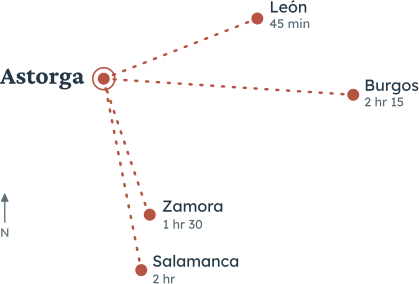
From Leónabout 45 minutes by car (roughly 50 km) on the A-6/AP-71. Direct trains also run several times a day and take around 35–45 minutes.
From Madridabout 3 hours 30 by car, or a direct train on the Madrid–Galicia line; long-distance ALSA coaches also serve the town.
Nearest airportsLeón (LEN) is closest, about 45 km away, but has very few flights. Valladolid (VLL) is the nearest realistic option, and Madrid (MAD) is the main international gateway, about 3 hours 30 by road.
By trainAstorga is on the line from Madrid and León towards Ponferrada and Galicia, with direct Media Distancia and Alvia services. The station is about a 15-minute walk (750 m) from the centre.
Getting around
You don’t need a car inside Astorga — the old town is small, flat and easy to walk, and the main sights sit within a few minutes of each other. Park outside the historic core and explore on foot. You do want a car for the wider trip, though: it’s what lets you reach León, the Maragato villages nearby and the mountains beyond at your own pace. If you’re touring the region, this is a natural, well-placed overnight stop.
Looking for a ready-made plan? See our Castilla y León road trips.
Practical Info
- Tickets — plan around the two big sightsThe Gaudí palace (Museo de los Caminos) and the cathedral each charge admission and sell their own tickets. Check the official sites for current prices and hours before you go: the Palacio de Gaudí and the Catedral de Astorga. The cathedral often opens free on Tuesday mornings.
- Roman Astorga needs bookingThe Ruta Romana is a guided walk with limited places and set departure times from the Roman Museum — reserve ahead, especially in summer. A combined Museum + Ruta Romana ticket gives the fullest visit.
- Closing daysSeveral museums (the Chocolate Museum, the Roman Museum) close on Mondays, and hours change with the season. Check before you go rather than relying on a fixed timetable.
- Getting aroundThe centre is walkable; park outside the old town. The main sights cluster on and around the Plaza Eduardo de Castro and the Plaza Mayor.
- ClimateAstorga sits high, at around 870 m, so it runs cooler than the lower cities of the region. July is the warmest month, with highs around 28°C, but evenings stay fresh; January is cold, with highs near 9°C. The most comfortable months are May, June, September and roughly into early October, with pleasant daytime temperatures. Autumn is the wettest time, with October the rainiest month; summer is dry.
Where to Eat in Astorga
You’ll eat well in Astorga, and you’ll eat the region’s most famous dish at its source. This is the home of cocido maragato, a huge, slow lunch eaten “backwards”, meats first and soup last. The town is full of places that do it properly. Astorga is also known for its sweets: IGP mantecadas, flaky hojaldres and a long chocolate tradition. A simple rule helps: cocido is a midday meal, so plan it for lunch and keep the evening lighter. The picks below run from the classic cocido houses to a more modern kitchen. Book ahead at weekends — the good tables fill fast, and some places serve cocido only to order.
The town’s best-known cocido house, serving the full “backwards” ritual since the early 1990s, with a long parade of meats before the chickpeas and soup. Warm, formal service and generous plates; come very hungry and don’t plan much after. Closed Monday and Tuesday.
The sister restaurant, a short walk from the first, serving the same famous cocido at a slightly gentler price. A favourite with pilgrims and locals alike; reserve on weekends or risk being turned away.
A warm, family-run spot much loved for its cocido maragato and its welcome, especially to walkers coming off the Camino. The set lunch is generous and the owners look after every table. A reliable, honest choice for the local dish.
For something beyond cocido, this cosy, family-run kitchen cooks seasonal Spanish food with care — wild mushrooms in autumn, good local produce, home-made desserts, and a strong wine list. The chef-owner still runs the kitchen. Book ahead; a good choice for a special dinner. Closed Monday.
A century-old family house just off the Plaza Mayor, cooking local dishes with local ingredients — cocido, cured cecina, fish and meats — in a comfortable old-town dining room. Steady quality and friendly service, and you can stay upstairs too.
Café Restaurante El Maragato
A busy, no-frills spot on the edge of town, popular with workers and travellers for its good-value set lunch and homely cocido maragato. Not fancy, but honest and filling — a solid budget option if the central houses are full.
Where to Stay in Astorga
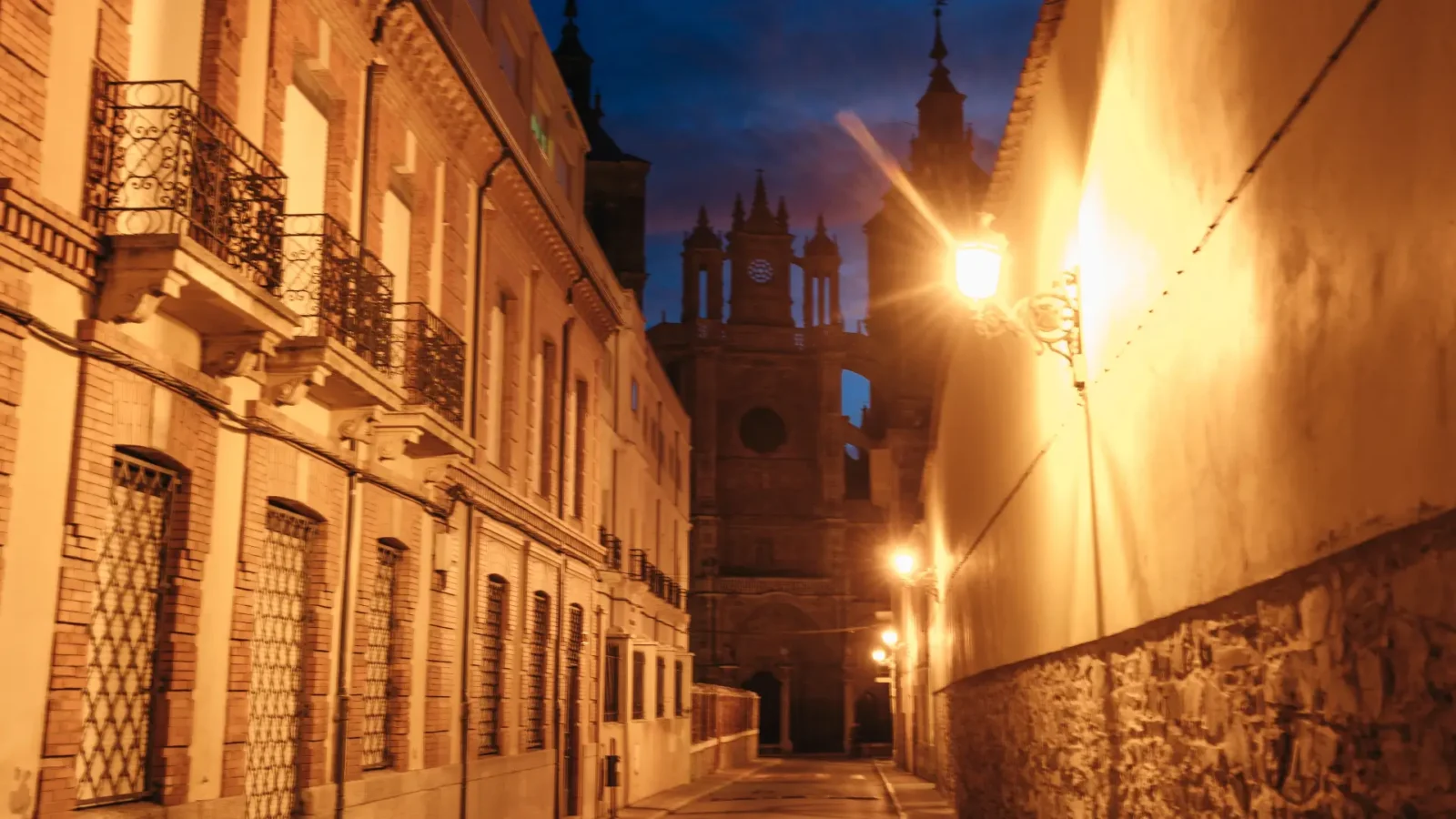
Stay the night and Astorga changes. Once the coaches leave, the lamplit streets around the cathedral and the Gaudí palace empty out. The Plaza Mayor slows to a few tables under the arcades, and the town feels like it belongs to the people who live there. That quiet evening is the real reason to stay — here’s where we’d do it.
Posada Real Casa de Tepa
A restored 18th-century mansion, kept in the same family for generations, with elegant rooms, a walled garden for a pre-dinner drink and a fine breakfast — a few minutes from the cathedral. The characterful choice in town.
Check prices & availability for Posada Real Casa de Tepa on the accommodation's websiteHotel Spa Ciudad de Astorga by PortBlue Boutique
A central hotel with a spa and small pool, barely 100 m from the Gaudí palace — a restful base after a day on your feet, and handy parking.
Check prices & availability for Hotel Spa Ciudad de Astorga by PortBlue Boutique on the accommodation's websiteEurostars Vía de la Plata
A comfortable four-star in a handsome historic building in the centre, with a sauna and easy walking access to every sight. The reliable upper-tier hotel option.
Check prices & availability for Eurostars Vía de la Plata on the accommodation's websiteHotel Gaudí
Right on the main square, facing the Gaudí palace and cathedral; some rooms look straight out at them. An older hotel, but the location is unbeatable and the Camino passes the door.
Check prices & availability for Hotel Gaudí on the accommodation's websiteHotel El Descanso de Wendy
A small, warmly run guesthouse a few steps from the cathedral, with lovely rooms, an excellent breakfast and a 24-hour coffee corner — one of the highest-rated stays in town.
Check prices & availability for Hotel El Descanso de Wendy on the accommodation's websiteHotel Imprenta Musical
A modern, good-value option in the centre, clean and comfortable with a self check-in — a smart budget base within a short walk of the palace and cathedral.
Check prices & availability for Hotel Imprenta Musical on the accommodation's website
Region, Nearby and Routes
Part of Castilla y León
Astorga is in León — Castilla y León
Part of these routes
Astorga is part of The Cathedral Cities road trip
Nearby places
- BurgosOne of Spain’s finest Gothic cathedrals, the tomb of El Cid and the Atapuerca fossils, in a calm, walkable Castilian city.
- LeónA great cathedral city on the Camino, León glows with medieval stained glass, painted Romanesque royal tombs and free-tapa bars in the Barrio Húmedo.
- ZamoraHome to more Romanesque churches than any other European city, quiet Zamora rewards a slow evening on the Duero.
- SalamancaUNESCO city of golden sandstone on the Tormes — baroque Plaza Mayor, two cathedrals and Spain’s oldest university, at its liveliest after dark.
Frequently Asked Questions
Yes. For a small town it packs in a lot. There’s a fairy-tale palace designed by Gaudí, a fine Gothic cathedral right beside it, deep Roman remains you can walk through, a chocolate museum and its own famous stew. Away from those headline sights it stays calm and local, which is much of its charm. It also makes an easy, well-placed stop on the Camino or on a wider tour of León province.
Three things above all: the Palacio de Gaudí (one of only three Gaudí buildings outside Catalonia), its Roman past as Asturica Augusta, and cocido maragato, the region’s hearty stew eaten “backwards”. It is also famous for its mantecadas — protected local cakes — and a long chocolate-making tradition.
Half a day covers the main sights — the Gaudí palace, the cathedral and the town-hall clock all sit close together. But it’s better as an overnight: stay, and you get the quiet evening streets once the day-trippers and coaches have left, plus time for a slow cocido lunch and the guided Roman walk.
Easily. Astorga is about 45 minutes from León by car, with direct trains taking a similar time, so it’s a simple day trip. That said, it rewards a night if you can spare one — the town is at its best in the evening, once the day visitors have gone.
Plenty. Right next door is the Gothic cathedral and its museum. Underneath the town is Roman Astorga, seen on the guided Ruta Romana and in the Roman Museum. The Plaza Mayor has a Baroque town hall with figures that strike the hour, and the Chocolate Museum tells the story of the town’s sweet trade. Roman walls and a Roman gate ring the old centre.
Late spring and early autumn are most comfortable — May, June, September and into early October bring pleasant days without the summer heat or winter cold. July is the warmest month, with highs around 28°C, though the town sits high so evenings stay fresh; January is cold, near 9°C. Autumn is the wettest season. Late July is lively for the Astures y Romanos festival.
For character, the Posada Real Casa de Tepa is a restored 18th-century family mansion near the cathedral. The Eurostars Vía de la Plata is the reliable upper-tier hotel, and the Hotel Spa Ciudad de Astorga adds a spa and small pool. For value, the modern Hotel Imprenta Musical or the warmly run El Descanso de Wendy are both central and comfortable.
For the local cocido maragato, the classic houses are Casa Maragata (two branches) and the warm, family-run Las Termas. For something more modern, Restaurante Serrano cooks seasonal Spanish food with care, while Hotel Restaurante La Peseta is a reliable century-old choice off the Plaza Mayor. Book ahead at weekends, and remember cocido is a lunchtime meal.