

Castilla y León: Monumental Spain, Minus the Queues
Spain’s biggest region hides its best in plain sight. Roman aqueducts, complete medieval walls and cathedrals to rival any in Europe — yet the plains between them stay almost empty. This is the interior worth slowing down for.
Why Visit Castilla y León
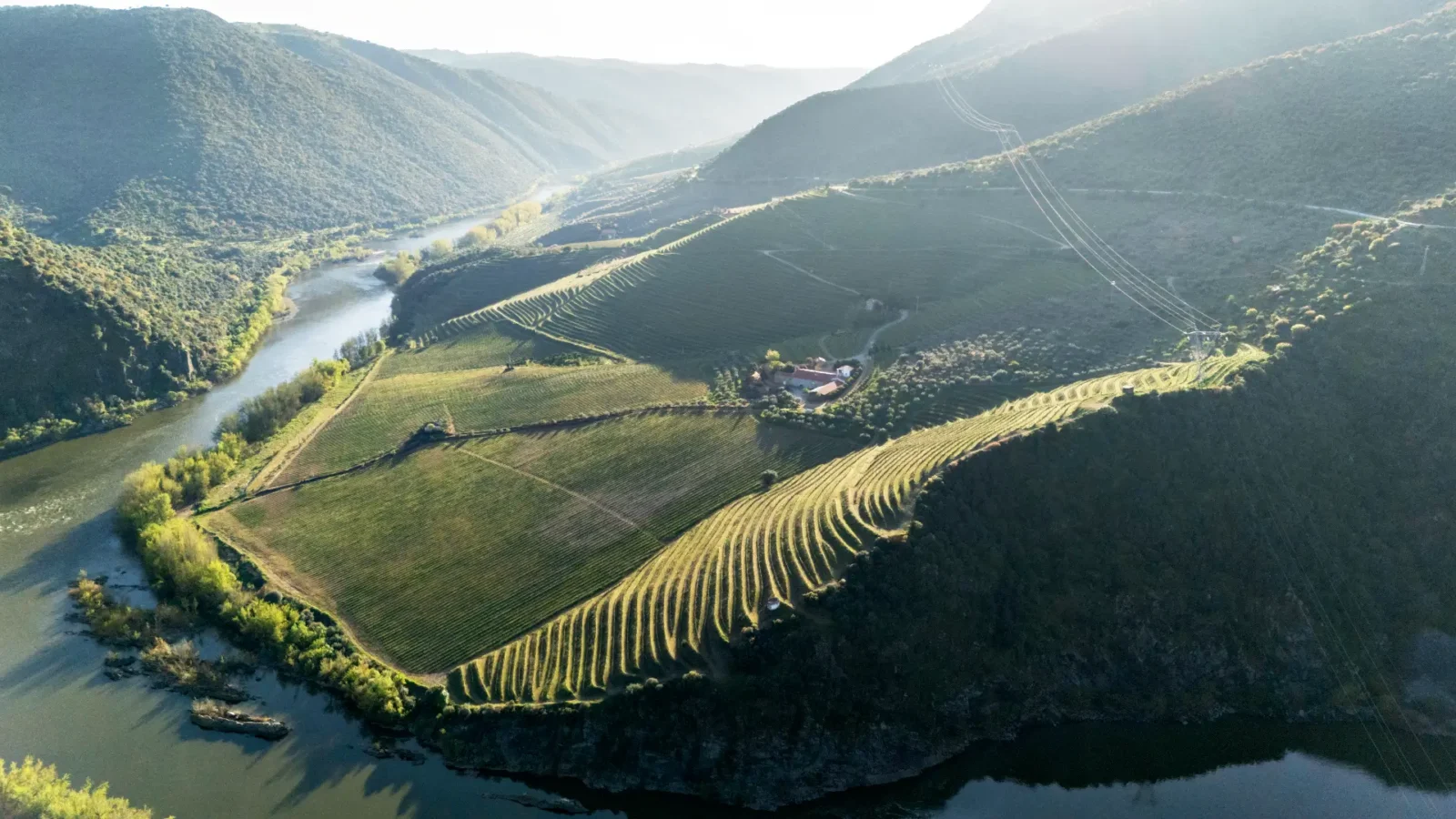
Castilla y León is the largest region in Spain and one of the largest in the whole European Union. Most of it is high, dry tableland — the meseta — sitting around 700 to 800 metres above sea level, ringed by mountains. That space is the point. The region holds more UNESCO World Heritage sites than any comparable part of Spain, yet outside a handful of famous cities you can drive for an hour and barely pass a soul. It is Spain without the beaches, the resorts or the crowds — big skies, honest food, and monuments that stop you in your tracks.
Great monuments, small queues
This is the headline. Segovia’s Roman aqueduct, Ávila’s complete medieval walls, the Gothic cathedrals of Burgos and León, and golden Salamanca all sit here. Some pull day-trip coaches from Madrid, so mornings and evenings matter — arrive early or stay the night and the same streets empty out. Step into the villages and you often have the place to yourself.
Living history at every turn
The region shaped Spain itself: the Castilian language, the Reconquista frontier, the Camino de Santiago. You can stand inside a Roman gold mine, walk a wall built against the Moors, and trace the pilgrim road that knitted medieval Europe together — all within a few hours’ drive. Eight UNESCO sites is only the start; there are twelve cathedrals and hundreds of castles and churches besides.
Room to breathe
Beyond the cities, the land opens out: wheat plains, the Duero river valley and its vineyards, canyons, and mountain ranges on the northern rim. The emptiness that emptied these provinces of people — locals call it la España vaciada, “emptied Spain” — is exactly what makes them restful to travel. Quiet roads, long views, and villages that feel unchanged.
Serious food, fair prices
This is roast-meat country: suckling lamb and suckling pig from wood-fired ovens, hearty stews, strong cheeses and blood sausage. It is also wine country, with Ribera del Duero reds and Rueda whites among Spain’s best. Away from the tourist hubs, a proper regional meal costs far less than on the coast, and the quality is high.
When to Visit Castilla y León
Spring (March–May)The sweet spot for many. Days warm gradually from cool to pleasant (highs around 15°C in March, low 20s by May), the plains turn green, and city crowds are thin outside Easter week. Note that Holy Week (Semana Santa) processions are a major regional tradition, especially in Zamora, León and Valladolid — beautiful, but busier. Nights stay cold early in the season.
Summer (June–August)Hot and very sunny, but drier and a touch cooler than Madrid thanks to the altitude. Daytime highs sit around 30°C and can climb past 35°C in a heatwave; the reward is warm, cool evenings perfect for a late dinner outdoors. This is peak season in the famous cities, though the countryside still absorbs it easily. Book city hotels ahead for July and August.
Autumn (September–October) Arguably the best all-round window: warm days, cool nights, the grape harvest in the Duero valley, and the light turning golden over the plains. Crowds fall away after early September. October brings the first proper rains and colder evenings, but also the clearest air of the year.
Winter (November–February) Cold, and honest about it. January hovers near freezing, and snow is common in the north and on high ground — Ávila, Burgos, León and Soria all see it. Cities look magical under snow and cost less, but plan for short days and pack warm. Some rural sights keep reduced winter hours, so check before a long drive.
Sights and Activities in Castilla y León

Stand beneath the Aqueduct of Segovia
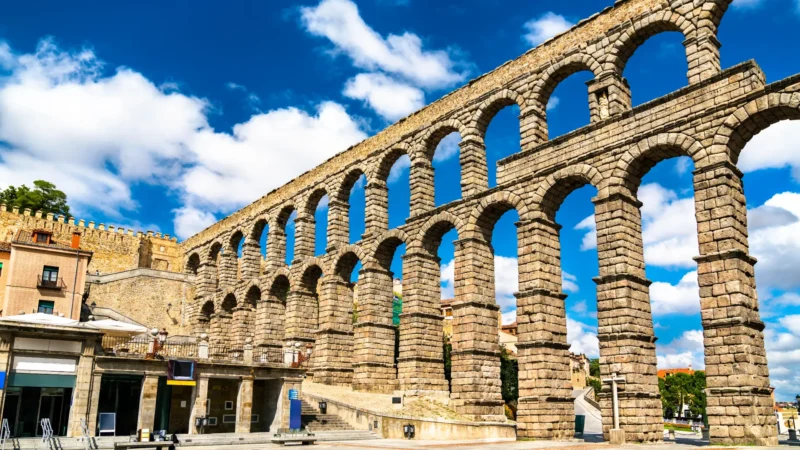
Segovia’s Roman aqueduct is one of the best-preserved in the world — a mortar-free stack of granite arches that has stood for roughly 1,900 years. At its tallest it reaches almost 29 metres, carried on a run of 167 arches straight through the old town. It is free to walk up to, and unforgettable at first sight. Come early or late to have the base of it to yourself.
Climb the fairy-tale Alcázar of Segovia
The Alcázar of Segovia rises on a rocky spur above the city. Shaped like the prow of a ship and topped with pointed turrets, it is the castle widely said to have inspired Disney’s fairy-tale look. Inside are royal halls from its centuries as a palace. Climb the tower for long views over the city and the plains. It stands a short walk from the aqueduct, so the two pair naturally in a day.
Walk the walls of Ávila
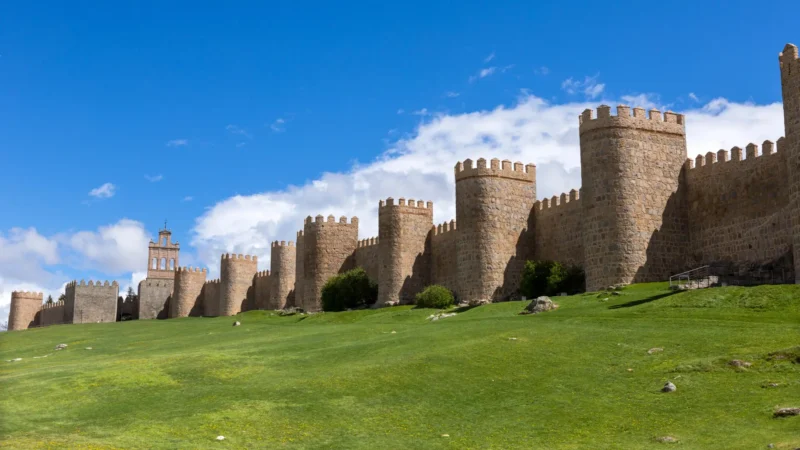
Ávila has the most complete medieval walls in Spain: an unbroken circuit of about 2.5 kilometres, studded with some 88 semicircular towers and pierced by nine gates. You can walk long stretches along the top for views over the old town and the plains beyond. At roughly 1,130 metres, Ávila is the highest provincial capital in Spain — bring a layer, even in summer.
Look up inside two great Gothic cathedrals
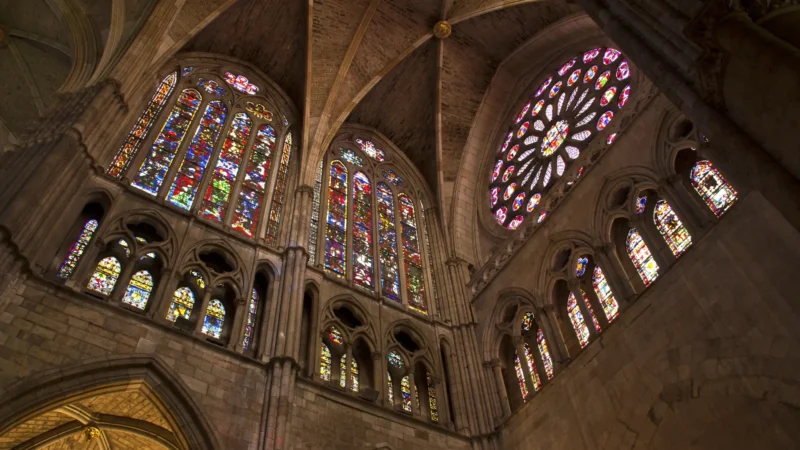
Burgos and León hold two of Europe’s finest Gothic cathedrals. Burgos, begun in 1221, is the only cathedral in Spain listed by UNESCO in its own right — a dense summary of the whole Gothic era. León is famous for something else: walls of medieval stained glass that flood the interior with colour on a bright day. See one, and you will want to see the other.
Wander golden Salamanca
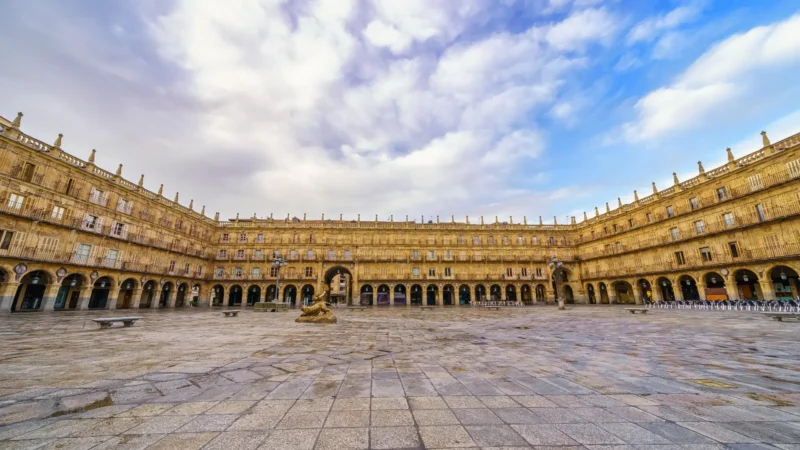
Salamanca is built from a sandstone that glows honey-gold in low light, and it is home to the oldest university in Spain, founded in 1218. The Plaza Mayor is among the most beautiful squares in Europe, and the city carries two cathedrals side by side. As a student city it stays lively year-round, with tapas bars to match.
Trace Zamora's Romanesque churches
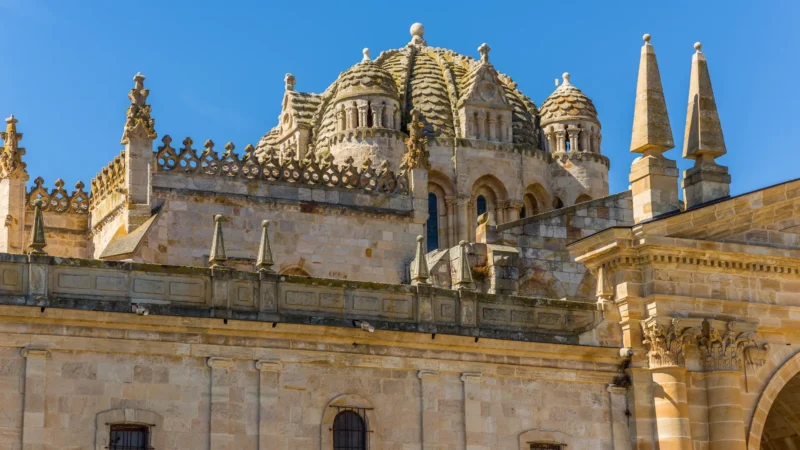
Quiet Zamora sits on the river Duero. It holds one of the densest sets of Romanesque architecture anywhere in Europe: more than twenty medieval churches within a small old town, plus a stout cathedral with a distinctive scaled dome. It sees a fraction of the visitors the bigger cities do, so you can wander the honey-coloured stone almost alone. It lies less than an hour from Salamanca, so the two are easy to combine.
Taste the Ribera del Duero wine country
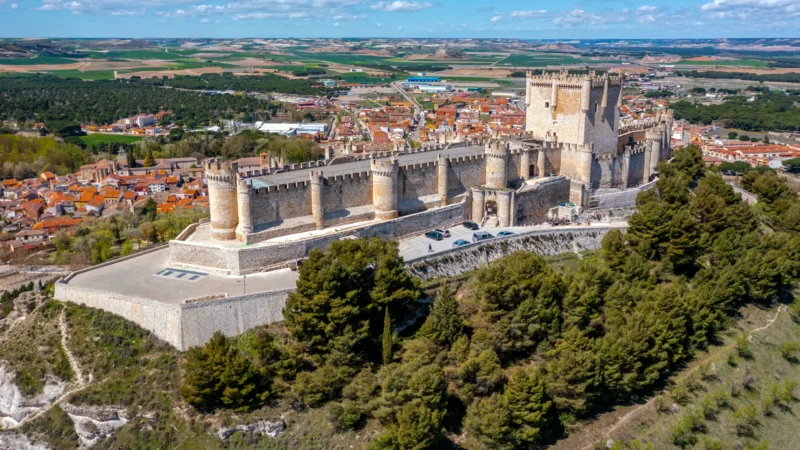
The Ribera del Duero is one of Spain’s great red-wine regions. Hundreds of wineries sit among vineyards and old villages along the river Duero, and many welcome visitors for tours and tastings — just book ahead. The pretty town of Peñafiel anchors it all, crowned by a ship-shaped castle that now holds a wine museum. Pair a tasting with local roast lamb and you have the region on a plate. The Rueda white-wine country lies just to the south.
See a castle rise from the plain at Coca
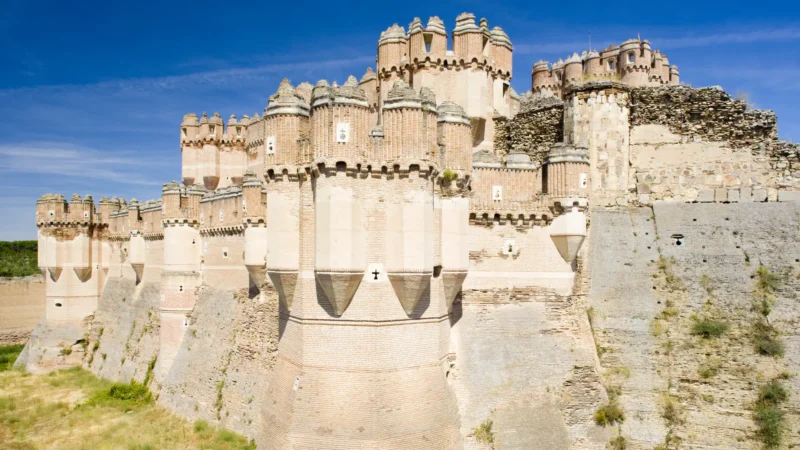
Castilla y León is castle country, and Coca is its showpiece. It is an all-brick 15th-century fortress in the Gothic-Mudéjar style, ringed by a deep moat and set on the flat plain rather than a hill, about 50 kilometres northwest of Segovia. Its geometric brickwork blends Moorish and Gothic craft into something unlike any other castle in Spain. Further out, Peñafiel guards the wine country and Ponferrada keeps a Templar fortress on the Camino — a whole trail of castles for those who catch the bug.
Stand over a Roman gold mine at Las Médulas
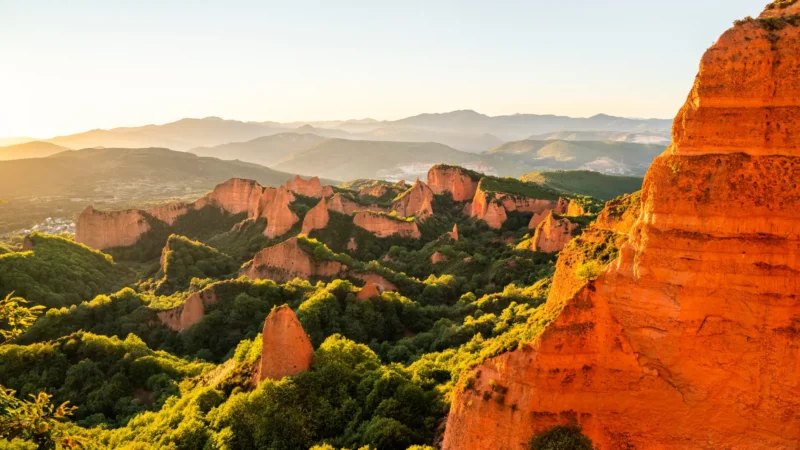
In the green northwest, Las Médulas is the ruin of what was once the Roman Empire’s largest gold mine. The Romans blasted the hills apart with channelled water, and left behind a startling landscape of red rock pinnacles rising out of chestnut woods. Viewpoints and old mining tunnels make it a rewarding half-day, and it sees a fraction of the visitors the cities do.
Look Spain's first Europeans in the eye at Atapuerca
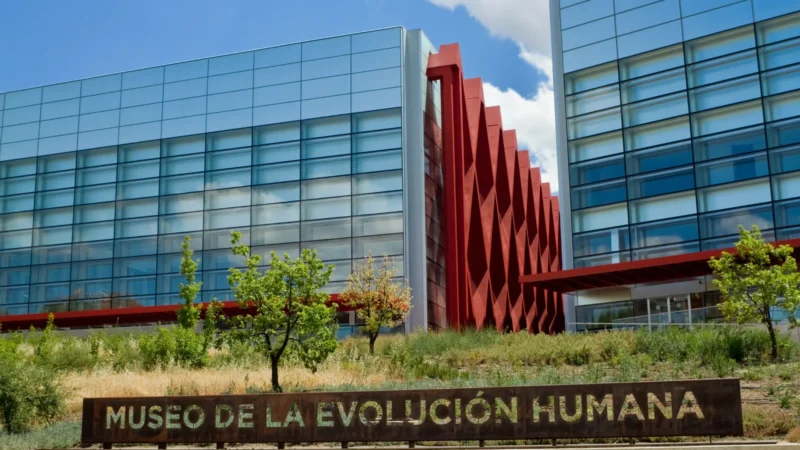
Near Burgos, the Atapuerca archaeological site has yielded some of the oldest human remains in Western Europe — hundreds of thousands of years old. The digs and the excellent Museum of Human Evolution in Burgos together tell the story of who lived here before history began. Guided visits to the site run from the nearby visitor centre.
Follow the Camino de Santiago
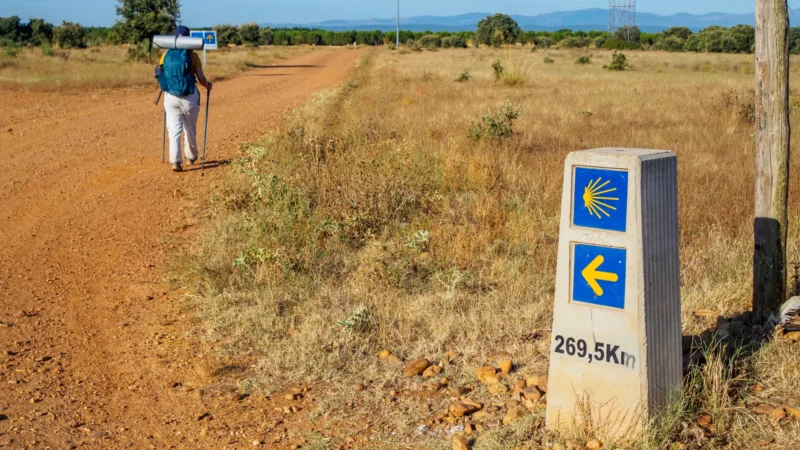
The Camino’s main French Way crosses the region for hundreds of kilometres, through Burgos, Palencia and León. You do not have to walk for weeks to feel it — a day on the trail between historic towns, or an evening in León’s pilgrim quarter, gives a real taste. The Romanesque churches strung along the way are a highlight in themselves.
Slip into a walled village
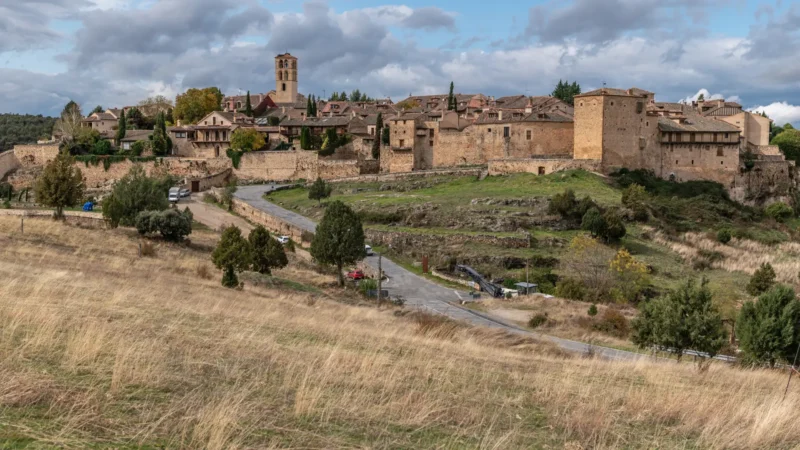
The region’s “hidden” layer lives in its villages. Pedraza, near Segovia, is a tiny walled town with a cobbled square, a hilltop castle and candlelit summer nights. South of Salamanca, the half-timbered villages of the Sierra de Francia, like La Alberca, feel centuries removed from the cities. These are the places where you can still hear your own footsteps — the reason to leave the headline sights for an afternoon.

Getting There and Around
Affiliate note: some links below are affiliate links. If you book through them, we may earn a small commission at no extra cost to you. It helps us keep GoHiddenSpain running and growing. We only suggest services we'd feel comfortable recommending.
By airThe main gateway is Adolfo Suárez Madrid-Barajas (MAD) — Spain’s busiest airport, with the widest choice of international flights. It sits about an hour to an hour and a half by road from the southern cities: Segovia and Ávila are each around an hour away, Salamanca about two. For the north, MAD is still the usual entry, with Burgos, León and Zamora roughly two to three hours on. Valladolid (VLL) has a small domestic terminal (limited flights from Barcelona, Palma and the Canaries) and can shorten the drive if the schedule fits.
By trainSpain’s high-speed network reaches the region fast. Madrid to Segovia takes under 30 minutes by high-speed train (Avant/AVE from Madrid-Chamartín to Segovia-Guiomar); Madrid to Valladolid is also around 30 minutes. Note that Segovia-Guiomar station sits outside the old town — a short bus or taxi ride connects it. León, Zamora and Salamanca are all reachable by direct trains from Madrid.
By carA car is strongly recommended if you want the villages, the vineyards and the countryside — the region is huge and the best of it is rural, where public transport thins out. The cities are well linked by motorway (the A-1, A-6, A-62 and A-66 fan out from Madrid), and driving between them is easy. In the historic centres, park on the edge and walk in; old-town streets are narrow and often restricted.
Prefer not to drive? For airport pickups and city-to-city transfers, a pre-booked private transfer takes the stress out of the first and last legs: Book an airport transfer on GetTransfer.
How Long to Stay and Where to Base Yourself
Castilla y León spreads across nine provinces, so think of it in two natural halves rather than one loop. The south holds the tight triangle of Segovia, Ávila and Salamanca — each an easy hour or so apart and closest to Madrid. The north holds the great cathedral and Camino cities — Burgos, León and Zamora — a couple of hours further on. A car ties the whole thing together; without one, stick to the cities and the fast trains.
How many days do you need?
A weekend (2–3 days)Pick one half. Base in Segovia for the southern trio: the aqueduct and Alcázar on day one, then Ávila’s walls (about an hour away) as a day trip, with Salamanca if you have a third day. It is the most Madrid-friendly slice of the region.
The sweet spot (4–6 days)Do both halves properly. Start in the south around Segovia and Salamanca, then drive north and base in León for the cathedral cities, reaching Burgos, Zamora and Astorga from there. Six days lets you fold in a village or two — Pedraza, or the Romanesque churches of Zamora — without rushing.
A week or more (7+ days)Add the empty, green corners most people miss: Las Médulas and El Bierzo in the far northwest, the Ribera del Duero wine country between Valladolid and Burgos, or the remote east around Soria. Slow travel is what this region is built for — long drives, small towns, and time to stop.
For ready-made day-by-day trips through the region, see the routes below rather than planning every leg yourself.
Explore Castilla y León by area
The region’s places are grouped by province. Not every province is fully covered yet — we build the best of each over time.
Segovia
- La Granja de San IldefonsoA royal palace and Versailles-style gardens in cool pine hills — the Bourbon kings’ summer retreat, still calm today.
- PedrazaA fully walled medieval village entered through one gate, with a clifftop castle and a colonnaded square.
- SegoviaA high, walled city whose Roman aqueduct, fairy-tale Alcázar and Gothic cathedral make it one of Castile’s great sights.
In the south, closest to Madrid: the aqueduct city itself, plus the royal gardens of La Granja de San Ildefonso and the walled village of Pedraza tucked into the hills nearby.
Ávila
- ÁvilaSpain’s most complete medieval walls ring a high, quiet stone city — a fortress-cathedral and St Teresa’s Ávila, best after the day-trippers leave.
The walled city on the high plain, birthplace of Saint Teresa and the highest provincial capital in Spain — the central hinge between Segovia and Salamanca.
Salamanca
- SalamancaUNESCO city of golden sandstone on the Tormes — baroque Plaza Mayor, two cathedrals and Spain’s oldest university, at its liveliest after dark.
The golden university city on the river Tormes, and the warm southwestern gateway toward Portugal and the Sierra de Francia villages.
León
- AstorgaAstorga crowns a small Maragato town with a Gaudí palace, a Gothic cathedral and deep Roman roots.
- LeónA great cathedral city on the Camino, León glows with medieval stained glass, painted Romanesque royal tombs and free-tapa bars in the Barrio Húmedo.
In the northwest, on the Camino: the great stained-glass cathedral of León and, off to the west, Astorga with its Gaudí palace and Roman past. The province also reaches into El Bierzo and Las Médulas.
Burgos
- BurgosOne of Spain’s finest Gothic cathedrals, the tomb of El Cid and the Atapuerca fossils, in a calm, walkable Castilian city.
The northern cathedral city, first capital of Castile, with the Atapuerca prehistoric site nearby and the Ribera del Duero vineyards to the south.
Zamora
- ZamoraHome to more Romanesque churches than any other European city, quiet Zamora rewards a slow evening on the Duero.
On the Duero in the west: a quiet city holding one of Europe's densest sets of Romanesque churches, and a short hop from Salamanca.
Looking for a ready-made plan? See our Castilla y León road trips.

Food and Drink in Castilla y León
Castilla y León is Spain’s great roast-meat region, and its signature dishes come straight from the wood-fired oven. Cochinillo de Segovia is milk-fed suckling pig, roasted until the skin crackles and the meat turns spoon-soft — so tender it is traditionally carved with the edge of a plate. Lechazo, milk-fed suckling lamb, carries the protected Lechazo de Castilla y León label and is the pride of the Ribera del Duero towns and the north. Both are simple food done with great care: young meat, salt, fire and patience.
Around them sits a whole world of hearty cooking. Morcilla de Burgos is a rich blood sausage made with rice; sopa de ajo (garlic soup) and slow bean and meat stews warm the cold months; and the region’s cheeses run from mild fresh Burgos cheese to the sharp, aged Queso Castellano. Cured sausages and Iberian ham round out any tapas spread.
This is also serious wine country. Ribera del Duero produces bold, structured reds from the Tempranillo grape — some of Spain’s most sought-after bottles. Rueda, the region’s first protected wine area, makes crisp, aromatic whites from Verdejo. Look out too for the reds of Toro and the up-and-coming Mencía wines of Bierzo in the green northwest. A glass of Ribera alongside roast lamb is the regional meal in a sentence.
Hand-picked restaurant lists, across price levels, live on each place page — see the town you are visiting for where to actually book a table.
Good to Know
LanguageSpanish (Castilian), born in this region. English is spoken in city hotels and tourist sights, less so in villages — a few basic phrases go a long way in the countryside.
MoneyEuro (€). Cards are widely accepted, but carry some cash for small rural bars, bakeries and village sights.
SiestaMany shops and some sights close in the early afternoon, roughly 2–5pm, especially in smaller towns. Lunch is the big midday meal; dinner runs late, from around 9pm.
Altitude & weatherMost of the region sits high, so evenings are cool even after hot days. Pack a layer year-round, and proper warm clothes in winter.
DrivingRoads are good and quiet, motorways link the cities, and rural driving is a pleasure. Park outside historic centres — old-town streets are narrow and access is often restricted.
Frequently Asked Questions
Yes — especially if you want Spain’s history and food without the coastal crowds. It holds eight UNESCO World Heritage sites, including the Segovia aqueduct, Ávila’s walls, and the cathedrals of Burgos and León, spread across quiet, spacious countryside.
A weekend covers the southern cities (Segovia, Ávila, Salamanca). Four to six days lets you add the northern cathedral cities of Burgos, León and Zamora. A week or more opens up the wine country and the green northwest.
Monumental cities and empty plains: Roman and medieval architecture, Gothic cathedrals, the Camino de Santiago, and its food — roast suckling lamb and pig, plus Ribera del Duero and Rueda wines.
Spring and autumn are ideal — warm days, cool nights and thin crowds. Summer is hot but sunny and drier than Madrid. Winter is cold with snow in the north, but cities look striking and cost less.
For the cities alone, no — fast trains link Madrid to Segovia, Valladolid, León, Zamora and Salamanca. For the villages, vineyards and countryside, a car is strongly recommended, as the region is large and rural transport is limited.
Base in Segovia or Salamanca for the south, and León for the northern cathedral cities. Splitting your stay between one southern and one northern base covers the whole region comfortably.
No — it is one of the better-value regions in Spain. Away from the busiest city sights, regional restaurants and rural hotels cost noticeably less than on the coast, and the food quality is high.
Fly into Madrid-Barajas, the main gateway, then drive or take a high-speed train. Segovia is under 30 minutes from Madrid by train and about an hour by road; the northern cities are two to three hours on.

Where to Stay in Castilla y León
This is just placeholder text. Don’t be alarmed, this is just here to fill up space since your finalized copy isn’t ready yet.
Áurea Convento Capuchinos
Sleep inside a former convent on the quiet edge of the walled old town, with stone-walled rooms, two cloisters, a garden terrace and long views over the valley — a couple of minutes’ walk from the restaurants but a world away from the daytime crush.
Check prices & availability for Áurea Convento Capuchinos on the accommodation's websiteHotel Don Felipe
In the old Jewish quarter, with a garden and a sun terrace looking straight at the Alcázar. Comfortable, well-run and walkable to every sight, it’s a dependable mid-range choice with its own parking.
Check prices & availability for Hotel Don Felipe on the accommodation's websiteParador de Salamanca
A modern Parador across the Tormes, whose great draw is the view: rooms and terrace look straight back at the golden cathedral skyline over the river. It’s a short, pleasant walk into the centre, with easy parking — the classic choice if you want the postcard panorama from your window.
Check prices & availability for Parador de Salamanca on the accommodation's websiteHostal Concejo
Simple, clean and friendly, right in the centre near the Plaza Mayor and excellent value. The honest budget pick: no frills, a central location and a warm welcome, ideal if you’re spending your money on tapas rather than the room.
Check prices & availability for Hostal Concejo on the accommodation's websiteParador de León (San Marcos)
Sleep inside one of Spain’s most famous monuments: a 16th-century monastery with a breathtaking Plateresque façade, a serene cloister and a riverside setting, freshly renovated. It’s a short, scenic walk from the old town. The building alone is worth the splurge.
Check prices & availability for Parador de León (San Marcos) on the accommodation's websiteHotel Neru con Encanto
A modern, well-run small hotel on a quiet street in the historic centre, walkable to everything, with a calm, comfortable feel after a day on your feet.
Check prices & availability for Hotel Neru con Encanto on the accommodation's website