
Ávila: Spain’s Great Walled City on the High Meseta
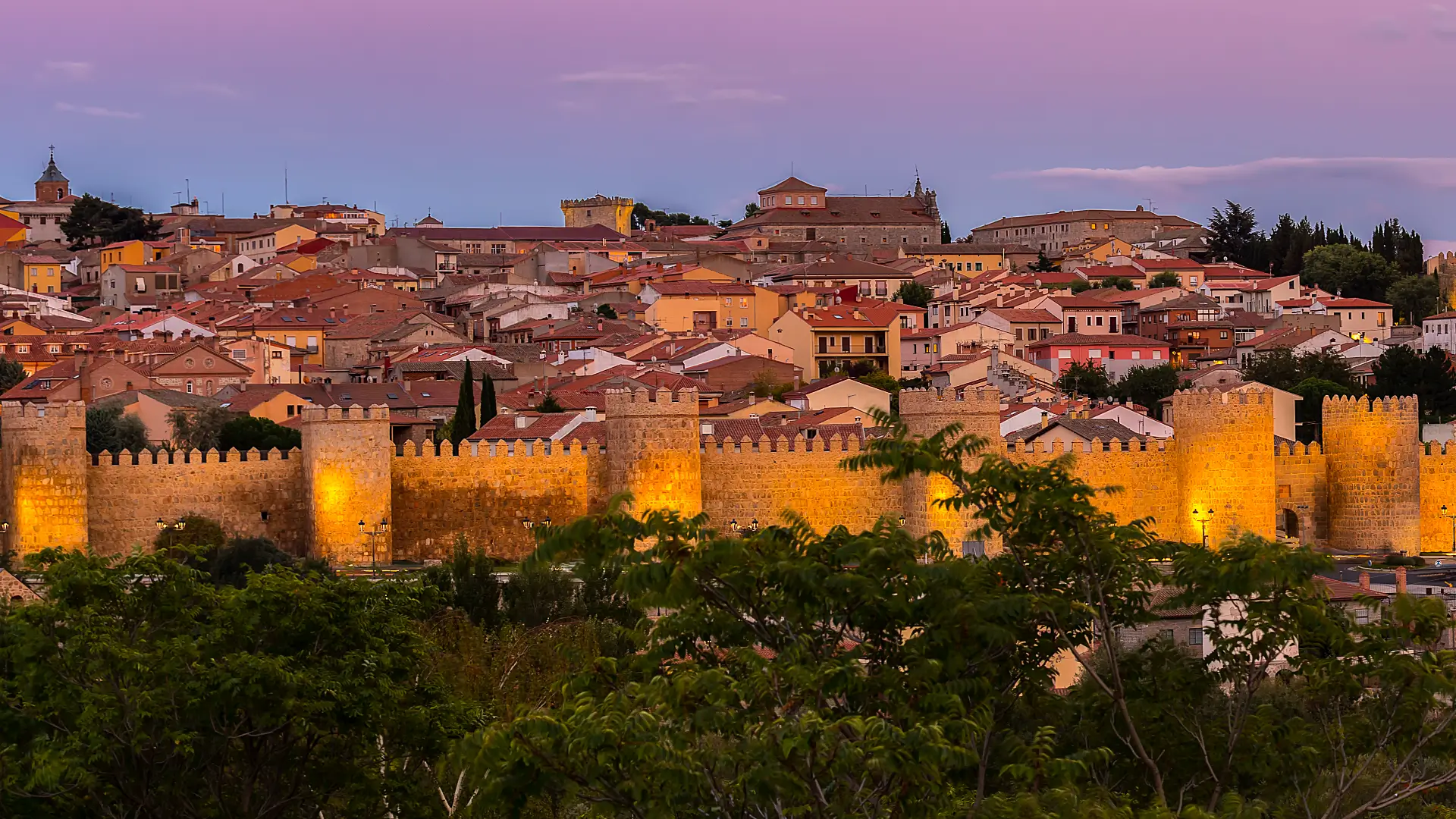
Ávila is a small, high city in Castilla y León, ringed by the most complete medieval walls in Spain — a granite circuit of towers and gates you can still walk. Inside sit a fortress-cathedral built into the rampart and the streets that shaped St Teresa. It draws day-trippers, but they leave by evening. Stay the night, and the lamplit walls are almost yours.
Why Visit Ávila
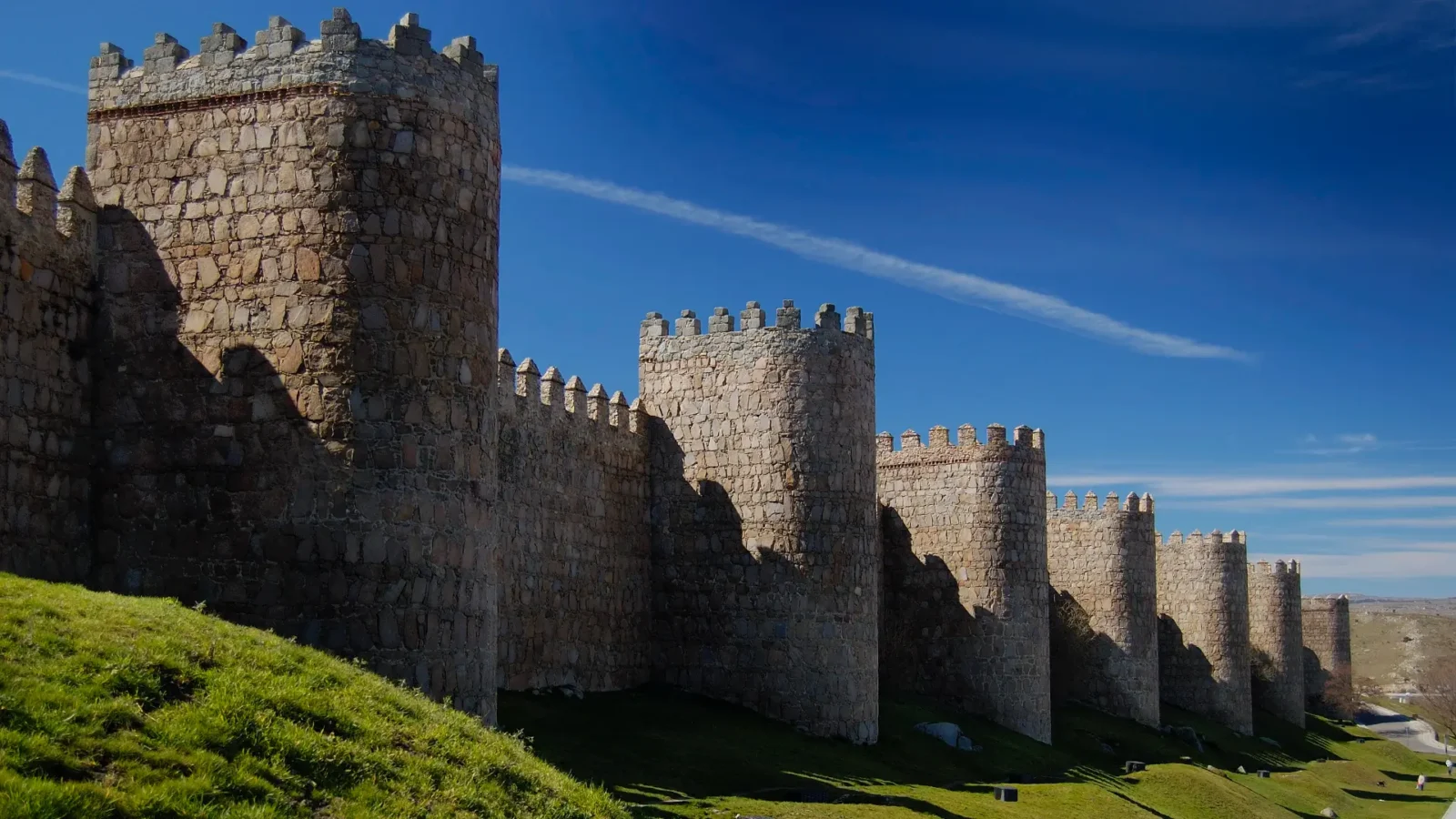
Few Spanish cities announce themselves as plainly as Ávila. The walls come first: a sandy-gold ring of stone that has held its shape since the Middle Ages, rising straight from the high plain west of Madrid. At 1,130 metres, this is the highest provincial capital in Spain, and it feels it. The light is sharp, the air is thin and cool, and the whole old town sits inside its rampart like a model of itself.
Ávila — a calm base.
Ávila rewards a slow visit for a simple reason: the thing you came to see is best in the quiet. By day, coaches roll in from Madrid, and the wall walk and the cathedral fill up. By early evening they are gone, and the streets empty out. This is a real provincial capital, not a museum town, so it keeps its own rhythm once the visitors leave. The city is also famous for St Teresa. The 16th-century mystic and writer was born here, and her convents and churches are woven through the centre. And it is a fine base for the region: a calm, walkable stop on the line between Segovia and Salamanca.
Day trip or overnight?
You can see Ávila's headline sights in an afternoon: walk a stretch of the wall, step into the cathedral, look out from Los Cuatro Postes. But that means leaving just as the city turns quiet and golden. Our honest advice is to stay the night. A perfect short visit looks like this: arrive by mid-afternoon and climb onto the ramparts while the light is still high; drop down to the Basílica de San Vicente, then drive or walk out to Los Cuatro Postes for the wide view of the whole walled skyline at dusk; eat a slow chuletón inside the walls; and end with a lap of the empty, floodlit streets. That evening simply doesn't fit into a day trip — which is exactly why it's worth staying.
What to See in Ávila

The Walls (Muralla de Ávila)
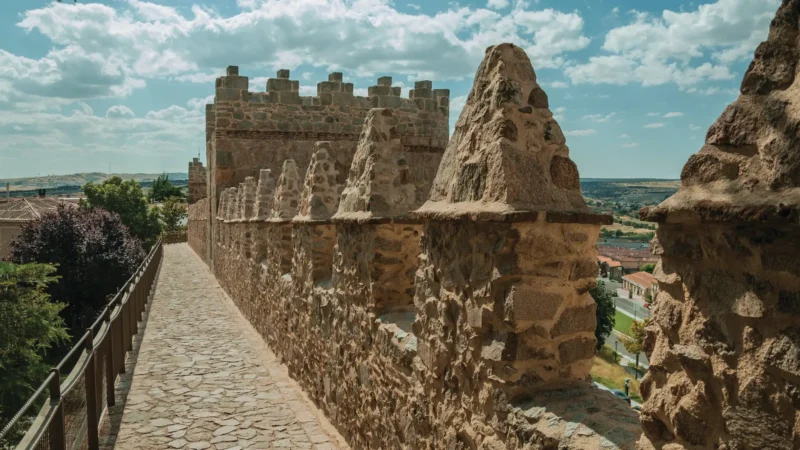
The reason the city exists in most people’s minds. The circuit runs about 2.5 km around the old town, with 88 towers and nine gates. It is one of the best-preserved medieval walls in Europe. You can walk roughly half of it along the rampart walk, climbing on at points such as Casa de las Carnicerías, Puerta del Alcázar and Puerta del Carmen. From up top you look down over the old town on one side and out across the plain on the other. Walking round the outside, at ground level, is free and impressive in itself.
Ávila Cathedral (Catedral del Salvador)
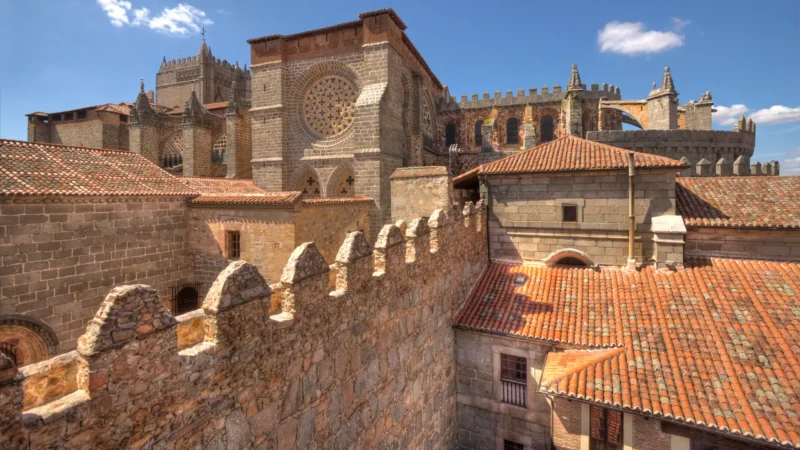
Part church, part fortress. Begun in the 12th century, it is often called the first Gothic cathedral in Spain. Its apse, the cimorro, is built straight into the eastern wall as one of its strongest towers. Inside are a soaring stone nave, a carved high altarpiece and the alabaster tomb of the bishop known as El Tostado. You can also climb the tower for a view over the rooftops.
Basílica de San Vicente
Just outside the walls, this warm-toned church is the finest Romanesque building in the city. It stands where tradition places the death of three martyrs — Vicente and his sisters. Their carved canopied tomb, the cenotaph, is a masterpiece of Romanesque storytelling in stone. The sandstone glows in late light, and it is an easy few minutes’ walk from the main wall.
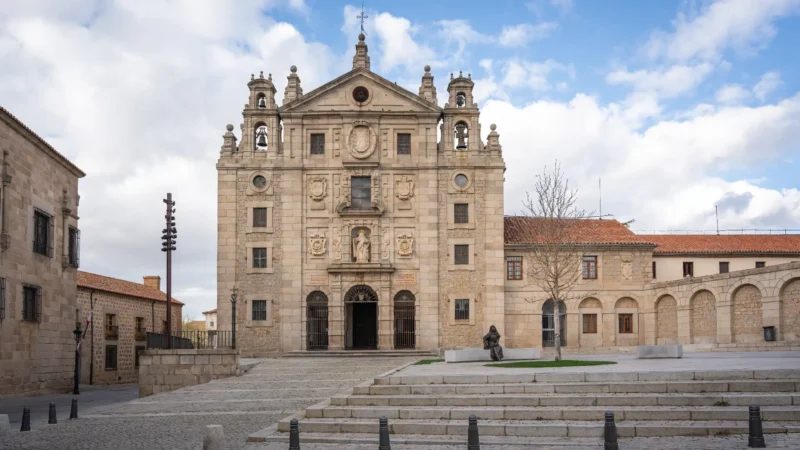
Convento de Santa Teresa
Built in 1636 over the house where Teresa of Ávila was born in 1515, this Baroque church and convent is the heart of the city’s link to the saint. Alongside the church there is a small museum of relics and objects tracing her life and writing. It sits in the southern corner of the old town, easy to fold into a walk through the centre.
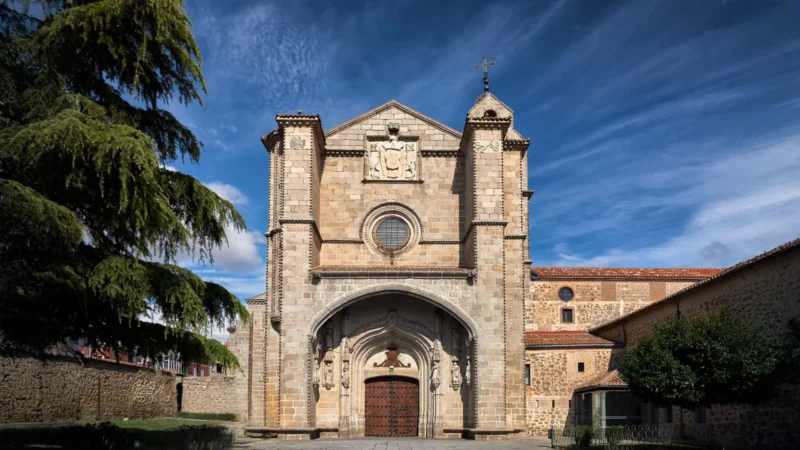
Monasterio de Santo Tomás
A grand monastery on the southern edge of town, commissioned by the Catholic Monarchs and finished in 1492. It holds three cloisters, a royal summer palace and the tomb of Prince Juan, their only son. It is a calm, uncrowded counterweight to the busy core, and worth the ten-minute walk out.
Los Cuatro Postes.
Not a monument to go inside, but the view everyone comes for. Northwest of the city, across the Río Adaja on the Salamanca road, this simple four-pillared shrine looks straight back at the full walled skyline. It is the classic wide shot of Ávila, and it is at its best at dusk, when the ramparts light up.


What to Do in Ávila
Walk the ramparts
The single best thing to do in Ávila is to get up onto the wall itself. The walkable stretches give close views of the stonework and long views over the plain. They also take you past the backs of churches and gardens you’d never see from the street. Wear proper shoes: the surface is uneven and the steps are steep in places. Buy your ticket at one of the staffed access points and allow an hour or so to do a full stretch without rushing.
Do the outside loop on foot
You don’t need a ticket to appreciate the walls. A slow lap around the outside, through the gardens of San Vicente and along the Paseo del Rastro on the south side, gives you the whole circuit and some of the best photographs, all for free. It pairs naturally with the rampart walk: outside first, then up top.
Follow the Teresa trail
However you feel about the religion, the St Teresa sites make a coherent, walkable thread through the city. It runs from her birthplace convent to the Encarnación where she lived, taking in quiet plazas and churches along the way. Treated as history rather than pilgrimage, it’s one of the clearest ways to read how this city grew.
Taste the city's two specialities
Ávila is cattle country. The chuletón de Ávila — a thick, bone-in steak from local Avileña beef — is the dish to try, grilled simply and served rare. For something sweet, the yemas de Santa Teresa are soft little sweets of egg yolk and sugar, sold boxed in shops around the centre. Several let you watch them being made.
Drive out to Los Cuatro Postes for sunset
Time your evening around the viewpoint. It’s a short hop out of town, and arriving as the light drops gives you the whole illuminated wall in one frame — the picture that sums the city up.
Prefer to go with a guide for any of this? Ask where you’re staying, or at the tourist office on the Plaza de la Catedral — they’ll know what’s running, in which language, and can point you to something that fits.
Seasonal Events and Festivals
Jornadas Medievales / Mercado de las Tres Culturas (first weekend of September)The city’s biggest festival, and a genuine reason to time a visit. The whole walled centre turns medieval for four days, with hundreds of market stalls, jousting, falconry and street theatre set against the floodlit walls. It recalls the old shared life of Christians, Muslims and Jews in the city, and it draws large crowds, so book a room well ahead.
Fiestas de Santa Teresa (mid-October)The walled village of Pedraza lights every street with candles on two July nights. It is one of the most atmospheric events in the province — and one of the busiest. Confirm the exact dates locally each year.
Semana Santa (spring, dates shift with Easter)Holy Week processions wind through the walled streets, one of the more atmospheric times to be in the city.
For exact dates each year, check the tourist office rather than relying on fixed dates, as programmes are set anew each year.
Getting There and Around
Ávila sits on the high plain west of Madrid, just off the A-6 and A-50 corridors, roughly an hour and a quarter from the capital.
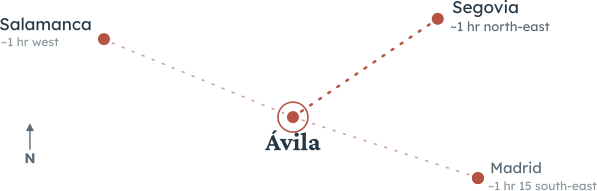
From Madridabout 1 hr 15 by car (roughly 110 km). Frequent Media Distancia trains also run from Madrid to Ávila in around 1 hr 30–1 hr 50, with the station a short walk from the walls. Ávila is not on the high-speed AVE network.
From Segoviaabout 1 hr by car (roughly 65 km); there is no direct train, but a regular bus links the two in under an hour.
From Salamancaabout 1 hr by car; direct trains also run in around 1 hr, as Ávila sits on the Madrid–Salamanca line.
Nearest airportsMadrid-Barajas (MAD) is the main international gateway, about 1 hr 30 by car; from there the train or a hire car brings you in.
By traindirect Media Distancia services reach Ávila from Madrid and Salamanca, with the station about 1 km from the old town.
Getting around
Inside the walls, Ávila is small and easy to walk — you won’t want a car in the old town, and parking is tight within the gates. Leave the car outside the walls (there is parking near the Exhibition Hall and along the lower streets) and go in on foot. For the region, though, a car earns its keep: it’s how you reach Segovia, Salamanca and the villages between them at your own pace, and how you get out to Los Cuatro Postes without a walk each way.
Looking for a ready-made plan? See our Castilla y León road trips.
Practical Info
- Walking the wallstickets are bought at staffed access points (Casa de las Carnicerías, Puerta del Alcázar, Puerta del Carmen). Hours change with the season and some stretches close for works. Walking the outside of the walls is free.
- Cathedral & churchesthe cathedral, San Vicente and the Santa Teresa sites each charge their own admission; Buy at the sight entrance, tourist office or online on the official sites (some are Spanish but browser translation works well). Hours shift seasonally and around services — check each site’s official page for current times and prices.
- Best time of daygo up on the walls in the morning before the coaches arrive, or in the last hour before closing; save Los Cuatro Postes for dusk.
- Getting aroundwalkable old town; park outside the walls; you’ll want a car for the wider region.
- Climateat 1,130 m this is a high, cool city with big day-to-night swings. July is the warmest month, with highs around 28–30°C but cool nights near 15°C. Winters are cold, with January highs near 8°C, frequent frost and some snow from late autumn into spring. Late spring and early autumn (roughly May, June and September) are the most comfortable, though evenings stay cool year-round — bring a layer even in summer, and expect wind on the walls. May is the wettest month; midsummer is dry.
Where to Eat in Ávila
You’ll eat well in Ávila, and you’ll eat meat. This is cattle country. The city’s signature dish is the chuletón de Ávila, a thick, bone-in steak from local Avileña beef, grilled over embers and served rare. Save room for the yemas de Santa Teresa, the soft egg-yolk sweets that are the city’s other speciality. Two simple rules make it easy: at lunch, the streets around the cathedral and Plaza del Mercado Chico are full of good asadores; for dinner, stay inside the walls where the evening is at its best. The picks below run from a legendary steak to a modern tasting table.
On the Plaza de la Catedral, this is one of the city’s best-known kitchens for the chuletón, with a warm dining room and a terrace under the cathedral. A place to order the steak and share it. Listed in the Repsol Guide.
A small, deservedly popular grill just inside the walls, where the steak is the whole point and the service is genuinely kind. Book ahead; it fills fast.
For a special meal, this modern tasting-menu restaurant sits in a beautifully restored old building on the edge of town, with an inventive kitchen leaning hard on local produce. It holds a Michelin star. Book well ahead; a handful of tables only.
Out on the Salamanca road, with a picture-window view straight onto the floodlit walls. Come as much for the panorama as the plate; the steak and the beans are the things to order.
Right by the cathedral, with part of its dining room set into the 900-year-old wall. Good for the full Castilian spread — bean soup, patatas revolconas, a well-charred chuletón — at a fairer price than some of its neighbours.
For the sweet end of the day. These long-running shops near the centre sell the classic yemas de Santa Teresa by the box, and you can watch them being made in the window — the easiest edible souvenir to take home.
Where to Stay in Ávila
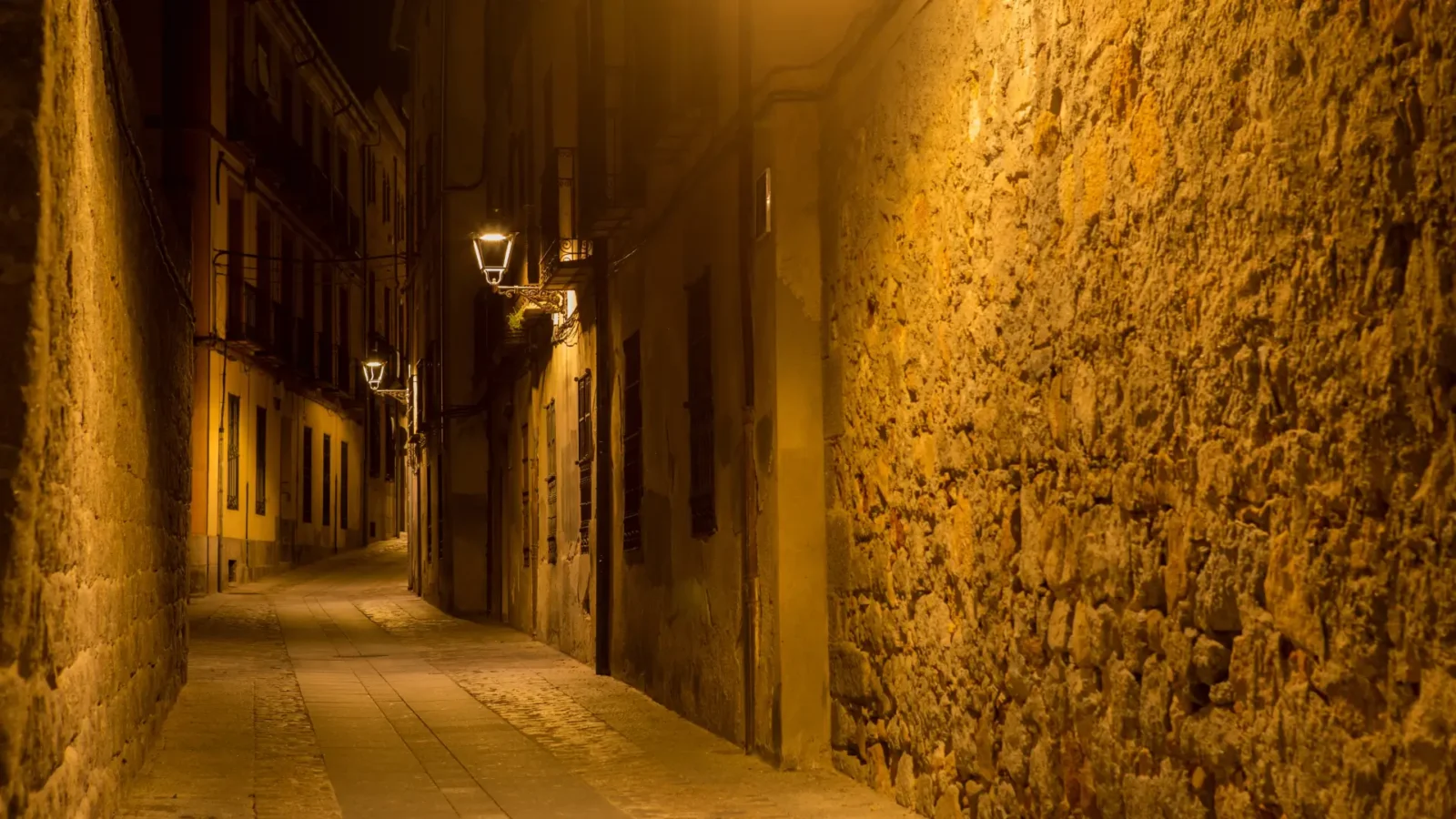
Picture the city after the last coach has gone: the walls lit gold, the lanes empty, the air cool and still. That evening is the real reason to stay, and Ávila lets you sleep right inside it — in palaces built against the rampart, on the old squares. Here’s where we’d book.
Parador de Ávila
Sleep in a 16th-century palace set right against the inside of the wall, with a garden looking onto the ramparts and an access point to the wall walk almost at the door. The classic Ávila stay: historic, calm and central, with the state-run Parador’s reliable comfort.
Check prices & availability for Parador de Ávila on the accommodation's websiteHotel Palacio de Los Velada
A 16th-century palace on the Plaza de la Catedral, arranged around a beautiful covered courtyard, a minute from the cathedral and the wall. Spacious, quiet and grand, with an excellent breakfast — the easy choice for old-town comfort.
Check prices & availability for Hotel Palacio de Los Velada on the accommodation's websiteSofraga Palacio
A restored 1479 palace that seems to fuse with the wall itself, on a quiet square in the old town, with a garden terrace and private parking — a rare bonus inside the gates. Warm, characterful and a notch below the grand palaces on price.
Check prices & availability for Sofraga Palacio on the accommodation's websiteHotel Palacio Valderrábanos
A 14th-century palace directly facing the cathedral, with a café terrace looking onto its west front. Solid, central and full of old-building character; you step out of the door into the heart of the walled city.
Check prices & availability for Hotel Palacio Valderrábanos on the accommodation's websitePalacio de Monjaraz
A renovated 16th-century stone house in the old town, with timbered ceilings and a lived-in, family-run feel. Central, characterful and gentler on the wallet — a good middle option with real historic charm.
Check prices & availability for Palacio de Monjaraz on the accommodation's websiteHostal la Estación
Simple, spotless and friendly, right by the train station and a 10–15 minute walk from the walls. The honest budget pick: no frills, good value, and an easy base if you’re arriving by rail.
Check prices & availability for Hostal la Estación on the accommodation's website
Region, Nearby and Routes
Part of Castilla y León
Ávila is in Ávila — Castilla y León
Part of these routes
Ávila is the middle stop on our The Three Walled Cities road trip see the full drive.
Ávila is also a stop on our Castilla y León & Extremadura Road Trip: 9 Days
Nearby places
- SegoviaA high, walled city whose Roman aqueduct, fairy-tale Alcázar and Gothic cathedral make it one of Castile’s great sights.
- SalamancaUNESCO city of golden sandstone on the Tormes — baroque Plaza Mayor, two cathedrals and Spain’s oldest university, at its liveliest after dark.
- PedrazaA fully walled medieval village entered through one gate, with a clifftop castle and a colonnaded square.
Frequently Asked Questions
Yes. It has the most complete medieval walls in Spain — a 2.5 km circuit of 88 towers you can walk — plus a fortress-cathedral built into the rampart and the streets that shaped St Teresa. It’s compact, genuinely historic, and far quieter than Spain’s big-name cities, especially once the day-trippers leave.
Its walls, above all: one of the best-preserved medieval city walls in Europe. It’s also known as the birthplace of St Teresa of Ávila, for its fortress-cathedral, and for its food — the chuletón de Ávila steak and the sweet yemas de Santa Teresa.
You can — it’s about 1 hr 15 by car or 1 hr 30–1 hr 50 by train, and you can see the main sights in an afternoon. But the city is at its best in the evening, once the crowds go and the walls light up, so an overnight is well worth it. Segovia is only about an hour away, making a two-day loop easy.
Yes, you can walk roughly half the circuit along the rampart walk, climbing on at points like Casa de las Carnicerías and Puerta del Alcázar. That part is ticketed, bought at the access points; hours change with the season. Walking around the outside of the walls at ground level is free.
Half a day covers the headline sights, but one night is the sweet spot: it lets you walk the walls unhurried, see Los Cuatro Postes at dusk, eat a proper chuletón and enjoy the empty evening streets. Two nights suits anyone wanting to pair it with Segovia.
Late spring and early autumn are most comfortable — roughly May, June and September, with pleasant days and cool evenings. July is warmest (highs around 28–30°C) but nights stay cool near 15°C. Winters are cold, with frost and some snow and January highs near 8°C. May is the wettest month; bring a layer whenever you come, as it’s high and often windy.
Stay inside the walls to get the quiet evenings. The Parador de Ávila sits in a palace against the rampart; Hotel Palacio de Los Velada and Palacio Valderrábanos are historic palaces by the cathedral; Sofraga Palacio and Palacio de Monjaraz are characterful mid-range choices; and Hostal la Estación is a tidy budget pick near the station.
For the famous chuletón steak, head to Alcaravea or Los Candiles near the cathedral, or Siglodoce for the full Castilian spread at a fairer price. El Almacén pairs the steak with a wall view; Barro is the special-occasion tasting table. For yemas de Santa Teresa, stop at Yolks or the Santa Teresa café in the centre.