
Cáceres: A Whole Medieval City Behind the Walls
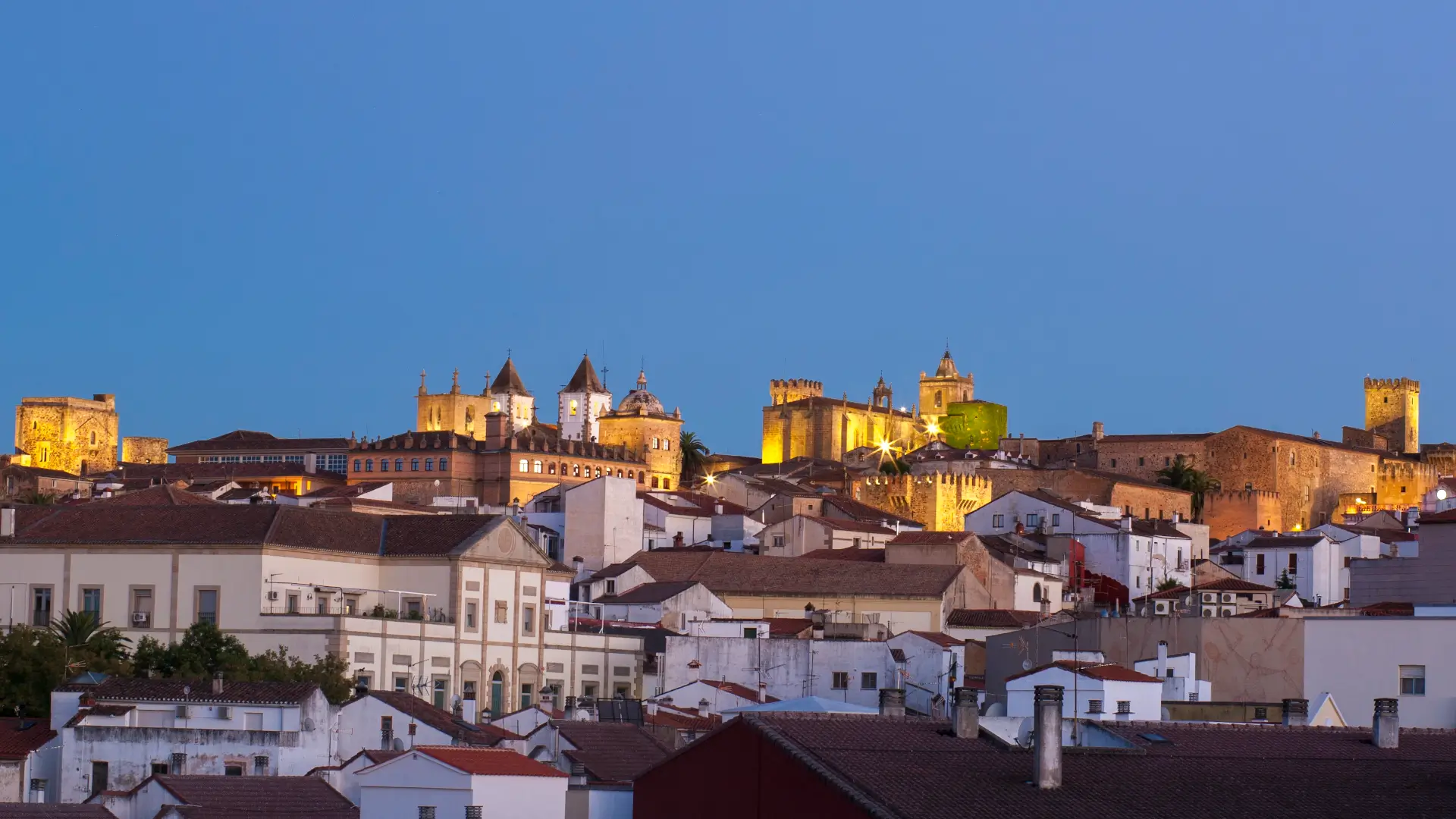
Cáceres sits in the heart of Extremadura, in western Spain, and its walled old town is one of the most complete medieval quarters in Europe. Inside the Almohad walls, golden-stone palaces, watchtowers and quiet squares stand almost as they did 500 years ago — no cars, no modern signs. It is famous enough to have stood in for King’s Landing on screen, yet most days you can wander it almost alone.
Why Visit Cáceres
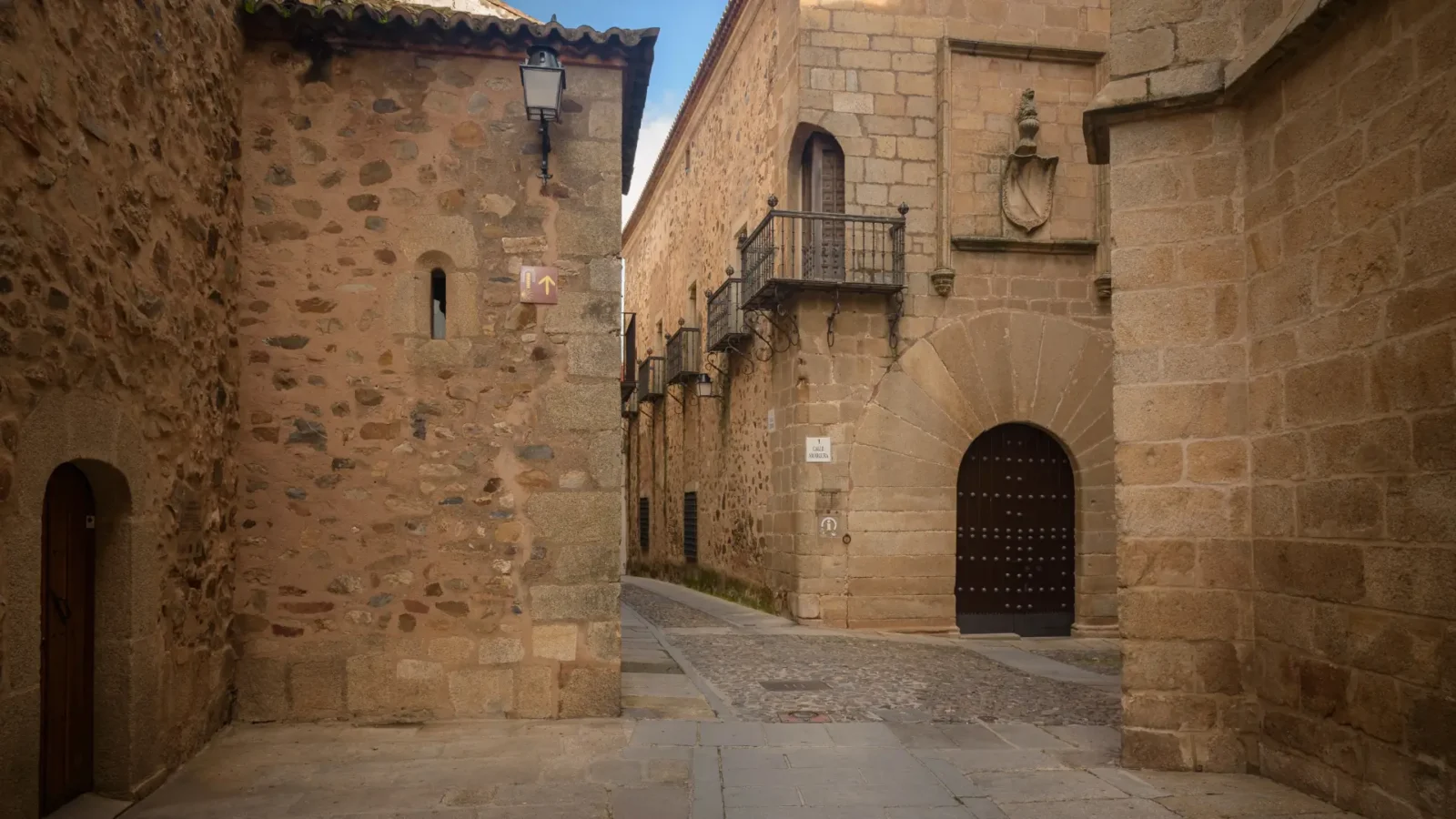
Most Spanish old towns have a handful of historic streets ringed by a modern city. Cáceres is different: its whole medieval core survives intact, walled off and almost untouched. Walk through the Arco de la Estrella and you step out of the present — granite palaces with carved coats of arms, narrow lanes that open onto silent squares, and storks nesting on the towers, as they have for centuries. It is compact, walkable and rewards going slowly.
Who Cáceres is for
This is a place for travellers who like history they can walk through, not just look at. The old town is small enough to cross in fifteen minutes, but you could spend two days finding its corners — a Jewish quarter of whitewashed houses, a museum built over an Almohad cistern, viewpoints over the rooftops. It works beautifully as a slow overnight: day-trippers leave by late afternoon, and the lamplit, empty streets after dark are the real reward for staying.
Day trip or overnight?
You can see the walled town in an afternoon, so plenty of people come for the day from Trujillo or Mérida. But that means leaving just as Cáceres gets good. The tour groups thin out after four, the low sun turns the granite gold, and by evening you have the lanes almost to yourself. Our honest advice: arrive in the afternoon, walk the old town at golden hour, eat inside the walls, and stay the night. A perfect short visit looks like this — reach Cáceres mid-afternoon, climb the Bujaco Tower before the light goes, lose an hour in the quiet upper squares and the Judería, have dinner in the old town, and walk it once more after dark. Next morning, see the museum and the cistern before the day's first groups arrive, then drive on. It is a day and a night, and the night is the part you'll remember.
What to See in Cáceres
Affiliate note: some links below are affiliate links. If you book through them, we may earn a small commission at no extra cost to you. It helps us keep GoHiddenSpain running and growing. We only suggest services we'd feel comfortable recommending.

Baroque church of San Francisco Javier
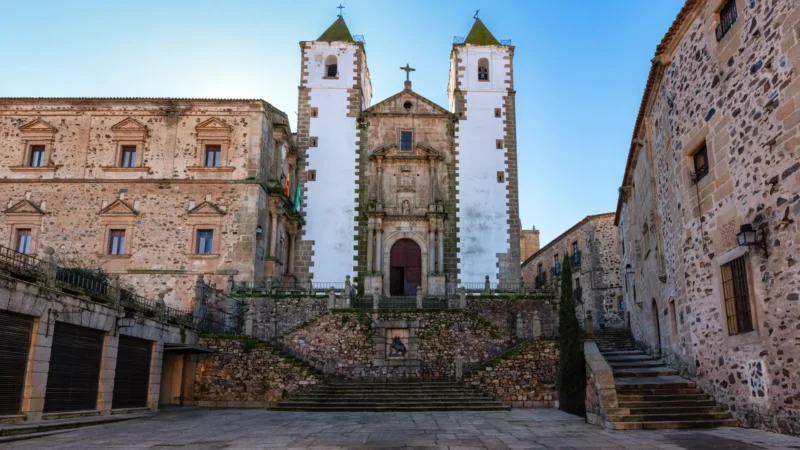
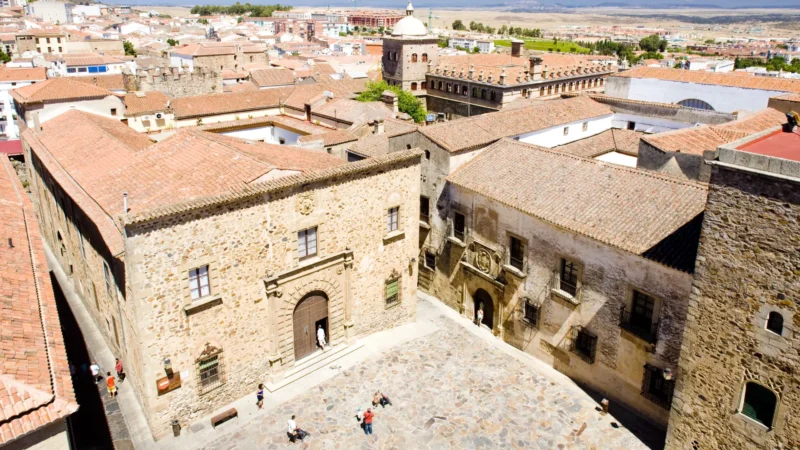
Higher up, the walled town rises to two more quiet squares. Plaza de San Jorge is dominated by the Baroque church of San Francisco Javier, whose tower you can also climb. A short, steep lane leads on to Plaza de San Mateo at the highest point, framed by the church of San Mateo and the Palacio de las Cigüeñas, the “Palace of the Storks”.
Museo de Cáceres and the Almohad cistern
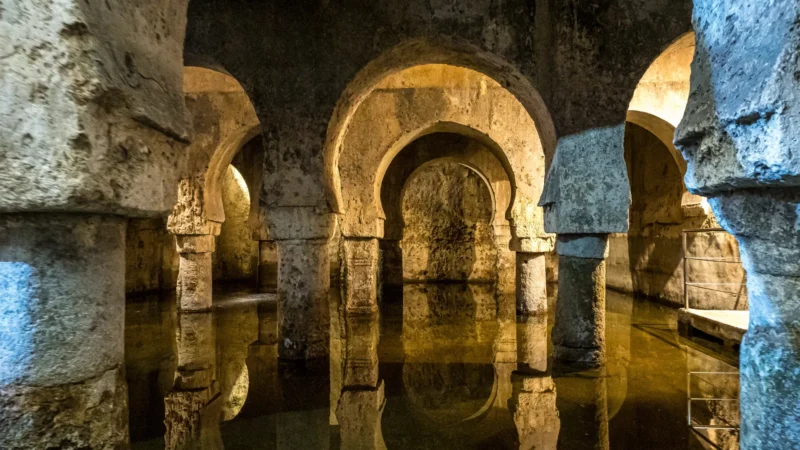
The city museum fills the Palacio de las Veletas on Plaza de las Veletas. Its star feature is downstairs: a remarkably well-preserved Almohad cistern (aljibe), its vaulted roof held up by horseshoe arches and Roman columns, still holding water. The museum also covers local archaeology and fine arts.
Plaza de Santa María and the Concatedral
This square is the gateway to the walled town, ringed by noble houses and the 15th-century Palacio de Carvajal, which now holds the tourist office. The Concatedral de Santa María, the city’s main church, stands on one side; you can climb its bell tower for a wide view across the old-town rooftops.
Book entry + audio guide (English) for the Co-cathedral on TiqetsPlaza Mayor and the Bujaco Tower
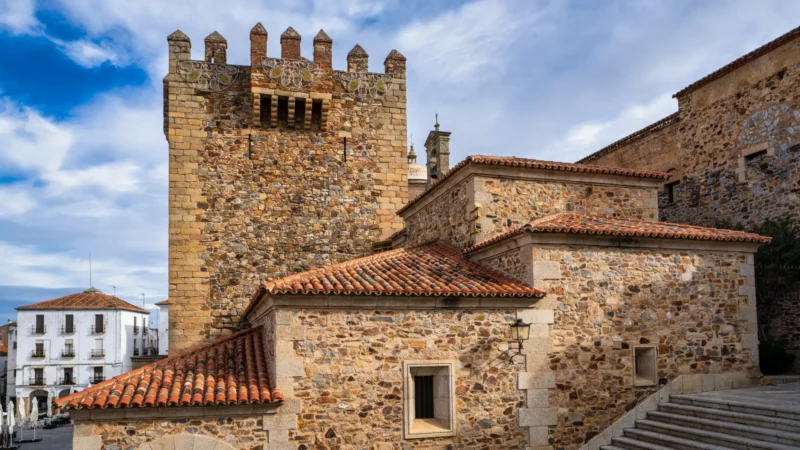
The wide Plaza Mayor sits just outside the walls and is the heart of the city — lined with cafés and arcades, busy in the evening. Above it rises the Torre de Bujaco, a 12th-century Almohad tower that is the symbol of Cáceres. You can climb it for the best view over the square and the old town gate beside it, the Arco de la Estrella.
The Judería (old Jewish quarter)
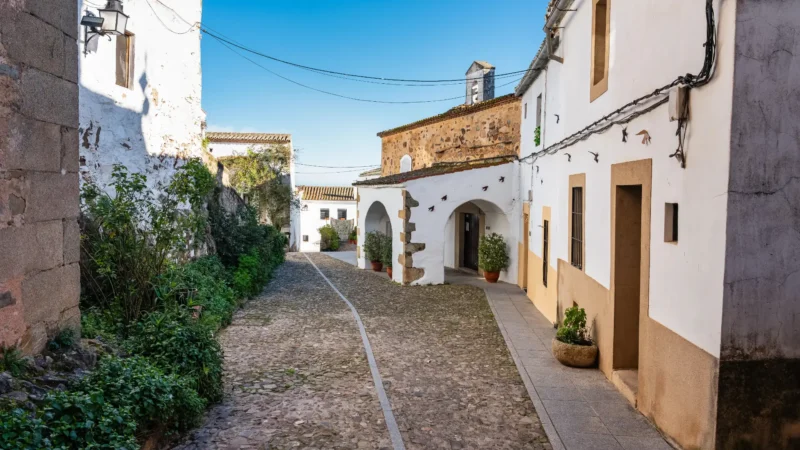
Below the church of San Mateo, the Judería Vieja is a knot of steep, narrow lanes lined with small whitewashed houses — a contrast to the grand stone palaces above. It is one of the prettiest and quietest corners of the old town, and easy to miss if you don’t go looking.
The walled old town (Ciudad Monumental)
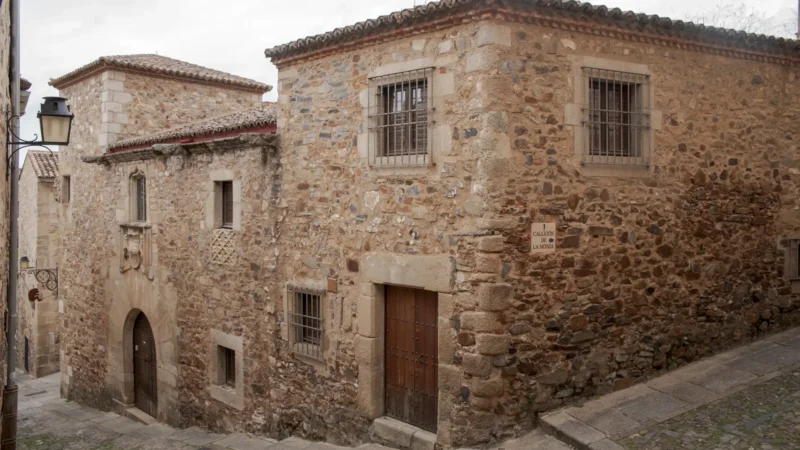
The walled quarter is the reason Cáceres is a UNESCO World Heritage Site. Inside, fortress-houses, palaces and towers built by rival noble families during the 14th to 16th centuries stand almost unchanged. There are no cars and no modern shopfronts, which is why film and television crews use it so often. It is best simply walked, with no fixed route.
What to Do in Cáceres
Walk the old town at golden hour
The single best thing to do in Cáceres is to walk the walled quarter slowly in the last hour of light, when the granite turns gold and the day-trippers have gone. A free town map from the tourist office on Plaza de Santa María is all you need; the quarter is small, so getting “lost” is part of the pleasure.
Climb a tower for the rooftop view
Three climbs give three different views: the Bujaco Tower over the Plaza Mayor, the bell tower of the Concatedral over the old-town rooftops, and the tower of San Francisco Javier over the inner squares. Each is short. Hours and small fees change with the season, so check locally on the day.
Taste Extremadura: ham, cheese and wine
This is one of Spain’s great food regions, and Cáceres is where you taste it: acorn-fed Iberian ham, the soft, spoonable Torta del Casar cheese, and local wines. The best way in needs no plan — walk into an old-town bar, point to the ham, ask for the Torta, and let whoever’s pouring suggest a local glass to go with it. Do that two or three times across a day and you’ve had the full tour without ever joining one. Our Where to Eat picks below are the place to start, from a quick tapas lunch on the Plaza Mayor to a proper sit-down dinner inside the walls. Guided food tastings do exist if you’d rather have someone explain each bite — just check the language before booking, as many run in Spanish.
Visit the Game of Thrones locations
The walled town stood in for King’s Landing in Game of Thrones and turns up again in House of the Dragon — and once you know, you start seeing it everywhere. The good news for an independent visitor: the locations are all in the compact old town and free to wander at your own pace. Start at the Arco de la Estrella, then work through Plaza de Santa María and Plaza de San Jorge, where the biggest scenes were filmed. Half the pleasure is recognising a corner yourself rather than being marched to it. Themed walking tours run too, for fans who want the scene-by-scene detail — check the language and group size before booking if that’s your thing.
Prefer to go with a guide for any of this? Ask where you're staying, or at the tourist office on Plaza de Santa María — they'll know what's running, in which language, and can point you to something that fits.
Seasonal Events and Festivals
WOMAD Cáceres (early–mid May)A world-music festival that fills the old-town squares with stages and concerts for one weekend each spring. It is one of the city’s biggest events, and admission is free. The official WOMAD Cáceres site has the current dates and line-up.
Semana Santa (spring, Holy Week)Cáceres holds solemn Easter processions through the walled old town, declared of International Tourist Interest. The Semana Santa de Cáceres guide lists the current dates and processions.
Planning around your visitTravelling at another time of year? For everything else on during your trip — concerts, exhibitions, food events, theatre and more — the official Cáceres tourism agenda shows what’s on during your dates.
Getting There and Around
Cáceres sits in central-western Extremadura, on the A-66 north–south motorway and the main Madrid–Extremadura rail line. It is an easy stop on a road trip and reachable from Madrid without a car.
From Madridabout 3 hours by car via the A-5 and A-66 (roughly 300 km). Direct trains also run from Madrid (Atocha) in about 3 hours, with around five services a day; the modernised line has shortened this journey in recent years.
From Sevilleabout 3 hours by car heading north on the A-66 (roughly 265 km) — the natural southern approach.
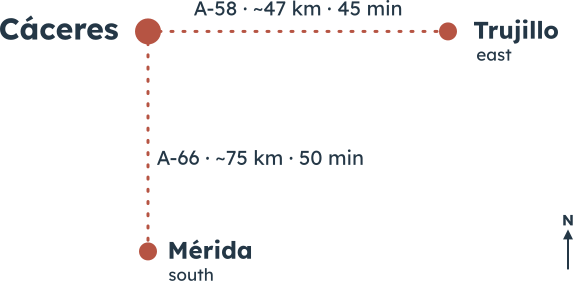
From Trujilloabout 45 minutes by car (roughly 47 km east on the A-58).
From Méridaabout 50 minutes by car (roughly 75 km south on the A-66).
Nearest airportsMadrid (MAD) is the main international gateway, about 3 hours away by car or train. Seville (SVQ) is a similar distance to the south. Both work as entry points for a Cáceres trip.
By traindirect services reach Cáceres from Madrid, Mérida and Badajoz; the station sits about a 30-minute walk or a short taxi ride from the old town.
Getting around
For most people travelling Extremadura, the honest answer is: a car for the region, your feet for the city. Cáceres sits naturally on a road-trip loop with Trujillo and Mérida, and a car is what makes that loop work — the distances between these towns are short but the public transport between them is slow. Inside Cáceres itself you won’t touch the car: the old town is fully walkable and partly pedestrian, with the Plaza Mayor, walled quarter and squares all a few minutes apart on foot. When you arrive, park outside the old town — paid car parks and street parking sit just below the walls — and walk up; the historic lanes are narrow and largely closed to traffic. If you’re flying into Madrid or Seville and touring from there, picking up a hire car at the airport is the simplest way to do Cáceres and the towns around it in one trip.
Looking for a ready-made plan? See our Extremadura road trips.
Practical Info
- Opening hours and ticketsMost sights charge only a small fee, several close on Mondays, and some are free on certain days. There’s no single combined ticket, so each sight is paid (or entered) separately. Hours and prices shift with the season, so the safest thing is to check times and entry at each sight on the day rather than plan around fixed hours.
- ClimateHot, dry summers and mild winters. July and August are the hottest (highs around 35°C) and driest months; the walled old town offers little shade, so start early. April, May, September and October are the most comfortable, at roughly 18–23°C. Rain is concentrated in late autumn (October–December); the rest of the year is dry and sunny.
- Best time of dayEarly morning and the hour before sunset are quietest and best for photos, once the day-trip groups have gone.
- On footThe old town is steep and cobbled in places; wear comfortable shoes. It is small, so distances are short.
Where to Eat in Cáceres
You’ll eat and drink well in Cáceres, at every budget — this is one of Spain’s quiet food capitals, home to acorn-fed Iberian ham, Torta del Casar cheese and a clutch of celebrated kitchens. Two simple rules make it easy: for lunch while you’re out walking, the Plaza Mayor and its edges are full of easy, good-value spots; for dinner, stay inside the walls and eat in the old town, so you’re already where the evening is at its best. The picks below cover both, from a quick tapas lunch to a special-occasion table.
Cáceres’s landmark restaurant, on Plaza de San Mateo, holding three Michelin stars and famous for one of the great wine cellars in Spain. A special-occasion destination; reserve well in advance.
A busy, modern tapería near the Plaza Mayor with a long menu and a well-priced weekday set lunch. A reliable, good-value option in the heart of town.
A traditional restaurant on the edge of the old town with a terrace and wide views over the medieval quarter — strong on grilled Iberian pork and vegetables. Worth timing for sunset.
A small, highly regarded restaurant tucked into the walled quarter, with a short à-la-carte menu and a tasting option. Creative cooking in a historic, intimate setting; book ahead.
Tapería La Tula
A friendly, well-rated spot right on the Plaza Mayor, serving traditional Extremaduran plates to share. Good for a relaxed lunch over the square. Try the pork cheeks with rice or the croquetas.
The casual sister of three-Michelin-star Atrio, a few steps away, set in a 15th-century mansion with an ivy-clad tower and a lovely garden terrace. Traditional Extremaduran cooking — Iberian meats and cheeses, grilled dishes, good local wines — with the odd surprising touch. A characterful old-town table without the fine-dining price.

Where to Stay in Cáceres
Here is the case for staying, in one picture: it is nine in the evening, the day-trippers are long gone, and you are walking back to your room through empty, lamplit lanes with the towers lit above you. That is what an overnight in Cáceres buys, and the best places put you right in it — inside the walls or a minute from them. Here’s a mixed set across budgets.
Casa Pizarro Hotel
A beautifully restored mansion turned design-led boutique hotel right inside the historic centre. Stylish rooms and warm service and some terraces overlooking the city. Walking distance to the old town and the (free) contemporary art museum next door. Parking is a short walk away, as it is everywhere in the walled quarter.
Check prices & availability for Casa Pizarro Hotel on the accommodation's websiteCasa Rural Las Avutardas (Sierra de Fuentes)
A clean, well-equipped country house about a 10-minute drive from the city, with a rooftop terrace and views over the Extremadura countryside. Good value for travellers happy to stay just outside town.
Check prices & availability for Casa Rural Las Avutardas (Sierra de Fuentes) on Booking.comHotel La Bohème
A small, characterful family-run hotel right by the Plaza Mayor and the entrance to the old town. Warm hosts, cosy rooms and a back terrace — an affordable base in a prime spot.
Check prices & availability for Hotel La Bohème on the accommodation's websitePalacio de Godoy, Curio Collection by Hilton
A restored palace beside the city walls, blending historic features with modern comfort, a spa and a strong concierge. The upper-tier choice for travellers who want a polished, full-service base.
Check prices & availability for Palacio de Godoy, Curio Collection by Hilton on the accommodation's websiteParador de Cáceres
A 16th-century palace turned hotel deep inside the walled old town, on Calle Ancha. Atmospheric stone rooms, a courtyard and a good restaurant — the classic way to sleep inside the monument.
Check prices & availability for Parador de Cáceres on the accommodation's websiteSoho Boutique Casa Don Fernando
A comfortable, well-located hotel directly on the Plaza Mayor, looking across to the old-town gate. The familiar, easy choice for first-time visitors who want to be in the centre.
Check prices & availability for Soho Boutique Casa Don Fernando on the accommodation's website
Region, Nearby and Routes
Part of Extremadura
Cáceres is in Extremadura
Part of these routes
Cáceres is the first stop on our 4 day Extremadura Medieval Trail
Cáceres is also a stop on our Castilla y León & Extremadura Road Trip: 9 Days
Nearby places
- TrujilloA walled hilltop town of conquistadors and one of Spain’s grandest plazas.
- MéridaRoman Spain’s old capital, with a UNESCO ensemble of theatre, amphitheatre and aqueduct in a calm, walkable city.
- GuadalupeA medieval village built around a great UNESCO pilgrimage monastery, deep in the Villuercas mountains.
Frequently Asked Questions
Yes. Its walled old town is one of the most complete medieval quarters in Europe, a UNESCO World Heritage Site, and it stays far less crowded than Spain’s better-known historic cities.
Its intact walled old town of golden-stone palaces, watchtowers and quiet squares, built by rival noble families between the 14th and 16th centuries. It is also widely known as a Game of Thrones filming location.
The walled old town can be seen in half a day, but an overnight stay is better: the lamplit, empty streets after the day-trippers leave are the highlight, and there are enough corners and viewpoints to fill a full day.
Spring (April–May) and early autumn (mid-September–October) are ideal: daytime temperatures sit around 18–23°C, the light is soft on the golden stone, and the old town is quiet. Summer is very hot — July highs reach about 35°C, with little shade in the walled centre — so plan sightseeing for early morning or evening. Winters are mild (around 13°C by day) and the quietest time of all, though December is the wettest month.
Yes — it is about 45 minutes from Trujillo and around 3 hours from Madrid by car or train. But staying overnight lets you experience the old town at its quietest, after dark.
The Plaza Mayor and old-town squares are full of tapas bars serving local ham and Torta del Casar cheese. For something special, Cáceres is also home to Atrio, a three-Michelin-star restaurant.