
Mérida: Roman Spain, Walkable and Uncrowded
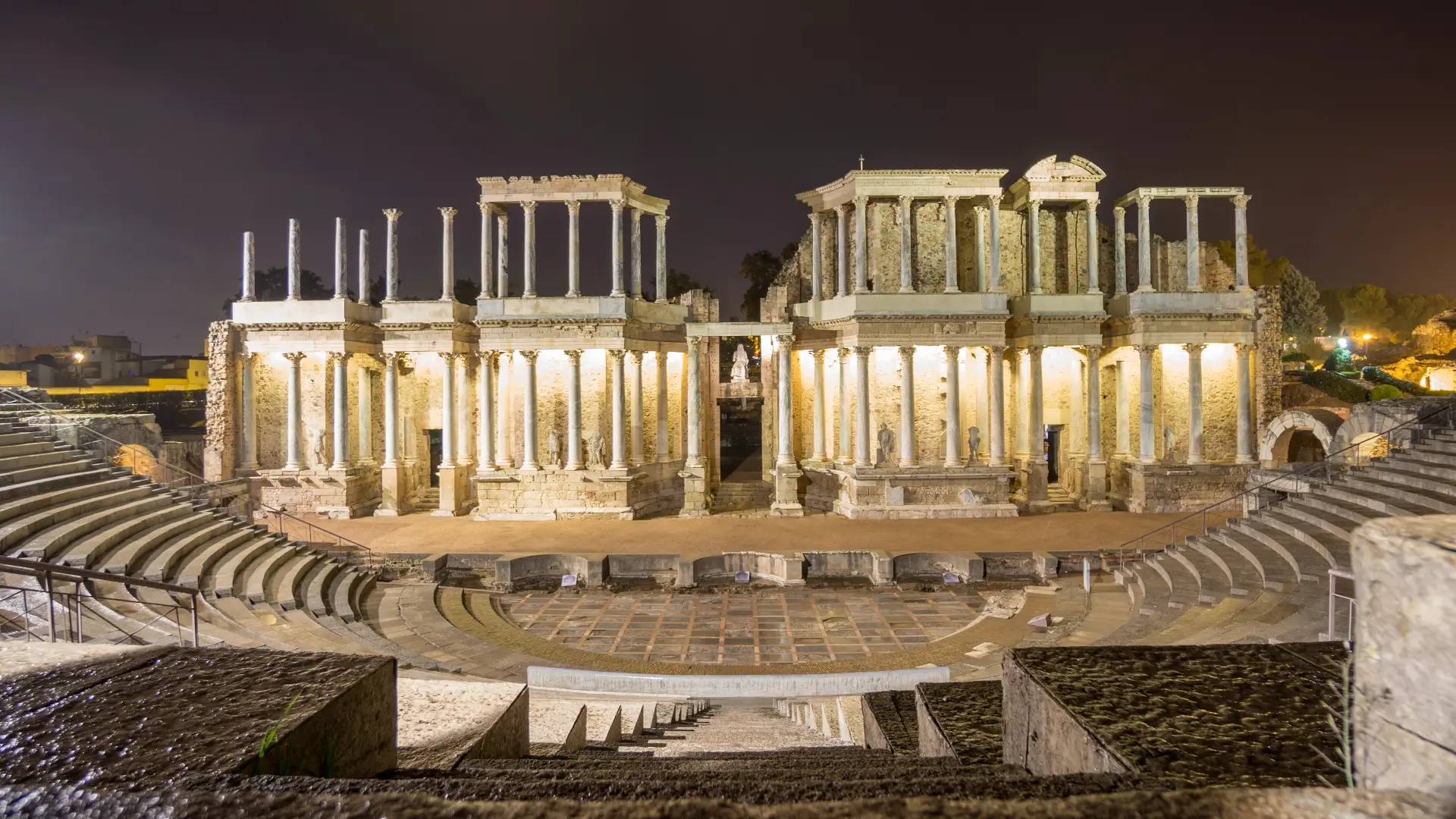
Mérida was the Roman capital of Lusitania, set on the Guadiana River in south-west Extremadura. Its theatre, amphitheatre, temple and aqueduct survive in remarkable shape — one of the best-preserved Roman sites in Europe, and a UNESCO World Heritage Site. Best of all, you can walk it in an afternoon. And it draws a fraction of the crowds that fill Rome or Pompeii, so you see it at your own pace.
Why Visit Mérida
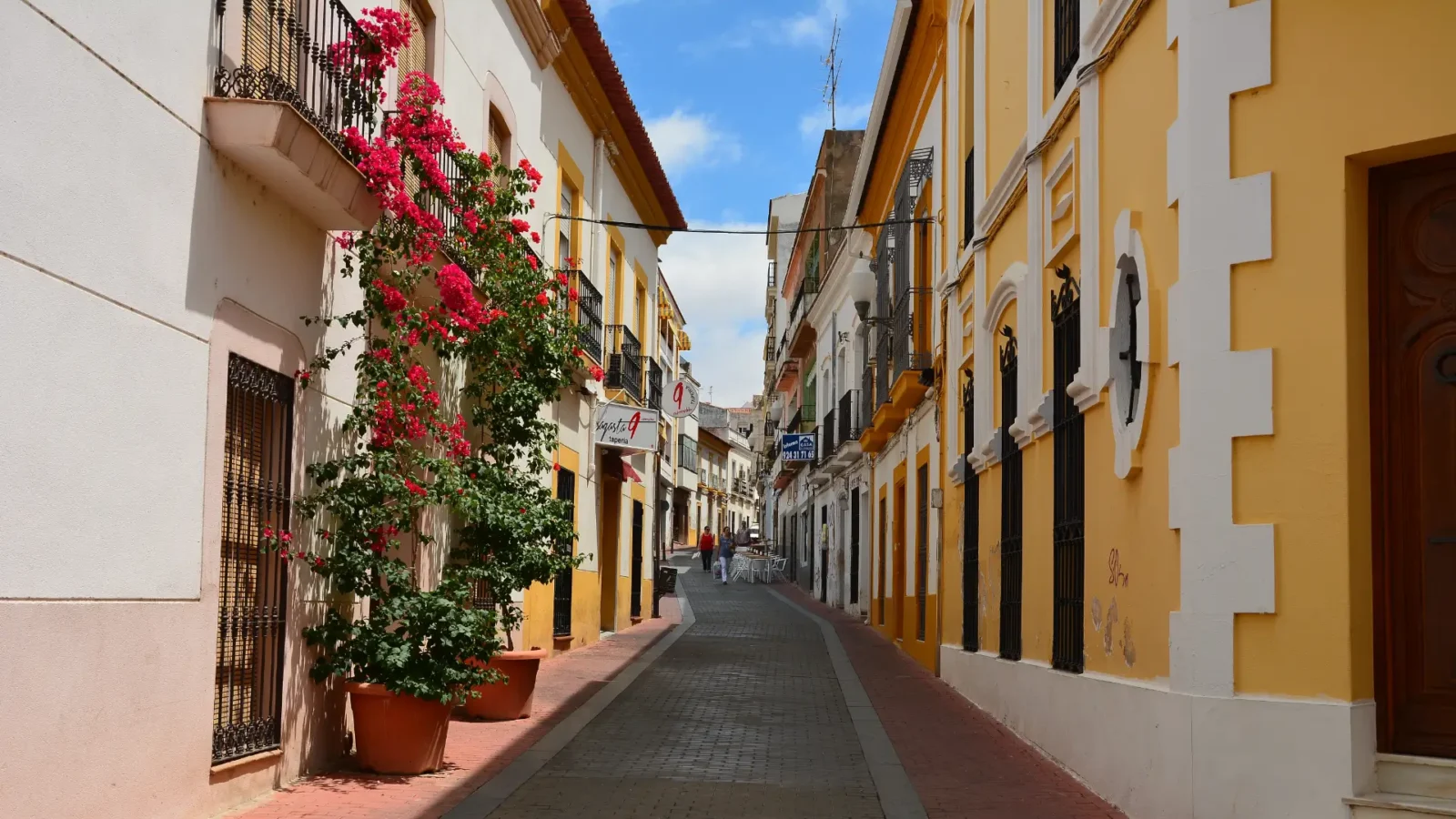
Mérida is one of those rare places where the ancient world is not roped off behind glass — it is the city. The Romans founded it in 25 BC as Emerita Augusta, capital of Lusitania. It kept its great public buildings while the modern town grew up around and between them. You can walk from a café on the main square to a 2,000-year-old temple in a couple of minutes, then on to a theatre where actors still perform every summer. Most of the monuments sit within an easy stroll of each other, on flat ground — which makes Mérida one of the most rewarding Roman sites in Spain to explore on foot.
Who Mérida is for
This is a town for travellers who want substance over spectacle. Mérida is a real working city of around 60,000 people, not a museum-village, so it has the everyday life — markets, tapas bars, a riverside walk — that a pure ruin site lacks. Spain's better-known Roman remains are scattered and partial. Here they are gathered, restored and explained, yet still far quieter than the famous classical sites of Italy.
Day trip or overnight?
You can see Mérida's main monuments in a single day, so many people come for a few hours from Cáceres or on the way up from Seville. But the ruins are only half the city. The day-trippers leave in the late afternoon. By evening the Temple of Diana glows under floodlights, the Roman bridge empties, and the square fills with locals instead of tour groups. Our honest advice: come in the morning, see the Theatre, Amphitheatre and the Museum of Roman Art before the heat and the crowds, then slow down.
A perfect short visit looks like this. Spend the morning on the big sites, then break for a long tapas lunch near Plaza de España. Walk the Temple of Diana, the Arch of Trajan and the Alcazaba in the softer afternoon light. Cross the Roman bridge at golden hour, have dinner by the lit-up temple, and stay the night. It is a day and a night — and the night is when Mérida feels most like a place people live.
What to See in Mérida
Affiliate note: some links below are affiliate links. If you book through them, we may earn a small commission at no extra cost to you. It helps us keep GoHiddenSpain running and growing. We only suggest services we'd feel comfortable recommending.

Roman Theatre (Teatro Romano)
The signature monument of Mérida, and one of the most complete Roman theatres anywhere. Built around 16–15 BC, it could seat about 6,000 people. Its tall colonnaded stage front — rebuilt from its own fallen stones — is the image most associated with the city. It is still in use: every summer it hosts a classical theatre festival, so the ruin becomes a working stage again.
Book entry + audio guide app for the Teatro Romano on Tiqets
Roman Amphitheatre (Anfiteatro)
Right next to the theatre, the amphitheatre opened in 8 BC and held 15,000–16,000 people for gladiator and wild-beast games. These drew bigger, broader crowds than the theatre in their day. Much of the lower seating, the arena and the monumental entrance corridors survive, so it is easy to picture the spectacle. The two sites share one ticket and are best seen together.
National Museum of Roman Art (MNAR)
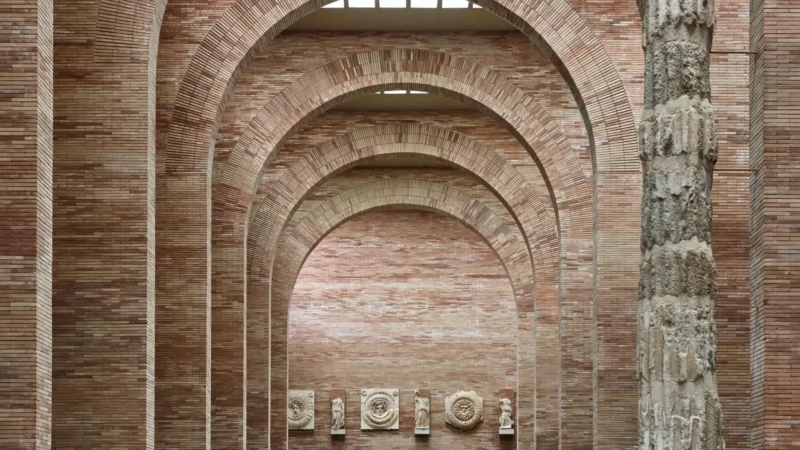
The essential indoor stop, in a striking brick building by architect Rafael Moneo that echoes Roman vaulting. It holds the mosaics, sculpture, coins and everyday objects dug up across the city, with a crypt of Roman house remains beneath. Visit it mid-trip to tie the loose monuments outside into one clear story.
Arch of Trajan (Arco de Trajano)
A granite arch about 15 metres high, standing in a pedestrian street in the old town. Despite the name, it had nothing to do with the emperor Trajan. It was the monumental gateway into Mérida’s provincial forum — the administrative heart of Roman Lusitania. It once wore marble cladding and statues, all long gone. But for centuries it was the city’s great symbol, while the other monuments lay buried. Free to walk through, and lit up after dark.
Temple of Diana (Templo de Diana)
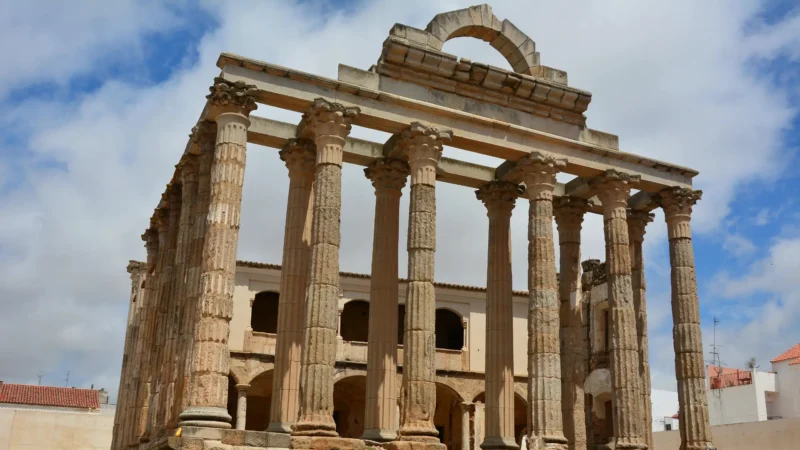
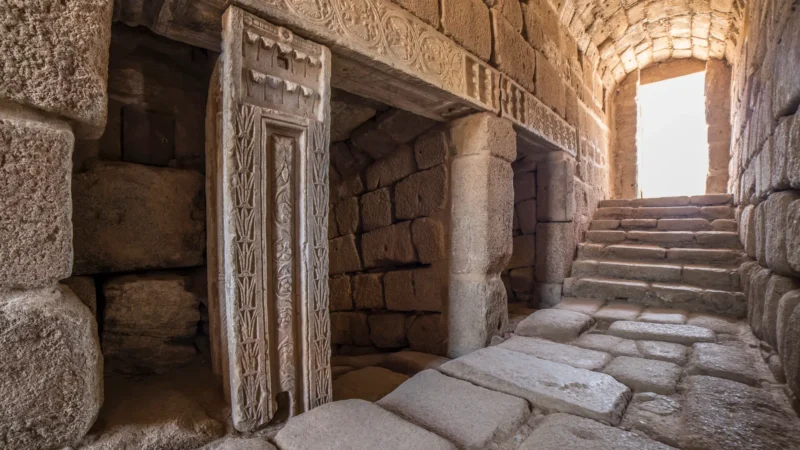
A first-century temple of the imperial cult, its tall granite columns standing almost complete in the middle of the old town. The name is a long-standing mistake — it was never dedicated to Diana — but the building is the real draw. It is a Roman temple you can stand beneath, free to view, set among later houses built right into it.
Alcazaba
A 9th-century Moorish fortress on the riverbank, guarding the Roman bridge — the oldest Muslim fortification in Spain. Its builders raised it with stone taken straight from Roman and Visigothic ruins, so you walk past reused Roman walls and a stretch of original Roman road inside. The highlight is the aljibe, a cool, vaulted cistern with steps down to water drawn from the Guadiana. Climb the walls for the best view over the river and the bridge.
Roman Bridge (Puente Romano)
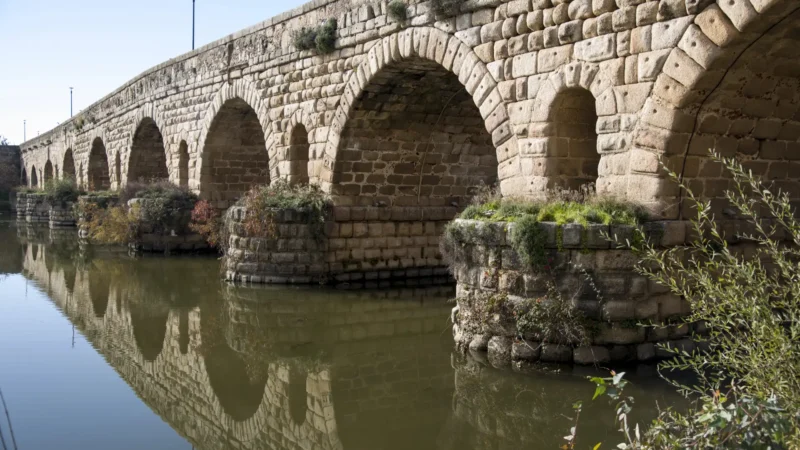
One of the longest surviving Roman bridges in the world, running about 790 metres on 60 granite arches across the Guadiana. It carried the Vía de la Plata, the great Roman road through the city, and is now a pedestrian crossing — a quiet, free walk at any hour, best at sunset with the Alcazaba on the far bank.
Acueducto de los Milagros
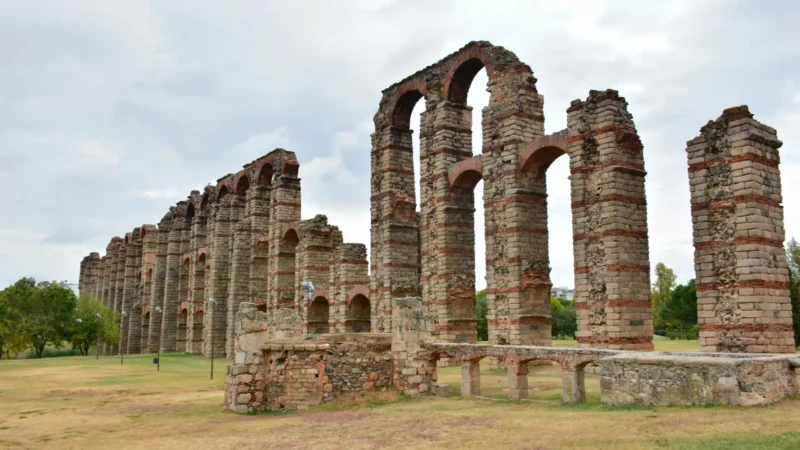
The “Miraculous Aqueduct” — a stretch of tall, triple-arched piers in granite and brick that once carried water from the Proserpina reservoir into the city. It stands on the edge of the centre, free and open, and its scale and striped masonry make it one of the most photogenic Roman remains in Spain.



What to Do in Mérida
Walk the monument loop on foot
Mérida’s great advantage is that you can see almost everything on one flat walking circuit. A common route runs Plaza de España → Temple of Diana → Arch of Trajan → Theatre & Amphitheatre → MNAR → Roman Bridge → Alcazaba. The aqueduct and the circus sit a little further out, on a second, looser loop. You don’t need a tour — a free town map and the on-site signs (often in English) are enough — though a local guide adds depth at the theatre and amphitheatre.
See a play in the Roman Theatre
In July and August, the Mérida International Classical Theatre Festival stages Greek and Roman drama on the original theatre stage, under the open sky. Watching a tragedy where Romans once watched the same is the city’s standout experience. Most performances are in Spanish, so check the programme and language before you book. Tickets sell ahead for the bigger nights, so book early if your dates fall in summer.
Walk the riverside and the bridge at dusk
The banks of the Guadiana below the Roman bridge are a calm green strip, with footpaths, the modern Lusitania bridge and views back to the Alcazaba. It is where locals come to walk in the evening once the heat drops. It makes a good end to a sightseeing day — and a reminder that Mérida is a lived-in city, not just a set of ruins.
Taste Extremadura's food and wine
Mérida sits in the Ribera del Guadiana wine region, in the heart of Extremadura’s pig country — the home of acorn-fed Iberian ham. The local tapas bars are the easy way in: order migas, Iberian pork and a glass of regional red. For those who want to go deeper, there are wineries within a short drive of the city.
Swim in a Roman lake at Proserpina
Just outside the city sits the Proserpina reservoir, one of the most unusual places to cool off in Spain. The lake is held back by a Roman dam from the 1st or 2nd century AD. Remarkably, it still works today. It is part of Mérida’s UNESCO World Heritage site, alongside the famous theatre and aqueduct. In summer the reservoir becomes a local beach. You will find a sandy shore, calm fresh water, shaded cafés and a small water museum nearby. It makes an easy, relaxed half-day: swim, picnic under the trees, and enjoy the thought that Romans built this lake almost two thousand years ago. Bring water shoes, as the bottom can be stony in places.
Prefer to go with a guide for any of this? Ask where you're staying, or at the tourist office by the Roman Theatre — they'll know what's running, in which language, and can point you to something that fits.
Seasonal Events and Festivals
Emerita Lvdica (late May) For about a week, the whole city returns to the first century AD: gladiator displays, a Roman legion marching across the bridge, period markets, and a late-night “White Night” with the monuments open into the small hours. The exact week shifts each year, so check the official dates at merida.es before you plan around it.
International Classical Theatre Festival (July–August)Spain’s most important classical theatre festival, staged on the Roman theatre’s own stage across the high summer. It is the single best reason to come in July or August despite the heat. The programme and dates are released each spring at festivaldemerida.es.
Holy Week (Semana Santa, spring)Declared of International Tourist Interest, with solemn processions through the old town and across the Roman bridge. The dates move with Easter each year.
Getting There and Around
Mérida sits where two motorways cross — the A-5 (Madrid–Lisbon) running east–west and the A-66 “Vía de la Plata” (Gijón–Seville) running north–south. That makes it one of the easiest towns in Extremadura to reach by car.
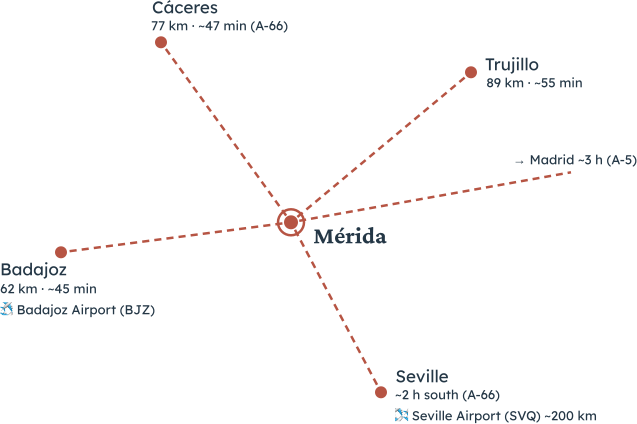
From Madridabout 3 hours by car via the A-5 (roughly 340 km). Direct trains and buses also run from Madrid.
From Sevilleabout 2 hours by car via the A-66 (the Vía de la Plata).
From Cáceresabout 45 minutes by car
From Trujilloabout 55 minutes by car
Nearest airportsadajoz (BJZ) is closest, about 45 km west, but it has only limited domestic flights. Seville (SVQ) is the main international gateway, about 200 km / 2 hours south. Lisbon is a further option, around 3 hours west.
By traindirect services reach Mérida from Madrid, Seville, Cáceres and Badajoz.
Getting around
Once you arrive, you barely need the car. The monuments, museum and old town are clustered and flat, and almost everything in this guide is walkable from a central base. Use a central paid car park — street parking in the historic core is limited — and explore on foot from there. A car earns its keep for the wider region, not for Mérida itself.
Looking for a ready-made plan? See our Extremadura road trips.
Practical Info
- One combined ticket covers the main monumentsThe Consorcio de Mérida sells a single pass for the major Roman sites — the Theatre, Amphitheatre, Circus, Alcazaba, Casa del Mitreo and more. It works out far cheaper than paying per site. You can also buy a smaller Theatre + Amphitheatre ticket, or a single-monument ticket. Current prices, the full site list and opening hours are on the official site, consorciomerida.org.
- Opening hours change with the seasonThe big monuments share hours that run longer in summer and shorter in winter, with some sites closing over lunch. Check the current times on consorciomerida.org before you plan your day.
- The National Museum of Roman Art (MNAR) is separateIt is a state museum with its own entry and hours, not part of the monument ticket. Confirm current details at cultura.gob.es/mnromano.
- Several sights are free, any timeThe Roman Bridge, the Acueducto de los Milagros, the Temple of Diana and the Arch of Trajan can all be seen in the open air at no cost.
- ClimateBeat the heat. Mérida is one of the hottest towns in Extremadura: July and August highs reach about 35°C, with little shade among the open-air ruins, so start early or save your sightseeing for late afternoon. March to May and October to November are the most comfortable, at roughly 18–26°C. Rain is light and falls mostly in autumn.
- Getting around is easy on footThe centre is flat and walkable. A central paid car park is the simplest option for drivers.
Where to Eat in Mérida
You’ll eat and drink well in Mérida, at every budget — this is Iberian-ham and Ribera del Guadiana wine country, and the old town runs on honest tapas. The rhythm is easy. By day, graze on tapas between the monuments: order migas, Iberian pork and a glass of regional red. Save the evening for a proper table — ideally one that puts the city’s Roman past on the plate, or right under your feet. The picks below run from a quick tapas lunch to a special-occasion dinner.
A lively tapas and grill spot praised for grilled Iberian pork — presa, secreto — plus good ham and a friendly room. Sit inside or out, and order a spread to share.
Malcriao
Right on the Plaza de España, with a buzzing terrace and well-regarded modern tapas; the steak tartare is a signature. A fine choice for people-watching with a glass of regional wine.
A family-run mesón serving hearty Extremaduran raciones — migas, wild asparagus and the like. Good value, a genuinely local feel, and menus in English and German if you need them.
A small, refined restaurant where the kitchen gives local produce a creative, elevated turn. The room is intimate and the service attentive — real fine-dining quality at a fair price for what it is. Book ahead: there are only a few tables, and they fill fast.
A small, warm spot just off the main streets, known for regional tapas and tasting plates at very fair prices. A reliable first stop for local dishes like salmorejo and Iberian pork.
The city’s most memorable table — a Michelin-recommended restaurant built over a Roman site, with a glass floor that lets you look down at the ruins beneath your feet as you eat. The kitchen gives Spanish dishes a creative turn; the bone marrow (tuétano) and the grilled beef are favourites. The standout choice for a special evening that ties the food to Mérida’s Roman past.
Where to Stay in Mérida
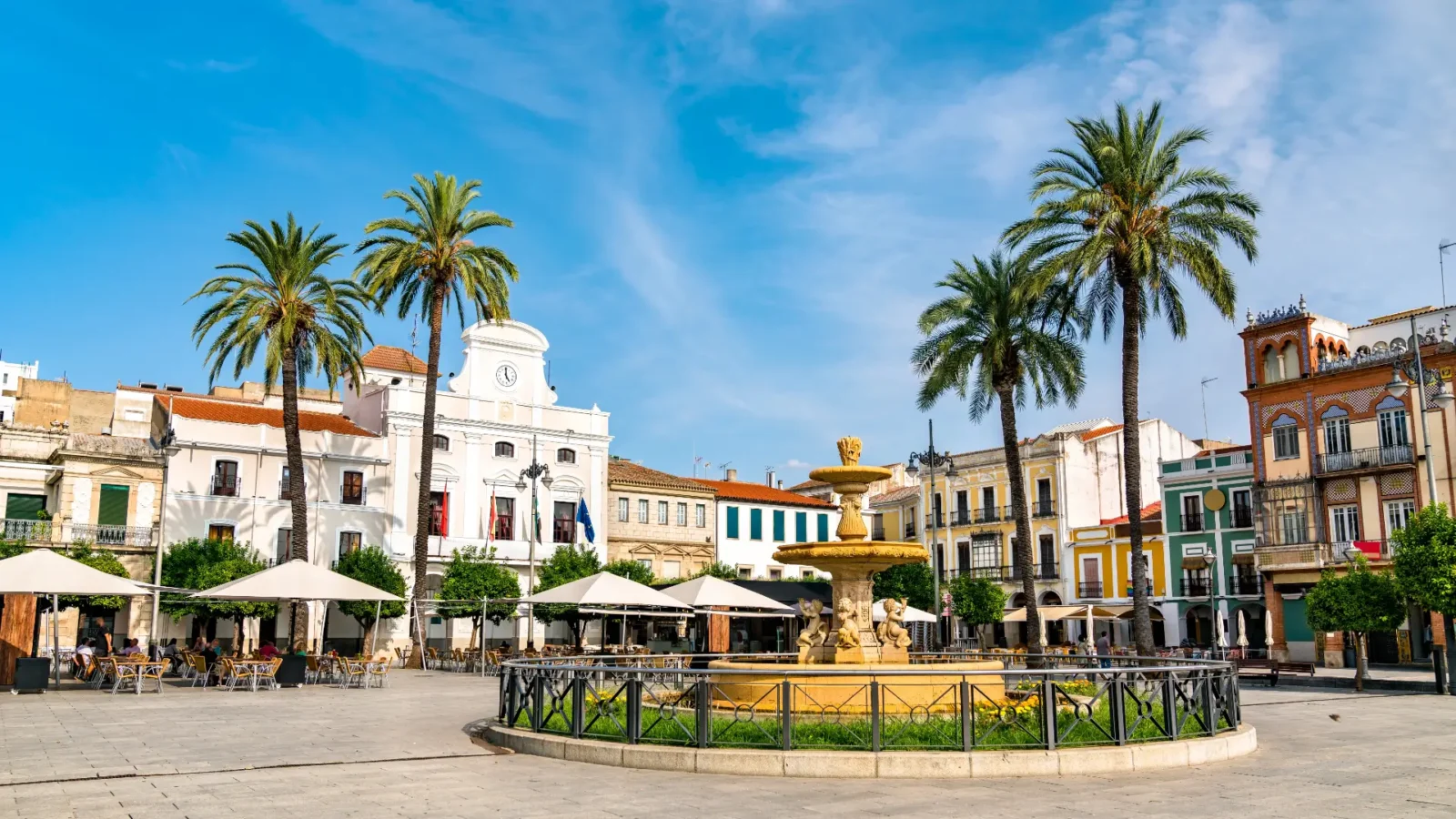
Stay the night, and you get the Mérida the day-trippers miss. Once the coaches leave, the Temple of Diana and the Roman bridge glow under floodlights, the tapas bars fill with locals, and the old town settles into a warm, unhurried evening. From a former convent turned Parador to small country retreats just outside town, here’s where we’d stay, across every budget.
Akla Hotel Mérida
A design-led hotel with a spa in the old town, a few steps from the Temple of Diana and a short walk from the train station. Calm, contemporary rooms and a soothing spa make it the more intimate of the city’s two upscale stays — the place to come back to after a long day on your feet.
Check prices & availability for Akla Hotel Mérida on the accommodation's websiteCerro Príncipe
A characterful rural hotel in a converted farmhouse at La Garrovilla, about 11 km from Mérida, with a calm patio and well-kept rooms full of original wood and stonework. A peaceful, individual base if you don’t mind a short drive in.
Check prices & availability for Cerro Príncipe on the accommodation's websiteHostal Emeritae
A clean, modern hostal that feels more like a small hotel, on a quiet side street a few minutes from the Roman theatre and the archaeological core. Friendly staff, fair prices and a central spot make it the budget-friendly choice in the heart of Mérida.
Check prices & availability for Hostal Emeritae on the accommodation's websiteHotel ILUNION Mérida Palace
A grander hotel right on the Plaza de España, built around a striking covered atrium, with a rooftop pool and terrace looking over the city. Central and comfortable, with every monument within walking distance — step out of the door and you’re in the heart of it.
Check prices & availability for Hotel ILUNION Mérida Palace on the accommodation's websiteParador de Mérida
Sleep in an 18th-century former convent in the centre of town, a short walk from the Roman sites, with quiet rooms set around cool cloistered spaces and a well-regarded restaurant. The kind of building you come to Spain to stay in, not just walk past.
Check prices & availability for Parador de Mérida on the accommodation's websiteVilla Aemilius Boutique Rural
A boutique country retreat styled after a Roman villa, about 15 minutes south of the city, with a pool, gardens and an on-site restaurant. For travellers who want quiet countryside with Mérida an easy drive away.
Check prices & availability for Villa Aemilius Boutique Rural on the accommodation's website
Region, Nearby and Routes
Part of Extremadura
Mérida is in Extremadura
Part of these routes
Mérida is one stop on our 4 day Extremadura Medieval Trail
Mérida is also a stop on our Castilla y León & Extremadura Road Trip: 9 Days
Nearby places
- TrujilloA walled hilltop town of conquistadors and one of Spain’s grandest plazas.
- CáceresA complete walled medieval old town of palaces, towers and stork nests — UNESCO-listed and famous on screen, yet still quiet to walk.
- GuadalupeA medieval village built around a great UNESCO pilgrimage monastery, deep in the Villuercas mountains.
Frequently Asked Questions
Yes. It holds one of the best-preserved collections of Roman monuments in Europe — a near-complete theatre, an amphitheatre, a temple, a long Roman bridge and an aqueduct — all within a walkable, lived-in city, and far less crowded than the famous Roman sites in Italy.
Its Roman past. Founded in 25 BC as Emerita Augusta, capital of the province of Lusitania, Mérida preserves a UNESCO World Heritage ensemble of Roman buildings, with the Roman theatre as its emblem.
One full day covers the essential monuments and the museum on foot. Stay overnight to see the sites lit in the evening, eat well, and enjoy the city once the day-trippers have left.
March to May and October to November are the most comfortable, at around 18–26°C. Mérida is one of the hottest towns in Extremadura — July and August highs reach about 35°C — so summer sightseeing means starting early. The heat is worth it only if you want to see a play at the Classical Theatre Festival, held in the Roman theatre in July and August.
Yes — from Cáceres (about 45 minutes) or Trujillo (about an hour), or as a stop on the road up from Seville. But the monuments and the food reward an overnight stay.
Most visitors stay in the historic centre, within walking distance of the monuments. Options run from simple hostales to a parador in a former convent and a design-led spa hotel by the Temple of Diana — see our picks above.
Start with the traditional tapas bars in the old town for Extremaduran dishes — Iberian pork, migas, regional wine. See the Where to Eat section above for specific picks across budgets.