
La Rioja Road Trip: 12 Days
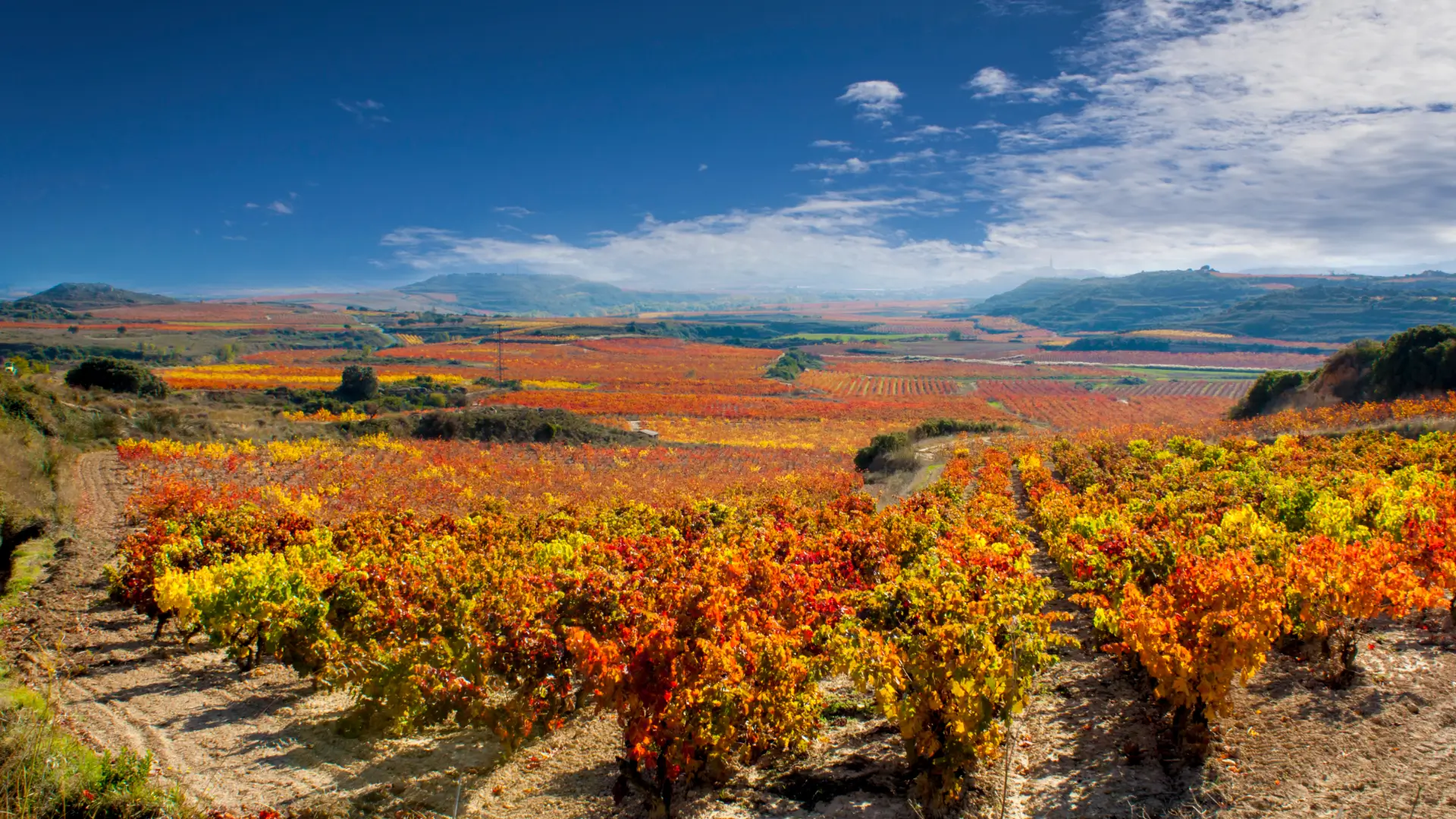
Twelve unhurried days from Briones to Calahorra, from the wine villages of the Ebro over the mountain passes to the hot springs of the Cidacos valley.
- Start
- Briones
- End
- Calahorra
- Duration
- 12 driving days, 12 nights
- Total distance
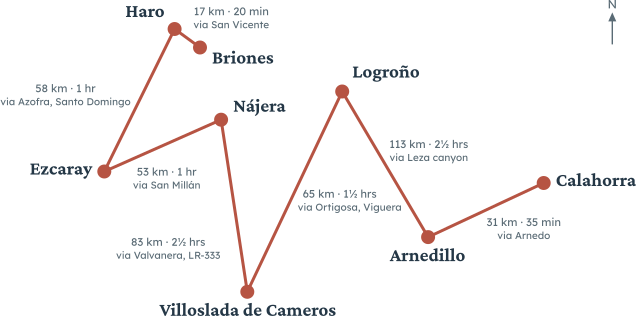
- About 465 km
- Nights
- Briones ×1 · Haro ×2 · Ezcaray ×2 · Nájera ×1 · Villoslada de Cameros ×1 · Logroño ×2 · Arnedillo ×2 · Calahorra ×1
- Best for
- Car or motorbike
- Difficulty
- Moderate: two days on narrow mountain roads, the rest is easy
- Best season
- May to October (the mountain pass on Day 7 can close with snow in winter)
- Pace
- Relaxed
Flying in?Bilbao (BIO) in · Bilbao (BIO) or Zaragoza (ZAZ) out. If you fly, add an arrival day and a departure day to the 12 driving days.
Why this Route?
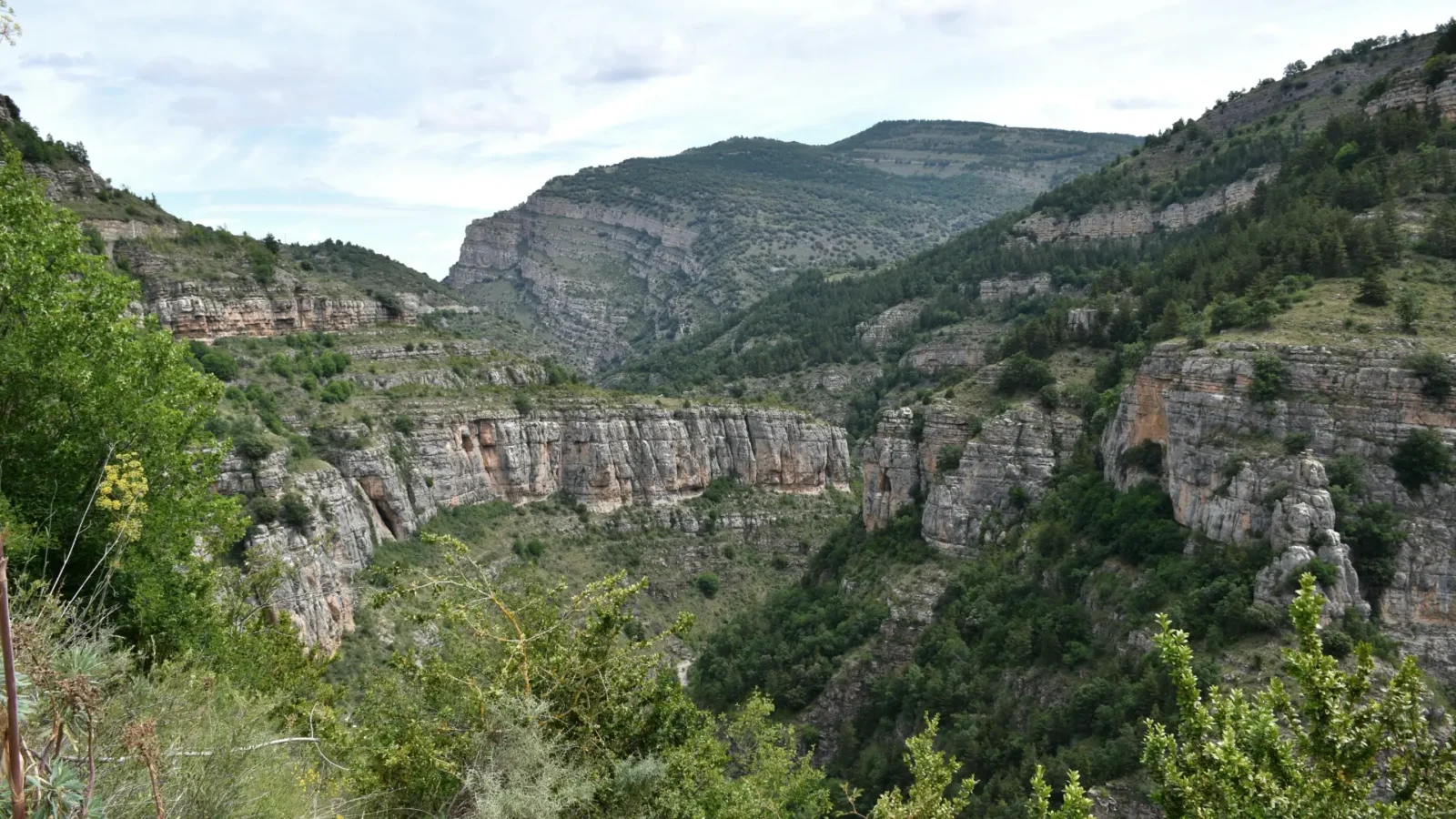
Most visitors see La Rioja as a few famous bodegas around Haro and a night of pintxos in Logroño. This trip gives you those, and then keeps going. You climb from the vineyards into beech woods, cross a mountain pass above 1,500 metres, and finish with a soak in hot springs beside a river. In twelve days you sleep in eight different places, and most days you drive for an hour or less. The quiet parts are the point: monasteries at the end of narrow roads, cave villages, and dinosaur footprints you can walk next to.
Wine country, mountains and hot water
The trip follows La Rioja from west to east. It starts in Rioja Alta, where the villages sit on hills above the Ebro and the wine cellars lie under the streets. Then it turns south into the Sierra de la Demanda and the Najerilla valley, and crosses into the Cameros, the green mountain half of the region. From Logroño it drops into Rioja Baja, a land of cave villages, vegetable gardens and warm springs. Each part tastes different too: lamb chops grilled over vine cuttings in the west, red beans in the hills, and vegetable stews in the east.
How it's paced, and who it's for
This is a relaxed plan, not a checklist. Four places get two nights, so you have whole days with no driving at all. The longest days are Day 7 and Day 10, with about two and a half hours at the wheel, spread over a full day with stops. The trip is the drive from Briones to Calahorra. It reads the same whether you fly into Bilbao and pick up a car or a bike, or drive down from home in your own. It suits travellers who like small places, good food and a bit of walking. Many of the best things here are outside, on a hillside, rather than in a museum.
Getting there and around
The trip begins in Briones, a hill village in Rioja Alta. You can fly into Bilbao and hire a car or a motorbike, or drive down from home and start straight in Briones.
Flying in?
Bilbao (BIO) is the best airport for this trip: it has the most flights and it sits on the north side of La Rioja. From Bilbao airport to Briones is about 120 km, roughly 1 hour 30 minutes by car. Logroño has a small airport (RJL), but its regular flights go mainly to Madrid and Barcelona, so it rarely helps international travellers. If you fly, allow an extra day at the start and another at the end on top of the 12 driving days.
Hire your car or bike at the airport and keep it until you fly home. A car is the usual choice. A touring motorbike works well too, and the mountain roads on Days 7 and 8 are popular with riders.
Arriving late?Driving unfamiliar roads after dark is no fun. If your flight lands in the evening, sleep near Bilbao airport that first night and drive to Briones the next morning. Check your hire desk’s opening hours before you book. Many close around midnight, and not all offer a key box for late pickups. This airport night comes on top of the 12 trip nights. More tips on our Practical Info page.
Arriving in your own car or motorbike
Many travellers drive down from the Netherlands, Belgium, France, United Kingdom or Germany, or already have a base in Spain. You don’t need the flights or the hire car: just make your way to Briones, and skip the fly-in part above.
Coming from The Cathedral Cities?If you drive The Cathedral Cities road trip in reverse, it ends in Burgos. From Burgos to Briones is about 100 km, roughly 1 hour 15 minutes, so you can roll straight on into this trip.
See the drive to Briones
This shows the route to Briones. Set your starting point in the “from” field — your home if you’re driving down, or your arrival airport if you’re flying in — then send it to your phone or car if you want it ready for the road. See the route to Briones in Google Maps.
The Itinerary
The trip moves east one valley at a time, with two-night stops where a place has more to give. The plan below is the backbone, not the full list: each day links to that town’s own guide, so head there for every sight, restaurant and guided tour once you know which day is yours.
Day 1 — Briones
- The drive
- If you’re flying in, Bilbao airport to Briones is about 120 km, roughly 1 hour 30 minutes. Arriving in your own car, or from an earlier stop, you just reach Briones when you do; see Getting there for the ways in.
- The shape of the day
- Arrive, park, and walk up into a quiet hill village.
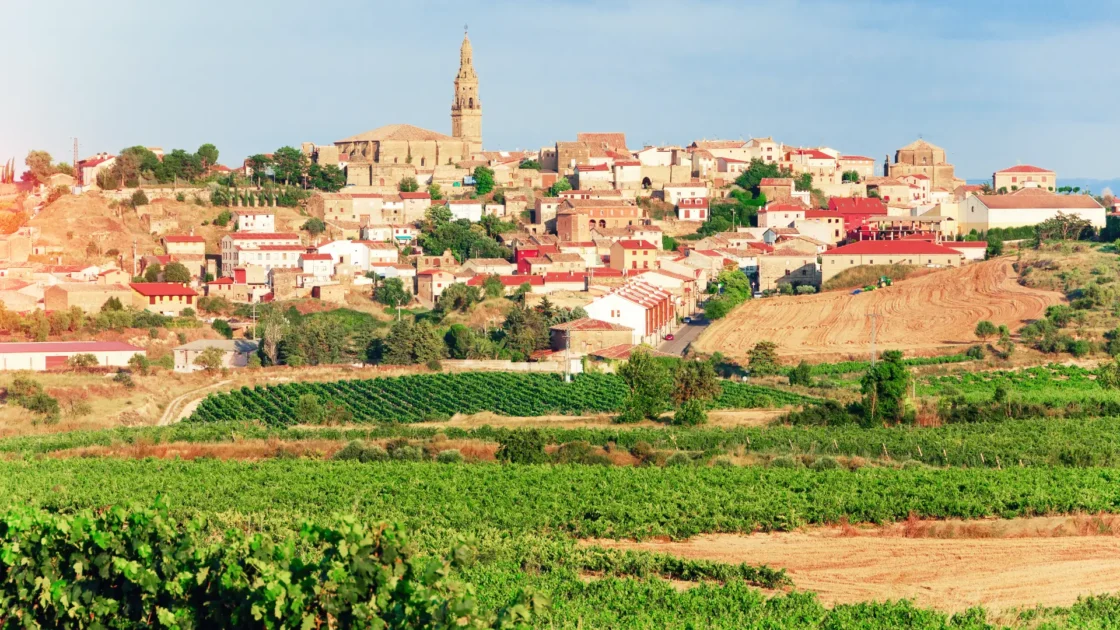
Leave the car in the free car park in the lower town and walk up the steep lanes. Briones sits on a ridge above the Ebro, with vineyards on every side. At the top, the church of the Assumption holds a gilded altarpiece. Walk to the ruined castle tower at the edge of the old walls and look down over the river plain. Give yourself an hour or two. There is no need to do more today.
Where to eat
Briones is wine country: try chuletillas al sarmiento, tiny lamb chops grilled over dry vine cuttings, and patatas a la riojana, potatoes stewed with chorizo and sweet red pepper.
- Lunch
- If you land early, eat on arrival in Briones. Lunch is the main meal here, and on weekdays most places serve a set menú del día, often with a bottle of local wine. Kitchens close after lunch, so don’t arrive too late.
- Dinner
- Look in the old town, where a handful of bar-restaurants serve grilled lamb chops and local red. Dinner starts late in Spain, and that is normal here too.
Where you sleep tonight
Tonight you sleep in Briones. Stay in the old village at the top of the hill: it is quiet, and the views reach over the Ebro. The lanes are narrow and steep, so park in the free car park in the lower town. Stand-out stay: Santa María Briones, an old mansion with the town wall built into it.
Day 2 — Briones to Haro, via San Vicente de la Sonsierra
- The drive
- About 17 km in total, roughly 20 minutes: Briones to San Vicente de la Sonsierra is about 4 km, then on to Haro about 13 km.
- The shape of the day
- A wine museum in the morning, a castle hill at lunch, and the bars of Haro in the evening.
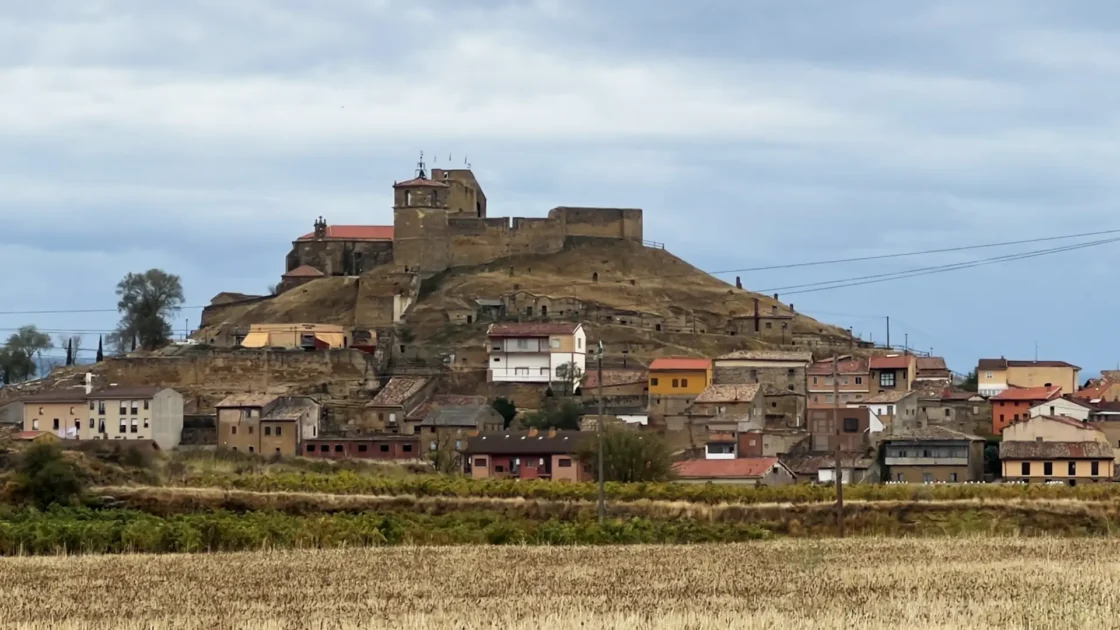
Start at the Vivanco Museum of Wine Culture, just outside Briones. It tells the story of wine around the world, and its collection includes a large display of corkscrews. Allow two to three hours. The museum is closed on Mondays, so check ahead. Then drive across the Ebro to San Vicente de la Sonsierra. Walk up to the castle enclosure on the hill and climb the Torre Mayor for a view over the vineyards and the river. On the way down, cross the medieval bridge, where nine arches still stand. Allow a relaxed half-day. Drive on to Haro in the late afternoon.
Where to eat
The Sonsierra is known for young red wine made by carbonic maceration, a method that keeps it fresh and fruity.
- Breakfast
- In Briones, the bar in the village opens early: order a café con leche and tostada con tomate y aceite, toast with grated tomato and olive oil. It is delicious.
- Lunch
- In San Vicente, look around the Plaza Mayor and Calle El Remedio. Order patatas a la riojana or the set menu of the day.
- Dinner
- In Haro, head for La Herradura, “the horseshoe”, the old-town tapas streets around Calle Santo Tomás and Calle San Martín. Move from bar to bar, with one pintxo and one glass in each.
Where you sleep tonight
Tonight you sleep in Haro, your base for two nights. Stay in the old town near the Plaza de la Paz, a short walk from the tapas streets. The old-town core is tight and partly closed to cars, so use the free car park on the edge. Stand-out stay: Eurostars Los Agustinos, a hotel in a former 14th-century convent, with a cloister under a glass roof, next to the main square.
Day 3 — Haro
- The drive
- Just a short trip today: Haro to Sajazarra is about 12 km, roughly 15 minutes each way.
- The shape of the day
- A walled village in the morning, a wine cellar in the afternoon.
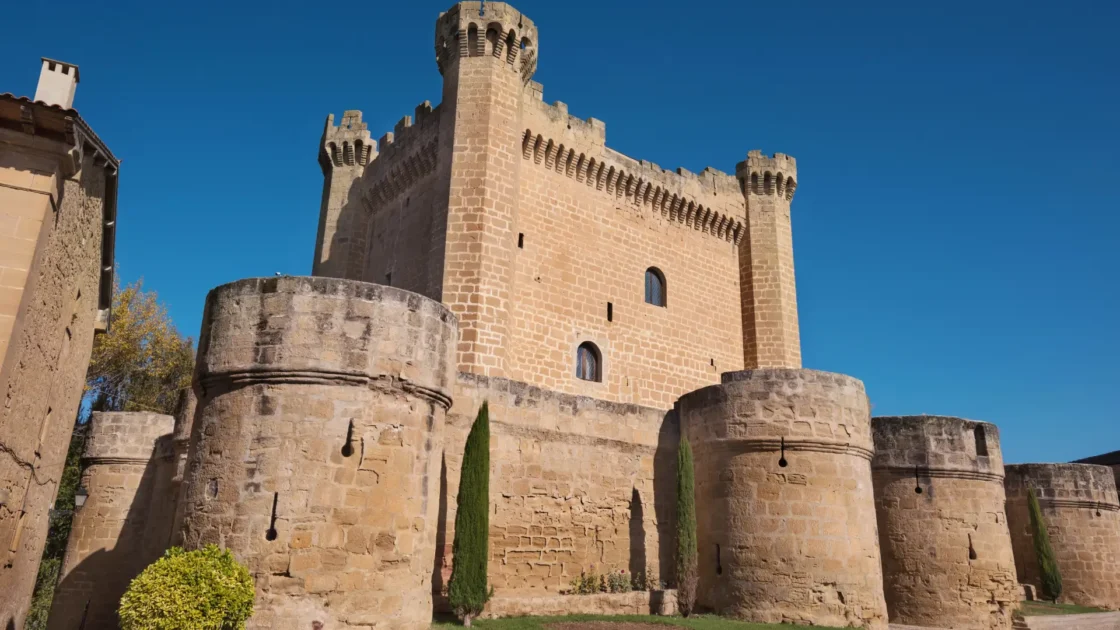
Drive out to Sajazarra in the morning. Non-residents can’t drive into the village, so leave the car in the free car park at the entrance and walk about six minutes in. The castle with its towers is private, so you see it from outside. Allow an hour. Back in Haro, the afternoon is for the Barrio de la Estación, the station quarter, where the old wine houses sit side by side next to the railway. Almost every bodega there needs a booking, so reserve a visit or tasting before you go. Six of the wine houses work together as the Barrio de la Estación. Their site lists each bodega and its visits in one place. Late afternoon is a good time. Many bodegas take a rest day early in the week.
Where to eat
Haro’s dishes are lamb chops grilled over vine cuttings, red caparrón beans, and patatas a la riojana.
- Breakfast
- The bars around the Plaza de la Paz open early. A slice of tortilla with your coffee is the local way to start.
- Lunch
- Eat in the old town. Grilled lamb and roast lamb are on many menus, and weekdays bring a set menu at lunch.
- Dinner
- Back to La Herradura, or try the streets you missed last night.
Where you sleep tonight
Your second night in Haro.
Day 4 — Haro to Ezcaray, via Azofra and Santo Domingo de la Calzada
- The drive
- About 58 km in total, roughly 1 hour: Haro to Azofra is about 22 km; on to Santo Domingo about 21 km; then Ezcaray about 15 km.
- The shape of the day
- A garden in the morning, a cathedral with live hens at lunch, a mountain village by evening.
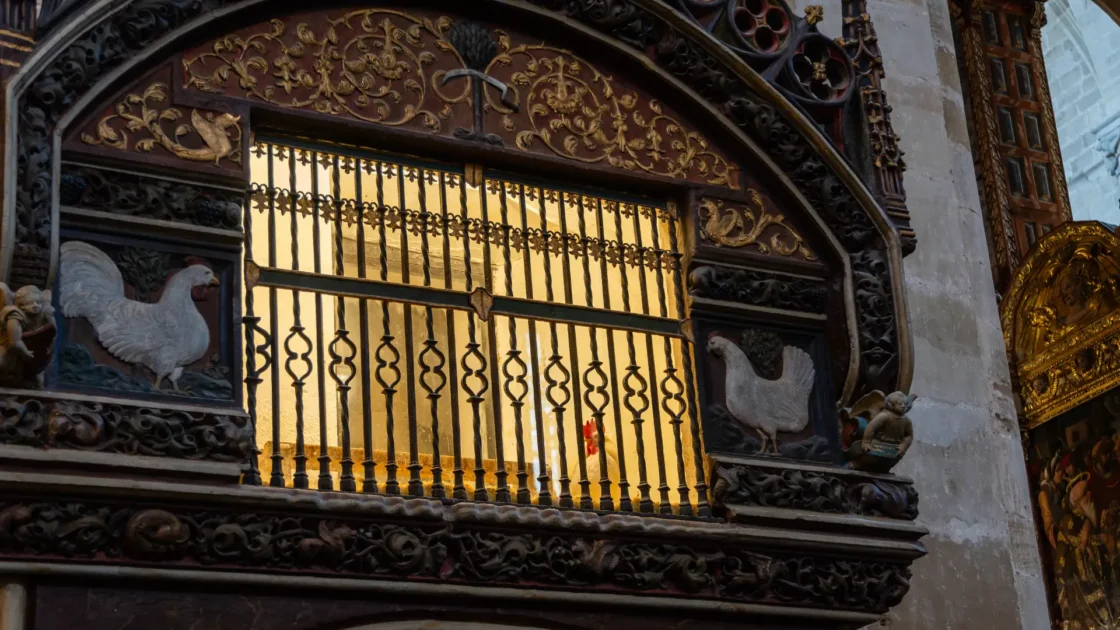
Start at the Jardín Botánico de La Rioja, on the main road at Azofra. It is more a tree garden than a flower garden, with paths you are invited to walk barefoot, over moss, sand and forest floor. It opens in the morning only, so go first. Allow one to two hours. Reviews say it takes cash only, so bring some. Then drive to Santo Domingo de la Calzada, a stop on the Camino de Santiago. Inside the cathedral, a live hen and rooster are kept in a coop, in memory of a local miracle story. The cathedral closes to visitors during Mass, and hours change with the season, so check ahead. Arrive in Ezcaray in the afternoon and walk under the arcades of its squares.
Where to eat
Santo Domingo is known for red beans with chorizo and morcilla, a blood sausage. Ezcaray is known for caparrones, red beans stewed slowly.
- Breakfast
- Haro bars, as yesterday. If you want something sweet, Santo Domingo’s bakeries sell ahorcaditos and molletes, the town’s own pastries.
- Lunch
- In Santo Domingo. Look for a menu of the day with red beans.
- Dinner
- In Ezcaray, around the squares. Ezcaray has a long name for serious cooking: if you want one tasting menu on this trip, tonight or tomorrow is the time for it. It is preferred to book ahead.
Where you sleep tonight
Tonight you sleep in Ezcaray, your base for two nights. The centre is small and walkable, and parking near it is easy. Stand-out stay: Hotel Echaurren, run by the same family for five generations, opposite the church.
Day 5 — Ezcaray
- The drive
- No driving today — Ezcaray is yours to explore.
- The shape of the day
- A walk in the morning, a long lunch, and an evening under the arcades.
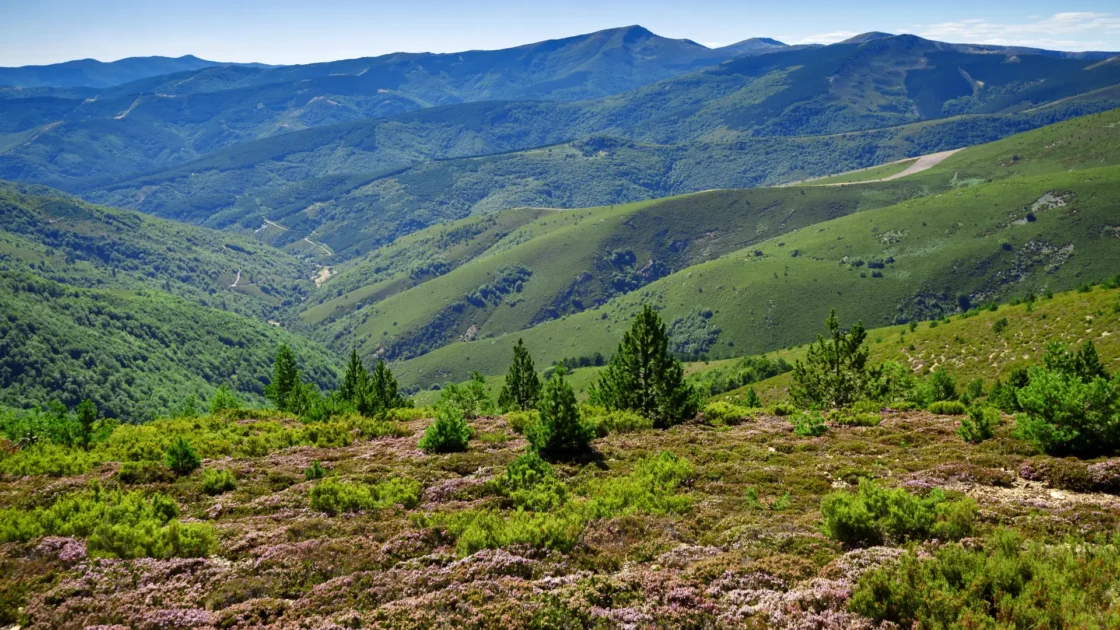
Walk part of the Vía Verde del Oja, a flat path on an old railway line that leaves Ezcaray along the river, with the mountains behind you. Or, if you like hills, follow a marked path into the Sierra de la Demanda, with beech woods and high pastures. The long-distance GR 93 passes through. Go in the morning, before the day warms up. Allow half a day either way. In the afternoon, wander the village and its arcaded squares.
Want a different pace?
Slow it down: skip the walk and spend the day in the village, with coffee on the square.
Where to eat
In the hills, game comes onto the menus in season, alongside the local red beans.
- Breakfast
- The bars on the main square open early. Take a pastry from the bakery if you’re heading out walking.
- Lunch
- Make it long, in the village. On weekdays the set menu is the best value.
- Dinner
- Around the squares again; have an early drink under the arcades first, the way locals do.
Where you sleep tonight
Your second night in Ezcaray.
Day 6 — Ezcaray to Nájera, via San Millán de la Cogolla
- The drive
- About 53 km in total, roughly 1 hour: Ezcaray to San Millán de la Cogolla is about 34 km; then on to Nájera about 19 km.
- The shape of the day
- A monastery tour in the morning, a royal monastery in the afternoon.
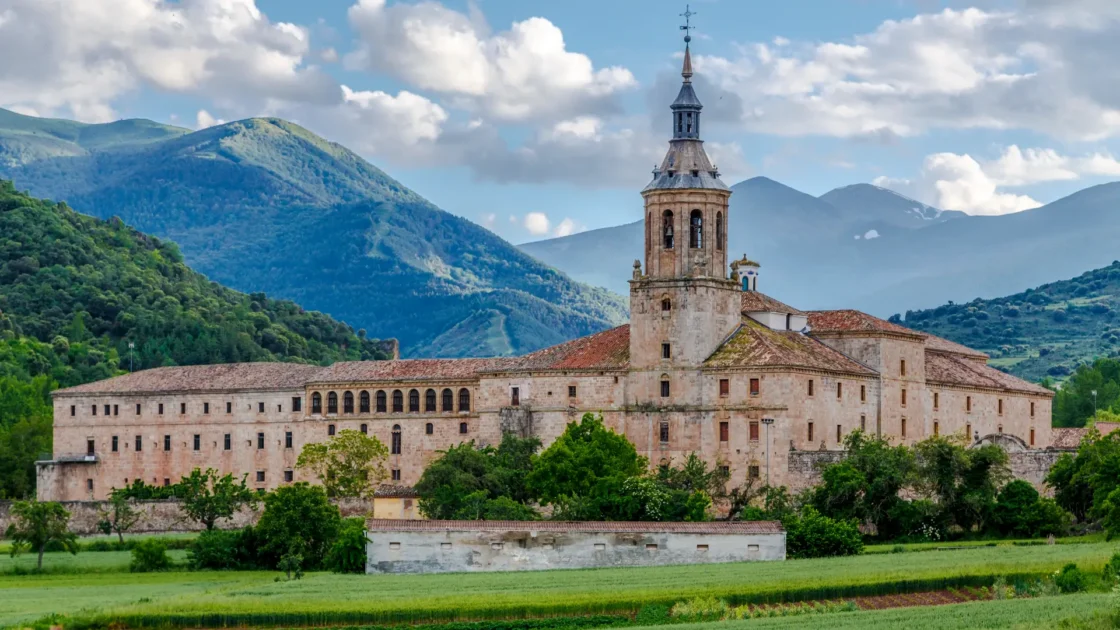
San Millán de la Cogolla has two monasteries on a UNESCO World Heritage listing. The lower one, Yuso, can only be seen on a guided tour. The tours are in Spanish, so read up before you go. The older monastery, Suso, sits higher up the hill. Check the monastery’s own site before you go: it shows which monastery you can visit and when, and how to book. The site is not secure (no https), but it works. Allow two hours here. Then drive to Nájera. In the afternoon, visit the monastery of Santa María la Real, where the kings of Navarre are buried. An audio guide in several languages takes you through the church and the cloister. It is closed on Mondays, so check ahead. Afterwards, climb the hill behind the monastery for a view over the town.
Where to eat
Nájera’s dishes are simple and filling: patatas a la riojana, grilled lamb chops, and red wine by the carafe.
- Breakfast
- Ezcaray’s bars and bakeries, as yesterday.
- Lunch
- In San Millán, after the tour, at one of the few bar-restaurants near Yuso and in the village. Choice is small, and some places close on Mondays.
- Dinner
- In Nájera’s old town, near the river.
Where you sleep tonight
Tonight you sleep in Nájera. Stay in the old town near the river and the monastery. Parking near the centre is easy.
Day 7 — Nájera to Villoslada de Cameros, over the LR-333
- The drive
- About 83 km in total, roughly 2 hours 30 minutes on mountain roads: Nájera to Anguiano about 20 km; Anguiano to Valvanera about 14 km; Valvanera to Viniegra de Arriba about 29 km; then over the pass to Villoslada about 19 km.
- The shape of the day
- Up the Najerilla valley, across the mountains, down into the Cameros. A full day, so start in the morning.
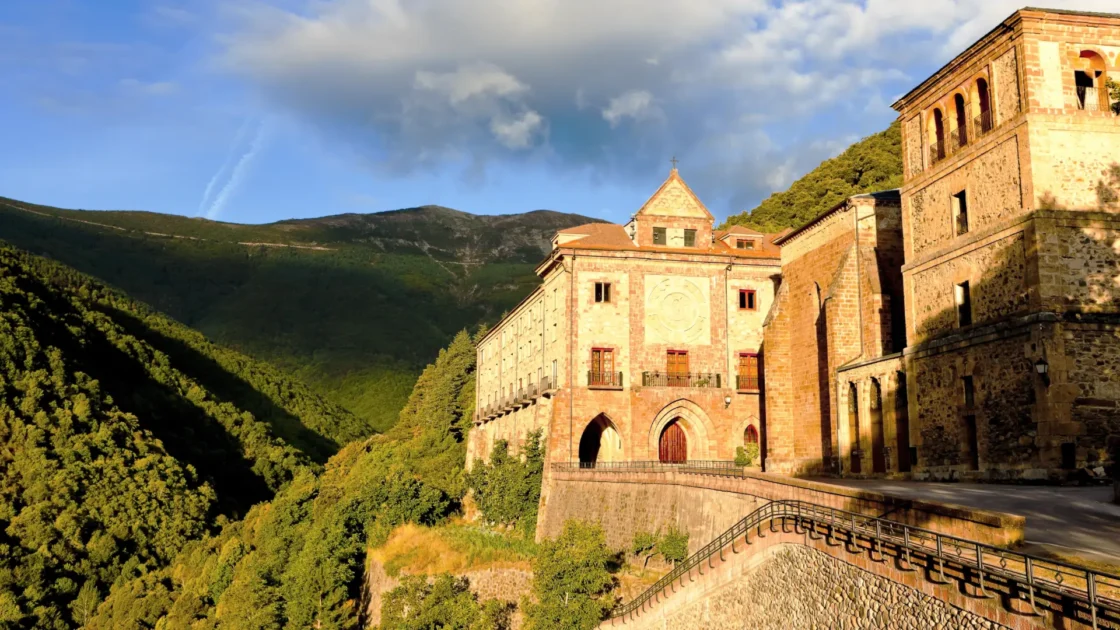
Drive south up the Najerilla river to Anguiano, a village above the river. Stop for a short walk. Then take the small side road to the monastery of Valvanera. It sits at the end of the road in a deep green valley, and you drive back the same way. Allow an hour. Further south, the road reaches the two Viniegras, villages high in the Sierra de la Demanda. At Viniegra de Arriba, the LR-333 climbs over the mountains at more than 1,500 metres and comes down into the Iregua valley at Villoslada de Cameros. This road can close in winter snow; see Practical info. In the evening, walk along the river below the village. Villoslada is the gateway to the Sierra de Cebollera natural park.
Where to eat
The beans of Anguiano are famous: the alubia de Anguiano, a red bean with protected status, is cooked slowly with chorizo.
- Breakfast
- In Nájera, at a bar in the old town. Fill up the car here too.
- Lunch
- Along the road near Anguiano, before you climb. Higher up there is very little choice. Order the local beans if they are on the menu.
- Dinner
- In Villoslada. The village is small, and the inns often serve dinner to their own guests. Ask when you book.
Where you sleep tonight
Tonight you sleep in Villoslada de Cameros. A small mountain village with a few family-run inns that let rooms by the night. Some houses are reached by steps. Many inns serve dinner, so ask when you book.
Day 8 — Villoslada de Cameros to Logroño, down the Iregua valley
- The drive
- About 65 km in total, roughly 1 hour 30 minutes: Villoslada to the Cuevas de Ortigosa about 13 km; on to El Rasillo about 4 km; then Viguera about 24 km; then Logroño about 24 km.
- The shape of the day
- Caves in the morning, a hermitage under a cliff after lunch, the city by evening.
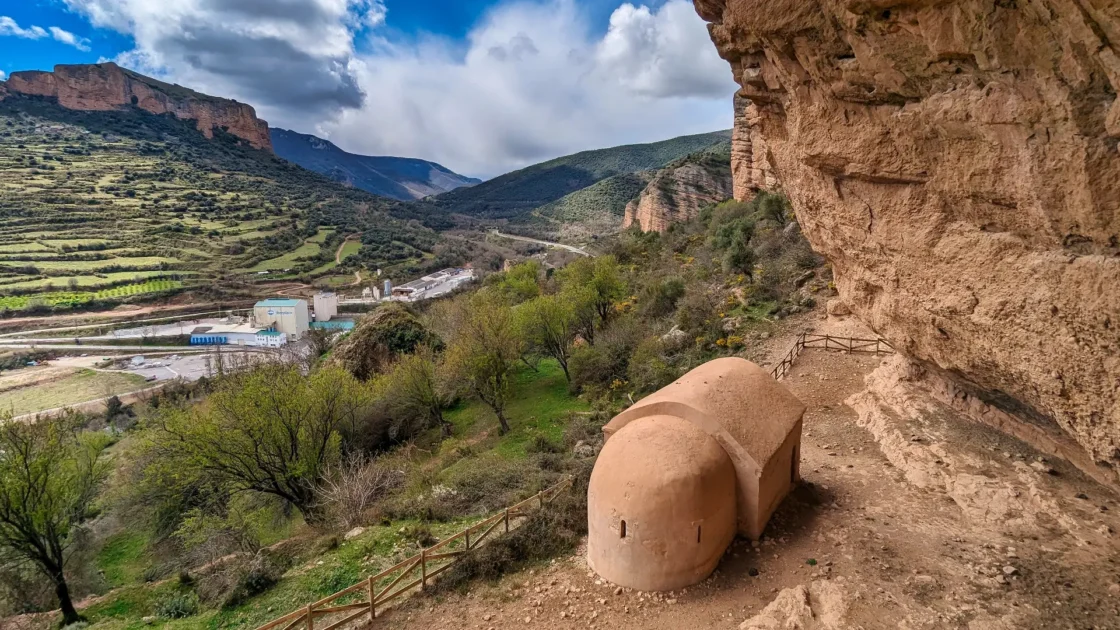
Start at the Cuevas de Ortigosa, two small caves full of stalactites and columns. Visits are guided, at set times in the morning and afternoon, so aim for a morning slot. The caves are closed on Mondays, so check ahead. Allow an hour. Then drive up to El Rasillo, a village above the González Lacasa reservoir. Follow the Iregua valley down to Viguera, where the road runs between high rock walls. Above the village, the small hermitage of San Esteban sits right under an overhanging cliff. The path up is steep and stony, about 20 to 30 minutes each way, so wear good shoes. The hermitage key is kept in the village for a small deposit; ask locally. Reach Logroño in the late afternoon.
Where to eat
Logroño’s signature is the pintxo: grilled mushrooms on bread, small skewers, and a glass of Rioja at each bar.
- Breakfast
- In Villoslada, ask at your inn, or go to the village bar.
- Lunch
- In Viguera or Torrecilla en Cameros, at the bar-restaurants along the N-111.
- Dinner
- Calle Laurel and its side streets, the busiest pintxo street in the city. Each bar has its own speciality. Order one pintxo and one glass, then move on.
Where you sleep tonight
Tonight you sleep in Logroño, your base for two nights. Stay in the old town: it is flat, and Calle Laurel is a short walk away. The core is pedestrian, so park in a car park on its edge.
Day 9 — Logroño
- The drive
- No driving today — Logroño is yours to explore.
- The shape of the day
- The old town, the market and the river by day, pintxos again by night.
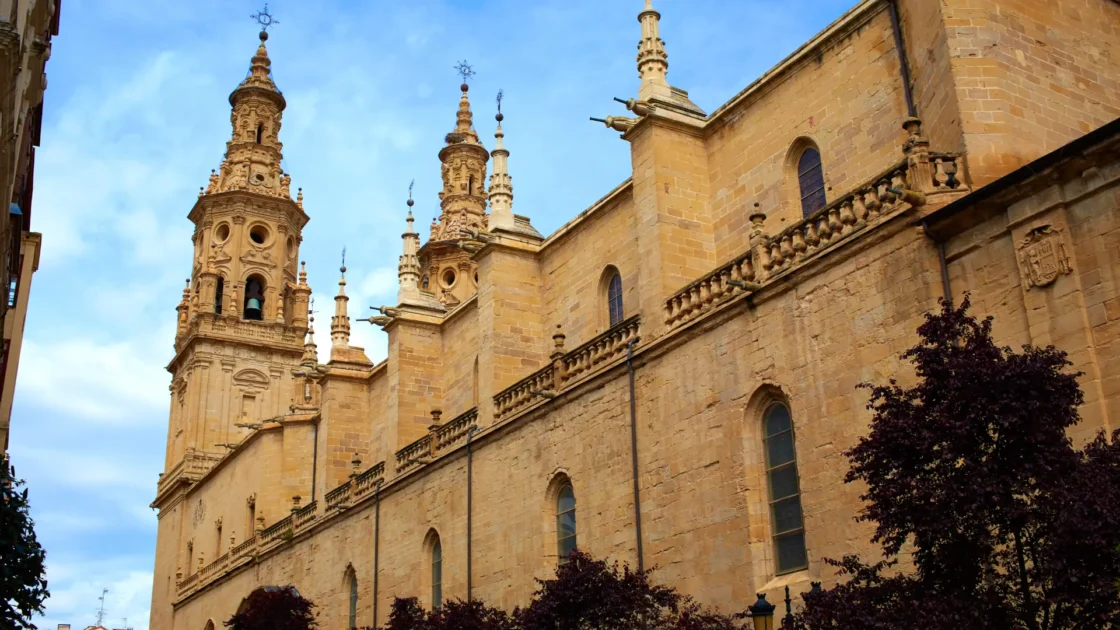
Start at the Concatedral de Santa María de la Redonda, with its two Baroque towers over the main square. Climb the north tower if it is open. Walk the Camino de Santiago route through the old town and cross the Ebro on the stone bridge, the Puente de Piedra. The Museo de La Rioja is free; it often closes on Mondays, so check ahead. Allow a relaxed day with time to sit.
Want a different pace?
Add something: drive about 15 km west to Navarrete, a Camino village with a long pottery tradition, and back for lunch.
Where to eat
Logroño eats in the street as much as at the table: pintxos at night, the market by day.
- Breakfast
- Any bar in the old town. Order tostada con tomate y aceite and a café con leche.
- Lunch
- At the Mercado de San Blas, the city market, closed on Sundays, or a set menu in the old town.
- Dinner
- Try Calle San Juan tonight. The quality is the same as Calle Laurel, with fewer crowds and more locals.
Where you sleep tonight
Your second night in Logroño.
Day 10 — Logroño to Arnedillo, via the Leza canyon
- The drive
- About 113 km in total, roughly 2 hours 30 minutes: Logroño to the Mirador del Cañón del Leza about 28 km; then on to Arnedillo about 85 km. There is no road across from the Leza valley to the Cidacos valley, so you drive back down the Leza valley the way you came, then east to Arnedillo.
- The shape of the day
- A canyon viewpoint in the morning, hot pools by evening.
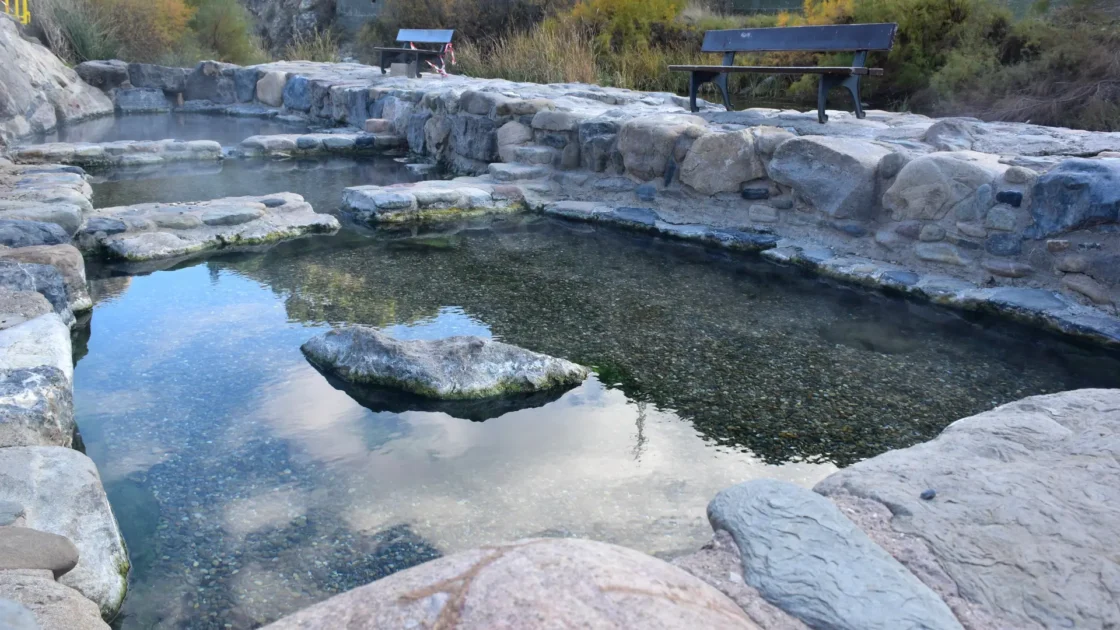
Drive south out of Logroño into the Leza valley. Beyond Soto en Cameros, stop at the Mirador del Cañón del Leza, a viewpoint above a narrow gorge. Vultures often circle overhead. It is open at all times and free. Allow an hour. Then drive on to Arnedillo in the Cidacos valley. In the evening, walk down to the river. Three stone pools sit next to the Cidacos. The water comes out of the ground at about 52°C and cools as it fills each pool. The pools are free and open day and night. There are cold showers but no changing rooms.
Where to eat
In Arnedillo, grilled lamb chops are on most menus, and in autumn look for revuelto de setas, scrambled eggs with wild mushrooms.
- Breakfast
- In Logroño’s old town before you leave.
- Lunch
- In Soto en Cameros there is a village bar, but choice is very small. You can also eat early in Logroño, or pack a picnic for the viewpoint.
- Dinner
- In Arnedillo, along the main street, Avenida del Cidacos, or in your hotel. Choice is small, especially on winter weekdays, and many places close one or two days a week.
Where you sleep tonight
Tonight you sleep in Arnedillo, your base for two nights. Stay close to the pools so you can walk down after dark or at dawn, when they are quiet. The main valley road runs through the village, so ask for a room away from it. Free parking near the pools. Stand-out stay: the spa hotel at the springs, with thermal pools for guests.
Day 11 — Arnedillo
- The drive
- A short trip up the valley: Arnedillo to Enciso is about 11 km, roughly 15 to 20 minutes each way.
- The shape of the day
- Dinosaur tracks in the morning, warm water in the afternoon.
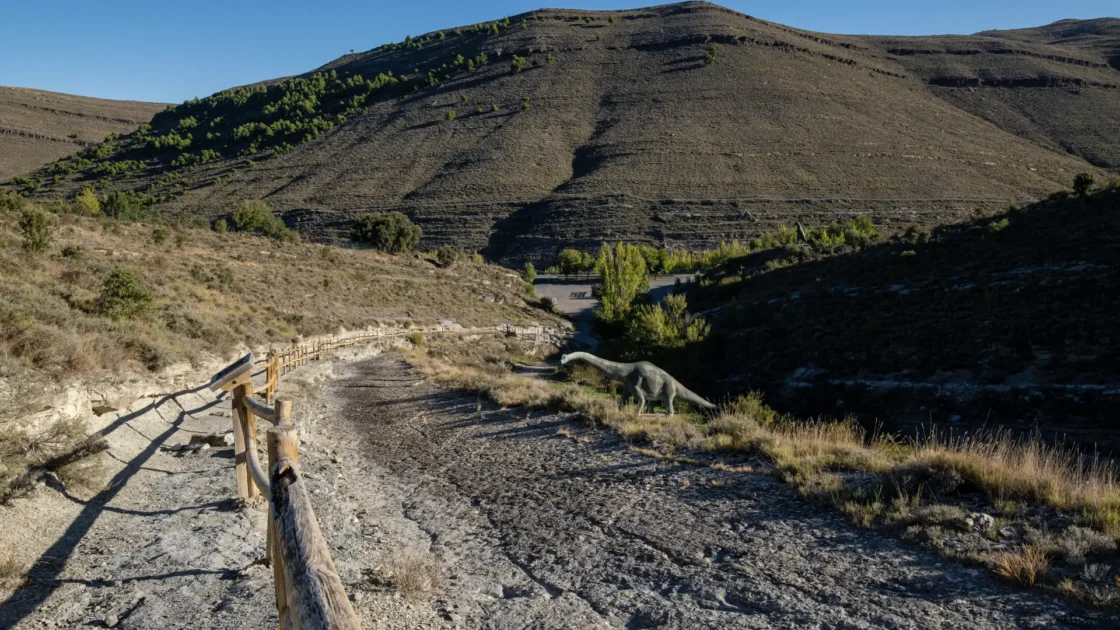
Drive up to Enciso. Around the village, rock slabs hold real dinosaur footprints. At the Virgen del Campo site, a wooden walkway takes you right next to the tracks, with dinosaur models beside them. Entry is free and open at all times, and more sites are signposted nearby. Allow a relaxed morning. Back in Arnedillo, spend the afternoon in the pools, or walk one of the paths above the village.
Where to eat
Enciso and Arnedillo share the mountain menu: grilled lamb chops, mushrooms in season, and Garnacha wine from eastern Rioja.
- Breakfast
- In Arnedillo, at a bar on the main street.
- Lunch
- In Enciso, at one of its few bars. Some close on Mondays.
- Dinner
- In Arnedillo again.
Where you sleep tonight
Your second night in Arnedillo.
Day 12 — Arnedillo to Calahorra, via Arnedo
- The drive
- About 31 km in total, roughly 35 minutes: Arnedillo to Arnedo about 14 km; then Calahorra about 17 km.
- The shape of the day
- Cave rooms in the morning, a Roman town in the afternoon.
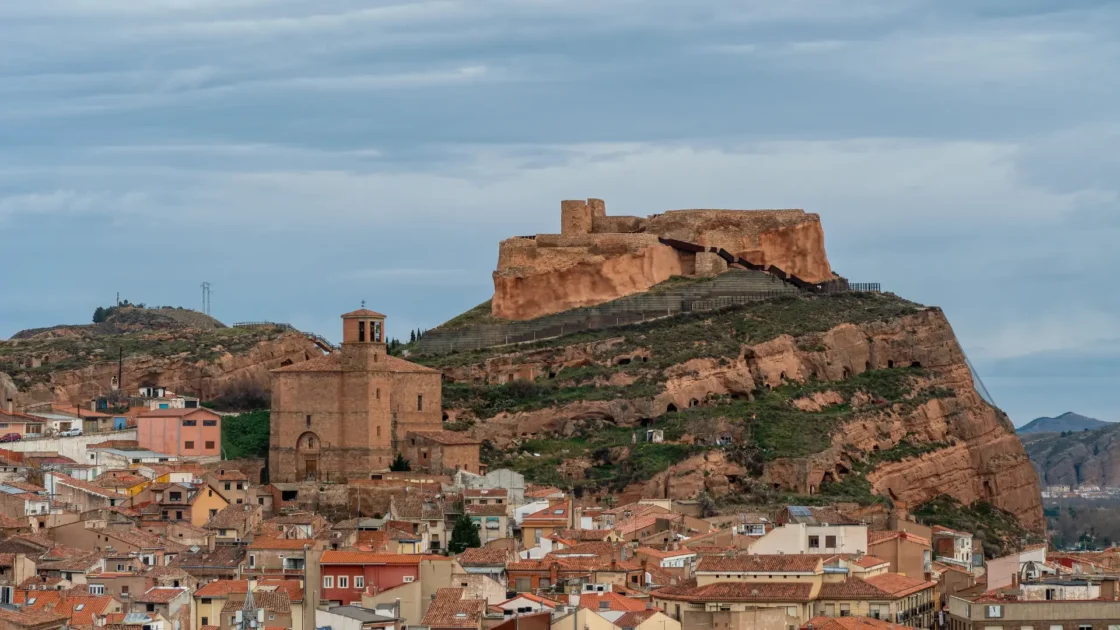
Arnedo sits below a hill of red rock with a castle on top. Start with the Cuevas de los Cien Pilares, on the slope of the same hill: rooms and galleries dug into the rock, their ceilings held up by thick pillars. Visits are guided and start from the tourist office, so book ahead. Then walk up the wooden path to the Mirador del Castillo, a viewpoint at the foot of the castle, with views over the town and the Cidacos valley. Going inside the castle itself is by guided visit only, also booked through the tourist office. Allow a relaxed morning. Then drive on to Calahorra, an old Roman town above the Ebro plain. Walk down to the cathedral. It closes to tourist visits on Sundays and religious holidays. In the evening, join the locals on the Paseo del Mercadal.
Where to eat
Calahorra is a vegetable town, with its own vegetable museum and a vegetable food festival in the second half of April. Order menestra de verduras, a spring vegetable stew, or in winter the town’s own cauliflower, the coliflor de Calahorra, dressed with garlic fried in olive oil.
- Breakfast
- In Arnedillo, or wait for Arnedo, where the bakeries sell fardelejos, the town’s traditional pastry.
- Lunch
- In Arnedo.
- Dinner
- Pintxos in the bars along the Paseo del Mercadal, where Calahorra goes out in the evening.
Where you sleep tonight
Tonight you sleep in Calahorra. Stay in the lower centre, near the Paseo del Mercadal or the Plaza del Raso. There are free car parks near the centre and at Era Alta. Stand-out stay: the Parador, a reddish building in a garden of palms on the Paseo del Mercadal.
Practical Info
- Mountain roads (Days 7 and 8)
- The LR-333 over the Montenegro pass runs above 1,500 metres. In winter it can close for snow or require chains, and so can other passes in the Cameros. Check the La Rioja road reports before Day 7. If the pass is closed, drive from Nájera to Logroño and up the N-111 to Villoslada instead.
- The Valvanera road
- This is a dead end: you return the same way to the main valley road.
- Fuel
- Fill up in Nájera before Day 7 and in Logroño before Day 10.
- Electric cars
- La Rioja had 339 public charging points in late 2025, but 104 of them were out of service. Charge fully before the mountain days (in Nájera or earlier before Day 7, in Logroño before Day 10) and plan each stop with a charging app. In return, an electric car with a zero-emissions label can enter every low-emission zone.
- Low-emission zone
- Logroño’s zone covers the San José–Madre de Dios district, not the old town, and only stops cars without an environmental label. Hire cars have a label. Calahorra has no zone.
- Parking
- Use the car parks on the edge of each old town. The centres of Haro and Logroño are partly closed to cars. In Calahorra, central streets use pay-and-display blue zones; there are free car parks nearby.
- Mondays
- Many sights on this trip close on Mondays: the Vivanco museum, Yuso, Santa María la Real in Nájera, the Cuevas de Ortigosa and the Colegiata in Alfaro. Start on a Thursday (Mondays then fall on Days 5 and 12) or on a Friday (Days 4 and 11), and no closed sight gets in your way.
- Lunch hours
- Many kitchens close after lunch, and village restaurants don’t open every day. On driving days, eat when you see a good place.
- Climate
- In the Ebro valley around Logroño, summers are warm and dry: in July and August afternoons average about 30°C. Winters are cool, with January afternoons around 10°C and nights close to freezing. May and October are the mildest months for walking, with afternoons around 20–22°C, but they are also among the wetter months, so pack a rain layer. The mountain days (Days 5, 7 and 8) are cooler than the valley at any time of year, and the passes can see snow in winter.
Where we’d Stay
All 12 nights in one list, so you can book them in one go. Where to stay in each town, and why, is in that day of the itinerary. We’ve also added an optional airport-side stay for before the trip and before you fly home, outside the 12 trip nights.
Affiliate note: links below are affiliate links. If you book through them, we may earn a small commission at no extra cost to you. It helps us maintain and expand this guide.
Your 12 nights
- Briones
- Day 1 · 1 night — See places to stay in Briones on Booking.com
- Haro
- Days 2–3 · 2 nights — See places to stay in Haro on Booking.com
- Ezcaray
- Days 4–5 · 2 nights — See places to stay in Ezcaray on Booking.com
- Nájera
- Day 6 · 1 night — See places to stay in Nájera on Booking.com
- Villoslada de Cameros
- Day 7 · 1 night — See places to stay in Villoslada de Cameros on Booking.com
- Logroño
- Days 8–9 · 2 nights — See places to stay in Logroño on Booking.com
- Arnedillo
- Days 10–11 · 2 nights — See places to stay in Arnedillo on Booking.com
- Calahorra
- Day 12 · 1 night — See places to stay in Calahorra on Booking.com
Airport nights (optional)
- Bilbao Airport
- See places to stay near Bilbao airport on Booking.com
- Zaragoza airport
- See places to stay near Zaragoza airport on Booking.com
Frequently Asked Questions
For La Rioja, plan at least a week to see the wine villages, Logroño and one mountain valley. Twelve days lets you see the whole region, from Haro in the west to Calahorra in the east, at a relaxed pace.
For a La Rioja road trip, Bilbao is usually the best airport: it has the most flights and is about 1 hour 30 minutes from Briones and Haro. Logroño’s small airport has few routes. For the east of La Rioja, Zaragoza is about 1 hour 20 minutes from Alfaro.
Yes, a car or motorbike is the best way to travel around La Rioja. Buses link the bigger towns, but the mountain valleys, monasteries and dinosaur sites are hard to reach without your own transport.
Driving in La Rioja is easy on the main roads along the Ebro. In the Najerilla valley and the Cameros, roads are narrow and winding, and the LR-333 crosses a pass above 1,500 metres. Take it slowly and allow extra time.
The best time for a La Rioja road trip is May to October. September and October are harvest time in the vineyards. In winter, the mountain pass on the LR-333 can close with snow or need chains.
No, a 12-day La Rioja road trip is calm, not slow. Most days have about an hour of driving, and four places get two nights. If you have less time, focus on Rioja Alta: Briones, Haro, Ezcaray and Nájera fill five or six days.
Yes, you can drive this La Rioja road trip in your own car or motorbike: start in Briones and skip the airport part. You can also join it to The Cathedral Cities road trip through Burgos, about 1 hour 15 minutes from Briones, in either order.
Yes, but a La Rioja road trip by electric car needs planning. In late 2025, about a third of the region’s public chargers were out of service. Charge fully in Nájera and Logroño before the mountain days, and use a charging app.
On this La Rioja road trip, the Vivanco wine museum, the Yuso monastery in San Millán, Santa María la Real in Nájera, the Cuevas de Ortigosa and the Colegiata in Alfaro are closed on Mondays. Start the trip on a Thursday or a Friday and none of them falls on a Monday.
Where to Next
The loop brings you back to Cuenca, so you are well placed for three onward moves.
Flying home?
Zaragoza airport (ZAZ) is the nearest airport with flights, though it has few routes. From Calahorra, drive about 24 km east to Alfaro, roughly 25 minutes, then about 106 km on to Zaragoza airport, roughly 1 hour 20 minutes. On the way, stop in Alfaro: about a hundred stork nests crowd the roof of the brick Colegiata de San Miguel, and April and May are the best months to see them. The church itself is closed on Mondays; the storks you see from outside. To fly from Bilbao instead, the drive from Calahorra is about 200 km, roughly 2 hours 15 minutes.
Early flight?You have two ways to handle it. Swap your last night: sleep near the airport instead of in Calahorra. It is the same 12 nights, just a different last base. Add a night: drive to the airport city the day after Calahorra and spend one extra night there, outside the 12 trip nights. That gives you a slow last day in the city before you fly: in Zaragoza, the old town around the Basílica del Pilar on the Ebro; in Bilbao, the old town and the riverside walk to the Guggenheim.
Driving on
No GoHiddenSpain road trip starts at Calahorra yet. From here, the Ebro valley leads east into Navarra and Aragón.
Doing this trip in reverse?
Then you finish in Briones, and Burgos is about 100 km away, roughly 1 hour 15 minutes. Burgos is where The Cathedral Cities road trip begins: it carries on west through León and Astorga to Zamora.
See the drive from Calahorra
This starts from Calahorra. Set your destination in the “to” field — the fly-out airport, your next route’s first stop, or home — and send it to your phone if you want to navigate it. Open in Google Maps
Essential Reading
Regions this trip crosses
Places on this route that have a full guide
Related routes
- The Cathedral Cities: Northern Castilla y León Road Trip
Here you find optional road-trips to extend your route.