
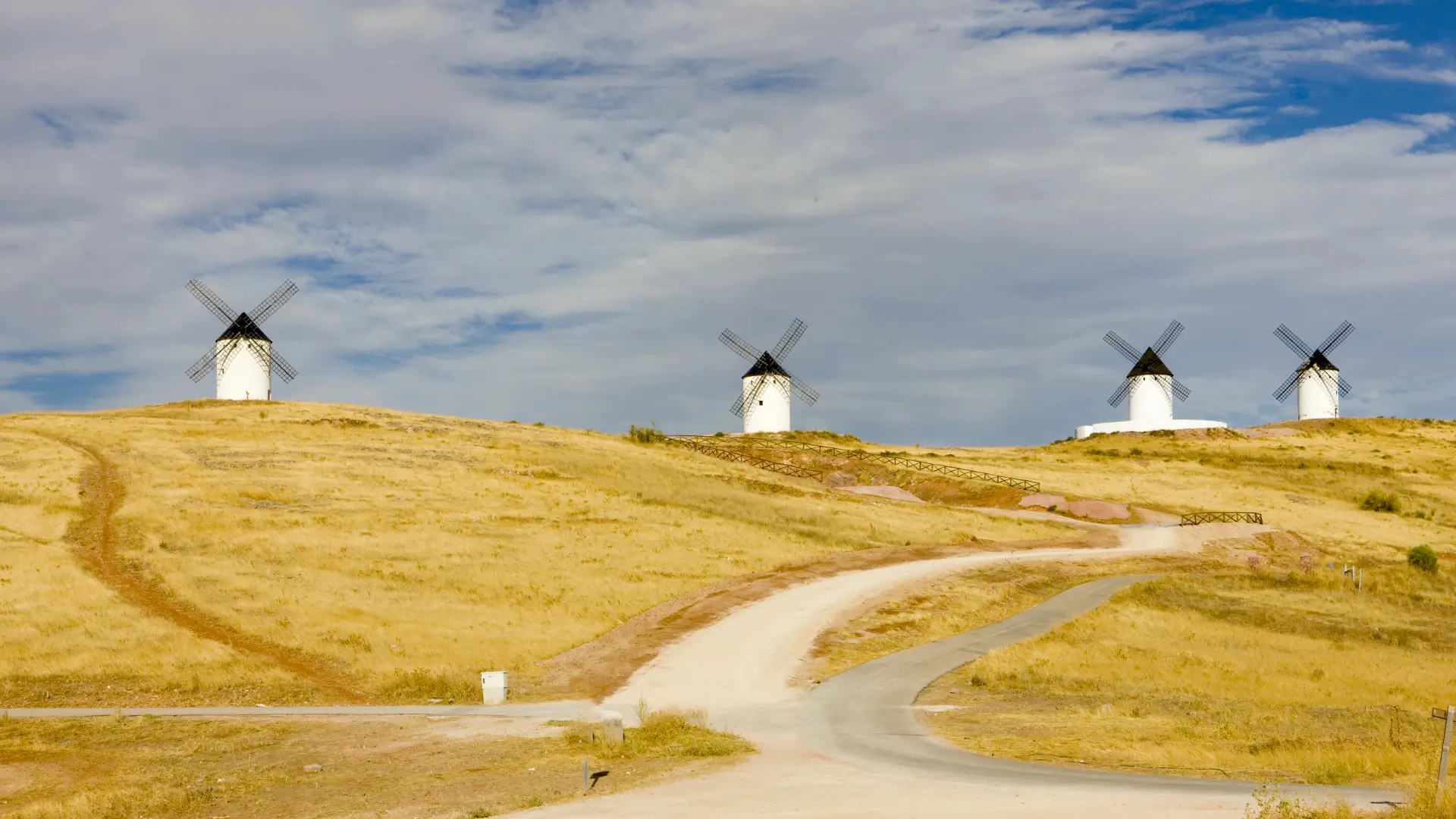
In the Footsteps of Don Quixote
A four-day drive across the plains of La Mancha — windmill ridges, Dulcinea’s village, a castle on a bare hill and a chain of turquoise lakes, on the trail of Spain’s most famous novel.
- DistanceAbout 335 km
- Duration4 days, 4 nights — add one night if you land in the evening
- Route TypeLinear, the base moves with you, because the southern stops sit far apart
- Best forCar (easy for a camper too; see the FAQ)
- DifficultyEasy: flat, open plains and good main roads; one long leg south on Day 3
- Best seasonSpring (April–June) and autumn (September–October); high summer is very hot on the treeless plain
- ThemeLiterary and landscape, the windmills, plains and villages of Don Quixote
- Start / end pointStart in Toledo · End at the Lagunas de Ruidera · Nearest airport: Madrid
Why this Route Exists
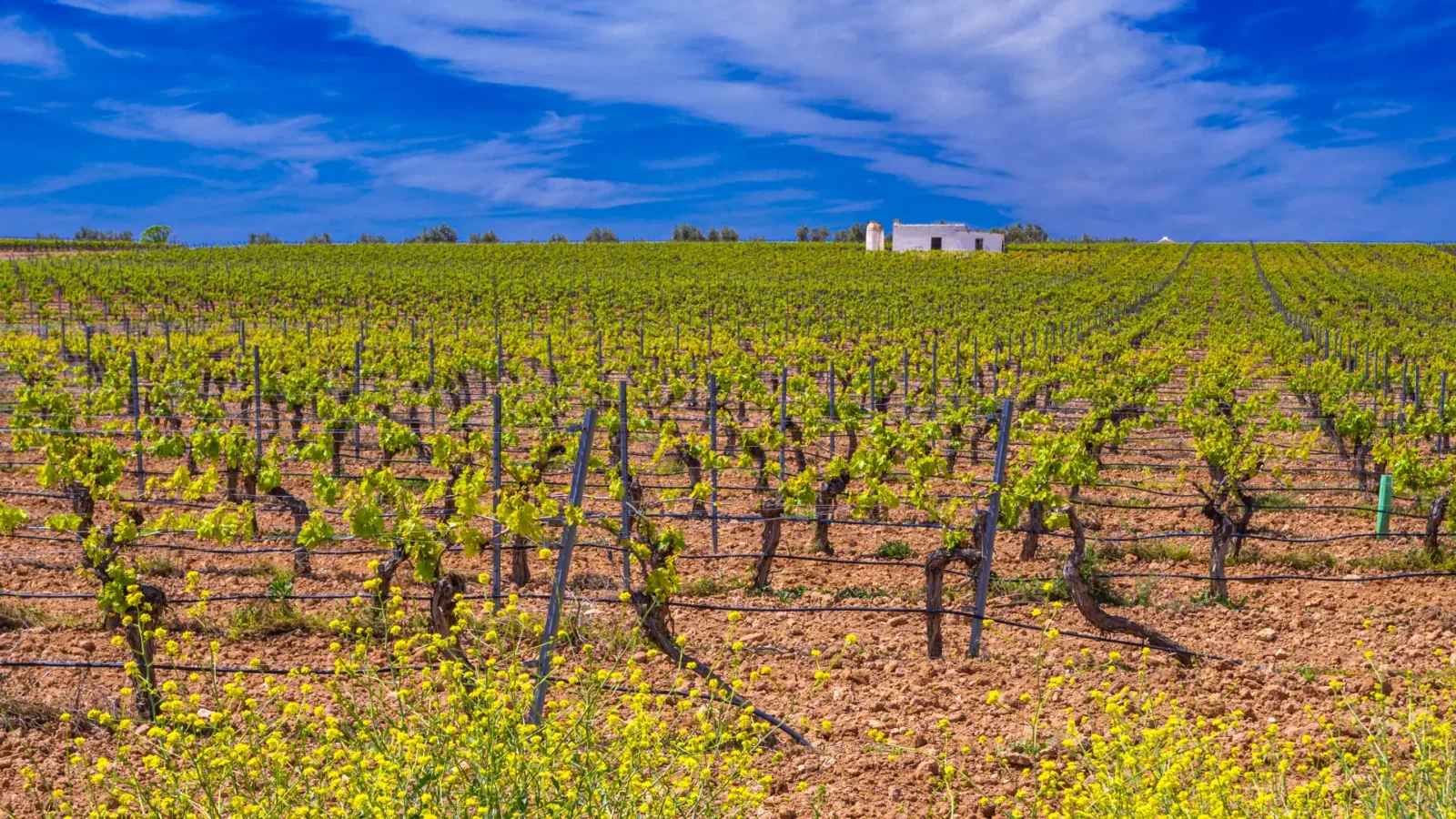
Few landscapes carry a story the way La Mancha does. This is the flat, sun-baked plateau where Cervantes set Don Quixote — a land of windmills, vineyards and long straight roads that vanish into the heat. The famous sights are real and easy to reach, yet the plain around them stays quiet. Drive it slowly and you get the thing the coach tours miss: empty ridges at first light, villages that go about their day, and the sense of space that gave the book its restless heart. This route strings the highlights together and shows you when to arrive so the crowds are somewhere else.
The plain rewards those who slow down
La Mancha does not shout. Its beauty is in scale and light — the way a line of windmills catches the low sun, the silence of a whitewashed square at midday, the smell of thyme and dust. Rush it and you see brown fields; give it time and it opens up. So this route is built around short driving days and long pauses. You climb the windmill hills early or late, when the light is kind and the tour buses have gone. You linger over a saffron-scented lunch. You let a Renaissance town or a quiet lake fill an afternoon. The point is not to tick off molinos — it is to feel why this plain has haunted readers for four hundred years.
Why linear, not a loop
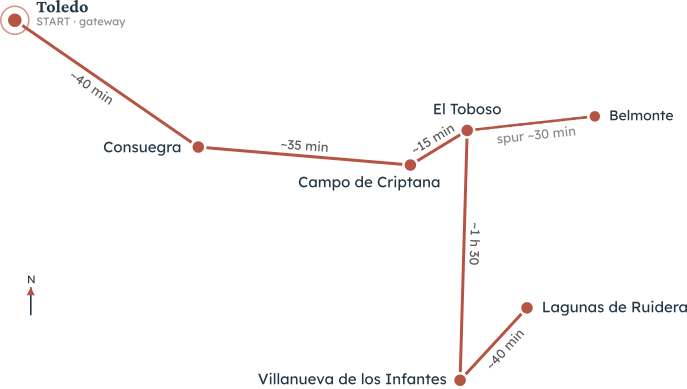
The stops do not sit in a neat circle. The windmill towns cluster in the north, close enough to hop between in minutes, but the finest Renaissance town and the lakes lie well to the south — over an hour's drive down into the Campo de Montiel. Driving back to one base each night would waste that distance twice. So this is a linear route: you sleep in a new place as you go, and the base moves with you. You start in Toledo, shift to the windmill cluster, then drop south for the final day. On the map it reads as a gentle diagonal, not a closed ring. If you would rather pick one base and day-trip out, that is a different kind of trip — see the Castilla-La Mancha region page for the single-base option.
Getting to the start
The route starts in Toledo, on the northern edge of La Mancha, less than an hour south of Madrid. Toledo has no airport of its own, but it sits close to Spain’s busiest hub, so getting there is simple.
Affiliate note: some links below are affiliate links. If you book through them, we may earn a small commission at no extra cost to you. It helps us keep GoHiddenSpain running and growing. We only suggest services we'd feel comfortable recommending.
Madrid–Barajas (MAD)about 85 km, roughly 1 hour by the A-42 motorway. The obvious choice: the most flights from the US, UK, Ireland and Northern Europe, and the closest big airport. There is no direct train from the airport to Toledo, but fast AVE trains run Madrid–Toledo in about 35 minutes if you were arriving by rail rather than driving.
Valencia (VLC)about 370 km, roughly 3 hours 30 east. Worth considering only if the fares are much better or you are pairing the trip with the Mediterranean coast.
Sevilla (SVA)about 390 km, roughly 3 hours 45 south-west. Makes sense mainly if you plan to carry on into Andalucía afterwards and want a one-way loop through the south.
This is a self-drive route. Hire a car at your arrival airport and keep it until you fly home — the whole point of La Mancha is the freedom to stop on an empty road when the light is good.
Landing in the evening? Take an arrival night first. Toledo deserves a full day, and you cannot give it one after a late flight. So treat the night you land as separate, and start Day 1 the next morning. There are two ways to do it. Sleep near the airport and drive to Toledo after breakfast — about an hour, and the easiest option after a long flight. Or drive straight to Toledo, sleep there, and wake up inside the walls. The second costs you an evening drive but buys you the city at first light, which is when Toledo is at its best.
Landing in the morning or early afternoon? Drive straight to Toledo. That day is Day 1, and you still get the evening. Either way, the four days below run the same. Only the number of nights changes: four, or five with an arrival night.
See our Practical Info page for how to handle late arrivals, plus everything on driving in Spain (low-emission zones, tolls, fuel and parking).
The Itinerary
This is a linear route: four unhurried days, sleeping somewhere new as you move south. Day 1 is Toledo. Day 2 is the windmill cluster. Day 3 turns from windmills to literature and ends deep in the Campo de Montiel. Day 4 gives you a Renaissance morning and an afternoon on the water. You sleep in four different places, and you never double back. The map below shows the shape — a diagonal, not a ring.
Day 1 — Toledo
Start where every Quixote road trip starts: Toledo, the honey-coloured city stacked above a bend in the River Tagus. Be honest with yourself about this stop — Toledo is busy. It is a UNESCO city and a coach-tour magnet, and by mid-morning the narrow lanes fill up. The trick is timing. Arrive the evening before, sleep inside the walls, and walk the old town at dawn or after the day-trippers leave, when the cathedral square is quiet and the light turns the stone gold. Allow a relaxed half-day to a full day: the cathedral, the two synagogues, the churches and viewpoints over the gorge reward slow wandering. Treat Toledo as your gateway, not the goal — a grand overture before the emptier plains to come. (Full sight-by-sight detail lives on the Toledo place page.)
Sleeping in Toledo tonight?If you took an arrival night, this is your second night here — no need to move hotels. See where we’d stay.
Day 2 — Consuegra and Campo de Criptana
This is the day the windmills earn the trip. Two hills, two of the best rows of molinos in Spain, and a short drive between them.
The driveToledo to Consuegra is short — about 62 km, roughly 40 minutes south on the A-42 then quiet local roads. You can do it late on Day 1 or first thing on Day 2.
Consuegra: twelve restored windmills strung along the Cerro Calderico, with a 12th-century castle at the ridge’s end. It is the postcard image of La Mancha, and for good reason — the line of white towers against the plain is unforgettable. Go early or stay for sunset; the middle of the day brings the tour buses and the harsh light. Allow a couple of unhurried hours for the ridge, the castle and the view. In late October the town’s saffron festival fills the square, so check the local tourism board for the exact dates if you want to catch it.
The driveConsuegra to Campo de Criptana is about 52 km, roughly 35 minutes east across the plain.
Campo de Criptana has the other great windmill hill — ten molinos above the town, three of them 16th-century originals with their machinery intact. The whitewashed old quarter, the Barrio Albaicín, tumbles down the slope below them in a tangle of blue-trimmed houses. It feels more lived-in than Consuegra and rewards a slow wander as much as the windmills do. Allow a half-day here, and eat well — this is deep saffron and Manchego country.
Full detail on Campo de Criptana
TonightSleeping in Campo de Criptana, right under the windmills. See where we’d stay.
Day 3 — El Toboso, Belmonte and south to Villanueva de los Infantes
The day trades windmills for literature. Two small stops, then the long run south into the country where the novel opens.
El Toboso comes first, 18 km and about 15 minutes north-east of Campo de Criptana. This is Dulcinea’s village, the home of Don Quixote’s imagined lady. It leans into the connection gently: a Cervantes museum, the “House of Dulcinea” set up as a 16th-century Manchegan home, and quiet lanes with lines from the novel on the walls. Allow an hour or so — it is small, and charming for it.
The driveEl Toboso to Belmonte is 34 km, about 30 minutes north-east.
Belmonte — is the second stop. One of Spain’s best-preserved medieval castles stands on a bare hill above the village, and it is often quiet on weekdays. Allow a couple of hours, and eat lunch here before the long leg. Belmonte sits in Cuenca province, so this is the one moment the route leaves Toledo and Ciudad Real behind.
The driveBelmonte to Villanueva de los Infantes is about 130 km, roughly 1 hour 45 minutes south. This is the longest leg of the trip, and the emptiest. Fill the tank before you leave.
From here the route drops into the Campo de Montiel, the high plain where the novel opens. “En un lugar de la Mancha”, the very first line, is set in this comarca, and its wide, empty horizons are the real country of Quixote’s wanderings. At its heart sits Villanueva de los Infantes. This is the surprise of the route: a Golden Age town of arcaded squares and noble mansions, argued by one university study to be the village Cervantes deliberately left unnamed. Alcázar de San Juan, which you passed yesterday, makes the same claim, and so does Argamasilla de Alba. Nobody can prove any of it, which is half the pleasure. Villanueva de los Infantes has the strongest case, and it sees very few foreign visitors.
Arrive late afternoon and stay. At about seven the day visitors leave, the arcades fall into shadow, and the Plaza Mayor becomes what it has been for four hundred years — a square where a small Spanish town sits outside and talks. Eat on Calle Quevedo.
Full detail on Villanueva de los Infantes
TonightSleeping in Villanueva de los Infantes. See where we’d stay.
Day 4 — The Campo de Montiel & the Lagunas de Ruidera
A slow morning in town, an optional side-trip, then water.
Walk Villanueva de los Infantes early, before the heat and before the light goes flat. The Plaza Mayor, the church of San Andrés where Quevedo is buried, and the convent cell where he died all sit within a ten-minute walk. Buy your San Andrés ticket at the tourist office in the Casa de Rueda, not at the church door.
Two optional side-trips, if you want the Campo de Montiel rather than just the drive through it. Torre de Juan Abad is 22 minutes south-west, where Quevedo spent years of exile; his house there is now a small guided museum, closed Mondays and Tuesdays. Montiel is 15 minutes east, under the ruined Castillo de la Estrella — the castle is being restored and closed inside, so this is a hillside walk and a view rather than a visit.
The driveVillanueva de los Infantes to the Lagunas de Ruidera is about 40 km, roughly 40 minutes north-east.
Finish at the Lagunas de Ruidera. After two days of dry plain, this chain of fifteen turquoise lakes, linked by falls and reed beds, feels almost unreal. Walk a stretch of the lakeshore, swim in summer, and let the water close the trip. Getting here by early afternoon is the whole point of the fourth day.
This is also where Cervantes sent Don Quixote underground, into the Cueva de Montesinos, the cave that stages one of the book’s strangest episodes. You can no longer walk in on your own: there is a gate, and access is by guided visit only, so book ahead. The park straddles the Ciudad Real and Albacete provincial line.
Full detail on Lagunas de Ruidera
TonightSleeping by the lakes. See where we’d stay.
Where to next
Don’t just turn for home — the Ruidera lakes sit at a natural crossroads. Genuine onward options:
South into AndalucíaFrom Ruidera it is about 45 km, roughly 1 hour to Valdepeñas on the A-4, and from there the motorway climbs through the dramatic Despeñaperros pass into the province of Jaén. Stay on it past Bailén and you reach Úbeda and Baeza in about 2 hours 15 from Ruidera — the start of our Renaissance & Olive Trail through Jaén’s olive country. It is the natural cross-region link from La Mancha into eastern Andalucía.
North into the Serranía de CuencaIf Belmonte’s castle gave you a taste for Cuenca province, keep going. From Belmonte it is about 1 hour 15 minutes north-east to the city of Cuenca, where our Into the Enchanted Mountains route begins. It swaps the flat, sun-baked plains for high pine forest, river gorges and the cold springs where the Júcar and Cuervo are born — the strongest landscape contrast in central Spain, plain one day and mountain the next. Travellers with a week to spare can run the two Castilla-La Mancha routes back to back.
Back to Madridfor a flight home
West toward ExtremaduraThe Toledo–Talavera corridor along the Tagus valley opens the way to our Extremadura routes; this is a future cross-region link from La Mancha.
Want the full picture of each town? Each stop links to its own guide above, with every sight, restaurant and place to stay.
Where we’d Stay
One place for each of the four nights, in the order you’ll need them.
Hotel Santa Isabel
A restored fifteenth-century building on a quiet lane, two minutes’ walk from the cathedral and about five from Zocodover. The roof terrace looks straight across the old-town skyline, which is a remarkable thing to get at this price. Simple rooms, genuinely warm staff, on-site parking for a nightly fee. This is the night-one pick on our Don Quixote route.
Check prices & availability for Hotel Santa Isabel on the accommodation's websiteHotel Rural La Casa de los Tres Cielos
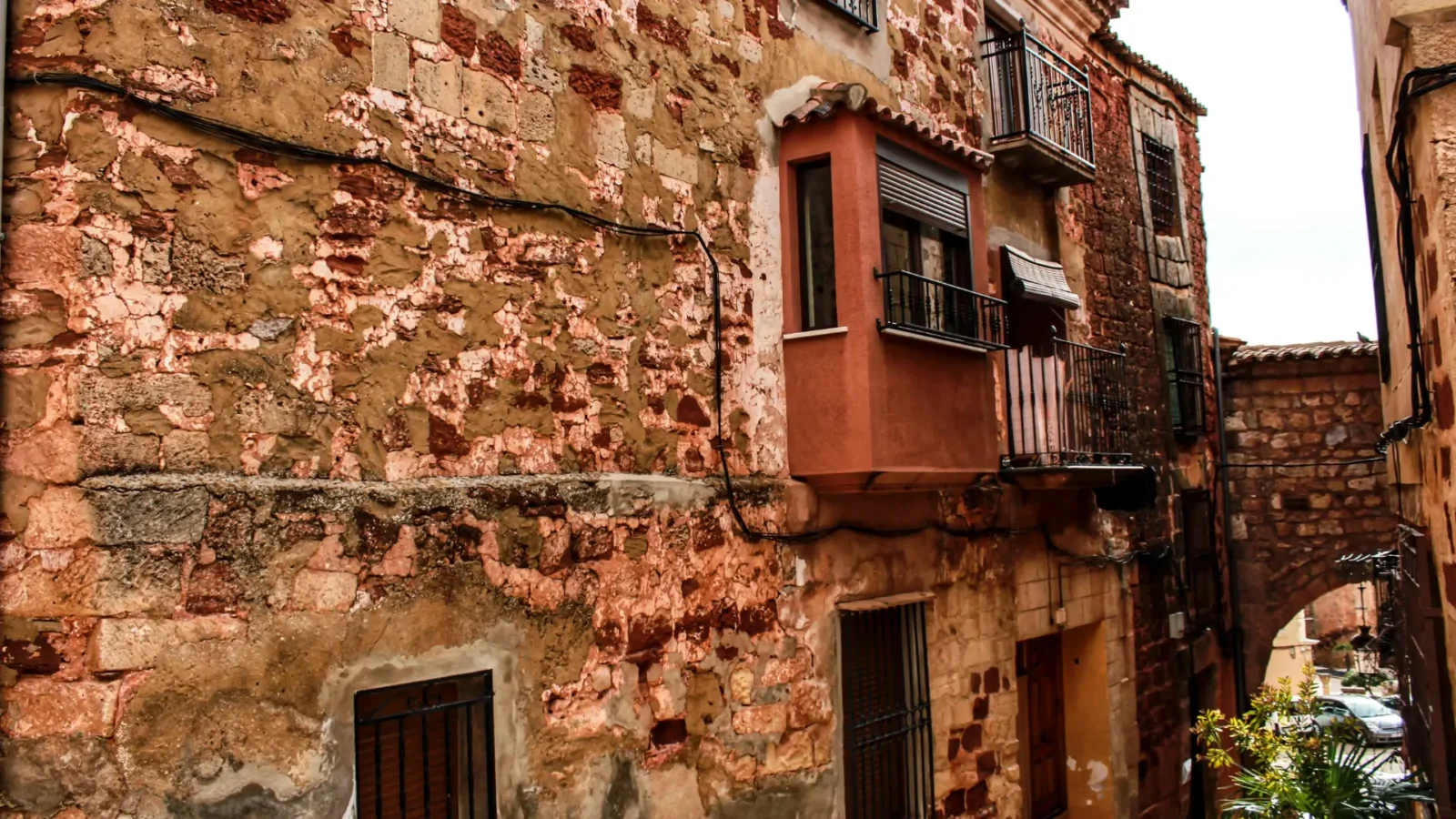
A restored Manchego house in the Albaicín, turned into a nine-room rural hotel with an outdoor pool, just a short walk below the mills. Comfortable, homely and very well placed for an early climb to the giants.
Check prices & availability for Hotel Rural La Casa de los Tres Cielos on the accommodation's websiteHotel Boutique La Morada de Juan de Vargas
Seven rooms in an old house a few steps off the Plaza Mayor, run by the owners themselves. It is the best-reviewed place in town, and the reviews are mostly about the welcome. Being able to walk out to dinner and back after dark is the reason to sleep here rather than drive on.
Check prices & availability for Hotel Boutique La Morada de Juan de Vargas on Booking.comHotel Rural Albamanjón
A characterful stone hotel set right on the bank of the San Pedro lagoon, inside the natural park, with lake-view rooms and a restaurant serving Manchegan dishes. Waking by the water is the gentlest possible end to the route.
Check prices & availability for Hotel Rural Albamanjón on the accommodation's website
Practical Info
- Driving and roadsThis is flat, open country on good main roads (A-42, A-4, CM- regional routes). No mountain passes, no tolls needed on the core route — the A-4 has a free dual-carriageway alternative to any toll section. The one longer leg is El Toboso down to Villanueva de los Infantes; it is straightforward, just emptier.
- Fuel up before the southern legpetrol stations thin out once you leave the windmill towns for the Campo de Montiel. Fill the tank in Belmonte before heading south.
- Parking is simplein every stop except Toledo. In Toledo, use a car park outside the walls and walk in — the old town is a maze and partly restricted. The windmill hills at Consuegra and Campo de Criptana have parking near the ridge.
- Time your windmill visitsEarly morning and late afternoon give the best light and the fewest people; the middle of the day on the exposed ridges is hot and busy. Some sights and many restaurants close in the afternoon (roughly 2–5 pm), so plan lunch and don’t expect to visit interiors during siesta hours.
- Summer is genuinely hotJuly highs in the region reach the mid-30s °C with almost no shade on the plain. If you come in summer, do the ridges at dawn or dusk and carry water. Spring and autumn are far kinder.
- Bring layers in spring and autumnthe plain is warm by day but cools fast after sunset at this altitude (most of the route sits above 600 m).
- Book the Cueva de Montesinos aheadthe cave is gated and can only be visited with a guide, so you cannot simply turn up. Check the Ruidera park information before you go.
Frequently Asked Questions
Four days and four nights: Toledo, the windmill towns, Belmonte and the drop south to Villanueva de los Infantes, then the Campo de Montiel and the lakes. Add a fifth night at the start if your flight lands in the evening, so that Toledo still gets a full day.
It is a linear, one-way drive. You sleep in a new place as you move south, from Toledo down to the Lagunas de Ruidera, rather than returning to one base each night.
Yes. Public transport between these towns is slow and indirect, and the joy of La Mancha is stopping on an empty road when the light is good. Hire a car at your arrival airport and keep it for the trip.
Easy. Flat, open country on good main roads, no mountain passes and no tolls needed. The longest single leg is Belmonte down to Villanueva de los Infantes, about an hour and three quarters — straightforward, just emptier of services, so fuel up first.
Spring (April–June) and autumn (September–October) are ideal: warm days, kind light, few crowds. High summer is very hot and shadeless on the plain; if you come then, visit the windmill ridges at dawn or dusk. Winter is quiet and can be cold but works for the towns.
Start in Toledo. The nearest and easiest airport is Madrid–Barajas, about an hour’s drive north. Valencia and Sevilla are far further and only make sense if you are pairing the trip with the coast or with Andalucía.
Four nights, one town each: inside the walls in Toledo, under the windmills in Campo de Criptana, on the Plaza Mayor in Villanueva de los Infantes, and by the water at Ruidera. One strong pick per night is above, and the place pages carry the full choice.
Yes. The roads are flat and the towns have room. The only awkward spot is Toledo’s walled old core — park a larger vehicle outside the walls and walk in.
Not well. You would have to drop Belmonte and reach the lakes at dusk, which wastes the best part of the trip. If you only have three days, do Toledo, the windmills and Villanueva de los Infantes, and save the lakes for another time.
Essential Reading
Stops on this route
Connecting routes
- Renaissance & Olive TrailAndalucía / Jaén; the natural continuation south through Despeñaperros, ~2 h 15 from Ruidera to Úbeda
- Into the Enchanted MountainsCastilla-La Mancha / Cuenca; the high-sierra companion route, ~1 h 15 from Belmonte to Cuenca